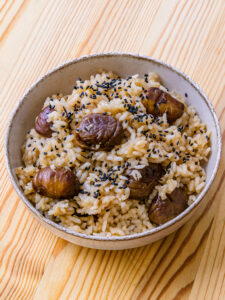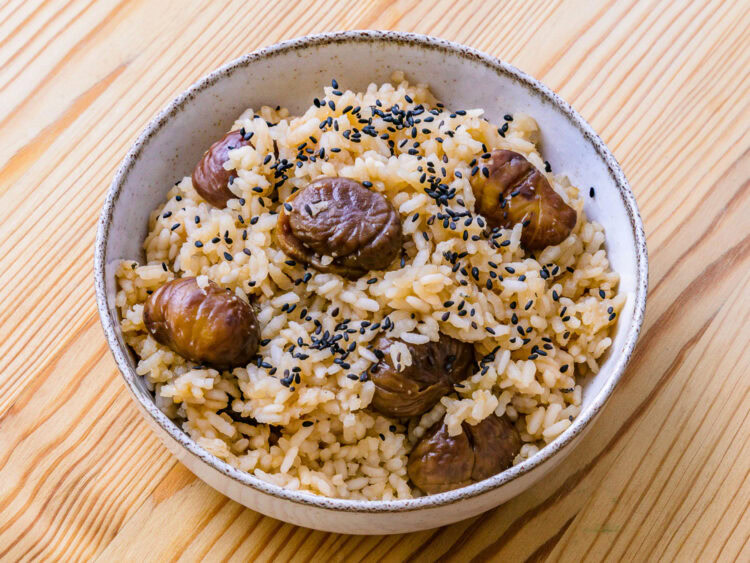
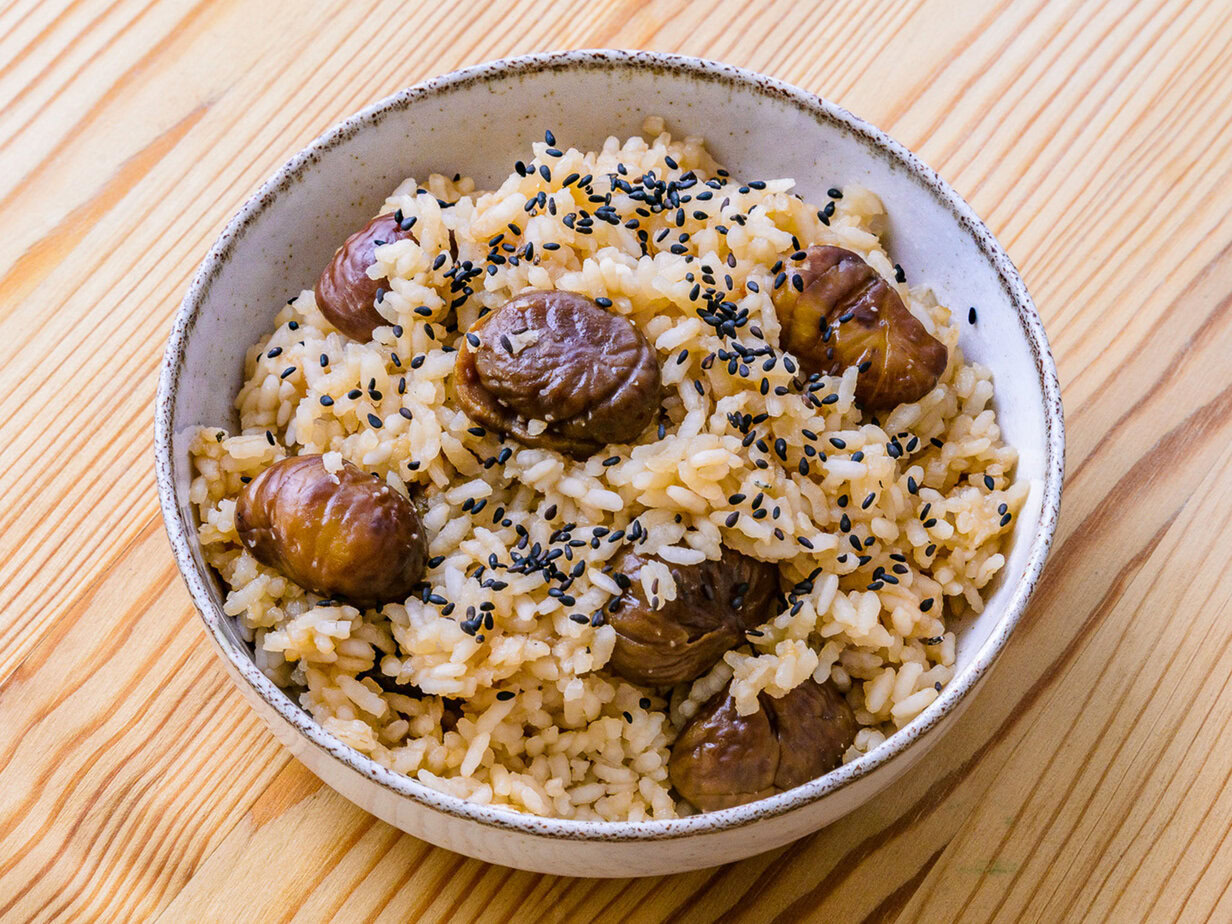
Japanese short-grain rice cooked with fresh chestnuts, lightly salted and sprinkled with black sesame — the quintessential autumn rice dish.
The first chestnuts have arrived at the market, and the craving for a warm, comforting bowl returns all at once.
Kuri gohan answers that craving with almost nothing: soft grains of rice, tender golden pieces of chestnut, and a gentle puff of steam when the lid is lifted. Salt and a splash of sake lift the whole dish without ever masking the chestnuts.
What is kuri gohan?
Kuri gohan, written 栗ご飯, means “chestnut rice”: kuri means chestnut, gohan means cooked rice or meal. At its simplest, it combines fresh chestnuts with Japanese short-grain rice and a pinch of salt. Depending on the region, sake or a small square of kombu is sometimes added for fragrance and a subtle note of umami. In Kyoto in particular, the dish stays pale, with clean, delicate flavors.
Texture is what defines it. The chestnuts remain in large, tender, creamy chunks scattered through soft, slightly sticky grains. It is not a heavily seasoned takikomi gohan: when soy sauce is used, it stays light and discreet to keep the rice pale and let the chestnuts shine. Kuri okowa, the stickier version, uses a higher proportion of glutinous rice, and the large, sweet Tamba chestnuts from north of Kyoto have long been prized.
From Tamba chestnuts to the tables of the shoguns
Chestnuts have been part of the Japanese diet since Jōmon prehistory, later prized at elite tables. Those from Tamba, north of Kyoto, were already renowned in the Heian period, from 794 to 1185; prized for their size and sweetness, they were offered to shoguns and emperors. That prestige still clings to the dish, which has stayed simple yet refined.
In autumn, kuri gohan holds a special place. The chestnut symbolizes abundance and good fortune, and chestnut rice is linked to Chōyō no Sekku, the Chrysanthemum Festival on the ninth day of the ninth month. It also appears in certain Shinto offerings as an expression of harvest gratitude.
The dish eventually won over both nobles and commoners. Today it is served at home, at harvest festivals, in canteens and in restaurants in chestnut-growing regions. In Japanese cuisine, it relies on restrained seasoning: salt brings out the sweetness without dominating it, and a pinch of goma-shio, black sesame with salt, finishes the bowl.
The main ingredients of kuri gohan
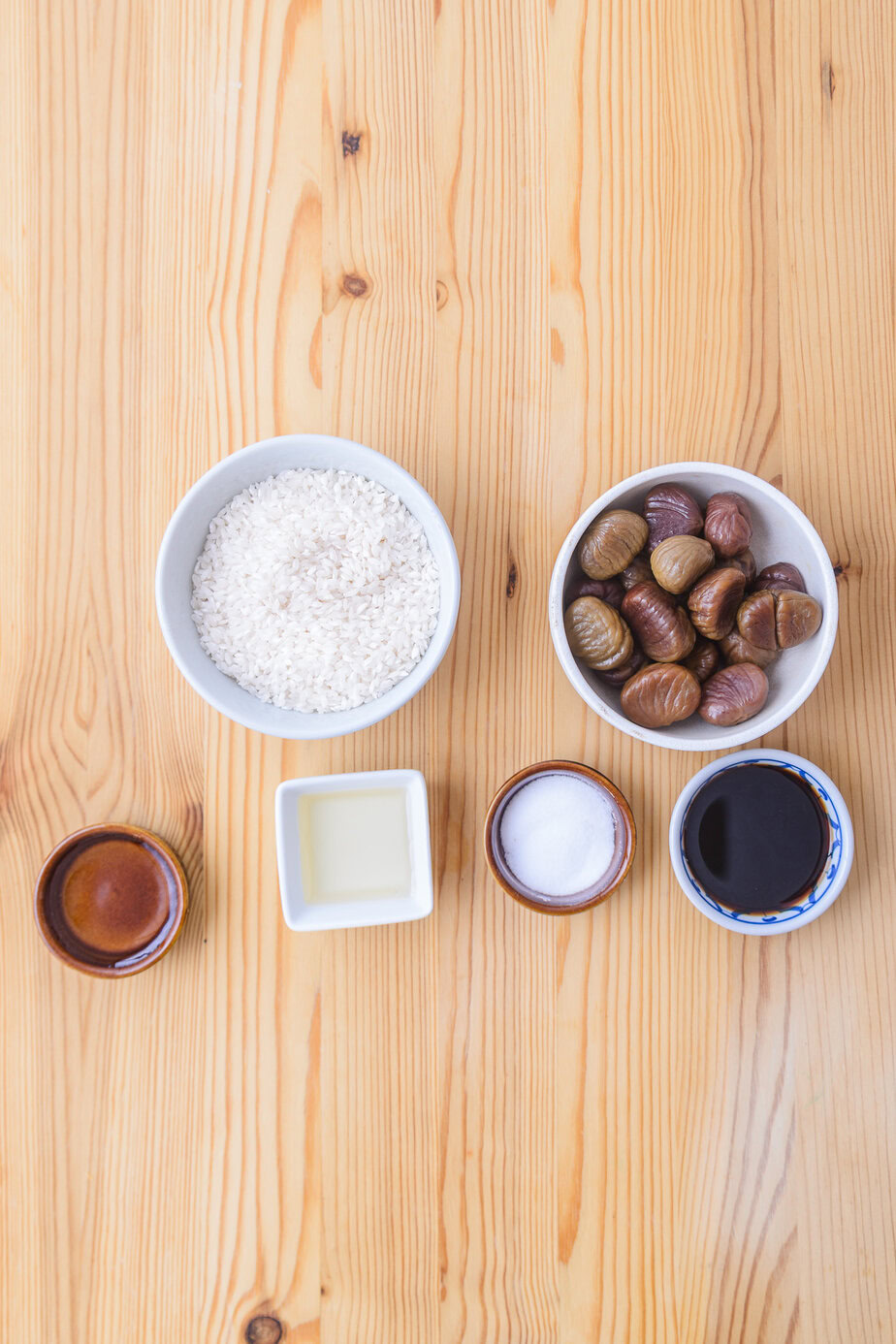
Fresh chestnuts are the centerpiece — ideally Japanese varieties such as Tamba: rounded flavor, creamy texture, golden color. Remove the hard outer shell and the inner bitter skin, the shibukawa, then rinse in clean water to prevent discoloration and bitterness. Japanese short-grain rice gives a plump, slightly sticky bite; adding mochigome, 10 to 20%, makes it softer, closer to okowa.
Seasoning stays minimal. Salt does most of the work: it highlights the sweetness of the rice and chestnuts without making the dish salty. Measure the water as for plain Japanese rice, barely adjusting for the chestnuts, which steam on top. One to two tablespoons of sake round out the aroma, and an approximately 5 cm square of kombu adds a clean umami note.
The finishing touch is goma-shio, the blend of black sesame and salt that adds contrast and crunch. Some families add a splash of light or white soy sauce for savoriness; Kyoto-style versions keep the rice pale, while others tint it a little more.
Signs of authenticity and pitfalls to avoid
The hallmark of a good kuri gohan is restrained, salt-based seasoning. Sake, kombu, one to two teaspoons of light soy sauce or a little mochigome all have their place, provided they support the chestnut without overpowering it.
Cook the chestnuts arranged on top of the rice, then fold them in gently after steaming to keep the pieces whole.
What to avoid: candied or syrup-packed chestnuts, garlic, butter, dark soy sauce and overly strong stocks, which would overwhelm the dish. Serve in a bowl with a pinch of goma-shio, often alongside miso soup or pickled vegetables. This preserves the pale color, the tenderness of the rice and the sweetness of the chestnuts.
Ingredients
- 300 g rice (dry weight)
- 300 g chestnuts with skin on
- 440 ml water
- toasted black sesame seeds for garnish
Instructions
Preparation
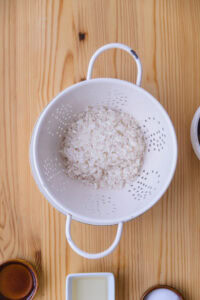
- Rinse the rice at least 30 minutes in advance, then drain in a colander and let stand until thoroughly drained.300 g rice (dry weight)
- Pour plenty of boiling water over the chestnuts and let stand until the water cools to soften the skins.300 g chestnuts
- Peel the chestnuts with a knife, removing the hard outer shell and the thin inner skin, then soak them in water.440 ml water
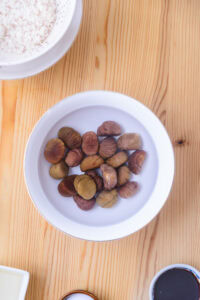
Cooking
- Add the drained rice to the rice cooker.
- Add the water, sake, mirin, soy sauce, and salt.2 tablespoons sake, 0.5 tablespoon mirin, 1 teaspoon soy sauce, 0.75 teaspoon salt

- Stir once from the bottom up, then level the surface.
- Arrange the chestnuts on top without stirring, then cook on the normal setting.
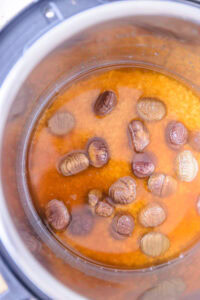
Serving
- Spoon into bowls and sprinkle with toasted black sesame seeds.toasted black sesame seeds