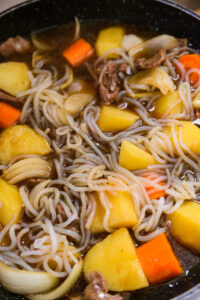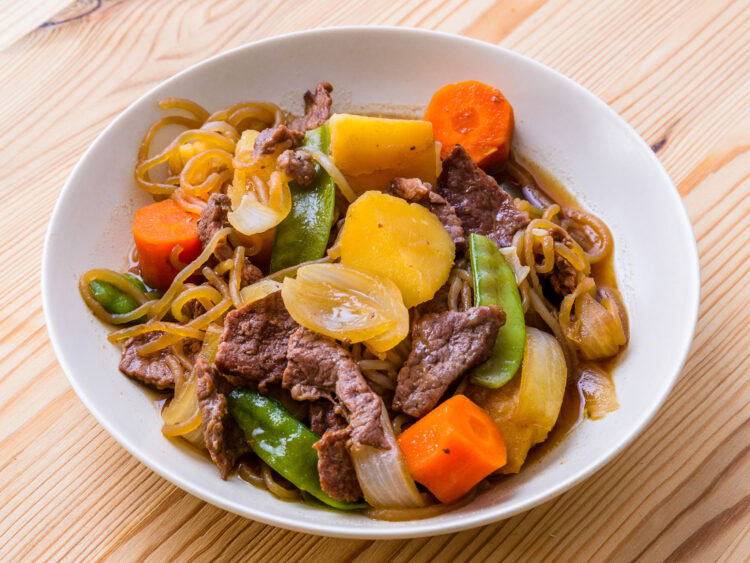
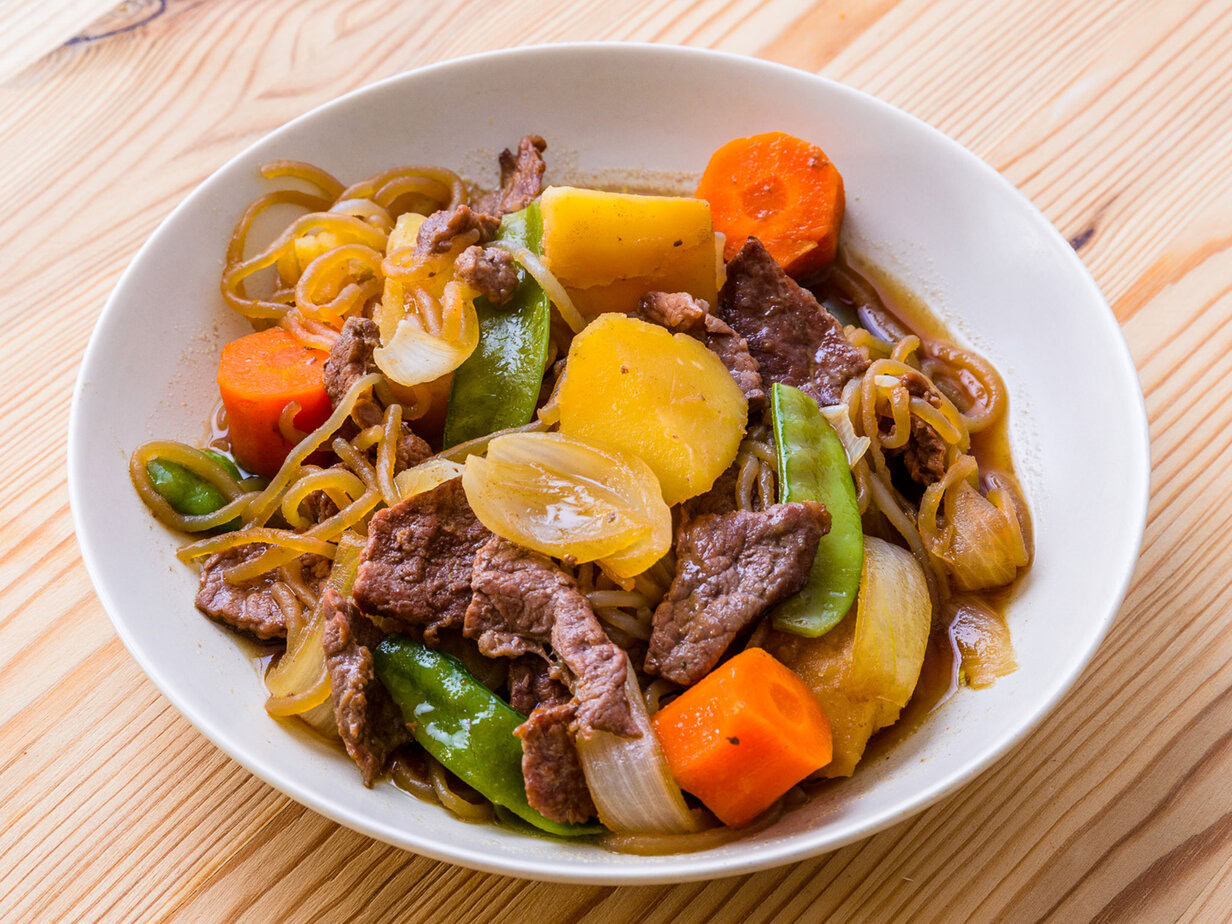
A Japanese stew of thinly sliced beef or pork, tender potatoes, and onion in a delicious sweet-savory broth
In the pot, soy sauce deepens the color of the broth, while mirin rounds out its edge. The potatoes slowly absorb this sweet-savory liquid, along with thin slices of meat, soft onions, and translucent strands of konjac.
They become hokuhoku, both fluffy and tender, while the shirataki stay silky to the bite. It’s an everyday kind of dish, and one that tastes even better reheated the next day.
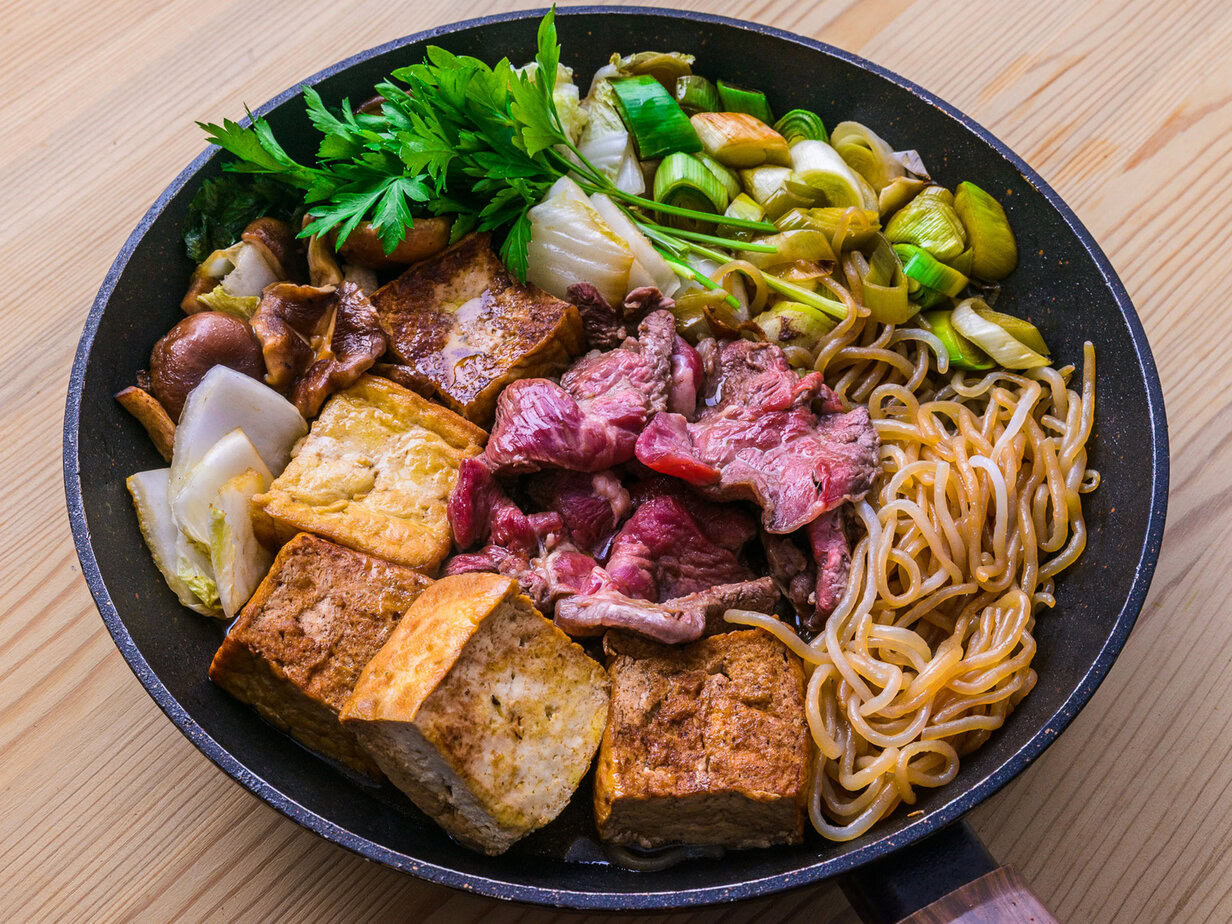
Meat, potatoes, and the spirit of nimono
The name is straightforward: niku, “meat,” and jaga, from jagaimo, the Japanese word for potato. The term only became established in the 1970s; before that, the dish went by names such as amani or umani, meaning “sweet simmered dish.”
In Japanese cuisine, it belongs to the family of nimono, simmered dishes cooked in a clear, unthickened liquid. It has nothing in common with a Western stew thickened with flour: here, the broth reduces to concentrate and glaze, not to weigh the dish down.
The aromatic base is built on sugar, soy sauce, mirin, and sake, often with a light dashi. Order matters just as much as the ingredients themselves: the Sa-shi-su-se-so rule calls for adding sugar before soy sauce, so it can penetrate the vegetables before the salt tightens their fibers.
The meat is sliced very thinly, either beef or pork; in modern versions, the konjac used in older recipes is often replaced with shirataki or ito konnyaku.
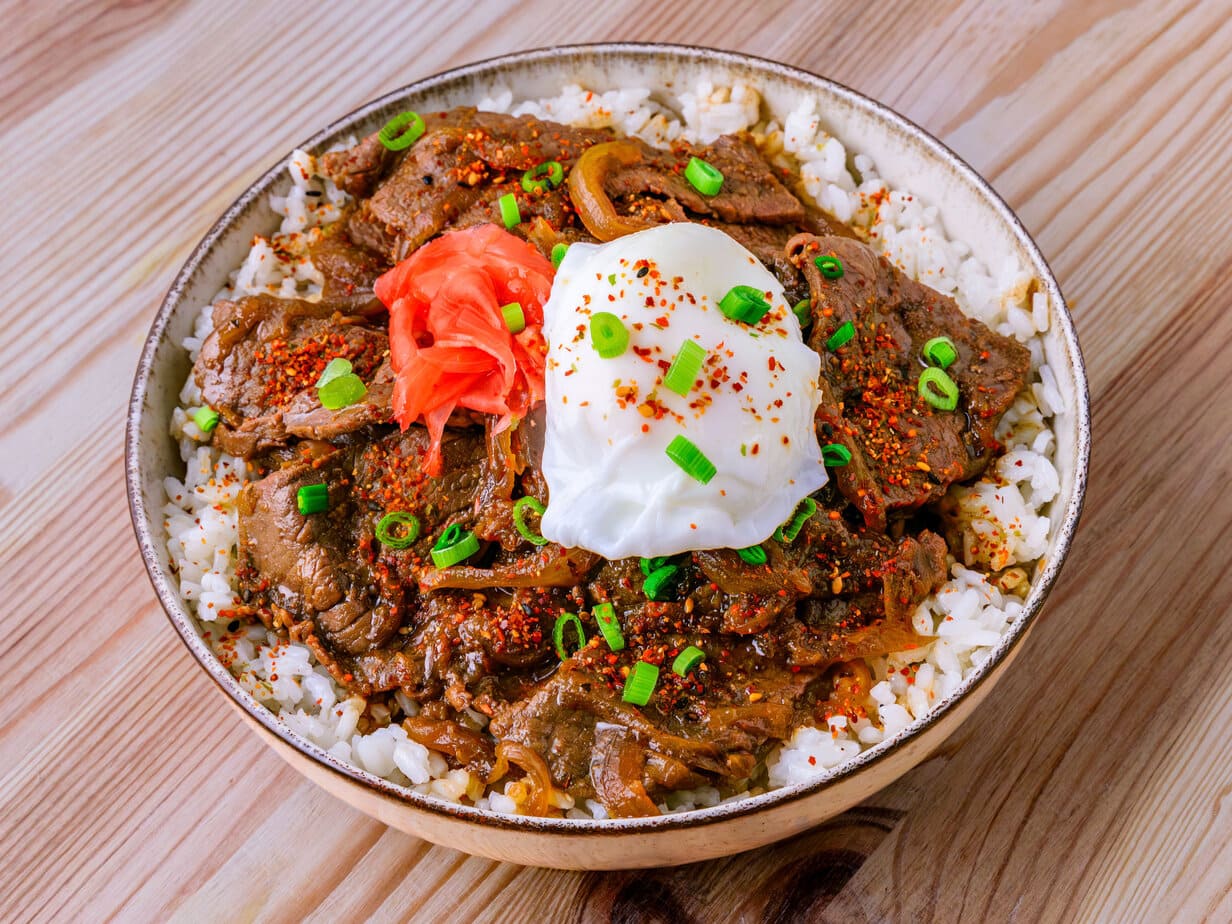
Origins, from the Royal Navy to Meiji-era kitchens
Nikujaga feels like a home-style dish, but it was born in the imperial navy during the Meiji era. Polished white rice dominated sailors’ diets and encouraged beriberi, a vitamin B1 deficiency; adding meat and vegetables became a matter of health as much as military strength.
According to legend, Admiral Tōgō Heihachirō, who trained in the United Kingdom between 1871 and 1878, developed a taste there for British beef stew. Without red wine or butter, navy cooks are said to have recreated it with what they had on hand: soy sauce, sugar, sesame oil, or beef fat.
Naval archives support this story. A 1938 manual on the management of navy kitchens codifies an amani made with beef, konjac, potatoes, onions, sesame oil, sugar, and soy sauce, without water or dashi : the dish cooks in the juices released by the meat and vegetables. Sugar goes in before soy sauce, and the onion is added only at the end so it keeps a bit of bite.
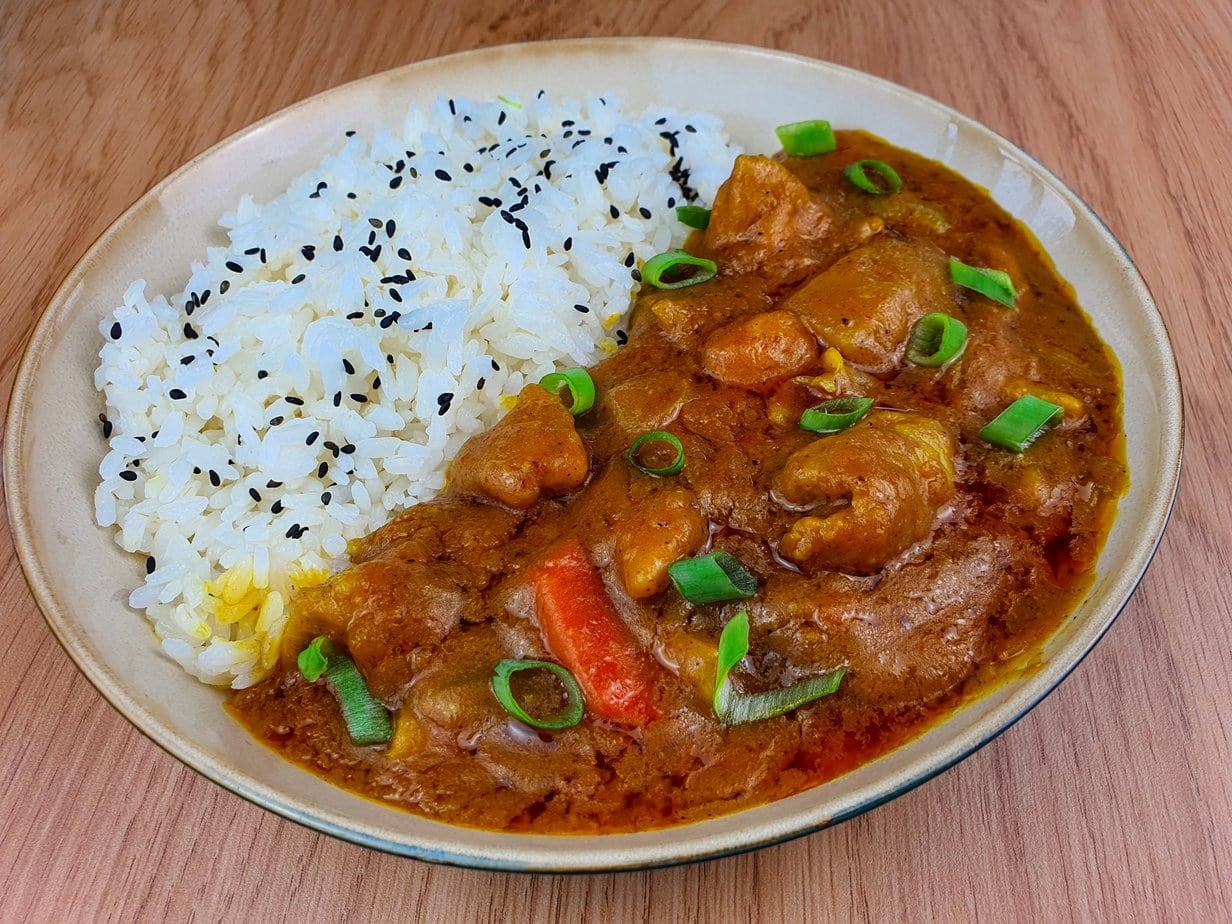
Two former garrison towns claim to be its birthplace. Kure, in Hiroshima, champions a strict version: May Queen potatoes, no carrot, no added water, and a dark, concentrated finish. Maizuru, in Kyoto, offers a more home-style interpretation: hokuhoku Danshaku potatoes, carrot, peas, and water for gentler cooking.
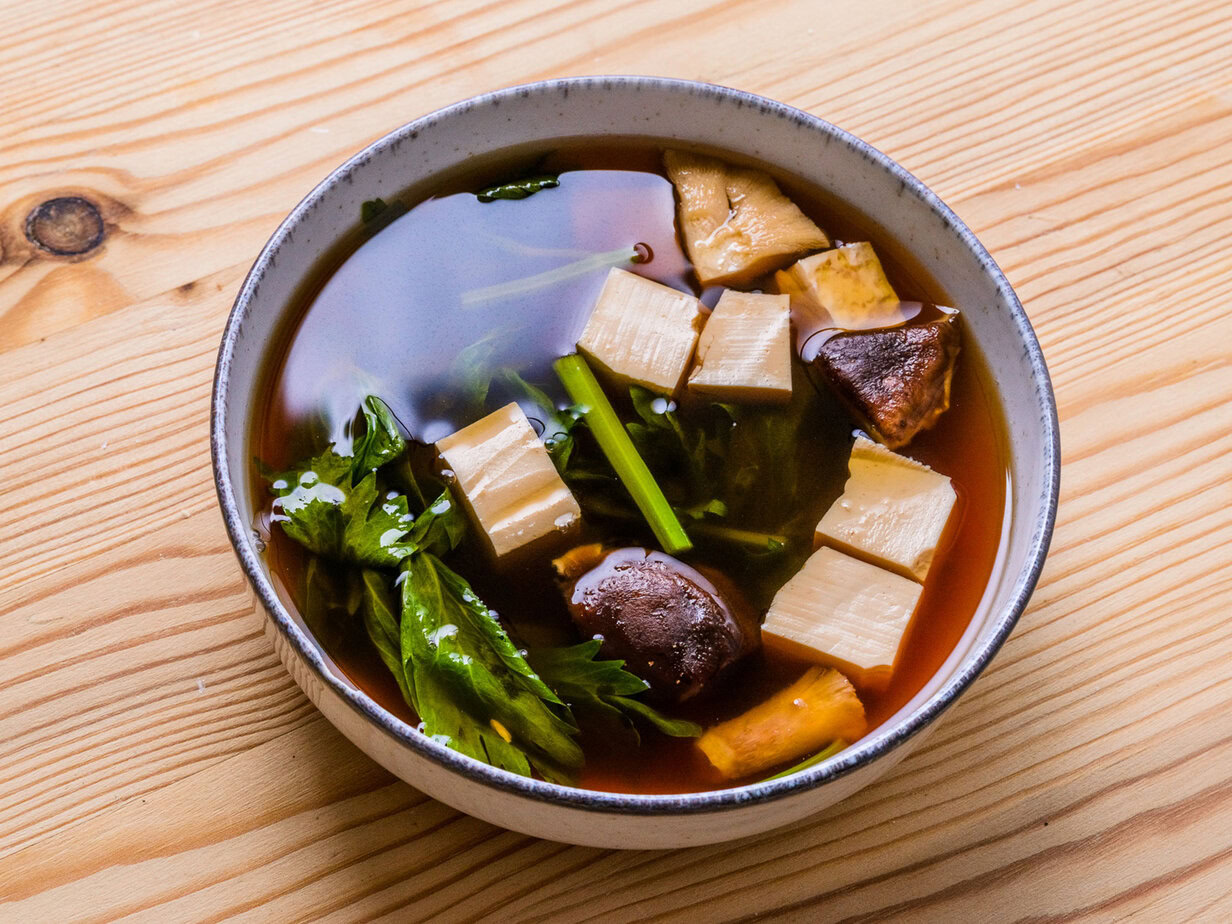
From the 1970s onward, as beef became more accessible, the dish moved from military kitchens into the realm of ofukuro no aji, the “taste of home.”
The main ingredients in nikujaga
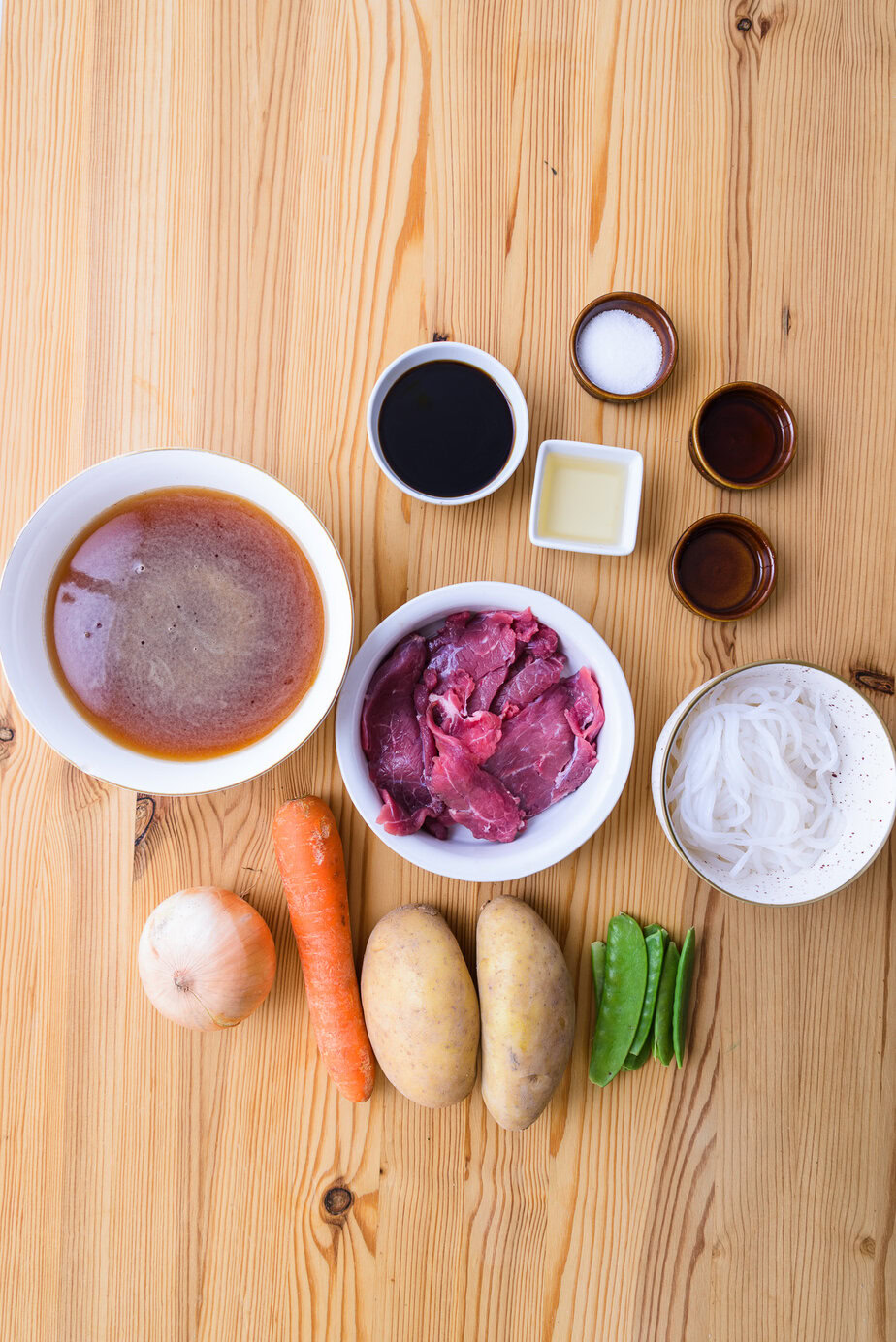
The meat is sliced paper-thin, as it is for sukiyaki. In Kansai, beef is the usual choice, well marbled, with fat that melts into the broth ; in Kantō, pork is more common, giving the dish a more everyday richness and letting the soy sauce stand out. In both cases, an initial sear adds umami and caramelized depth.
Potatoes are at the heart of the dish. Cut rangiri-style into irregular chunks, they expose more surface area to the broth and absorb it more readily: firm May Queen potatoes hold their shape in waterless cooking, while the flourier Danshaku variety breaks down slightly and soaks up flavor.
The onion lends sweetness and moisture; the konjac and shirataki, first blanched to remove their alkaline smell, absorb the broth while keeping a light, pleasant chew.
Soy sauce brings salt, color, and depth ; sugar adds roundness and a glossy finish. Mirin and sake contribute shine and aroma, while dashi adds the first layer of umami. Sesame oil lays down a toasted note from the very first minutes. Carrot, meanwhile, remains optional : present in Maizuru, absent in Kure.
Ingredients
Meat and Vegetables
- 200 g beef or pork thinly sliced and cut into bite-size pieces
- 450 g potatoes peeled and cut into 4 to 5 cm chunks (about 3 potatoes)
- 200 g onion peeled, cored, and cut into wedges about 2 cm wide (about 1 onion)
- 100 g carrot peeled and cut into irregular chunks slightly smaller than the potatoes (about 1 small carrot)
- 8 snow peas ends and strings removed
Shirataki
- 100 g shirataki noodles or konjac noodles; rinsed, cut into shorter lengths, then blanched for 1 minute
For Cooking
- 1 tablespoon vegetable oil
- 400 ml dashi broth or 400 ml water plus a little less than 1 tsp instant dashi granules
Instructions
Prepare the Shirataki
- Rinse the shirataki briefly in a colander, then snip them into bite-size lengths with kitchen scissors.100 g shirataki noodles
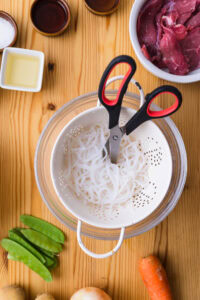
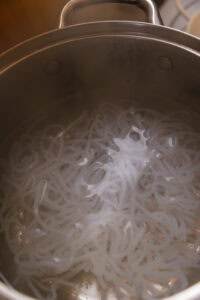
- Bring a small saucepan of water to a boil. Boil the shirataki for 1 minute, then drain. This helps reduce their odor and allows them to absorb the sauce more easily.
Prep the Vegetables
- Peel the potatoes and cut them into large chunks, about 4 to 5 cm.450 g potatoes
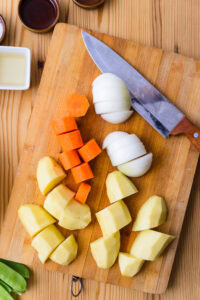
- Peel the onion, remove the core, and cut it into wedges about 2 cm wide.200 g onion
- Peel the carrot and cut it into irregular chunks slightly smaller than the potatoes.100 g carrot
- Cut the meat into bite-size pieces, then trim the snow peas by removing the ends and strings.200 g beef or pork, 8 snow peas
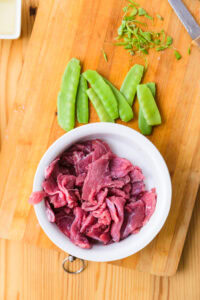
Cook the Nikujaga
- Add the vegetable oil and meat to a cold pan. Set it over medium heat, separating the pieces as they cook. Sauté until about 70% of the meat has changed color, without overcooking it.1 tablespoon vegetable oil
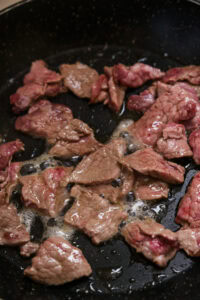
- Add the potatoes, carrot, and onion, then stir to coat the vegetables well with the oil.
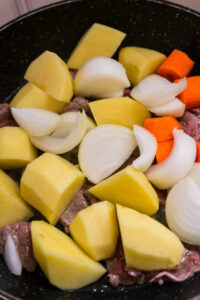
- Pour in the dashi broth, bring to a boil, and lightly skim off any foam.400 ml dashi broth
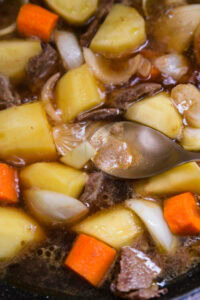
- Add the shirataki, then stir in the sugar, mirin, sake, and soy sauce. Cover with a sheet of aluminum foil laid directly over the ingredients, with a small vent hole in the center.2 tablespoons sugar, 2 tablespoons mirin, 2 tablespoons sake, 4 tablespoons soy sauce
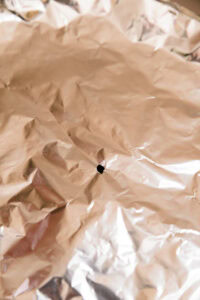
- Simmer over medium-low heat for 13 minutes. Add the snow peas to the broth, re-cover with the foil lid, and simmer for 2 minutes more, about 15 minutes total.
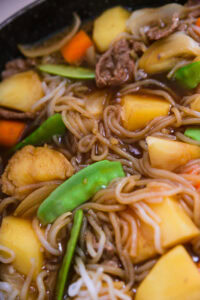
Serve
- Serve right away, or let it cool in the pan so the flavors can deepen. If cooling, remove the snow peas to preserve their color, then add them back just before serving.