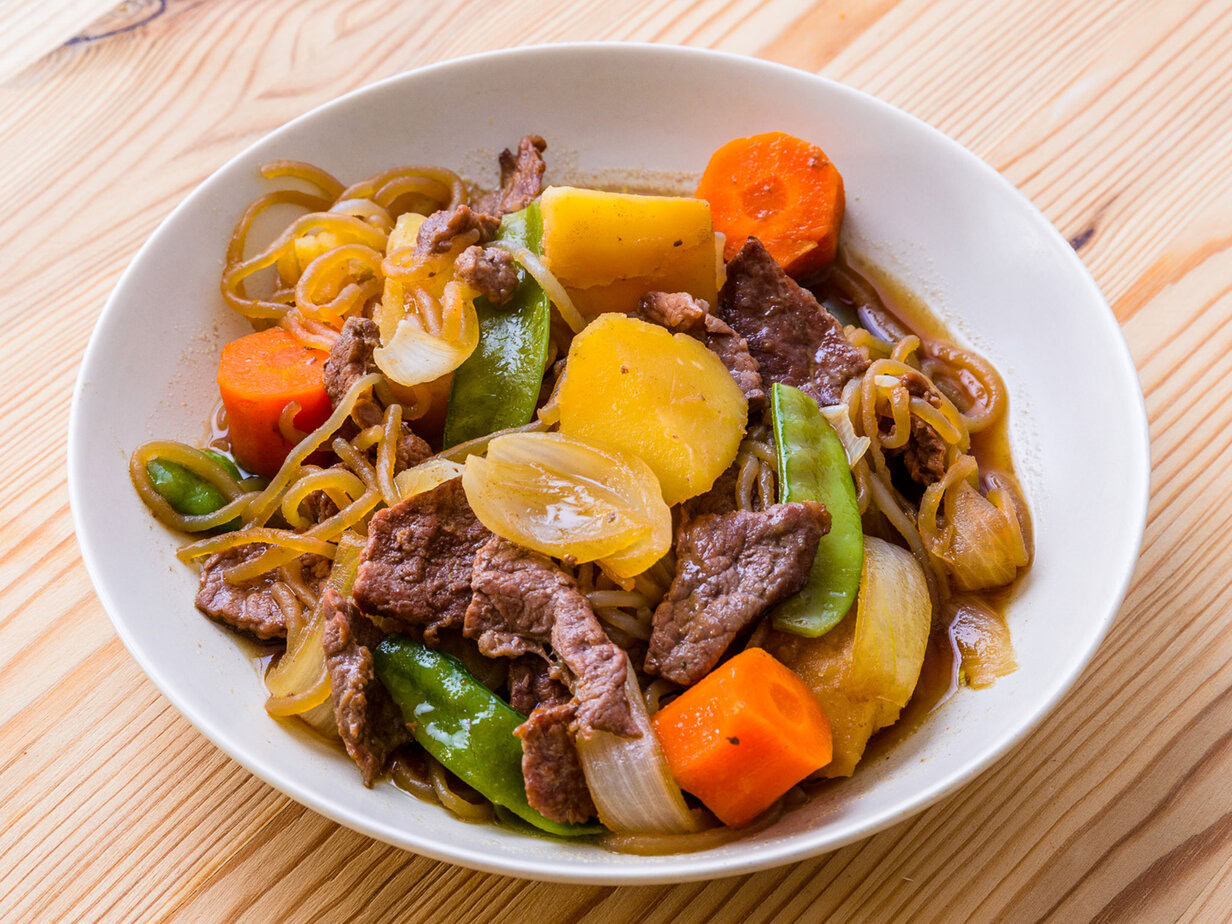
Servings: 4
Ingredients
Meat and Vegetables
- 200 g beef or pork thinly sliced and cut into bite-size pieces
- 450 g potatoes peeled and cut into 4 to 5 cm chunks (about 3 potatoes)
- 200 g onion peeled, cored, and cut into wedges about 2 cm wide (about 1 onion)
- 100 g carrot peeled and cut into irregular chunks slightly smaller than the potatoes (about 1 small carrot)
- 8 snow peas ends and strings removed
Shirataki
- 100 g shirataki noodles or konjac noodles; rinsed, cut into shorter lengths, then blanched for 1 minute
For Cooking
- 1 tablespoon vegetable oil
- 400 ml dashi broth or 400 ml water plus a little less than 1 tsp instant dashi granules
Seasonings
Procédé
Prepare the Shirataki
- Rinse the shirataki briefly in a colander, then snip them into bite-size lengths with kitchen scissors.100 g shirataki noodles
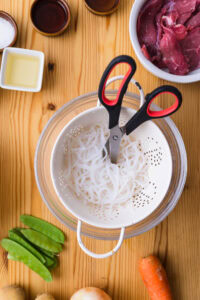
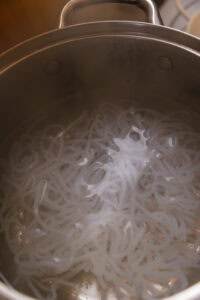
- Bring a small saucepan of water to a boil. Boil the shirataki for 1 minute, then drain. This helps reduce their odor and allows them to absorb the sauce more easily.
Prep the Vegetables
- Peel the potatoes and cut them into large chunks, about 4 to 5 cm.450 g potatoes
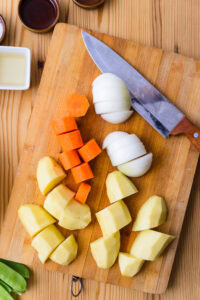
- Peel the onion, remove the core, and cut it into wedges about 2 cm wide.200 g onion
- Peel the carrot and cut it into irregular chunks slightly smaller than the potatoes.100 g carrot
- Cut the meat into bite-size pieces, then trim the snow peas by removing the ends and strings.200 g beef or pork, 8 snow peas
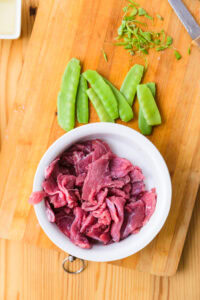
Cook the Nikujaga
- Add the vegetable oil and meat to a cold pan. Set it over medium heat, separating the pieces as they cook. Sauté until about 70% of the meat has changed color, without overcooking it.1 tablespoon vegetable oil
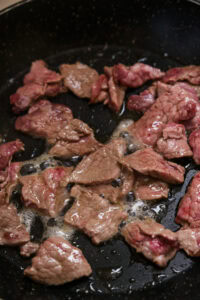
- Add the potatoes, carrot, and onion, then stir to coat the vegetables well with the oil.
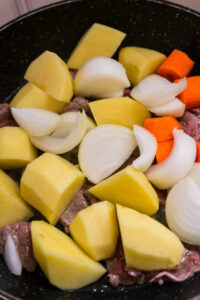
- Pour in the dashi broth, bring to a boil, and lightly skim off any foam.400 ml dashi broth
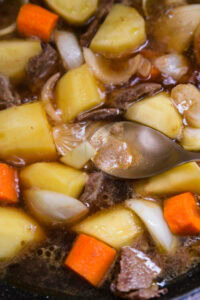
- Add the shirataki, then stir in the sugar, mirin, sake, and soy sauce. Cover with a sheet of aluminum foil laid directly over the ingredients, with a small vent hole in the center.2 tablespoons sugar, 2 tablespoons mirin, 2 tablespoons sake, 4 tablespoons soy sauce
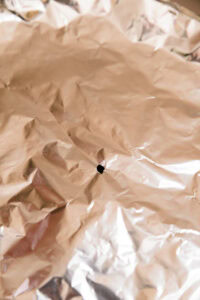
- Simmer over medium-low heat for 13 minutes. Add the snow peas to the broth, re-cover with the foil lid, and simmer for 2 minutes more, about 15 minutes total.
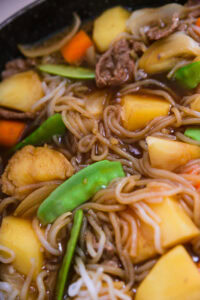
Serve
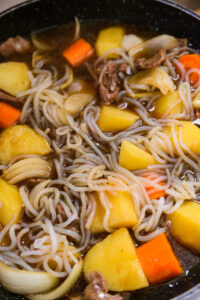
- Serve right away, or let it cool in the pan so the flavors can deepen. If cooling, remove the snow peas to preserve their color, then add them back just before serving.
Notes
Storage: refrigerate for up to 6 days.
Choose thinly sliced meat, such as belly, tenderloin, shaved cuts, or trimmings.
Substitution: replace the dashi broth with 400 ml water plus a little less than 1 tsp instant dashi granules.
Did you make this recipe?Tag @marcwiner on Instagram!