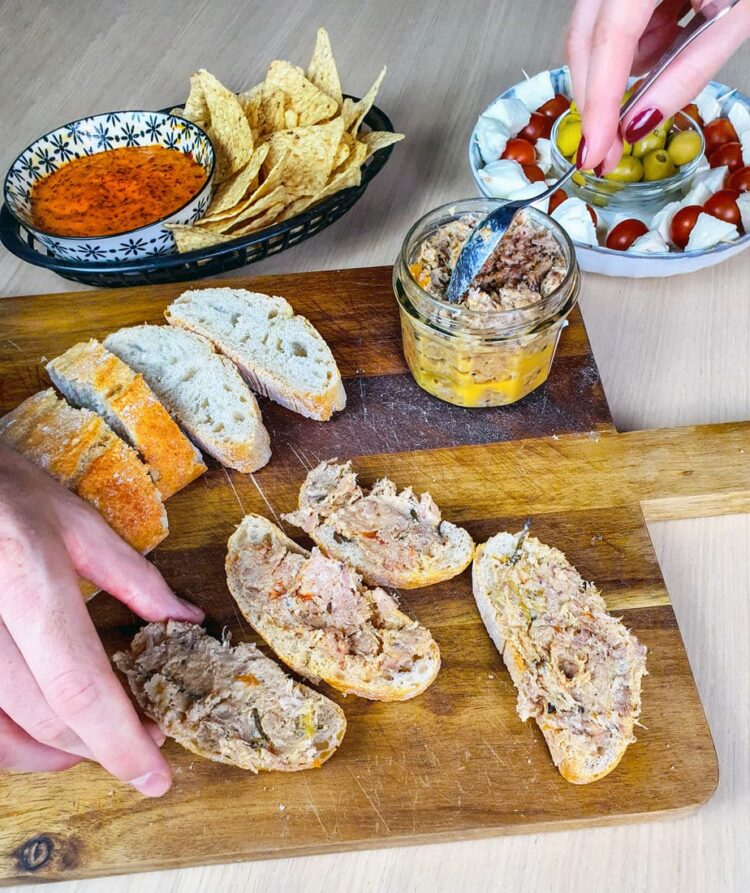
Rillettes were originally an age-old way to preserve meat… yes, you guessed it: preserve meat! Before refrigerators existed, they were a very practical way to keep protein on hand throughout the winter.
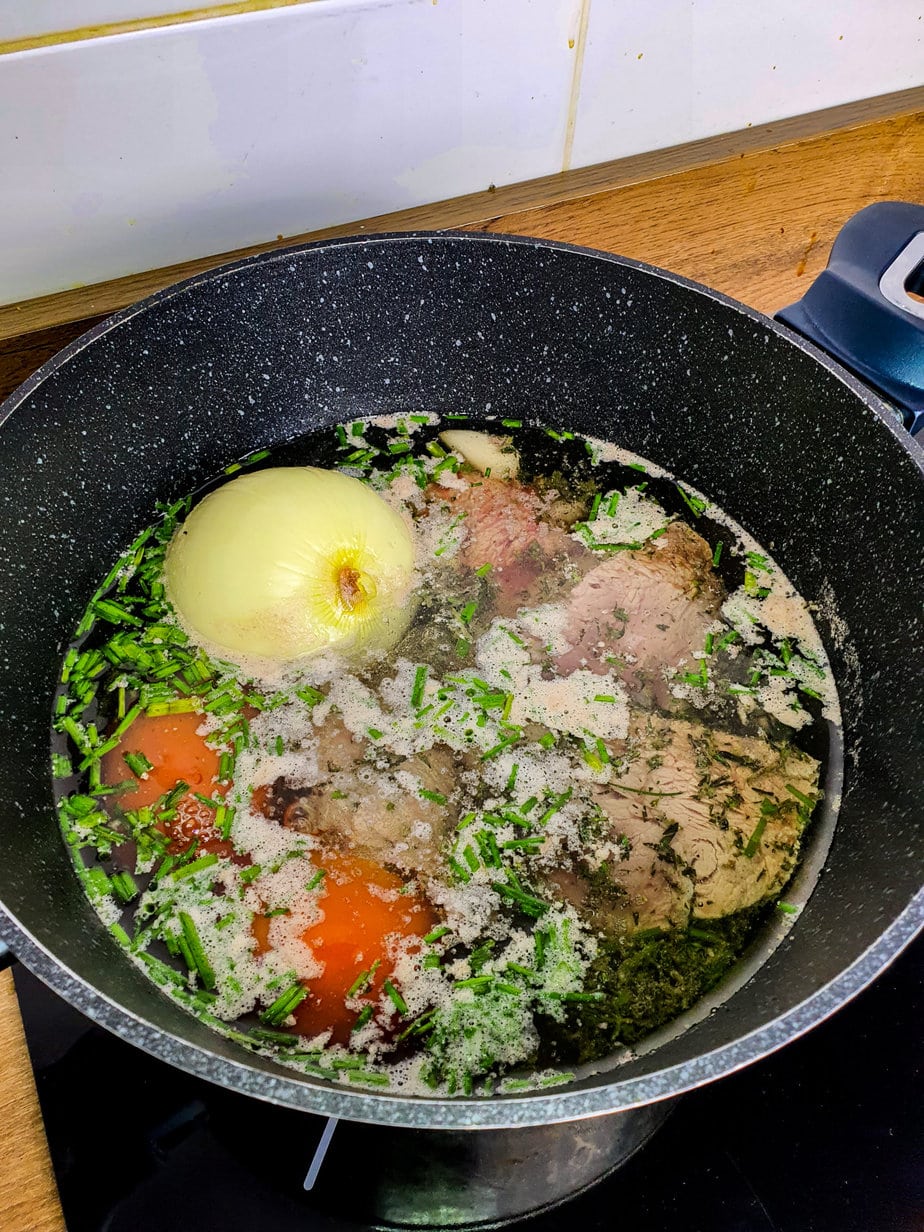
What’s more, as you’ll see, you can kill two birds with one stone and preserve some of the vegetables’ nutrients at the same time.
Ingredients for veal rillettes
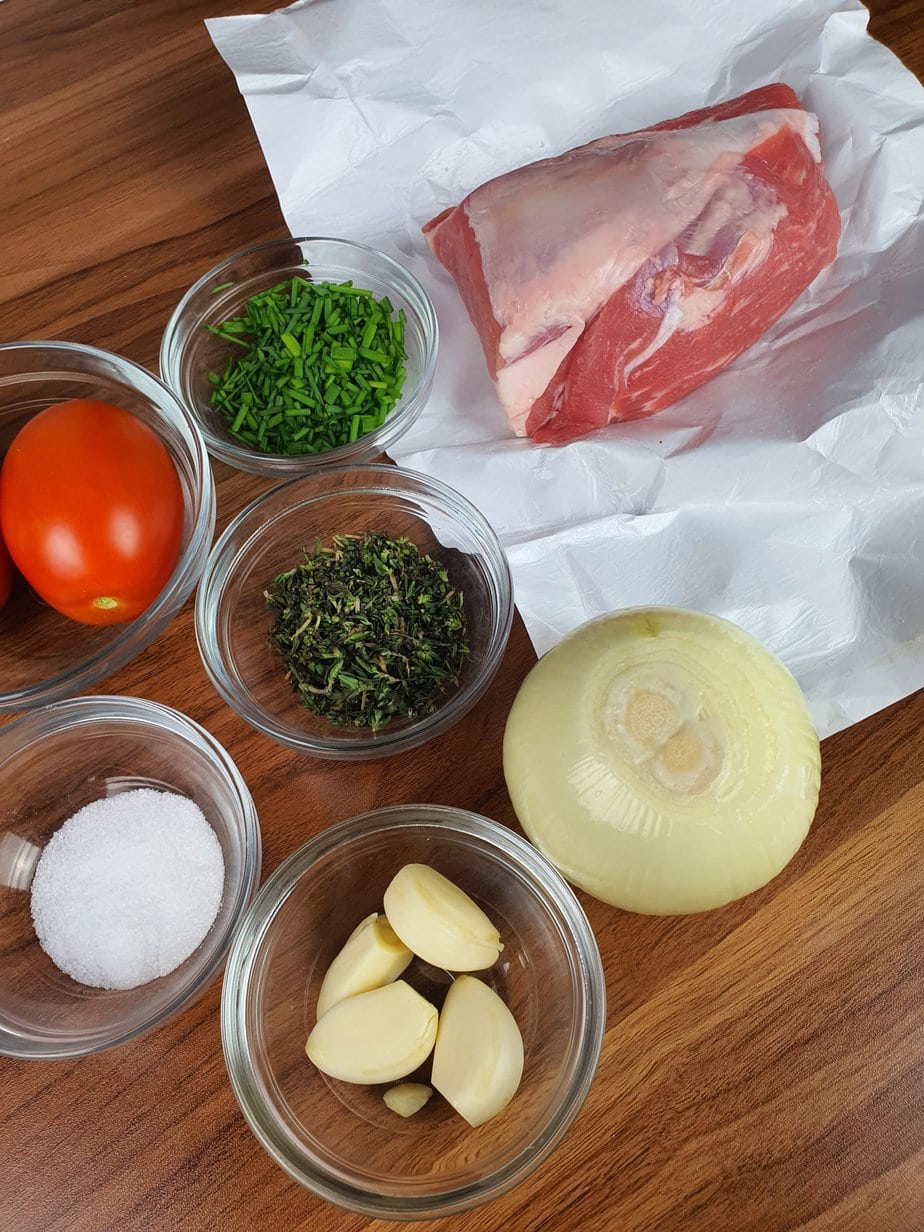
The veal: Use whichever cut you like; honestly, it doesn’t matter all that much, except to purists. That said, try to choose good-quality meat, ideally locally raised. Trust me, it makes a real difference to the flavor.
The tomatoes: Tomato rillettes? It may sound odd, but I promise it’s delicious! Contrary to what you might expect, the tomato flavor won’t be overpowering; however, its high glutamate content will make the rillettes much more savory.
In any case, my friends are sold!
How to serve veal rillettes
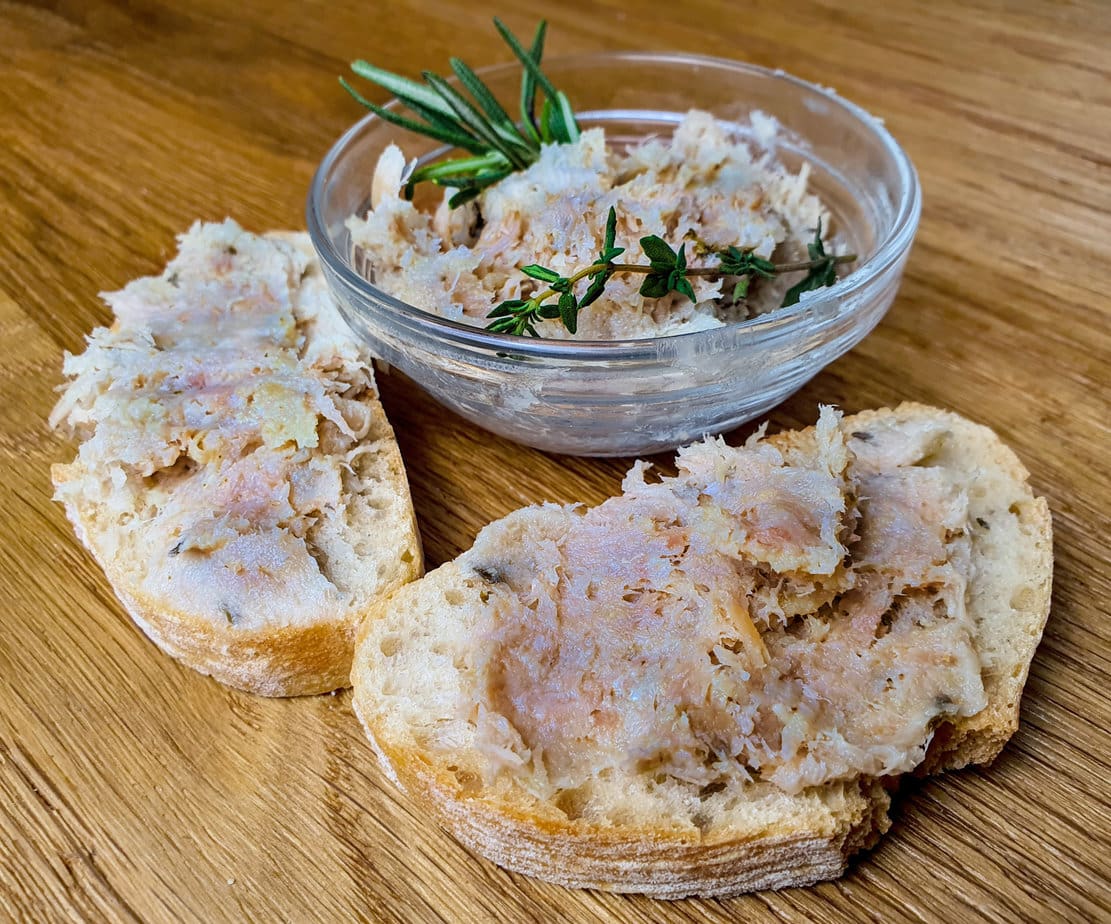
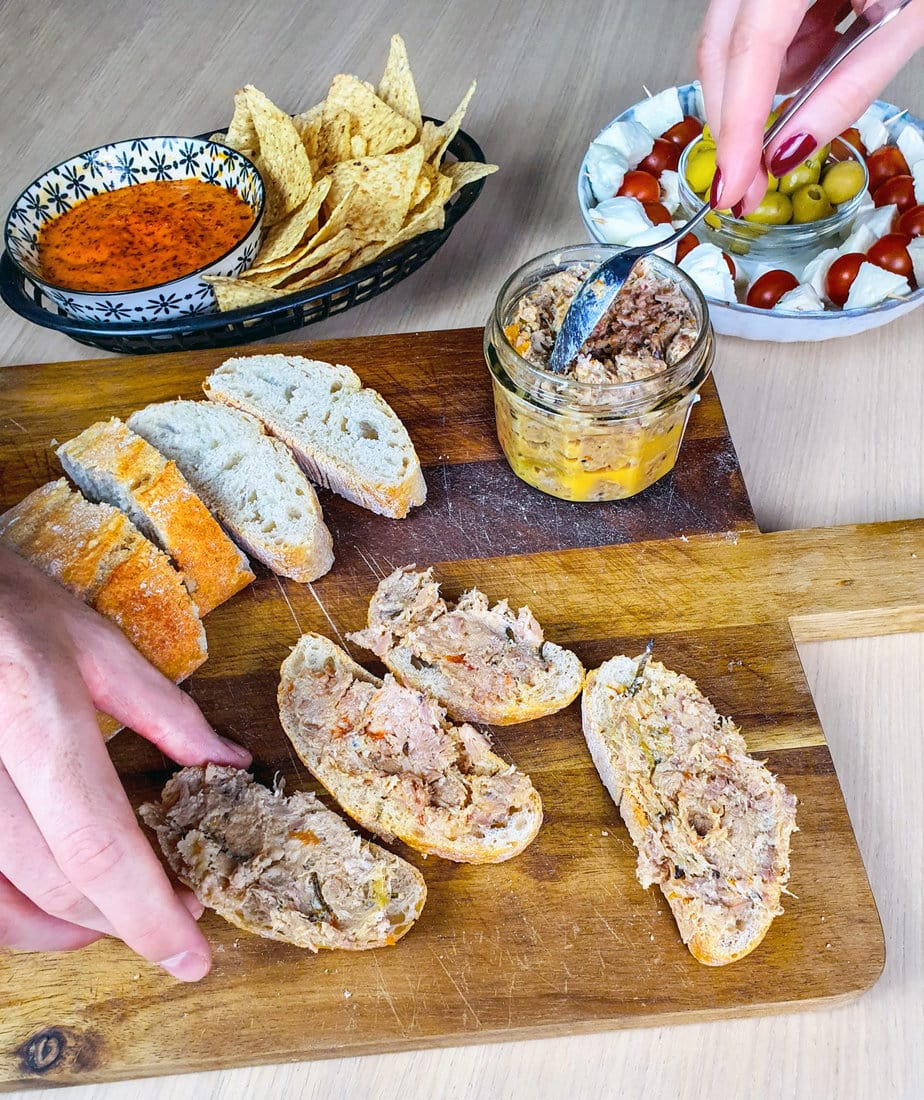
One of the best things about rillettes is how versatile they are. Spread on good bread from the bakery, tucked into a sandwich, eaten by the spoonful, or added to a salad: however you serve them, they’re a treat.
If you feel like it, you can even make my chicken rillettes at the same time for twice the pleasure.
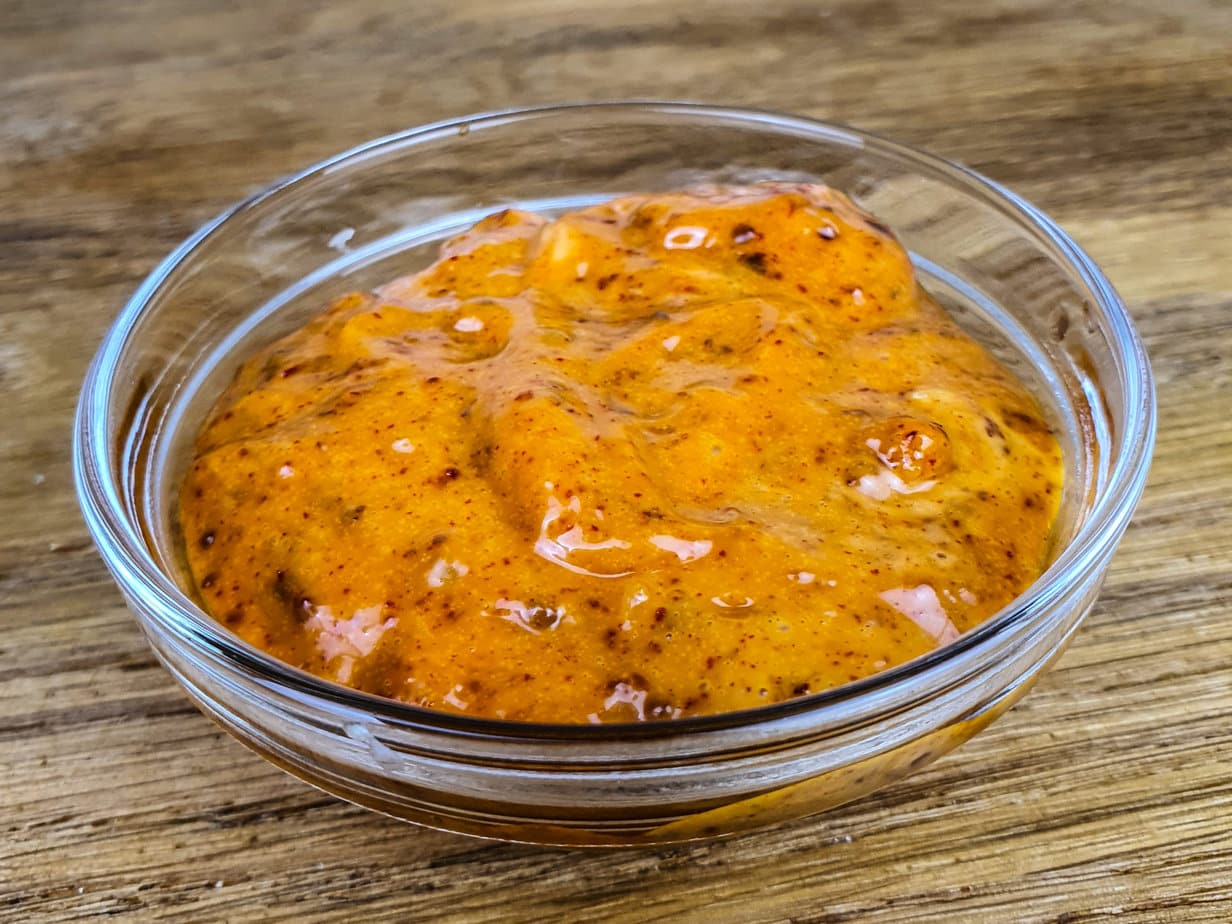
P.S. You may have noticed the gorgeous sauce in the photo, served with corn chips: it’s my wing sauce.
Tips for making veal rillettes
First, be patient. It’s really important to let them cook for a very, very long time. That’s one of the two essential keys to getting this recipe right.
The second is the amount of salt. A gram or two won’t make much difference, especially since we’re adding quite a few vegetables, but sticking to the ratio of 10 g of salt per 1 kg of meat is crucial. Otherwise, the rillettes will either be lacking in flavor or unbearably salty.
Ingredients
- 1 kg veal
- 10 g salt
- 4 sprigs thyme
- 2 sprigs chives
- 1 pinch pepper
- 2 tomatoes
- 1 onion
- 400 g lard or other animal fat (beef, duck, goose, etc.)
- 1 glass water (start with half, then check that once the fat has melted, the meat is fully covered)
Instructions
- Add all the ingredients to a saucepan over low heat (3-4 out of 10)
- Cook for 4-5 hours uncovered
- Turn off the heat, remove the herbs, and discard them
- Transfer the meat and vegetables to a large bowl, then shred the meat
- Look at the liquid in the saucepan: you will see two layers. The top is fat, while the dark liquid at the bottom is the cooking juices. Taste them – they are intensely flavorful, and you will want to keep them!
- Using a ladle, transfer as much of the surface fat as possible to a separate bowl, leaving mostly the cooking juices in the saucepan
- If a little fat remains, do not worry – pour everything from the saucepan into the bowl with the veal and mix. Your rillette mixture is ready!
- To jar the rillettes, prepare jam jars or other airtight containers. Alternate two tablespoons of rillette mixture with one tablespoon of pure fat (reserved from the cooking bowl) until the jars are full. Finish with a spoonful of fat on top.
- Seal tightly and refrigerate for up to 2 weeks, or up to 1 week after opening. If you know how to sterilize jars, you can keep them longer, but that is beyond my expertise
Nutrition
The content of this promotional campaign reflects only the author’s views and is solely the author’s responsibility. The European Commission and the European Research Executive Agency (REA) accept no responsibility for any use that may be made of the information it contains.