


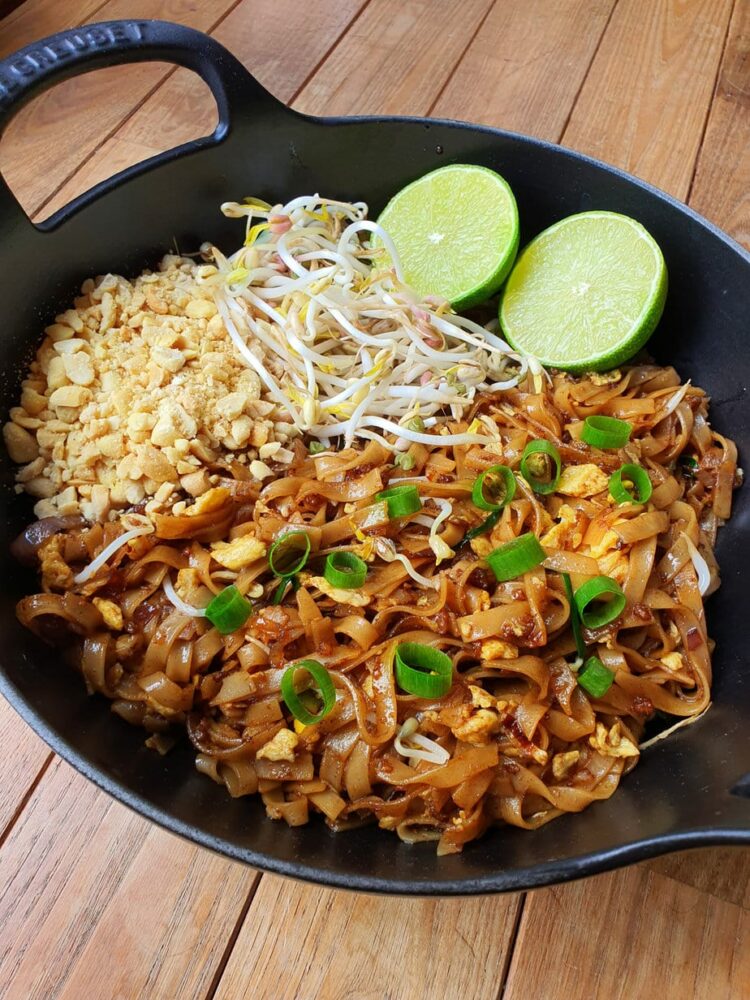
If you’re on this page, it’s not because Pad Thai is unfamiliar. How could it be? It’s the most famous dish in Thai cuisine—and it’s actually not that hard to make at home.
Besides being simple, this Thai specialty will be worlds apart from the disappointing versions you often find in restaurants…
It’s not a universal rule, of course, but I’ve had people tell me tomato sauce was traditional—among other absurdities—while charging me €20. Long story short, I’m scarred for life: I’ll eat Pad Thai either in Thailand or homemade.
The main ingredients of Pad Thai
Dark soy sauce: definitely not to be confused with light soy sauce, which you usually find in stores. You can sometimes find it there, but you’ll have better luck at an Asian grocery store.
Dark soy has a very different flavor; it brings great depth and nuance. To learn more about the differences between soy sauces, see my full article on the topic. If you go to an Asian market, look for Healthy Boy brand “black” soy sauce; it’s Thai, and its flavor is especially well-suited to Pad Thai.
Tamarind pulp: absolutely essential if you want authentic flavor. Honestly, there aren’t any good substitutes for its deliciously tangy taste. Rehydrate it with boiling water, then strain it through cheesecloth.
Dried shrimp: you can use the small gray variety if you like—use 5x the amount and chop them. Either will work, but don’t skip them. In France, dried shrimp are generally found in the frozen section of Asian supermarkets. Let them thaw overnight in the fridge.
The flavor they add is fundamental to the final result, and you won’t regret the extra few minutes it takes to incorporate them into the Pad Thai.
Rice noodles: definitely don’t use rice vermicelli! Choose medium- to wide-width noodles; in Thailand, medium is typical. Cook them carefully—you’ll find all the details in the recipe—but know that the final texture of the noodles is one of the most important elements of a successful Pad Thai.
Fish sauce: a pillar of Thai and Vietnamese cuisine. It doesn’t taste like fish but, like powdered dried shrimp, adds an intense umami note. I recommend Squid Brand or Phú Quốc, which are among the best you can find in France.
What to serve with Pad Thai?
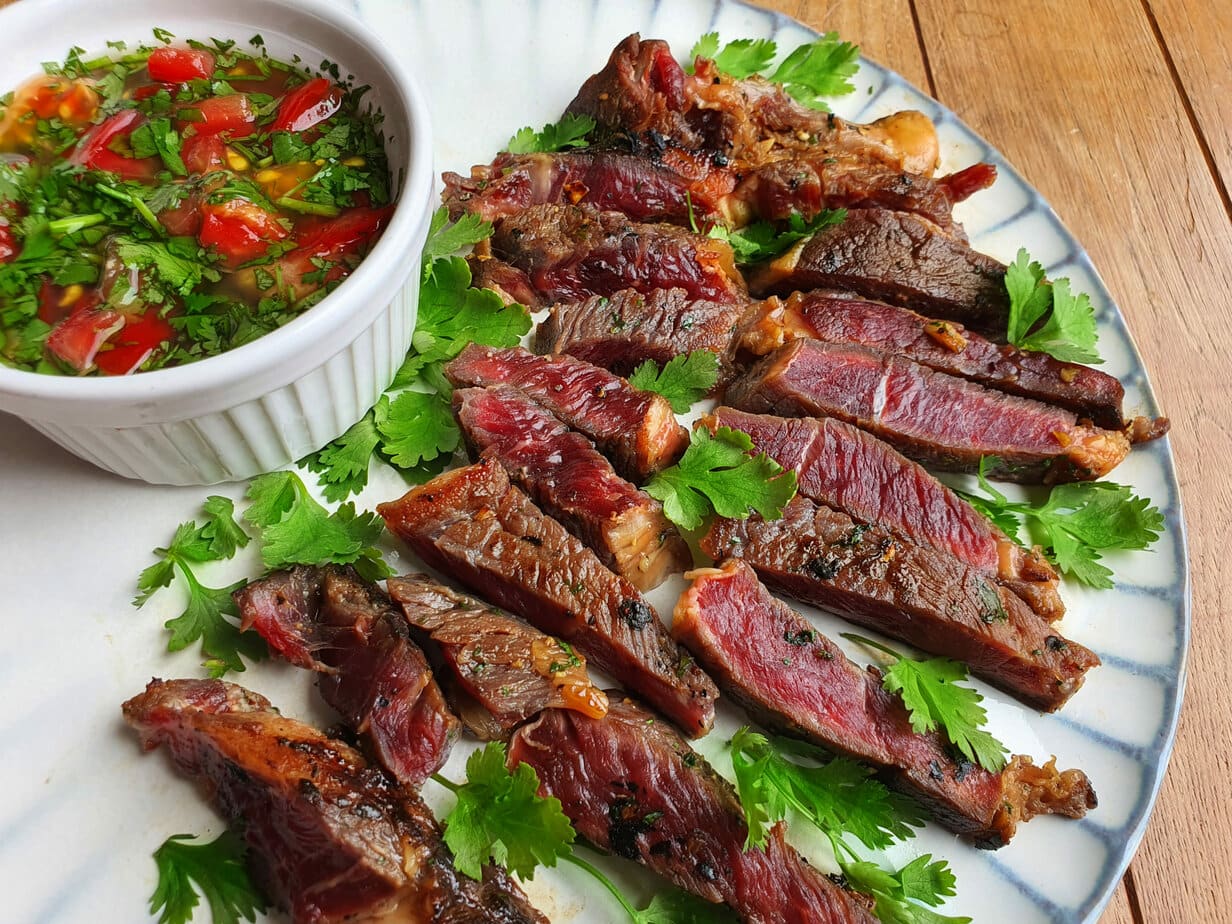
Generally, it’s a complete meal on its own. But why not serve Weeping Tiger beef as a starter?
Tips for perfect Pad Thai
For the rice noodles used in Pad Thai, there’s a simple trick that makes cooking them foolproof (and gives them that signature, authentic texture). If you prefer, you can cook the noodles according to the package, but I strongly recommend this method.
In short, the noodle cooking happens in two stages:
- Soak the noodles in hot water (not boiling, just hot) for 5–10 minutes. The noodles should be pliable but not fully soft—this may seem counterintuitive, but you’ll see. Drain and set aside.
- The second stage happens in the pan as the recipe describes. Because they’re only partially cooked, the noodles finish cooking in the sauce and oil of the dish. This yields an inimitable chewy-tender texture.
It may take a couple of tries to nail the timing and feel for when to pull them from the water, but believe me, it’s worth it.
You’ll find another recipe using rice noodles here, and if you’re not sure how to choose a soy sauce, check out my full guide to the different kinds of soy sauce
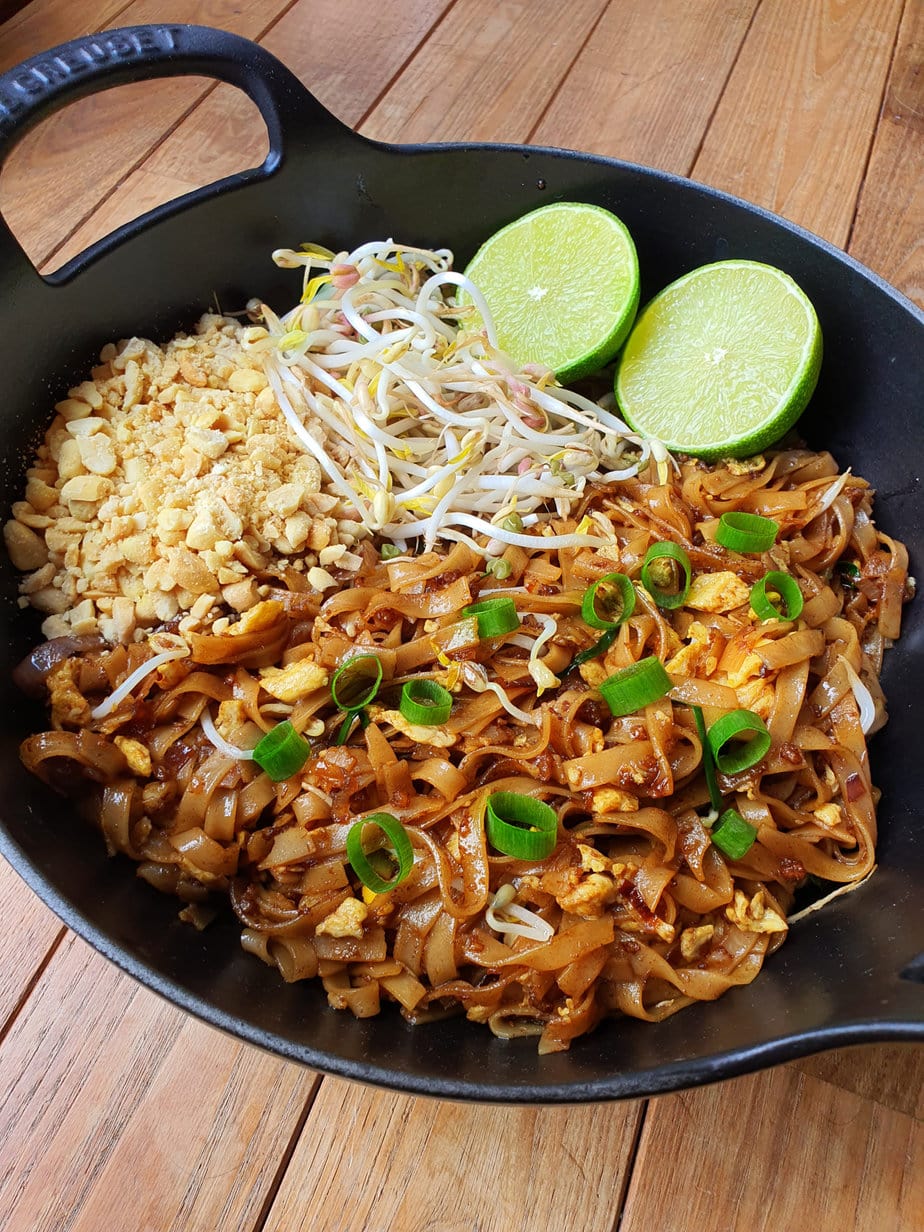
Equipment
- 1 Wok
Ingredients
Pad Thai Sauce
- 6 tablespoons brown sugar
- 4 tablespoons fish sauce
- 40 g tamarind pulp softened; if using tamarind concentrate, use twice the amount (in ml)
- 120 ml boiling water for the tamarind pulp
- 2 tablespoons dark soy sauce ideally, use Thai "black" soy sauce from the brand "Healthy Boy"
Other
- 75 ml water
- 250 g rice noodles dry weight; pre-cooked according to the instructions in the recipe
- 1 pinch salt to taste
- 1 teaspoon white pepper
- 25 g dried shrimp ground to a powder
- 4 garlic cloves sliced
- 2 shallots thinly sliced
- 3 large eggs beaten
- 1 handful bean sprouts
- 1 handful Thai chives cut into 1 cm slices
- 4 tablespoons peanuts roughly chopped
- 2 limes, for serving
Instructions
Sauce
- If using tamarind pulp, mix it with the boiling water. If using concentrate, skip to step 4.120 ml boiling water, 40 g tamarind pulp
- Break up the pulp and mix well, removing any seeds as needed.
- Strain the mixture through cheesecloth.
- Prepare the sauce by mixing all the ingredients thoroughly in a bowl.6 tablespoons brown sugar, 4 tablespoons fish sauce, 40 g tamarind pulp, 2 tablespoons dark soy sauce
Cooking the Noodles
- Submerge the noodles in hot water (not boiling, just hot) and soak for 5–10 min.250 g rice noodles
- The noodles should be pliable but not fully soft. It may seem counterintuitive, but you’ll see. Drain and set aside.
Stir-Fry
- Blend the dried shrimp (or mince very finely) to a powder.25 g dried shrimp
- Heat a saucepan or wok over medium-high with a thin layer of oil. Let it get very hot.
- Add the powdered dried shrimp and stir constantly for 2 minutes.25 g dried shrimp
- Add the shallots and stir-fry for 2–3 minutes.2 shallots
- Add the garlic and stir-fry for 2–3 minutes.4 garlic cloves
- Increase to high heat, add the noodles and sauce, and toss well.250 g rice noodles
- Add the water, mix well, and let it almost completely evaporate. A tip I learned from a chef in Thailand—it gives the noodles the perfect final texture.75 ml water
- Reduce heat to medium-high, push the noodles to one side, and add the eggs to the other. Cook for 30 seconds to 1 minute, then scramble. Fold into the noodles.3 large eggs
- Add the chives, white pepper, and bean sprouts; toss for 1–2 min.1 teaspoon white pepper, 1 handful bean sprouts, 1 handful Thai chives, 1 pinch salt
- Serve with chopped peanuts and limes.4 tablespoons peanuts, 2 limes, for serving
Notes
- Submerge the noodles in hot water (not boiling, just hot) and soak for 5–10 min. They should be pliable but not fully soft—it may seem counterintuitive, but you’ll see. Drain and set aside.
- The second stage happens in the pan, as the recipe describes. Because the noodles are only partially cooked, they finish cooking in the sauce and oil, which gives them a unique texture that’s truly inimitable.


Ce Pad Thai m’a ramené aux soirées où ma tante sortait son vieux wok et la cuisine se remplissait d’odeurs de tamarin et d’ail pendant qu’on attendait près de la table. La technique des nouilles en deux temps, c’est exactement le petit secret qu’elle répétait toujours pour garder cette texture parfaite, et ça m’a fait sourire 😊
So flavorful and truly authentic, nailed it!
So authentic and easy, noodles turned out perfect!
Wasn’t expecting my picky partner to go back for seconds, but the tangy tamarind and that chewy noodle texture totally won them over 😄