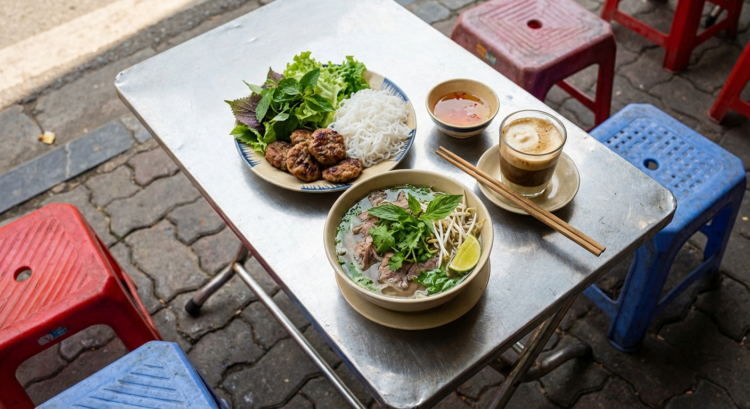
Why Hanoi May Be the World’s Best Street-Food City
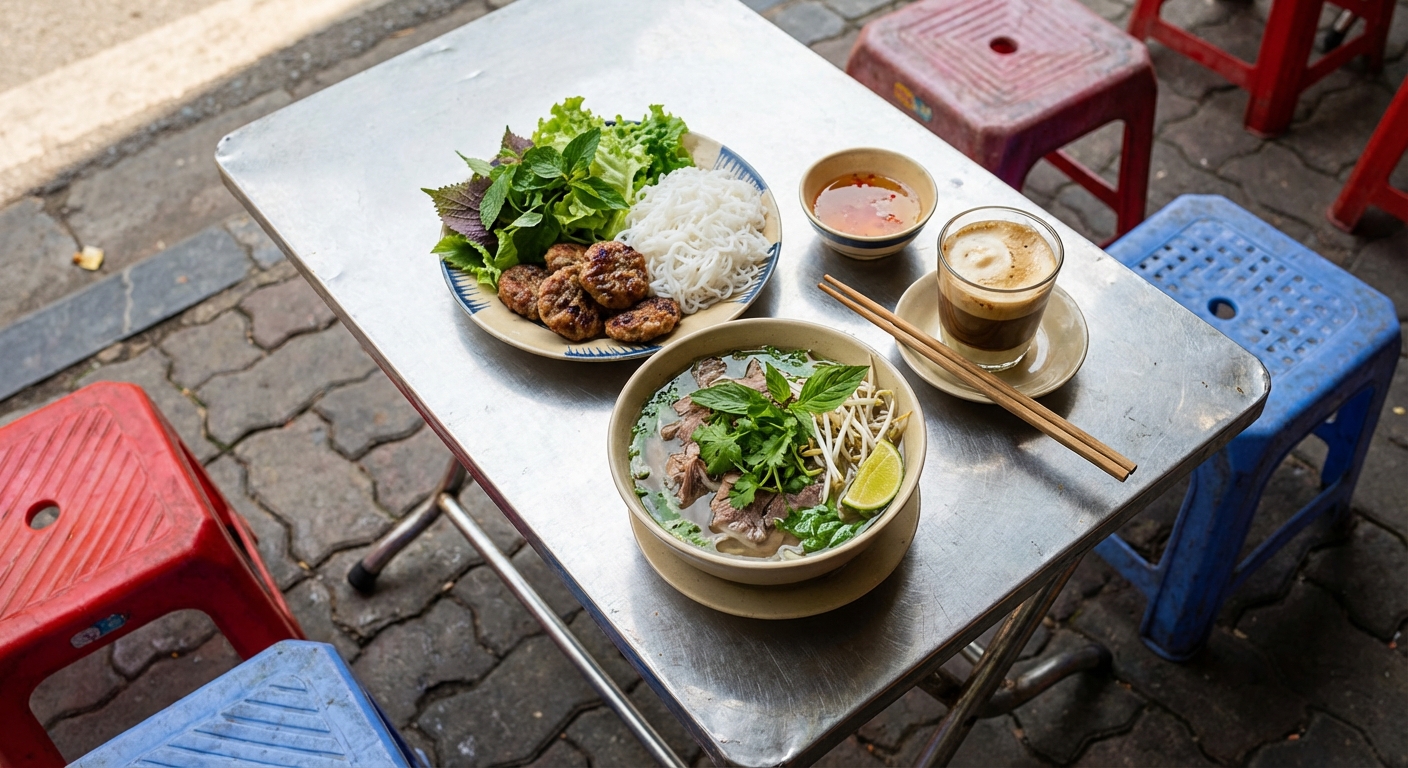
Hanoi runs on soup. By 5:30 a.m. charcoal fires already heat enormous stockpots hidden down the Old Quarter’s alleyways. Elderly women balance bamboo poles loaded with bowls, herbs, and noodles on their shoulders, staking out a patch of sidewalk. Office workers squat on blue plastic stools barely six inches off the ground, noisily slurping phở before the workday begins. By six o’clock the whole city smells of star anise, beef bone broth, and grilled pork fat. It happens every day without fail.
What sets Hanoi apart from other Southeast Asian food capitals is its obsessive specialization. Here, a shop cooks just one thing—nothing else. The phở restaurant on Bát Đàn Street has served only phở since before your parents were born. The bún chả stall on Hàng Quạt grills pork patties over charcoal in a narrow alley and does absolutely nothing else. That single-minded focus produces flavours no chain or multi-page menu can match, and a bowl of phở from one of these specialists costs about 50,000 VND (€1.90), less than a baguette in most French bakeries.
This guide covers every dish you need to taste, the exact restaurants and street stalls that serve them, and how to plan your days around the table. If you’re planning a trip to Hanoi, building a food itinerary is the single most important thing you can do before you arrive.
Phở: the dish that defines the city
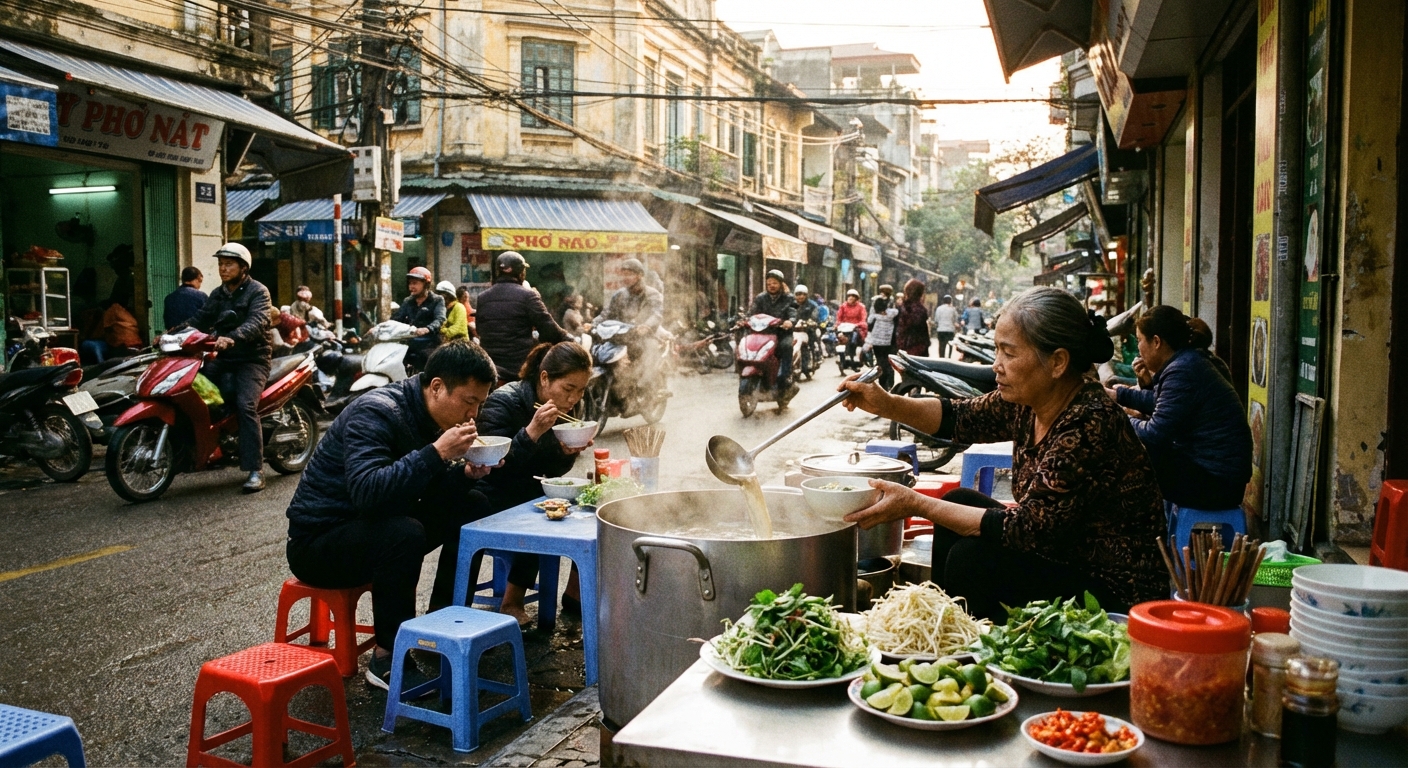
Phở in Hanoi is different from what most Westerners have tasted. The broth is clear, light, and highly aromatic rather than heavy and sweet. Northern phở relies on the purity of bone stock and a precise balance of star anise, cinnamon, and cardamom—an austerity closer to a classic French consommé than to an ordinary Asian soup. The bowl arrives relatively plain: rice noodles, slices of beef or chicken, a few sprigs of chives. You season it yourself from the tray of condiments on the table.
Phở Gia Truyền (49 Bát Đàn Street)
The unanimous pick for the best traditional beef phở in Hanoi—and it has been for years. The system is no-nonsense: queue up, pay first, carry your bowl to a table, and eat on tiny stools in a room without air-conditioning. The broth is the benchmark: clear, clean, and unmistakably “beefy,” the kind of stock that comes only from bones simmering since 3 a.m. A bowl costs 50,000–60,000 VND (€1.90–2.30).
Expect a line between 7 and 8 a.m. Right next door a separate stall serves phở xào (stir-fried phở noodles with beef) that’s worth a detour while you’re there. Tip: order “tái chín” (a mix of rare and well-done beef) for the best range of textures in one bowl.
Phở Thìn (13 Lò Đúc Street)
Phở Thìn takes the opposite approach. Instead of a delicate, restrained broth, the cooks stir-fry the beef with garlic before adding it to the soup, producing what regulars describe as a “flavour bomb.” The surface shimmers with garlic oil. Scallions are piled on with abandon. It’s fatty, punchy, and polarizing: some travellers call it the best phở they’ve ever eaten, others find it oily and overpowering.
Long-time visitors report that quality has become uneven in recent years with the influx of tourists. A bowl costs 70,000–90,000 VND (€2.70–3.40). Caution: there’s another place called “Phở Thìn Bờ Hồ” near Hoàn Kiếm Lake that serves traditional phở. They are not the same. Make sure you go to 13 Lò Đúc if you want the garlic-fried version.
Phở 10 Lý Quốc Sư
Near St Joseph’s Cathedral, Phở 10 is the safe, comfortable choice: glass storefront, air-conditioning, higher hygiene standards. The phở is good and consistent, perfect for first-time visitors. Downsides: a crowd of mostly foreign tourists, queues up to 45 minutes, and less authenticity than the sidewalk stalls. A bowl costs 70,000–90,000 VND. Order tái nạm (rare beef and brisket).
Where Hanoians really eat
Phở Sướng in Trung Yên Alley offers a lighter, gentler broth in a tucked-away laneway. Phở Khôi Hơi at 50 Hàng Vai serves a bowl with brisket and marrow, prized by expats. Phở Vui on Hàng Giầy Street is an Old Quarter classic locals simply call “very Hanoi.” These places charge 40,000–50,000 VND. For chicken phở, Phở Gà Mai Anh is often praised as better than any beef version.
For phở cuốn (phở noodle rolls stuffed with beef and herbs—a delicate, fresh spring roll), head to Trúc Bạch, where Phở Cuốn Hương Mai and Phở Cuốn Hưng Bến sit side by side in a quiet lakeside neighbourhood.
Bún chả: the real signature dish of Hanoi
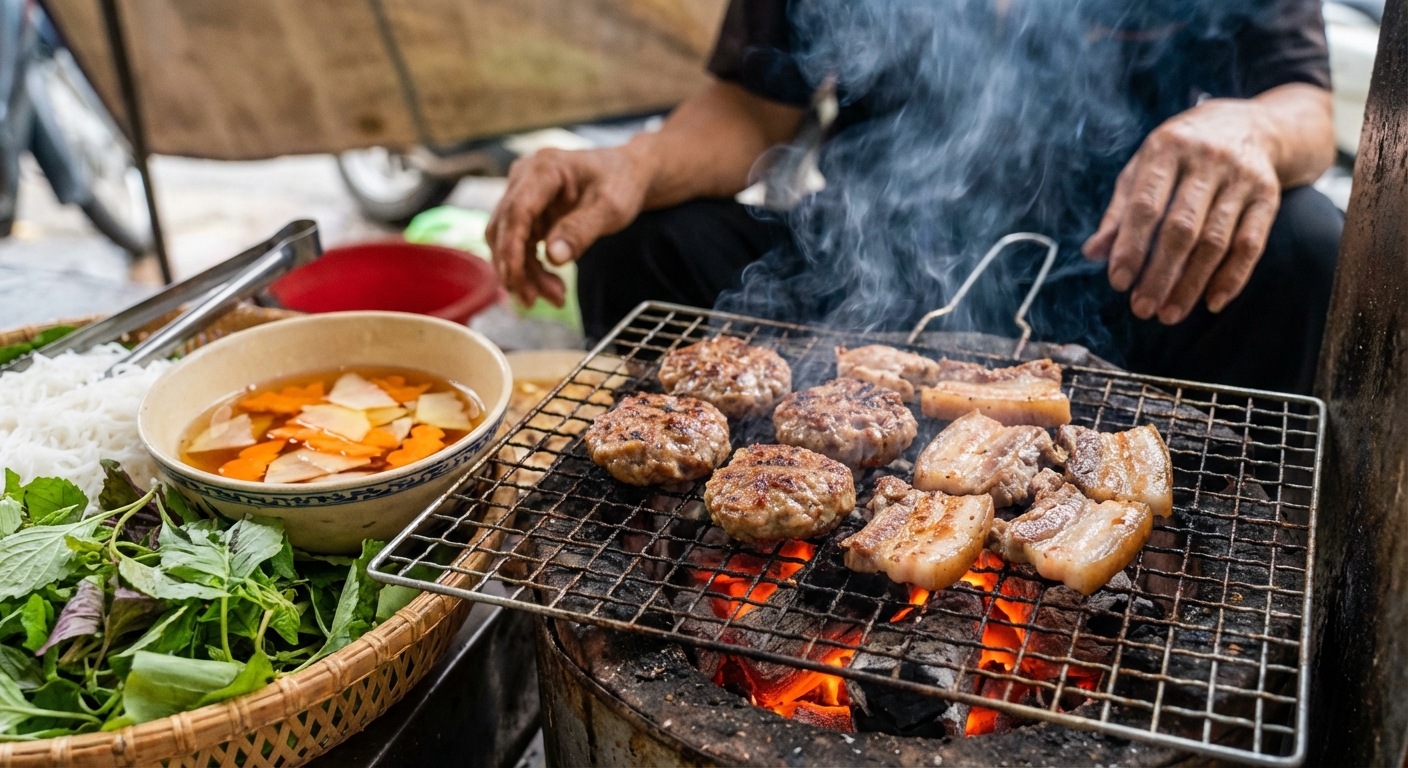
If Hanoi has one signature dish, it’s bún chả. Fatty pork patties and slices of pork belly are grilled over charcoal until charred at the edges, then served in a bowl of sweet-sour broth with cold rice vermicelli, a mountain of fresh herbs, and a plate of nem (fried spring rolls—the famous nem you know from Asian caterers in France, but here in their original form). Smoked meat, fresh noodles, bright herbs, and tangy broth combine into something unique in Vietnamese cooking. It’s a lunchtime dish; most bún chả places open around 11 a.m. and close at 2 p.m.
The Obama question
In 2016 Anthony Bourdain and President Obama sat on plastic stools at Bún Chả Hương Liên (24 Lê Văn Hưu Street) and ate bún chả on camera. The restaurant now sells an “Obama Combo” (bún chả, fried seafood roll, and Hanoi beer) and has sealed the table where they sat behind glass, turning the spot into a pilgrimage site.
The honest verdict from travellers: the food is decent but not the best in town. The broth is sweeter than traditional versions, service is brisk, and the smoky charcoal flavour that defines great bún chả is weaker than at the street stalls. It is, however, indoors with more controlled hygiene, making it a reasonable choice if street-food cleanliness worries you. Go for the story; skip it if you want the very best bún chả in Hanoi.
Where to really eat bún chả
Bún Chả 74 Hàng Quạt in the Old Quarter is the spot most consistently recommended on travel forums. It’s tucked in a narrow alley, the pork is grilled over charcoal right in front of you, and the broth has the honest smokiness missing from the Obama restaurant. Portions are generous and prices fair.
Bún Chả 34 Hàng Than, a bit farther from the centre, is described as “noticeably better and cheaper.” Here the pork is wrapped in betel leaf (lá lốt) before grilling, adding a peppery, herbal note—a method you’ll never find in France. Bún Chả 38 Mai Hắc Đế serves caramelised, deeply smoked pork. For a reliable chain with indoor seating where locals actually have lunch, Bún Chả Sinh Từ offers multiple branches and consistent quality. Remember: great bún chả needs charcoal smoke. Always look for stalls where you can see the grill and smell the smoke from the street.
Beyond phở and bún chả: dishes most tourists miss
Chả cá (fish with turmeric and dill)
Chả cá is so important in Hanoi that an entire Old Quarter street is named after it. Chunks of catfish are marinated in turmeric and galangal, then pan-fried at your table with mountains of fresh dill and scallions. You eat it with rice noodles, peanuts, shrimp paste, and herbs. The table-top cooking is reminiscent of fondue or raclette: convivial, hands-on, and every bite tastes a little different.
Chả Cá Lã Vọng on the eponymous street is the original—crowded and pricey but full of atmosphere. Chả Cá Thăng Long serves the same dish with better seating and lower prices. Plan on 80,000–120,000 VND (€3–4.60) per person at local places.
Bún riêu (crab noodle soup)
A tomato-based broth with crab paste, tofu, and rice vermicelli. The colour is orange-red, the flavour tart and briny thanks to the crab—an umami reminiscent of crustacean bisque, Asian-style. Try it at 11 Hàng Bạc in the Old Quarter. It’s specific to northern Vietnam and often overlooked because visitors fixate on phở. Order it for breakfast or lunch.
Bánh cuốn (steamed rice rolls)
Ultra-thin steamed rice sheets rolled around minced pork and wood-ear mushrooms, topped with fried shallots and served with chả lụa (Vietnamese ham) and dipping sauce. The texture is silky and delicate, a welcome change from heavier noodle soups. Bánh Cuốn Chị Su on Hoàng Ngọc Phách Street is well-known and conveniently located opposite Bún Chả Đắc Kim—you can try both without walking thirty metres.
Bún thang and miến lươn
Bún thang is a clear chicken broth with shredded chicken, omelette ribbons, and sliced Vietnamese ham over rice vermicelli. More refined than phở, it’s considered a festive dish in traditional Hanoian families—a bit like a lighter Sunday pot-au-feu. You’ll find it on Đinh Tiên Hoàng Street. Few tourists order it, which adds to the charm.
Miến lươn (eel glass noodles) at 87 Hàng Điếu Street earned a Michelin Bib Gourmand while remaining a full street-food experience: plastic stools, no English menu, local prices. Glass noodles come with crispy fried eel, either in broth or dry. The eel is crunchy outside and melting inside—a dish you’d never order unless someone tipped you off, after which you’ll wonder why no one told you sooner.
Nộm bò khô (dried beef salad)
Shredded dried beef mixed with green papaya, herbs, fried shallots, and peanuts in a lime dressing. Long Vi Dung on Đinh Tiên Hoàng Street is the address. It works as a snack between meals or with a bia hơi—a bit like apéro crudités, but far more fragrant.
Bánh mì in Hanoi: an honest opinion
Hanoi is not Vietnam’s best bánh mì city; that title belongs to Hội An or Ho Chi Minh City. Focus on noodles here and save your bánh mì ambitions for the south.
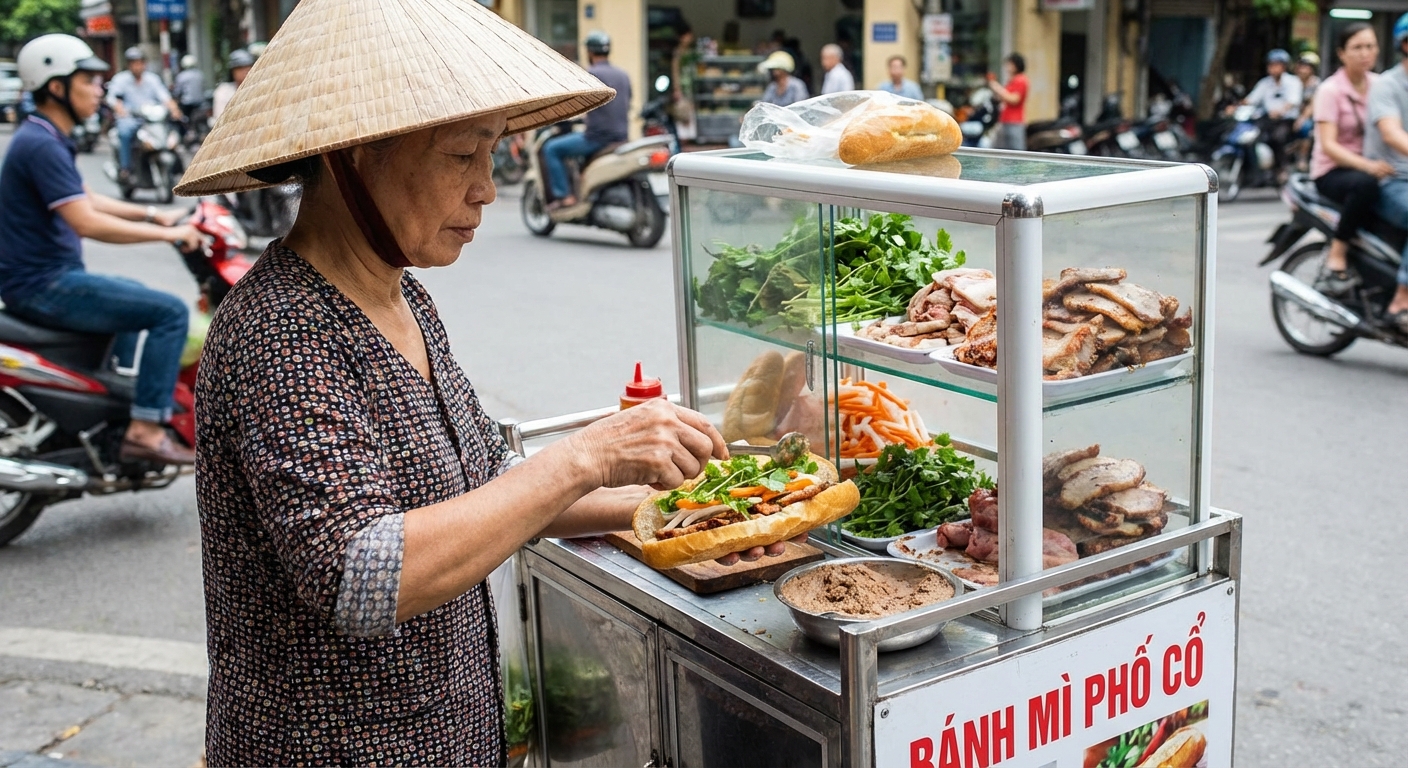
If you insist, Bánh Mì 25 is clean and reliable. Bánh Mì Trâm is famous for bánh mì sốt vang, a baguette filled with red-wine beef stew—a legacy of French colonial cooking, essentially boeuf bourguignon in sandwich form. What defines Hanoi bánh mì is the pâté: look for places where a hefty block of pâté sits on the counter. The delicious irony is that the baguette itself is a colonial import; the Vietnamese adopted it, lightened it, and made it their own. Prices run 15,000–25,000 VND (€0.60–1).
Cà phê trứng and Hanoi’s café culture
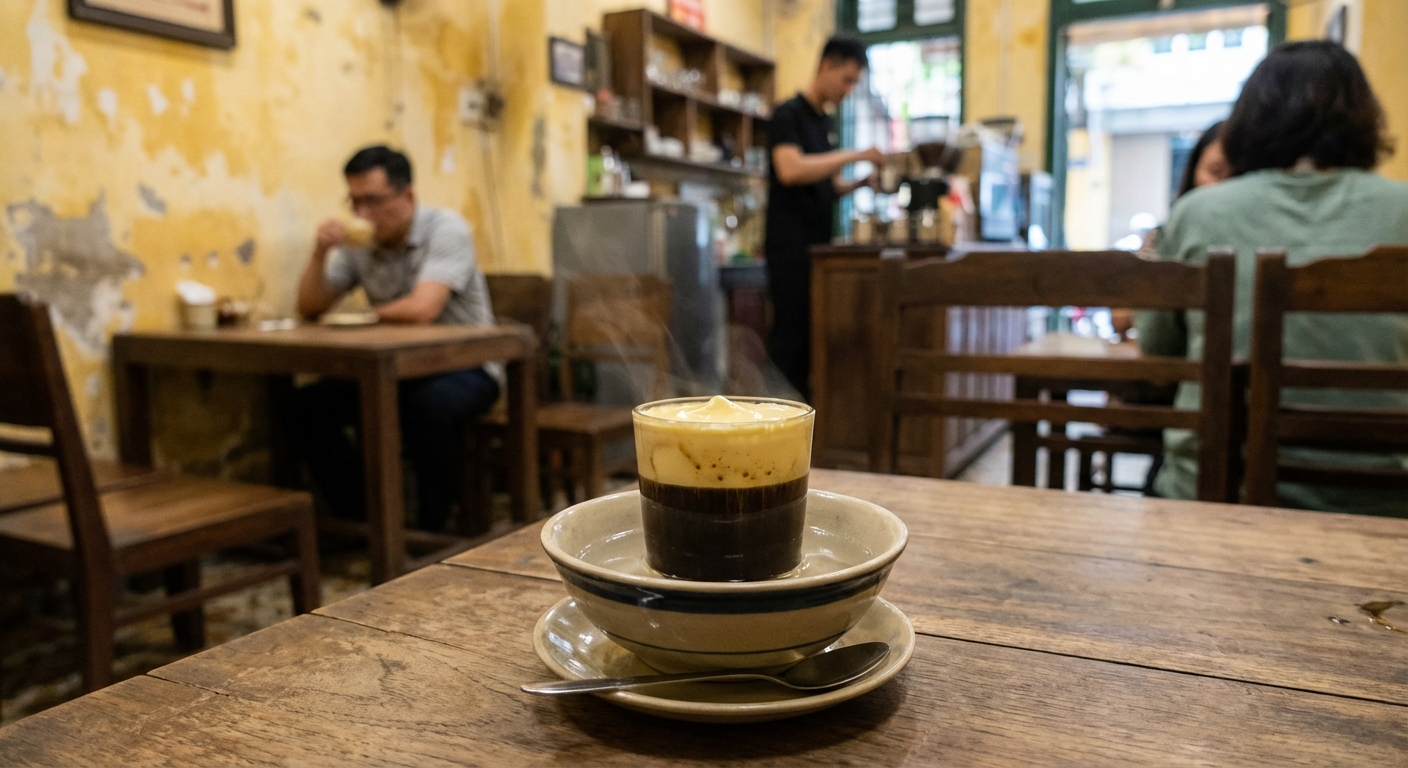
Cà phê trứng (egg coffee) was invented in Hanoi in the 1940s when fresh milk was scarce. A barista at the Sofitel Métropole whisked egg yolk with sweetened condensed milk and Vietnamese coffee, creating something that tastes like liquid tiramisu atop a strong black espresso. For a French palate used to creams and sabayons, it’s an instant revelation.
The three cafés you need to know
Café Giảng (39 Nguyễn Hữu Huân Street) is the original. The current owner’s father invented the drink. Expect tiny stools, knees touching those of dozens of tourists, and rushed service. Go for the history, not the ambience.
Café Đinh (13 Đinh Tiên Hoàng Street), run by the same family, overlooks Hoàn Kiếm Lake. It’s cheaper, less crowded, and serves the same recipe in a space where you can actually relax—travellers who do both almost always prefer Café Đinh. Loading T Café wins nearly every taste test: they add a hint of cinnamon to their egg coffee, and the café occupies a peaceful colonial villa with airy rooms and plants—a world apart from Giảng’s hustle.
Other coffee drinks to try
Cà phê sữa đá (iced coffee with condensed milk) is most Vietnamese people’s daily caffeine fix. A metal phin lets coffee drip slowly onto ice and sweetened condensed milk, producing a brew that’s both intensely strong and very sweet. Yogurt coffee (cà phê sữa chua) is another Hanoian specialty; Cà Phê Duy Trí at 8 Yên Phụ is the place for it.
Coconut coffee, topped with sweet coconut cream, is another variation worth tasting. Blackbird Coffee is a modern “third-wave” option for those who want less sugar and higher-quality beans. Café Lâm is a historic spot with excellent coffee and far fewer crowds than the Giảng/Đinh circuit. Egg coffee costs 25,000–35,000 VND (€1–1.35) in local cafés, 35,000–50,000 VND in famous addresses.
Bia hơi corners and Hanoi’s drinking culture
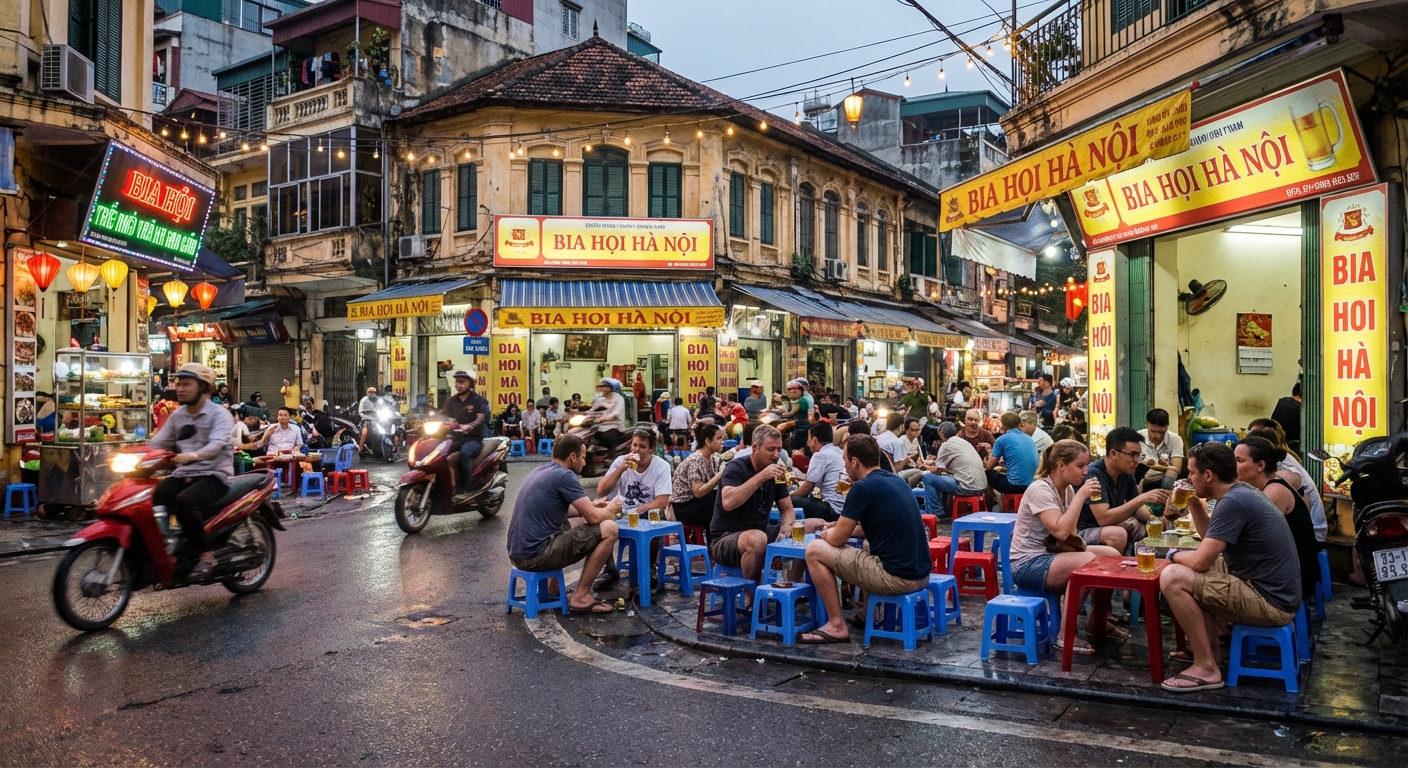
Bia hơi is fresh draft beer brewed each morning and delivered in large silver kegs to sidewalk bars all over the city. Alcohol content is around 3–4%, price 10,000–15,000 VND a glass (€0.40–0.60)—less than a bottle of water in some Paris cafés. Sipping bia hơi on tiny plastic stools while motorbikes weave around you is one of the quintessential Hanoi experiences.
Tạ Hiện Street (“Beer Street”) is the famous backpacker strip. Walk through once to see the spectacle, stay for one drink, then move on. Prices are inflated (30,000–50,000 VND for what should cost 10,000–15,000), some vendors pass off bottled beer as draft, and the food is expensive and mediocre. Do not eat on Tạ Hiện.
For real bia hơi, head to Bia Hơi Phố Cổ at 37 Đường Thành: local crowd, honest prices, no tourist circus.
Bát Đàn Street has quieter bia hơi corners you can combine with nearby phở. Bia Hơi Hải Xồm is a chain of lively beer halls with a Biergarten energy: big communal tables, fast service, and a mostly Vietnamese clientele. The rule for finding real bia hơi is simple: look for the big silver kegs outside. If you see kegs, the beer is fresh; if not, you’re probably drinking bottled beer poured into a glass. Late afternoon (4–5 p.m.) is best: the kegs are freshest and the crowd hasn’t fully formed.
Trà đá (iced tea) is the other ubiquitous drink—free or nearly free at most street-food stalls. It’s lightly brewed green tea served over ice, the palate cleanser between bites—the Vietnamese equivalent of the glass of water that comes with your espresso at the bar.
Street-food alleys and the Old Quarter food crawl
The Old Quarter (Hoàn Kiếm District) packs more food per square metre than almost anywhere in Asia. Each street was historically devoted to a single trade, an arrangement we detail in our Hanoi heritage guide. For eating, the essential streets are: Bát Đàn for phở (Phở Gia Truyền at number 49, go between 6 and 8 a.m.); Hàng Quạt for the alley bún chả at number 74; Hàng Bạc for bún riêu at number 11; Hàng Điếu for miến lươn at number 87.
Hàng Ngang for chicken vermicelli at number 50 (opens 6 p.m.). Lý Quốc Sư, just past the cathedral, for Phở 10 and other English-menu restaurants.
The best way to eat through the Old Quarter is to wander these streets between meals, stopping whenever you spot a crowd of locals on plastic stools eating something you can’t identify. Point at the dish, hold up one finger, sit down, and eat. This method has an almost perfect success rate—the finest food discoveries in Hanoi are often unplanned.
Đồng Xuân Market and late-night food
Đồng Xuân is mainly a wholesale market, but the surrounding streets feed its vendors with food that’s cheaper and more local than anywhere else in the Old Quarter. Early morning is the prime window.
The Old Quarter night market runs Friday to Sunday evenings on Hàng Đào Street. Look for grilled meats on skewers, bánh tráng nướng (“Vietnamese pizza”: grilled rice paper with egg, scallion, and dried shrimp), and sweet chè desserts. Streets around Hàng Buồm stay lively well past midnight with late-night phở and noodle stalls.
Sit-down restaurants and gastronomy
Most of Hanoi’s best food comes from street stalls specialising in a single dish, but several sit-down restaurants merit a detour. Bún Chả Đắc Kim on Hoàng Ngọc Phách Street is touristy and pricier but reliable and comfortable. Across the street, Bánh Cuốn Chị Su serves steamed rice rolls, so you can try both without walking thirty metres.
Cầu Gỗ overlooks Hoàn Kiếm Lake and serves well-executed Vietnamese classics in an upscale setting—ideal for travellers who want a gentle introduction to local cuisine before graduating to street stalls. The lake view alone justifies a dinner reservation.
Pizza 4P’s, the Japanese-Vietnamese fusion chain, appears in nearly every traveller recommendation as the place to go when you need a break from noodles. The pizzas are wood-fired with house-made mozzarella, and more than one traveller has called it among the best they’ve had anywhere. It’s not Vietnamese, but after five days of noodle soup you may crave a margherita—and there’s no shame in that.
For fine dining that fuses Vietnamese recipes with French technique—a logical pairing given Hanoi’s colonial history—the Sofitel Legend Métropole has hosted La Beaulieu for French cuisine and Spices Garden for Vietnamese since 1901.
The Métropole has survived wars and revolutions; eating here is as much about the building as the food. Main courses start around 500,000–800,000 VND (€19–31)—still far below what you’d pay for a starred table in Paris. Sunday brunch is a local institution.
French influence in Hanoi goes far beyond fine dining. The baguette in your bánh mì exists because of colonialism. Pâté, café culture, the habit of lingering over a single coffee—these traditions date back to French Indochina, and the Vietnamese have transformed them into something wholly their own.
Small pastry shops selling croissants and pains au chocolat dot the streets around the Opera House. They’re not export-quality French bakeries, but their very presence—unchanged for more than a century—is part of what makes Hanoi so different from Bangkok, Bali, or Phuket. For French travellers, eating in Hanoi feels both familiar and exotic—a fun-house mirror of our own culinary traditions.
Cooking classes and food tours
A cooking class or food tour is one of the best things to do in Hanoi. Most classes begin with a guided market visit where you learn to identify Vietnamese herbs, sauces, and produce. Then you cook four or five dishes yourself—usually phở, spring rolls, and a salad. The market visit alone will improve your restaurant choices for the rest of the trip.
Rose Kitchen is the top-rated class: well organised, English-speaking instructors, market tour included. Ella Hanoi combines a walking food tour with a cooking class so you eat at several street stalls and then recreate what you just tasted. Travellers call Ella “hilarious, informative, and authentic,” praise that keeps pouring in year after year.
Apron Up is a solid budget option. Classes cost 600,000–1,200,000 VND (€23–46) depending on the school and group size.
For a guided food tour without the cooking, the Ella Hanoi Food Tour covers six to eight dishes across the Old Quarter with a guide who handles all the Vietnamese ordering. Hanoi Kids is a volunteer student organisation where university students guide you for free while you cover the food. Both options work well on your first or second day, giving you the confidence to eat on your own later.
How to eat well on a small budget
Hanoi is one of the cheapest cities on earth for quality food. A realistic daily budget is 300,000–400,000 VND (€11.50–15.50) for three full meals plus snacks—about what you’d pay for a single sandwich and coffee near Gare du Nord in Paris. For a detailed budget and currency tips, see our practical tips guide.
Morning phở: 40,000–50,000 VND. Bún chả lunch: 40,000–60,000 VND. Bánh mì snack: 15,000–25,000 VND. Afternoon bia hơi: 10,000–15,000 VND a glass. Dinner rice or noodle dish: 40,000–60,000 VND. Egg coffee between meals: 25,000–35,000 VND. Total: well under 300,000 VND for a full day of excellent food.
The price gap between tourist spots and local stalls is consistent in every category. A bowl of phở at Phở Gia Truyền: 50,000–60,000 VND. The same at Phở 10 Lý Quốc Sư: 70,000–90,000 VND. The cheaper bowl is widely considered better. Places with English menus, air-conditioning, and glass doors are almost always more expensive—and less tasty—than stalls with plastic stools and no signboard.
Follow the crowds of Vietnamese office workers at lunchtime and you’ll find the best value every time.
The biggest budget trap is Tạ Hiện Street and the restaurants around Hoàn Kiếm Lake that target tourists. A beer on Tạ Hiện can cost three to four times what it costs two streets away. Walk five minutes in any direction from the main tourist axis and prices drop.
The best addresses by neighbourhood
Where you choose to stay in Hanoi determines what you can eat on foot. The Old Quarter (Hoàn Kiếm) puts you near the highest concentration of stalls: Phở Gia Truyền, Bún Chả 74 Hàng Quạt, Bún Riêu on Hàng Bạc, Miến Lươn on Hàng Điếu, egg-coffee cafés, and bia hơi corners. It’s the most convenient base for a food-focused trip, though also the noisiest.
Trúc Bạch (Ba Đình District) near West Lake is the place for phở cuốn and a quieter dining experience. Hai Bà Trưng and Đống Đa Districts are where Hanoians actually live and eat: Phở Thìn on Lò Đúc, the Obama bún chả on Lê Văn Hưu, Bún Chả 38 Mai Hắc Đế. Eating here shows you the real city, away from the tourist energy of the Old Quarter.
Vegetarian options and dietary needs
Vietnamese cuisine leans heavily on fish sauce (nước mắm), shrimp paste, and meat-based broths, making vegetarian eating trickier than it looks. The word to remember is “chay,” meaning vegetarian in the Buddhist tradition. Restaurants with “Cơm Chay” in their name serve plant-based food—often with convincing mock-meat dishes made from tofu and mushrooms—for 30,000–50,000 VND per set.
They’re busiest on the 1st and 15th of the lunar month. Most noodle dishes use rice noodles, naturally gluten-free. Condiment sauces may contain wheat. Having your dietary restrictions written in Vietnamese on your phone is practical, as most street-food vendors won’t understand English explanations.
Food-safety tips
The best indicator of food safety is the crowd. A stall packed with local customers at noon means fresh ingredients and rapid turnover; an empty stall signals the opposite. Restaurants specialising in a single dish tend to be safer than those with long menus because they cook one thing all day in fresh batches.
There’s a saying among long-term visitors: “If the chairs are high, the food is average. If you’re squatting on a tiny blue plastic stool, the food will be amazing.” Places with plastic stools survive on their reputation and regulars, meaning quality and safety have been vetted by thousands of Hanoians before you.
If your stomach needs a gentle introduction, start with indoor restaurants like Phở 10 Lý Quốc Sư or Bún Chả Hương Liên (the Obama restaurant) for the first few days. These offer cleaner environments and more controlled handling. Then move to street stalls once your system adjusts. Avoiding street food entirely means missing the heart of Hanoi’s culinary culture, but easing in over a few days is sensible.
Tap water is not potable. Use bottled water, including for brushing your teeth if you’re cautious. More health and hygiene details are in our practical tips guide. Ice at established restaurants and cafés is factory-made from purified water and generally safe.
The free iced tea (trà đá) at street stalls also uses industrial ice in most cases. Avoid any Old Quarter restaurant advertising a 100-item menu with “Vietnamese & Western Food.” They’re tourist traps with mediocre versions of everything. The best food in Hanoi comes from places that do one thing, all day long.
A suggested day of eating
6:30 a.m.: phở at Phở Gia Truyền on Bát Đàn. 10 a.m.: egg coffee upstairs at Café Đinh overlooking Hoàn Kiếm Lake. 11:30 a.m.: bún chả at 74 Hàng Quạt with nem on the side. 2 p.m.: phở cuốn in the Trúc Bạch neighbourhood. 4:30 p.m.: bia hơi on Bát Đàn, 10,000 VND a glass. 6:30 p.m.: dinner of Chả Cá Thăng Long or bún riêu at 11 Hàng Bạc.
All six experiences cost about 250,000 VND (€9.60). You will have eaten some of Southeast Asia’s best food for less than the price of a single main course in a Paris brasserie. For more trip-planning advice, see the complete Hanoi guide.