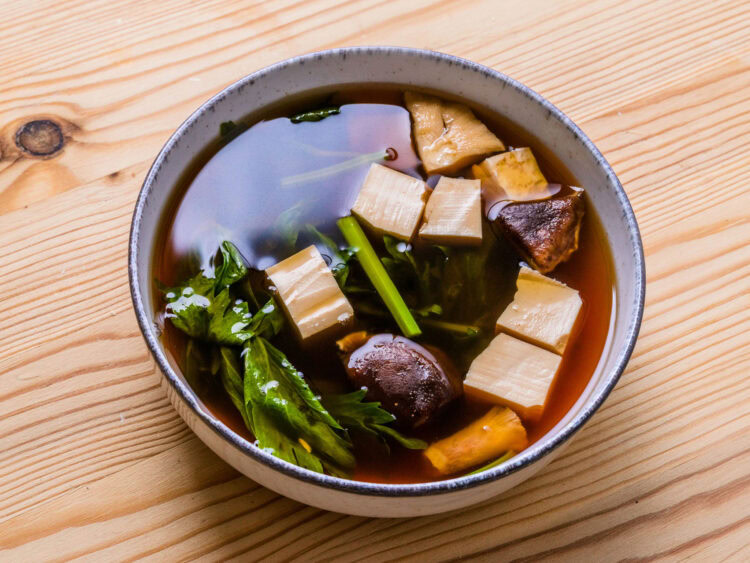
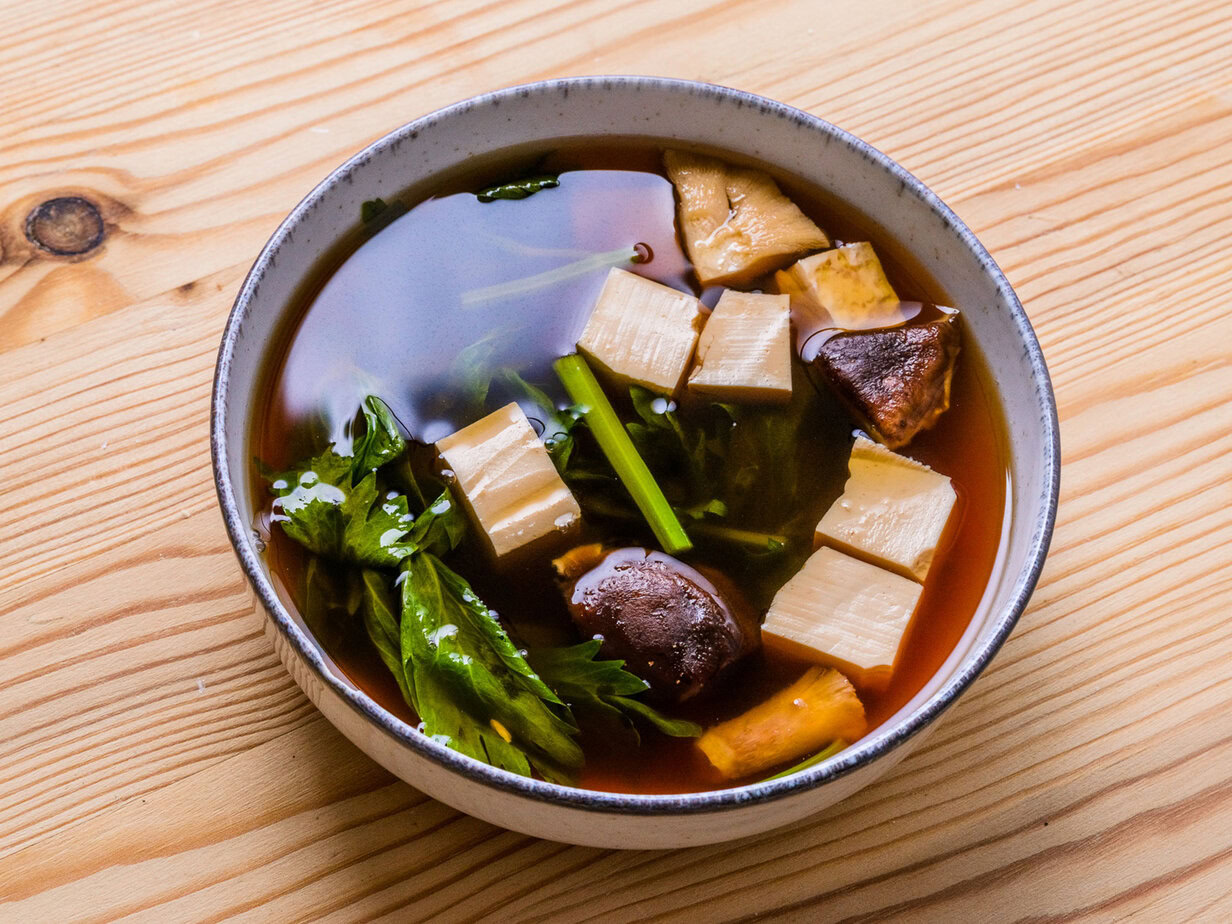
A clear Japanese autumn soup, a crystal-clear dashi infused with matsutake.
Steam rises from a covered lacquered bowl, carrying all of autumn: pine needles, warm spices, damp earth. Beneath the lid, the broth stays perfectly clear, barely touched with gold.
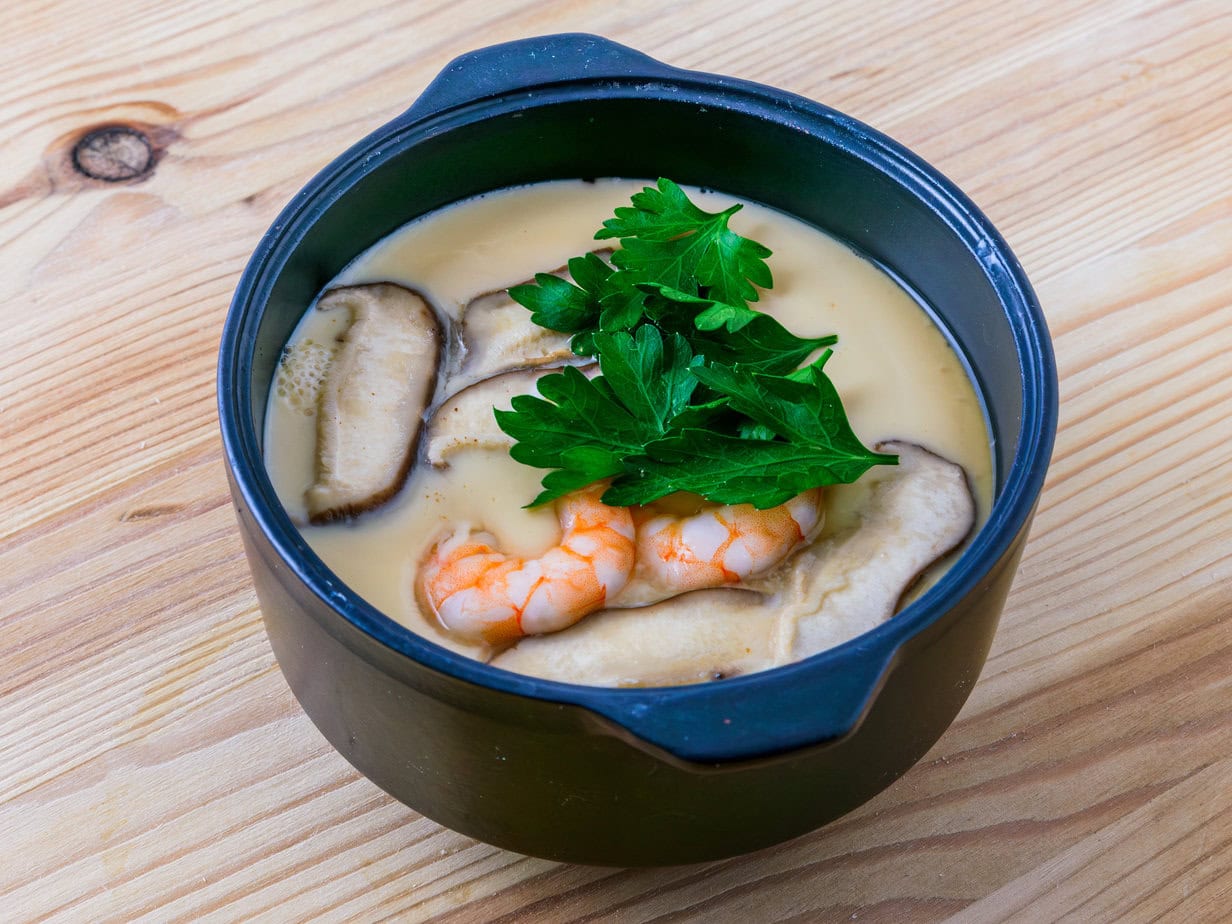
A single mushroom is enough to scent the whole soup. Lift the lid and its aroma rises all at once, even before the first sip. The whole bowl rests on that fleeting fragrance, to be caught at just the right moment.
What is suimono ?
Suimono belongs to washoku, the core tradition of Japanese cuisine. It is a clear soup meant to refresh the palate, a counterpoint to richer shiru and miso soups.
Its name says it all: suimono means “something to sip.” The base is ichiban dashi, the first extraction of kombu and katsuobushi. Kombu releases glutamate, while bonito flakes contribute inosinate: together, they amplify umami far beyond what either would provide alone.
The seasoning stays minimal: usukuchi shoyu for salinity without darkening the broth, a little fine salt, Japanese sake for depth, and a touch of mirin to round it out.
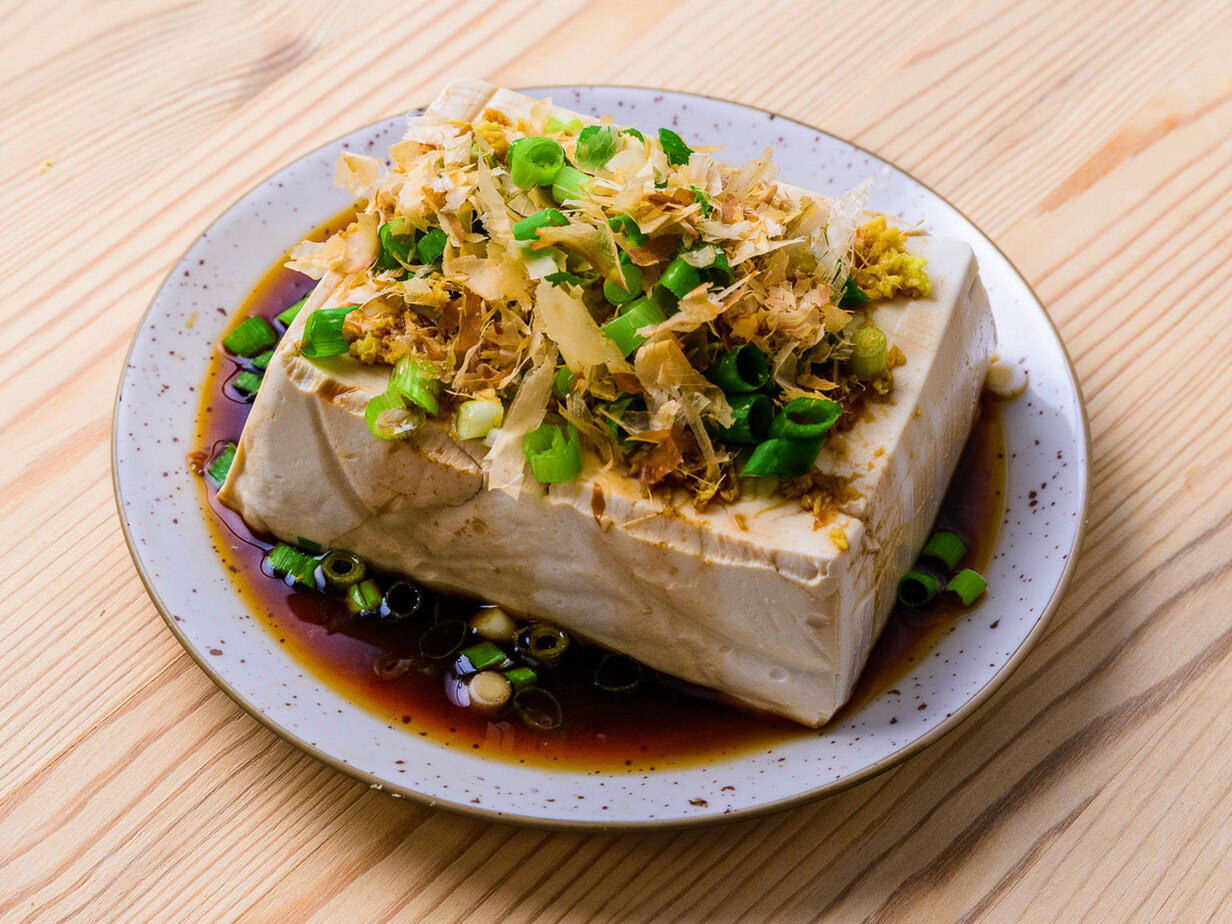
Dark soy sauce is avoided: it would muddy the broth. Matsutake cooks for just two to three minutes at the barest simmer, so it keeps its fragrance. To finish, mitsuba adds a fresh green note, while yuzu or sudachi zest brings a hint of citrus.
A thousand years of autumn prestige
In Japan, matsutake has held a place of autumn prestige for more than a thousand years. Its fragrance already appears in the 8th-century Man’yōshū, where mountain mushrooms herald the season. Rare and difficult to harvest, it quickly became associated with aristocratic tables, made all the more precious by its fleeting scent.
By the Edo period, the broth served with it already followed a set of rules. The Ryōri Amime Chōmishō, published in 1730, distinguished suimono from heartier shiru and emphasized a clear, balanced bowl built on dashi.
In kaiseki, this clear soup accompanies sake and lets shun shine through: the moment when a seasonal ingredient is at its best. Stories tell of matsutake carried in palanquins to preserve their bouquet, or coveted by Toyotomi Hideyoshi. They all repeat the same lesson: fragrance comes first; everything else falls away.
The main ingredients in matsutake suimono
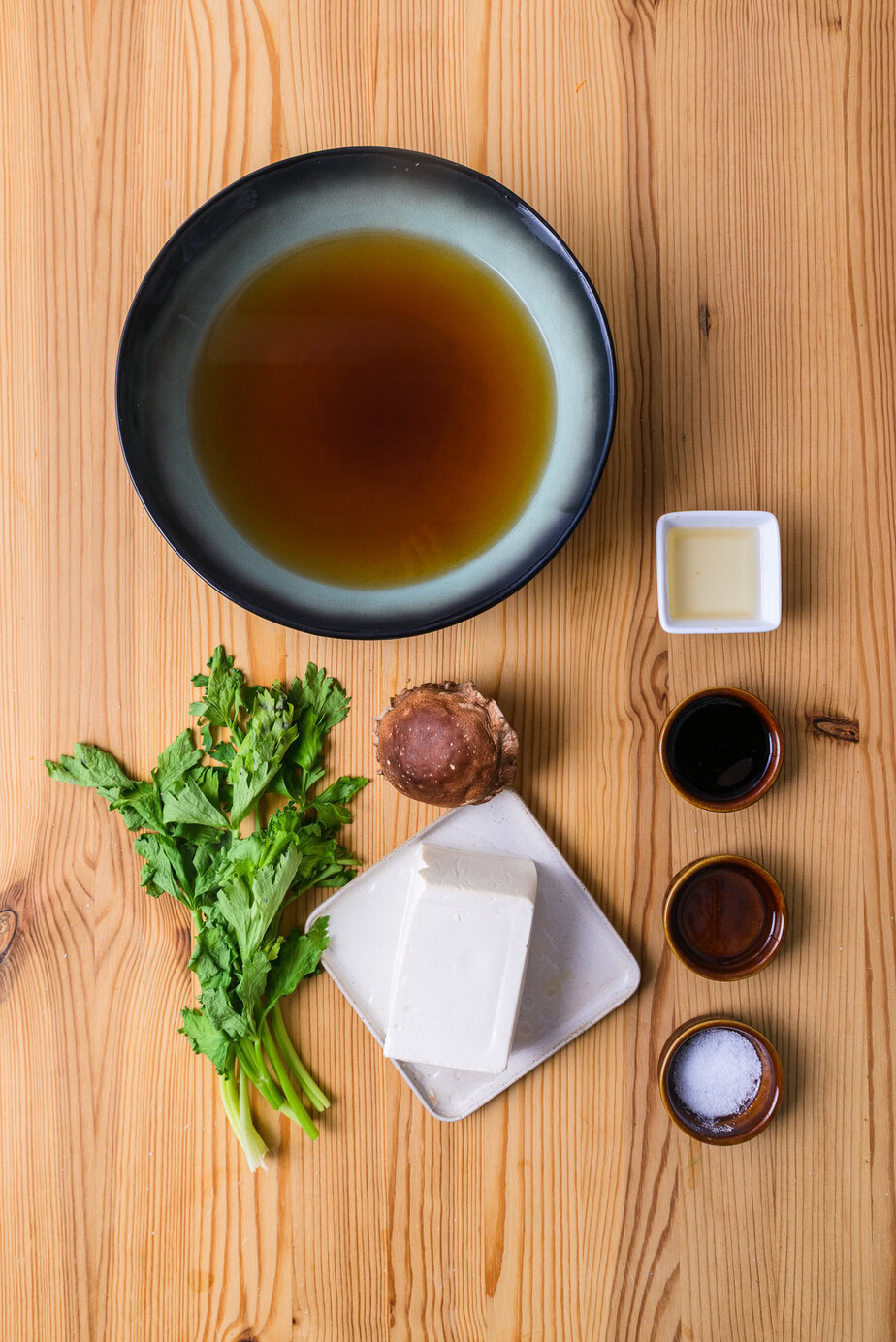
Everything begins with dashi. Low-mineral water helps the kombu and bonito release clean flavors without clouding the broth. Kombu, a dried seaweed, brings glutamate and depth. Katsuobushi, dried bonito flakes, adds inosinate, which boosts umami while keeping the broth light.
Matsutake is the star. Choose one with a nearly closed cap, a sign of freshness and fragrance: that is what brings notes of pine, cinnamon, and forest floor.
The seasoning supports it without masking it: usukuchi shoyu for salinity and precision, fine sea salt to adjust, sake for depth, and mirin for discreet sweetness and a little sheen.
The final garnishes do the rest. Mitsuba brings an herbal freshness, somewhere between celery and parsley, while a thin strip of yuzu or sudachi zest adds a citrus accent that should never be overdone.
If you like, add silken tofu for softness, kamaboko for a subtle seafood note, or temari fu, which adds color and texture as it absorbs the broth. Finally, be mindful of provenance: wild mushrooms are easy to misidentify, so matsutake should come from certified suppliers or be identified by a mycologist, never casually foraged.
Ingredients
Instructions
Preparation
- Trim the tough base of the matsutake stem to a point, then wipe the mushroom clean with a well-wrung damp cloth (do not rinse it under running water).1 small matsutake
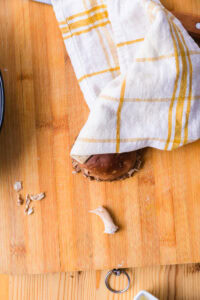
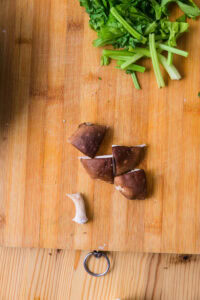
- Separate the stem from the cap, thinly slice the stem, and cut the cap into quarters.
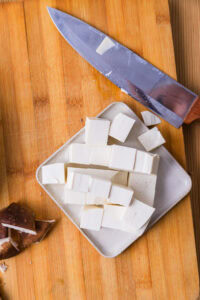
- Cut the tofu into small cubes.0.5 small block tofu
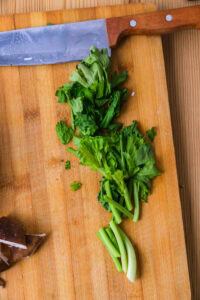
- Remove the mitsuba roots and cut it into 2 cm lengths.0.25 bunch mitsuba
Cooking
- Bring the dashi to a boil in a saucepan over high heat.400 ml dashi
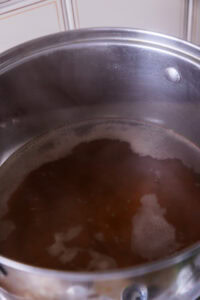
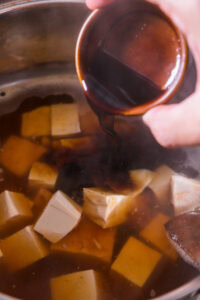
- Lower the heat to medium and add the tofu, matsutake, sake, mirin, salt, and soy sauce.1.5 tablespoons sake, 1.5 teaspoons mirin, 0.5 teaspoon salt, 1.5 teaspoons soy sauce
- Simmer for about 2 minutes, just long enough to heat the tofu through and gently perfume the broth.
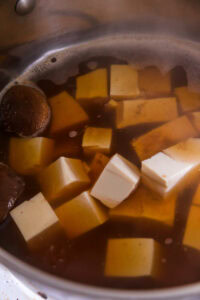
- Add the mitsuba, turn off the heat, divide among bowls, and serve right away.