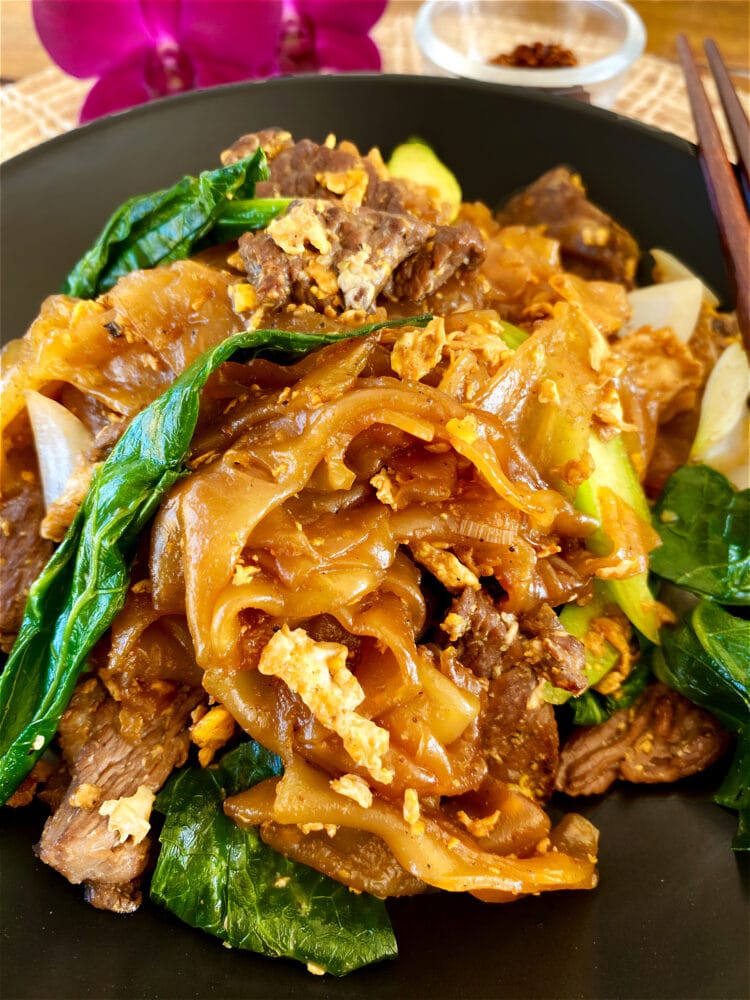
Learn how to make pad see ew, a delicious stir-fry of wide rice noodles with beef, Chinese broccoli, and a rich, savory sauce
Pad see ew (ผัดซีอิ๊ว), one of the most iconic dishes in Thai street food, stands out for its irresistible combination of extra-wide rice noodles, tender beef, and crisp vegetables such as Chinese broccoli, all coated in dark soy sauce. In Thailand, some say it’s even more popular than Pad Thai.
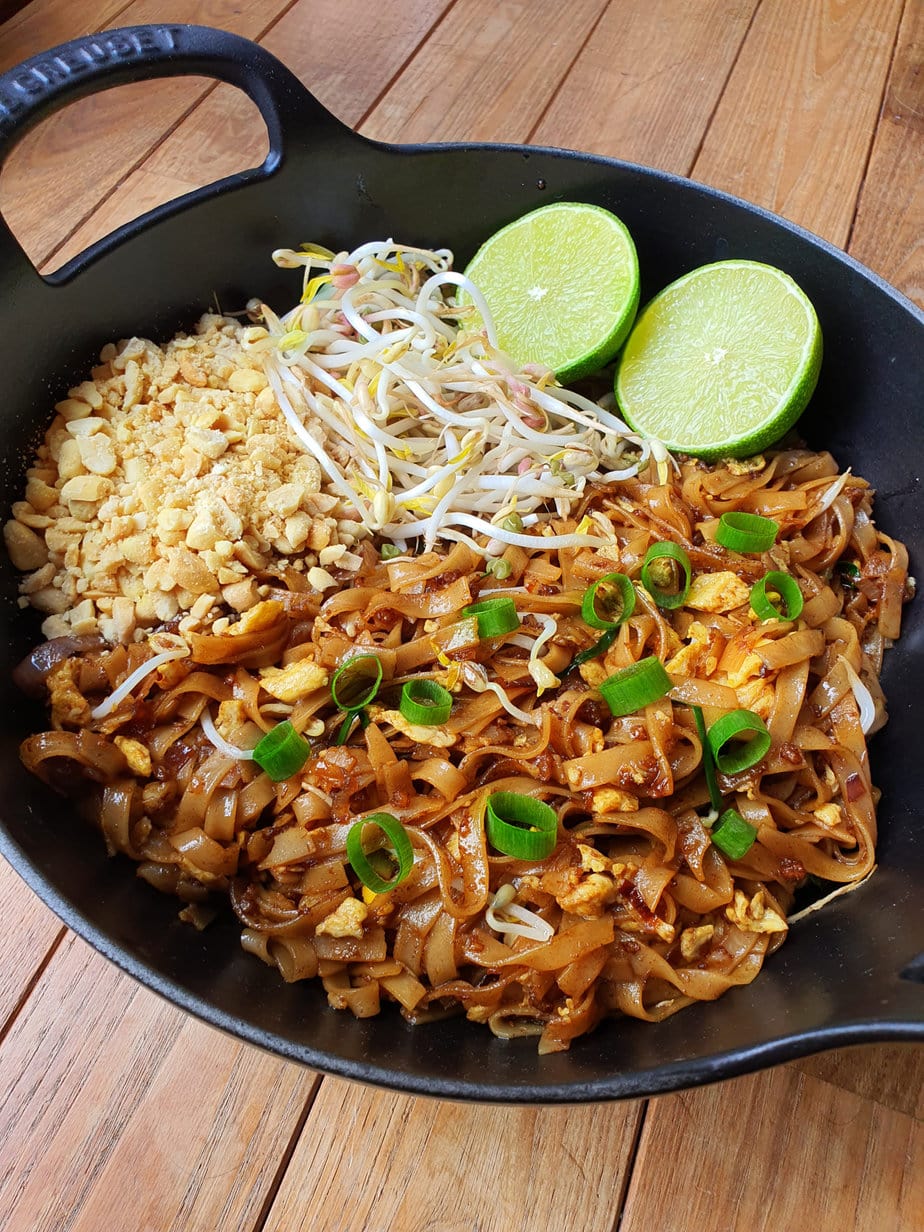
Pad See Ew: where Thai and Chinese cuisines meet
This recipe shines with its balance of sweet, salty, and umami flavors, making it both quick and deeply satisfying. More than just a Thai classic, pad see ew is a delicious meeting point between cuisines, blending beloved Thai flavors with Chinese culinary traditions.
In fact, pad see ew shares a lot in common with chow fun, a classic Chinese noodle dish that is absolutely delicious if you haven’t tried it yet.
What kind of noodles should you use for Pad See Ew?
What makes these Thai stir-fried noodles so special is the type of noodle used – sen yai or ho fun – a variety of rice noodle often sold fresh or frozen, and above all wonderfully wide. You can make them at home or find them fresh or frozen at an Asian grocery store.
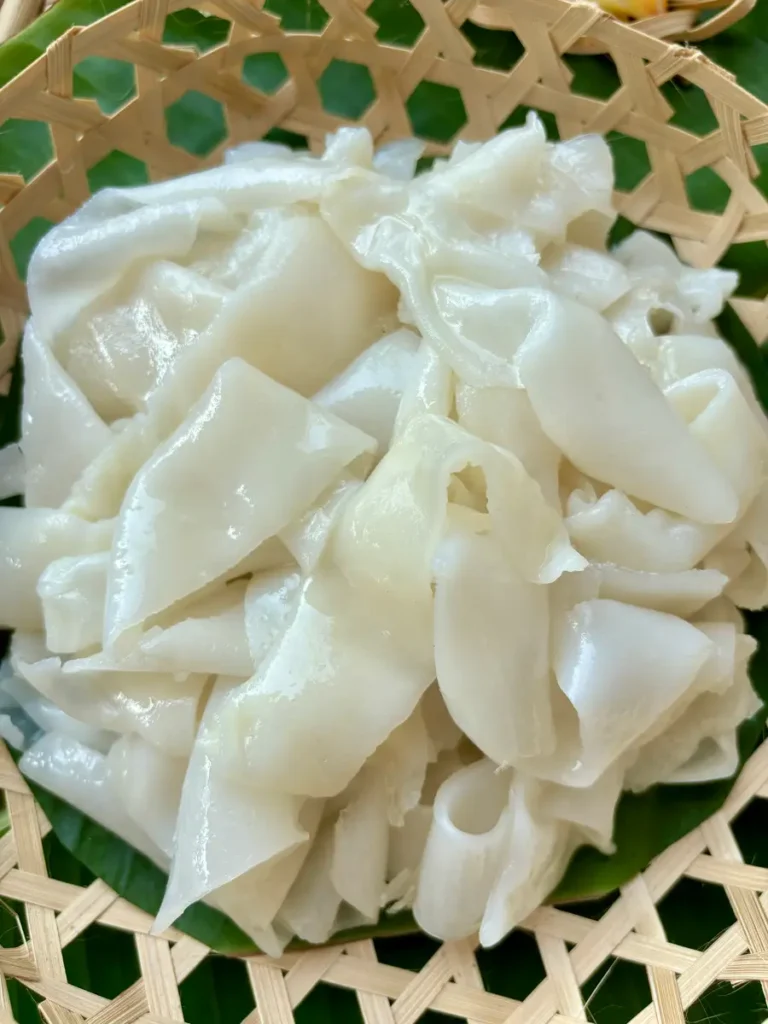
They’re so wide, in fact, that they can be lightly charred, which enhances both their flavor and texture. Their width and remarkable texture also allow them to soak up the sauce beautifully. In Thailand, this was my favorite dish.
A quick anecdote: one morning, we had to leave very, very early for an excursion, and in those cases you can ask the hotel to prepare a takeaway breakfast. The day before, you simply tick your choices on a menu for the next morning. I was thrilled to find pad see ew on it. The other members of the excursion looked at me strangely over their frozen croissants as they watched me happily dig into this dish at 7:00 a.m.
What cut of meat should you use?
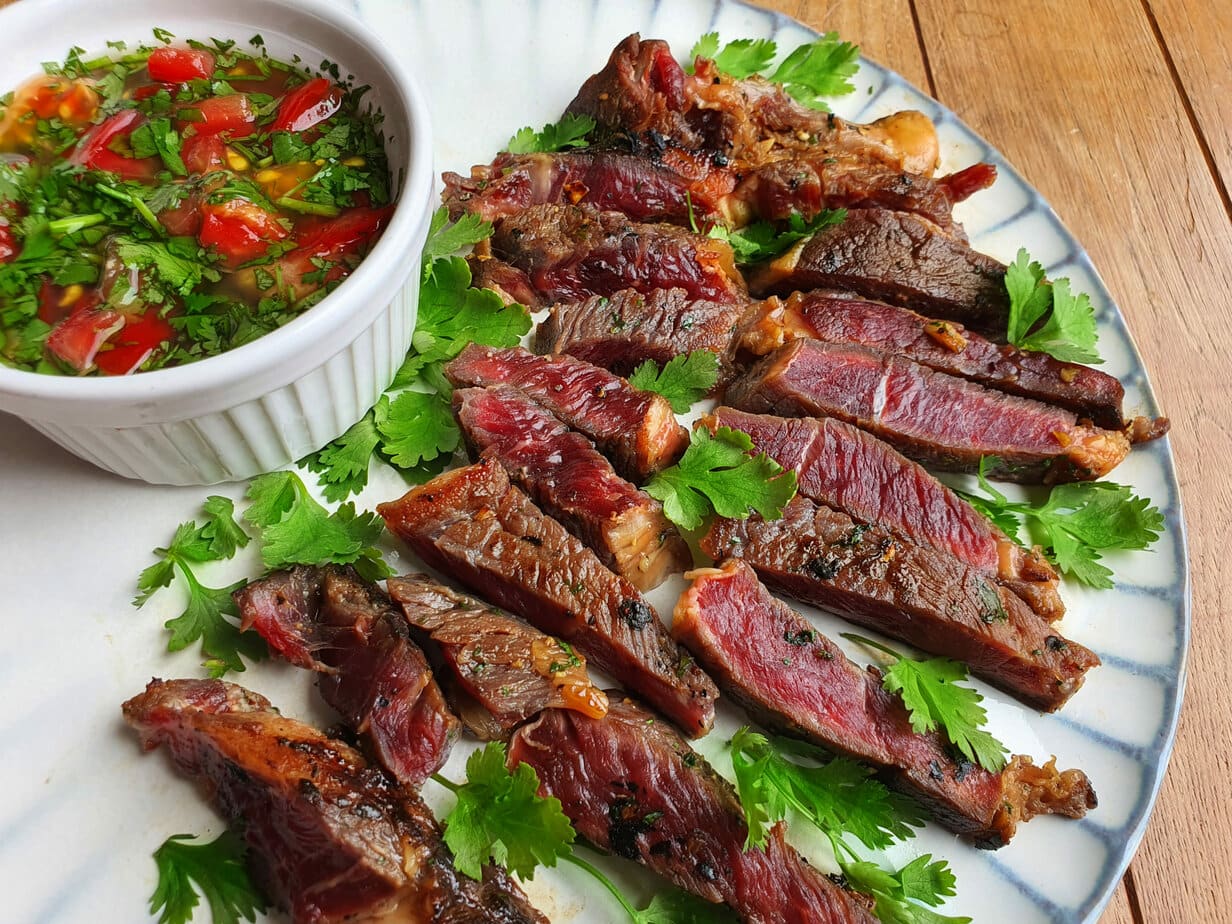
Although I prefer this stir-fry with tender slices of juicy beef, Thai cuisine is known for its versatility. This recipe easily adapts to your favorite protein, whether that’s chicken, pork, shrimp, or other seafood, and the result is always delicious.
In Thailand, especially in rural areas, choosing specific cuts of meat isn’t all that common. Instead, people head to the local butcher, who proudly displays large cuts of meat and bones.
You tell him what you need — for example, meat for stir-frying, for noodle soup, or for Thai-style dried beef — and he gives you a suitable cut. Otherwise, use the baking soda method to tenderize the meat, and almost any cut will work.
Tips for making great Beef Pad See Ew
Bring the fresh rice noodles to room temperature. This helps keep them from sticking together and ensures even cooking in the wok, so each strand gets beautifully coated in sauce.
Feel free to add other vegetables, such as bean sprouts, bell peppers, and mushrooms. Although kai lan is the traditional choice, you should adjust the flavors and ingredients to suit your taste. For example, bok choy or Chinese cabbage.
Keep the stir-fry quick to avoid overcooking, which can make the noodles mushy and the beef tough.
Cook over high heat and make sure to use a large wok or skillet. Having all the ingredients prepped and within reach is crucial, because stir-frying moves fast.
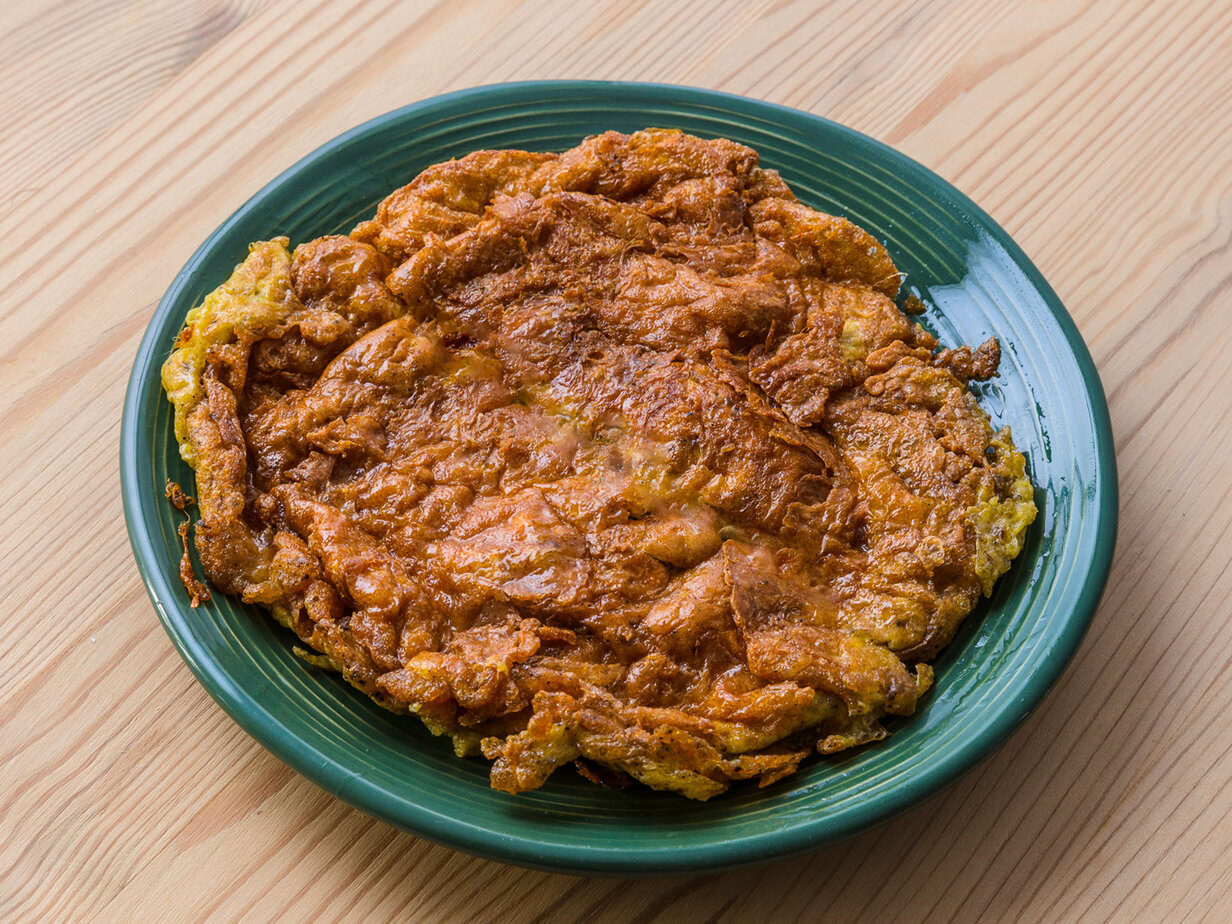
The key ingredients in Pad See Ew
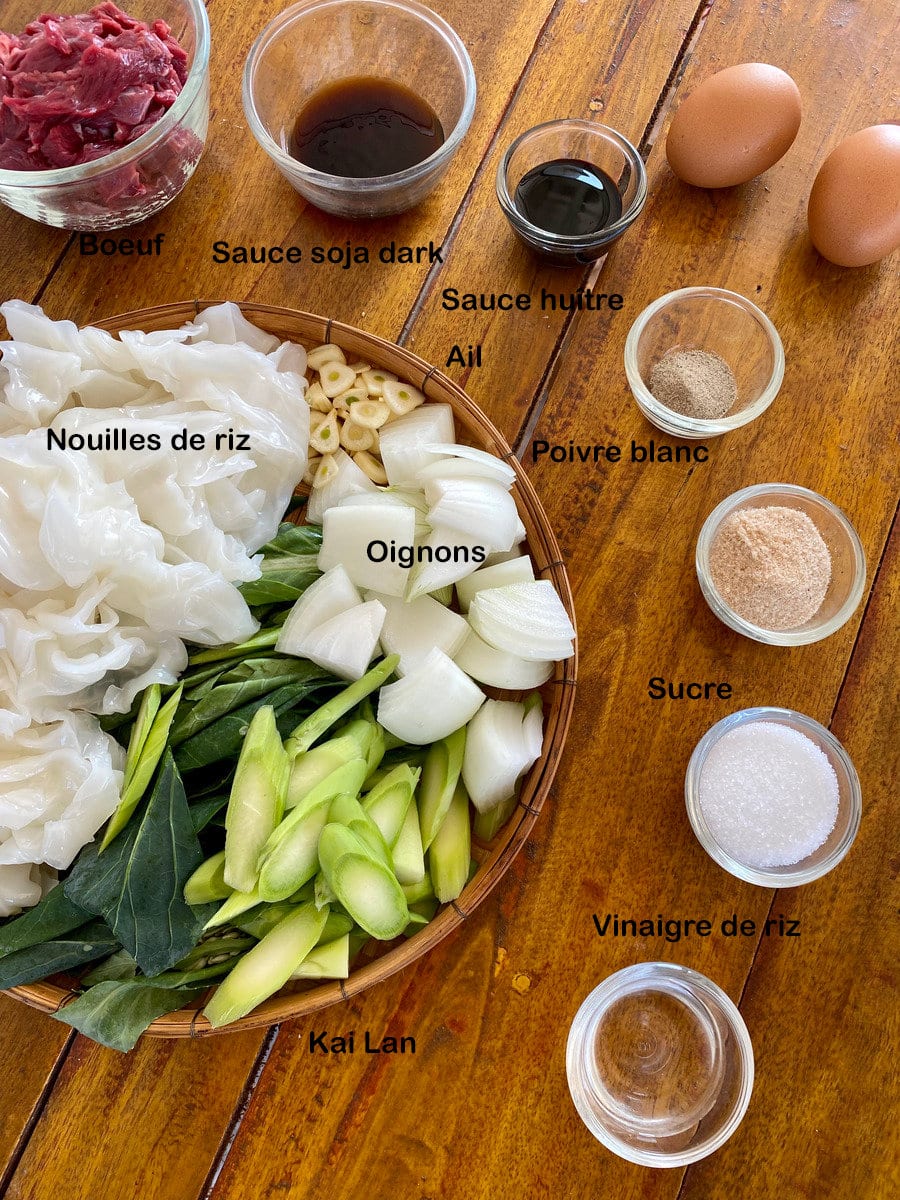
Fresh wide rice noodles: The foundation of the dish, they add texture and substance. You can substitute other noodles, but these give pad see ew its distinctive character.
Dark soy sauce: Adds deep color and rich umami flavor.
Chinese broccoli: Adds crunch, color, and essential nutrients.
Light soy sauce: Saltier and thinner than dark soy sauce, it balances the flavors.
Oyster sauce: Adds distinctive umami depth and a hint of sweetness.
Rice vinegar: Adds a touch of acidity to balance the sweet and savory flavors.
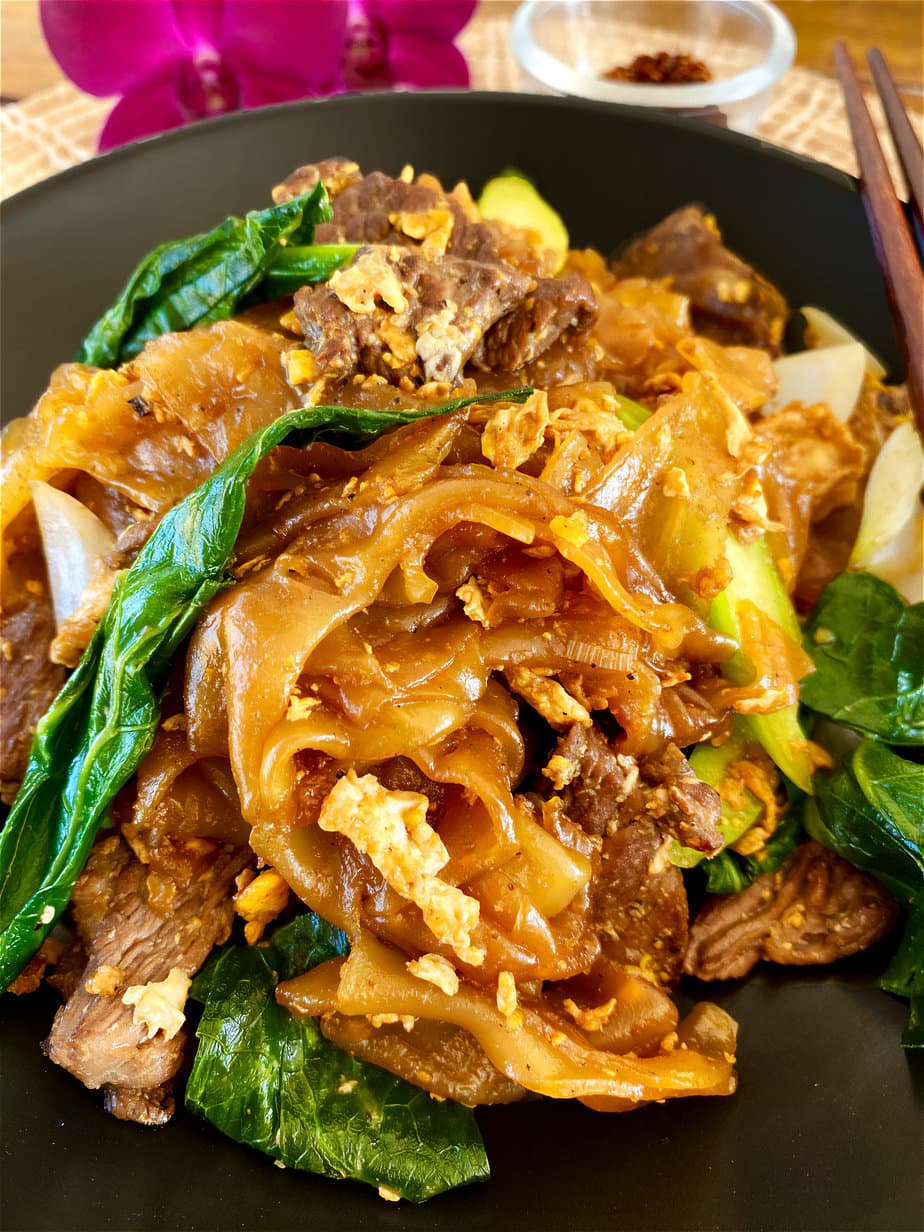
Equipment
Ingredients
- 500 grams of fresh wide rice noodles or about 300-340 grams of dried rice noodles
- 200 grams of beef thinly sliced against the grain
- 1 tablespoon of dark soy sauce
- 1 tablespoon of oil
- 3 cloves of garlic minced
- 200 grams of Chinese broccoli peel and slice the stems; roughly chop the leaves
- 1 onion diced
- 2 eggs
Sauce
- 1 tablespoon of light soy sauce
- 2.5 tablespoons of oyster sauce
- 2 tablespoons of sugar
- 1 teaspoon of white pepper
- 2 tablespoons of rice vinegar
Instructions
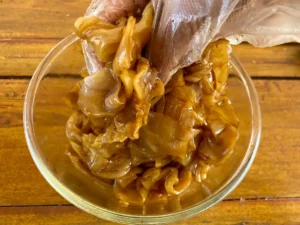
- In a bowl, gently toss the fresh rice noodles with the dark soy sauce. Use a plastic glove to mix them carefully without breaking the noodles.
- Heat a wok over high heat.
- Add the oil and stir-fry the garlic until golden.
- Add the beef and stir-fry until about halfway cooked.
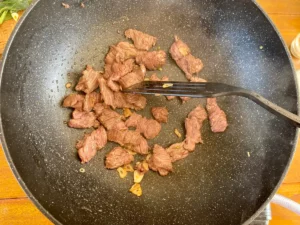
- Push everything to one side of the wok and crack the eggs into the empty side.
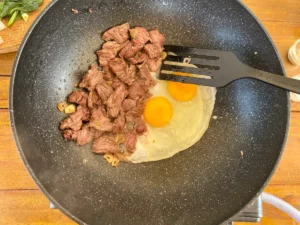
- Gently scramble the eggs, then mix them in with the beef.
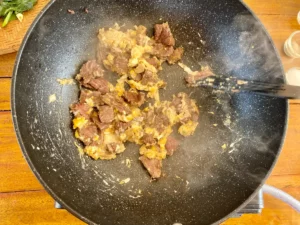
- Add the sauce ingredients and the noodles. Toss until all the noodles are evenly coated.
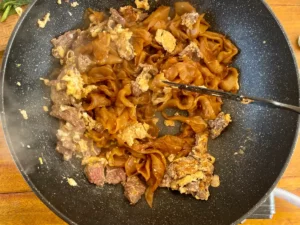
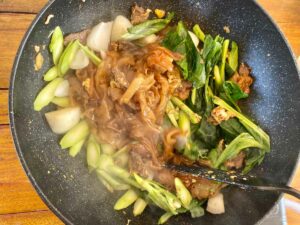
- Add the Chinese broccoli and onion. Stir-fry until the vegetables are tender-crisp, or cooked to your liking.
- Serve immediately.
Notes
Nutrition
This recipe was contributed by Praew from the English-language blog Hungry In Thailand. Stay tuned — she specializes in Thai recipes and will soon be sharing more traditional Thai dishes.