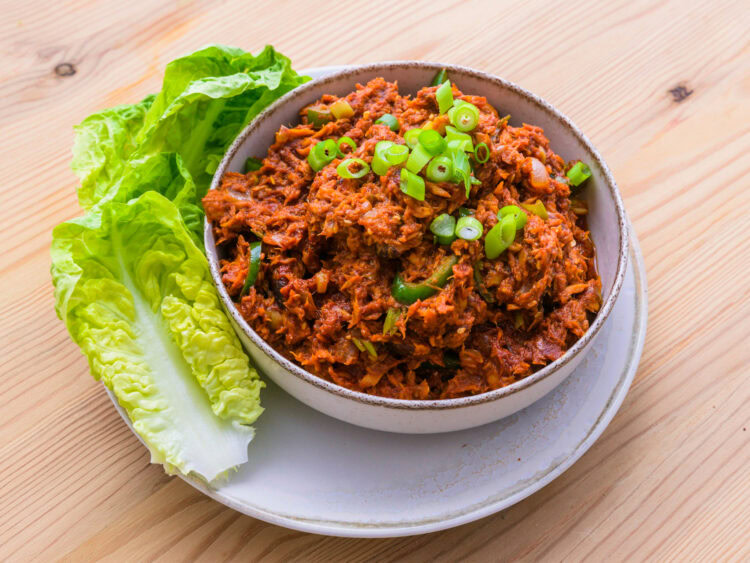
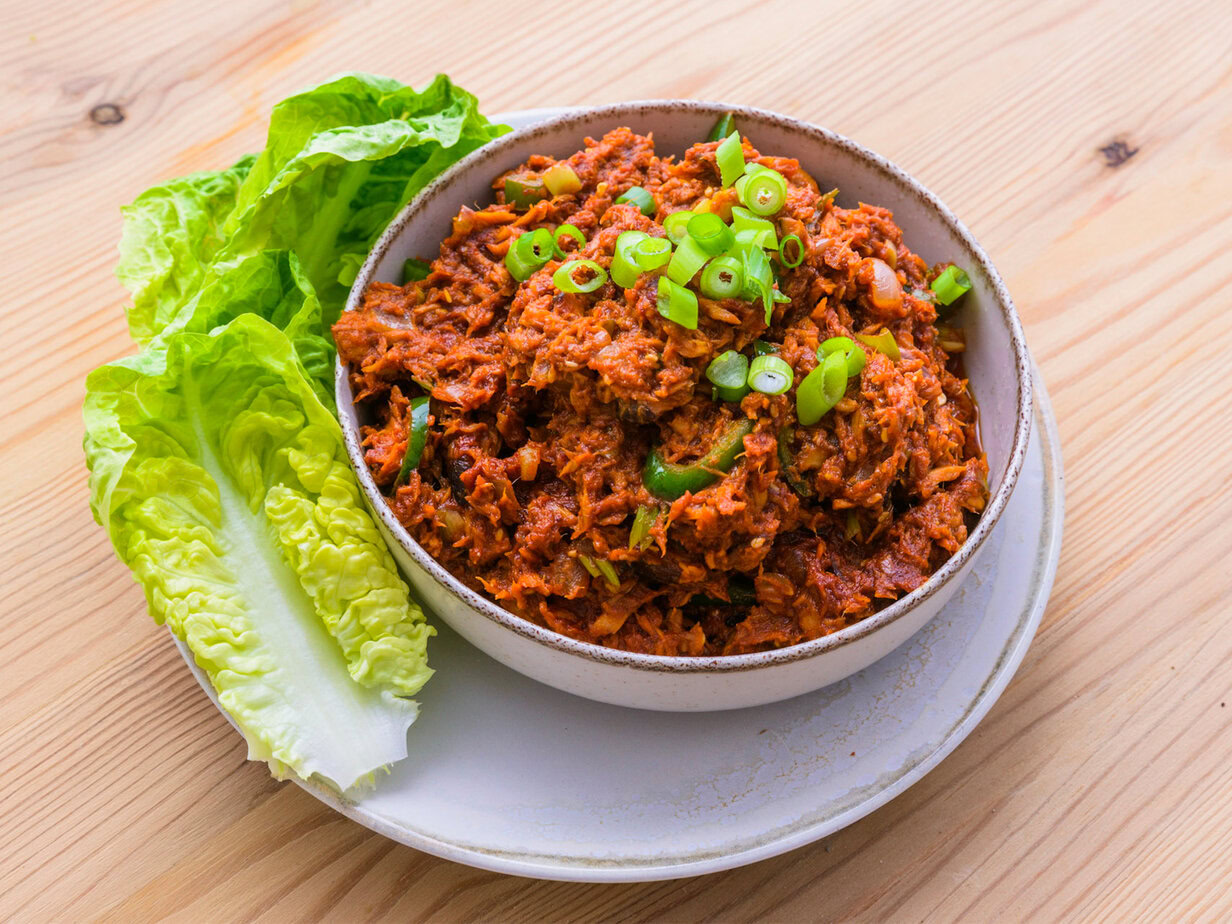
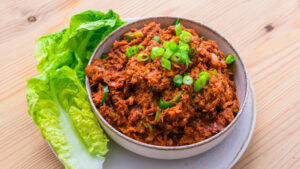
A deeply savory sautéed tuna condiment seasoned with doenjang, gochujang, and cheongyang chilies, perfect for lettuce wraps with a rich, lightly sweet sauce
Steam rises from a still-warm ssam, sesame releases its nutty aroma, and a glossy brick-red paste, studded with tender tuna, settles into the bite. The chili lands first, then quickly mellows: savory, deep, and just briny enough.
This is chamchi ssamjang, a bold, sea-scented condiment where the fermented richness of jang meets the clean, full flavor of tuna.
What is Chamchi ssamjang?
Chamchi ssamjang (참치쌈장) literally means “ tuna ssamjang ”. Chamchi (참치) means tuna, ssam (쌈) is a wrapped bite, and jang (장) refers to Korean fermented sauces and pastes ; ssamjang (쌈장) is a jang made specifically for ssam.
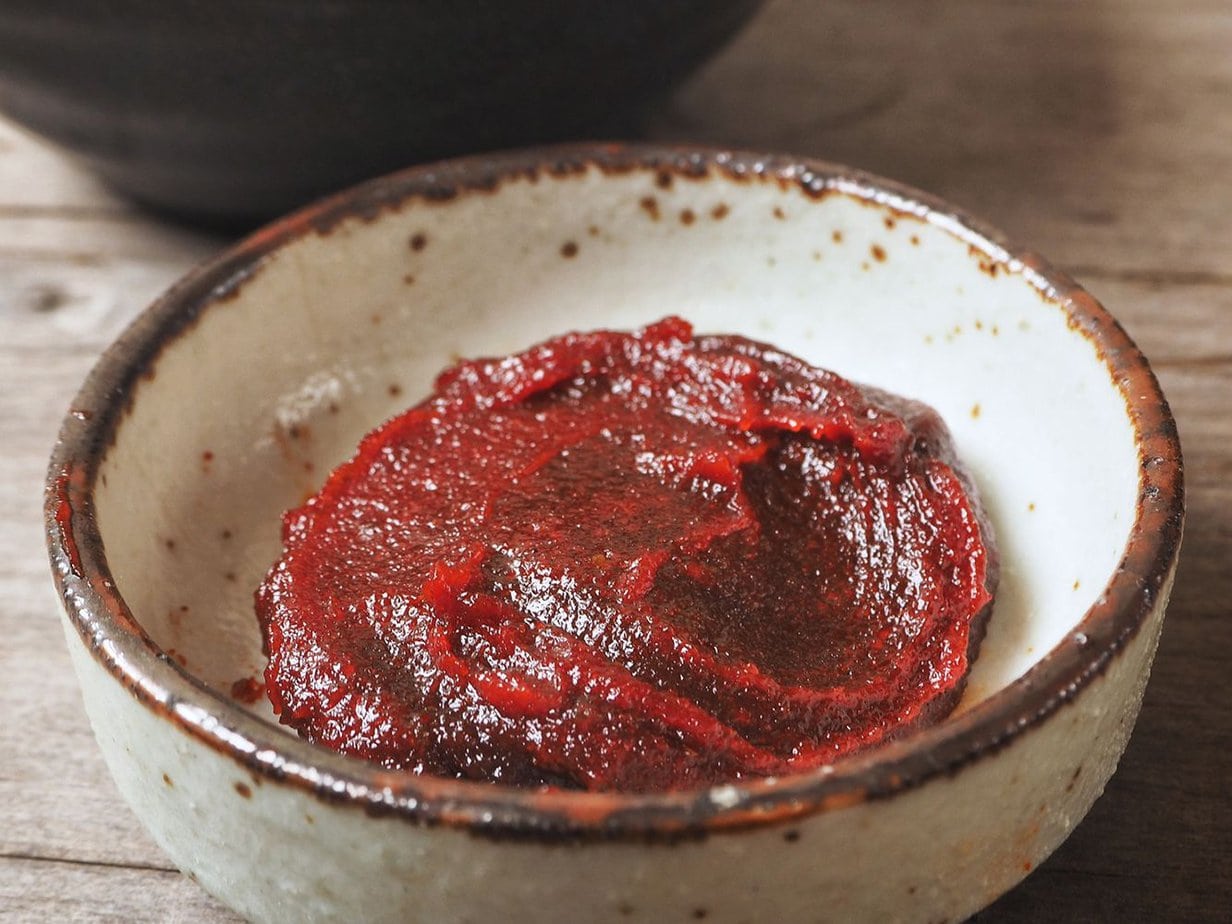
In the bowl, it is very much a ssamjang, built on the classic pairing of doenjang and gochujang, in varying proportions (often with more doenjang than gochujang). It is enriched with garlic, onion, scallion (pa) or daepa (Korean leek), plus sesame.
The tuna, usually canned, adds body, extra umami, and a gentle oceanic salinity.
The two texture styles
Two main styles stand out. The first is the cold-mixed version: a quick assembly, prepared right at the table, where the tuna is folded in as is to make a bright paste with visible pieces and a clear, salty-savory character.
The second is the cooked version: the aromatics are first softened in oil, often the oil from the can. The jang is then loosened with a splash of water or broth and reduced before the tuna is added at the end. The result is thicker, rounder on the palate, and less sharply salty thanks to heat and reduction.
The flavor foundation remains the same in both cases: the fermented depth of doenjang ; the sweet heat and brick-red color of gochujang ; a base of garlic, onion, and scallion ; sesame oil and seeds for richness and a nutty note ; adjustable heat from fresh chilies or gochugaru ; and a touch of sweetness to balance the salt.
The origins of Chamchi Ssamjang
Because chamchi ssamjang almost always uses canned tuna, its history is largely modern. A 2003 economics article reports that Dongwon introduced canned tuna to Korea in 1982, giving us a clear chronological marker. No Joseon-era manuscript records this recipe ; by contrast, the logic of ssam and jang itself runs deep through Korean food history.
Regional sources help define its character: according to local Busan press in 2008, “fish in ssamjang” (mackerel, tuna, or horse mackerel, for example) gives the Busan–Gyeongsangnam-do coastline a thicker, more protein-rich paste.
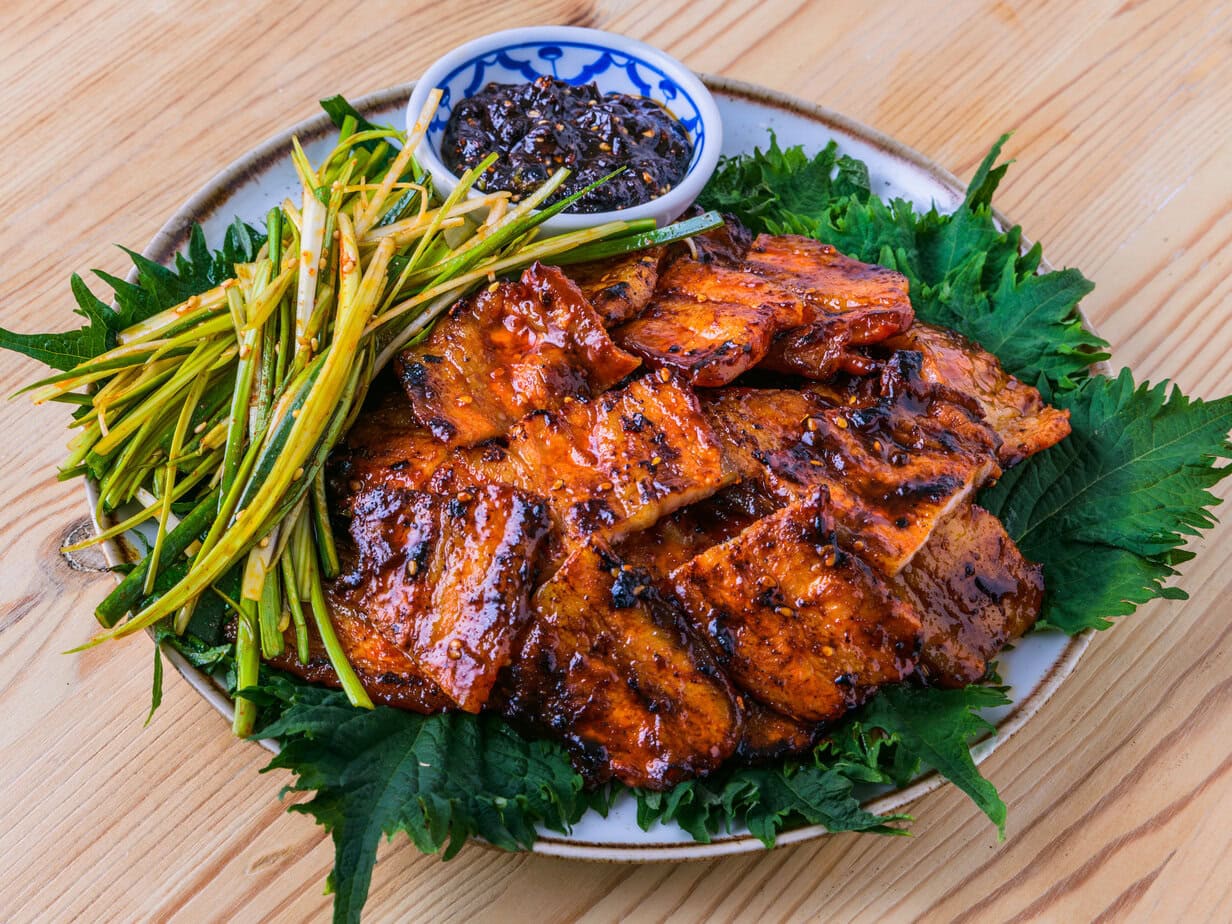
In the central and northern regions, including Seoul and Gyeonggi, tofu more often plays the role of protein thickener, creating a lighter spread with a less pronounced fish flavor. Both approaches keep the same jang base and the same aromatics ; what changes is the protein, and with it the texture and overall feel. To stay in the spirit of a Korean table, you can compare it with kimbap (the logic of bite-sized portions) or samgyeopsal served in leaves.
Korean media shows the dish gaining steady visibility: by the late 2000s, home-cooking websites were publishing tuna ssamjang recipes, from quick table-mixed versions to gentler, family-style ones with mild heat. Mayonnaise already appears in Korean sources from 2008–2009: it is used as an option, not as a rule.
A 2010 article on bentos places a minimalist “tuna ssamjang” alongside a more classic, jang-focused version made with Pacific saury (sanma), highlighting local variations even in the names. In 2017, Baek Jong-won (Home Food Made Simple 3, 집밥 백선생3) popularized a cooked method: oil from the can, softened alliums, doenjang and gochujang loosened with a splash of water, a little sugar, then tuna added at the end. This approach firmly established a style that tastes “less salty on the palate” in the kitchens of viewers.
Authenticity here is therefore not a single fixed canon, but a set of reliable markers : a core of jang, aromatics, sesame, and controlled sweetness, all adapted according to region and household habits.
Main ingredients in Chamchi Ssamjang
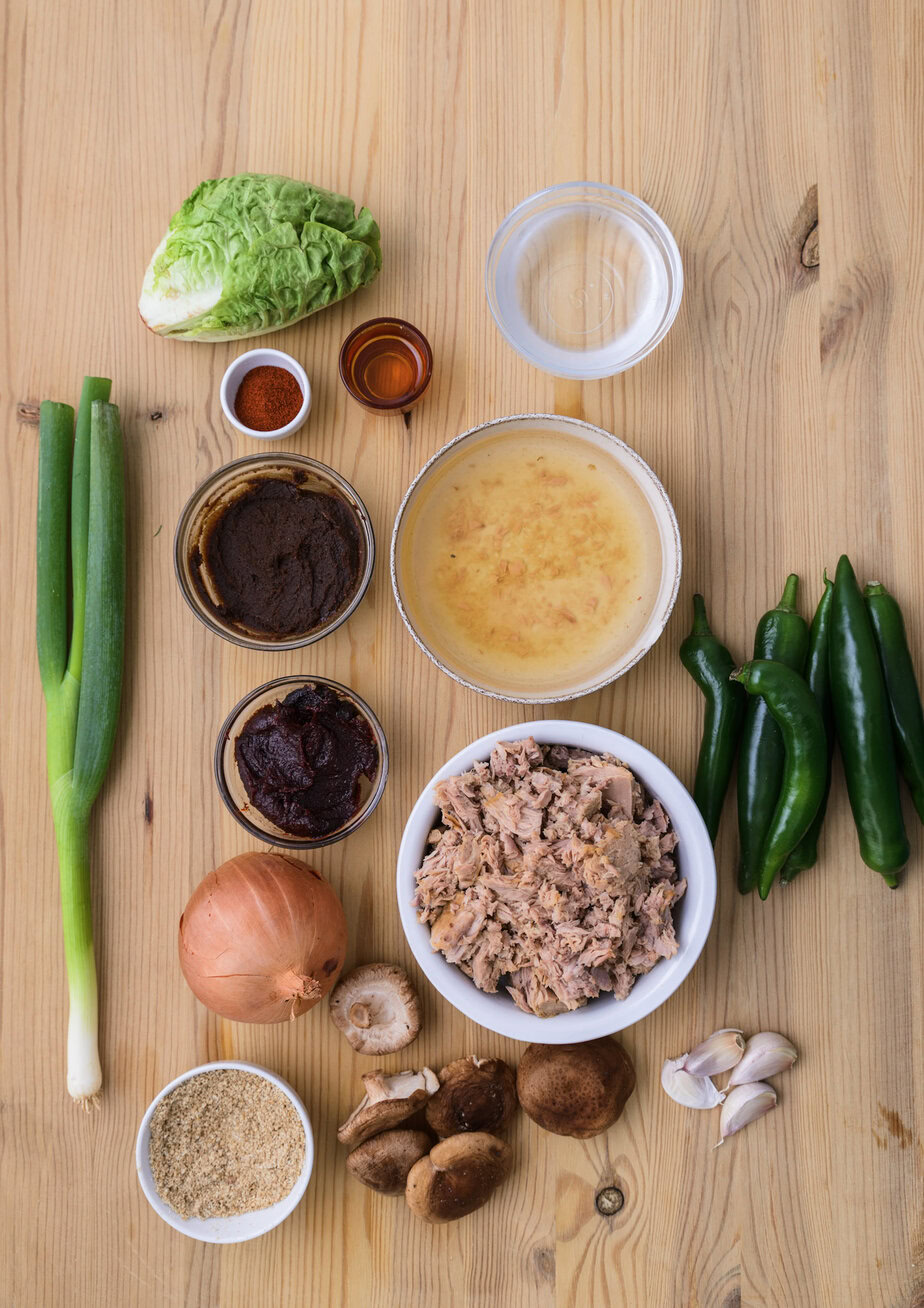
- Canned tuna (often packed in oil): the main protein, bringing meaty umami, a subtle boost of oceanic salinity, and an easy-to-spread texture ; the oil also carries the aromatics
- Doenjang (soybean paste): deep fermented flavor, saltiness, and roundness ; the backbone that defines ssamjang, comparable to a miso sauce within the broader family of fermented pastes.
- Gochujang (chili paste): sweet heat, color, and body ; generally used in a smaller proportion than doenjang, so the fermented flavor remains dominant (if you enjoy very spicy profiles, also see chili powder).
- Fresh green chili (for example cheongyang), optional: clean, immediate heat that lifts the richer flavors (in another style, jeyuk bokkeum is a great example of this direct chili-forward character).
- Sesame oil and sesame seeds: nutty aroma and a smooth finish ; classic for both fragrance and texture (if you like sesame-based sauces, goma dare (sesame sauce) is a good reference).
- Pine nuts or walnuts (optional): subtle richness and a lightly grainy texture, found in more nut-forward jang mixtures.
- Tofu (a regional alternative in the central-northern regions): a protein-rich thickener used when fish is not included, while keeping the idea of “protein in ssamjang” (for another way to use tofu, mapo tofu is an interesting reference).
Ingredients
- 400 g canned tuna about 2 cans
- oil from the tuna cans reserved
- 1 onion about 200 g, chopped
- 1 stalk scallion about 100 g, chopped
- 4 tablespoons garlic minced
- 6 fresh shiitake mushrooms chopped
- 6 tablespoons doenjang
- 6 tablespoons gochujang
- 6 tablespoons mirin
- 2 tablespoons gochugaru
- 8 Cheongyang chili peppers thinly sliced
- 2 tablespoons sesame oil
- 10 tablespoons sesame seeds finely ground (crushed in a mortar, then passed through cheesecloth, or pulsed in a blender)
- lettuce leaves for serving
Instructions
Preparation
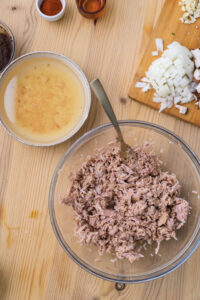
- Drain the tuna in a colander, reserving the oil, then roughly flake the tuna.400 g canned tuna, oil from the tuna cans
- Heat a skillet and add the reserved oil from the tuna cans.
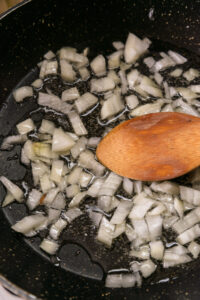
- Add the chopped onion and sauté.1 onion
- Add the chopped scallion, minced garlic, and chopped shiitake mushrooms.1 stalk scallion, 4 tablespoons garlic, 6 fresh shiitake mushrooms
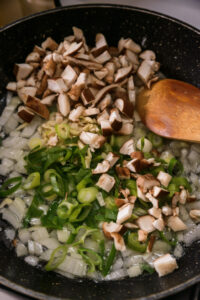
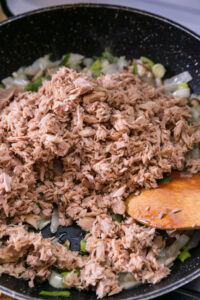
- Add the tuna and sauté.
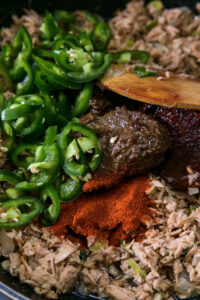
- Add the doenjang, gochujang, mirin, gochugaru, and Cheongyang chili peppers, then stir-fry to combine.6 tablespoons doenjang, 6 tablespoons gochujang, 6 tablespoons mirin, 2 tablespoons gochugaru, 8 Cheongyang chili peppers
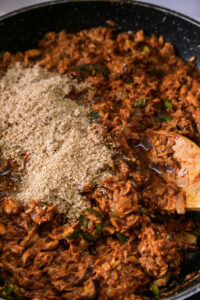
- Add the sesame oil and ground sesame seeds, then stir until evenly combined.2 tablespoons sesame oil, 10 tablespoons sesame seeds
- Serve with lettuce leaves for wrapping and enjoy.lettuce leaves
Notes
- Adjust the heat level by reducing the gochugaru and/or the number of Cheongyang chili peppers.
- Finely ground sesame seeds give the ssamjang a thicker texture and a nuttier flavor: pulse them gently to avoid turning them into a paste.
- If the pan starts to look dry, add a small drizzle of neutral oil along with the reserved tuna oil.