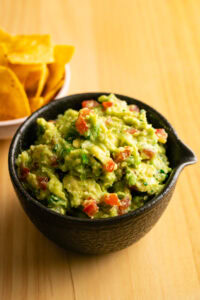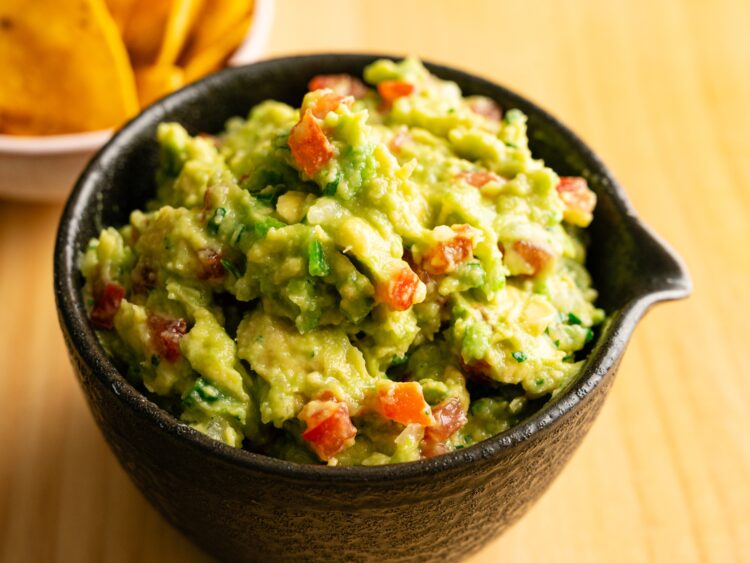
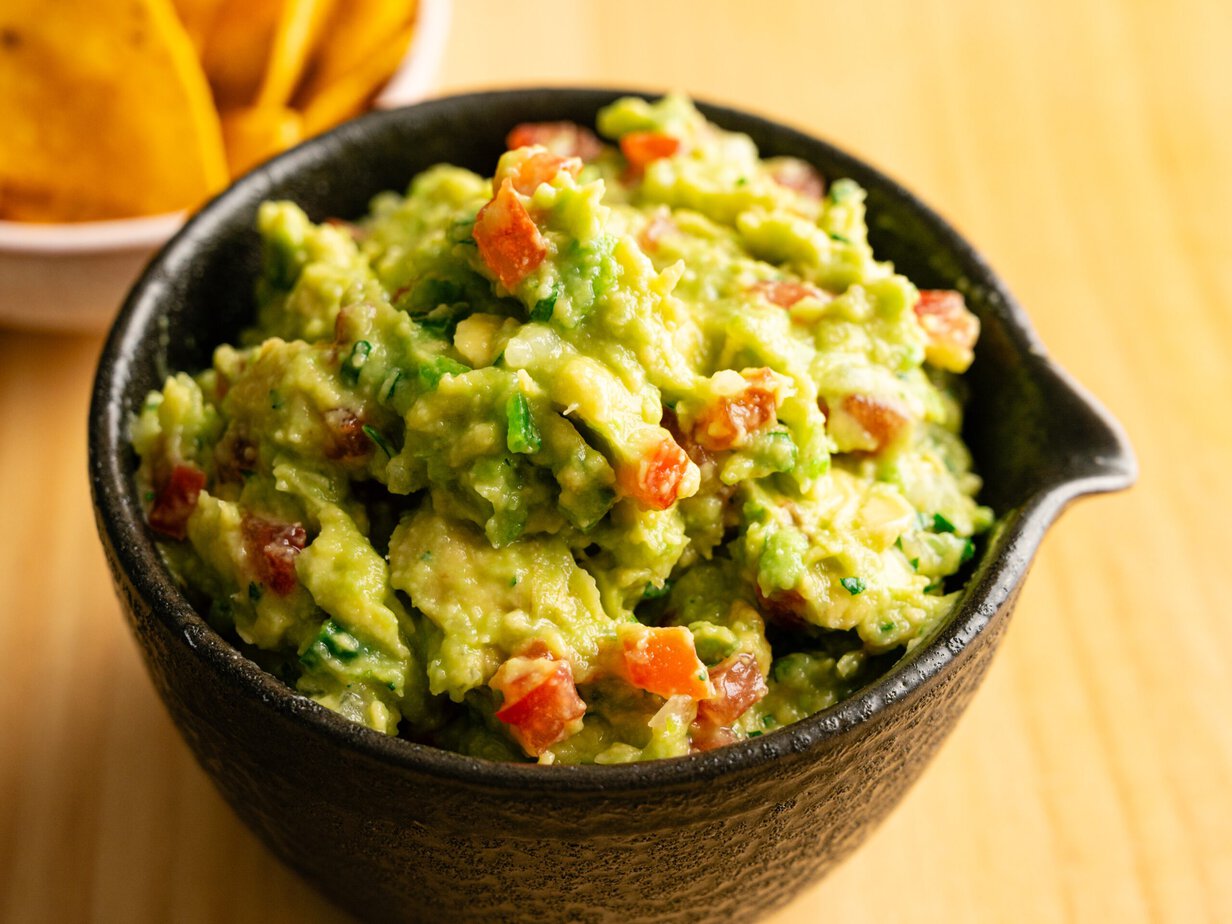
Classic Mexican guacamole: a paste of coarse salt, serrano chile and white onion, then Hass avocado roughly mashed into big chunks, served with totopos.
A bowl of totopos on the table, a few friends arriving, and the guacamole is gone before everyone has sat down. Here the avocado stays chunky: you bite into buttery pieces caught in a creamy mash that smells of cilantro and lime.
The serrano, crushed with the coarse salt, gives every bite the same gentle heat. Dunk in a first chip, and any idea of making it ahead goes out the window.

What Is Guacamole?
Guacamole is a Mexican dish of mashed avocado, served cold, by the spoonful or with corn chips. The classic version starts with a paste of coarse salt, serrano chile and white onion, ground in a molcajete, the Mexican mortar made of volcanic stone. The avocado goes in next, then the lime, the cilantro and, if you like, a seeded tomato. In Mexico it is served with tortillas, tacos or grilled meat; in France it has become a cocktail hour classic.
The name comes from Nahuatl, the language of the Aztecs: ahuacamolli, from ahuacatl, avocado, and molli, sauce. The French word “avocat” comes from the same root, by way of the Spanish aguacate.
From Aztec Ahuacamolli to Today’s Guacamole
People in Mexico have been eating avocado for thousands of years: in the Tehuacán Valley, the earliest traces date back to around 5000 BCE. In the 16th century, the Franciscan Bernardino de Sahagún described the Aztecs’ ahuacamolli in the Florentine Codex: avocado, chile, tomato and salt, ground together in a molcajete, the three-legged mortar carved from basalt.
The Spanish later brought onion, garlic, cilantro and lime. Onion, cilantro and lime have stayed in modern Mexican guacamole. Garlic still divides opinion and is left out of this version. The avocado has changed too: the Hass, patented in California in 1935 by Rudolph Hass, has replaced the original criollo avocado almost everywhere, as the criollo was more fragile to ship.
Lime and tomato are still up for debate. In central Mexico, cooks use little lime, sometimes none at all; in the north of the country and abroad, much more. Tomato has its fans, who like its color and freshness, and its detractors, who say it dilutes the flavor of the avocado. This recipe sticks to one lime for three avocados and leaves the tomato up to you.
The Main Ingredients in Guacamole
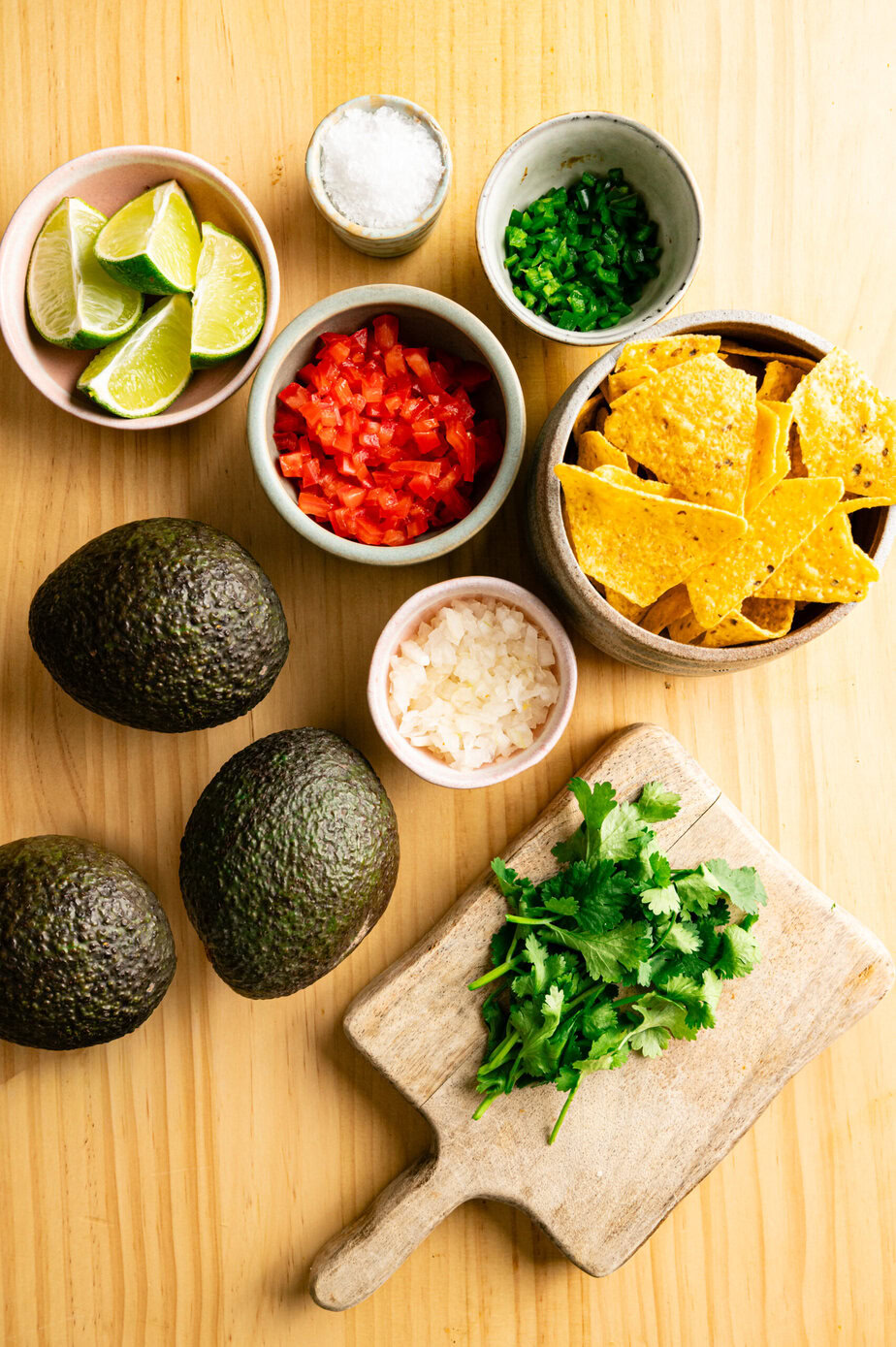
Three large, fully ripe Hass avocados form the base. Hass is richer and more buttery than smooth-skinned varieties, and its chunks hold their shape once mashed. A ripe avocado gives under your palm; if the spot under the stem is dark brown, the fruit is overripe.
The starting paste brings together the coarse salt, the serrano chiles and a spoonful of white onion. The salt helps crush the chile and release its oil, which then flavors the whole bowl. White onion, cleaner-tasting than yellow onion, cuts through the richness of the avocado; the rest goes in at the end for crunch.
The finishing touches bring freshness: the juice of one lime, chopped cilantro and a seeded tomato, cut into small dice. With its seeds and jelly removed, the tomato adds no water. Totopos, thick corn chips, serve as the spoon.
Technique Tips for Good Guacamole
The rough stone of the molcajete grinds the chile against the salt, something a smooth bowl does poorly. A blender or food processor turns out avocado cream, and the air they whip in makes the guacamole turn dark faster.
For the avocado, three or four strokes of the tejolote are enough. You want fingernail-sized chunks in a creamy mash; any more and you end up with a puree. After that, just mix with a spoon, from the bottom up.

Guacamole is meant to be eaten right away, two minutes after the last spoonful. If there’s any left, pack it into a small container, press plastic wrap directly onto the surface and refrigerate for one day at most.
Ingredients
Chile Paste
- 1 teaspoon coarse salt
- 2 serrano chiles, very finely chopped
- 0.33 white onion, very finely chopped (1 tablespoon for the paste, the rest for finishing)
Avocados
- 3 large avocados, ripe, preferably Hass
Finishing and Serving
- 1 lime
- 0.33 bunch cilantro, chopped
- 1 tomato, seeded and cut into small dice (optional)
- Totopos (corn chips)
Instructions
Chile Paste
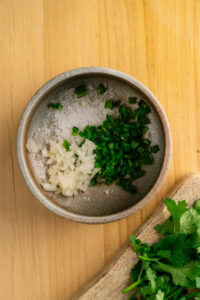
- Put the coarse salt, chopped chiles and one tablespoon of the chopped onion in the molcajete.1 teaspoon coarse salt, 2 serrano chiles,, 0.33 white onion,
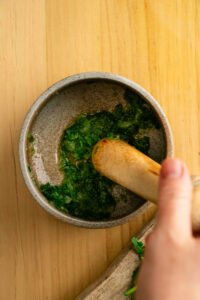
- Grind with the tejolote until you have a fragrant green paste: the coarse salt breaks down the chile’s walls and releases its oil.
Avocados
- Cut the avocados in half lengthwise.3 large avocados,
- Twist the two halves in opposite directions to separate them.
- Remove the pit by striking it with the knife blade so the blade lodges in it, then twisting to free it.
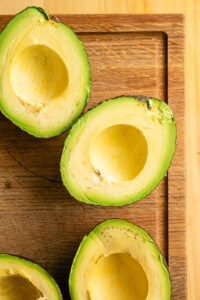
- Scoop out the flesh in one piece with a spoon.
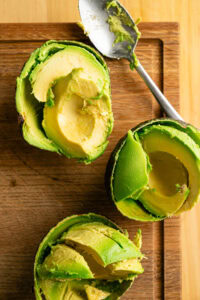
- Put the flesh in the molcajete, on top of the chile paste.
- Mash with the tejolote only three or four times: you want fingernail-sized pieces surrounded by creamy flesh, not a puree.
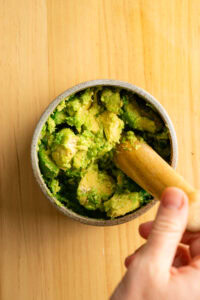
Finishing and Serving
- Squeeze the lime over the avocado.1 lime
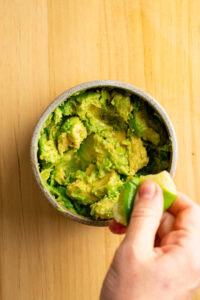
- Stir with a spoon, without mashing any further: from this point on, the tejolote is no longer needed.
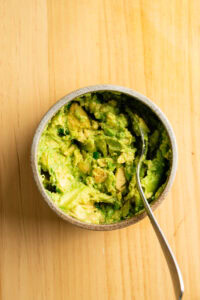
- Add the rest of the onion, the cilantro and the tomato, if using.0.33 bunch cilantro,, 1 tomato,
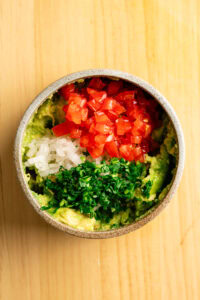
- Stir gently, lifting the mixture from the bottom up, to distribute the ingredients without crushing the pieces of avocado.
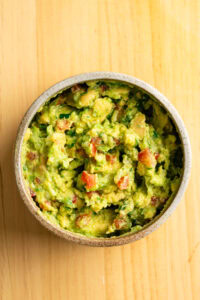
- Taste and adjust the salt: avocado is rich and often needs more than you’d think.
- Serve immediately, in the molcajete, with totopos: guacamole is at its best two minutes after it’s finished.Totopos