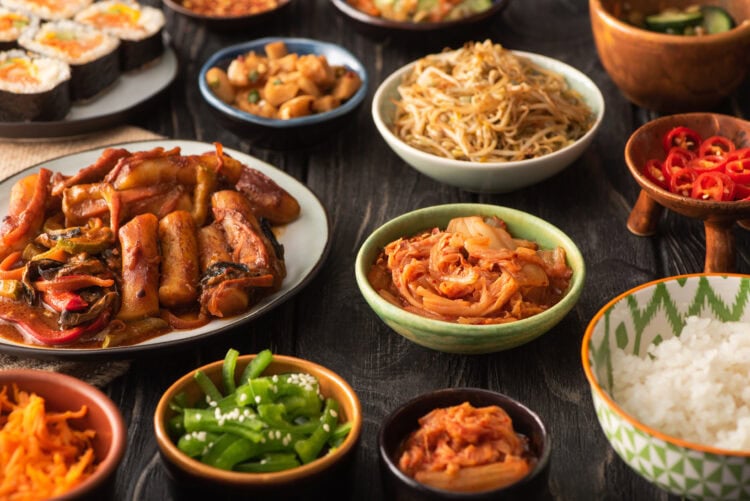
Want to travel without leaving home? Let Korean cuisine, recognized by the WHO for its nutritional balance, whisk you away in a whirlwind of flavors! The perfect way to indulge after the excesses of the holiday season without a hint of guilt!
Rooted in the seasons and centered on well-being, Korean gastronomy brings the five flavors (sweet, salty, bitter, sour, and umami) into harmony to create dishes that are both delicious and easy to make. Discover in this article 10 essentials that will transport you straight to South Korea and delight your taste buds with every bite.
If you love Asian cuisine but Korea is still unfamiliar to you, you’re in for a treat!
1. Bibimbap (비빔밥)
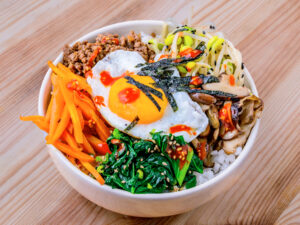
Literally meaning “mixed rice,” this dish consists of a bowl of rice topped with colorful vegetables, meat (often beef), an egg (fried or raw), and a spicy gochujang sauce. Just before eating, all the ingredients are mixed together to create a delicious blend of flavors and textures.
Authentic Bibimbap
2. Bulgogi (불고기)
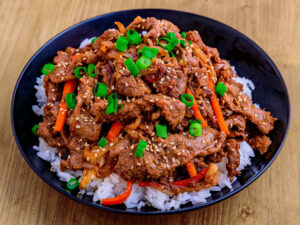
Thin slices of beef are marinated in a sweet-savory sauce made with soy sauce, fruit, sesame, garlic, and sugar, then grilled. The result? Tender, fragrant meat often enjoyed wrapped in a lettuce leaf, with a little kimchi and ssamjang sauce.
Authentic Bulgogi recipe
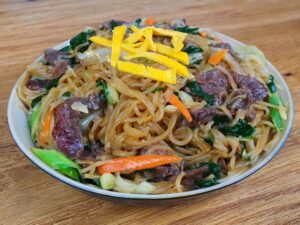
3. Japchae (잡채)
Translucent sweet potato noodles stir-fried with assorted vegetables (carrots, bell peppers, onions, spinach) and sliced beef, all coated in a lightly sweet sauce. Popular during holidays and celebrations, this dish offers a delightful interplay of textures between tender noodles and crunchy vegetables.
Japchae with Beef
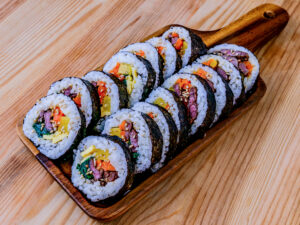
4. Gimbap (김밥)
Often compared to maki, gimbap is a seaweed roll filled with rice seasoned with sesame oil, assorted vegetables (carrots, pickled radish, spinach…), omelet, and meat or fish. Cut into slices, it’s ideal for picnics or meals on the go.
Authentic Kimbap – Korean Maki Rolls
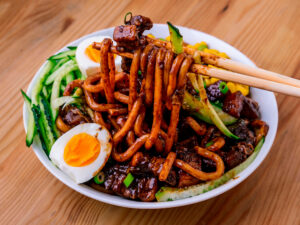
5. Jajangmyeon (짜장면)
A hugely popular Sino-Korean dish made with thick noodles coated in a sauce based on black bean paste (called chunjang), enhanced with meat (often pork) and vegetables (onions, zucchini). Its dark appearance contrasts with its rich, slightly sweet, comforting flavor.
Creamy and flavorful Jajangmyeon
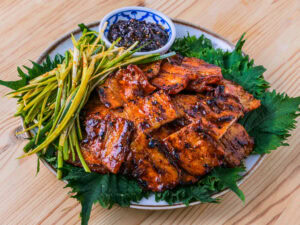
6. Samgyeopsal (삼겹살)
Delicious slices of grilled pork belly, usually cooked right at the table. They are then wrapped in a lettuce or perilla leaf with a little kimchi, ssamjang sauce, and garlic, for maximum flavor and conviviality.
Samgyeopsal Recipe – Korean Grilled Pork
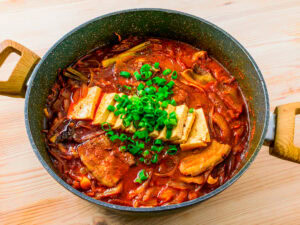
7. Kimchi Jjigae (김치찌개)
A spicy stew made with kimchi, tofu, meat (pork or tuna), and often boosted with gochujang paste. Perfect for cool days, this spicy and comforting dish is enjoyed with a bowl of rice that tempers the heat of the spices.
Traditional Kimchi Jjigae
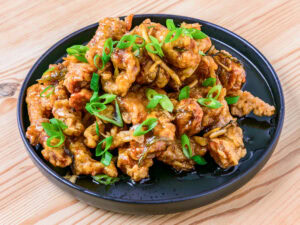
8. Tangsuyuk (탕수육)
A Sino-Korean dish made of battered and fried meat (often pork), served with a thick, slightly sweet sweet-and-sour sauce, along with vegetables (carrots, onions, cucumbers). Its crispiness contrasts deliciously with the velvety sauce.
Tangsuyuk – Korean sweet and sour fried pork
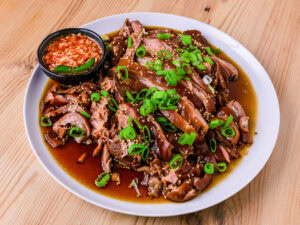
9. Jokbal (족발)
Pig trotters and hocks braised in a mixture of soy sauce, ginger, and spices, then sliced. The meat, tender and fragrant, is sometimes enjoyed wrapped in lettuce or perilla leaves, with ssamjang sauce and kimchi on the side.
Jokbal – Korean braised pork
10. Korean Fried Chicken (치킨)
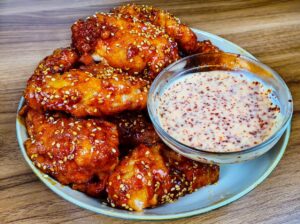
Known for its double-frying, which gives it ultra-crispy skin and juicy meat, it is sometimes coated in a spicy, sweet sauce, or served plain. A true institution in Korea, it is often enjoyed with a cold beer, forming the famous chimaek duo (치맥).
Korean chicken wings