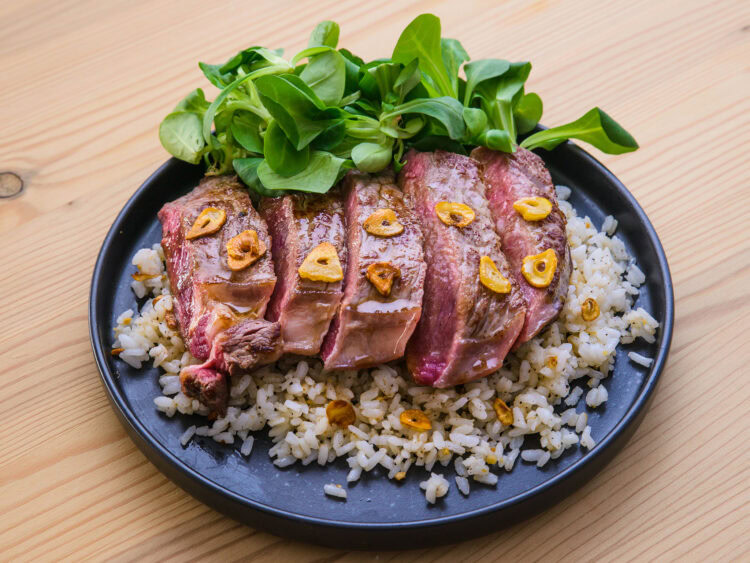
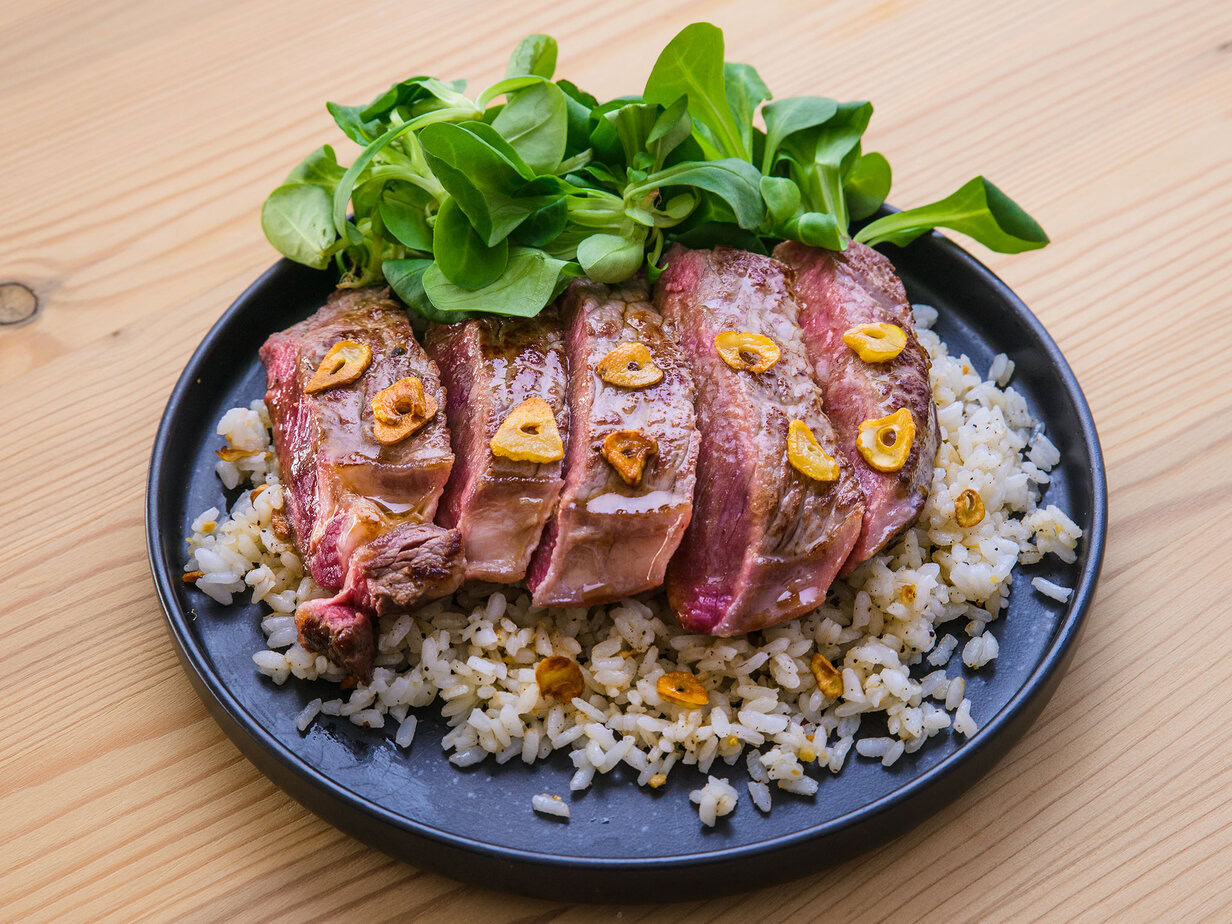
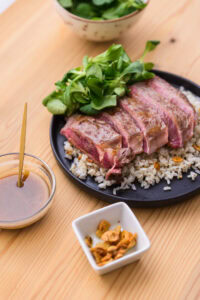
Quick-seared beef glazed with a buttery sake-mirin sauce, served over crisp garlic rice and finished with peppery watercress.
On a scorching-hot iron griddle, A5 Wagyu sizzles the instant it touches the surface. The garlic gently cooks in the fat, and a glossy crust forms in moments. This is teppanyaki at its finest : precise heat, quiet mastery, and deep respect for the ingredients.
This is not the “ hibachi ” style, heavy on sauces and designed above all for show. Yet it is the version many Western diners associate with Japanese steak restaurants.
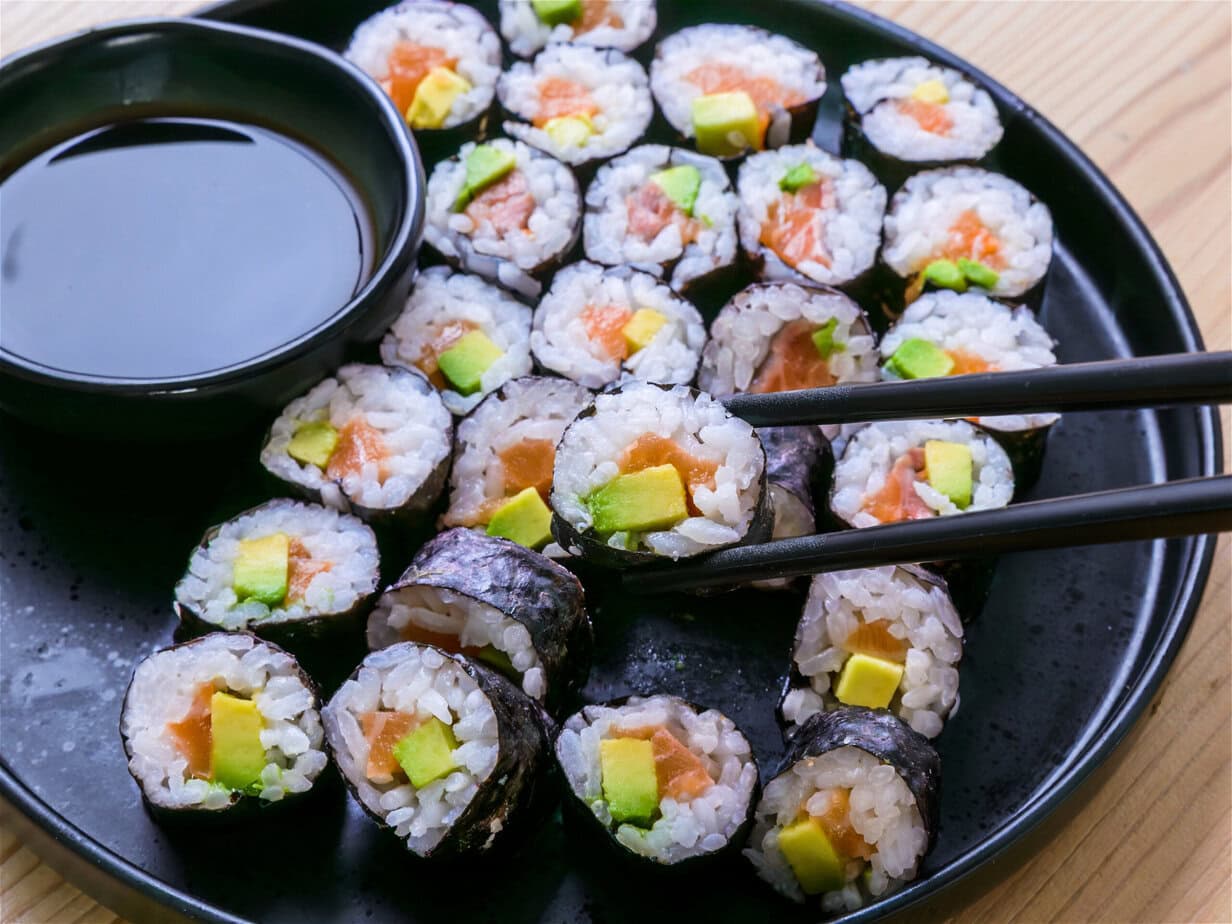
Teppanyaki is, instead, a disciplined style of cooking built on balance. To understand it, start in Kobe, then follow the vegetables, seafood, rice, and sauces that all have their place on the teppan. In that same spirit of precision, it sits comfortably alongside more familiar classics such as gyoza and yakimeshi, where technique matters just as much as seasoning.
What is teppanyaki?
The term breaks down simply : teppan refers to an iron cooking plate, and yaki means “ grilled ”. By contrast, a traditional hibachi is a charcoal brazier or heating vessel, not the flat iron griddle used for teppanyaki.
Calling teppanyaki “ hibachi ” is a Western misuse of the term, popularized by restaurant marketing and repetition.
The teppan is the heart of this cuisine : a thick iron plate, often 19 to 25 millimeters thick, designed to hold steady heat and prevent the temperature drop that would ruin a beautiful sear.
When a cold piece of Wagyu is placed on this surface, the plate keeps its heat, giving the chef precise control over cooking from edge to edge.
The method is deliberately minimalist. When you are working with Kuroge Wagyu A4 or A5, seasonal vegetables at their peak, and impeccably fresh seafood such as live abalone, Japanese spiny lobster, or scallops, heavy-handed seasoning would only obscure what matters most.
Salt, freshly cracked pepper, garlic, and light soy-based sauces let the ingredients speak for themselves. The meal often unfolds at a rhythm reminiscent of kaiseki, ending with ninniku chahan, a garlic fried rice that captures the last caramelized flavors from the griddle.
Born in postwar Kobe
The modern history of teppanyaki begins in Kobe in 1945, in a city marked by war. American military personnel from the occupation forces were among the first customers for beef cooked on an iron griddle. Shigeji Fujioka, a young entrepreneur, was then running a modest okonomiyaki restaurant in Kobe’s Sannomiya district.
He is said to have used a heavy iron plate from a local shipyard to cook steaks directly in front of his guests. Out of this postwar experiment came Misono, founded in Kobe in 1945 and widely credited as the birthplace of teppanyaki steak.
The concept made foreign guests feel welcome. Beef was a familiar point of reference, while tableside cooking felt both transparent and theatrical without ever hiding the technique.
Over the decades, Misono expanded beyond Kobe, with locations in Osaka, Shinjuku, Kyoto, and Ginza, among others, combining Western-inspired steak cookery with a more understated Japanese aesthetic, attentive to the seasons.
This history also explains teppanyaki’s distinctive status in Japan : it is often presented as a modern, hybrid style, partly adapted to foreign palates, rather than as the direct, uninterrupted heir to washoku.
By comparison, miso soup or Japanese curry tells other, more everyday stories within that same culinary culture.
The main ingredients in Teppanyaki
- Kuroge Wagyu A4 or A5, including certified Kobe beef : the centerpiece. Its fine marbling, combined with a high proportion of monounsaturated fatty acids such as oleic acid, melts at a temperature close to that of human skin and gives each bite a buttery mouthfeel. In practice, use a very high-quality piece of beef, ideally one with generous marbling.
- Fresh garlic and fried garlic chips : the garlic slowly infuses the oil ; the chips add a crisp, toasted counterpoint to the rich tenderness of the beef.
- Soy sauce : provides the umami base for light dipping sauces, as well as salty, caramelized depth when it hits the hot iron.
- Sake and mirin : sake brings a gentle alcoholic note, while mirin adds subtle sweetness ; together, they perfume the vegetables and seafood while encouraging caramelization without weighing everything down.
- Rice vinegar : its acidity cuts through the richness of the Wagyu and keeps the tare sauce bright rather than sticky.
- Toasted sesame seeds or sesame oil : add a nutty aroma, subtle crunch, and roundness to soy-based sauces, in the spirit of goma dare sauce.
- Seasonal vegetables, in the spirit of shun : mushrooms, kabocha, bean sprouts, scallions, and bamboo shoots absorb the beef fat while adding sweetness, crunch, and earthy notes.
- Impeccably fresh seafood : live abalone, Japanese spiny lobster, and scallops sear quickly, develop caramelized edges, and keep their delicate briny character.
- Day-old short-grain Japanese rice : slightly dry grains absorb the garlic oil and caramelized soy sauce for ninniku chahan without turning mushy.
- Scallions : add a fresh, green note to the rice and to the richest bites.
- Mustard powder : a controlled heat for soy sauce and mustard emulsions that refresh the palate.
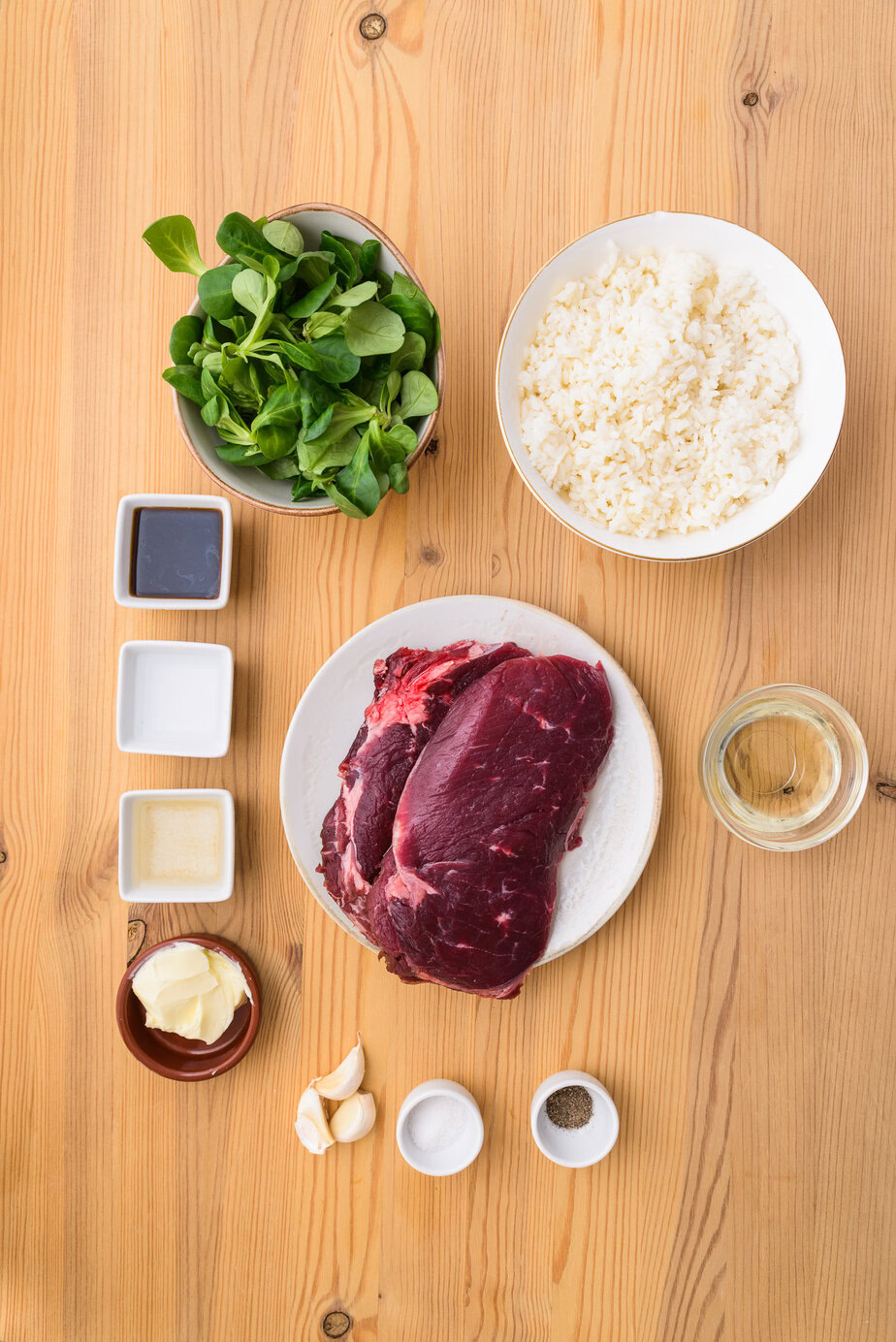
Ingredients
Beef
- 300 g beef quick-cooking (2 to 3 slices)
- 1 pinch salt
- pepper
- 3 cloves garlic germ removed, thinly sliced
Sauce
Garlic rice
- 600 g cooked rice hot
- 0.33 teaspoon salt
- black pepper coarsely ground
- 1 bunch watercress halved lengthwise
Oil
- 2 tablespoons oil heaping (reserve 1.5 tablespoons)
Instructions
Preparation
- Remove the beef from the fridge 30 to 40 minutes before cooking so it comes to room temperature.
- Halve the watercress lengthwise.1 bunch watercress
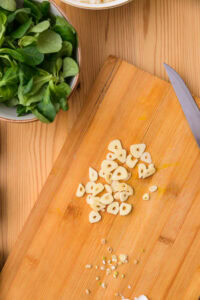
- Slice the garlic thinly into rounds, then remove the germ.3 cloves garlic
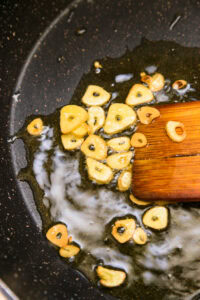
- Add the oil and garlic to a pan and heat over very low heat, stirring often to separate the slices. Cook until the garlic is lightly golden and crisp, 7 to 8 minutes, then remove the garlic chips.2 tablespoons oil
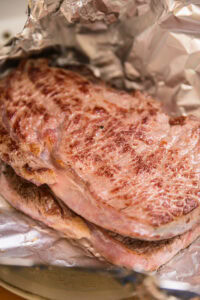
- Season the beef with the salt and pepper. Spoon the reserved oil out of the pan, then heat the remaining oil over medium-high heat. Sear the beef for 1 to 1 minute 30 seconds on each side, then remove it, wrap in aluminum foil, and keep warm.300 g beef, 1 pinch salt, pepper
- Pour the sake and mirin into the pan, bring to a boil, and let the alcohol cook off. Add the soy sauce, then the butter, boil briefly, and remove the sauce from the heat.2 tablespoons saké, 2 tablespoons mirin, 2 teaspoons soy sauce, 2 tablespoons butter
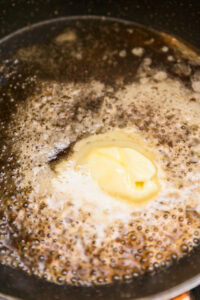
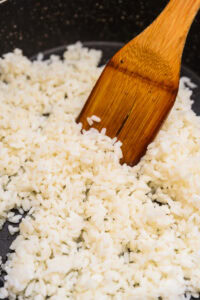
- Quickly wipe out the pan. Heat the reserved oil, add the rice, and stir-fry, breaking it up until the grains are well separated. Season with the salt and black pepper, crush half of the garlic chips, add them to the rice, and toss to coat well.600 g cooked rice, 0.33 teaspoon salt, black pepper
- Divide the rice among plates. Thinly slice the beef on the bias, place it over the rice, spoon the sauce on top, scatter with the remaining garlic chips, and serve with the watercress.
Notes
- Always bring the beef to room temperature before cooking: it’s the key to getting a good sear, and you can use that time to prepare everything else.
- Remove the garlic germ, as it burns easily, then start the garlic in cold oil over low heat: in hot oil, garlic burns very quickly.
- Garlic sticks easily: let it brown slowly while separating the slices, and remove it when it is just lightly colored, as it will continue to brown in the residual heat.
- For the best bite, slice the beef thinly and wrap it around the garlic rice as you eat.