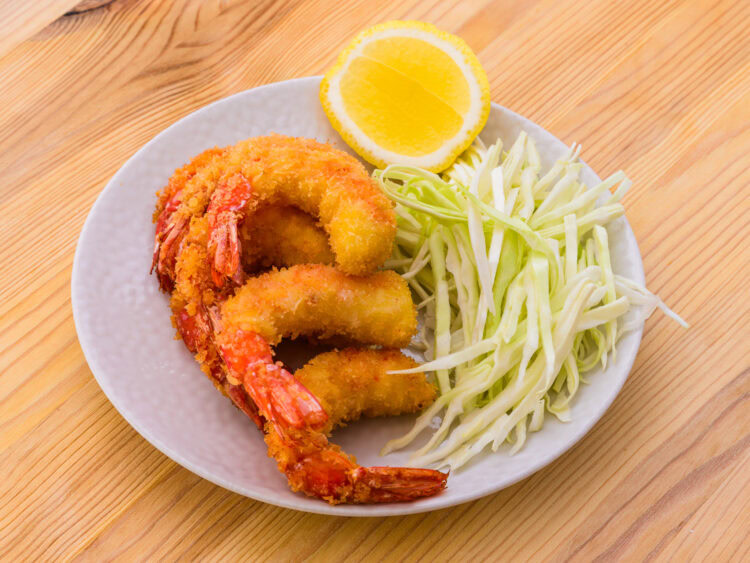
Ultra-crispy shrimp coated in panko and fried until light and golden, perfect with shredded cabbage and tartar sauce.
A great Ebi Fry is all about contrast: a crackling panko crust, ideally made with fresh nama panko in the most carefully prepared versions, and pearly, tender, juicy shrimp inside.
The glossy tail is left intact, making each shrimp easy to pick up with chopsticks. Fried over high heat until beautifully golden, it stays light and delivers a clean, satisfying crunch.
When served, finely shredded green cabbage balances the dish, while Japanese tartar sauce, often made with Kewpie-style Japanese mayonnaise, or tonkatsu sauce, is offered on the side so the crust stays crisp. Japanese white rice and miso soup complete the meal.
What Is Ebi Fry?
Ebi Fry is a staple of yōshoku, Japan’s Western-inspired cuisine, designed to be eaten with rice. Its name sums up the dish: ebi, “shrimp,” and furai (フライ), the Japanese adaptation of the English word fry. It consists of a large shrimp, straightened, breaded, and fried, easy to pick up with chopsticks, with accompaniments that balance its richness with freshness and acidity.
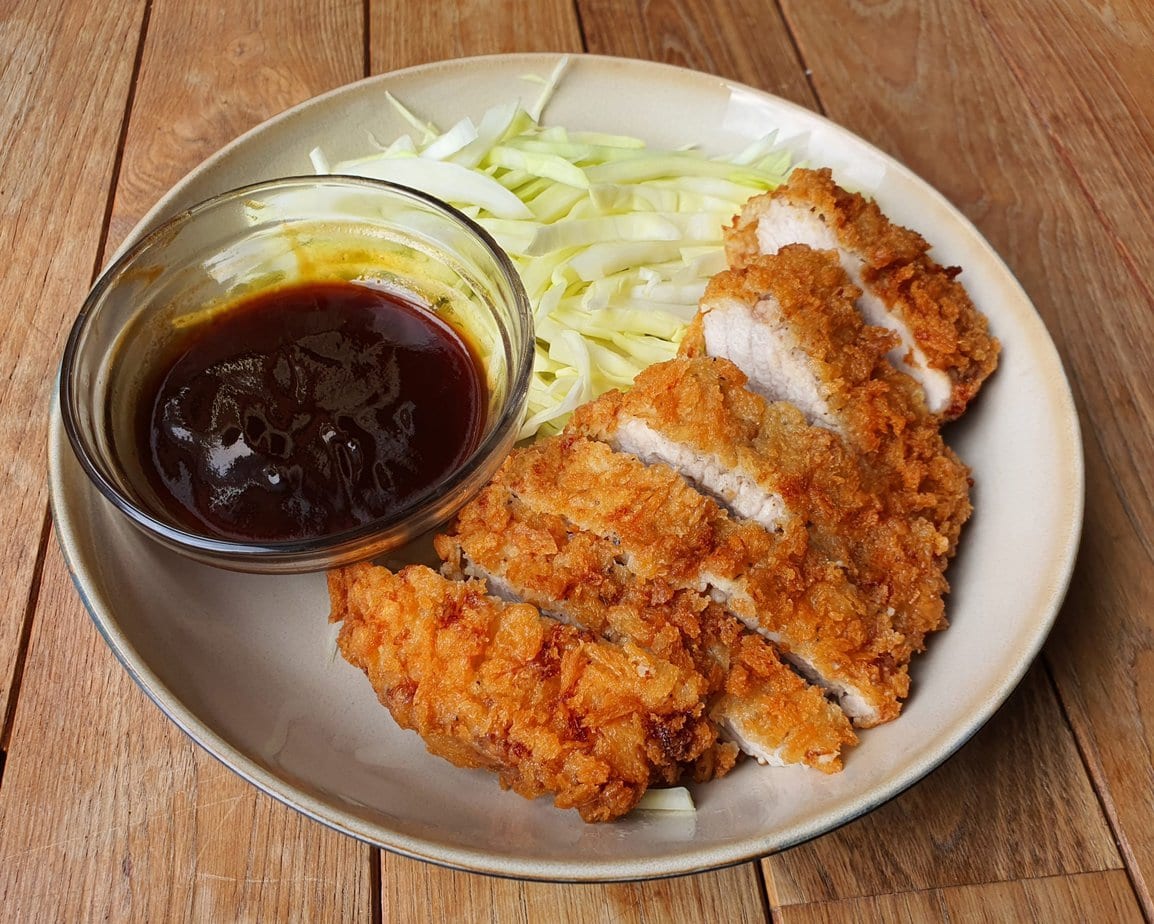
The breading has three parts: fine flour to help everything adhere, a batter-like binder made with egg, water, and flour, then a generous layer of nama panko. The binder is prepared in advance and left to rest, which relaxes the gluten and helps create a more even coating.
Nama panko, made from crustless shokupan, is gently pressed onto the shrimp to form a light, crisp crust. The ideal shrimp size is 13/15, with 16/20 as the recommended minimum.
The last shell segment and tail are kept on, making the shrimp easier to pick up with chopsticks. Fried at a high temperature until beautifully golden, they stay juicy inside. Serve them with finely shredded cabbage, thick Japanese tartar sauce or tonkatsu sauce, plus white rice and miso soup.
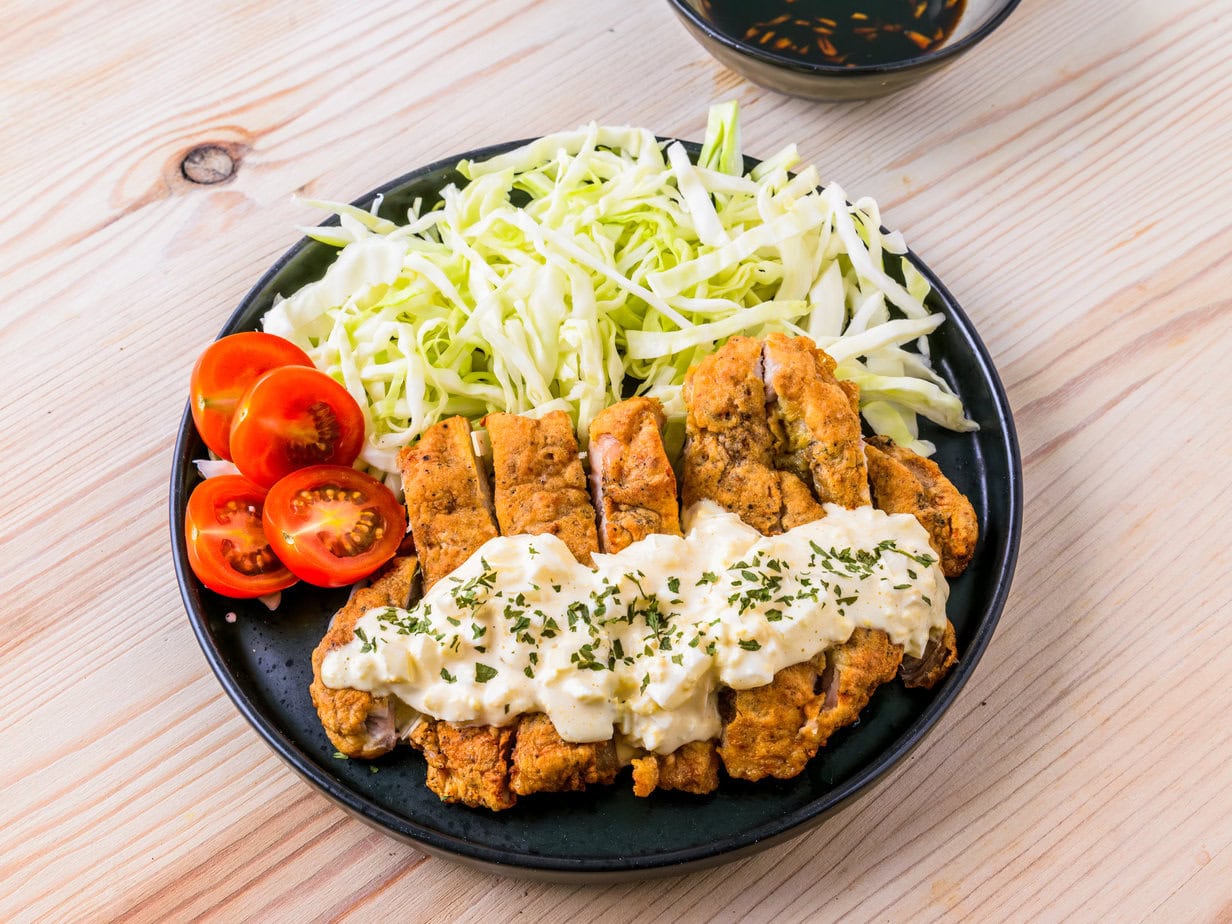
The Origins of Ebi Fry
Ebi Fry emerged during Japan’s modernization. As the country opened up in the mid-19th century, through the Meiji Restoration from 1868 onward and the lifting of the ban on eating meat in 1872, Western cooking techniques were adapted to meals eaten with rice and chopsticks. It was in this context that yōshoku took shape.
In 1895, Rengatei opened in Ginza, Tokyo. Four years later, Motojiro Kida introduced a Japanese-style breaded cutlet there, fried in oil. Around 1900, the same technique was applied to large shrimp, and Ebi Fry appeared, first as a luxury dish.
At the same time, the breadcrumbs evolved. Japanese cooks gradually favored panko made from grated soft bread, which creates a crust that is airier and less greasy than crushed dry breadcrumbs.
Ebi Fry became widely popular in the 1960s, with the rise of gas stoves in Japanese homes and the arrival of ready-breaded frozen products. From there, it moved from Ginza restaurants to family tables and bento boxes.
Although Nagoya eventually became strongly associated with the dish through sandwiches, giant versions, and local variations, that connection was largely shaped by the media. The satirical nickname “Ebi-furya,” popularized by comedian Tamori, helped link the city to Ebi Fry, even though the pronunciation was more caricature than local dialect. The dish itself was indeed born in Tokyo, with Rengatei as its emblematic reference.
Main Ingredients for Ebi Fry
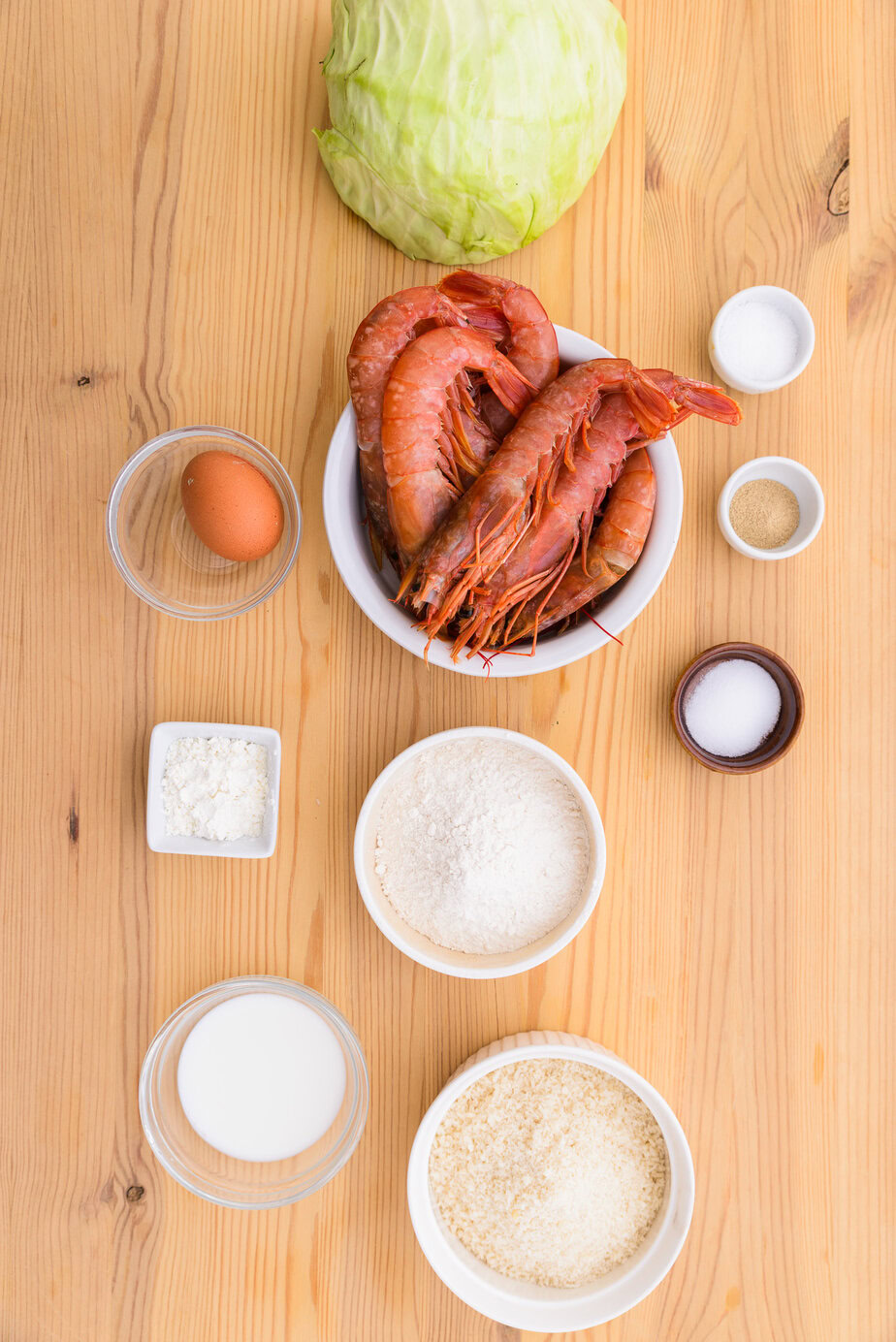
Large raw shrimp are essential. Ideally, use kuruma-ebi, Black Tiger shrimp, or white or pink shrimp. Size 13/15 is preferred, while 16/20 is the minimum I recommend.
Their firm, slightly sweet flesh gives a good balance between crust and shrimp and holds up well to the “straight” shaping known as massugu (まっすぐ).
Fine salt and baking soda are used for an alkaline treatment that deodorizes the shrimp and firms the fibers, followed by careful rinsing to remove any trace of baking soda. Wheat flour (T45/T55) forms the thin adhesion layer and is also used discreetly in the binder.
The egg forms the base of the binder and helps the panko adhere. Cold water loosens it just enough to create a smooth, even coating.
Nama panko, made from crustless shokupan, provides large, airy flakes that expand with steam and dry as they fry, forming a light, crisp crust. That said, if regular panko is all you have, use it.
A neutral oil, such as canola, corn, or peanut oil, stands up well to high heat and is ideal for frying.
Kewpie-style Japanese mayonnaise, made with egg yolks and a blend of vinegars, forms the base of homemade Japanese tartar sauce, which is usually thick and flavorful.
Tonkatsu sauce is a thick, sweet-savory condiment rich in umami, often made with Worcestershire sauce, ketchup, and sweet or fruity ingredients; its exact composition varies by brand and homemade version.
Signs of Authenticity and How to Serve It
From a technical standpoint, the straight shape (massugu, まっすぐ) is almost essential. Precise cuts along the underside, followed by gentle pressure to relax the shrimp without damaging the flesh, promote even cooking and help maintain a neat, straight shape, even in a bento. At home, it is not strictly mandatory, but if you ever invite Japanese guests…
The tail is left intact, with its last segment and fins, but the telson is removed and the moisture trapped inside is scraped out to prevent splattering in the oil. A rested binder reduces the risk of bare patches, and the nama panko is pressed on gently to create a very airy crust.
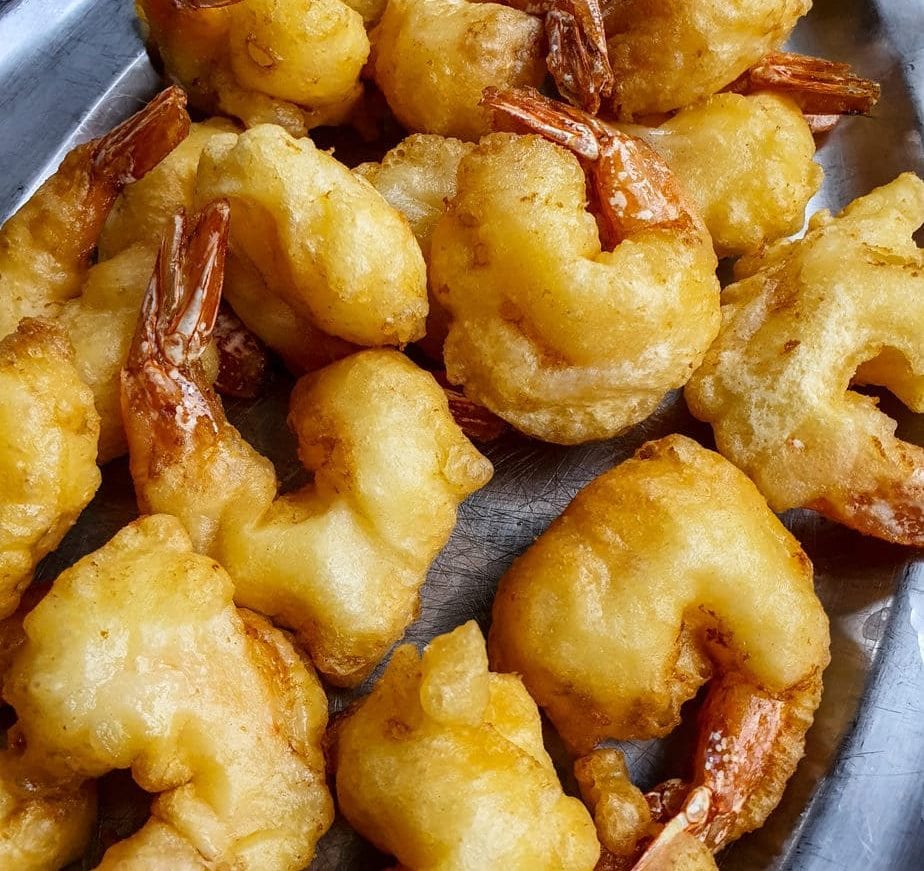
At first glance, tempura is pale and lacy, and is served with tentsuyu and daikon. Ebi Fry, by contrast, is breaded, golden brown, and opaque, and is served with fresh cabbage and Japanese tartar sauce or tonkatsu sauce.
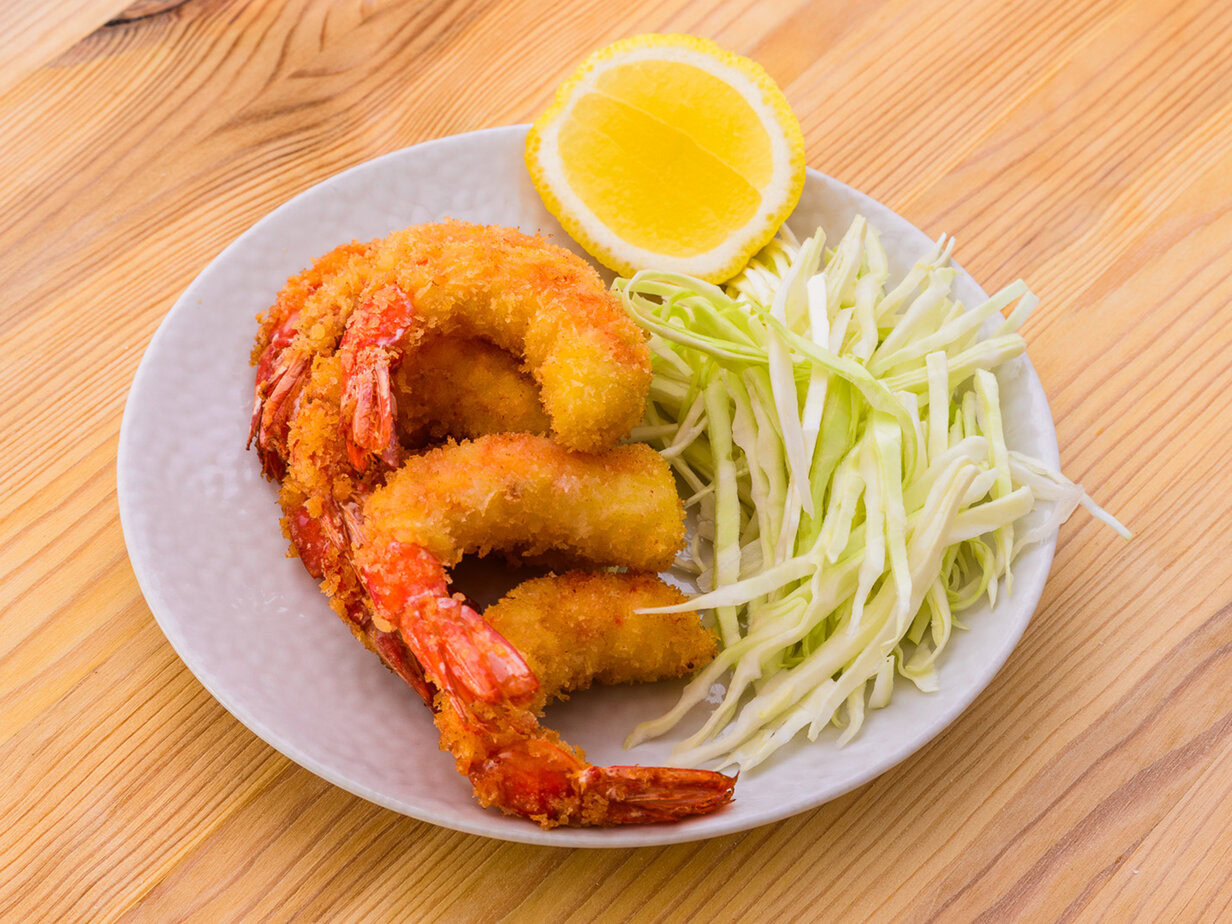
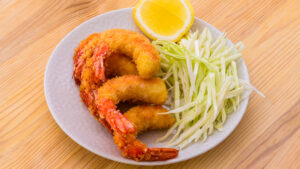
A classic serving includes a generous mound of finely shredded cabbage, straight, beautifully golden shrimp lined up neatly, the sauce of your choice on the side, a bowl of rice, miso soup, and, if desired, a lemon wedge.
Warning signs include a missing tail, which may indicate pre-peeled, industrial, or chemically treated shrimp; a thin, sandy, uniform crust, like “nuggets,” made from finely ground breadcrumbs; or a split tail, caused by a telson that was not removed.
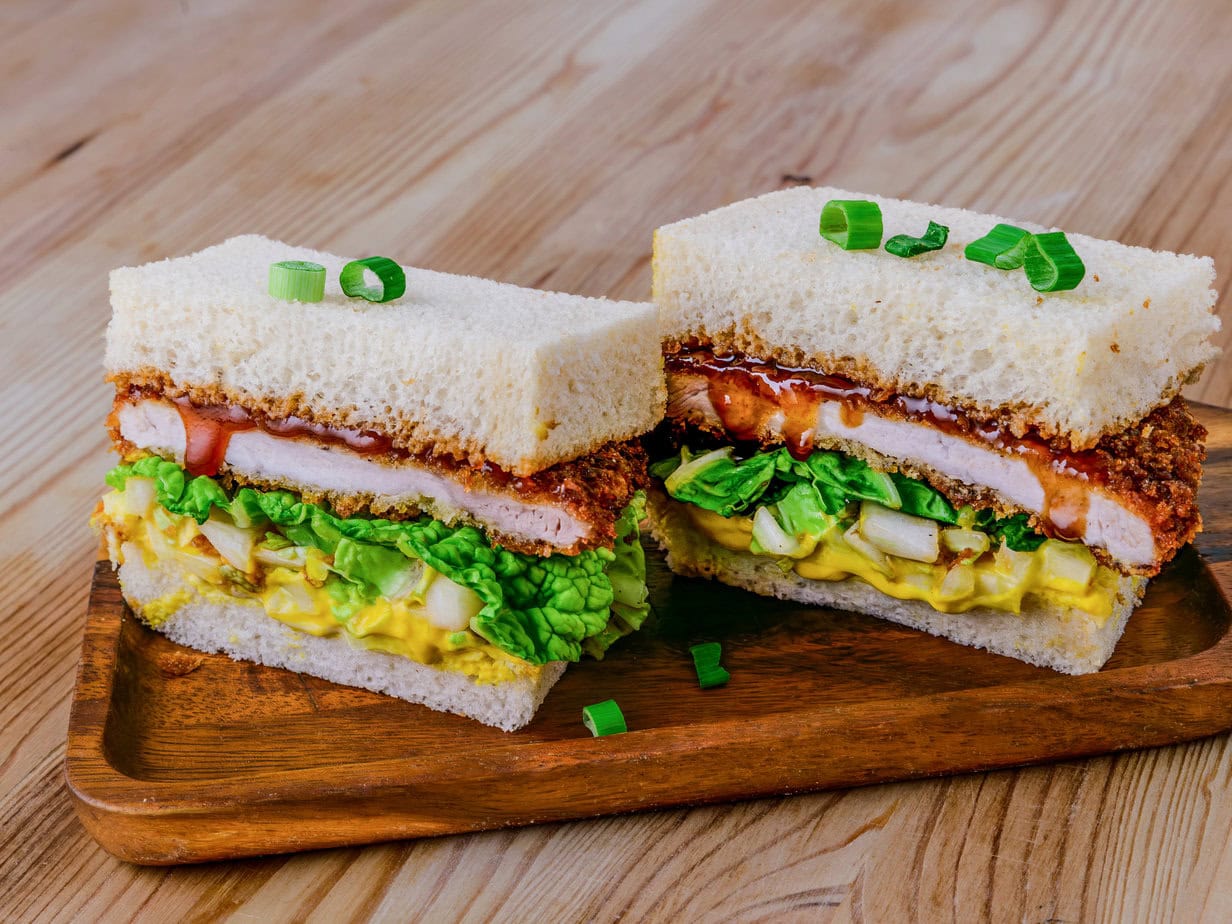
To place Ebi Fry among the great Japanese classics in the same family, you can compare it to chicken katsu, katsu sando, katsudon, omurice, or even Japanese curry. They all belong to the same family of Western-inspired dishes woven into the Japanese table.
Ingredients
- 8 shrimp headless, shell-on, 15 to 20 g each (Black Tiger or jumbo shrimp)
- 1 pinch salt
- 1 pinch white pepper
- oil for frying neutral vegetable oil, as needed
For cleaning
- 0.2 teaspoon baking soda
For the flour coating
- 40 g flour
- 10 g tempura flour
Egg mixture
- 1 egg
- 25 ml milk
To serve
- panko breadcrumbs fresh, coarsely ground, as needed
- cabbage finely shredded, as needed
Instructions
Peel and devein the shrimp
- Slide your index finger between the legs and the shell near the tail. Loosen and remove the legs, then peel away the shell from the flesh.8 shrimp
- Make a shallow incision along the back with a knife and remove the vein.
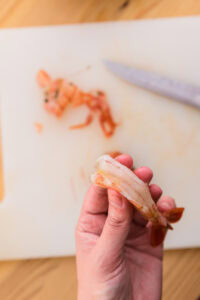
- Place the tip of the knife along the leg side and gently scrape from the tail toward the front to remove any remaining legs.
- Cut the tip of the tail at an angle, then scrape out the dark residue inside.
Clean
- Place the peeled shrimp in a bowl, sprinkle with baking soda, and rub to remove odors and impurities. Rinse, changing the water about 3 times.0.2 teaspoon baking soda
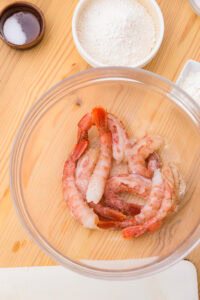
- Arrange the shrimp on paper towels and press with more paper towels to remove excess moisture.
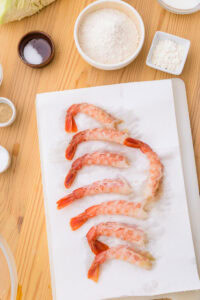
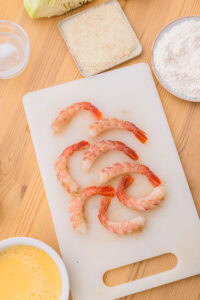
- Arrange the shrimp on a tray and season one side with salt and white pepper.1 pinch salt, 1 pinch white pepper
Bread
- Mix the flour and tempura flour. Holding each shrimp by the tail, coat it evenly in the mixture, then tap off the excess, paying special attention to the grooves and any loosened areas.40 g flour, 10 g tempura flour
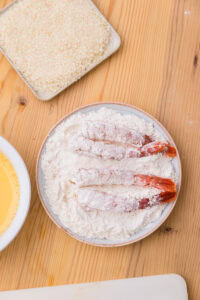
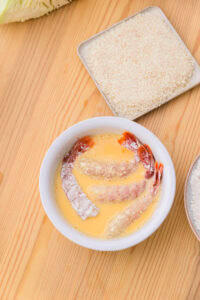
- Beat the egg with the milk. Dip the shrimp flesh into the egg mixture, very lightly dipping the tail shell as well, then let the excess drip off.1 egg, 25 ml milk
- Lay the shrimp in the panko breadcrumbs, head end down, then cover generously with more panko.panko breadcrumbs
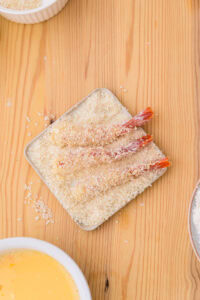
- Lift the shrimp with plenty of breadcrumbs and press firmly with both hands so the panko adheres.
- Press once more to secure the coating, then place the shrimp on a tray in a single layer.
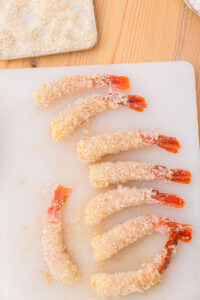
Fry
- Heat the oil to 160°C. Holding a breaded shrimp by the tail, gently lower it into the oil, head end first.oil for frying
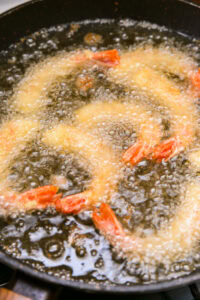
- Fry for about 3 min 30 sec. Separate the shrimp with chopsticks only if they look like they might stick, and avoid touching or turning them as they cook.
- Remove the shrimp and stand them upright on a rack to drain thoroughly.
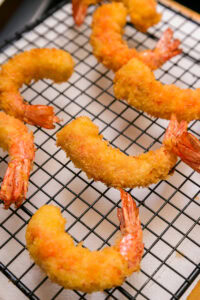
- After a brief rest, transfer the shrimp to paper towels to absorb any remaining oil.
Serve
- Serve with the shredded cabbage and enjoy with tartar sauce or your favorite dipping sauce.cabbage
Notes
- Once the peeled shrimp are thoroughly dry, they can be wrapped in plastic wrap and frozen.
- For an extra-crispy coating, press the panko firmly onto the shrimp and avoid turning them during frying.