



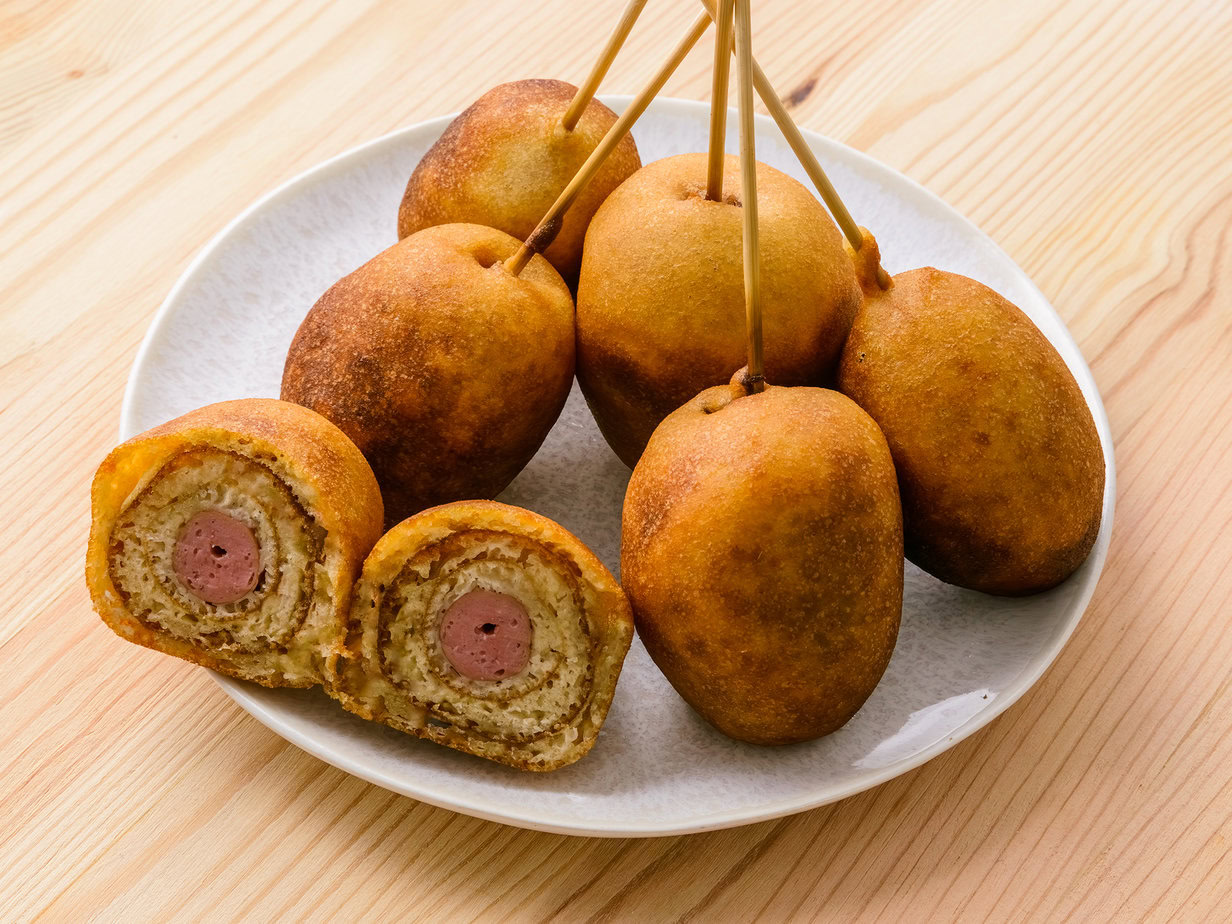
These homemade Thai corn dogs tuck tender cocktail sausages into a golden, fluffy batter for an irresistible, shareable snack.
The vendor brandishes a bamboo skewer like a retro stage mic. The “head” is a golden sphere that smells of vanilla sugar. Bite in and the crust snaps, revealing an airy crumb. At the center is a bright-red strip of lightly salted sausage.
For many Thais, that first bite is a shortcut back to school fairs and temple festivals. Yet Pong Neng is more than just a cousin of the corn dog.
Its sweeter batter demands patience and triple frying (an even more involved process than double frying), and its story traces back to temple fairs in the Ayutthaya period.
From Ayutthaya fairs to a nostalgic street snack
Frying spread through Siam under the joint influence of the Portuguese and Chinese traders, popularizing sweet batters for frying. At some point during the Ayutthaya period (16th–18th centuries), these inspirations met at temple fairs and gave birth to a batter-coated treat, later nicknamed Pong Neng among other local names, a distant cousin of the Vietnamese Banh Cam.
Lantern-lit stalls lined monastery courtyards; vendors kept turning the skewers so the little balls would cook evenly. Their silhouettes fluttered like fireflies before paper lanterns. Children coined nicknames — “big head,” “microphone,” … — to laugh at its puffed shape.
Dynasties vanished and capitals shifted, but the treat remained at fairs, offering for a few baht a thrill loud enough to drown out the clamor of fairground organs. Older Bangkokians still remember racing across temple courtyards, clutching a dripping ball while monks chanted the evening sutras.
From coconut filling to the sausage of the “Thai corn dog”
The earliest accounts mention a filling of grated coconut cooked with palm sugar: a purely sweet center. But by the mid-20th century, Thailand had fallen for the Western hot dog — cheap, long shelf life, carnival red.
Vendors found that the sausage held its shape through multiple dips, brought a salty note, and, above all, spared them the chore of peeling coconuts. Thus Pong Neng quietly shifted from dessert to sweet-and-savory snack.
Comparisons with the American corn dog multiplied, but the kinship is superficial. Here, there’s no cornmeal: just wheat flour, eggs, and enough sugar to brown the crust more deeply than the American donuts at amusement parks.
Anatomy of a classic Pong Neng
The batter is disarmingly simple: plain wheat flour whisked with eggs, a good amount of sugar, a teaspoon of baking powder, and a splash of milk or water. Many add a spoon or two of rice flour so the shell stays crisp once the steam has dissipated.
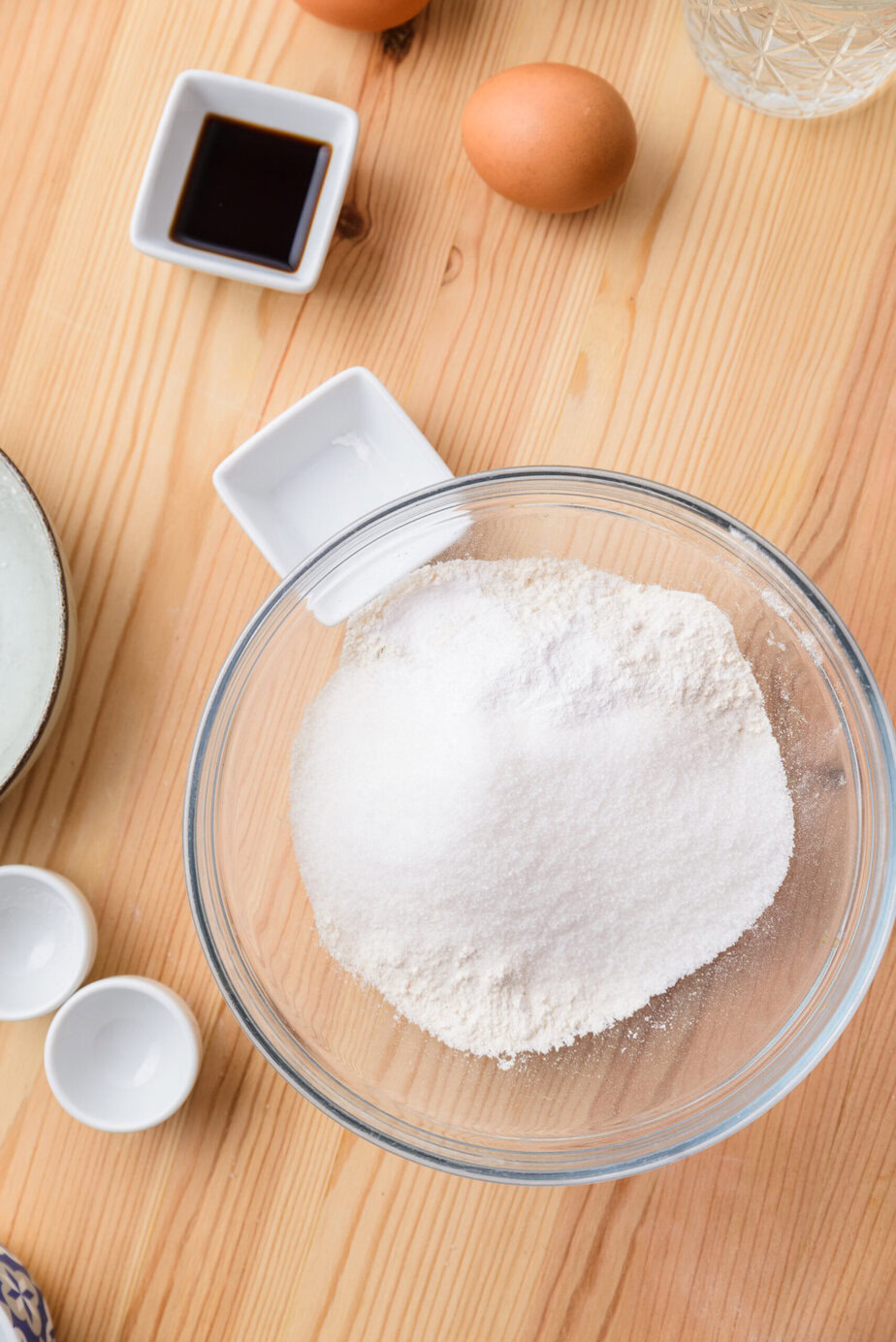
Vanilla extract, a modern touch now indispensable, perfumes the batter beautifully. A 30‑minute rest in the refrigerator relaxes the gluten and cools the starch; when cold batter meets oil at 165 °C, it puffs into a lighter, less greasy sponge — somewhere between a donut and a genoise.
The triple frying method
Achieving a neat sphere takes technique. Vendors skewer a 2–3 cm length of sausage, dip it into well-chilled batter poured into a narrow glass, then lower it into shimmering oil while twirling the skewer continuously.
After about a minute, the sphere rises, cools just enough to lose its shine, then dives back for a second coat and, finally, a third. The process forms a 5–6 cm ball, crisp outside and airy within. If the oil exceeds 170 °C, the crust browns too fast and the center can remain undercooked; skip one dip and the hallmark balloon silhouette slumps.
Authenticity, modern twists, and where to eat Pong Neng today
Ask devoted fans and you’ll hear four non-negotiables: a sweet wheat batter; at least three trips into hot oil; a well-centered stick; and a filling of sausage or, the old-school way, a coconut center.
Sidewalk debates rage: some swear by a fourth dip for more lift, others champion the “two‑flour” trick, while TikTokers finish with breadcrumbs, hide a cube of mozzarella for a cheesy pull, or flavor the batter with red curry before serving it with a sweet and sour sauce. Purists may roll their eyes — then end up cleaning the stick anyway.
Finding the classic version today requires a small pilgrimage. A few temple fairs in central Thailand still perfume the night with vanilla and hot oil; in Ratchaburi, one vendor even offers miniature Pong Neng for about one baht apiece, drawing a nostalgic crowd.
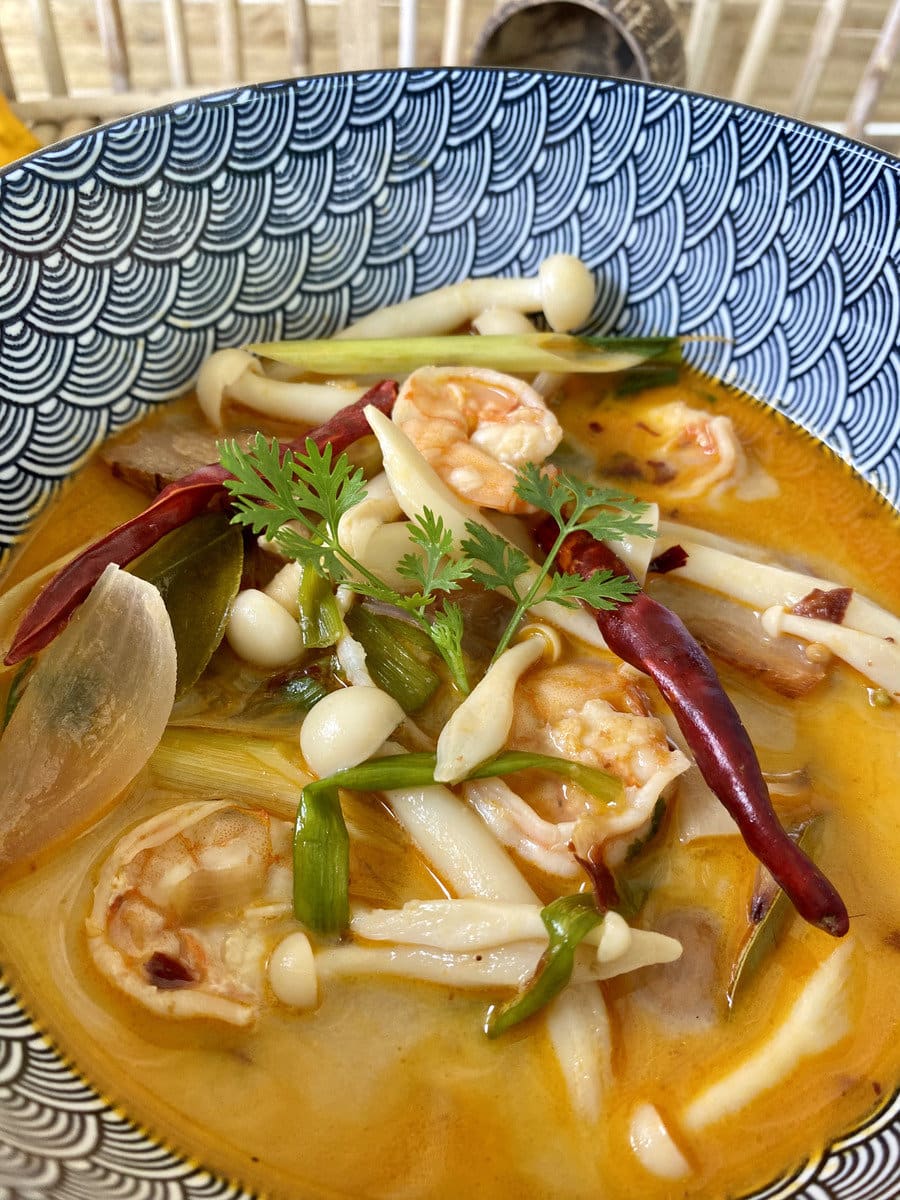
In Bangkok, between a stand of Thai basil beef sending up smoke, a wok of stir-fried noodles, and a bubbling cauldron of Tom Yum, pop-up carts appear in front of primary schools around Children’s Day.
Social media then dub them “ขนมแห่งความทรงจำ” (“snack of memories”), while former pupils relive recess. And for those far from any stall, supermarkets now sell red sausages specially labeled “for Pong Neng,” ready to be coated and fried at home: make the batter, chill it, twirl until the crust browns, then enjoy while the vanilla aroma still mingles with carnival air.
Ingredients
- 6 bamboo skewers
Batter
- 200 g all-purpose flour all-purpose
- 50 g granulated sugar
- 0.5 teaspoon salt
- 1 teaspoon vanilla sugar
- 0.5 teaspoon vanilla extract
- 1 teaspoon baking powder
- 235 ml water
- 2 eggs
Skewers
- 6 small cocktail sausages
Frying
- 600 ml vegetable oil or enough to suit the size of your pot
Instructions
Make the batter
- Prepare a sieve or fine-mesh strainer.
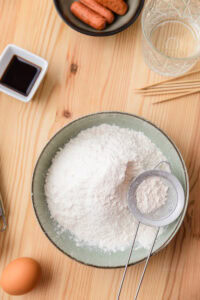
- Combine the flour, baking powder, salt, and vanilla sugar, then sift this mixture into a bowl.200 g all-purpose flour, 1 teaspoon baking powder, 0.5 teaspoon salt, 1 teaspoon vanilla sugar

- Whisk the eggs until foamy.2 eggs

- Gradually whisk in the granulated sugar until pale and airy.50 g granulated sugar

- Gradually whisk in the sifted flour mixture and the water until smooth.235 ml water

- Stir in the vanilla extract.0.5 teaspoon vanilla extract
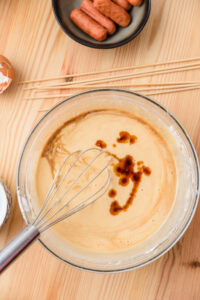
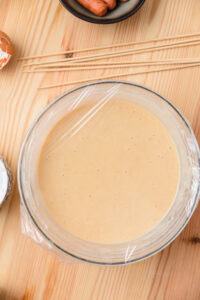
- Let the batter rest for 20 minutes.
Assemble and fry
- Thread a sausage onto the end of each skewer.6 small cocktail sausages, 6 bamboo skewers

- Heat the oil in a deep pot over medium heat until hot.600 ml vegetable oil

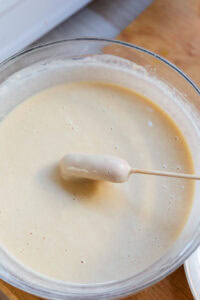
- Dip a skewer into the batter to coat it generously.
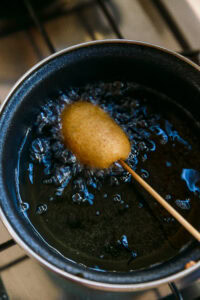
- Lower into the hot oil and fry until light golden brown.
- Drain on a rack until just warm.
- Repeat dipping and frying 3 to 4 times to build the desired coating.
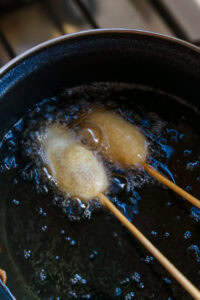
- Serve the battered sausage skewers piping hot.

Notes
Culinary sources
• Pong Neng, a must-try traditional Thai dessert – FOOD EQUIPMENT (Thai)
• Pong Neng – ครัวบ้านพิม (Thai)
• “Pong Khong Nam” stock photo taken in Thailand (1369726025) – Shutterstock (English)
• Pong Neng, “bomb” treat and homemade fried balls, so easy to make | ครัวบ้านทราย – Pantip (Thai)
• Squid Pong Neng with Betagro smoked sausage – Facebook (Thai)
• Make “Pong Neng” to relive childhood with this lovely traditional dessert – NaiBann – ในบ้าน (Thai)


Made these last night and the triple-fry really gives that crisp, airy shell, honestly as good as (maybe better than) the Pong Neng I’ve had from street stalls and casual Thai restaurants 😊
Made these on a rainy afternoon and they were the ultimate comfort food, with that sweet vanilla batter and crispy shell feeling like instant cozy vibes. The triple-fry sounds intense but it’s so worth it, everyone felt happily comforted after the first bite 😊
Made these last night and swapped in about 2 tablespoons of rice flour for the same amount of all-purpose flour to help the shell stay crisp. The batter puffed up beautifully through the dips and the result was even lighter and less greasy than expected 🙂
So glad I tried these on a night when I was exhausted and short on time, because the batter came together fast and the step-by-step made frying feel totally doable. They turned out golden and fluffy with barely any effort, perfect for a busy weeknight 🙂