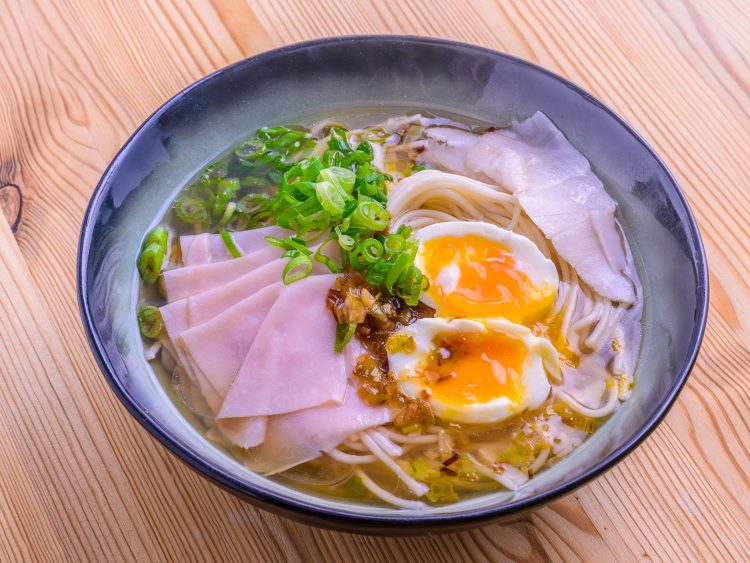
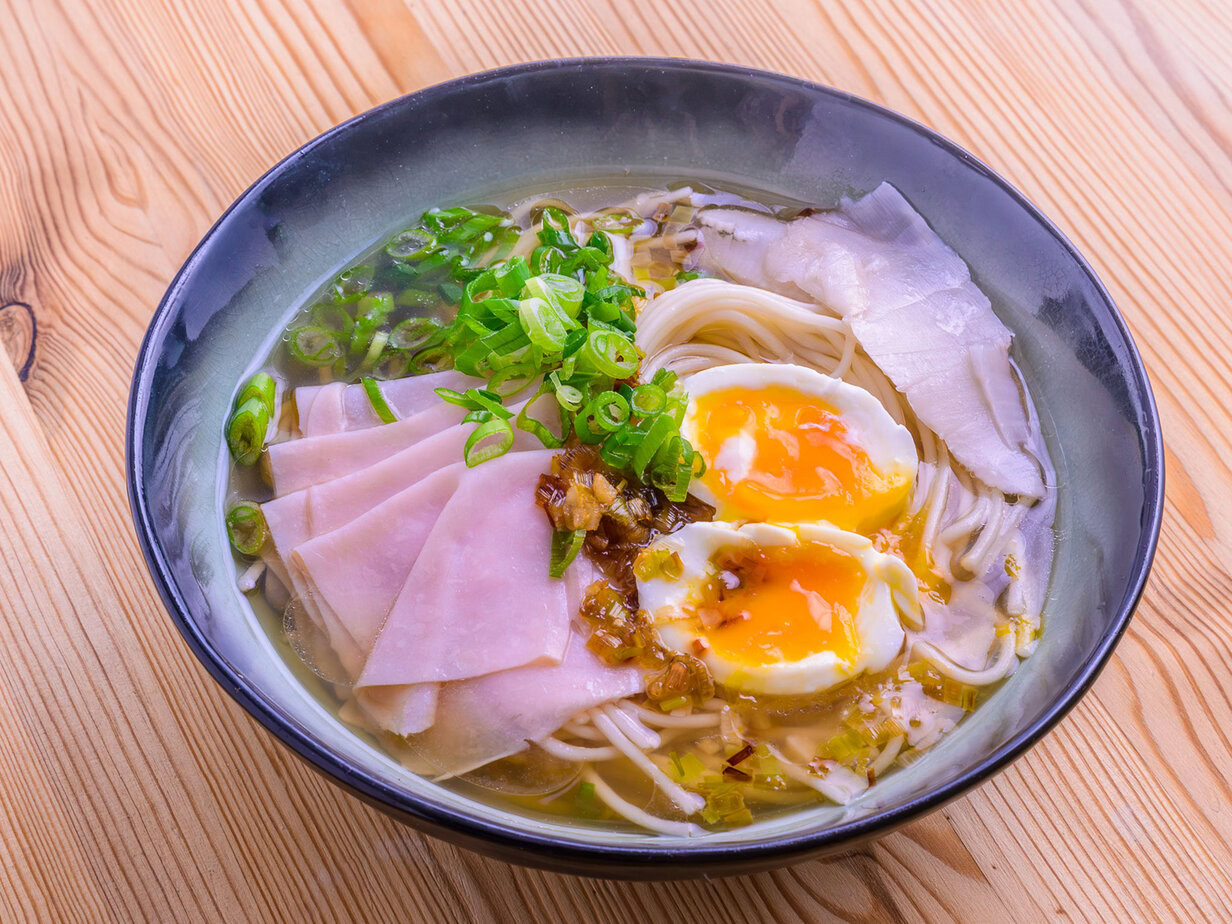
A Tokyo-style salt ramen: a clear broth of chicken, kombu and dried scallops, leek oil and thin noodles.
When the cold sets in and you want a piping-hot bowl that won’t leave you feeling heavy afterward, shio ramen is what you need. Its broth stays clear, almost golden, and smells of chicken, the sea and ginger all at once.
A drizzle of oil made with golden leek and garlic glistens on the surface, the thin noodles slip beneath it, and a hint of yuzu zest perfumes the first sip. You might think it’s reserved for Tokyo’s ramen counters, yet you can make it at home in an hour.

What Is Shio Ramen?
Shio means “salt” in Japanese. The word names the seasoning of the ramen, alongside shoyu (soy sauce), miso and tonkotsu. Each bowl brings together five components prepared separately: the broth, the tare (the concentrated seasoning), the aromatic oil, the noodles and the toppings. Here, a teaspoon of light soy sauce rounds out the salt tare without coloring the broth.
Shio and chintan refer to two different things. Chintan means “clear soup”: it’s a crystal-clear broth, the opposite of cloudy, milky paitan. This shio ramen is built on a chicken chintan broth, with a taste of the sea from the kombu, dried scallops and katsuobushi.
From Hakodate to Tokyo
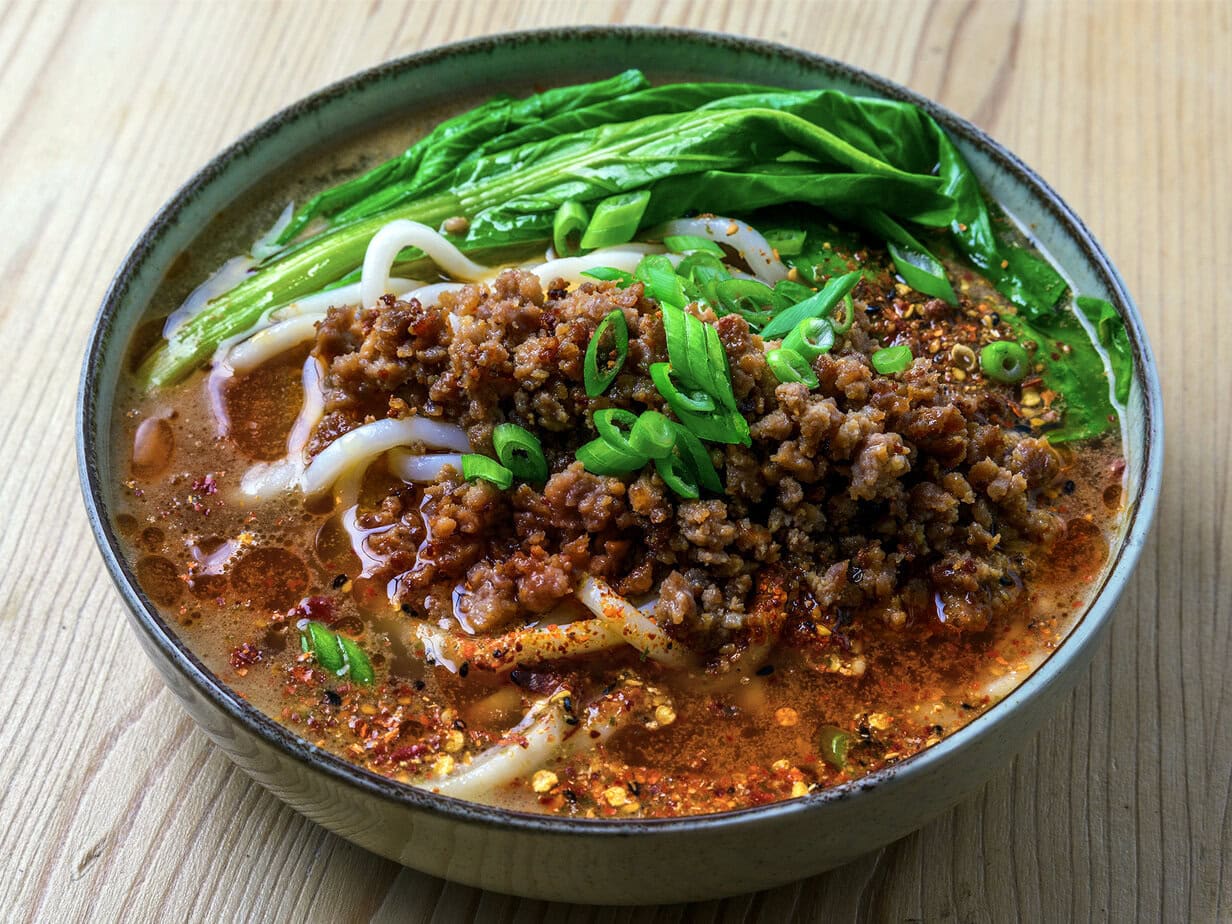
Hakodate, a port on the island of Hokkaido that opened to international trade in 1854, is said to be the birthplace of shio ramen. Chinese merchants brought their noodle soups there, and in 1884 a restaurant in the city advertised “Nankin soba,” one of the oldest written records of an ancestor of ramen. Hakodate’s broth is very pale and made with pork, chicken and kombu.
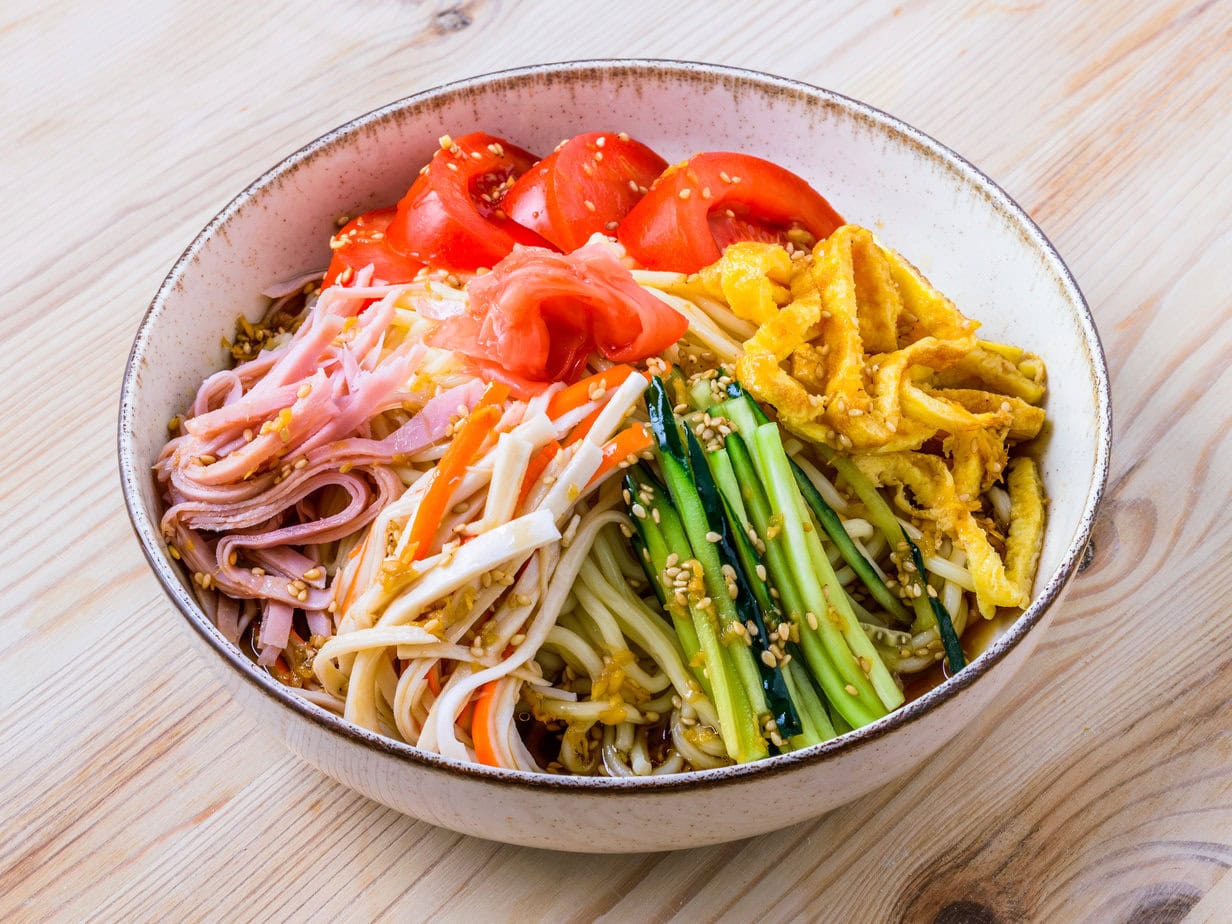
Tokyo later gave shio a more pronounced poultry flavor. Tokyo bowls often pair a chicken broth with a dashi made from kombu and dried fish, then finish with a drizzle of aromatic oil. Ramen has become an everyday dish in Japanese cuisine, and this homemade version follows the Tokyo template using ground chicken, which considerably shortens the broth’s cooking time.
The Main Ingredients in Shio Ramen
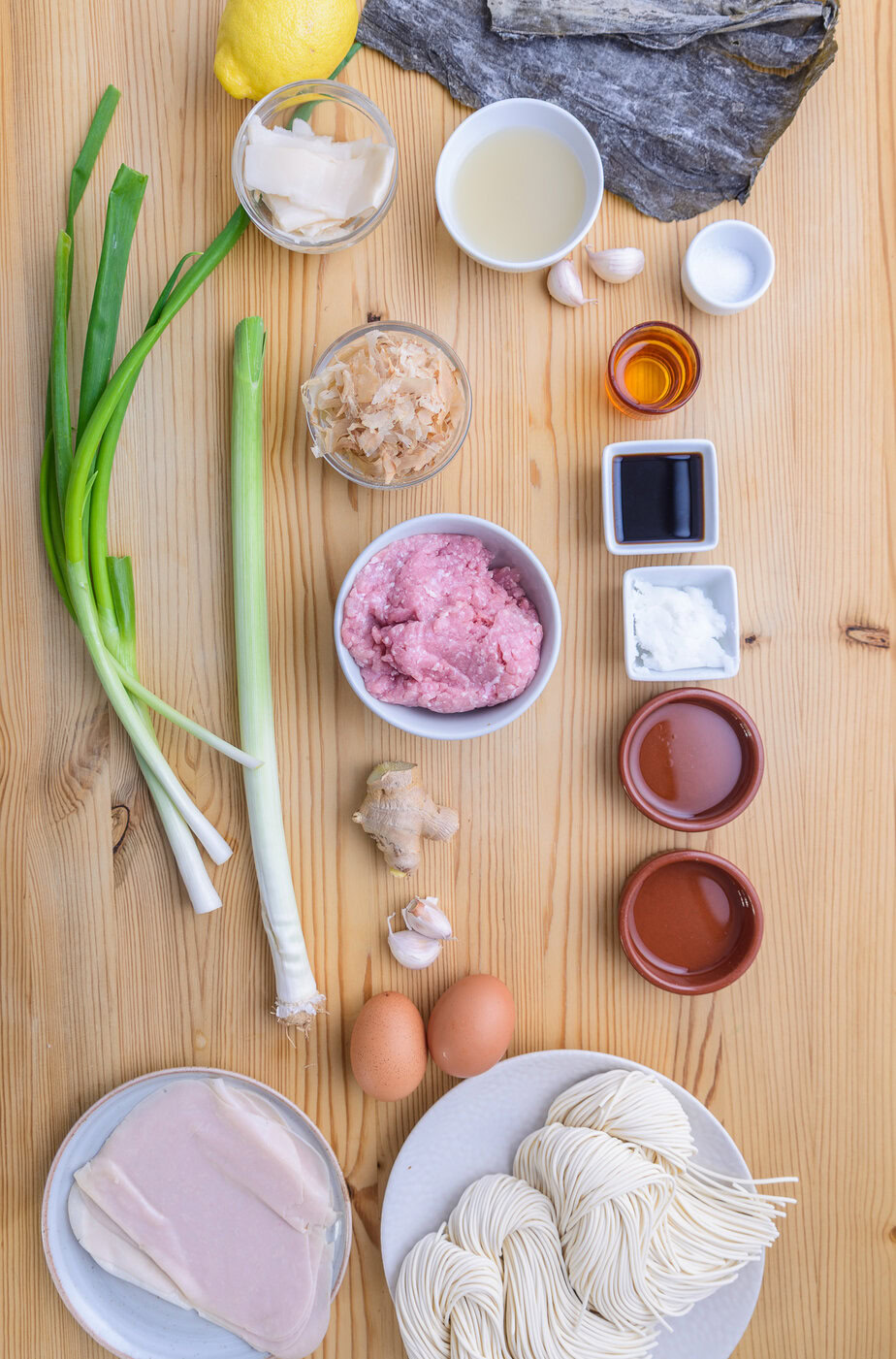
The broth begins with cold water in which the kombu and dried scallops (conpoy) soak. The kombu provides glutamates, the foundation of umami flavor, and the scallops deepen the taste of the sea. The ground chicken brings the poultry flavor, along with the green tops of Japanese leek (naganegi), ginger and garlic. Katsuobushi flakes, steeped at the end, add a smoky note.
The shio tare combines sake, dry white wine, mirin and salt, with a teaspoon of light soy sauce (usukuchi). “Light” refers to its color: it keeps the broth pale. The aromatic oil is made with lard, or duck or chicken fat, in which the leek whites and garlic slowly turn golden.
Thin, low-hydration ramen noodles hold their texture in this light broth. For toppings, two or three are enough: green onions, menma (seasoned bamboo shoots), marinated ramen eggs, yuzu zest or thin slices of cold lean meat. Pork chashu is too fatty for this delicate broth; chicken chashu or turkey breast suits it better.
Technical Pointers for a Clear Broth
The broth should barely simmer, with just a few lazy bubbles: a full boil emulsifies the fat and turns the broth cloudy. Take the kombu out of the pot just before the water reaches a simmer, or it will make the broth slimy or bitter. Skim mainly during the first ten minutes, never stir, and strain without pressing.
At home, all the tare goes into the broth at once, so you don’t end up with unevenly salted bowls. The broth, tare and oil keep separately in the refrigerator, and the noodles are cooked at the last minute.
Ingredients
Broth Base
- 2 L water
- 10 g kombu (dried kelp)
- 15 g dried scallops (conpoy), or the liquid from a can of clams or scallops, or clam juice
Broth
- 200 g ground chicken or ground turkey, or chicken wings or drumsticks
- 50 g Japanese leek greens (naganegi), or leek, onion or shallot greens
- 20 g fresh ginger
- 2 cloves garlic
- 15 g dried bonito flakes (katsuobushi)
- Hot water, to bring the strained broth up to 1.4 L (350 ml per bowl)
Aromatic Oil
- 3 tablespoons lard, or duck fat, or chicken fat
- 3 tablespoons Japanese leek whites (naganegi), finely diced, or leek or onion
- 2 cloves garlic, finely diced
Shio Tare
Noodles and Toppings
- 4 servings ramen noodles thin or medium-thin, preferably low-hydration
- Green onions, finely chopped
- Soft-boiled eggs, or marinated ramen eggs (ajitama)
- Seasoned bamboo shoots (menma)
- Yuzu zest, or lemon zest
- Thinly sliced lean cold cuts of your choice (pastrami, turkey breast, Italian cooked ham or chicken breast)
Instructions
Broth Base (Soaking)
- Pour the water into a saucepan.2 L water
- Add the kombu and the dried scallops.10 g kombu, 15 g dried scallops
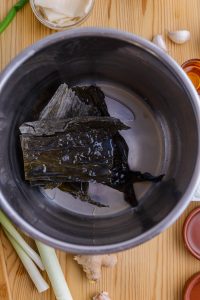
- Cover and let soak for 30 minutes off the heat, without warming it.
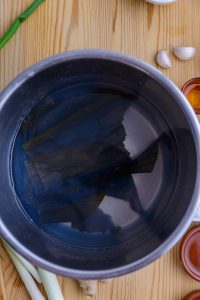
- While it soaks, cut the leek greens into large pieces that will fit in the saucepan.50 g Japanese leek greens
- Wash the ginger.20 g fresh ginger
- Cut it into thick slices.
- Peel the garlic cloves.2 cloves garlic
- Lightly crush them with the flat of the knife blade, just enough to split them.
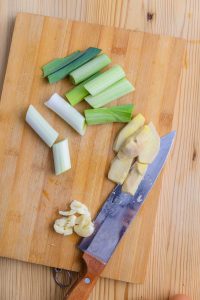
Broth
- After 30 minutes of soaking, place the saucepan over medium heat.
- Add the ground chicken.200 g ground chicken
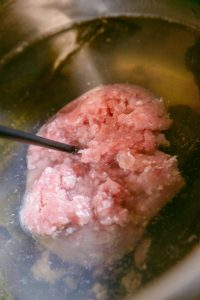
- Gently break it up with chopsticks.
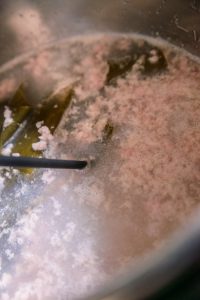
- Heat gently until the first bubbles appear (82 to 90 °C).
- At this point, remove the kombu and the scallops, just before the broth simmers, to keep it from turning slimy or bitter.
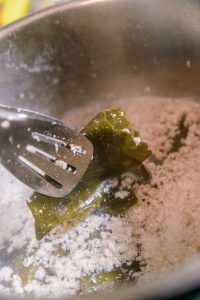
- Add the leek greens, ginger and garlic.
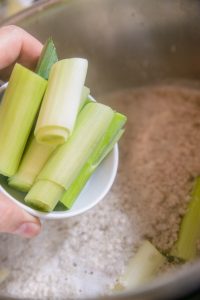
- Lower the heat.
- Simmer very gently for 30 minutes, uncovered.
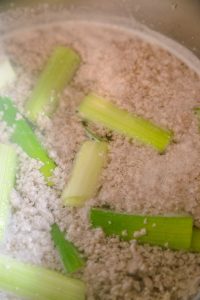
- Skim from time to time to keep the broth clear.
- Do not stir the broth while it cooks.
- Meanwhile, make the aromatic oil and the tare.
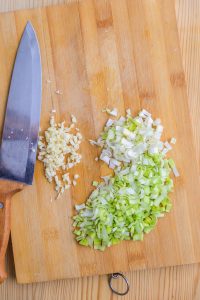
Aromatic Oil
- Put the lard, the diced leek whites and the diced garlic in a small frying pan.3 tablespoons lard,, 3 tablespoons Japanese leek whites, 2 cloves garlic,
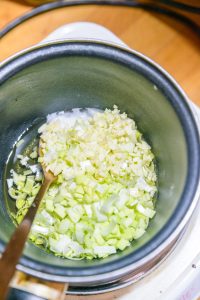
- Heat over low heat, watching closely.
- Take the pan off the heat as soon as the leek and garlic turn golden.
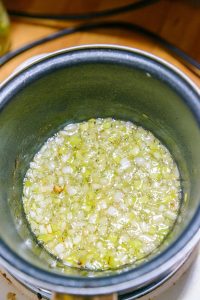
- Do not let them brown, or the oil will turn bitter.
Shio Tare
- Pour the sake, white wine and mirin into a small saucepan.4 tablespoons sake,, 2 tablespoons dry white wine, 1 tablespoon mirin
- Add the salt.2 teaspoons salt
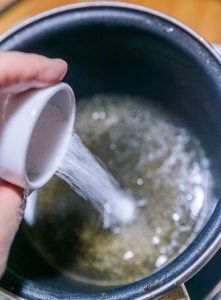
- Heat over medium heat, stirring, until the salt dissolves.
- Let it boil gently for 2 minutes.
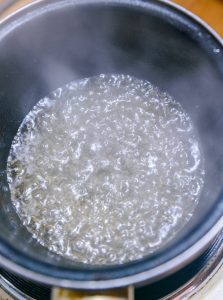
- Turn off the heat.
- Stir in the light soy sauce.1 teaspoon Japanese light soy sauce
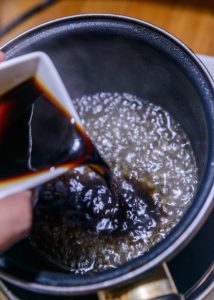
- Set the tare aside.
Finishing and Straining the Broth
- After 30 minutes of simmering, remove the chicken and aromatics with a skimmer.
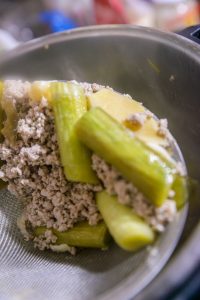
- Turn off the heat.
- Add the bonito flakes.15 g dried bonito flakes
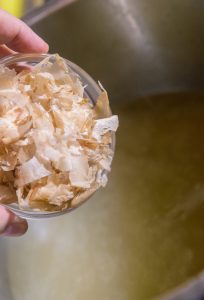
- Let steep for 2 minutes.
- Set a fine-mesh strainer over a heatproof bowl.
- Line the strainer with two layers of paper towels, or with cheesecloth, or a coffee filter.
- Strain the broth without pressing or squeezing.
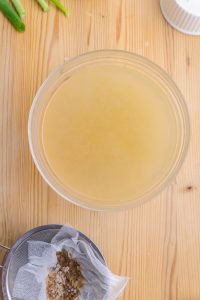
- Measure how much broth you have.
- Add hot water to bring it up to the volume indicated.Hot water,
Noodles and Assembly
- Cook the noodles according to the package directions, keeping them slightly firm.4 servings ramen noodles
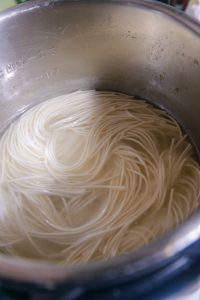
- Drain them well so the starchy cooking water doesn’t cloud the bowl.
- Mix all of the tare into the hot broth.
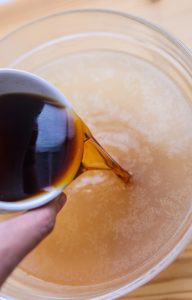
- Divide the broth among the bowls.
- Add the noodles.
- Drizzle each bowl with the aromatic oil, along with the golden leek and garlic.
- Top with your choice of green onions, eggs, menma, yuzu zest and cold cuts.Green onions,, Soft-boiled eggs,, Seasoned bamboo shoots, Yuzu zest,, Thinly sliced lean cold cuts
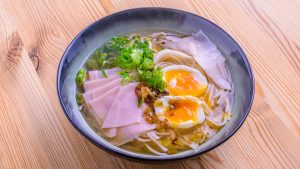
- Serve immediately.