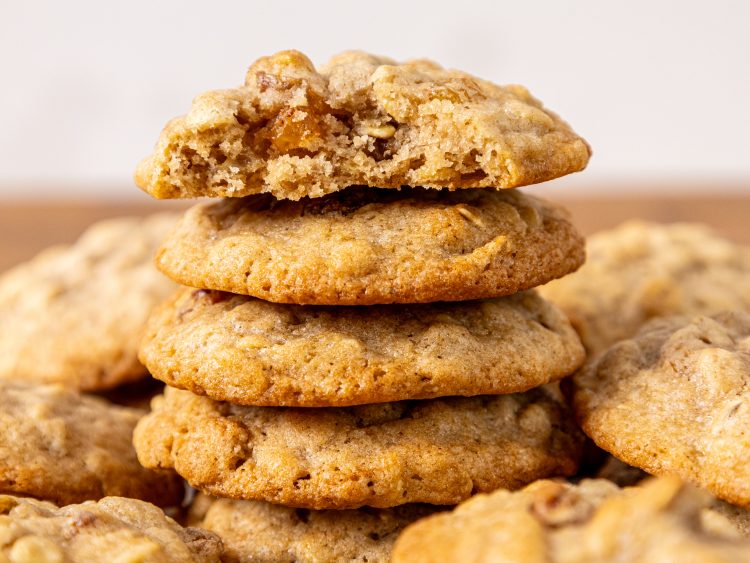
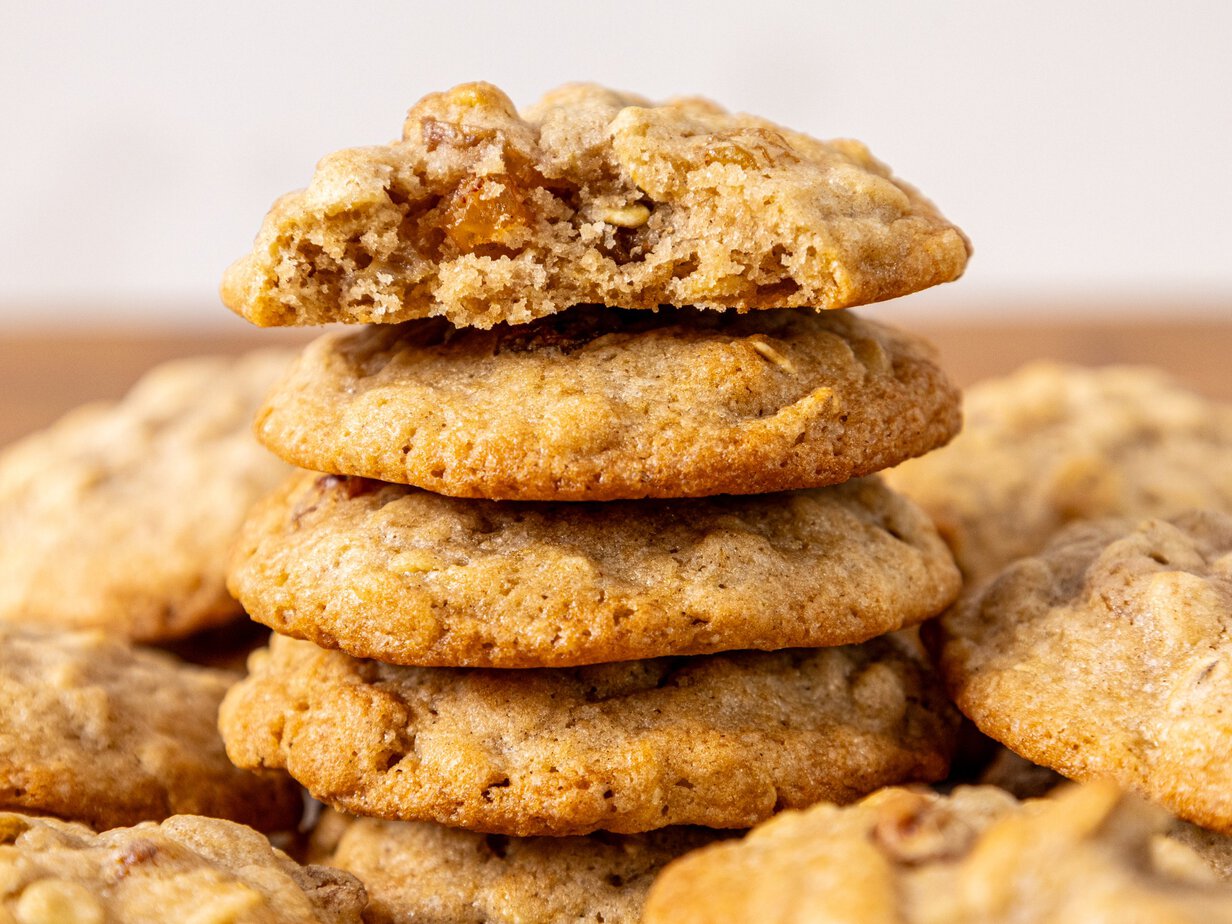
American cookies with thick rolled oats and raisins, golden at the edges, soft in the middle and fragrant with cinnamon.
It’s four o’clock, a craving for something sweet sets in, and the smell of butter and cinnamon drifting from the oven settles the matter. The edge barely cracks, then your teeth sink into a tender center where the oats keep their chew and the raisins burst like little dabs of jam.
You eat them warm, standing in the kitchen, without waiting for them to cool on the rack. The first one always disappears faster than expected.
What Is an Oatmeal Cookie?
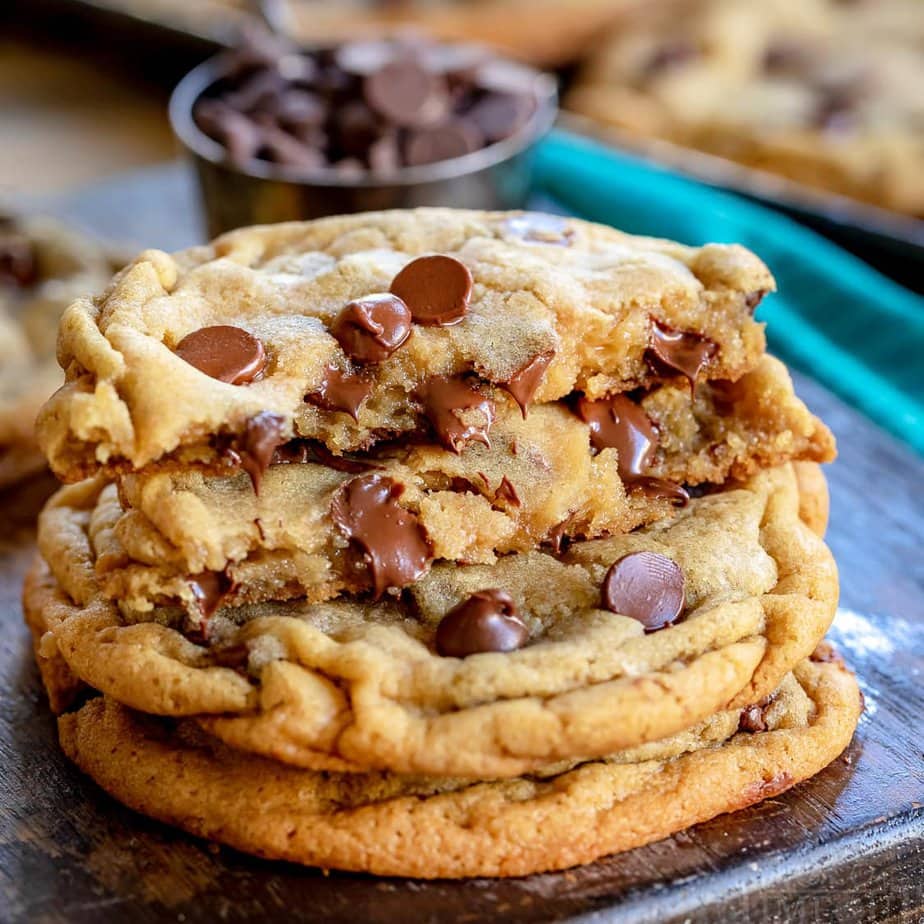
It’s a cookie made with a butter dough and two kinds of sugar, in which thick rolled oats and raisins provide most of the chew. In the United States, it’s called the oatmeal raisin cookie, and it’s the most widespread version in the home-baking side of American cuisine.
More rustic than the American cookie with chocolate chips, it keeps a bumpy surface where the oats stay visible. Butter creamed with brown sugar and white sugar gives it crisp edges and a tender center.
The thin Scandinavian and German oat cookies (havrekakor, Haferflockenkekse) belong to another family: made with melted butter, they come out of the oven flat, brittle and lacy. For another snack-time classic from the United States, try American brownies.
From Oatcakes to Boxes of Oats
In the British Isles, oats had long been eaten as dry, lightly sweetened oatcakes. The sweet oat cookie was born in the United States in the late 19th century: a recipe for oat cookies appeared in an American cookbook in 1896.
In the early 20th century, oat manufacturers printed recipes on their packaging, and the cookie found its way into homes. During World War I, it was presented as a way to save rationed wheat. Raisins then became a fixture thanks to a recipe printed on boxes of oats, which remains the benchmark for American tastes.
The Main Ingredients in Oatmeal Cookies
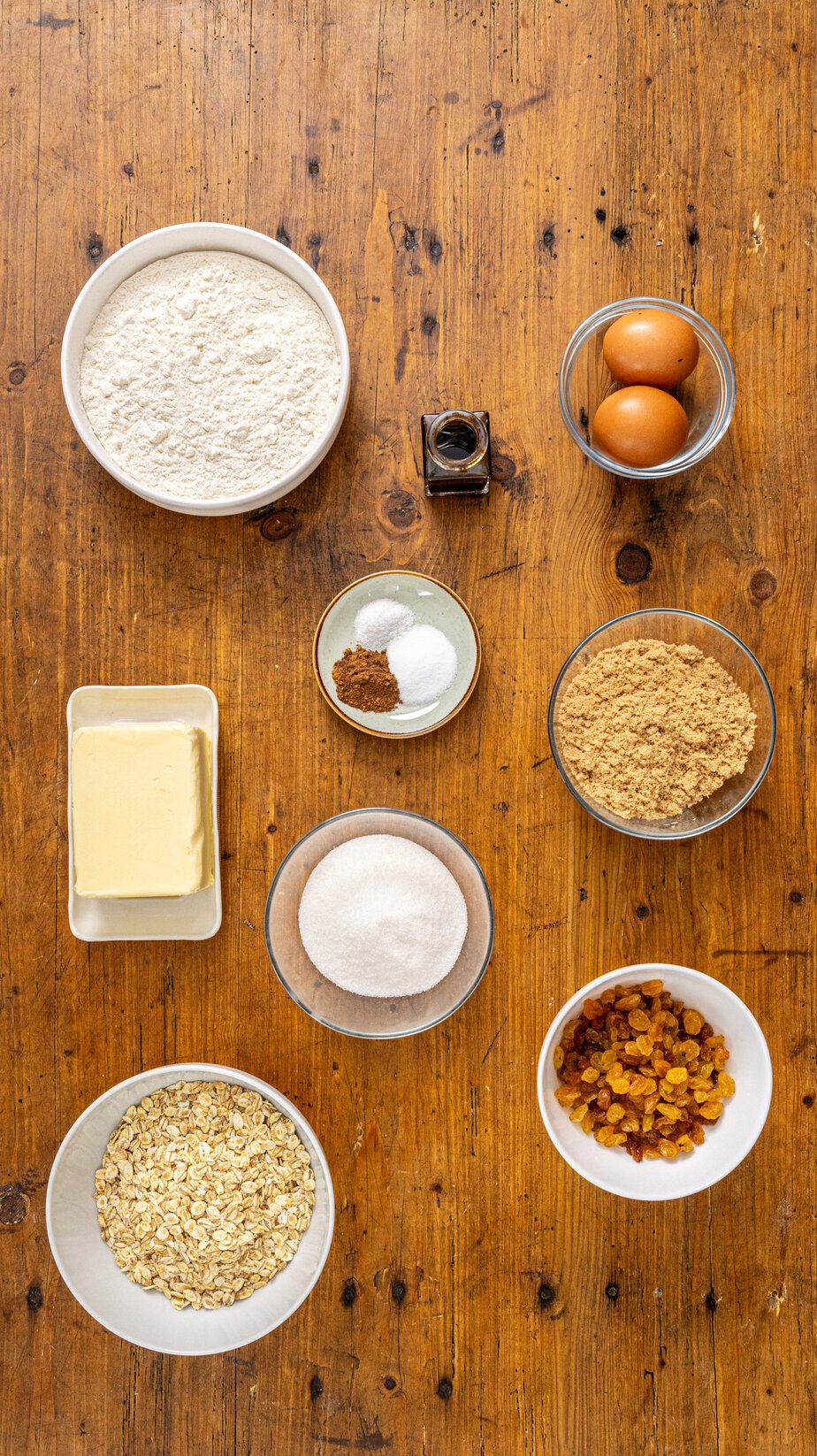
Thick rolled oats, the kind used for porridge, sold as “old-fashioned” oats in the United States, can still be felt after baking and give the cookies their chew. Small, thin flakes make a less firm cookie, and instant oats, which fall apart, are best avoided. Raisins bring fruitiness and a softness that contrasts with the oats.
Unsalted butter, at room temperature but still cool to the touch, is beaten with the brown sugar and granulated sugar until pale and fluffy: the air beaten in makes the cookie soft. This brown sugar is the moist kind sold in the United States as light brown sugar, and it keeps the center tender. The eggs bind the dough and the vanilla rounds out the flavor of the butter.
Weigh the all-purpose flour: too much flour stops the cookies from spreading. Baking soda, used on its own without baking powder, makes them puff up and turn golden. Cinnamon, which also flavors American cinnamon rolls and American carrot cake, and a pinch of salt complete the dry mix.
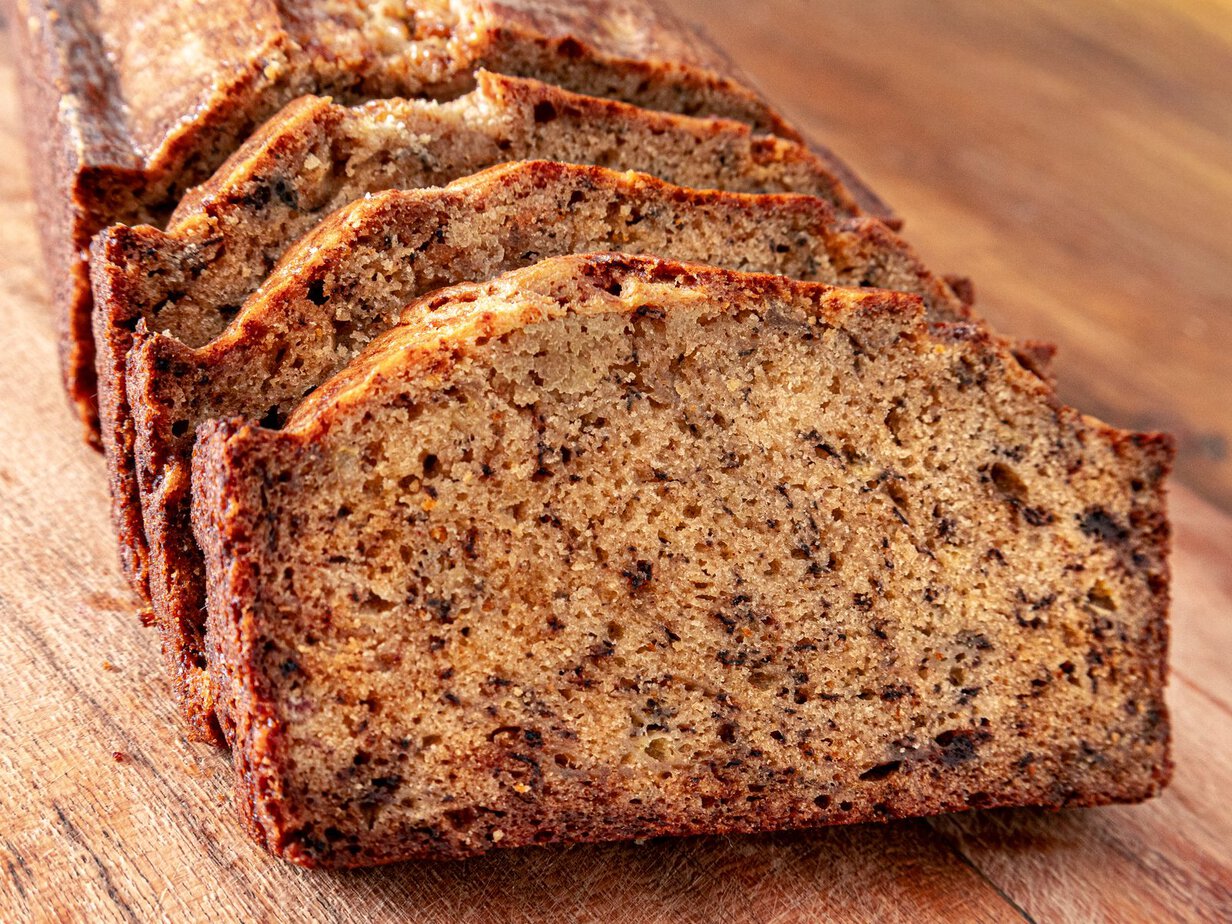
Technical Pointers for Soft Cookies
Butter that is too soft makes the cookies spread: a finger should sink into it without going all the way through. The dough doesn’t go into the fridge; it’s baked as soon as it’s ready.
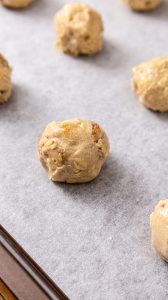
Space the balls of dough 6 cm apart, which means 12 to 15 per 40 x 30 cm baking sheet, and bake one sheet at a time. Take the cookies out of the oven when their edges start to turn golden, then let them rest for 2 minutes on the sheet before moving them to a wire rack.
Variations, Serving and Storage
Eaten warm, they have a softer center and a more pronounced buttery flavor. At room temperature, they go with coffee, black tea or a glass of milk, and have their place alongside American pancakes at a brunch.
The raisins can be replaced, in whole or in part, with chocolate chips or chopped walnuts. Toasted hazelnuts, cooled and then chopped, work too. For a small batch without turning on the oven, see air fryer cookies.
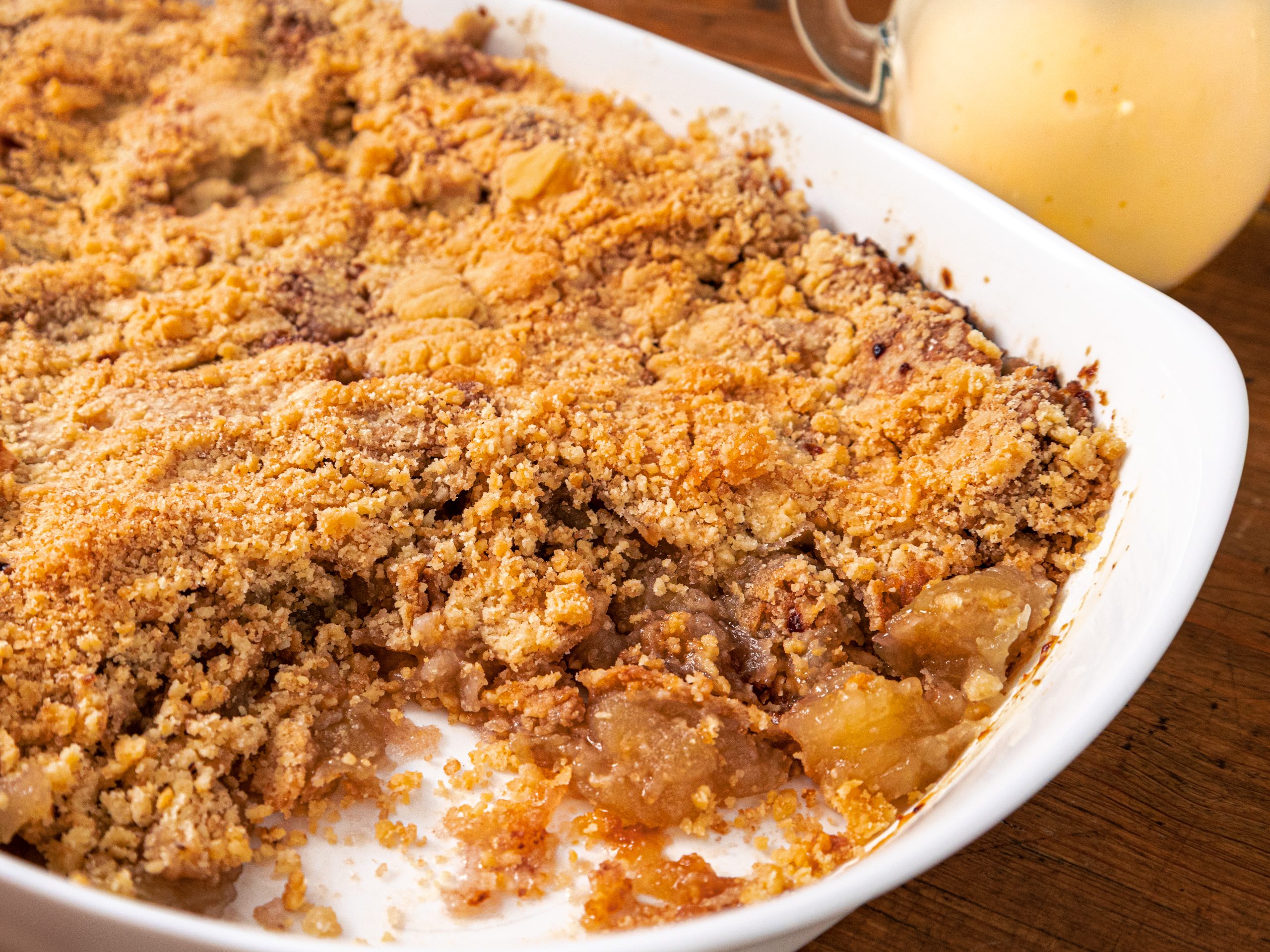
The cookies keep for a week in an airtight container and up to 3 months in the freezer. The dough can also be frozen in balls and baked straight from frozen, 12 minutes at 180 °C. This dough is meant to be eaten baked: for a version to enjoy raw, see our edible cookie dough.
Ingredients
Dry Mixture
- 240 g all-purpose flour T55
- 1 teaspoon baking soda
- 1 teaspoon cinnamon ground
- 0.5 teaspoon salt
Dough
- 200 g unsalted butter, at room temperature
- 160 g light vergeoise, or light brown sugar
- 150 g granulated sugar
- 2 large eggs, at room temperature
- 1 teaspoon vanilla extract
Oats and Raisins
- 180 g old-fashioned rolled oats
- 150 g raisins
Instructions
Preparation
- Preheat the oven to 180°C.
- Line rimmed baking sheets with parchment paper.
Dry Mixture
- Put the flour, baking soda, cinnamon and salt in a medium bowl.240 g all-purpose flour, 1 teaspoon baking soda, 1 teaspoon cinnamon, 0.5 teaspoon salt
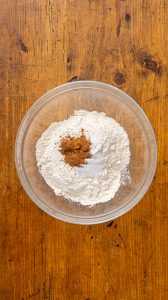
- Whisk until the mixture is completely uniform.
Dough
- Put the butter, vergeoise and granulated sugar in a large bowl.200 g unsalted butter,, 160 g light vergeoise,, 150 g granulated sugar
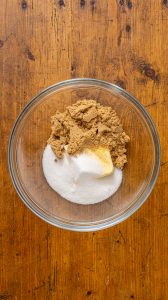
- Beat with a hand mixer or stand mixer for 3 to 6 minutes, until the mixture is pale, light and fluffy.
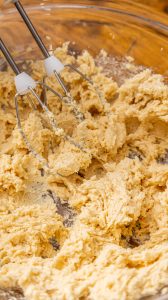
- Scrape down the sides of the bowl with a spatula.
- Add the first egg.2 large eggs,
- Beat until it is fully incorporated.
- Scrape down the sides of the bowl.
- Add the second egg.
- Beat until it is fully incorporated.
- Scrape down the sides of the bowl.
- Add the vanilla and beat just until incorporated.1 teaspoon vanilla extract
- Add all of the dry mixture at once.
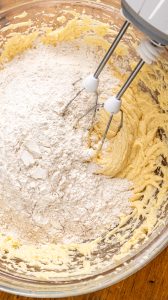
- Mix on the lowest speed until the flour is just starting to blend in.
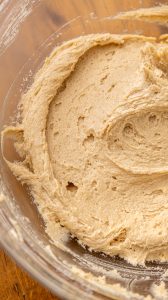
- Increase the speed for a few seconds, just until the dough is evenly mixed.
- Stop mixing as soon as the flour has disappeared.
Oats and Raisins
- Mix in the oats.180 g old-fashioned rolled oats
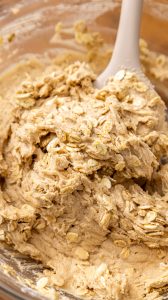
- Then mix in the raisins.150 g raisins
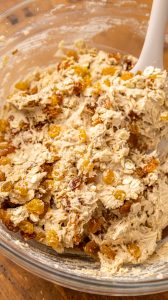
Shaping
- Scoop out portions of dough with a 1.5-tablespoon cookie scoop (portion scoop).
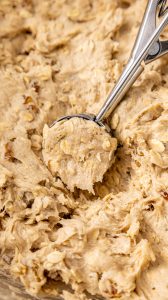
- Roll each portion into a ball between your hands.
- Place the balls on the baking sheet, spacing them 6 cm apart.
Baking
- Bake for 11 to 12 minutes, until the edges of the cookies start to turn golden.
- Halfway through baking, rotate the baking sheet a half turn so the cookies bake evenly.
- Take the baking sheet out of the oven.
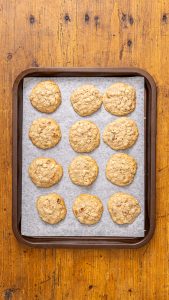
- Let the cookies rest on the baking sheet for 2 minutes.
- Transfer them to a wire rack.
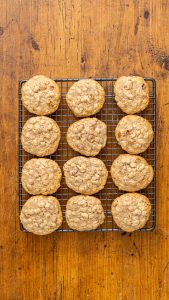
- Let them cool completely.
- Bake the rest of the dough the same way, one sheet at a time.
Storage
- Enjoy the cookies warm or cooled, or store them in an airtight container for up to a week.