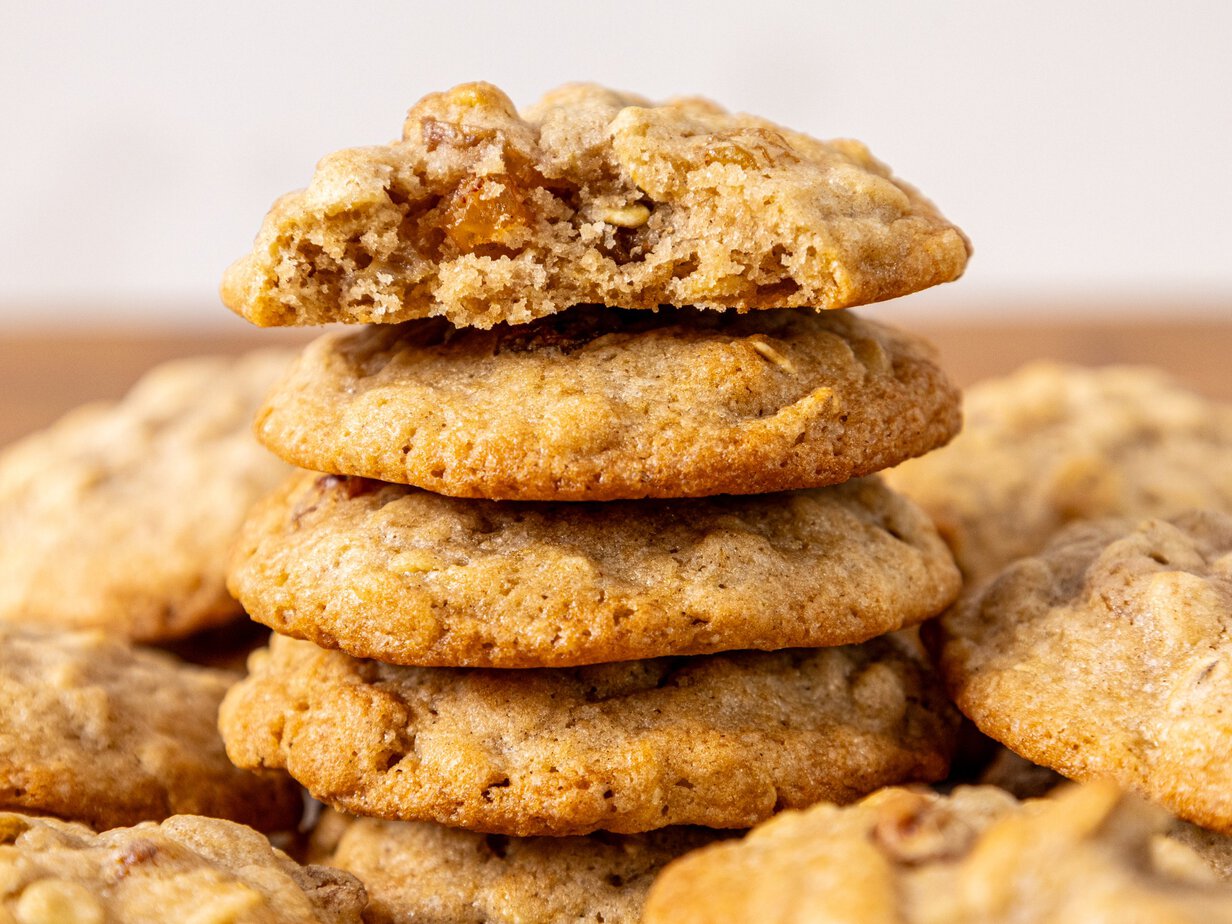
Servings: 32 cookies
Ingredients
Dry Mixture
- 240 g all-purpose flour T55
- 1 teaspoon baking soda
- 1 teaspoon cinnamon ground
- 0.5 teaspoon salt
Dough
- 200 g unsalted butter, at room temperature
- 160 g light vergeoise, or light brown sugar
- 150 g granulated sugar
- 2 large eggs, at room temperature
- 1 teaspoon vanilla extract
Oats and Raisins
- 180 g old-fashioned rolled oats
- 150 g raisins
Procédé
Preparation
- Preheat the oven to 180°C.
- Line rimmed baking sheets with parchment paper.
Dry Mixture
- Put the flour, baking soda, cinnamon and salt in a medium bowl.240 g all-purpose flour, 1 teaspoon baking soda, 1 teaspoon cinnamon, 0.5 teaspoon salt
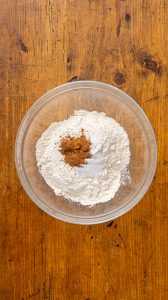
- Whisk until the mixture is completely uniform.
Dough
- Put the butter, vergeoise and granulated sugar in a large bowl.200 g unsalted butter,, 160 g light vergeoise,, 150 g granulated sugar
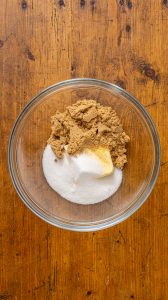
- Beat with a hand mixer or stand mixer for 3 to 6 minutes, until the mixture is pale, light and fluffy.
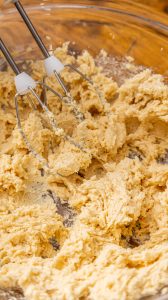
- Scrape down the sides of the bowl with a spatula.
- Add the first egg.2 large eggs,
- Beat until it is fully incorporated.
- Scrape down the sides of the bowl.
- Add the second egg.
- Beat until it is fully incorporated.
- Scrape down the sides of the bowl.
- Add the vanilla and beat just until incorporated.1 teaspoon vanilla extract
- Add all of the dry mixture at once.
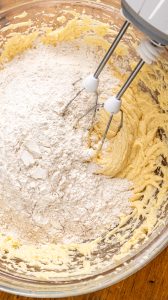
- Mix on the lowest speed until the flour is just starting to blend in.
- Increase the speed for a few seconds, just until the dough is evenly mixed.
- Stop mixing as soon as the flour has disappeared.
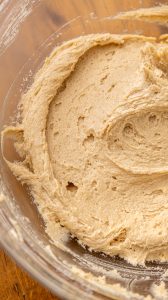
Oats and Raisins
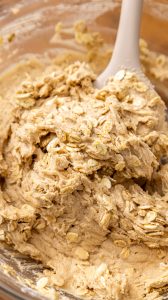
- Mix in the oats.180 g old-fashioned rolled oats
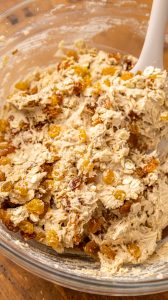
- Then mix in the raisins.150 g raisins
Shaping
- Scoop out portions of dough with a 1.5-tablespoon cookie scoop (portion scoop).
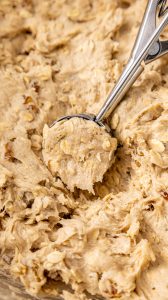
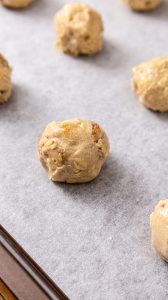
- Roll each portion into a ball between your hands.
- Place the balls on the baking sheet, spacing them 6 cm apart.
Baking
- Bake for 11 to 12 minutes, until the edges of the cookies start to turn golden.
- Halfway through baking, rotate the baking sheet a half turn so the cookies bake evenly.
- Take the baking sheet out of the oven.
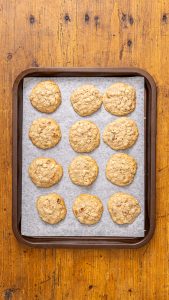
- Let the cookies rest on the baking sheet for 2 minutes.
- Transfer them to a wire rack.
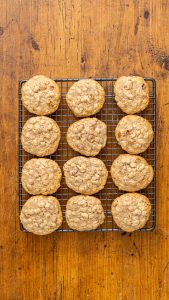
- Let them cool completely.
- Bake the rest of the dough the same way, one sheet at a time.
Storage
- Enjoy the cookies warm or cooled, or store them in an airtight container for up to a week.
Notes
Oats: American “old-fashioned” oats are the large, whole rolled oats (kernige Haferflocken in Germany), the kind you cook for oatmeal. They make a softer, chewier cookie. Small, thin oats (zarte Haferflocken, quick oats) also work, with less chew. Avoid instant oats, which fall apart. Extra-thick (jumbo) oats hold their shape well and make a firmer cookie.
Room-temperature butter: it should still feel cool to the touch, and your finger should be able to press into it without going all the way through. That's what gives the cookies the right spread. Cream the butter thoroughly with the sugars: the air beaten in creates the soft texture.
Baking soda: it needs to be fresh. Do not replace it with baking powder. To test it, pour a little into some vinegar: it should fizz right away.
Flour: weigh the flour. Too much flour keeps the cookies from spreading.
Vergeoise: American light brown sugar is a moist, soft brown sugar. Light vergeoise (Belgium, northern France) is the closest match; otherwise, use brown sugar or turbinado sugar.
Dough: there's no chilling in this recipe; the cookies are baked as soon as the dough is made.
Freezing the dough: place the dough balls on parchment paper and freeze them for 1 hour. Then transfer them to an airtight container. On the day you want them, place them, still frozen, on a parchment-lined baking sheet and bake them for 12 minutes in an oven preheated to 180°C.
Freezing baked cookies: freeze them in a single layer for a few hours, then store them in an airtight container. They keep for up to 3 months in the freezer.
Variations: you can replace all or some of the raisins with chocolate chips or chopped walnuts. The thin, crisp Scandinavian and German oat cookies (havrekakor, Haferflockenkekse), made with melted butter, are a different cookie, flat and lacy.
Spaced 6 cm apart, 12 to 15 balls fit on a standard baking sheet (40 x 30 cm), so you'll need 3 batches for the 32 cookies. If your kitchen is very warm and the cookies spread too much, first check how you weighed the flour and the temperature of the butter.
Did you make this recipe?Tag @marcwiner on Instagram!