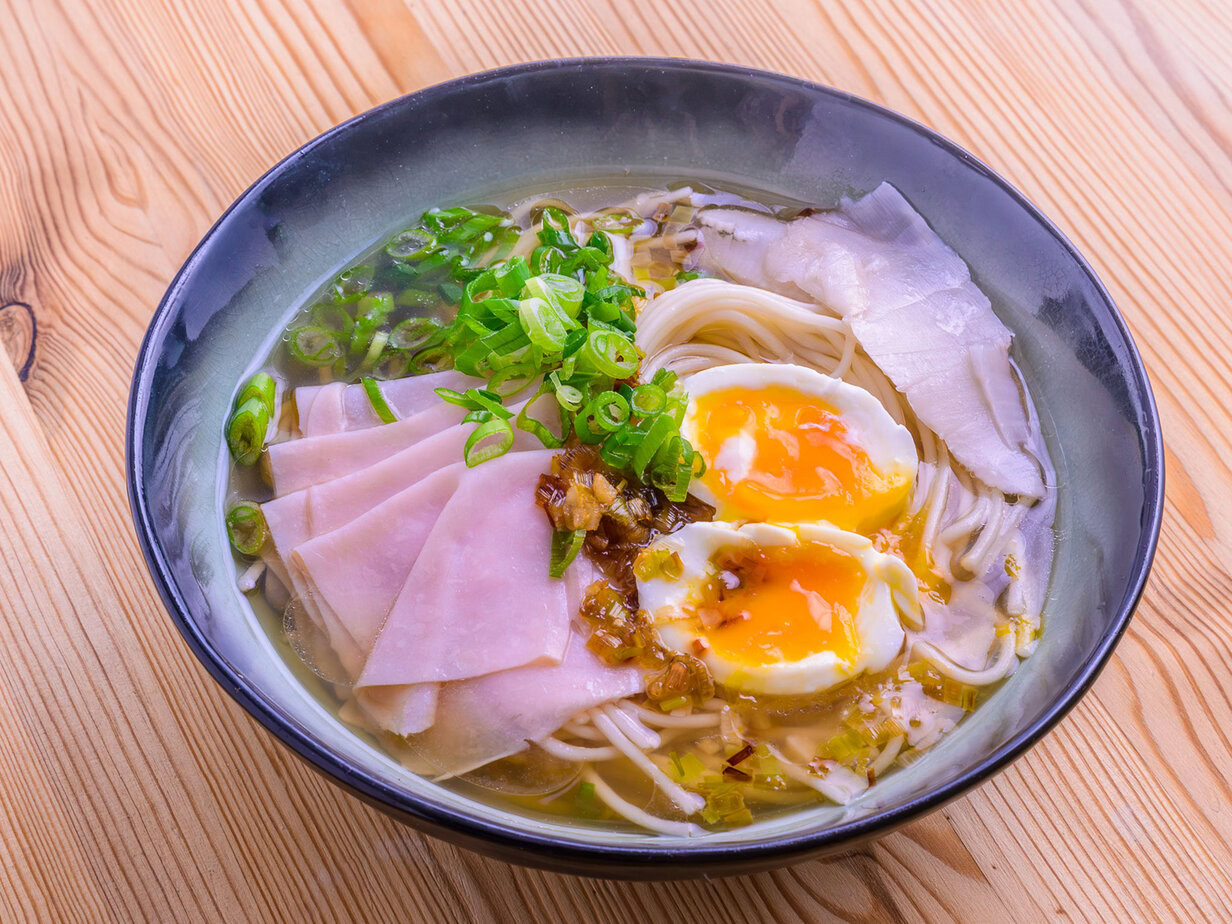
Servings: 4 bowls
Ingredients
Broth Base
- 2 L water
- 10 g kombu (dried kelp)
- 15 g dried scallops (conpoy), or the liquid from a can of clams or scallops, or clam juice
Broth
- 200 g ground chicken or ground turkey, or chicken wings or drumsticks
- 50 g Japanese leek greens (naganegi), or leek, onion or shallot greens
- 20 g fresh ginger
- 2 cloves garlic
- 15 g dried bonito flakes (katsuobushi)
- Hot water, to bring the strained broth up to 1.4 L (350 ml per bowl)
Aromatic Oil
- 3 tablespoons lard, or duck fat, or chicken fat
- 3 tablespoons Japanese leek whites (naganegi), finely diced, or leek or onion
- 2 cloves garlic, finely diced
Shio Tare
Noodles and Toppings
- 4 servings ramen noodles thin or medium-thin, preferably low-hydration
- Green onions, finely chopped
- Soft-boiled eggs, or marinated ramen eggs (ajitama)
- Seasoned bamboo shoots (menma)
- Yuzu zest, or lemon zest
- Thinly sliced lean cold cuts of your choice (pastrami, turkey breast, Italian cooked ham or chicken breast)
Procédé
Broth Base (Soaking)
- Pour the water into a saucepan.2 L water
- Add the kombu and the dried scallops.10 g kombu, 15 g dried scallops
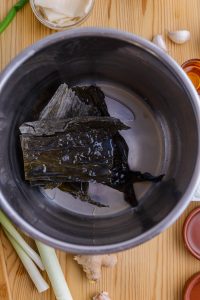
- Cover and let soak for 30 minutes off the heat, without warming it.
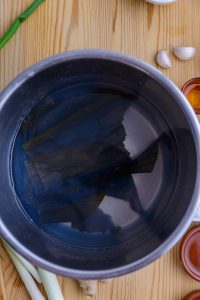
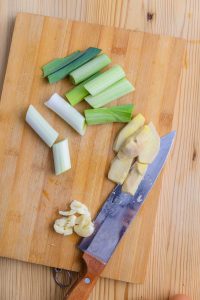
- While it soaks, cut the leek greens into large pieces that will fit in the saucepan.50 g Japanese leek greens
- Wash the ginger.20 g fresh ginger
- Cut it into thick slices.
- Peel the garlic cloves.2 cloves garlic
- Lightly crush them with the flat of the knife blade, just enough to split them.
Broth
- After 30 minutes of soaking, place the saucepan over medium heat.
- Add the ground chicken.200 g ground chicken
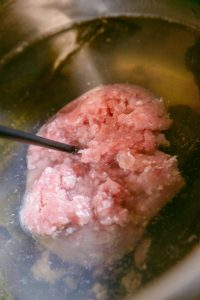
- Gently break it up with chopsticks.
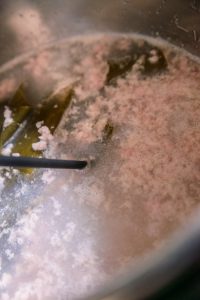
- Heat gently until the first bubbles appear (82 to 90 °C).
- At this point, remove the kombu and the scallops, just before the broth simmers, to keep it from turning slimy or bitter.
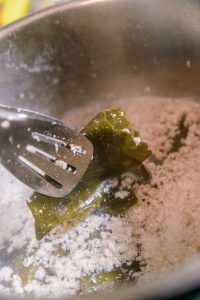
- Add the leek greens, ginger and garlic.
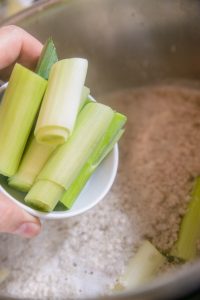
- Lower the heat.
- Simmer very gently for 30 minutes, uncovered.
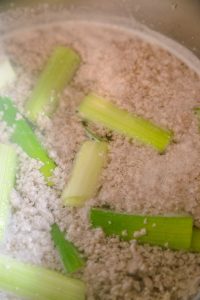
- Skim from time to time to keep the broth clear.
- Do not stir the broth while it cooks.
- Meanwhile, make the aromatic oil and the tare.
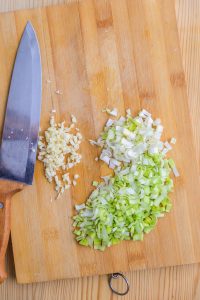
Aromatic Oil
- Put the lard, the diced leek whites and the diced garlic in a small frying pan.3 tablespoons lard,, 3 tablespoons Japanese leek whites, 2 cloves garlic,
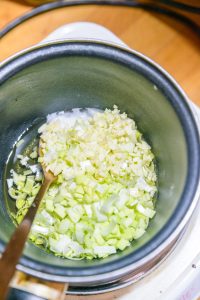
- Heat over low heat, watching closely.
- Take the pan off the heat as soon as the leek and garlic turn golden.
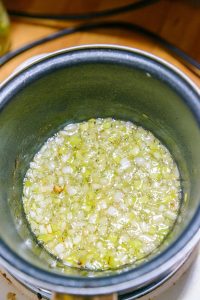
- Do not let them brown, or the oil will turn bitter.
Shio Tare
- Pour the sake, white wine and mirin into a small saucepan.4 tablespoons sake,, 2 tablespoons dry white wine, 1 tablespoon mirin
- Add the salt.2 teaspoons salt
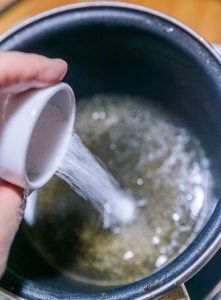
- Heat over medium heat, stirring, until the salt dissolves.
- Let it boil gently for 2 minutes.
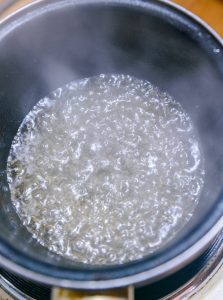
- Turn off the heat.
- Stir in the light soy sauce.1 teaspoon Japanese light soy sauce
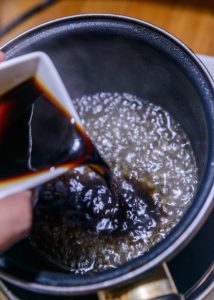
- Set the tare aside.
Finishing and Straining the Broth
- After 30 minutes of simmering, remove the chicken and aromatics with a skimmer.
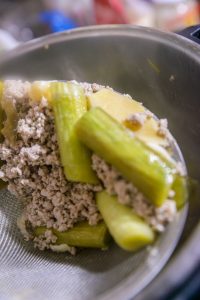
- Turn off the heat.
- Add the bonito flakes.15 g dried bonito flakes
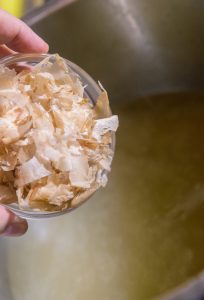
- Let steep for 2 minutes.
- Set a fine-mesh strainer over a heatproof bowl.
- Line the strainer with two layers of paper towels, or with cheesecloth, or a coffee filter.
- Strain the broth without pressing or squeezing.
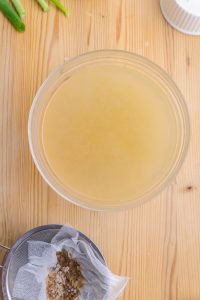
- Measure how much broth you have.
- Add hot water to bring it up to the volume indicated.Hot water,
Noodles and Assembly
- Cook the noodles according to the package directions, keeping them slightly firm.4 servings ramen noodles
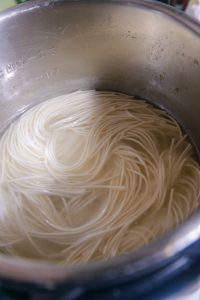
- Drain them well so the starchy cooking water doesn't cloud the bowl.
- Mix all of the tare into the hot broth.
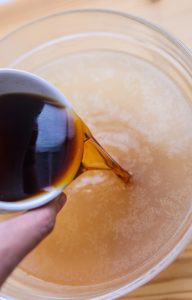
- Divide the broth among the bowls.
- Add the noodles.
- Drizzle each bowl with the aromatic oil, along with the golden leek and garlic.
- Top with your choice of green onions, eggs, menma, yuzu zest and cold cuts.Green onions,, Soft-boiled eggs,, Seasoned bamboo shoots, Yuzu zest,, Thinly sliced lean cold cuts
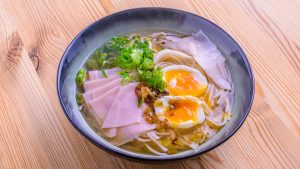
- Serve immediately.
Notes
Clear broth: it should barely simmer, with just a few lazy bubbles. A rolling boil emulsifies the fat and clouds the broth. Skim especially during the first 10 minutes.
Water: soft or filtered water draws more umami out of the kombu, while hard water gives a flatter-tasting broth.
Dried scallops: look in the dried goods aisle of Asian grocery stores. If you can't find them, add the liquid from a can of clams or scallops when you combine the broth and the tare.
Chicken: wings, drumsticks or carcasses give more body (collagen) than ground chicken, always kept at the barest simmer. The cooked ground chicken can be used afterward in onigiri.
Assembly: in restaurants, the tare is measured out bowl by bowl. At home, mixing all of the tare into the broth keeps some bowls from ending up saltier than others.
Meat: thin slices of lean cold cuts work better than pork chashu, which is too fatty for this delicate broth. Chicken chashu is the other option. Stick to just 2 or 3 toppings.
Other topping ideas: nori, sweet corn, wakame, narutomaki, blanched spinach. Marinated eggs: see the recipe for ramen eggs (ajitsuke tamago).
Longer version: chintan broth can serve as the base, with the tare adjusted to taste.
Soy sauce: usukuchi or shiro shoyu keeps the broth pale. Regular soy sauce works, but it colors the broth.
Noodles: if you can't get fresh noodles, use dried Japanese ramen noodles.
Storage: the broth keeps 3 to 4 days in the refrigerator in an airtight container, or 1 month in the freezer in portions. The aromatic oil solidifies when cold and keeps for about 1 week. The tare keeps in the refrigerator in a sealed jar. Reheat each component separately, the broth over low heat without letting it boil.
Did you make this recipe?Tag @marcwiner on Instagram!