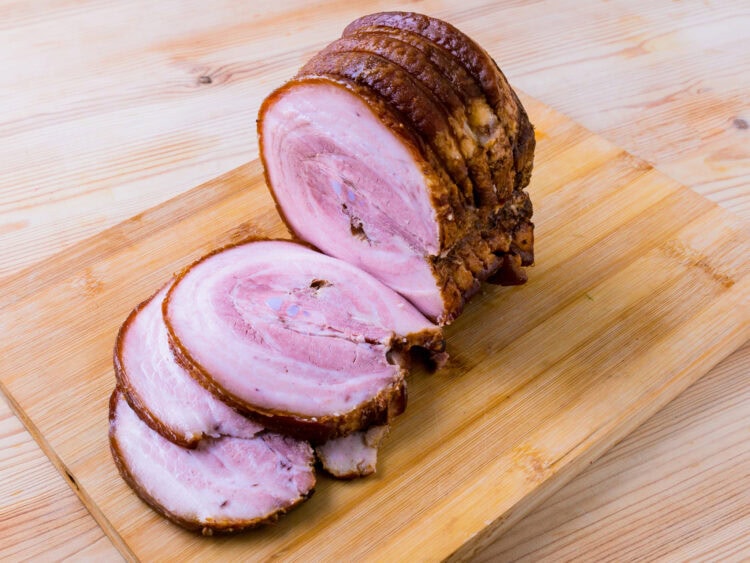
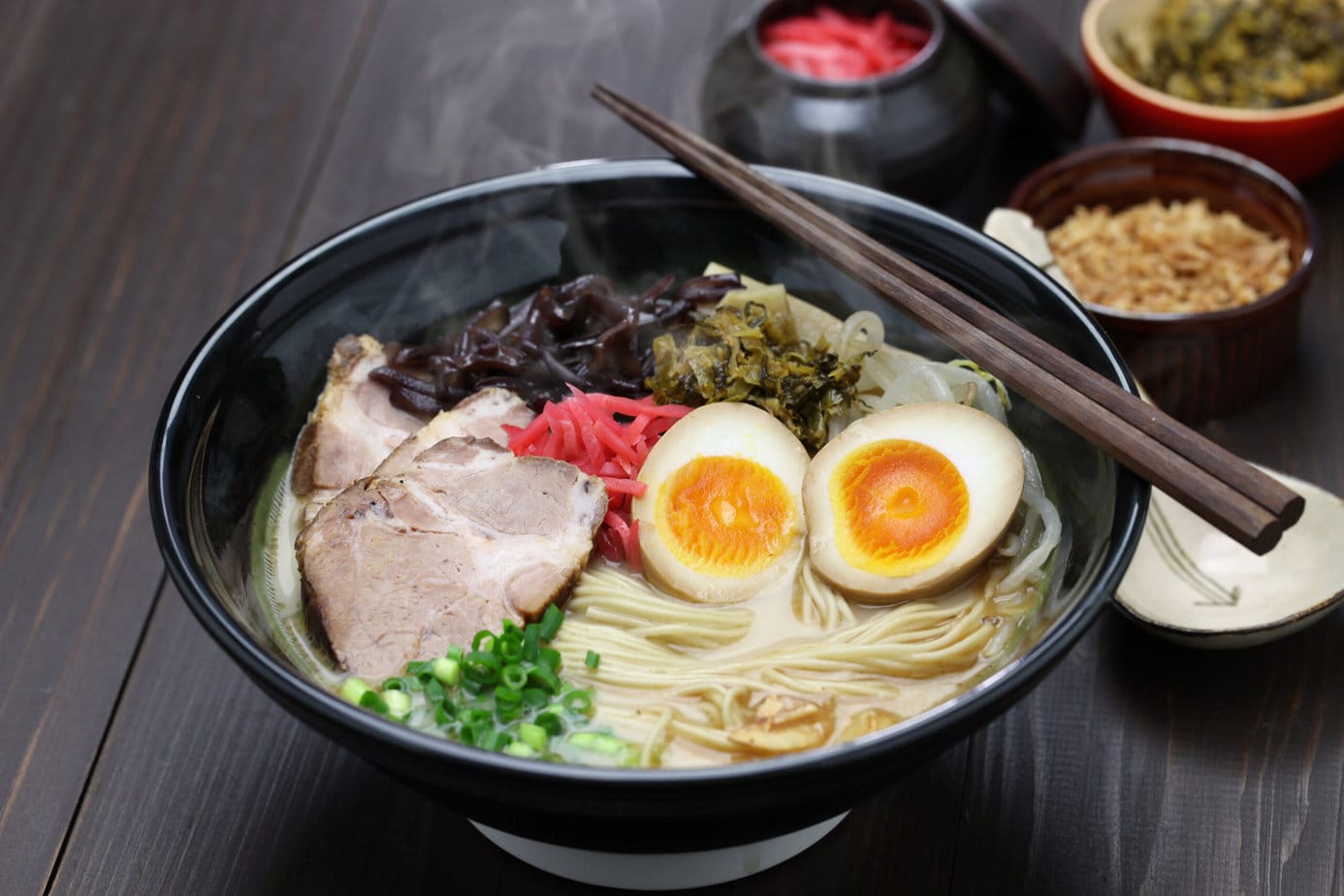
Today, we’re exploring an often underestimated but essential element of a perfect ramen bowl: chashu. This piece of braised pork belly, tender, salty, sweet, and melt-in-your-mouth, transforms a good ramen into a transcendental culinary experience. The famous Chashumen
While many restaurants unfortunately serve dry or rubbery chashu, a well-executed version can elevate a ramen bowl, whether it has a chintan broth or a paitan broth base, these are just the first steps towards an orgasmic ramen, quality toppings are needed.
What is Chashu Pork?
Chashu is a preparation of pork belly, typical of Japanese cuisine, particularly appreciated in ramen dishes. This pork is carefully braised for hours, allowing the flavors of the marinade – often a mixture of soy sauce, sake, mirin, and other spices – to deeply penetrate the meat. The slow cooking process transforms the pork belly into tender and juicy meat.
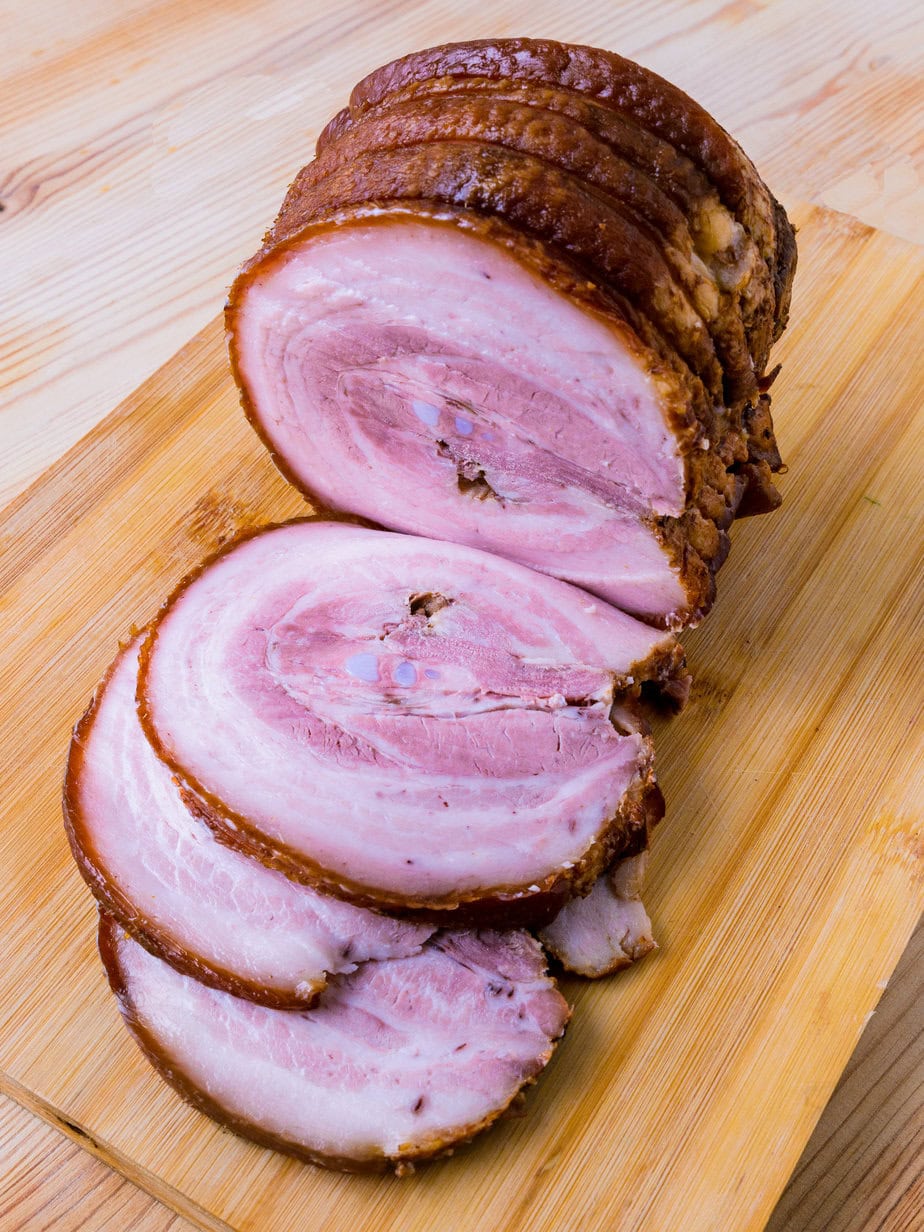
In terms of use, chashu is typically served in thin slices on top of a ramen bowl, adding a rich and savory dimension to the dish. Its tender texture and both sweet and salty flavor harmoniously complement the other components of ramen, such as the broth, noodles, and vegetables.
In addition to being a key ingredient in ramen, Chashu can also be used in other Japanese dishes, as a topping or main component.
The origins of Chashu
Asian cuisine enthusiasts will have already noticed the name resemblance, Japanese chashu, inspired by Chinese char siu, a bright red lacquered pork, has evolved differently from its cousin.
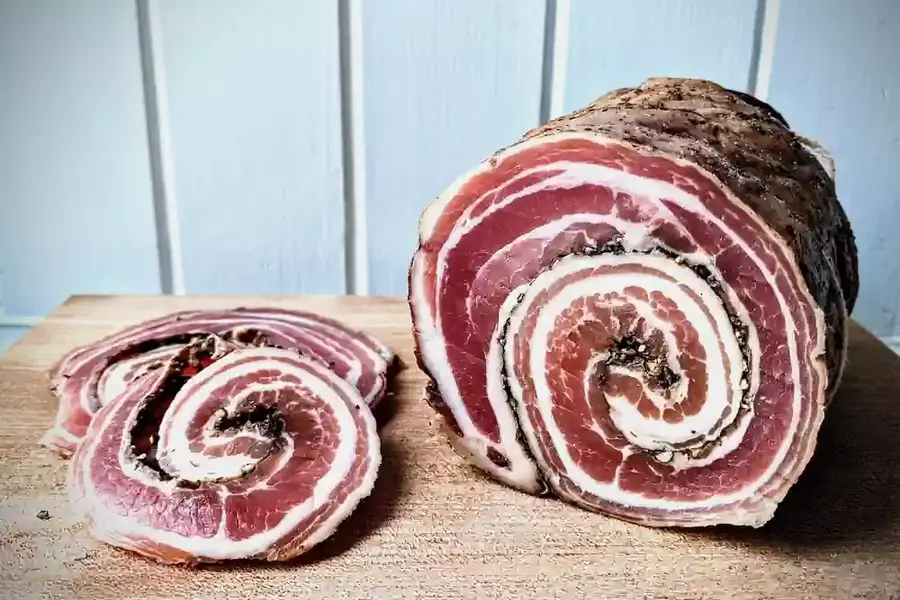
Unlike char siu, traditionally roasted with a thick and sweet marinade, Japanese chashu is a dish simmered for a long time in a highly aromatic broth and resembles an Italian pancetta in appearance.
Like gyoza or ramen, chashu is therefore yet another dish originating from Chinese cuisine and completely transformed in Japan
How to reheat Chashu pork?
When preparing chashu for your ramen, the final step is to reheat the slices. There are several effective methods.
Method 1: In the broth
This method is the simplest. Just place the Chashu slices in the hot broth just before serving. By the time you bring the bowl to the table, the chashu will be warm, tender, and ready to be enjoyed.
Method 2: In the Cooking Liquid
A more refined technique that enhances the flavor of your Chashu. After cooking the pork, you get a flavorful broth. Not only can this liquid marinate soft-boiled eggs, but it can also be used to reheat the Chashu.
Simmering the slices for a few seconds in this liquid warms them up and allows the flavors to deeply infuse, making the Chashu even more flavorful.
Which cut of pork to use?
Some say that pork shoulder works, I’ve never tried it and it’s actually a well-marbled cut, but traditionally it’s better to use pork belly (also called lard). But again, pork shoulder braised this way in the oven can be very good, in theory
The ingredients for Chashu Pork
You will have noticed the presence of lime juice, which, along with garlic and ginger, adds a touch of acidity that will help tenderize the meat to the maximum.
Next, we find the winning trio of Japanese cuisine: mirin, sake, and soy sauce. The first two bring a touch of sweetness, and the salty/umami flavor is provided by the soy sauce. By the way, you can use tamari soy sauce here

Ingredients
- 1 kg unsalted pork belly skin on
Broth Ingredients
- 30 g fresh ginger cut into pieces
- 30 g garlic cloves whole
- 4 spring onions cut into large sections
- 200 ml water
- 165 ml sake
- 125 ml light soy sauce
- 100 g brown sugar
- 220 ml mirin
- 1 star anise
- 1 shallot halved lengthwise, skin on
- 0.5 stick cinnamon
- 0.5 lime pulp/juice only
Instructions
- Place the pork belly on a cutting board1 kg unsalted pork belly
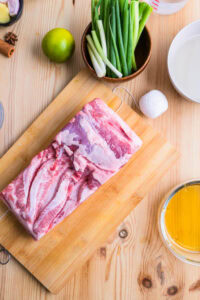
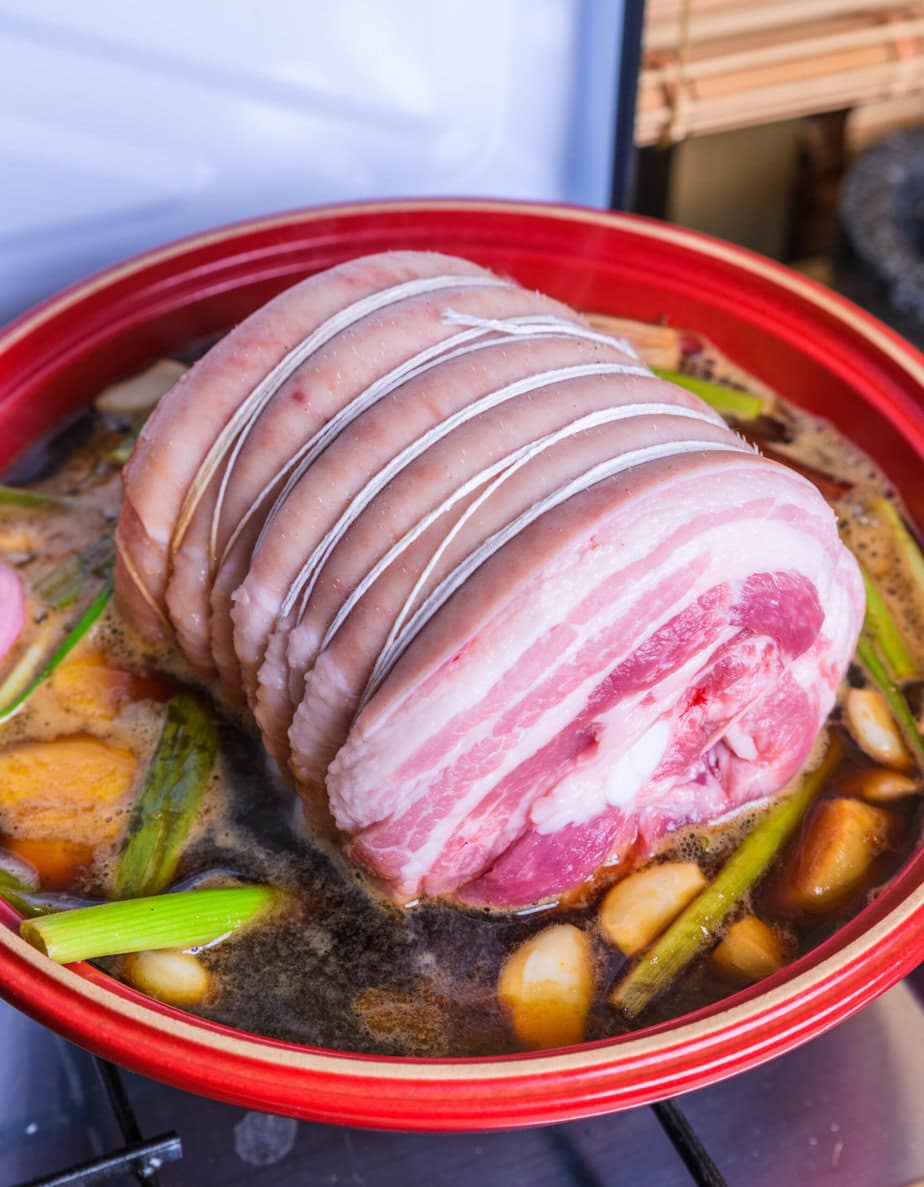
- Roll it up in whichever direction you prefer; the important thing is to keep the skin on the outside
- Using butcher’s twine, tie the pork belly tightly at intervals of about 2 cm
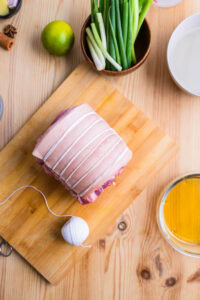
- Preheat the oven to 135°C
- Place the broth ingredients in an ovenproof pot30 g fresh ginger, 30 g garlic cloves, 4 spring onions, 200 ml water, 165 ml sake, 125 ml light soy sauce, 100 g brown sugar, 220 ml mirin, 1 star anise, 1 shallot , 0.5 stick cinnamon, 0.5 lime
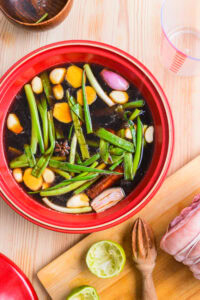
- Heat over medium-high heat until boiling
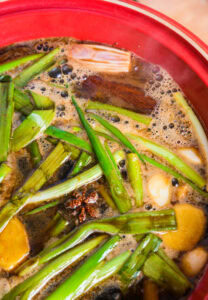
- Add the pork; it is normal for it not to be completely submerged
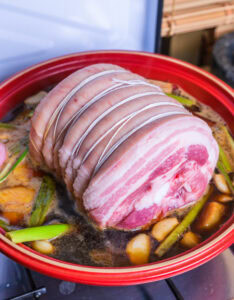
- Cover with a lid, leaving it slightly ajar (in a pinch, use aluminum foil, but in that case seal it tightly)
- Transfer to the oven, still at 135 degrees, and cook for 3 to 4 hours, turning the pork occasionally, until completely tender
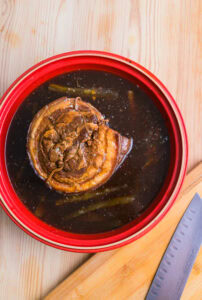
- Place in an airtight container (with the broth) and refrigerate until chilled. Feel free to add soft-boiled eggs to marinate for your ramen as well
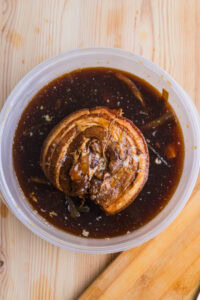
- Before serving, strain the broth and set it aside. It can be used again.
- Cut the pork into thin rounds
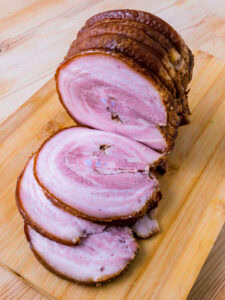
- To reheat, place the slices in your ramen broth before serving