


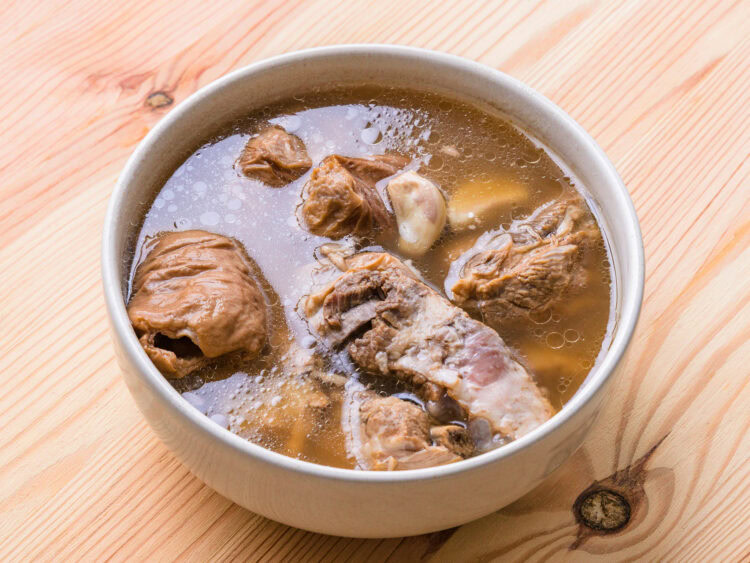
A spice-fragrant soup where pork ribs gently simmer into a rich, comforting broth.
In Klang’s breakfast stalls, it arrives still bubbling : a clay pot filled with dark brown broth, its steam perfumed with pepper and Cantonese-leaning herbs. Whole garlic cloves float on the surface.
The ribs, incredibly tender, fall apart at the slightest nudge of chopsticks, and each sip first brings the richness of pork, then notes of licorice and angelica. This is bak kut teh : “meat-and-bone tea.” It’s a true ritual : bones, youtiao for dipping (think dim sum) and a cup of piping-hot Chinese tea to refresh the palate.
In Klang, you’ll often find it alongside laksa or nasi goreng. What follows unpacks the name’s origin, its birthplace, the essentials, and the regional rivalries that still have aficionados debating which bowl is the “real” one.
What is bak kut teh?
Pronounced bak kut teh in Hokkien, the expression 肉骨茶 literally translates as “meat-and-bone tea.” One key nuance : there are no tea leaves simmering in the pot.
Instead, it’s traditionally served with hot Chinese tea, often oolong or pu-erh, poured alongside to cleanse the palate after the richness of the broth. Stripping away the myths, the definition is simple : pork ribs and pork bones simmered for hours with a precisely measured bundle of Chinese medicinal herbs, garlic, and basic seasonings. It’s served piping hot, with rice and classic condiments.
- Meaty base. Pork spare ribs are the heart of the dish, sometimes supplemented by belly, tail, or feet to add collagen and body.
- Character of the broth. A gently savory pork sweetness meets a nuanced medicinal depth. In many contemporary Hokkien versions (and in some blends called “traditional”), you also get the aroma of warm spices like star anise, cloves, and cinnamon or cassia : notes that echo a five-spice spirit in many bowls. In Klang, dark soy sauce often plays a central role, essential for both saltiness and color, yielding a more opaque soup, whereas lighter styles remain more translucent, in the manner of a chintan broth.
- How it’s served. Traditionally in Klang, it was typically one bowl per person ; today, some restaurants also serve shareable clay pots. In all cases, the dish rests on a long, slow simmer : pork, bones, and herbs infuse patiently, concentrating the flavors.
The origin of bak kut teh
Most accounts trace bak kut teh to Klang (Port Swettenham) in the early 20th century, when Hokkien laborers toiled there and sought a fortifying soup. Wages were low, and they needed something to keep them going.
Cooks turned to inexpensive pork bones, simmering them with water and invigorating herbs. Dark soy sauce plays a key role there, both for saltiness and for color. In the very earliest Klang versions, costly aromatic spices were likely rare, if present at all. The flavor leaned on the richness of pork, the medicinal herbs, and the dark, salty thread of soy sauce.
Two stories are often told to explain how “tea” entered the name. One attributes the origin to a Klang restaurateur named Lee Wen Di, who popularized the dish after World War II : customers nicknamed the soup rou gu di, “Di’s pork bones” ; with Di in Hokkien sounding like teh, the name evolved toward rou gu cha (肉骨茶). The other, simpler version highlights the hot Chinese tea traditionally served alongside.
However the name settled, bak kut teh traveled to Singapore, shifting from a worker’s meal to a morning classic. In 2024, Malaysia officially added it to the national food heritage, but its reputation had long been secured at stalls and among regulars, like other emblematic soups such as pho.
Key ingredients in bak kut teh

- Pork ribs (optionally with belly, tail, feet). Ribs bring meat and marrow ; fattier cuts and those with skin provide gelatin, which gives the broth deeper body.
- Bundle of Chinese herbs. Often gathered in a sachet, they define the dish’s profile : dang gui and chuanxiong lend a woody medicinal bitterness ; yu zhu adds gentle sweetness ; licorice rounds the edges ; astragalus or codonopsis contribute a subtle tonic base ; red dates and goji berries add light sweetness and a bit of color. In the recipe below, I simplify the list, but you can add to taste.
- Garlic. Whole heads soften and split during cooking, turning the pungency into a rounded sweetness (a little fried garlic at serving can also please fans).
- Warm spice notes (common in many bowls, notably Hokkien). Star anise, cloves, cassia bark, and fennel seeds bring a warm, spicy perfume that many now associate with bak kut teh (with, depending on preference, a pinch of chili powder).
- Pepper. Often present in the background in many herb-forward versions ; dominant in Teochew-leaning bowls.
- Soy sauce & salt. Season the broth ; dark soy sauce, in particular, is decisive for saltiness and color in darker Klang-style versions.
- Table essentials. Plain rice, youtiao to soak up the broth, and a dipping sauce based on soy sauce (light or dark), chili (such as sambal oelek), and chopped raw garlic ; a chili oil can replace or complement it, as you like. Hot Chinese tea is the classic counterpoint. To source the herbs and condiments, an Asian grocery store often makes shopping easier.
Regional styles, rituals, and debates over authenticity
One name, several accents
- Hokkien/Klang. Dark, strongly marked by soy sauce, often generous with herbs ; garlic melts into the infusion while pepper stays relatively discreet. Many locals see this as the original reference style.
- Teochew/Singapore. A clearer broth, seasoned mainly with white pepper and garlic, with little or no medicinal herbs ; at most a touch of light soy sauce, never dark soy. Fans appreciate its intensity and forthrightness ; skeptics feel it’s more like a peppery pork soup under the same name.
- Cantonese-leaning. Rarer, sometimes even more “tonic,” with a more assertive “apothecary” bitterness ; and sometimes a splash of medicinal wine or liqueur (药酒).
Whatever the style, the customs remain surprisingly constant : it’s usually eaten for breakfast (like a congee) or late breakfast, with rice or youtiao, sharpened by a soy–chili–garlic dipping mix on the side, and accompanied by hot tea to refresh the palate.
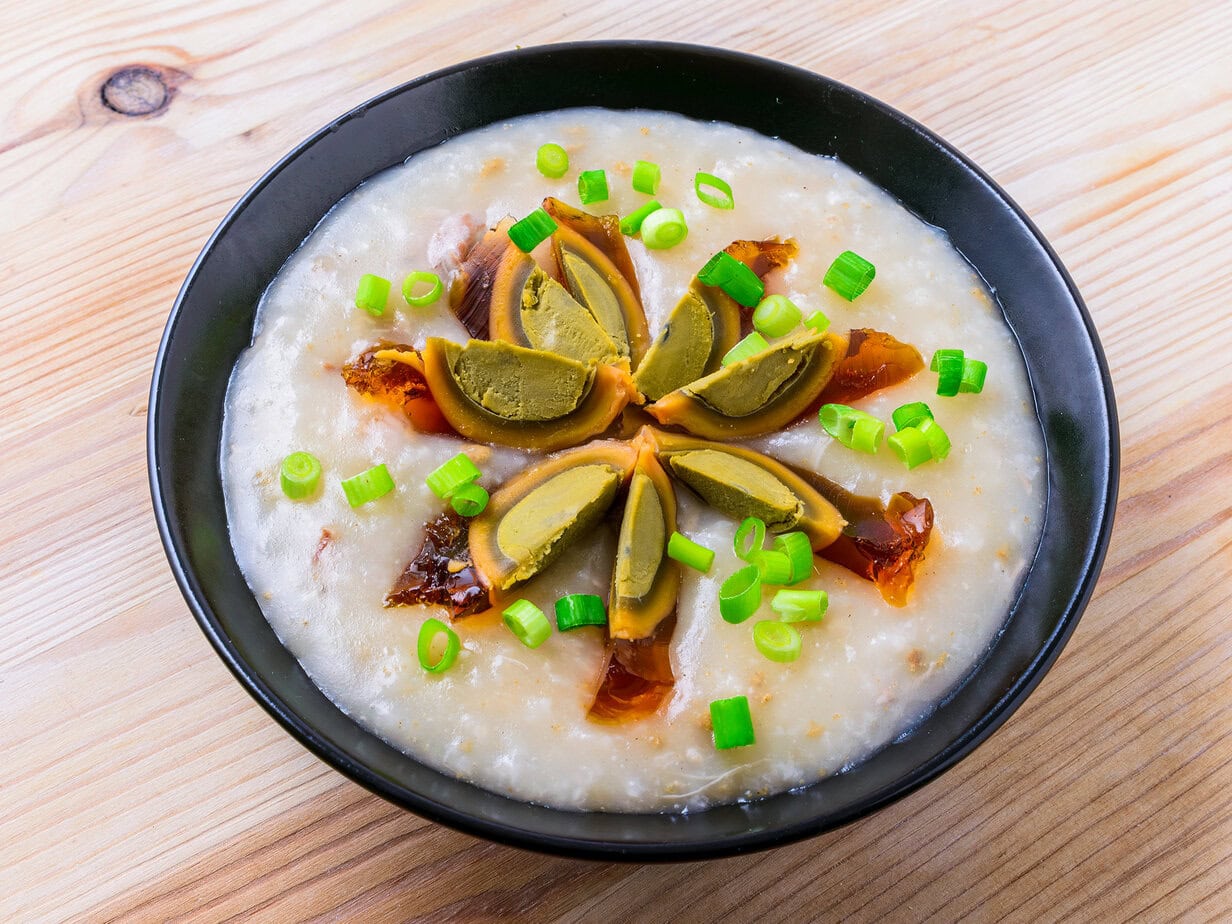
Beyond color, authenticity is often debated over a few simple criteria :
- A pork-and-bone base. The dish is built on pork and bone, not on a thickened broth.
- A clear or dark broth, but not thickened. Versions range from translucent to very dark, depending on seasoning and soy sauce.
- Herbs or pepper as the main axis. Either a traditional herb base, or (in many Teochew bowls) a deliberate emphasis on pepper.
- A long simmer. Simmering time is central to extract and concentrate flavors.
- Tea served alongside. It’s part of the service, even if it doesn’t cook in the pot.
In the panorama of Asian soups, it sits alongside tom yum, tom kha gai, wonton soup, hot and sour soup, and bún bò Huế ; and to explore other regional pork dishes, Malaysian fried pork makes an excellent detour.

Ingredients
- 800 g pork ribs bone-in
- 1 pork tongue optional
- 500 g pork intestines optional; use the large intestine, which is fairly fatty inside
- 50 g garlic cloves
- 3 L water
Dry Spices
- 4 star anise pods
- 20 whole cloves
- 8 g cinnamon sticks
- 6 teaspoons white peppercorns
- 2 teaspoons black peppercorns
Seasoning
- 1 tablespoon light soy sauce
Instructions
- Blanch the pork ribs, tongue, and intestines in boiling water until the water returns to a boil, then cook for 1 minute more.800 g pork ribs, 1 pork tongue, 500 g pork intestines, 3 L water
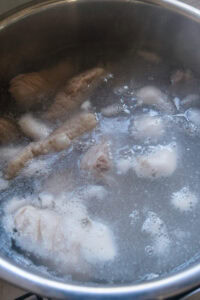
- Drain well and transfer the meats to a pot or clay pot.
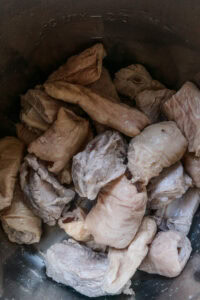
Cooking
- Add the dry spices enclosed in a sachet, the garlic, and the remaining water, then bring to a boil.50 g garlic cloves, 4 star anise pods, 20 whole cloves, 8 g cinnamon sticks, 6 teaspoons white peppercorns, 2 teaspoons black peppercorns
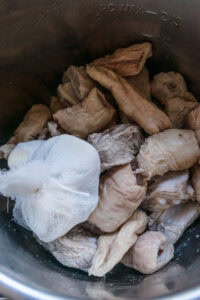
- Reduce heat to medium, cover, and simmer for 90 minutes.
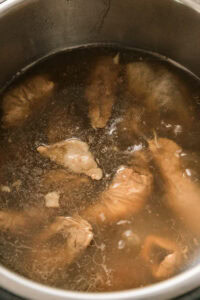
- Turn off the heat and let stand for 30 minutes without lifting the lid.
- Season the broth with the soy sauce, remove the tongue and intestines, cut into pieces, then return them to the soup before serving.1 tablespoon light soy sauce
Notes
Nutrition
Culinary sources
• Bak kut teh – Wikipedia (Chinese)
• The “Teh-riffic” bak kut teh – Jiak Pa Bui (English)
• Original bak kut teh recipe of our fathers • Recreating “Coolie Tea” – Tony Johor Kaki (English)
• How to make “bak kut teh” at home without tea? – Zhihu (Chinese)
• How to make a good bak kut teh? – Answer by 仟味高汤 – Zhihu (Chinese)
• A Ling’s Kitchen – Ingredients for traditional bak kut teh: 1 sachet, pork / pork stomach / ribs… – Facebook (Chinese)
• Bak kut teh – Singapore – NLB Singapore (English)
• Does bak kut teh soup really cause hepatotoxicity? – SpringerLink (English)
• Where does bak kut teh come from? – 6 versions and the story of its evolution | About the “Quanzhou thesis” – 食公子经典 (Chinese)
• Local gourmets guide you: a survey of the most authentic bak kut teh in Malaysia – Zhihu (Chinese)
• What ingredients does bak kut teh actually contain? – Zhihu (Chinese)


Made this last night and swapped half the white peppercorns for extra black peppercorns since that’s what I had on hand. Let it simmer an extra 20 minutes for a deeper broth, and it turned out even better with super tender ribs.
Merci pour cette recette de bak kut teh, les explications sur les herbes et les variantes régionales m’ont vraiment aidé à mieux comprendre le plat et à le réussir à la maison 🙂
Déjà réalisée environ 4 fois, et le bouillon reste toujours aussi profond et parfumé, avec des ribs ultra fondantes. On ne s’en lasse pas, surtout avec du riz et des youtiao pour tout absorber 🙂
Made this bak kut teh for a Lunar New Year family lunch, and the whole house smelled amazing while it simmered. Everyone went back for seconds, especially after dunking youtiao in that dark, garlicky broth, and the ribs were so tender they practically fell off the bone 😊