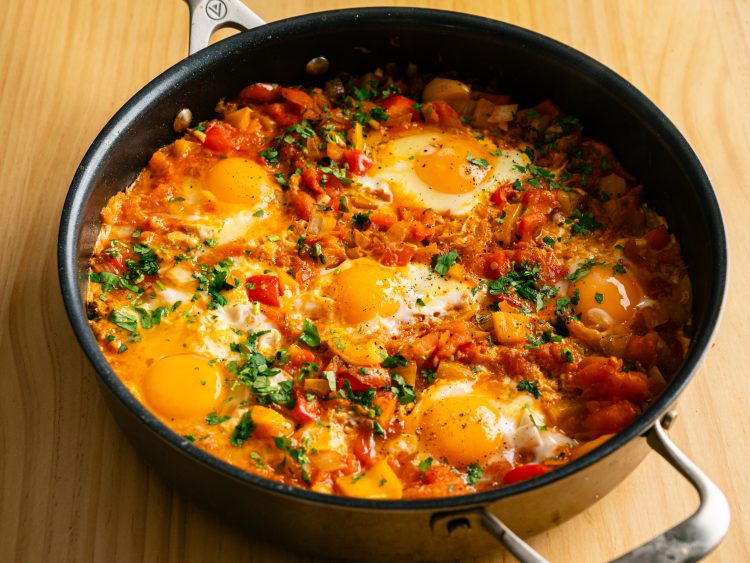
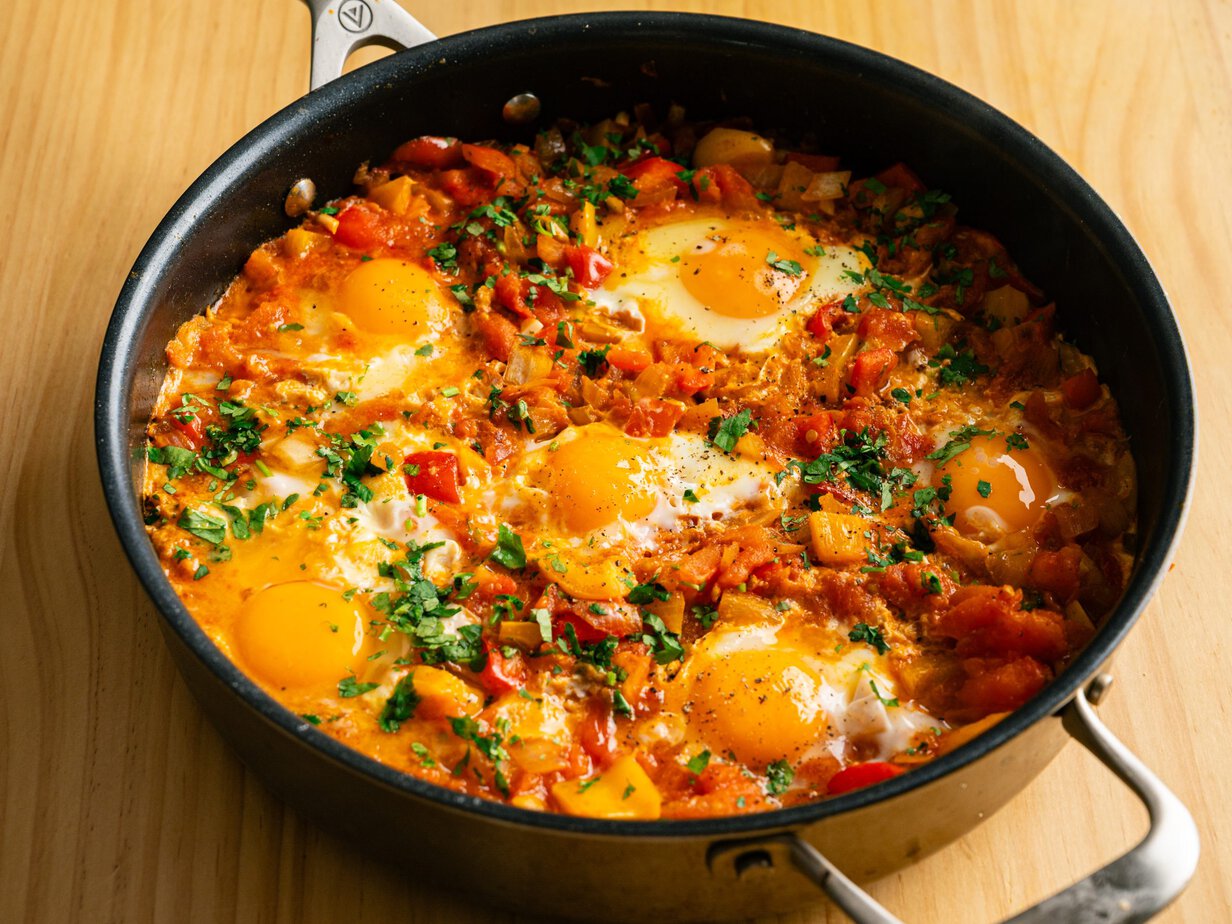
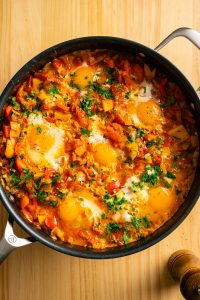
Eggs cooked in a spiced tomato and bell pepper sauce, made and served in the same skillet.
A Sunday morning with nothing on the schedule, a big skillet set in the middle of the table, and everyone is already reaching for a piece of bread. The yolks glisten in a thick tomato and bell pepper sauce, fragrant with cumin, with just the right amount of heat.
Chopped parsley adds a fresh note on top. That first piece of bread dipped into the yolk and sauce is all it takes to understand why shakshuka has made its way around the world.
What Is Shakshuka?
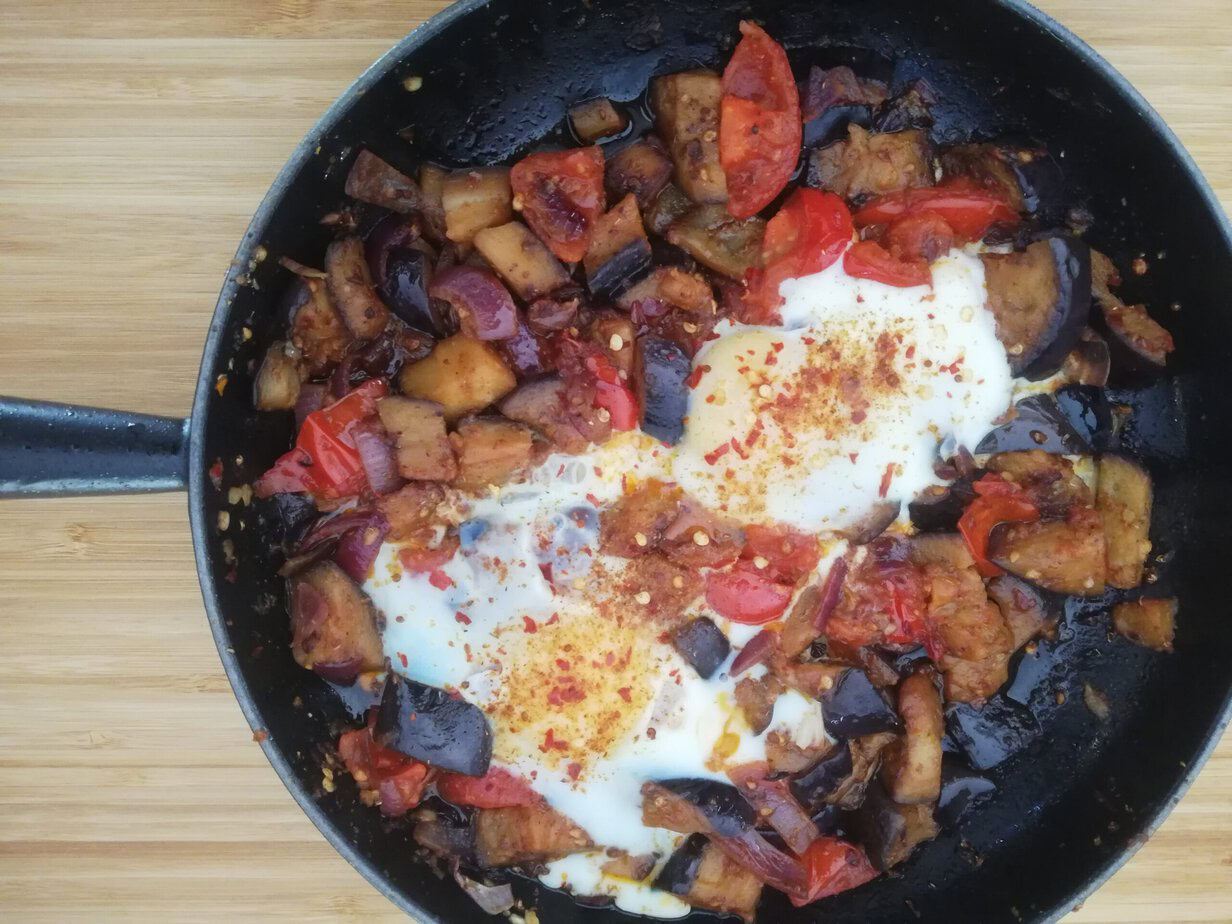
Shakshuka, or chakchouka, is a dish of eggs cooked right in a thick sauce of tomatoes, bell peppers, onion, and garlic, seasoned with sweet paprika, cumin, and cayenne pepper. The eggs cook covered: the steam sets the tops of the whites while the undersides cook in contact with the sauce.
Poached in the sauce, they cook in just a few minutes, much faster than Japanese onsen tamago, which are cooked slowly in their shells. The combination of simmered tomatoes and spices also turns up in chana masala, where chickpeas take the place of the eggs.
The name is thought to come from an Amazigh word that suggests the idea of a mixture. The exact etymology is still debated, but it describes the dish well: everything is made in a single skillet.
From the Maghreb to the Cafés of Israel
Shakshuka comes from the Maghreb, especially Tunisia, Libya, and Algeria. Its red version is fairly recent: tomatoes and peppers, which came from the Americas, didn’t reach North Africa until the 16th century. Before that, people there were already cooking stews of seasonal vegetables, and the custom of poaching eggs in them is said to have arrived with the Muslims and Jews expelled from Andalusia.
In the 1950s, Jews from Tunisia, Libya, Morocco, and Algeria brought it with them to Israel. Inexpensive and easy to make for a large family, the dish became a breakfast classic, then a staple of cafés and brunches, and from there it spread to Europe, the United States, and Japan.
It’s eaten the same way everywhere: the skillet in the middle of the table, and everyone dipping their bread into the sauce.
The Main Ingredients in Shakshuka
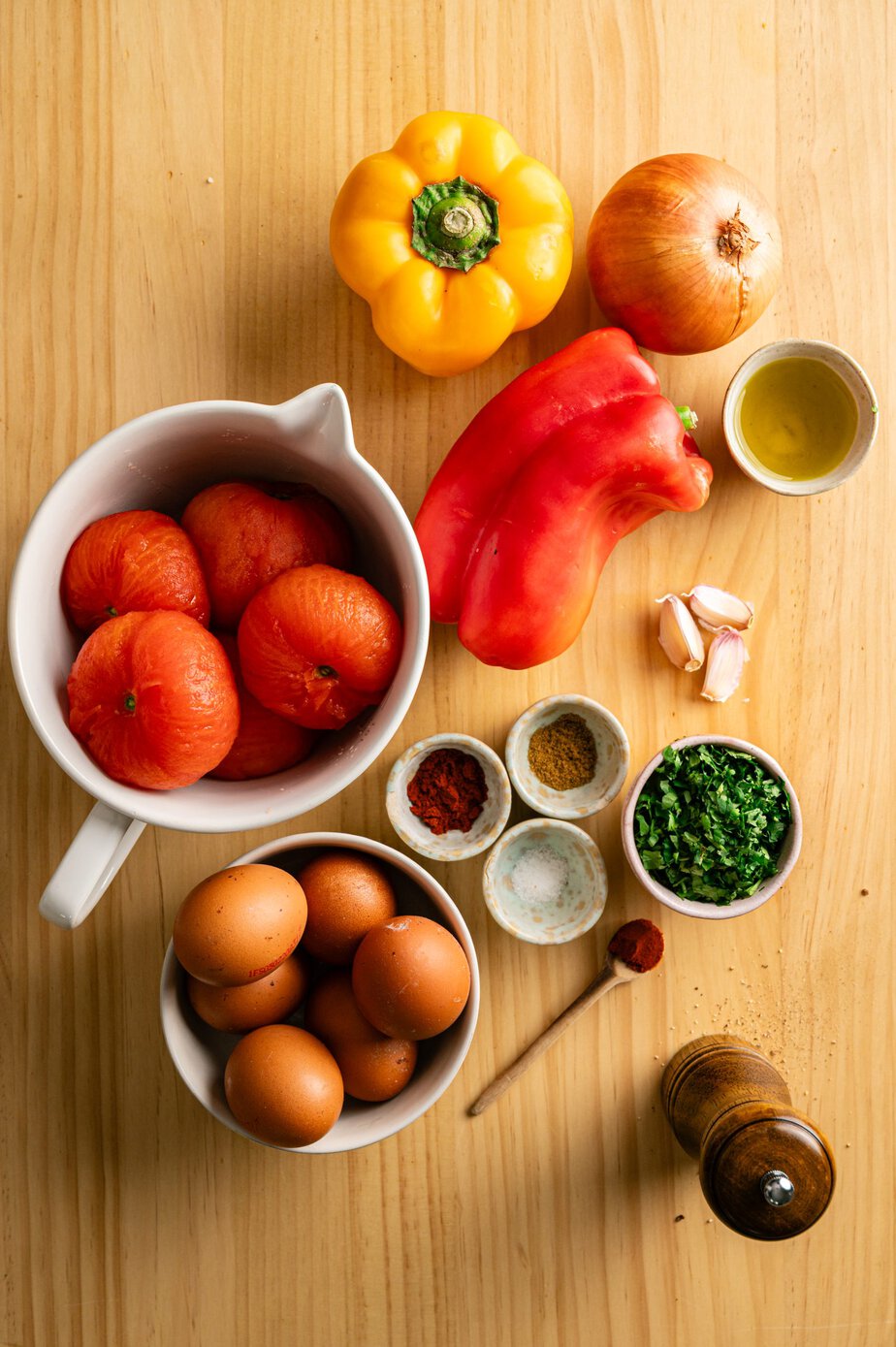
The base comes down to a few vegetables: an onion, a red bell pepper, and a yellow bell pepper, all diced, plus three cloves of garlic. Cooked gently in olive oil, they turn meltingly soft, and their sweetness balances the acidity of the tomatoes. For those, 800 g of fresh tomatoes in season, or canned tomatoes out of season, will do the job.
Sweet paprika provides the color, cumin a warm, earthy flavor, and cayenne pepper the heat. This is regular cumin, not to be confused with black cumin. Cayenne pepper is pure chile pepper, unlike chili powder, which is a spice blend.
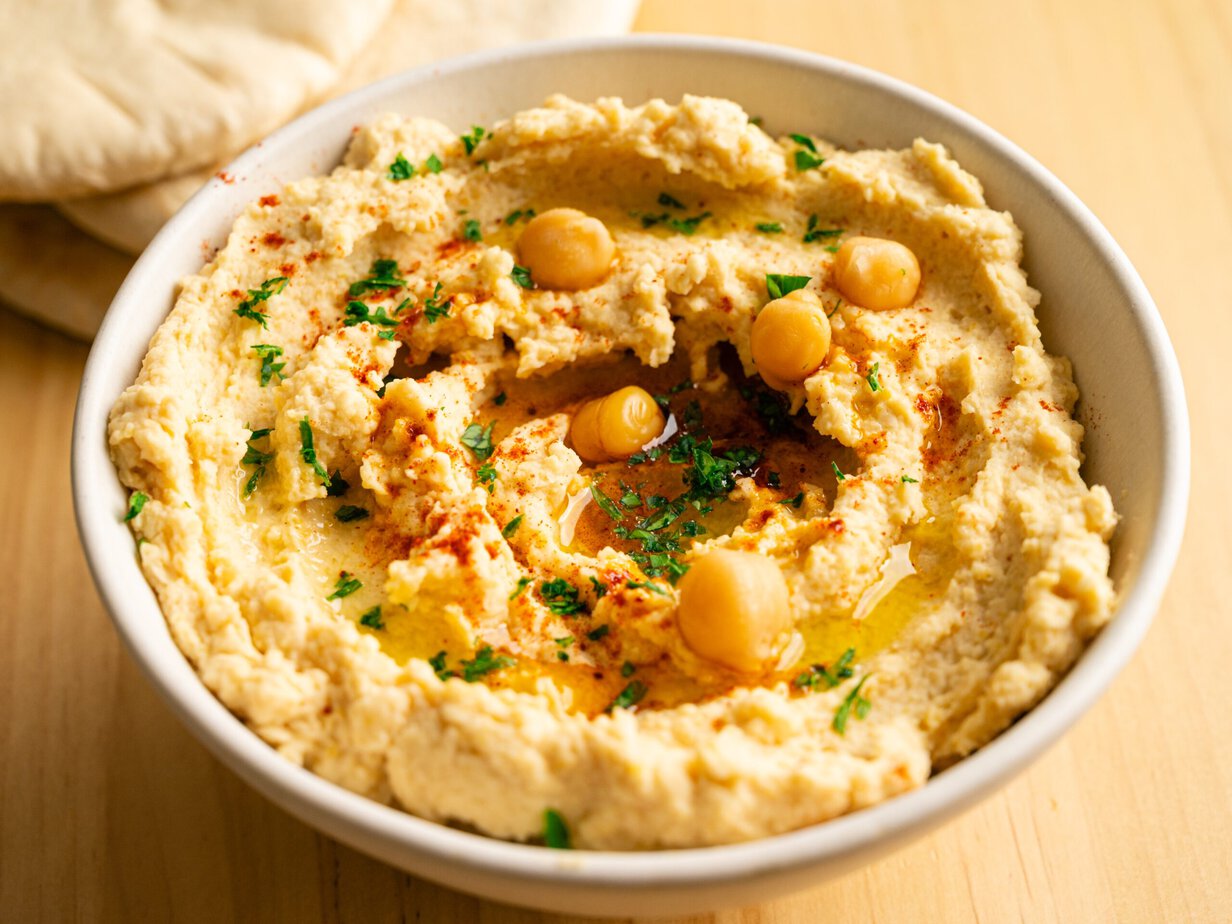
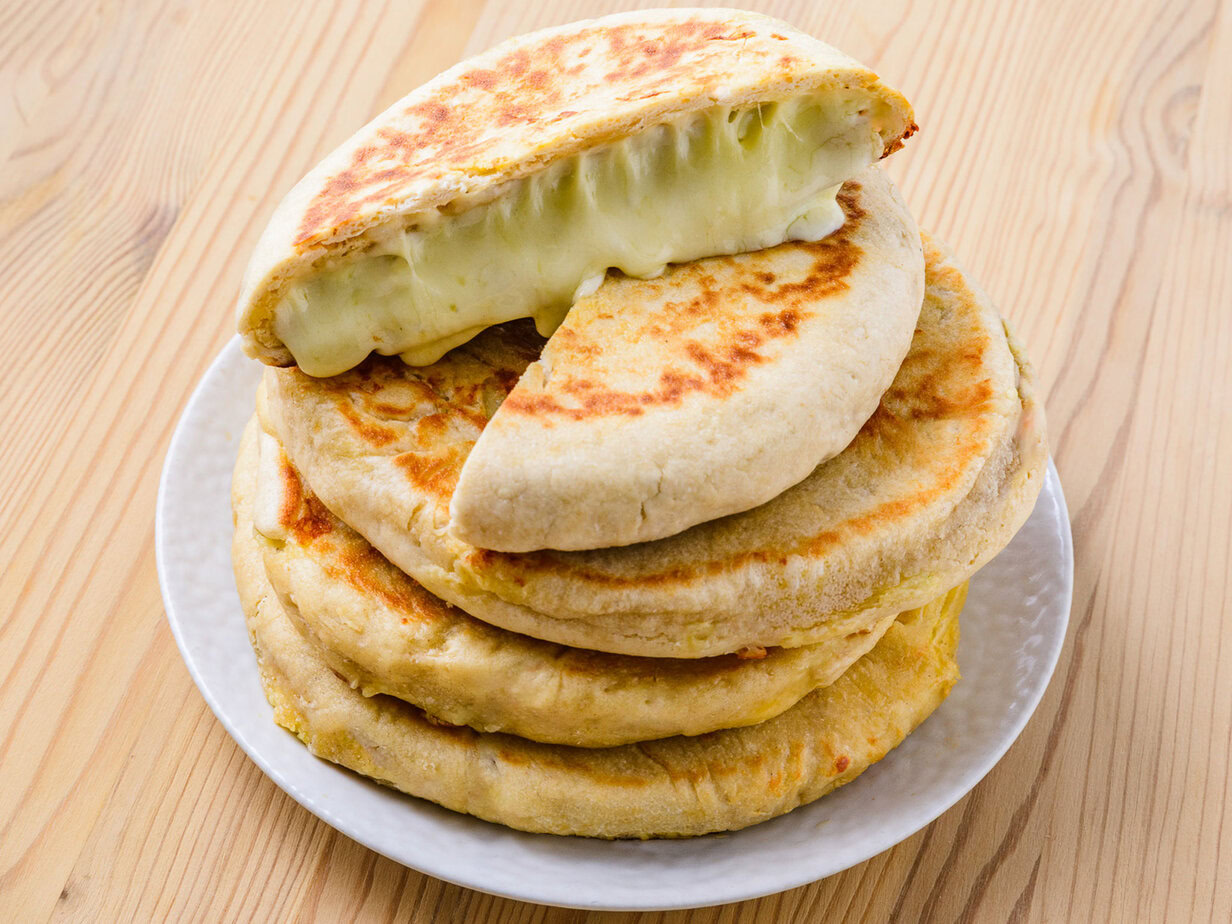
Six large eggs cook right in the sauce, and a bunch of parsley, cilantro, or a mix of both is scattered over the whole skillet just before serving. The bread is part of the dish: baguette, focaccia, or ciabatta, or homemade naan or chapatis for mopping up the sauce.
Tips for Getting Shakshuka Right
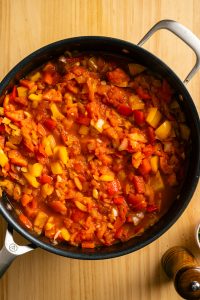
The sauce should have thickened before you crack the eggs into it: a spoon drawn across the bottom of the skillet should leave a trail. If it’s still runny, keep cooking it uncovered; otherwise the eggs will drown in it and the yolks will spread.
A lid is essential, and the skillet needs to be large enough that the six eggs don’t touch. For runny yolks, stick to the shortest cooking time.
Serving Shakshuka
Set the skillet on the table on a trivet, with the bread alongside, and serve everyone an egg with some of the sauce. Shakshuka is eaten at breakfast or brunch, and it also makes a good dinner when you’re short on time.
For a buffet, deviled eggs offer another way to serve eggs, this time cold.

The most common variations add crumbled feta over the eggs at the end, as is often done in Israel, harissa to the sauce, Tunisian-style, or spinach. The pairing of spinach and spices also shows up in Indian palak paneer.
Ingredients
Vegetables
- 1 onion medium
- 1 red bell pepper
- 1 yellow bell pepper
- 3 cloves garlic
Spicy Tomato Sauce
- 3 tablespoons olive oil
- 2 teaspoons sweet paprika ground
- 1 teaspoon cumin ground
- 0.5 teaspoon cayenne pepper ground
- 800 g tomatoes fresh, or canned tomatoes
- salt
- freshly ground pepper
Eggs
- 6 large organic eggs
- salt
- freshly ground pepper
Herbs and Serving
- 1 bunch parsley, or cilantro, or a mix of both
- bread crusty, for serving: baguette, focaccia, or ciabatta
Instructions
Prepare the Vegetables
- Peel the onion.1 onion
- Finely chop the onion.
- Cut the bell peppers in half.1 red bell pepper, 1 yellow bell pepper
- Remove the cores and seeds from the peppers.
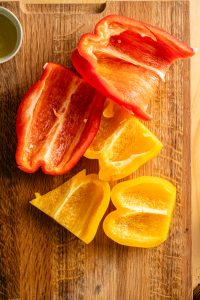
- Cut the pepper flesh into dice about 1 cm across.
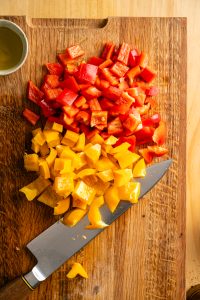
- Peel the garlic.3 cloves garlic
- Cut the garlic into small dice.
Cook the Tomato Sauce
- Heat the olive oil in a large frying pan that has a lid.3 tablespoons olive oil
- Add the onion and peppers.
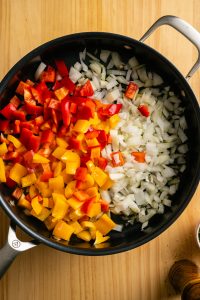
- Sweat them for 4 to 5 minutes over medium heat, until the onion turns translucent.
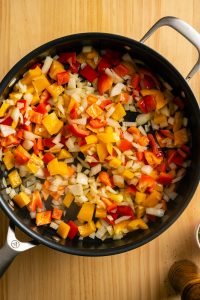
- Add the garlic.
- Cook for 1 more minute.
- Add the paprika, cumin, and cayenne pepper.2 teaspoons sweet paprika, 1 teaspoon cumin, 0.5 teaspoon cayenne pepper
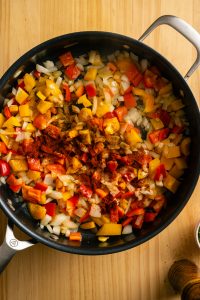
- Fry the spices for 1 minute, stirring, until they start to smell fragrant.
- Add the tomatoes.800 g tomatoes
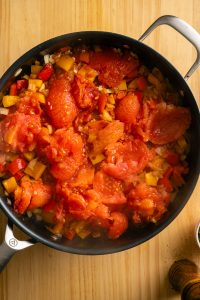
- Lightly crush them with a wooden spoon.
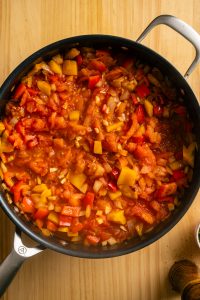
- Season with salt and pepper.salt, freshly ground pepper
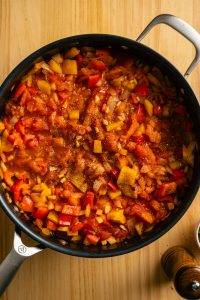
- Let simmer for 15 minutes.
Cook the Eggs
- Make 6 small wells in the sauce with the back of a spoon.
- Crack an egg and slide it into one of the wells.6 large organic eggs
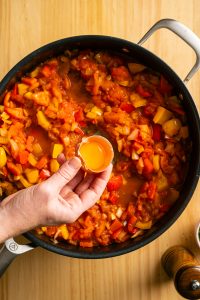
- Repeat with the remaining 5 eggs.
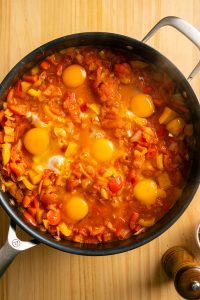
- Cover the pan.
- Turn the heat down to the lowest setting.
- Cook for 5 to 8 minutes, depending on how you like your eggs: the shorter time keeps the yolks runny, the longer time gives firmer eggs.
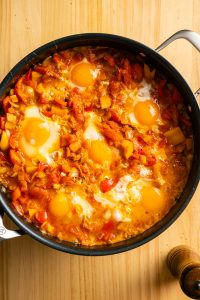
Prepare the Herbs
- While the eggs cook, wash the parsley or cilantro.1 bunch parsley,
- Dry the herbs.
- Finely chop the herbs.
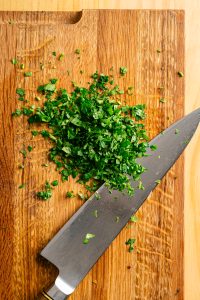
Serve
- Remove the lid.
- Season the eggs with salt and pepper.salt, freshly ground pepper
- Scatter the chopped herbs over the whole pan.
- Serve right away in the pan, with the bread for dipping into the sauce.bread