Bali operates by different rules than most Southeast Asian destinations, and knowing them before you land will save you money and real headaches. The visa system has subtleties that catch people off guard. Traffic can trap you for an hour on a ride that should take ten minutes. Police checkpoints target tourists on scooters. And the money changers near Kuta have perfected sleight-of-hand tricks that would impress a Las Vegas magician.
This guide covers the unglamorous but necessary side of a trip to Bali: visas, budget, transportation, scams, health, connectivity and timing. If you’re looking for a broader overview, our complete guide to visiting Bali covers destinations and itineraries. This article is the practical companion.
Visa: What You Need and How to Get It
Visa on Arrival (VOA)
Most nationalities can get a Visa on Arrival (VOA) at Ngurah Rai Airport. It costs 500,000 IDR (around 30 EUR / 35 USD) and grants 30 days. It can be extended once for an additional 30 days at a local immigration office.
The extension process is tedious: three separate visits to the immigration office (drop off your passport, return for biometric data, pick it up). Specialized agents like Bali Visas, Legal Legends or Komala Visa in the Kuta/Legian area handle the entire process for you, reducing it to a single visit for an additional 25 to 45 EUR in service fees. If you know before leaving that you want to stay 60 days, going through an agent is worth every rupiah.
The e-VOA: Skipping the Queues
The best pre-departure tip is to apply for the e-VOA online via the official website (molina.imigrasi.go.id). The e-VOA lets you use the automated immigration gates, meaning you bypass the manual counter entirely. Even when the gates malfunction (it happens), you still skip the first of two queues because your visa payment is already processed.
Warning: fraudulent websites mimicking the official portal charge double the rate. Make sure the URL ends in .go.id. Payment may fail with some bank cards, so try different browsers or cards if the first attempt doesn’t go through.
Budget Breakdown: What Bali Actually Costs
Bali’s reputation as an ultra-cheap destination needs updating. Prices in Canggu, Seminyak and Uluwatu have nearly doubled since 2019. Canggu in particular has become the most inflation-prone area on the island. That said, 45 EUR per day still gets you a comfortable experience, and 90 EUR per day puts you in the villa-with-pool category.
| Budget Level | Daily Cost (solo) | Accommodation | Food | Transport |
|---|---|---|---|---|
| Backpacker | 22-30 EUR | Hostel dorm (5-9 EUR/night) | Local warungs only (1-1.50 EUR/meal) | Scooter rental |
| Mid-range | 45-70 EUR | Private room or homestay (18-27 EUR/night) | Mix of local warungs and Western cafes | Scooter + occasional Grab |
| Comfortable | 90-135+ EUR | Private villa with pool (35-45 EUR/night) | Restaurants (27 EUR/day) | Private driver |
For couples, a good benchmark is 1,800 EUR for 12 days (excluding flights). That works out to about 75 EUR per person per day and covers private accommodation, a mix of local and restaurant meals, activities and transport.
Where the Money Goes
Renting a scooter costs 70,000-100,000 IDR per day (4-6 EUR). A meal at a local warung costs 15,000-25,000 IDR (1-1.50 EUR). A meal at a Western-style cafe with coffee runs over 100,000 IDR (6+ EUR). A one-hour Balinese massage costs 100,000-150,000 IDR (6-9 EUR).
A beach club daybed comes with a minimum spend of 1 to 3 million IDR (60-180 EUR). A private driver for the day (10 hours, car and fuel included) costs 600,000-800,000 IDR (35-50 EUR).
Bintang beer is cheap. Imported spirits and wine are heavily taxed and expensive. If you drink, stick to local beer and save cocktails for the occasional beach club outing.
Budget Tip: Leave the Touristy South
Amed, Lovina and Sidemen still operate at near pre-pandemic prices. A bungalow in Amed with rice paddy views can cost as little as 14 EUR per night. If your budget is tight, spend your first or last days in the south for logistics and head north or east for the bulk of your stay.
Getting There: Flights and Airport Arrival
From major international hubs, there are no direct flights to Bali from most Western countries. The most common layovers are Singapore, Kuala Lumpur, Bangkok and Doha. Singapore Airlines via Singapore, Qatar Airways via Doha and Emirates via Dubai are the most frequent combinations. Expect between 500 and 900 EUR for a round trip depending on the season.
Booking the two segments separately (home city-hub + hub-Bali) sometimes saves money, but check baggage transfer policies before committing.
Ngurah Rai International Airport (DPS) sits at the southern tip of the island, near Kuta (check out our guide to staying in Kuta near the airport). If you have the e-VOA in hand, immigration takes 15 to 30 minutes depending on gate wait times. Without the e-VOA, plan for an hour or more.
Getting from the Airport to Your Hotel
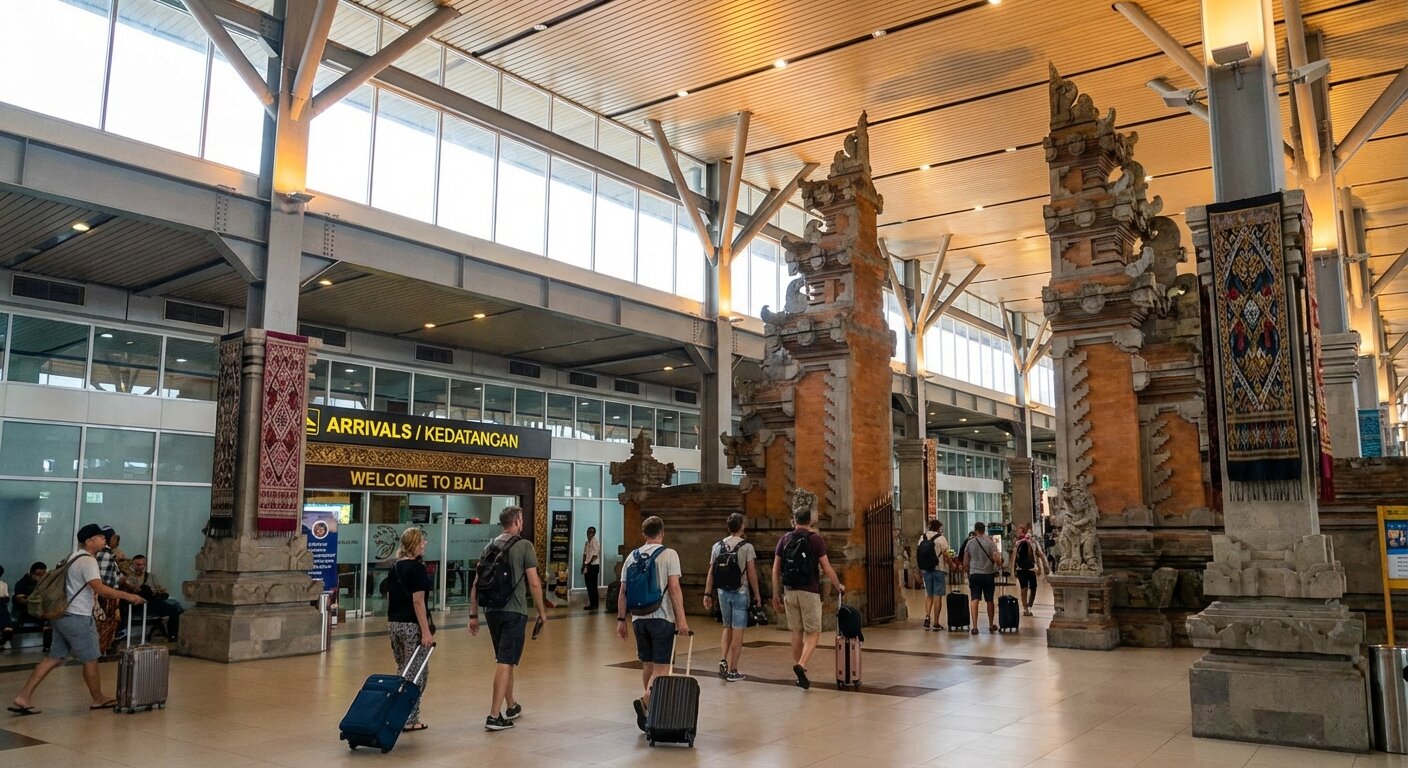
The Ngurah Rai arrivals hall unleashes a wall of drivers shouting “Taxi! Taxi!” at every foreigner walking through the doors. The first prices offered are often absurd: 1 million IDR for a ride that should cost 300,000.
The best option is a pre-booked transfer via Klook or Booking.com. Fixed price, no negotiation, the driver holds a sign with your name. A transfer to Ubud costs around 300,000-400,000 IDR (18-25 EUR). You can also use Grab from the airport, but you’ll need to walk to the “Grab Lounge” pickup point in the parking lot, and surge pricing during peak hours can cancel out the savings.
Getting Around Bali
Scooter Rental
A scooter costs 70,000-100,000 IDR per day (4-6 EUR) and is the fastest way to get around Bali. A 45-minute car ride takes 10 minutes on a scooter, especially in the congested corridors of Canggu and central Ubud.
There’s a catch, and it’s a serious one. You need two documents: a motorcycle license and an International Driving Permit (IDP) with motorcycle endorsement. Apply for your IDP before departure through your country’s automobile association; it takes a few weeks. You cannot get a legitimate one in Bali, despite what some shops claim.
Without a valid IDP and motorcycle license, your travel insurance will almost certainly deny any claim in the event of an accident. Medical costs for a serious motorcycle accident run into thousands of euros. This is the most common financial disaster among tourists in Bali.
Don’t learn to ride a scooter in Bali. Reddit threads on this topic are full of painful stories. Traffic is chaotic, roads have sand, potholes and stray dogs. If you’d rather skip the scooter, our guide to activities in Bali explains how to organize your excursions with a private driver.
“Bali tattoos” (exhaust pipe burns on the calf, scrapes on the forearms) mark a certain type of tourist. If you’ve never ridden a motorcycle, take lessons at home months before your trip, or skip the scooter altogether.
If you do ride, reliable rental shops include Bikago (insurance included, online booking, pricier), Bali Bike House and Varuna in the Ubud area. Make sure the rental includes a phone mount and a clean helmet.
Grab and Gojek
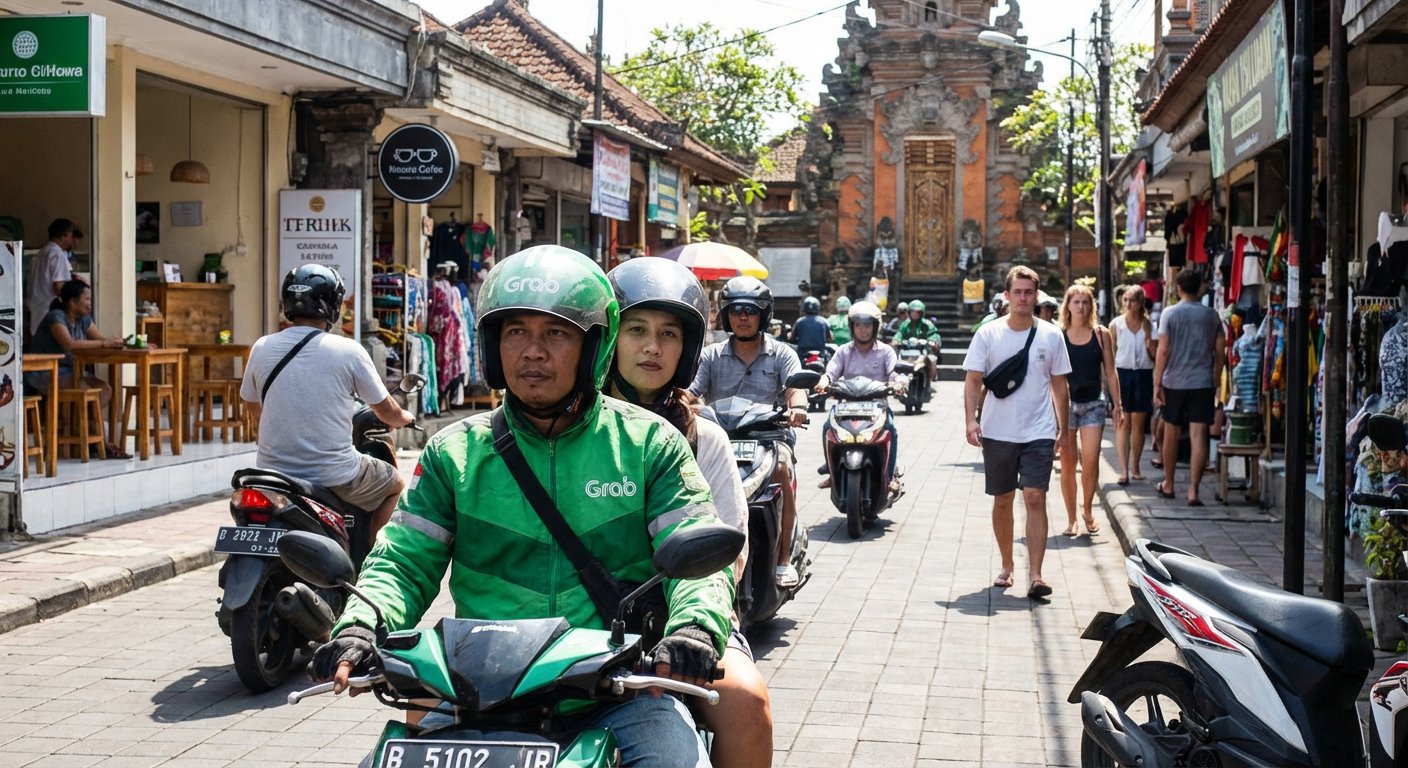
Install both apps before you leave. Prices fluctuate between the two, so compare every time you need a ride. Grab is better suited for foreigners linking international bank cards. Gojek is often cheaper for motorcycle taxis (GoRide) and food delivery (GoFood).
GoRide and GrabBike are the budget option: you sit on the back of a motorcycle and the driver weaves through traffic. You get the speed of a scooter without the risk of driving yourself. A minimum ride costs around 20,000 IDR (1.20 EUR), more during peak hours.
There’s a complication. In Canggu, central Ubud, the Uluwatu temple area and airport arrivals, local transport groups (sometimes called the “taxi mafia”) ban Grab and Gojek pickups. Drivers who enter these zones risk confrontation.
The workaround is simple: walk 200-300 meters away from the tourist center and order your ride from there. The driver may ask you to sit in the front to look less like a ride-hailing passenger. MyBluebird, the official Bluebird taxi app, works in most of these restricted zones as local groups generally respect traditional taxis.
Private Drivers
A private driver with car and fuel costs 600,000-800,000 IDR (35-50 EUR) for a full 10-hour day. This is the comfortable, stress-free option for temple visits and excursions. Longer trips like Ubud-Lovina round trip can reach 1 million IDR (60 EUR).
One thing to watch for: drivers who charge less than 500,000 IDR often supplement their income by steering you toward commission-based tourist traps (coffee plantations, silver workshops, “traditional art galleries”). You end up spending more time in shops than at the places you actually wanted to see.
Paying 700,000+ IDR for a driver who takes you where you ask without detours is money well spent. Book through Klook for vetted drivers with fixed prices and customer support. Treat your driver to lunch or give them 50,000 IDR for their meal; leave a tip at the end if the service was good.
Can You Get Around Without a Scooter?
Yes, but it requires patience and the right home base. Sanur has a beachfront promenade and flat streets. Central Ubud is walkable for restaurants and shops. Both work very well without any vehicle. Canggu and Seminyak are manageable with a combination of Grab cars and GoRide motorcycle taxis, but you’ll sit in traffic. Uluwatu requires a vehicle of some kind.
Money: ATMs, Currency Exchange and Tipping
Cash Is Still King
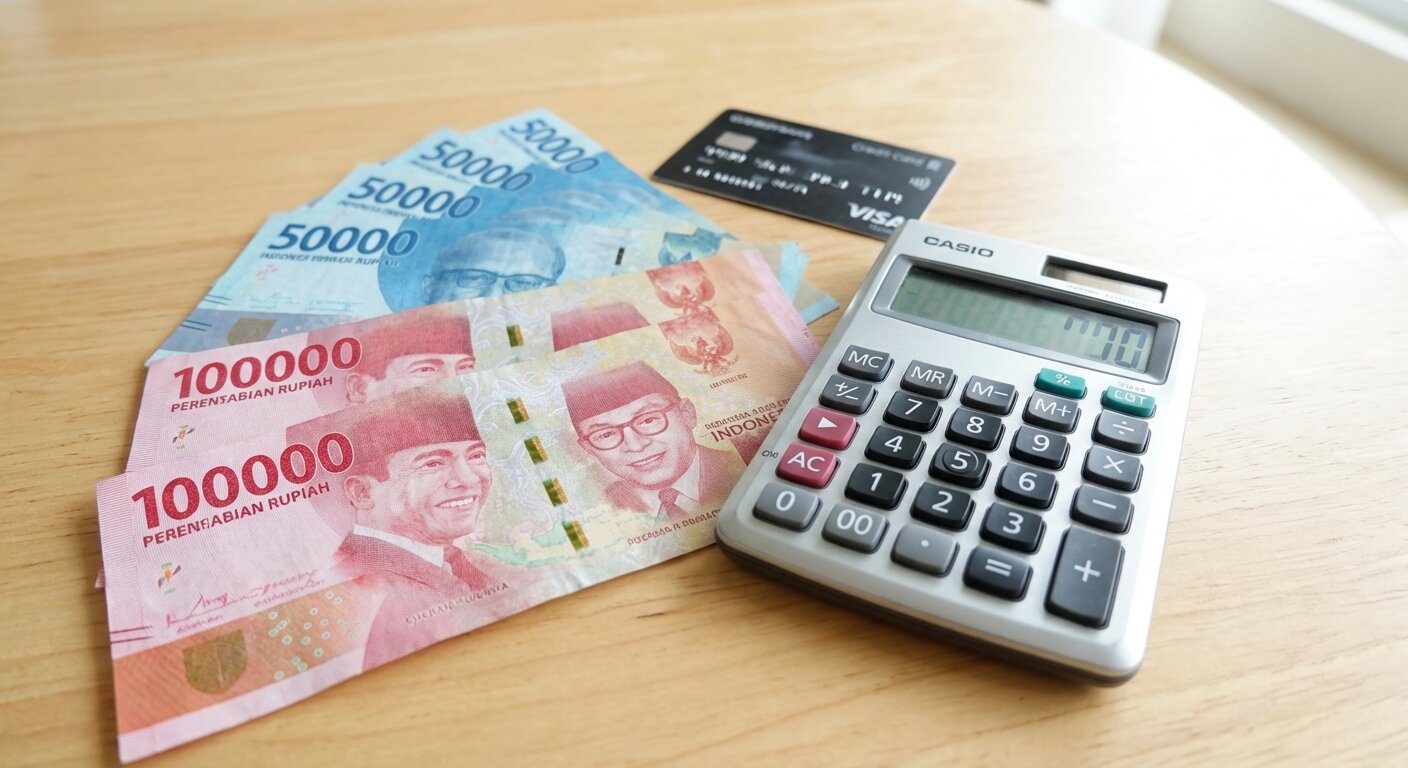
Many local warungs, market stalls and small shops don’t accept cards. Always have Indonesian rupiah on you. Bills come in large denominations (50,000 and 100,000 IDR notes are common), and the number of zeros takes a few days to get used to.
ATMs
Use ATMs located inside bank branches (BCA, BNI, Mandiri). Avoid standalone ATMs on the street, especially those attached to random walls in tourist areas. Card skimmers are a known problem: before inserting your card, wiggle the reader. If it feels loose or bulky, walk away.
Withdraw larger amounts less often to minimize fees that add up with each transaction. Consider notifying your bank of your trip to avoid card blocks, and bring a second bank card as backup.
Money Changers: Bali’s Biggest Tourist Trap
This topic deserves its own section because the money-changing scam is Bali’s most polished swindle. The glass-fronted exchange booths lining the streets of Kuta, Legian and Seminyak display exchange rates that look incredible. And for good reason: those rates are literally better than the market rate, which is your first red flag. A legitimate business cannot sell currency below its purchase price.
The mechanism works like this: the clerk counts your rupiah slowly, bill by bill, in a transparent display of honesty. Then comes the trick. While stacking the bills, they tap or press them against the counter, sliding bills into a slot or hidden drawer. Or they fold the stack into an envelope, palming several bills in the process.
Sometimes a second person approaches and asks you a question, creating a split-second distraction. You walk away with 20 to 30% less money than what you counted.
The golden rule: you must be the last person to touch the money before it goes in your pocket. If the clerk handles the stack again after you’ve counted it, the deal is off. Walk away.
Better yet, skip money changers entirely and use bank ATMs. If you absolutely must exchange cash, only use “authorized exchange offices” displaying the green “PVA Berizin” badge and operating from a real building, not a glass booth on the sidewalk.
Tipping
Tipping is not mandatory in Bali but is appreciated. Most restaurants in tourist areas add a service charge to the bill. At warungs, leaving small change (a few thousand rupiah) is a nice gesture. For drivers, 50,000-100,000 IDR (3-6 EUR) at the end of a full day is the norm. For massage therapists, 20,000-50,000 IDR on top of the session price is common.
Health and Safety
Travel Insurance
Get travel insurance before boarding the plane. This is non-negotiable. Standard health insurance from your home country likely won’t cover anything in Indonesia; you need private travel insurance. Providers like World Nomads, SafetyWing or Allianz Travel offer plans suited for stays in Asia.
The key thing to check: does your policy cover motorcycle accidents, and under what conditions? Most contracts require a valid motorcycle license and an International Driving Permit. If you have an accident without these documents, your insurer will deny coverage, and you’ll pay out of pocket for hospital bills that can easily reach 5,000-10,000 EUR or more for fractures requiring surgery.
Bali Belly
“Bali belly” (traveler’s diarrhea) hits many visitors, usually in the first few days. The usual advice applies: drink bottled water, avoid ice in small roadside stands (ice in established restaurants and warungs is generally safe as it comes from factories), eat at busy warungs with high turnover (fresh food = less risk), and wash your hands frequently.
If it happens anyway, stay hydrated with oral rehydration salts (available at any Bali pharmacy for pennies) and wait it out. Most cases resolve within 24 to 48 hours.
Vaccinations
Consult a travel health clinic or your doctor 4 to 6 weeks before departure. Hepatitis A and typhoid vaccines are commonly recommended for Bali. The rabies vaccine is worth considering given the number of stray dogs on the island.
If an unvaccinated dog bites you and you haven’t been pre-vaccinated against rabies, you need post-exposure treatment immediately, which means finding a hospital quickly. Travel health clinics and hospital emergency departments handle this type of treatment.
Stray Dogs
Bali has a large stray dog population, especially in rural areas and around temples. Most are docile during the day but can be territorial at night. Don’t touch, feed or approach stray dogs.
If you’re on a scooter and a dog charges at you, don’t swerve (that’s how many tourists crash). Maintain your speed and trajectory; the dog will usually stop. If you’re bitten, clean the wound immediately with soap and water for at least 15 minutes and go to a hospital for post-exposure rabies treatment.
Scams to Avoid
Bali is a safe destination, but it has a well-oiled ecosystem of scams targeting tourists. None of these scams will put you in physical danger. They will, however, drain your wallet if you’re not aware of them.
Money Changer Sleight of Hand
Covered in the money section above. Glass-fronted exchange booths with rates that beat the market rate are stealing from you. Use bank ATMs instead.
“Broken Meter” Taxis and Fake Bluebird Taxis
Drivers claim their meter is broken and offer a flat rate, usually 3 to 5 times the metered price. The legitimate company to look for is Bluebird: their cars have a bird logo, uniformed drivers and working meters. Fake Bluebird taxis exist, with similar paint jobs and logos that differ in small details. Use the MyBluebird app to guarantee you’re getting in a real one, or stick with Grab and Gojek where the price is locked before you get in.
“Mandatory Guide” Scam at Temples
At Besakih Temple (Bali’s largest and most important), aggressive touts near the entrance will insist you can’t enter without hiring a guide. This is false. Walk past them, buy your ticket at the official counter and enter on your own. The same scenario plays out at smaller temples, but with less insistence. The official ticket counter is always the authority on what’s required.
Lempuyang “Gates of Heaven”
The famous photo with the temple gates framing Mount Agung involves a 2 to 3-hour queue for what amounts to a 2-second photo. The “reflection” in the water that makes the photo look so perfect on Instagram is actually a mirror held under the camera by the photographer. Know this before you go to decide if the wait time is worth it.
Rice Paddy “Tolls” and Temple “Donations”
Some paths through rice paddies have improvised toll points where someone asks for a “donation” to walk on what is actually a public path. At some temples, touts outside (not the official counter) will pressure you to make a “donation” in exchange for a sarong or blessing. The official entry fee is what you pay at the official counter. Everything else is optional, no matter how insistent the person asking.
Kintamani Panoramic Restaurants
Tour drivers love taking tourists to the buffet restaurants overlooking Mount Batur in Kintamani. The food is overpriced and mediocre (buffet dishes sitting cold under heat lamps for hours). The view, however, is very real. For the same volcanic panorama with better food and lower prices, go to one of the small cafes along the Kintamani ridge road instead. Your driver gets no commission from those, which is why they never suggest them.
Police Checkpoints
This one surprises many tourists. Police set up checkpoints (called “operasi”) on main roads in Kuta, Seminyak, Canggu and along Sunset Road, stopping every foreigner on a scooter. If your documents are in order (valid license, IDP, helmet on, shirt worn), they generally wave you through without a word.
If something is missing, the officer will mention a “fine.” The real fine involves a blue slip and a court date. If the officer suggests settling it on the spot with a cash payment, that’s a bribe. The typical amount is 50,000-200,000 IDR (3-12 EUR) if you negotiate calmly, but can climb to 500,000-1,000,000 IDR if you look panicked or wealthy.
A strategy many travelers use: have a separate wallet with only 50,000-100,000 IDR in it, and show the officer that’s all you have. This is not a recommendation to pay bribes, but a description of what actually happens on the ground.

Connectivity: SIM Cards and WiFi
Physical SIM Cards
Telkomsel has the best coverage in Bali, including at Nusa Penida and the Gili Islands where other carriers drop out. You can buy a SIM card at the airport on arrival (immediate data, but about double the price) or at any small phone shop in town (half the price, but the seller needs your passport for registration). Wait for the confirmation text before leaving the shop to make sure the SIM is properly activated.
Note that roaming from your home carrier is expensive in Indonesia, and most plans don’t include Southeast Asia. A local SIM or an eSIM is much cheaper.
eSIM
If your phone supports eSIM and is unlocked, Airalo and Nomad are the two most commonly recommended providers. Set it up before boarding your flight and you’ll have data the moment you land. eSIMs cost slightly more than local physical SIM cards, but the convenience of skipping the registration process and having connectivity from minute one is worth the premium for most travelers.
WiFi
WiFi quality varies wildly. Cafes and coworking spaces in Canggu and Ubud generally have reliable, fast connections (Canggu and Ubud are popular digital nomad destinations). Budget accommodations and rural guesthouses may have slow or intermittent WiFi. If you’re working remotely, don’t rely on your accommodation’s WiFi as your only option; a local SIM card or eSIM with a good data plan is your backup.
What to Pack
Temple Visits
Every temple in Bali requires visitors to cover their knees and shoulders. You need a sarong (or at least a long scarf that works as a sarong). Many temples lend sarongs at the entrance, but they’re often damp from the previous visitor. Bringing your own is more hygienic and lets you skip yet another queue. A long, lightweight sarong folds down to almost nothing in your bag.
Rainy Season Gear
If you’re visiting between November and March (the wet season), pack a compact rain poncho or waterproof jacket. Rain in Bali comes as intense afternoon showers lasting 1 to 2 hours before clearing up. A poncho costs almost nothing, weighs nothing and will save you from a soaking on a scooter or while walking between temples. Waterproof phone cases or ziplock bags for electronics are also worth the small space they take up.
Other Essentials
Reef-safe sunscreen (SPF 50), reusable water bottle (refill stations are common in tourist areas), mosquito repellent with DEET, and a small first aid kit with antiseptic for minor scrapes. Flip-flops for everyday use, but also a pair of closed-toe shoes or water sandals with good grip for temple stairs and slippery paths through rice paddies. A headlamp or flashlight for early morning temple visits and power outages in rural areas.
Best Time to Visit: Month by Month
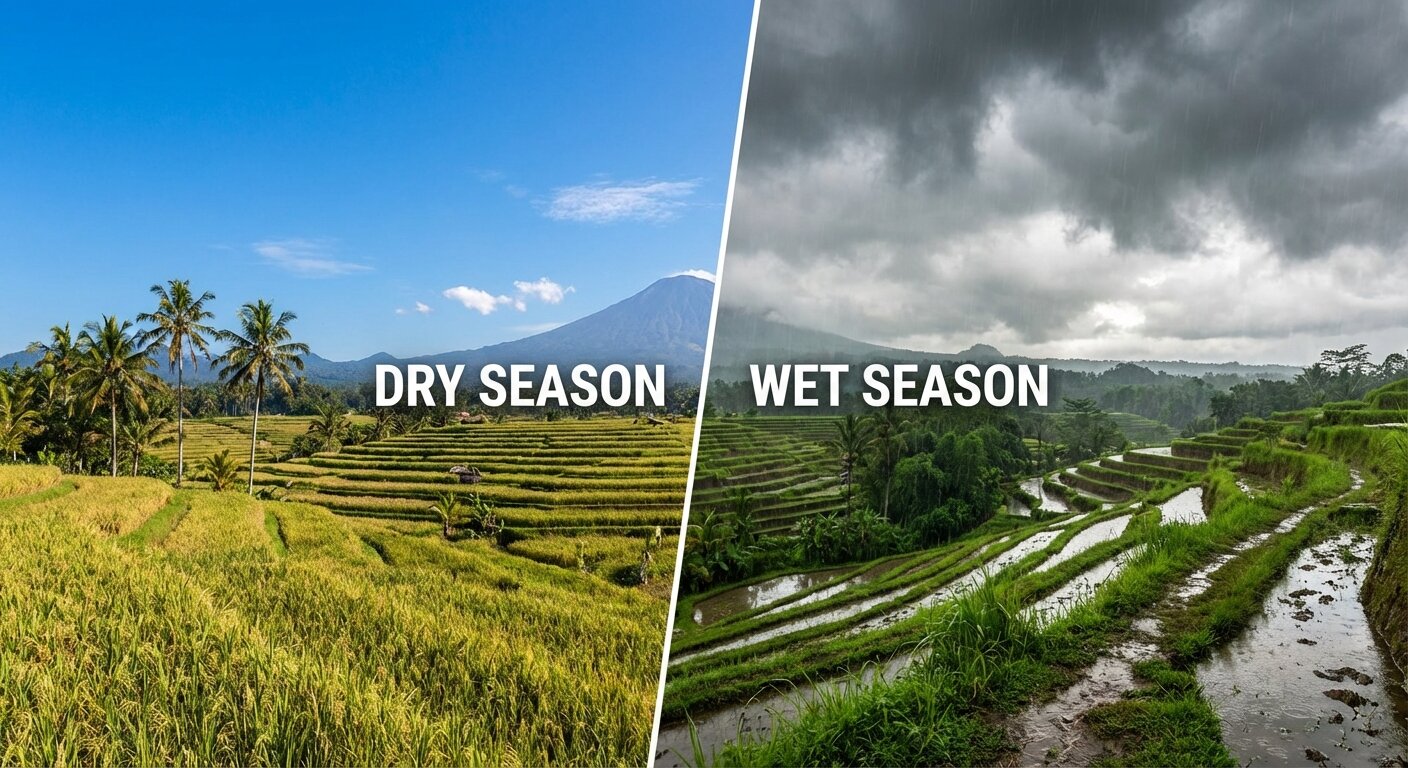
Bali has two seasons: dry (April to October) and wet (November to March). The distinction matters, but neither season is a dealbreaker.
Dry Season (April to October)
April and May are the sweet spot. Rains have stopped, tourist numbers are still moderate and prices haven’t yet hit peak season levels. June through August is peak season: the weather is at its best (sunny, low humidity, cool evenings in Ubud), but crowds and prices surge. Hotel rates in Seminyak and Uluwatu climb 30 to 50% above shoulder season prices.
September and October are similar to April and May: excellent weather, thinning crowds, lower prices.
Wet Season (November to March)
November starts gently with occasional showers. December brings heavier rains but also the Christmas and New Year rush, meaning peak season prices despite the weather. January and February are the wettest months: expect daily afternoon downpours, higher humidity and some disruption to outdoor activities.
That said, mornings are often clear and rain rarely lasts all day. March starts drying out. The big advantage of traveling in the wet season is the price: accommodation rates drop 30 to 50% across the board, and you’ll share temples and terraced rice paddies with far fewer people.
The Nyepi festival (Balinese New Year, usually in March) shuts the entire island down for 24 hours: no flights, no traffic, no electricity, you’re forbidden from leaving your hotel. It’s a unique experience if you’re prepared for it, but if it falls in the middle of your trip, make sure you have food and entertainment at your accommodation because nothing else will be open.
Eating on a Budget
Eating well for almost nothing is one of Bali’s true pleasures. A nasi goreng or mie goreng at a warung costs 1-1.50 EUR and is often better than the 7 EUR version at a Western-style cafe. The key is finding warungs with high turnover, which means fresh ingredients and food that hasn’t been sitting around.
Look for places packed with locals at lunchtime. If the menu is only in Bahasa Indonesia and the plastic chairs are mismatched, you’ve found the right spot.
To learn more about where and how to eat in Bali without breaking the bank, check out our guide to the best budget food in Bali.
Where to Base Yourself
Your choice of home base shapes your entire trip. Canggu is the digital nomad and surfer hub with the highest prices. Ubud is inland, surrounded by terraced rice paddies, and better suited for culture and temples. Seminyak is a step above Canggu in refinement and price, with better restaurants.
Sanur is quiet, walkable and popular with families and older travelers. Uluwatu has the cliff views and beach clubs but requires a scooter or driver to get anywhere.
Each neighborhood deserves its own breakdown, and we’ve written one: check out our guide to choosing where to stay in Bali for a neighborhood-by-neighborhood comparison.
What to Download Before You Go
Six apps will cover most of your needs. Grab and Gojek for transport and food delivery. MyBluebird for traditional taxis in areas where ride-hailing apps are restricted.
Google Maps for navigation (download the offline map of Bali before your flight). WhatsApp for communicating with drivers, hotels and tour operators. And your travel insurance app, so you have your policy number and emergency contacts accessible without digging through your emails.
If you’re comparing with Phuket, our practical tips for planning a trip to Phuket cover similar ground for Thailand’s largest island. Many of the same principles apply (scooter safety, ride-hailing apps, scam awareness), though the specifics differ.
Fast Boats to the Islands
Nusa Penida, Nusa Lembongan and the Gili Islands are common day trip or multi-day additions to a Bali trip. Boats depart from either Padang Bai (shorter crossing, about 1.5 hours) or Sanur (longer crossing, 3+ hours, but closer to hotels in southern Bali).
Operators like Blue Water Express and Eka Jaya charge 600,000-700,000 IDR (35-42 EUR) per crossing. Stands near the ports sell tickets at around 250,000 IDR (15 EUR) on unnamed boats. The cheaper boats are smaller, older and less well-maintained. In rough seas, the difference between a reputable operator and a cheap boat is a real safety issue.
Take seasickness tablets 30 minutes before boarding regardless of how strong your stomach usually is. The crossing can be rough, especially between October and April.
If you’re combining Bali and Thailand, check out our tips for planning a trip to Bangkok.
If you’re continuing to Vietnam, check out our guide to planning a trip to Hanoi.