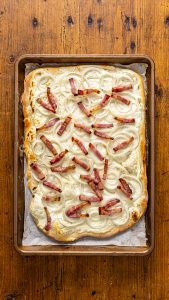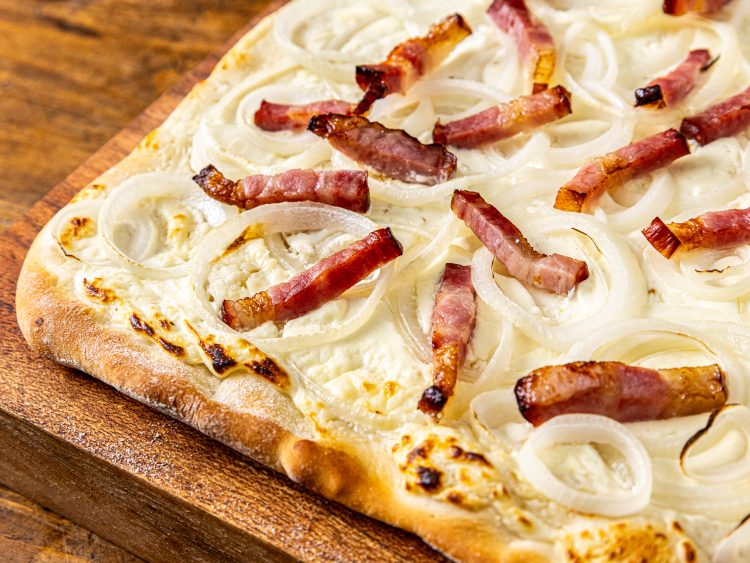
Plain Alsatian tarte flambée: a very thin bread dough, crème fraîche and fromage blanc, onions, and smoked lardons, baked in your home oven.
It comes out of the oven sizzling, and nobody waits for it to cool. The golden edges crackle between your fingers, the cream has picked up a few brown spots, and the lardons are still steaming on top of the melting onions.
In Alsace, it’s cut into rectangles right on the board, and the pieces get passed from hand to hand. The first tart is always gone before the second one comes out of the oven.
What Is Tarte Flambée?
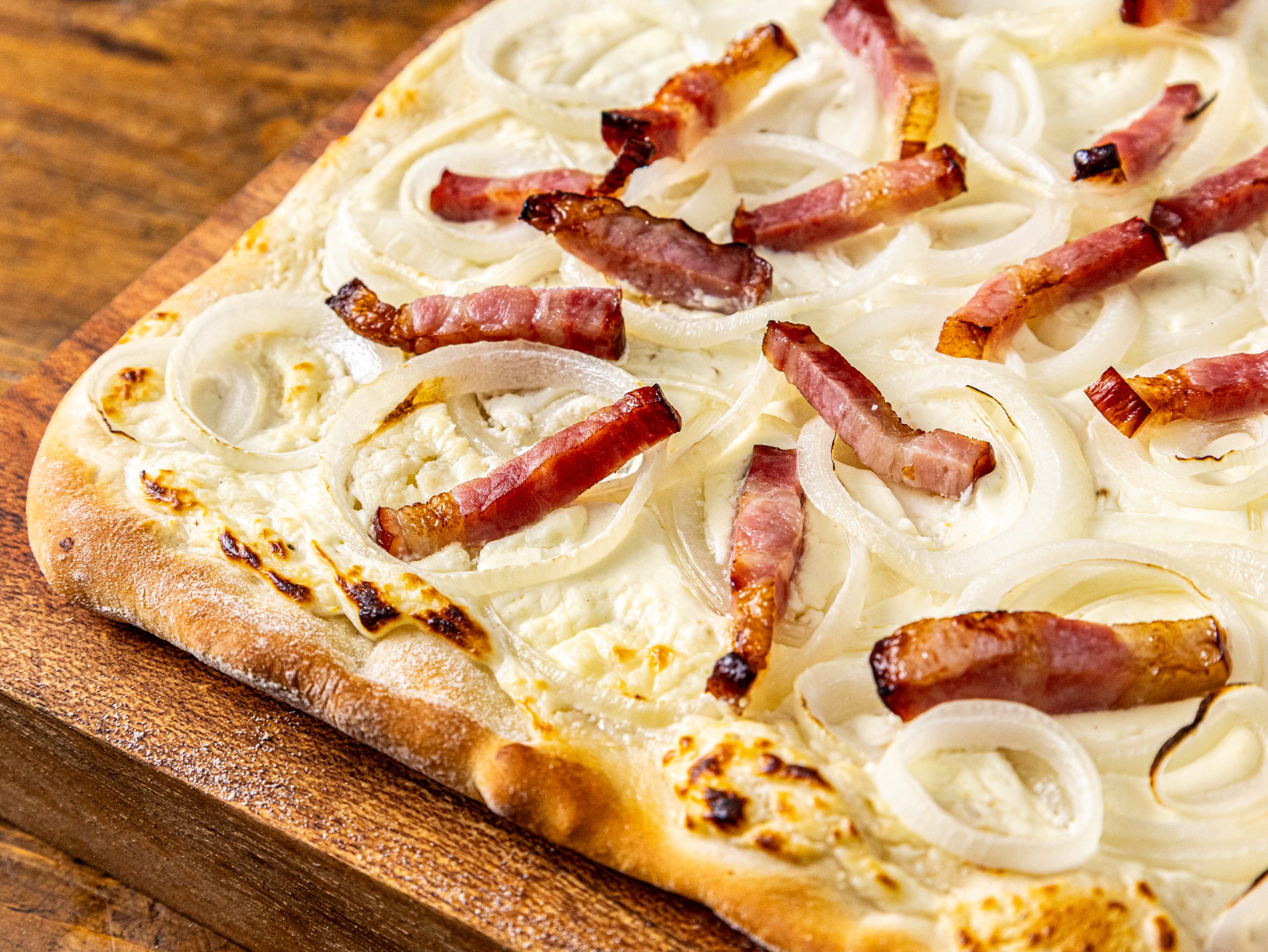
Tarte flambée is a savory specialty from Alsace: bread dough rolled out until it is almost translucent, then covered with a mixture of crème fraîche and fromage blanc, raw onions, and smoked lardons.
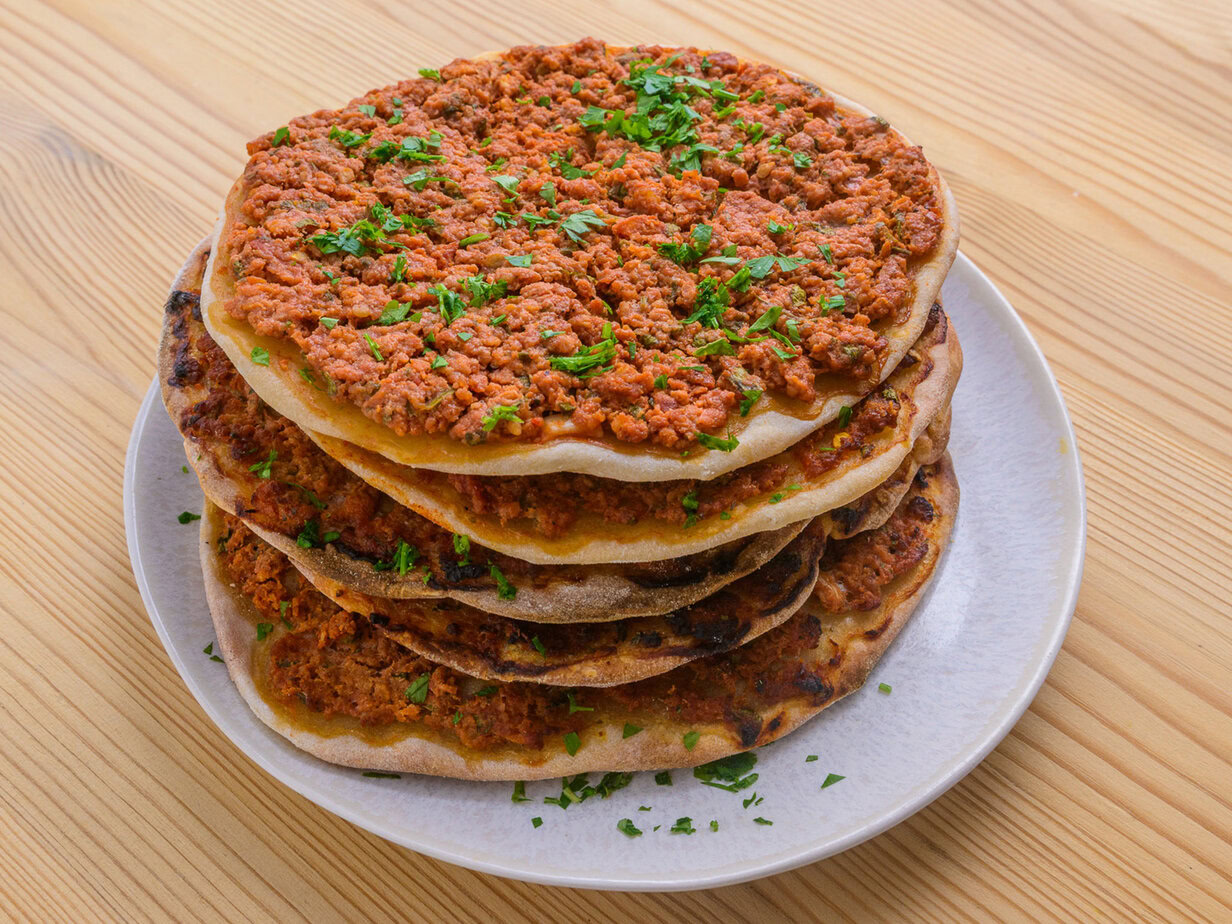
This version uses a lightly risen dough that stays very thin and turns crisp in the oven. It’s a far cry from naan, which is meant to be soft and pillowy, and closer to chapati, which is also rolled out thin but made without yeast and cooked in a frying pan.
Its Alsatian name, flammekueche, means “cake baked in the flames”; in German, it’s called Flammkuchen. The French name is misleading: the tart isn’t flambéed with alcohol. The flames are those of the wood-fired oven it used to be baked in.
Born at the Bread Ovens of the Kochersberg
Tarte flambée comes from the farms of the Kochersberg, an agricultural plateau northwest of Strasbourg. On baking days, farmers would slide a very thin piece of bread dough into the wood-fired oven to gauge its heat. If the flatbread baked quickly without burning, the oven was ready for the loaves.
The topping came from the farm: cream, fromage blanc, onions, and smoked bacon. The dish remained farmhouse fare, with no written recipe, until the 1960s, when Alsatian restaurants put it on their menus and served it on wooden boards.
The Main Ingredients in Tarte Flambée
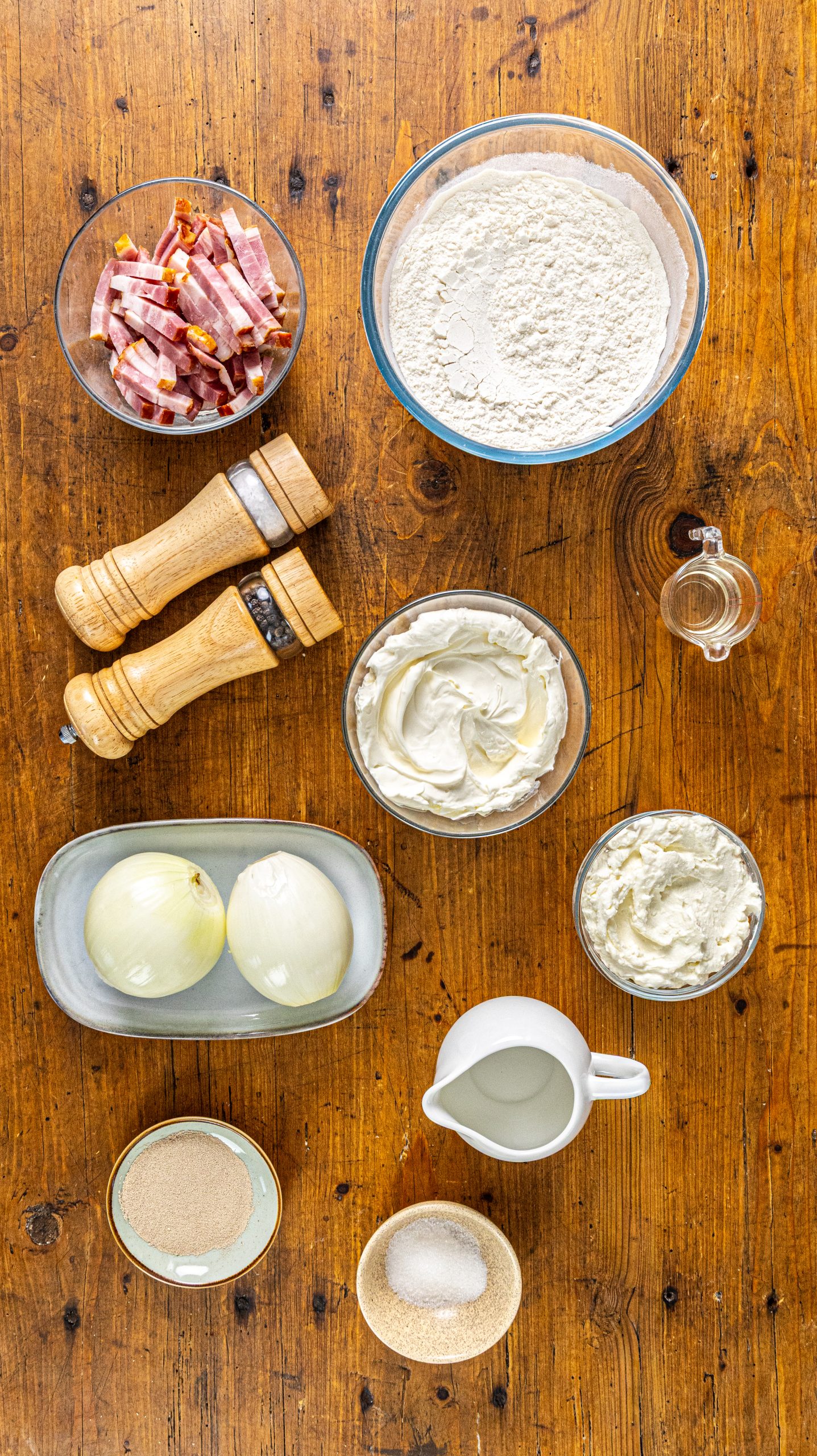
The base is a simple bread dough: flour, fresh yeast or half a packet of dry yeast, a teaspoon of sugar to get the yeast going, water, a neutral oil such as canola or sunflower, and salt. The oil makes the dough supple, so it can be rolled out very thin.
The topping relies on two dairy products. Thick crème fraîche brings richness and creaminess, while fromage blanc adds a slight tang that lightens the whole thing. Heavy cream would make the dough soggy. It’s the same pairing of cream and lardons as in air fryer quiche, in a much thinner layer.
The yellow onions, sliced as thinly as possible, and the smoked lardons go onto the tart raw: they cook in the heat of the oven. The salt and pepper are divided between the cream and the top of the tart, with a light hand, since the lardons are already salty.
Technique Tips for a Crisp Tarte Flambée
The dough should be rolled out until it is almost translucent. The thinner it is, the crisper the base will be.
The oven needs to be very hot, 250 °C. If yours doesn’t go that high, set it to its maximum and bake a little longer.
Spread the cream sparingly and bake one baking sheet at a time. Top the second piece of dough just before it goes into the oven, otherwise it will turn soggy. The tart is ready when the crust is crisp and the edges are lightly golden.
Serving and Variations
Tarte flambée is served piping hot on a wooden board, cut into rectangles that you eat with your fingers. Since the two tarts bake one after the other, the second arrives just as the first is finished. For another recipe to share, consider Korean garlic bread.
The gratinée version gets grated Munster or Emmental 5 minutes before the end of baking, and the forestière gets sliced button mushrooms.
The sweet version swaps the topping for lightly sweetened crème fraîche, thin apple slices, and cinnamon, and is then flambéed with Calvados or kirsch. If a cinnamon yeast dough tempts you, try cinnamon rolls.
For more yeast dough, there are steamed baozi. For melty cheese, try khachapuri and cheese naan. And for cheese and onion, homemade cancoillotte and French onion soup, with its slowly caramelized onions, can also be made at home.
Ingredients
Bread Dough
- 350 g flour
- 15 g baker’s yeast fresh, or 0.5 packet of dry yeast
- 1 teaspoon sugar
- 190 g water at room temperature
- 25 g oil neutral (canola or sunflower)
- 1 teaspoon salt
Cream
- 300 g crème fraîche thick
- 200 g fromage blanc
Topping
- 2 large yellow onions
- 300 g lardons smoked
Seasoning
- 2 pinches salt
- 10 turns of the pepper mill
Instructions
Bread Dough
- Crumble the yeast into the water.15 g baker’s yeast, 190 g water
- Add the sugar and stir.1 teaspoon sugar
- Pour the flour into a large mixing bowl.350 g flour
- Add the water and yeast mixture, the oil, and the salt.25 g oil, 1 teaspoon salt
- Knead until the dough is soft and smooth.
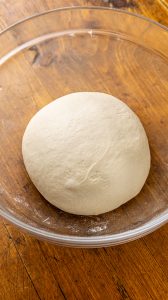
- Lightly oil a large bowl.
- Place the dough in it.
- Cover the bowl with plastic wrap.
- Let rise for about 1 hour, until the dough has doubled in size.
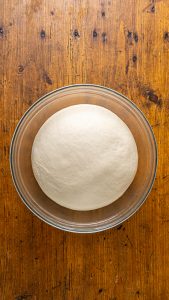
Cream
- Mix the crème fraîche and the fromage blanc together.300 g crème fraîche, 200 g fromage blanc
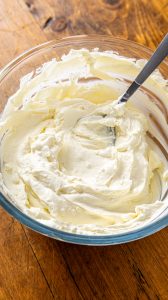
- Season with half the salt and half the pepper.2 pinches salt, 10 turns of the pepper mill
- Set aside.
Onions
- Once the dough has risen, preheat the oven to 250 °C.
- Peel the onions.2 large yellow onions
- Slice them as thinly as possible.
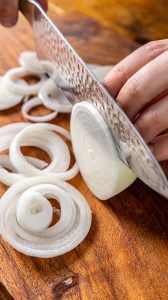
- Set aside.
Crusts
- Line 2 rectangular baking sheets with parchment paper.
- Flour the work surface.
- Divide the dough in half.
- Shape into 2 balls.
- Roll each ball out into a rectangle with a rolling pin, as thinly as possible, until the dough is almost translucent.
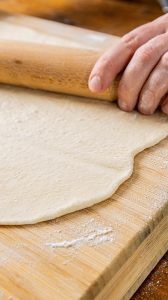
- Place each rectangle of dough on a baking sheet.
Topping and Baking
- Just before baking each tart, spread half the cream over the crust.
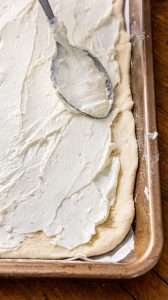
- Scatter half the onions over each crust.
- Scatter half the lardons over each crust.300 g lardons
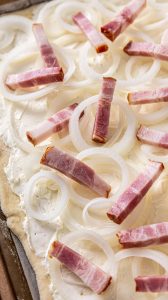
- Season with the rest of the salt and pepper.
- Bake one sheet at a time.
- Bake for about 7 minutes, until the crust is crisp and the edges are lightly golden.