
Black tea with milk, boiled in a saucepan with fresh ginger, green cardamom, cinnamon, a clove, and black pepper.
It’s a gray day, your hands are reaching for something warm, and the saucepan is already simmering on the stove. The ginger and cardamom fill the kitchen long before the milk foams up.
In the cup, the tea is strong, sweet, and slightly spicy, with a peppery warmth that lingers on the palate. You drink it piping hot, in small sips, and the second cup goes as fast as the first.
What Is Masala Chai?
Masala chai is the spiced milk tea of Indian cuisine. Whole spices are boiled in water, followed by black tea and sugar, and finally milk, all in the same saucepan, and then everything is strained.
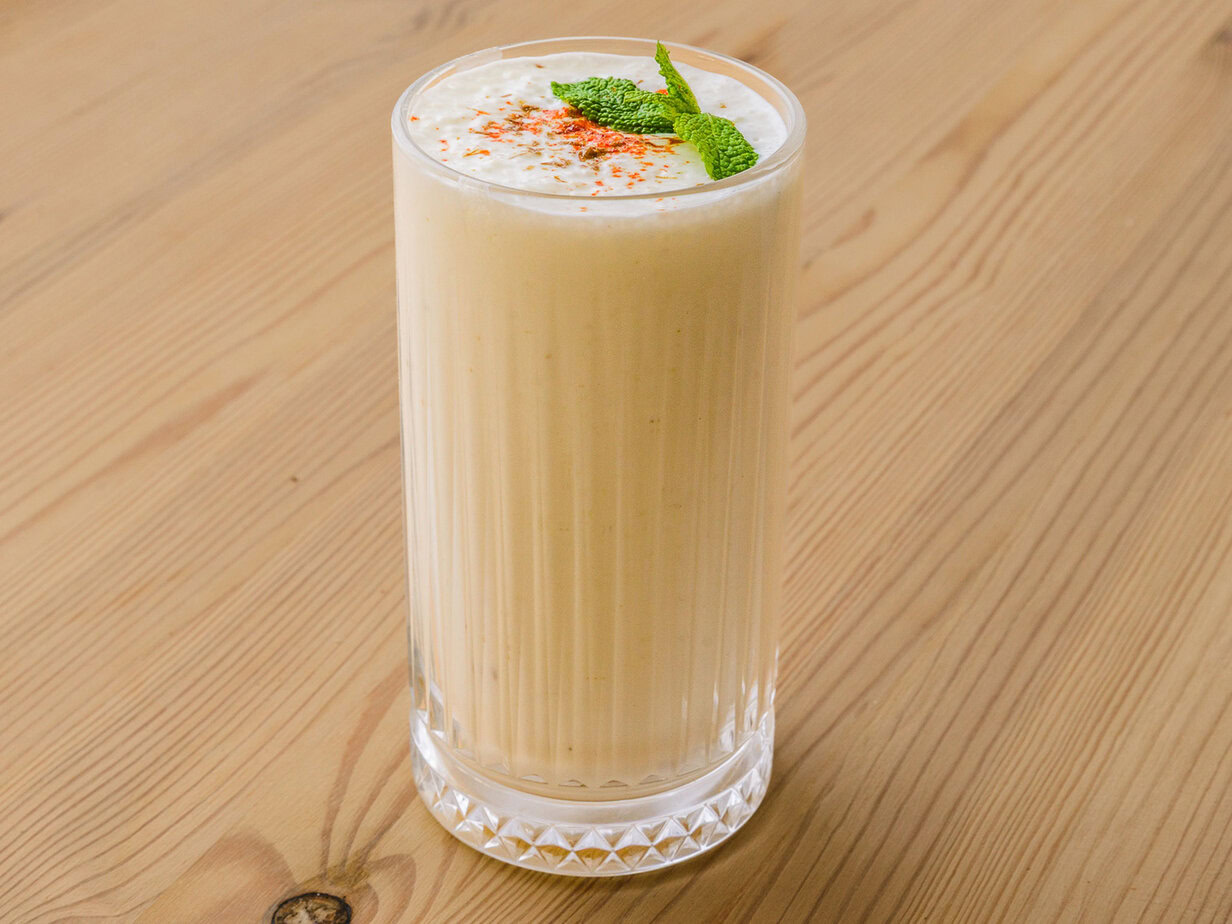
The tea and milk cook together, and that’s what sets it apart from a tea bag dunked in hot milk. Lassi, the other well-known Indian drink, is made with yogurt instead.
In Hindi, chai means tea and masala refers to a spice blend. So saying “chai tea” amounts to saying “tea tea.” Every family has its own proportions, and depending on the household, it’s the ginger, the cardamom, or the malty flavor of the tea that comes through most.
From the Plantations of Assam to the Stalls of the Chaiwalas
Spiced drinks have long existed in India, and some are linked to Ayurvedic medicine. Masala chai as it’s drunk today, with black tea, milk, and sugar, is much more recent. It emerged in the colonial era, when the British developed tea plantations in Assam and later built up tea drinking within India itself.
Street vendors, the chaiwalas, adapted the British way of making tea: more milk, more sugar, local spices, and a boil that got the most out of tea that was still expensive.
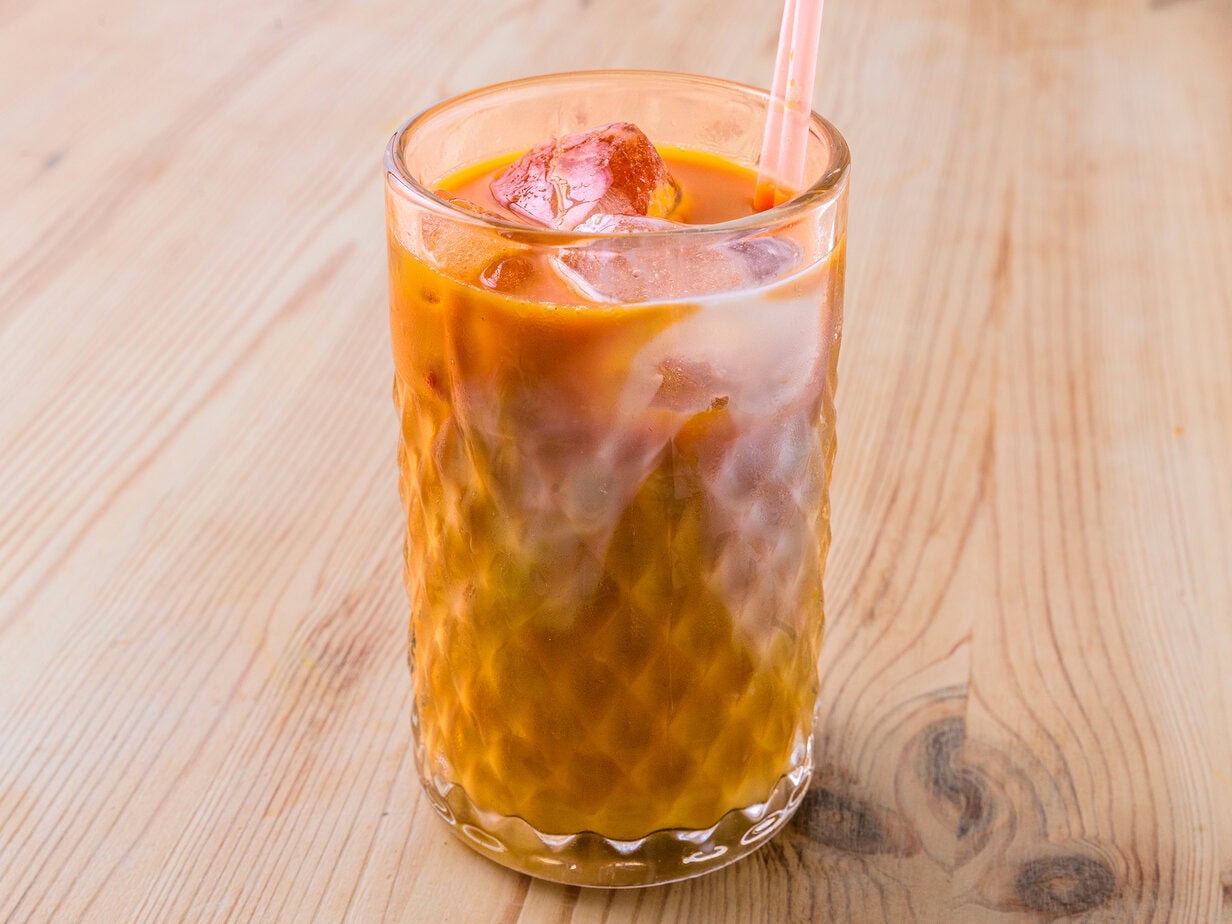
Today every region has its own version. Mumbai street chai is strong and very sweet. In the south, ginger takes the lead and the tea is aerated by pouring it from one stainless steel tumbler to another, and in Kashmir, noon chai is made with green tea and salt.
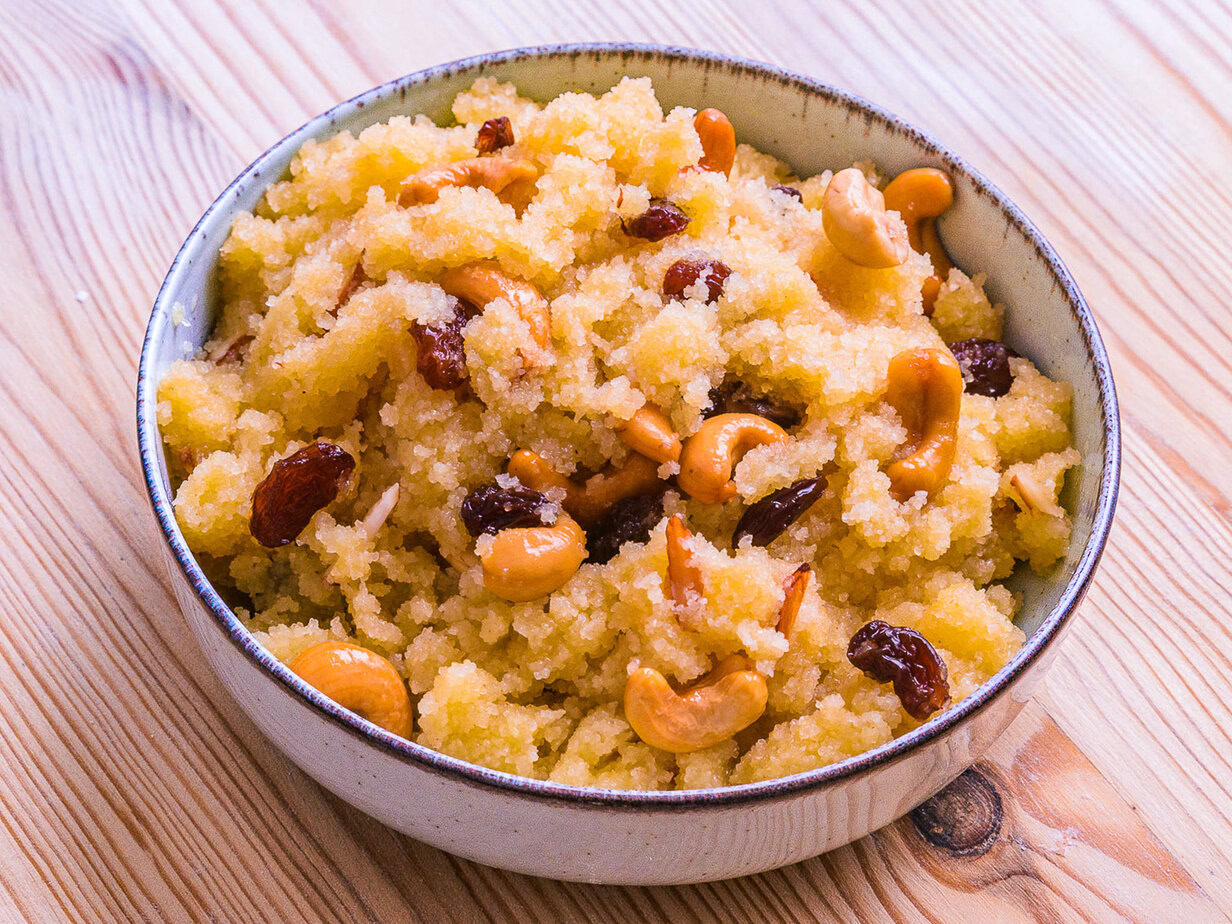
It’s drunk on the street, standing in front of the stall, and at home during the afternoon break or whenever a guest walks through the door. On the savory side, a few samosas or a paratha go well with it, and on the sweet side, gulab jamun.
The Main Ingredients for Masala Chai
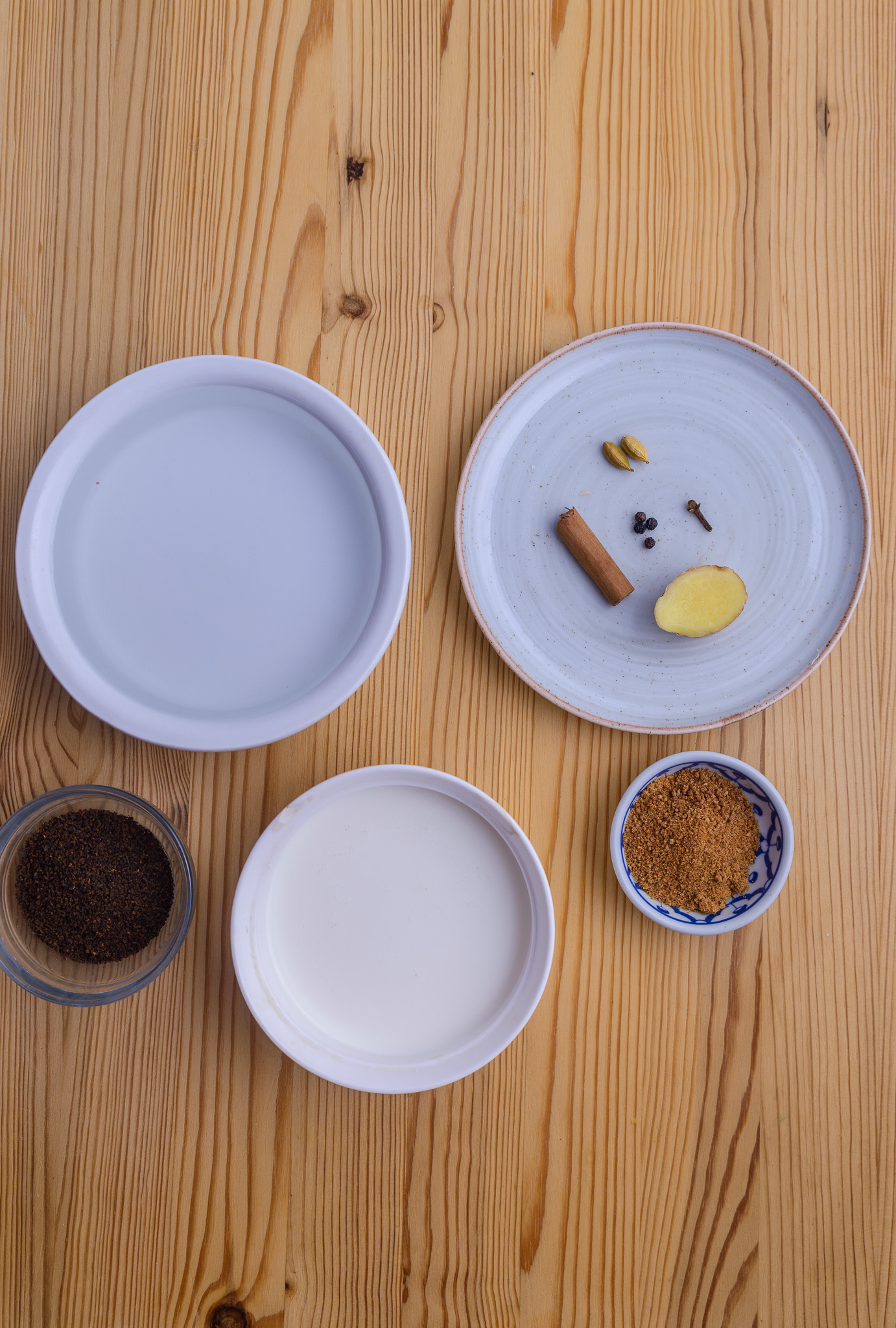
The black tea needs to stand up to the milk and spices: an Assam tea or a strong Indian blend does the job. In India, people mostly use CTC tea, which stands for crush, tear, curl: the leaves are crushed, torn, and then rolled into small granules that quickly release their color and malty flavor.
You can find it at Indian grocery stores, but a good strong loose-leaf black tea, or three tea bags, will also work.
The spices stay whole. The fresh ginger is cut into thin slices or crushed, never grated, and the green cardamom pods, not to be confused with smoky black cardamom, are just cracked open to release their fragrance.
A single clove is enough. The black pepper leaves a warmth at the back of the throat, and a small piece of cinnamon stick adds a woody note. Chinese cinnamon has a stronger aroma than Ceylon cinnamon.
2% milk makes a lighter chai, whole milk a creamier cup. Cane sugar balances the tea’s astringency and the heat of the spices, and can be adjusted to taste.
Jaggery, an unrefined sugar made from sugarcane or certain palms, isn’t always palm sugar. It’s better stirred into the cup: if boiled with the milk, it can make it curdle.
Technical Tips for a Good Masala Chai
A high-sided saucepan keeps it from boiling over when the milk foams up. The spices boil on their own in the water first, to get a head start on the tea. Once the tea is in, don’t drag out the cooking: boiled too long, it releases its tannins and the chai turns harsh and bitter.
Bland chai often comes from tea that’s too mild or spices that haven’t been opened up enough. With an English breakfast-style tea, use 1.5 to 2 tablespoons of tea instead of 3 teaspoons.
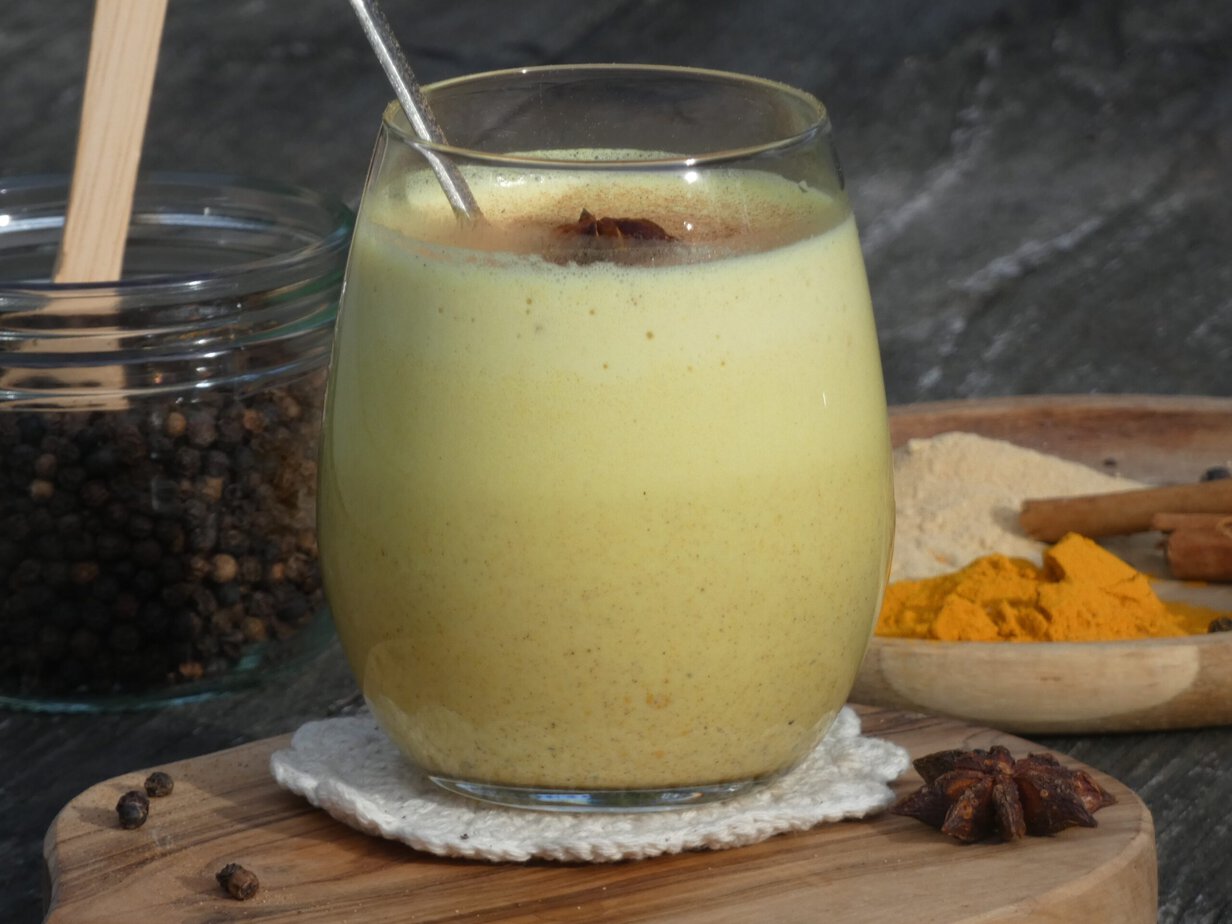
The chai is ready when it has turned a darker color and taken on a slightly silkier texture. Strain it straight into the cups and drink it piping hot. For four cups, double all the quantities and use a larger saucepan.

Ingredients
Spice Infusion
- 475 ml water
- 5 g ginger fresh (1 cm), thinly sliced or crushed with a mortar and pestle, not grated
- 2 pods green cardamom lightly cracked open (seeds and pods)
- 1 whole clove
- 3-4 whole black peppercorns
- 2-3 g cinnamon stick 1 small piece
Tea
- 3 teaspoons black tea loose-leaf, or 3 black tea bags
- 4 teaspoons cane sugar (16 g), to taste
Milk and Cooking
- 250 ml milk reduced-fat, or whole milk
Instructions
Prep
- Cut the ginger into thin slices, or coarsely crush it with a mortar and pestle.5 g ginger
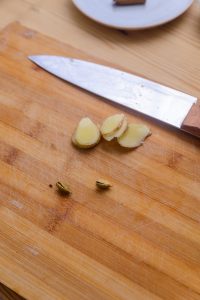
- Lightly crush the cardamom pods to crack them open, without removing the seeds.2 pods green cardamom
Spice Infusion
- Pour the water into a medium high-sided saucepan (2 L) so the chai doesn’t boil over.475 ml water

- Bring to a full boil over high heat.
- Reduce the heat to medium-low.
- Add the ginger, cardamom, clove, peppercorns and cinnamon.1 whole clove, 3-4 whole black peppercorns, 2-3 g cinnamon stick
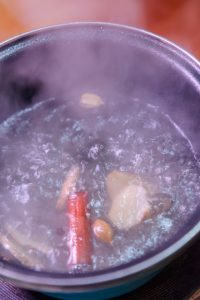
- Boil gently for 2 to 3 minutes: the water takes on the aroma of the spices.
Tea
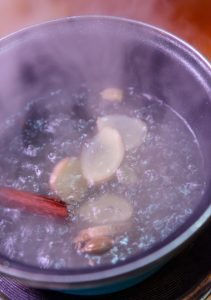
- Add the tea and sugar.3 teaspoons black tea, 4 teaspoons cane sugar
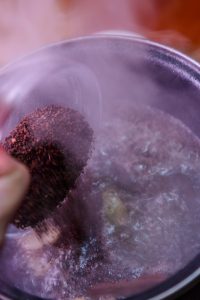
- Let steep for 3 minutes over medium-low heat: the tea releases its color and the brew darkens.
Milk and Cooking
- Pour in the milk.250 ml milk
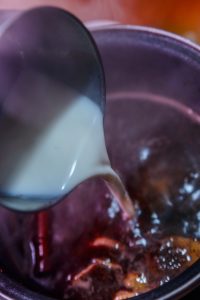
- Turn the heat up to high.
- Stir once or twice with a wooden or silicone spoon: at this stage, the chai is light brown and still mild.
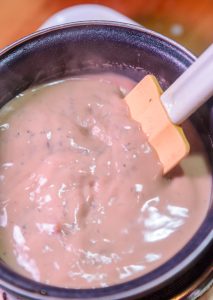
- Keep an eye on it until it first comes to a boil, about 2 to 3 minutes.
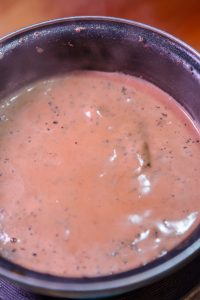
- Reduce the heat to medium-low.
- Stir constantly for 2 to 3 minutes to cook the milk and deepen the flavor.
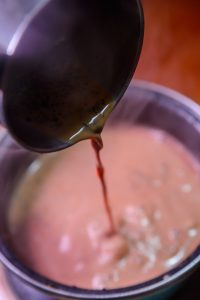
- At the same time, aerate the chai with a ladle by scooping it up and pouring it back into the saucepan: this makes it creamier.
Serving
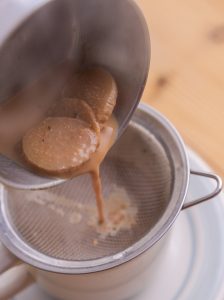
- Once the chai has turned a deeper color, immediately strain it into the cups through a tea strainer.
- If a thin skin forms on the surface, stir it back in with a spoon.
- Serve immediately.