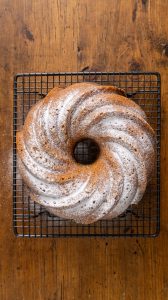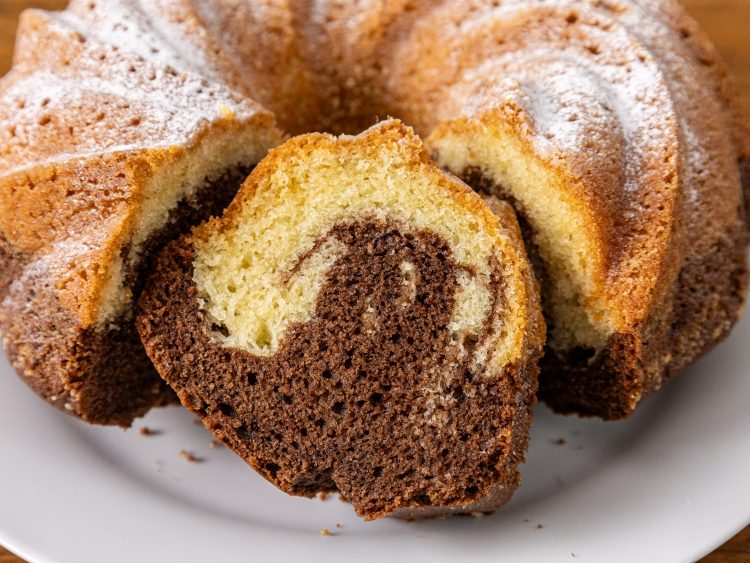
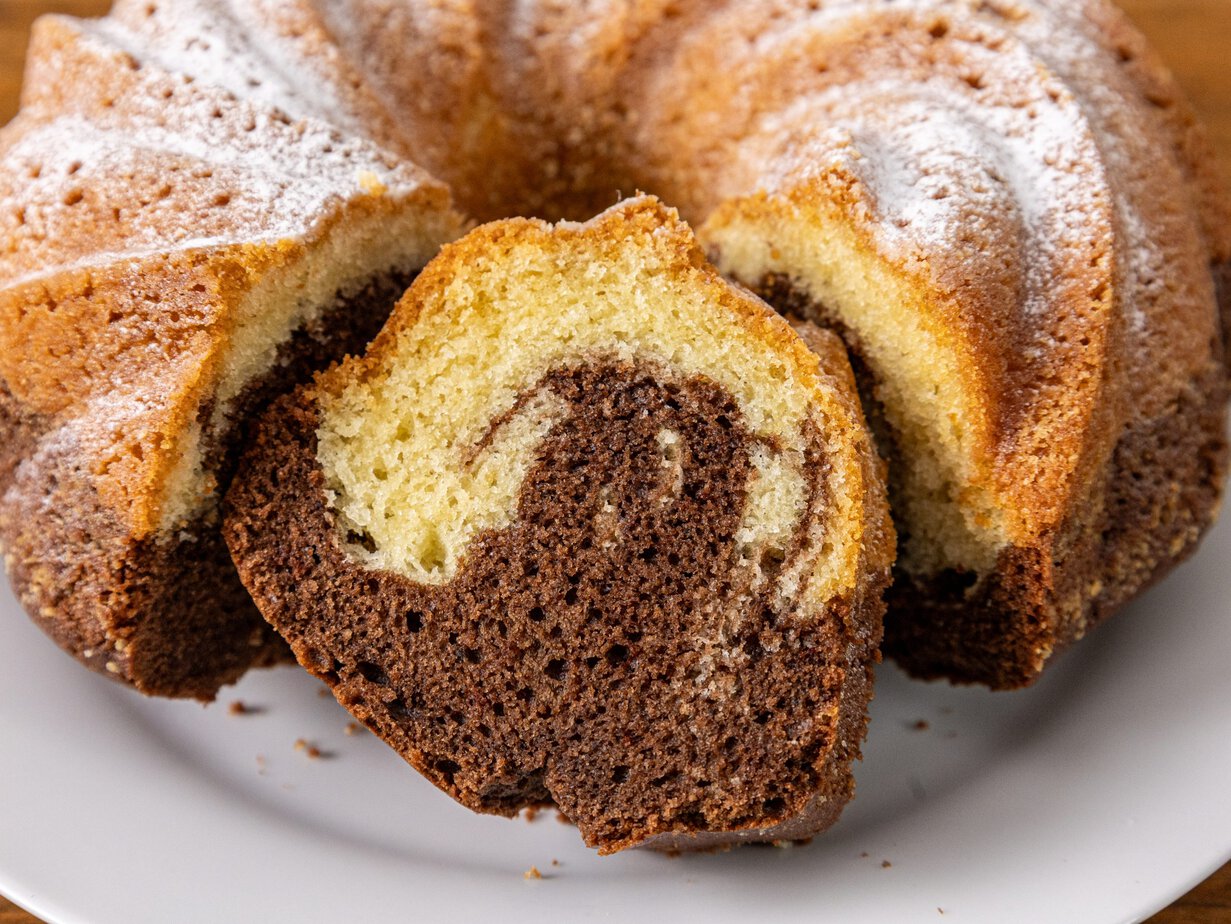
A vanilla butter cake marbled with cocoa and baked in a kugelhopf pan, like the German Marmorkuchen.
Afternoon coffee is steaming in the cup, and the kugelhopf, dusted with powdered sugar, sits waiting on its plate. The knife slides through a tender, buttery crumb streaked with ribbons of cocoa, and the scent of vanilla rises from the slice.
You cut a thin slice just to taste, then a second one, because the first really was much too thin.
What Is Marble Cake?
Marble cake is a vanilla-flavored butter cake. You make a single batter, divide it in two and add cocoa to one half: the crumb has the same texture throughout, with the sweetness of vanilla on one side and the slight bitterness of cocoa on the other. The German version shown here is baked in a kugelhopf pan (Gugelhupf), a fluted pan with a tube in the center. French marble cake is the same cake, baked in a loaf pan. For an all-chocolate dessert, American brownies are another option.
In German, Marmor means “marble” and Kuchen means “cake.” The name comes from the dark veins running through each slice, like those in a slab of marble.
The Cake for Afternoon Coffee in Germany
Marmorkuchen is part of German home baking, and you’ll also find it in Austria and Switzerland. No one knows for sure who invented it, or when. In Germany, it is one of the Alltagskuchen, the everyday cakes: it’s served with afternoon coffee, at birthdays, at family gatherings, or when guests drop by unannounced.
Its batter belongs to the Rührteige family, creamed butter batters. The spread of baking powder made these cakes easy to bake at home: they rise without yeast, unlike American cinnamon rolls, using ingredients everyone has in their cupboards.
The Main Ingredients for Marble Cake
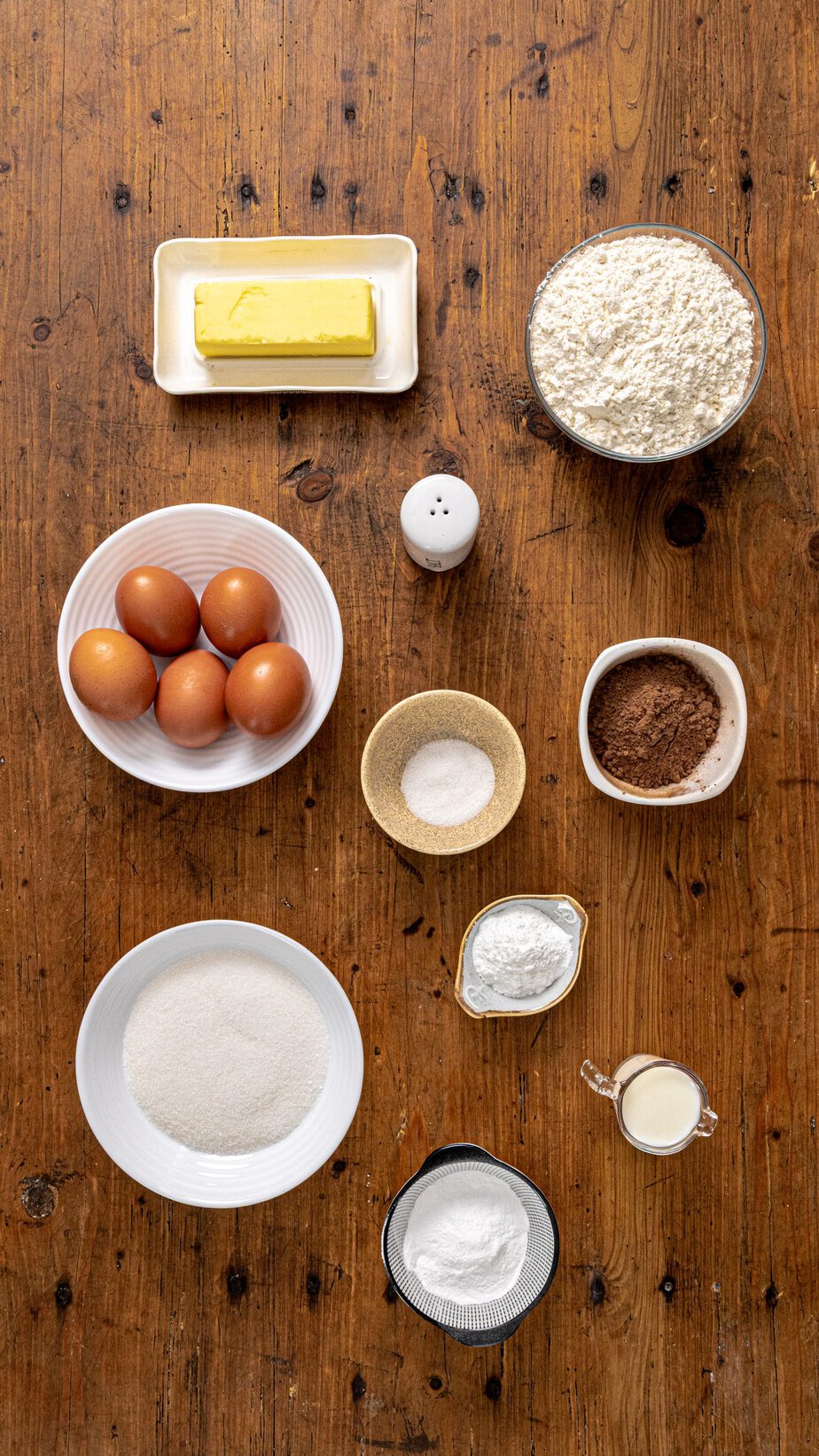
The batter starts with softened butter, sugar, vanilla sugar and a pinch of salt, beaten until the mixture is fluffy. The five eggs bind everything together, and their yolks help keep the water and butter well blended. The butter, eggs and milk should be at room temperature: cold eggs firm up the butter and the batter becomes less smooth. The crumb is soft but fairly dense, far from the airy texture of a Japanese cheesecake.
T45 flour corresponds to German type 405 flour. The amount of baking powder is higher than usual, the equivalent of one 16 g German packet: a French packet weighs only 11 g, so you need to weigh it. In the cocoa half, a little milk makes up for the cocoa powder, which absorbs liquid.
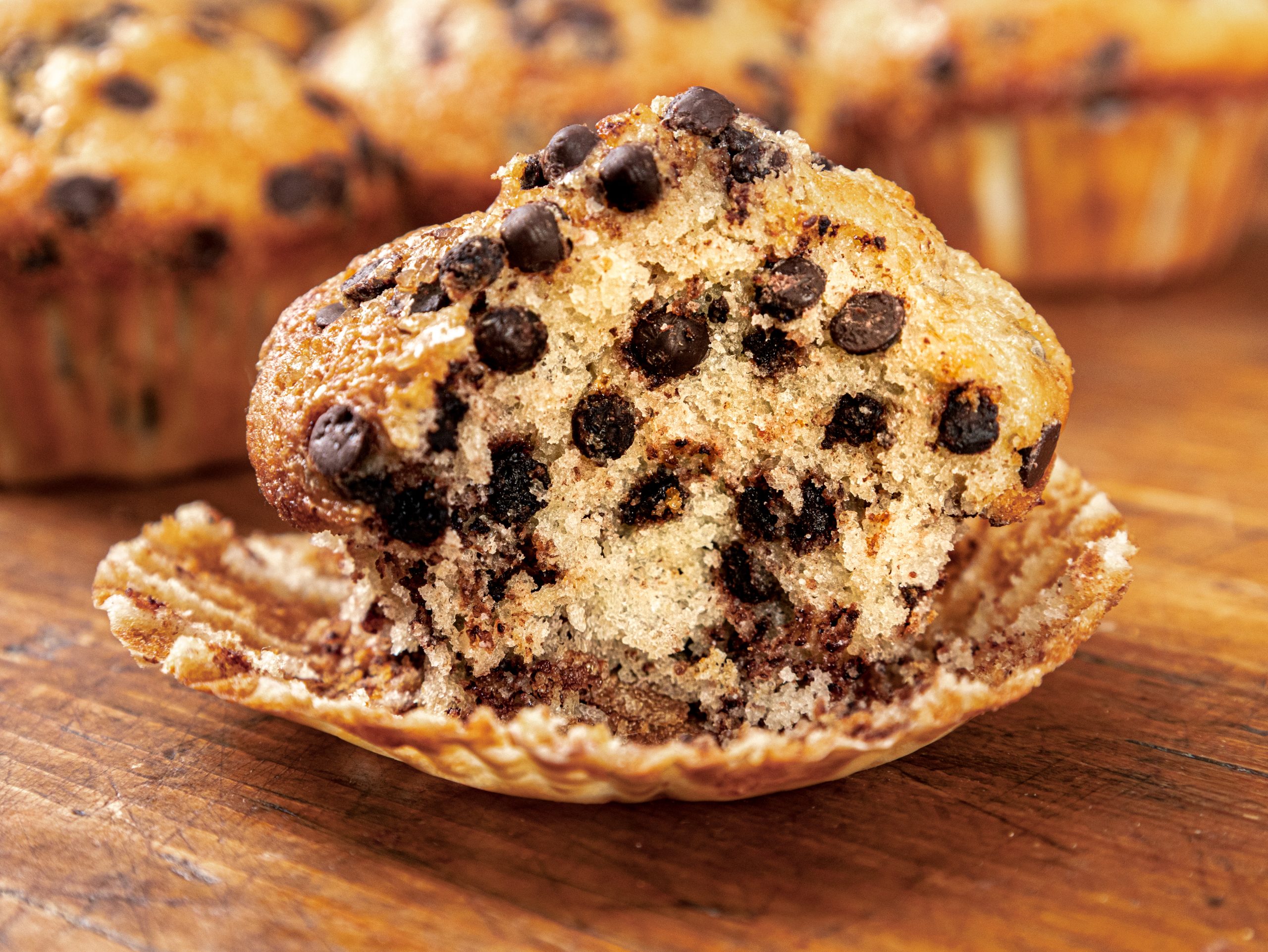
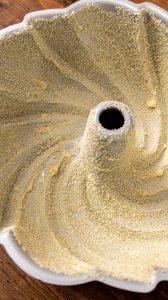
The pan is buttered, then coated with breadcrumbs so the cake comes cleanly out of the flutes. To finish, a light dusting of powdered sugar is all it needs, as on air fryer bugnes. The couverture chocolate glaze, with a little solid coconut oil to make it glossy and keep it flexible when sliced, is optional; it’s also delicious on American donuts.
Serving and Storing Marble Cake
A slice is perfect on its own with afternoon coffee or at snack time, without cream or sauce, and black tea makes a great stand-in for the coffee. Powdered sugar lets the vanilla and cocoa shine, while the glaze adds a stronger chocolate flavor. For another glazed cake, there are the matcha-glazed black sesame cakes.
The cake keeps for 3 to 4 days at room temperature in an airtight container, once it has cooled completely so no condensation forms. The refrigerator hardens the butter and makes the crumb less tender. It freezes well, whole or in individually wrapped slices, and thaws at room temperature.
To vary the cakes you serve with afternoon coffee, American carrot cake is another idea, and American cookies or American pancakes round out an afternoon snack nicely.
Ingredients
Pan
- Butter, or margarine, for the pan
- Breadcrumbs, for the pan
Batter
- 250 g butter softened
- 170 g sugar granulated
- 1 packet vanilla sugar (about 8 g)
- 1 pinch salt
- 5 eggs, at room temperature
- 250 g wheat flour T45
- 1 packet baking powder German (Backpulver, about 16 g)
Cocoa Batter
- 20 g cocoa powder unsweetened
- 50 ml milk, at room temperature
Chocolate Glaze (Optional)
- 200 g couverture chocolate dark, or milk
- 20 g coconut oil solid (such as Végétaline)
Finishing Without Glaze
- Powdered sugar, for dusting
Instructions
Before You Start
- Take the butter, eggs and milk out of the fridge at least 1 hour ahead: they need to be at room temperature for the batter to have the right consistency.250 g butter, 5 eggs,, 50 ml milk,
Oven and Pan
- Preheat the oven to 180°C using conventional top and bottom heat.
- Butter the entire inside of a 22 cm diameter Bundt pan (Gugelhupf).Butter,
- Sprinkle some breadcrumbs into the pan.Breadcrumbs,
- Rotate the pan so the breadcrumbs coat the entire inside.
Batter
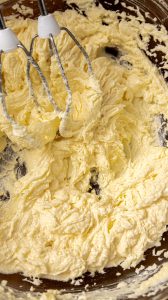
- Put the softened butter, sugar, vanilla sugar and salt in a mixing bowl.170 g sugar, 1 packet vanilla sugar, 1 pinch salt
- Beat for 2 to 3 minutes with a hand mixer or stand mixer until the mixture is fluffy.
- Add the eggs one at a time, beating constantly.
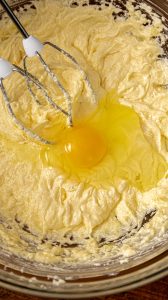
- Keep beating for 2 minutes.
- Mix the flour and baking powder in a bowl.250 g wheat flour, 1 packet baking powder
- If the mixture is lumpy, sift it.
- Pour the flour and baking powder into the mixing bowl.
- Beat for 1 more minute at most, just until the batter is smooth and creamy.
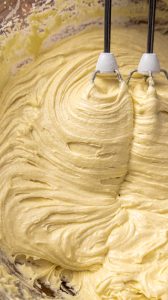
- Don’t beat any longer: overworked batter makes a less tender cake.
Cocoa Batter
- Pour half of the batter into a second mixing bowl.
- Sift the cocoa, which is often lumpy straight out of the container.20 g cocoa powder
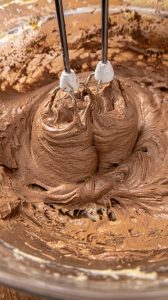
- Add the cocoa and milk to the half of the batter left in the first bowl.
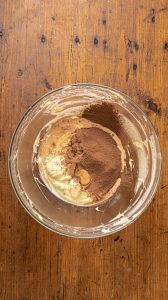
- Beat for 1 minute, until the cocoa and milk are fully incorporated.
Layering and Marbling
- Pour the plain batter into the pan first.
- Pour the cocoa batter over the top.
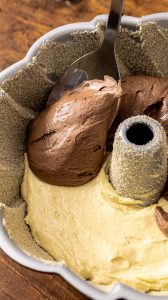
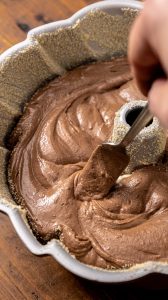
- Insert a fork into the batter.
- Draw spiral circles through both layers of batter to create the marbling.
Baking
- Bake on the middle rack for about 45 to 50 minutes.
- Check for doneness by inserting a wooden skewer into the cake: it should come out dry, with no batter sticking to it.
- Take the cake out of the oven.
- Let the cake cool in the pan for about 15 minutes.
- Carefully turn the cake out onto a wire rack.
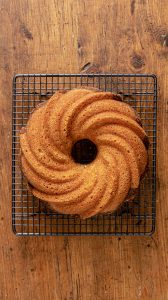
- Let cool completely.
Chocolate Glaze (Optional)
- Melt the couverture chocolate over a water bath, ideally in a double boiler insert.200 g couverture chocolate
- Add the coconut oil.20 g coconut oil
- Stir until the coconut oil and chocolate are well combined.
- Pour the glaze over the cooled cake.
- Spread it with the back of a tablespoon or with a pastry brush.
- Let the glaze set before slicing the cake.
Finishing Without Glaze
- Dust the cooled cake with powdered sugar.Powdered sugar,