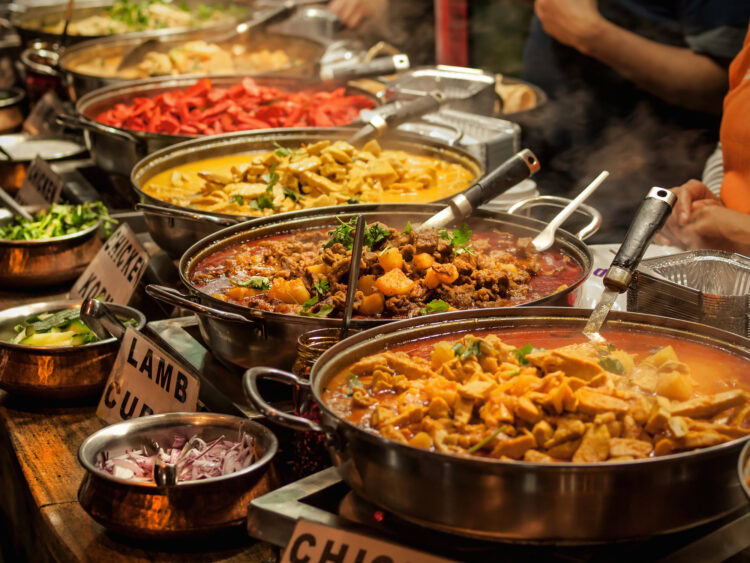
From the moment you arrive in India, you sense it before you even eat : the aroma of cumin warmed in ghee, the freshness of coriander, the tart note of tamarind. « Indian cuisine » is less a single menu than a shared way of building flavour. You’ll notably find the use of whole spices warmed in a fat, the balance between sour and sweet, and a finish of fresh herbs. Technique matters as much as the intensity of the heat.
The shortcut (« a good spicy curry ») often misses this diversity : even a Japanese curry follows a different logic.
India stretches from the Himalayas to a coastline of roughly 7,516 km (with a land border of about 15,200 km) and is home to around 1.43 billion people (2023). This scale translates into a multitude of regional patterns : meals centred on rice or on wheat, vegetarian temple traditions, coastal curries, meat dishes scented with saffron and smoke. The broad principles are shared, but the regional variations are constant. And that is precisely what makes the subject so interesting.
What shapes the plate : geography, climate and what grows where
In India, geography and climate directly influence the ingredients and culinary habits. The southwest monsoon (from June to September) delivers more than 75 % of the annual rainfall, with very concrete effects : a good monsoon fills the reserves of rice and pulses ; a poor one tightens habits and pushes towards hardy grains, dried pulses and pickles (vegetables in vinegar) made to keep.
The great rivers feed fertile plains, the deserts impose thrift, and the coasts bring seafood and acidity into daily life. From one region to the next, the plate can therefore change very quickly.
- Northern and North-Western plains : Irrigated, fertile land produces wheat and sugar cane ; meals rely on rotis and dairy, with yoghurt and ghee to enrich sauces and breads.
- East (especially Bengal, Odisha, Assam) : Rainfall-dependent rice cultivation and river deltas make fish a frequent guest at the table ; mustard oil and mustard pastes bring a very distinctive note.
- Deccan and arid regions (Rajasthan, the inland South) : Drier climates, millets and pulses ; sun-dried snacks, sturdy flatbreads, boldly assertive pickles : the whole answers a logic of preservation and adaptation to the climate.
- Coasts : Coconut and seafood often dominate, accompanied by tart notes from tamarind, kokum or kodampuli (Kerala).
The evolution of Indian cuisine
India has always absorbed outside influences, then adapted them to its balances of spices and flavours. Part of what gives Indian cuisine an « ancient » air is, in fact, genuinely ancient.
Archaeological discoveries (charred spices on sites of the Indus) indicate that, as early as around 3000 BC, spices such as turmeric, cardamom, black pepper and mustard were already in use ; a marker that sheds light on the continuity of techniques still visible today, such as the tadka of a dal.
From around 500 BC, Jain and Buddhist ethics reinforced vegetarian traditions and taboos that persist in certain communities : among the Jains in particular, the avoidance of onion and garlic, often replaced by asafoetida (hing) to bring depth. Centuries later, the Islamic and Mughal courts amplified tandoor cooking, kebabs, pilafs and biryanis, nut-thickened sauces, and dum : a slow, sealed cooking, scented with saffron, rose or kewra.
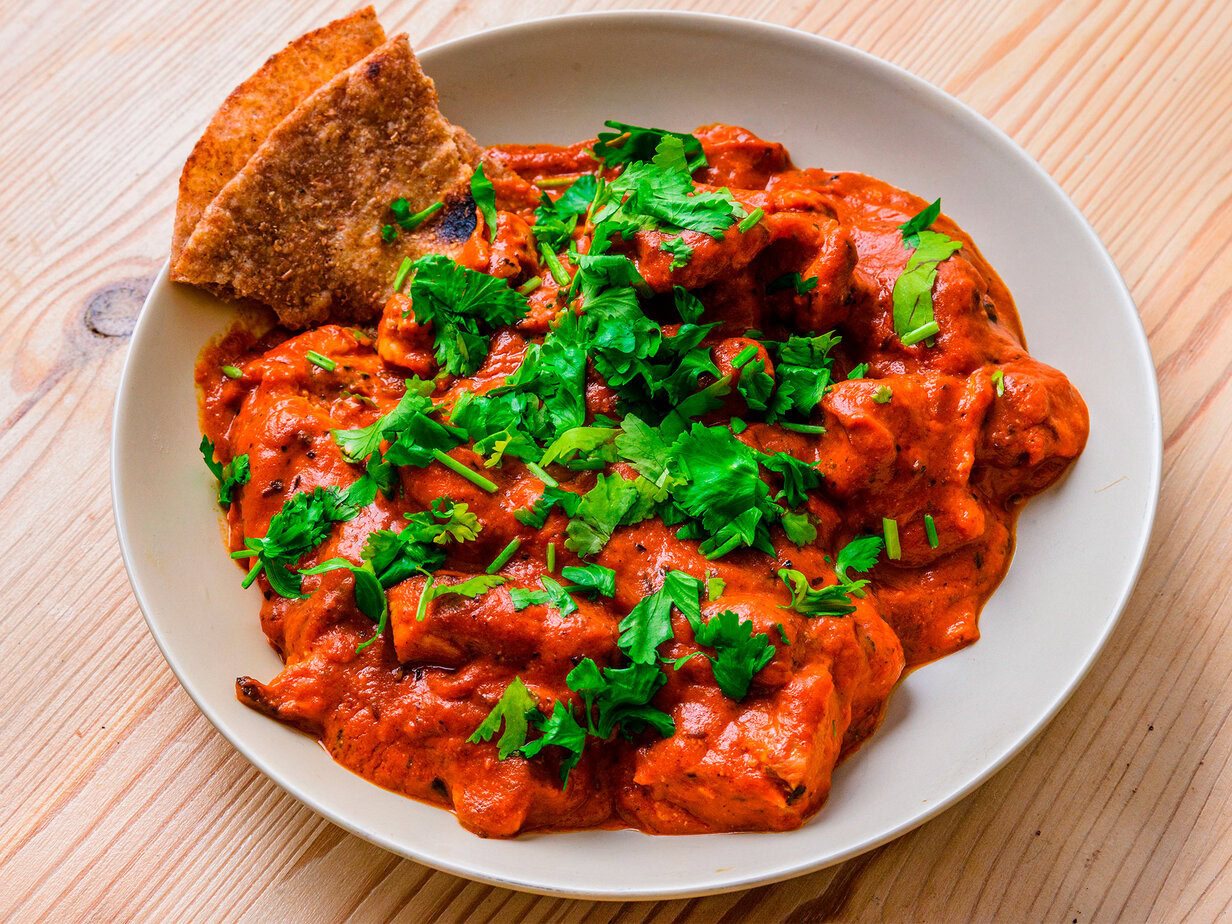
The Portuguese arrival in the 16th century triggered a revolution of ingredients : chillies (and, later, chili powder), tomatoes, potatoes and cashews, today often regarded as « traditional » so thoroughly have they woven themselves into the regional cuisines. The railways of the British era reshaped supply and habits, and the tea plantations (initially largely intended for export) set the stage for tea to later become a daily essential. After 1947, migrations helped the great « Punjabi » restaurant classics travel across the whole country, making dishes with a strong North Indian accent, such as chicken tikka masala, familiar far from their cradle.
Main ingredients of Indian cuisine
In an Indian kitchen, you’ll find essentials, each with a role : grains for structure, pulses for body, dairy for a softer richness, and spices for aroma as much as for heat.
Local logic also governs the choice of fats : mustard oil where mustard is common, coconut oil along the coasts, sesame oil for the pickles of the South. The fat therefore depends on taste, but also on tradition, climate and availability. And if you’re looking for where to track down some of these products in France, the map of grocery stores can help.
- Rice : The base of countless meals ; ground and fermented for idli and dosa batter, flattened into poha, puffed into murmura, or worked into great festive rice dishes.
- Wheat flour (atta/maida) : Everyday rotis and chapatis ; richer breads such as parathas, puris and naan (comfort and satiety).
- Millets (jowar, bajra, ragi) : Drought-resistant grains, turned into nourishing rotis and porridges, prized once again today for nutrition and climate resilience.
- Pulses and lentils (toor, moong, masoor, urad, chana) : The main protein for many households ; they thicken stews, and urad gives volume and softness to fermented batters. To go further, see also our article on pulses.
- Chickpea flour (besan) : The base of many pakoras, of kadhi and of a long list of sweets and snacks.
- Dairy (dahi, ghee, paneer) : Yoghurt cools and tenderises ; ghee carries aromas and richness ; paneer gives structure to vegetarian plates as a centrepiece, rich in protein.
- Base aromatics : Ginger, garlic and onion build depth when they are used ; in certain traditions, hing stands in for a garlic-onion note.
- Souring agents : Tamarind, lime, kokum, yoghurt, green mango and amchur brighten rich dishes and balance the spices.
- Essential spices and herbs : Turmeric for colour and an earthy quality ; cumin and coriander for the warm backbone ; black pepper and chillies for heat (in different ways) ; cardamom, clove and cinnamon for aroma ; curry leaves, coriander and mint for a fresh finish.
- Proteins (depending on region and faith) : Fish and seafood along the coasts and deltas ; chicken and goat very common ; vegetarianism remains important (a Pew Research Center survey conducted in 2019-2020 indicates that about 38 to 40 % of Indian adults describe themselves as vegetarian ; many others limit meat on certain days and/or avoid certain meats).
The philosophy of flavours
Indian flavours are built in balance and layering, not in the intensity of heat alone. You’ll often notice, in fact, that a « spicy » plate comes with a soothing element : rice, yoghurt, a squeeze of lime, a sweet-and-sour chutney. The six tastes of Ayurveda (sweet, sour, salty, bitter, pungent, astringent) explain why the meal is conceived as a complete experience, and not as an isolated dish.
Many spices are aromatic rather than « burning », and the chilli itself is a relatively recent import ; in the past, the heat came from black pepper and long pepper, still prized for their bite. Hence the importance of the following techniques, which give Indian cuisine its instantly recognisable profile :
- Tadka/baghar : Whole spices « bloomed » in hot oil or ghee to perfume the dish : the cumin crackles, the mustard seeds pop, the curry leaves hiss. You then understand that the aroma arrives before the first bite.
- Bhunao : Gently roasting an onion-tomato-spice base until it darkens and the oil separates, creating the foundation of many Northern sauces.
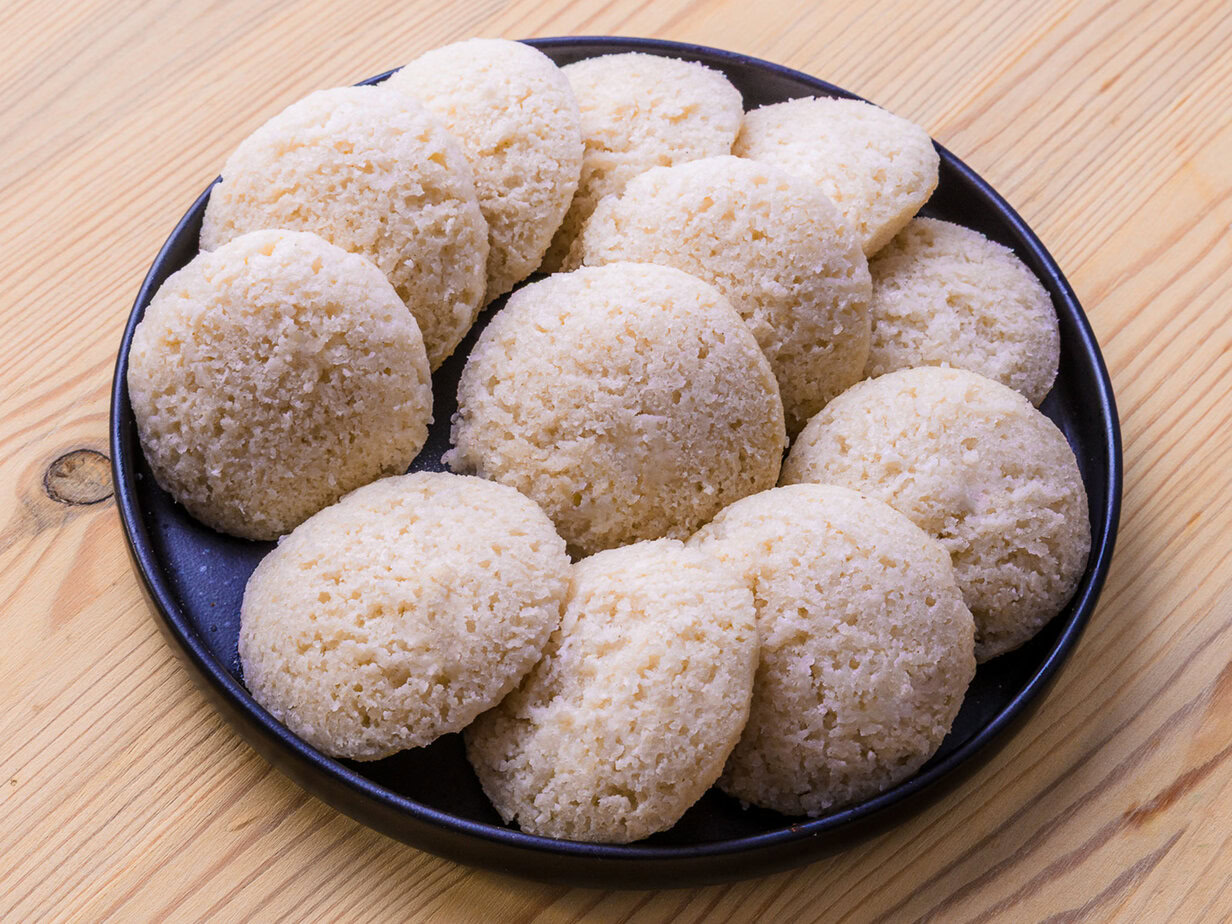
- Fermentation : The batters for idli, dosa and dhokla gain a tart edge and an airy texture.
- Dum and tandoor : A slow, sealed cooking turns biryani into a fragrant whole ; a clay oven gives breads and kebabs smoky, charred edges.
A regional overview of Indian cuisine
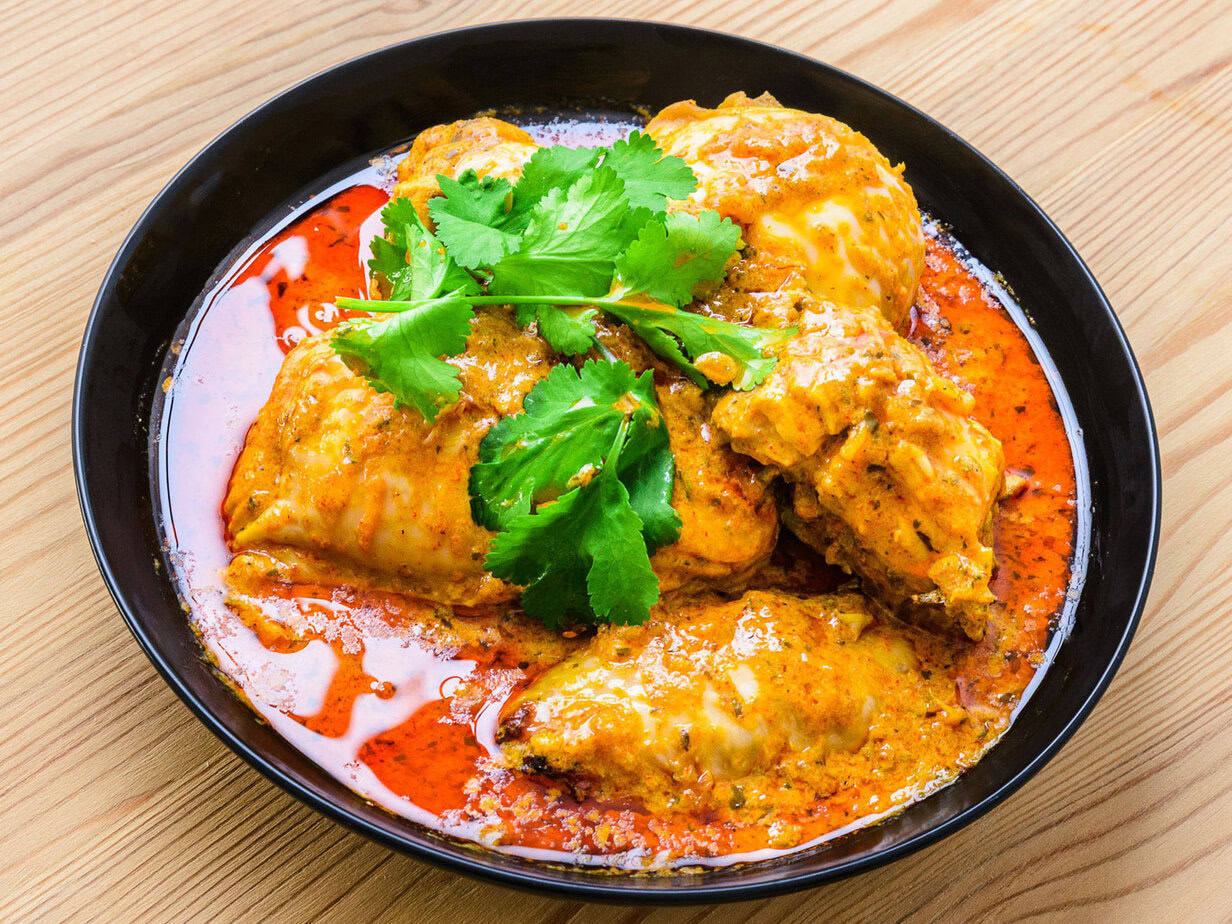
You can see Indian cuisine as a set of shared principles, applied differently from region to region. In the North, wheat and dairy often dominate : rotis and naan, paneer, yoghurt-based sauces, meats run through the tandoor, with classics like dal makhani and winter greens served with a corn bread.
The South, for its part, leans more on rice and lentils : sambar and rasam, crisp dosas with coconut chutney, and curries sharpened by tamarind or enriched with coconut.
The East bets on rice, fish and mustard : the character of mustard oil, whole-seed temperings, and a tradition of sweets based on chhena. The West ranges from the sweet-and-sour thalis of Gujarat and its snacking culture to the street food of Maharashtra, all the way to the vinegar, chilli and coconut profiles of Goa, shaped by Portuguese history.
And in the North-East, fermentation, smoking and a herb-driven cuisine (bamboo shoots, fermented soy or fish, pork in many communities) often use less oil and recall Southeast Asian sensibilities. Same country, very different cravings.
How the meal is served and lived in India
Variety is the rule. A thali makes the logic visible : a starch (rice or roti), dal, one or two vegetables, yoghurt, a pickle or a chutney that brings a lively note, and something crunchy like a papad. Street food picks up this same balance and expresses it differently : the chaat plays on sweet, sour and spicy ; samosas and pakoras often come with a piping-hot chai ; idli, dosa and biryani have spread widely beyond their home regions.
If you want to discover « Indian cuisine » without getting lost, pick a region and try its core trio : (1) its staple food (rice, wheat, millet), (2) its everyday dal or its protein in curry, and (3) its souring agent or its signature tempering. It is often simpler to grasp the logic than to memorise a dish : you’ll spot the balances and the regional markers more easily.
To extend the exploration on the « curry » side (and to compare the logics of spice paste, acidity and fats), you can also look at a Thai green curry, a Thai red curry, a yellow curry paste, a panang curry, a gaeng hang lay, a beef rendang, a laksa or a cà ri gà. On the Japanese side, you can compare katsu curry, Japanese curry roux and curry powder.
Finally, if you’re looking for easy ideas to practise (or simply to mix things up), dip into these quick Asian recipes, or on the comfort side these Asian soups. For a lighter everyday option, you also have an air fryer samosas version, and, for crisp frying, the logic of double frying remains a great classic.