


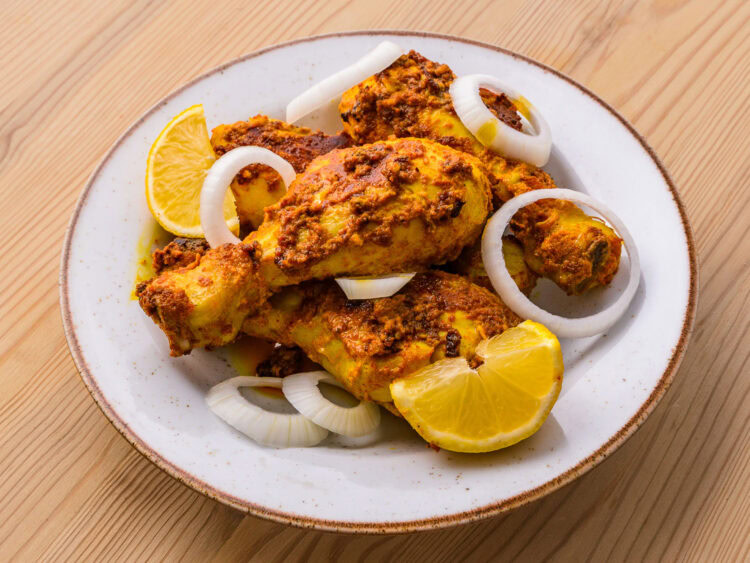
Scored chicken pieces, first seasoned with lemon, then marinated in yogurt and spices before being seared in a pan for fragrant, beautifully browned tandoori chicken.
The orange-red crust crackles between your teeth, streaked with char and glistening with ghee. Beneath it, the juices still run through the meat. The appeal of tandoori chicken lies in this contrast : a patient, precise two-stage marinade, followed by the fierce heat of the tandoor, which sears without drying out.
A great classic of Punjabi grilling, it has traveled from dhabas to Delhi banquets to become a global icon. To fully appreciate it, you need to understand the elements that define it : smoke, acidity, spices, and embers.
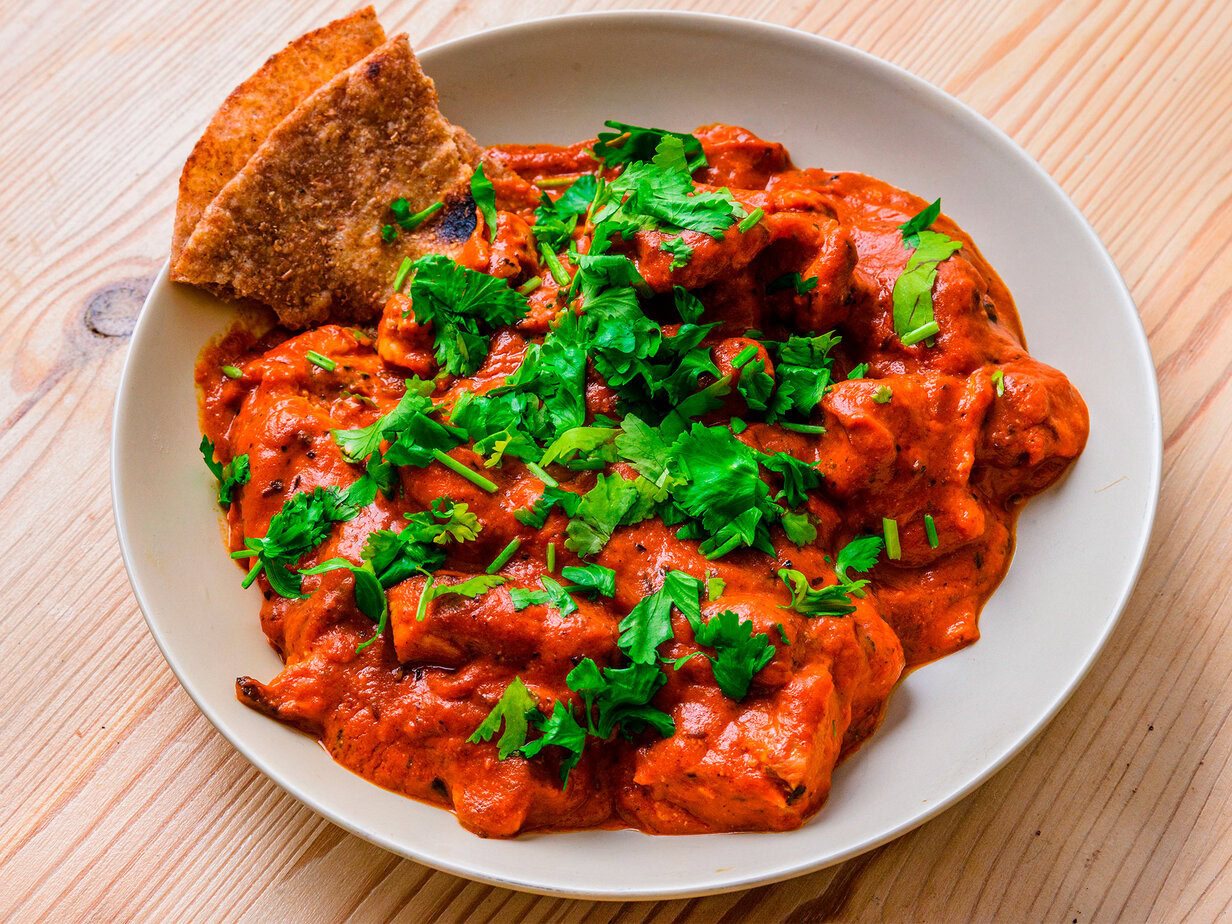
For a point of comparison, its flavor profile sits alongside other marinated and grilled poultry dishes, such as Thai chicken satay skewers, lemongrass chicken skewers, or chicken tikka masala. Tandoori chicken, however, stands apart thanks to its dry, intensely hot cooking, driven by the embers of the tandoor.
What is tandoori chicken?
The word tandoor first refers to a cylindrical clay oven. It is heated with wood or charcoal, and its use was shaped by exchanges with Central Asia, Persia, and Afghanistan.
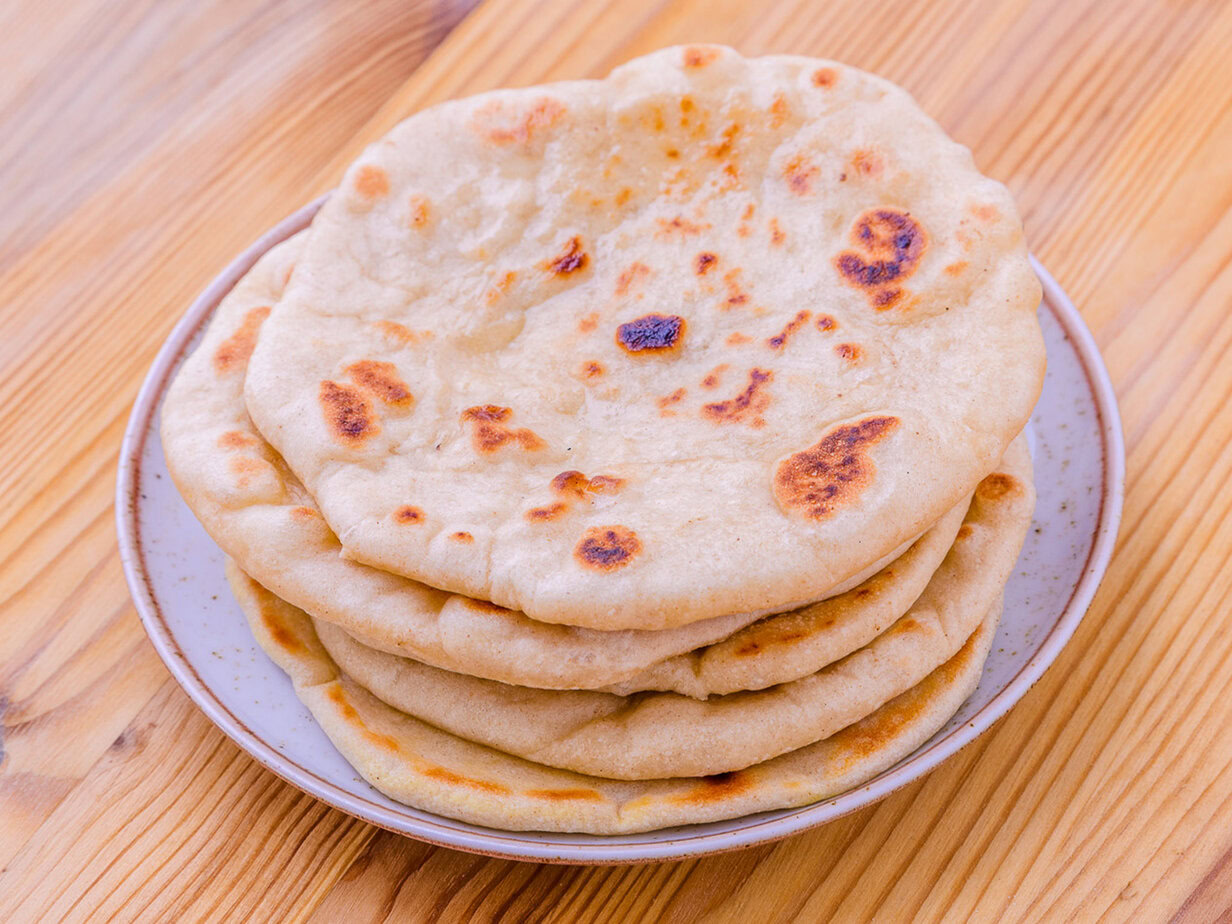
Long associated with Indian breads, such as chapati pressed against its scorching walls, it eventually came to cook skewered meats. Tandoori chicken became its most famous expression.
In its classic form, the dish relies on a small, young, tender chicken, ideally 800 to 1,000 g and ready to cook, with the skin completely removed. The flesh is deeply scored, sometimes down to the bone, so the seasoning penetrates beyond the surface.
The first marinade acts like an acidic brine. It combines lemon or lime, coarse salt, and chili, sometimes in the form of chili powder. This mixture begins to draw out moisture and tenderize the fibers.
The second marinade is a thick, cohesive paste. It combines strained yogurt, mustard oil, and a binder such as lightly toasted besan or sattu. Ginger-garlic paste, cumin, coriander, garam masala, black salt, and kasoori methi are then added.
The tandoor does the essential work. Its extreme heat combines the radiant heat of the embers, scorching air, and the conduction of the skewer. The outside dries, browns, and blackens in places, while the inside stays juicy. The juices that drip onto the charcoal produce smoke that perfumes the meat.
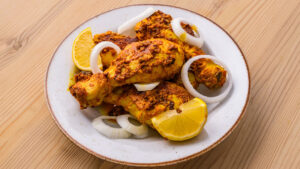
In a careful or traditional version, the color comes from Kashmiri chili, which is deep red yet relatively mild, rather than from garish red food coloring. On the palate, good tandoori chicken balances salt, lactic acidity, and moderate heat. Dried fenugreek adds a clear bitterness, kala namak brings a sulfurous edge, and the cooking gives it a smoky finish. The dish is served piping hot, with lemon, onions, and chaat masala.
The origins of tandoori chicken
The history of tandoori chicken begins long before the restaurants that made it famous. Traces of meat, sometimes poultry, cooked in clay ovens related to the tandoor are often linked to the Harappan civilization, as early as the 3rd millennium BCE.
They point to a technical kinship, not to the existence of the modern dish. Later, the Sushruta Samhita mentions an oven called kandu and the use of black mustard to season meat. Above all, this shows how ancient the link is between spices and enclosed cooking at very high temperatures.
In Punjab, the tandoor also became a social institution. The sanjha chulha, or communal oven, was part of Punjabi and Sikh tradition, tied to Guru Nanak’s egalitarian ideals at the turn of the 15th and 16th centuries.
It brought households together around daily bread and challenged caste barriers. This habit of sharing heat, smoke, and cooking helped establish, in the region, a preference for foods deeply marked by the embers.
The modern form took shape in Peshawar in the 1920s. Mokha Singh Lamba ran a small dhaba in Gora Bazar called Moti Mahal, where Kundan Lal Gujral, Kundan Lal Jaggi, and Thakur Das Magu worked as servers and cooks.
At this crossroads of Afghan, Persian, Punjabi, and Central Asian routes, they helped codify and then popularize whole or cut-up chicken marinated in yogurt and spices. It was then cooked in a tandoor, which until then had mainly been associated with bread.
The Partition of 1947 violently uprooted this cuisine. As refugees in Delhi, the artisans of Moti Mahal reopened in Daryaganj and introduced the capital to a more direct style of grilling than the slow Mughal dishes richly coated in sauce. In this dining culture, where one also encountered samosas, tandoori chicken found a lasting place. Jawaharlal Nehru adopted it for state banquets.
Internationally, Jacqueline Kennedy is said to have tasted tandoori chicken in 1962 on a Rome-Bombay flight, and the Los Angeles Times published a recipe as early as 1963. But speaking of a single invention would be reductive : its global reach owes much to the diaspora born of Partition, while its technique is the result of a collective evolution. Indian versions are often brighter, more tangy, and vividly red.
Main ingredients of tandoori chicken
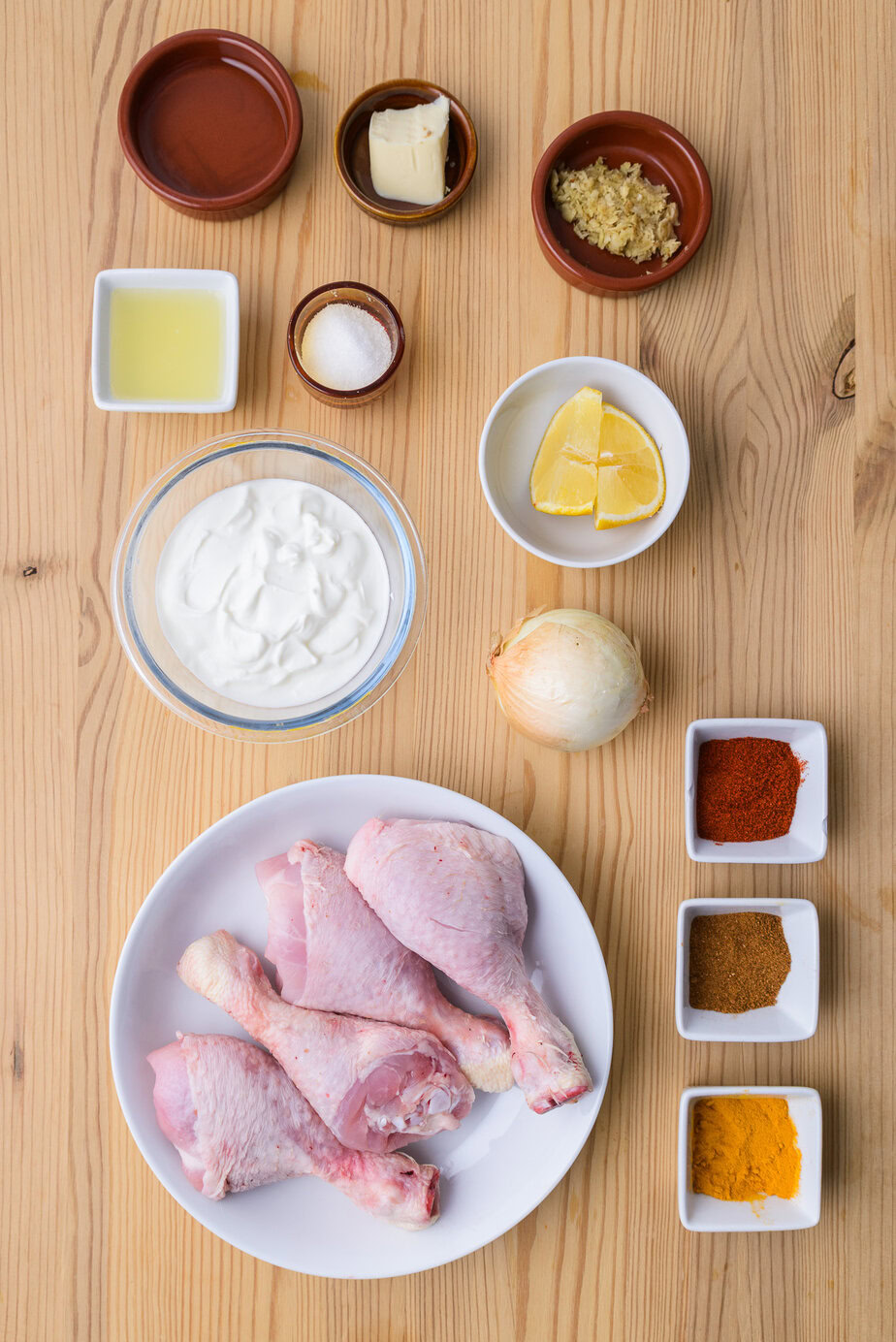
The choice of chicken matters as much as the marinade. A small, young, tender bird, ideally 800 to 1,000 g and ready to cook, skinless and well scored, stands up better to the intense searing of the tandoor.
It cooks through before the surface burns excessively, and the spices reach the flesh directly. Lemon or lime provides the initial acidity, while coarse salt draws out surface moisture.
This is essential for getting a dry crust rather than a steamed texture. The acidity plays a structuring role, even if its effect is very different from that of lemon chicken.
Kashmiri chili gives the dish its visual signature : a warm orange-red hue, with a gentle aroma and little heat. Strained yogurt, almost as thick as cream cheese, tenderizes without making the meat watery and dries into a flavorful coating.
Mustard oil brings the characteristic bite of northern India and helps the paste cling properly. Besan, a lightly toasted chickpea flour, serves as a binder, as does sattu. Both help the marinade adhere to the meat under the extreme heat of the tandoor.
Ginger-garlic paste forms the aromatic base, but it needs restraint : the harshness of raw garlic is one of the most obvious flaws. In tandoori chicken, garlic should support the whole without becoming the dominant flavor, unlike garlic chicken, which deliberately centers on that aroma.
Cumin brings earthy warmth, sometimes with a woody note when shahi jeera is used. You find that same cumin note in cumin beef. Ground coriander lightens the whole with lemony freshness. Garam masala, or shahi garam masala depending on the recipe, adds warm, complex nuances. Kala namak brings slightly sulfurous umami depth, while kasoori methi leaves add an herbal, gently sweet bitterness.
During cooking, melted butter, ghee, or mustard oil can be used to baste the meat, encouraging browning and preserving surface moisture.
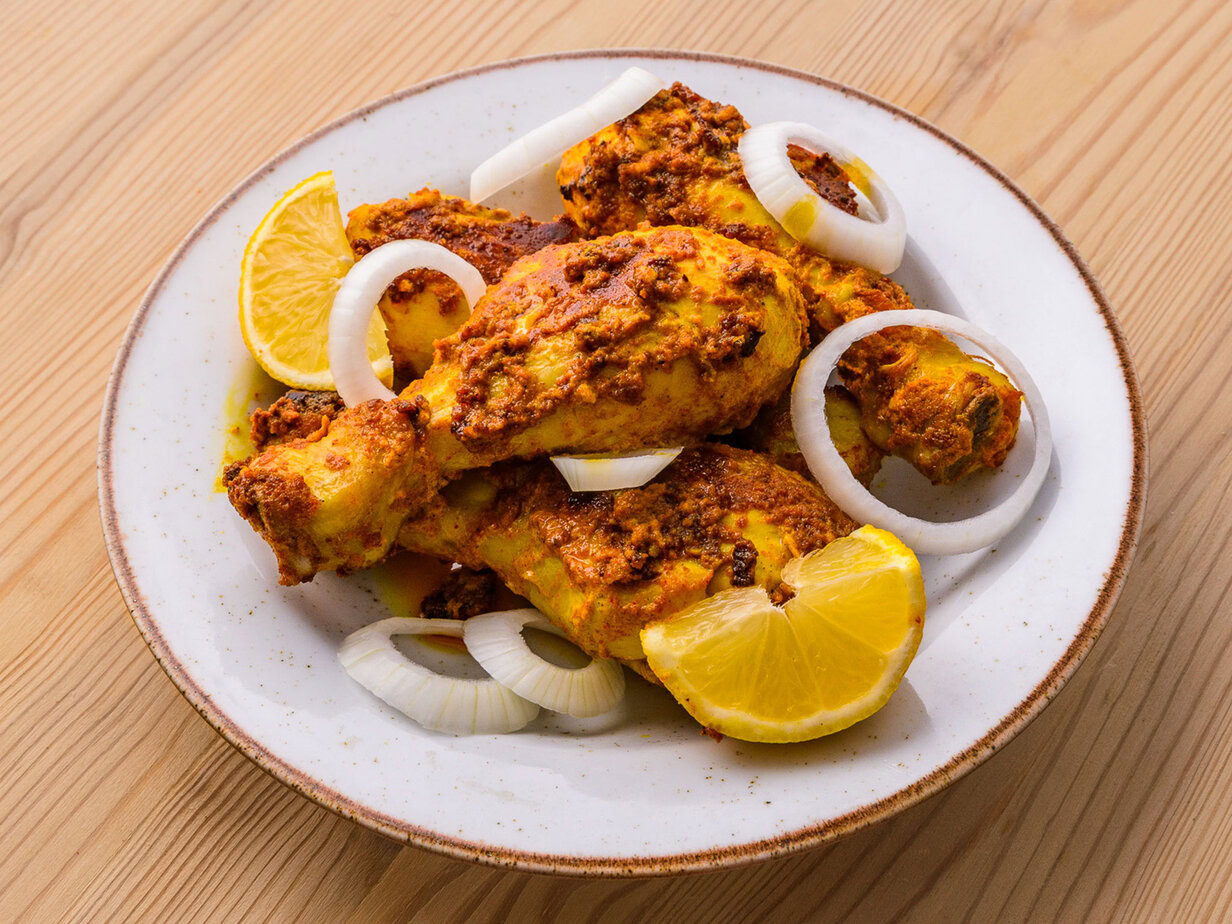
Ingredients
For the chicken
- 4 pieces chicken drumsticks or thighs
For the initial seasoning
- 1 teaspoon lemon juice
- salt to taste
For the marinade
- 120 g yogurt
- 1.5 teaspoons chicken masala
- 1 tablespoon ginger-garlic paste
- 1 teaspoon red chili powder
- 0.5 teaspoon turmeric powder
For cooking and serving
- oil for greasing
- 1 pat butter
- onion for serving
- lemon cut into wedges, for serving
Instructions
Preparation
- Make deep slashes in the chicken pieces, then place them in a bowl.4 pieces chicken
- Add the lemon juice and salt, then let sit for 5 minutes.1 teaspoon lemon juice, salt

Marinade
- Add the yogurt, red chili powder, turmeric powder, chicken masala, and ginger-garlic paste. Mix well to coat the chicken pieces evenly.120 g yogurt, 1 teaspoon red chili powder, 0.5 teaspoon turmeric powder, 1.5 teaspoons chicken masala, 1 tablespoon ginger-garlic paste
- Refrigerate for 1 hour.
Cooking
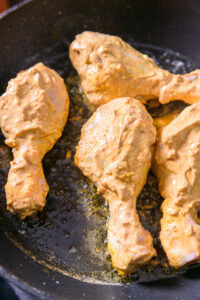
- Heat a skillet and grease it with oil, then add the pat of butter.oil, 1 pat butter
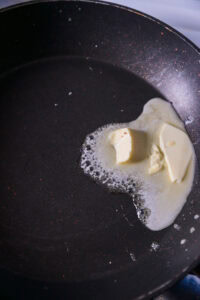
- Once the butter has melted, add the chicken pieces and cook for 1 to 2 minutes. Turn them over, then continue cooking, pressing lightly with a spoon, until the chicken is cooked through and nicely browned on both sides.
Serving
- Transfer the chicken to a plate and serve hot with the onion and lemon wedges.onion, lemon
Notes
- For deeper flavor, marinate the chicken in the refrigerator for up to overnight.
- Adjust the chili powder to your heat preference, and add a splash of oil if the marinade is too thick.


Made this tandoori chicken for a dinner with friends and the whole table went quiet for a minute once they bit into that smoky, tangy crust. Everyone kept complimenting how juicy it stayed, and two guests asked me to send them the recipe before they even finished their plates 🙂