
Hanoi runs at two speeds: in the city, motorbikes, street food stalls and thousand-year-old temples crowd into alleys barely wide enough for a cyclo; a few hours’ drive away, I found karst peaks rising from emerald water, terraced rice fields and river caves you paddle through by hand.
What should you do in Hanoi? Here are my 20 favorite activities in and around the city, with prices, opening times and operators.

- 1. Spend the night in Ha Long Bay
- 2. Glide through Ninh Binh in a rowing boat
- 3. Walk through the rice fields of Sapa
- 4. Take a rowing boat to the Perfume Pagoda
- 5. Cycle through the Mai Chau valley
- 6. Try the potter’s wheel in Bat Trang
- 7. Watch water puppets at Thang Long
- 8. Take a food tour by motorbike
- 9. Take a cooking class at the market
- 10. Walk around Hoan Kiem Lake
- 11. Watch the train pass on Train Street
- 12. Cross Long Bien Bridge at dawn
- 13. Cycle around West Lake
- 14. Ride through the Old Quarter in a cyclo
- 15. Visit the Imperial Citadel of Thang Long
- 16. See the wreckage in B-52 Lake and have lunch in Truc Bach
- 17. Visit the Vietnamese Women’s Museum and Phung Hung Street
- 18. Drink an egg coffee at Cafe Giang
- 19. Order tailor-made clothes and buy silk
- 20. Get a massage and take an herbal bath
- When to go?
- My other Hanoi guides
1. Spend the night in Ha Long Bay
Ha Long Bay, a UNESCO World Heritage Site since 1994, is the most popular excursion from Hanoi: nearly 2,000 karst peaks and islands rising from the Gulf of Tonkin. But the main route is overcrowded: boat traffic jams, engine noise, rubbish in the water.
I chose to spend the night on board, and I recommend it. The bay is about 3 hours 30 minutes away by road, so a day trip means 7 hours of travel for about 4 hours on the water: you board around noon and leave before sunset, just when the bay becomes magical. An overnight trip (2 days, 1 night) gives you sunset over the karsts, a quiet evening without the day-trippers and sunrise with mist between the limestone pillars.
Two nights often involve transferring to a smaller boat on the second day and a middle day that can be dull: they make sense for Cat Ba Island or cycling through Viet Hai village, which aren’t possible with an overnight trip. If you don’t have two days to spare, take a day trip by “limousine van” rather than tour bus, which is far more comfortable for 7 hours on the road.
There are three bays, and the destination matters much more than the price. Ha Long Bay itself is the most crowded, with hundreds of boats and increasingly polluted water. I recommend Lan Ha, just to the south, with the same karsts, far fewer boats and cleaner water (itineraries with Orchid Cruises, Peony Cruises and Mon Cheri). Bai Tu Long, to the northeast, is less developed, less touristy and wilder.

At the luxury end, Stellar of the Seas and Orchid Cruises top my list: €280 to €470 per person for an overnight trip, large cabins, balconies, a pool. In the mid-range, Indochina Junk (Bai Tu Long, at the upper end of the range, among the operators I recommend most), Peony Cruises and Doris Cruise, the latter two on Lan Ha, charge €140 to €230. Budget cruises start at around €75 to €110, including Oasis Bay Party Cruise, the party-focused backpacker option.
On a cruise, you get what you pay for: the cheapest often mean aging boats, mediocre food and unexpected extras. On a tight budget, my tip is Cat Ba Island: a ferry, 2 nights on the island and a day boat trip in Lan Ha Bay, around €18 to €28 per person, including kayaking and swimming, versus €140 or more for an overnight cruise. You miss out on waking up on the water, but you gain Cat Ba National Park, Hospital Cave and exploring the island by motorbike; for the boat trip, I recommend Cat Ba Ventures.
Before booking on Viator or a travel review site, compare the operator’s direct price: middlemen’s markups can be steep. In Hanoi, Lily’s Travel Agency in the Old Quarter and Blue Dragon Tours are two reliable agents. Watch out for websites cloned by scammers (details in my guide to planning a trip to Hanoi): check the URL or contact the operator via WhatsApp before paying.
2. Glide through Ninh Binh in a rowing boat
Ninh Binh has the same karsts, but among rice fields and rivers, hence its nickname “Ha Long Bay on land.” It’s only 2 hours south of Hanoi (compared with 3 hours 30 minutes for Ha Long Bay), cheaper, less commercialized, and I even find it a better experience.
Of the two boat rides, Trang An and Tam Coc, I prefer Trang An: a landscape complex that is also UNESCO-listed, a longer, better-organized ride through caves and past temples, and remnants of the King Kong, Skull Island film shoot. I asked for route 3, the best balance between caves and views; tips aren’t expected and the rowers don’t sell you anything in the middle of the river.
Tam Coc becomes the better choice during the rice harvest, in May and June, when the fields turn golden on either side of the river. The rest of the year, Trang An wins, and Tam Coc’s rowers have a reputation for pushing for tips and selling goods.
At Mua Cave (Hang Mua), 500 steps lead to a viewpoint with a dragon sculpture overlooking the whole valley, the most photographed spot in the region. The climb is steep but short, about 20 to 25 minutes, and the view over the karsts and rice fields is, for me, among the most beautiful in northern Vietnam. Go early in the morning, before the midday heat and the crowds.

Stay overnight if you can: day-trippers from Hanoi arrive around 10:00 and leave around 16:00, and from Tam Coc village (not to be confused with Ninh Binh city), you have Mua Cave and Trang An almost to yourself at sunrise or sunset, then a quiet village in the evening.
For a day trip, leave Hanoi before 7:00 by “limousine van” via 12Go.asia (around €9), without the tour bus’s mandatory souvenir shop stops. For Ninh Binh, you can also hire a local guide in Tam Coc or book a package through your hotel, then get around by bicycle or motorbike: the roads are flat and the scenery is half the appeal.
3. Walk through Sapa’s rice fields
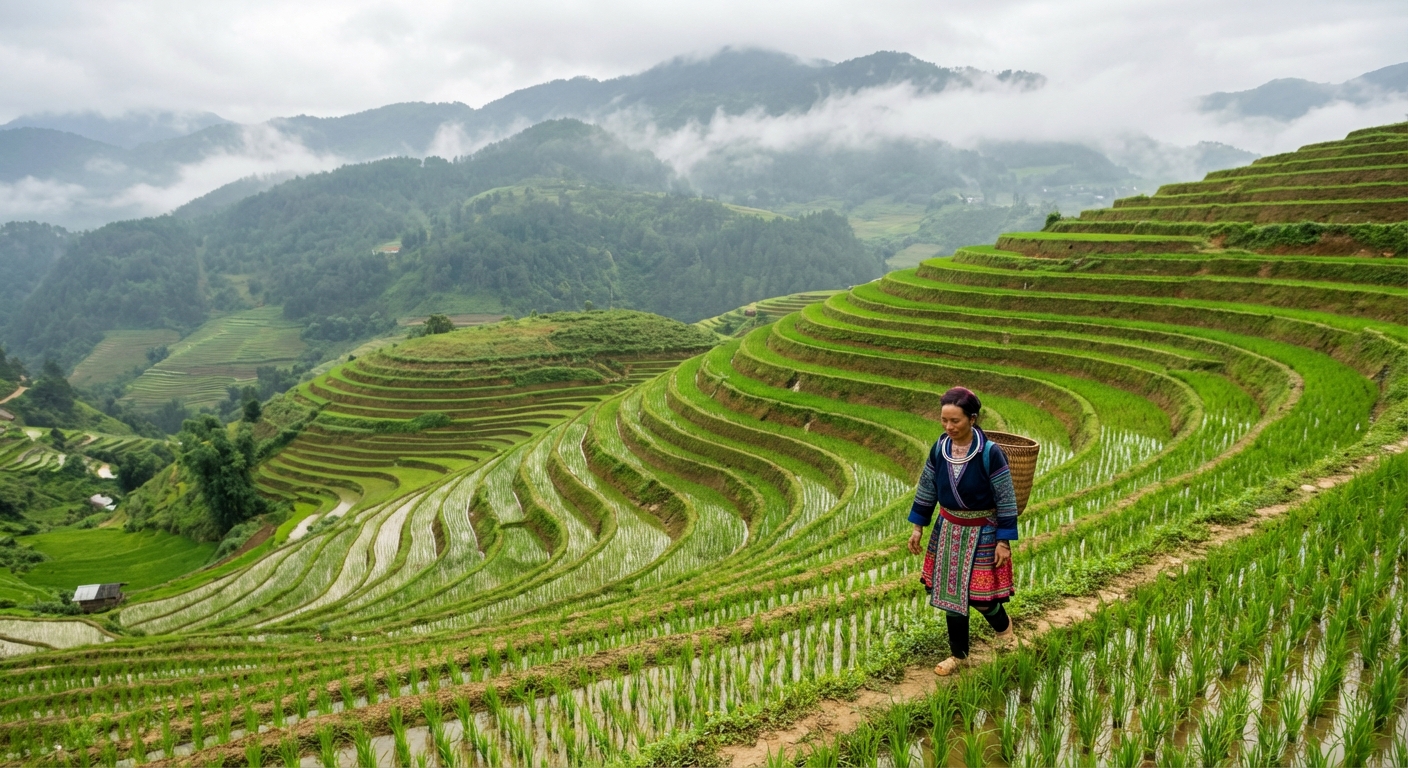
In Sapa, northern Vietnam goes vertical: terraced rice fields, ethnic minority villages on the slopes, spectacular views on clear days and nothing in the mist. The town suffers from overdevelopment (construction sites, tourist shops, noise), but 5 kilometres away, in Ta Van or Lao Chai, I found another world: terraces and homestays with Hmong families.
From December to February, fog and cold can wipe out the views; aim for September to October (after the harvest, golden terraces) or March to May (green terraces, clearer skies). Sapa is more than 6 hours away by bus, or an overnight train ride to Lao Cai followed by 1 hour on the road. I don’t recommend a day trip, with 12 to 14 hours on a bus for 4 hours there: the minimum is 2 nights, 3 days, otherwise head to Ninh Binh instead.
For trekking, I recommend Sapa Sisters or Ethos, two ethical companies you can book through their websites: Hmong guides, quiet trails, an overnight homestay, €45 to €95 per person for 2 days. Even if you don’t hike, take the cable car up Fansipan, Indochina’s highest peak at 3,143 metres: around 700,000 to 900,000 VND (€26 to €33), expensive for Vietnam, but the view above the clouds, when conditions are right, justifies it.
If you know how to ride a motorbike and have 3 to 4 days, the Ha Giang Loop is more remote, less developed, with more spectacular mountain passes, but you need an international driving permit (exchangeable in Vietnam) or a driver. For trekking on foot, stick to Sapa.
4. Take a rowing boat to the Perfume Pagoda
For the Perfume Pagoda, a Buddhist pilgrimage site around 60 km southwest of Hanoi, the journey starts with a very peaceful rowing boat ride along Yen Stream, between limestone mountains, about an hour each way. I then climbed up (there is also a cable car) to the caves and shrines carved into the rock. From February to April, after Tet, the site is packed with Vietnamese worshippers, and much quieter the rest of the year; set aside a whole day for this combination of river, mountain and cave temple, unique in the Hanoi area.
5. Cycle through the Mai Chau valley
About 3 hours 30 minutes southwest of Hanoi, Mai Chau is a valley of rice fields and stilt houses belonging to the White Thai ethnic group. The same treks and homestays as Sapa, at a lower altitude, milder and much closer: the alternative for rice fields and ethnic minority villages if you don’t have time for Sapa. I cycled through the valley, the main activity here, on terrain flat enough for everyone.
6. Try a potter’s wheel in Bat Trang
Just 13 km from the centre, the ceramics village of Bat Trang has been producing pottery for around 700 years. I visited the workshops and tried the potter’s wheel in half a day at most, taking bus 47A from Long Bien bus station (or a Grab). Buy your authentic Vietnamese ceramics from the artisans, cheaper and better quality than in any Old Quarter shop, where they cost 2 to 3 times the village price.
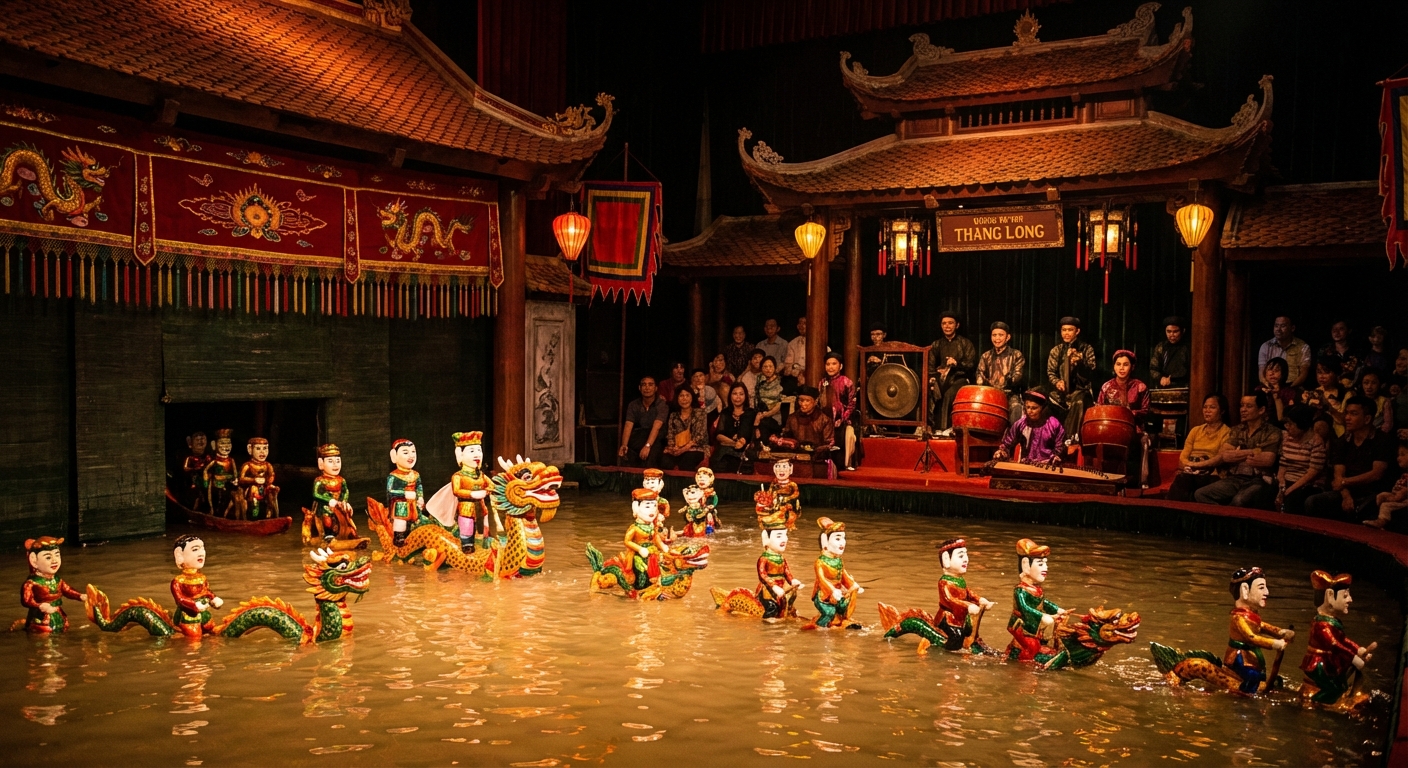
7. Watch water puppets at Thang Long
Water puppetry is a thousand-year-old art from northern Vietnam: wooden puppets manipulated on a pool of water by puppeteers hidden behind a screen. I saw them at Thang Long Water Puppet Theatre, next to Hoan Kiem Lake, the most renowned venue.
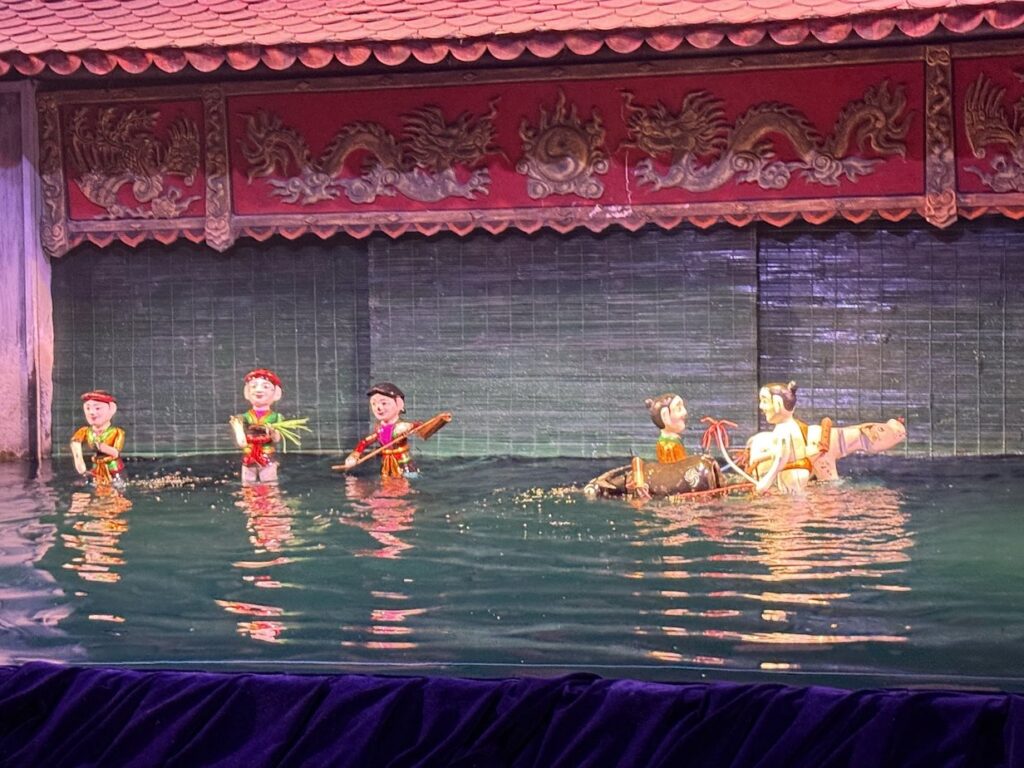
If you’re expecting a West End or Châtelet production, you’ll be disappointed: short, slow-paced folk scenes in a dark, air-conditioned theatre where the hypnotic music has sent more than a few spectators nodding off. The live traditional orchestra impressed me, and for €5-6 and around 50 minutes, you don’t have much to lose. Buy your tickets early in the day for the evening, as performances regularly sell out, especially at weekends; if Thang Long is full, go to Lotus Water Puppet Theater.
8. Take a motorbike food tour
If I could recommend just one activity in Hanoi, this might be it. Riding on the back of my guide’s motorbike, I went through alleyways, bridges and neighbourhoods impossible to find on foot or by taxi, with 5 to 8 stops at street food stalls popular with locals, with no English menu.
I took the tour with Hanoi Backstreet Tours: vintage Minsk motorbikes, guides who know the city inside out, tastings included, around 4 hours in the evening for €37 to €65 depending on the group and route, booked directly with them. If you’re an experienced rider, Tigit Motorbikes is the go-to rental company (no scams, transparent insurance, well-maintained bikes). But Hanoi’s traffic, far more chaotic than traffic in Rome or Naples, is genuinely dangerous when you’ve just arrived: start as a passenger.
On foot, I recommend Tony Eats Hanoi, which focuses on non-touristy alleyways and lesser-known dishes, and Street Eats Hanoi.
9. Take a cooking class at the market
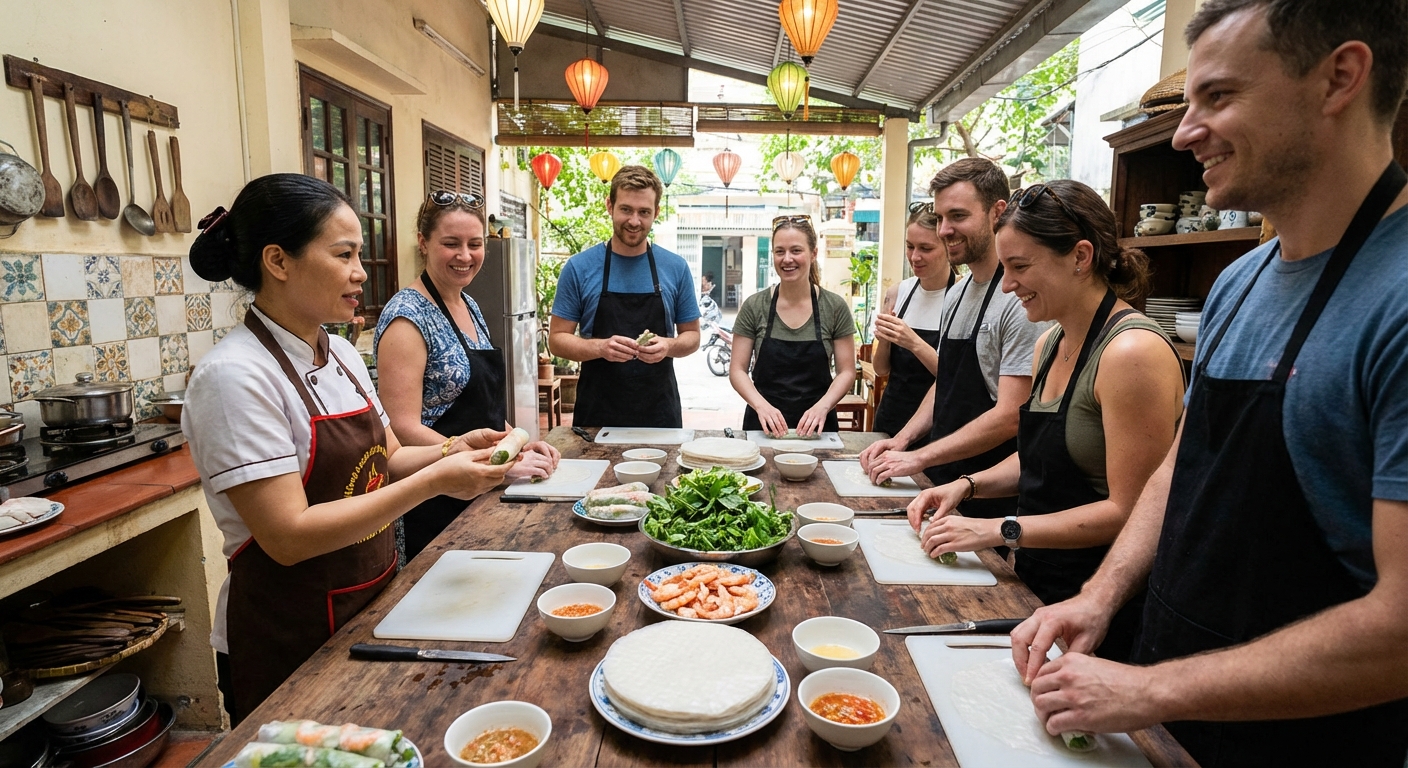
Hanoi’s best cooking classes start at the market. I met my guide at a local market, where he explained the ingredients, how to spot fresh produce and how Vietnamese cuisine changes from one region to another, before preparing 3 to 4 dishes and tasting everything.
Rose Kitchen is my first choice, for its funny, informative and passionate guides. Ella’s Food Tour & Cooking Class stands out for its excellent English and the cultural context of each dish, and Apron Up is a good budget option in the Old Quarter. Expect to pay €28 to €46 for half a day including the market; the group format makes it easy to meet people if you’re travelling alone.
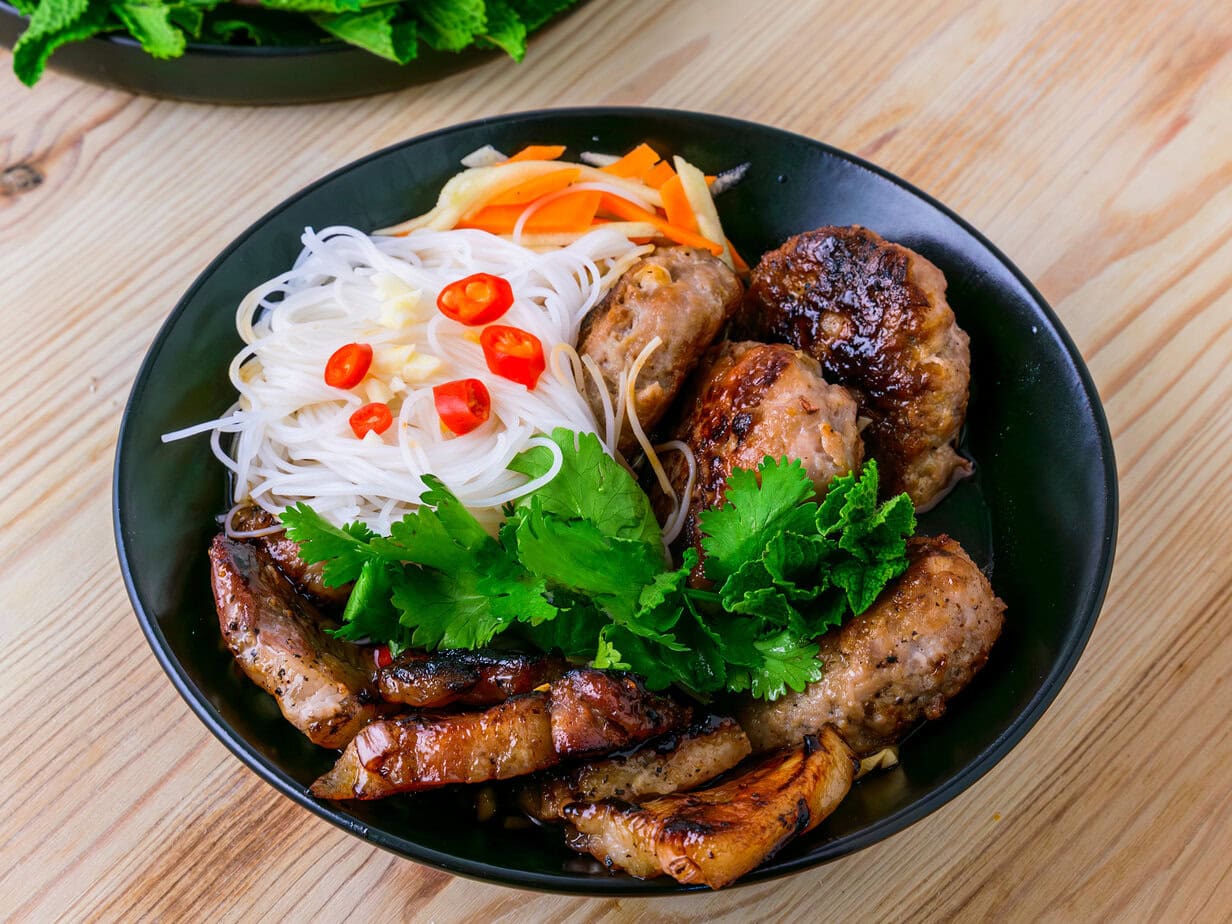
At home, I make bún chả and Vietnamese fried spring rolls: both recipes are on the site.
10. Walk around Hoan Kiem Lake
Hoan Kiem Lake is the centre of Hanoi: I walked around it in 20 minutes, but everything changes depending on the time of day. From 5:30 or 6:00, tai chi groups line up along the banks, joggers make their rounds and elderly men play chess on benches, the most peaceful version of the city until around 8:00, when traffic takes over.
From Friday evening to Sunday evening, the streets around the lake become pedestrian-only, with no motorbikes or cars: street performers, food vendors, children on roller skates. It’s one of Hanoi’s best free experiences, and my favourite time to wander around the Old Quarter without fearing for my life at every crossing. Ngoc Son Temple, on an islet in the middle of the lake connected by the red The Huc Bridge, is worth visiting more for the setting than the temple itself.
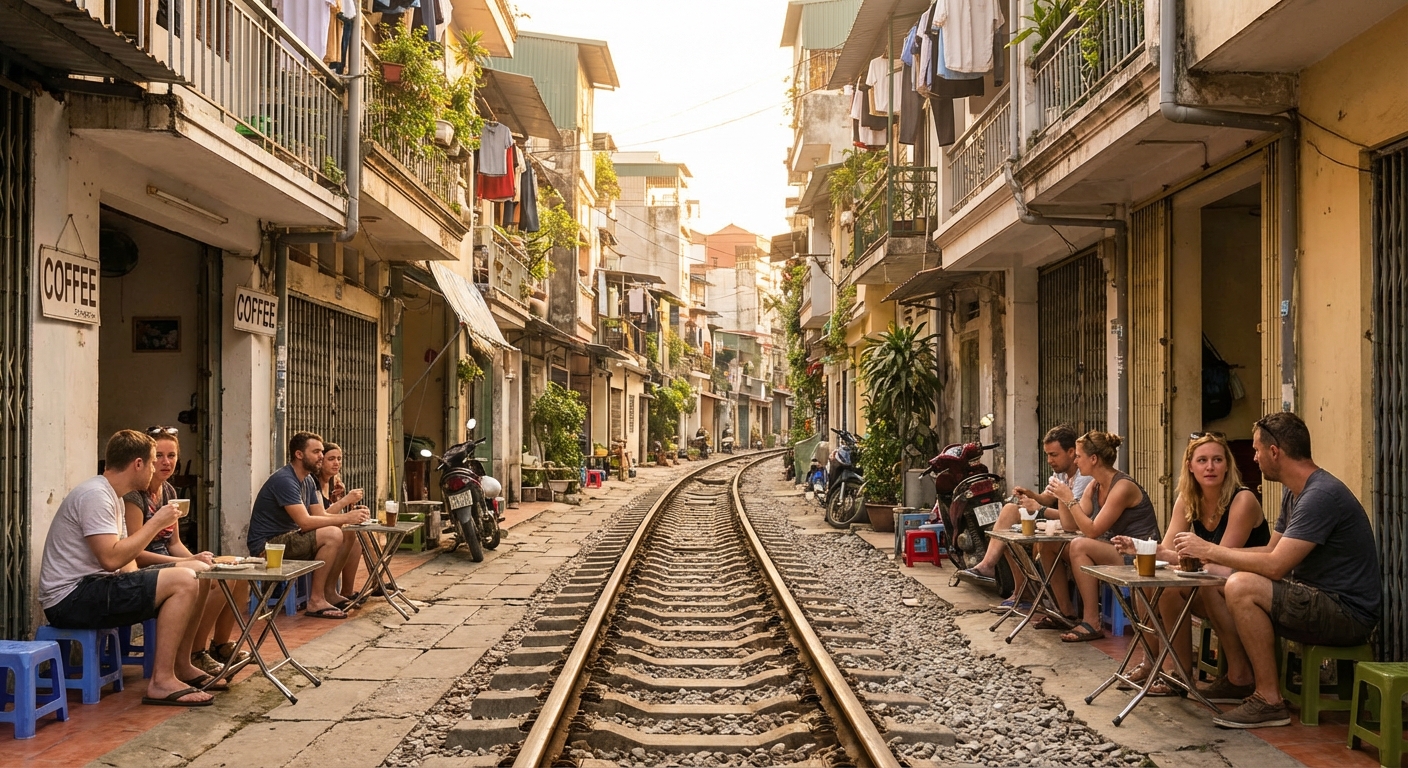
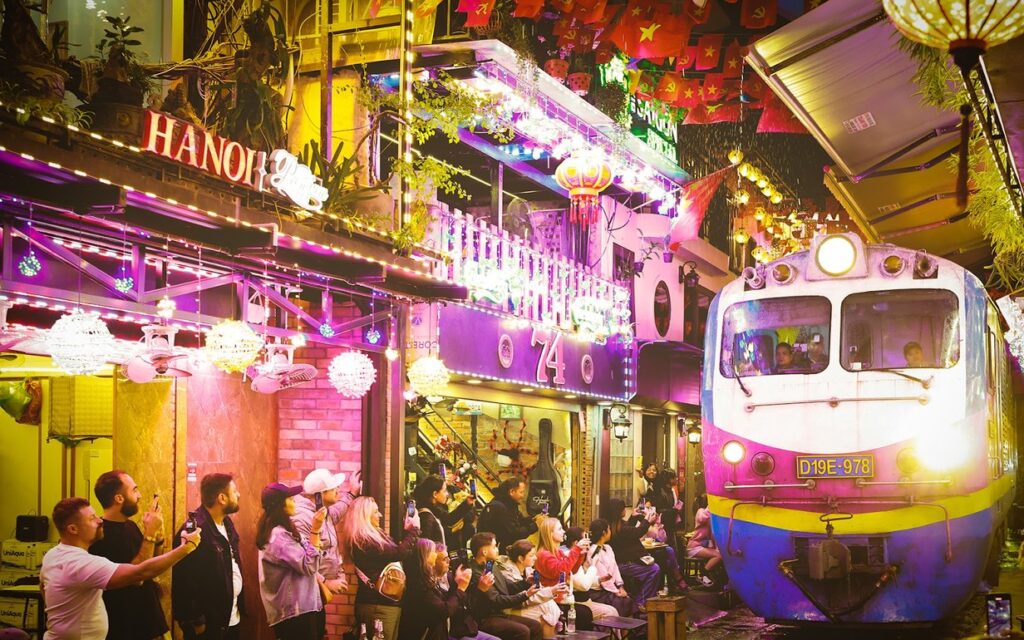
11. Watch the train pass on Train Street
Hanoi’s Train Street is a residential alley where the railway runs between the houses, with barely a metre to spare: when the train passes, at low speed, residents bring in their chairs and laundry. The police have officially “closed” it for safety reasons and you can’t get past their barrier on your own, but there is still a trick: don’t argue with them, hang back, make eye contact with locals and wait for a café owner to come and invite you in.
I ordered a drink and watched the train pass in front of the café: no more wandering freely along the tracks. The owners of Coffee 74 and Railway Cafe actively come out to find visitors. Schedules vary, with generally 2 to 4 trains a day on the popular stretch: ask your café for the times, and allow 30 to 60 minutes, including the wait.
12. Cross Long Bien Bridge at dawn
Long Bien Bridge, a century-old steel cantilever bridge over the Red River, was designed by the French company Daydé & Pillé and completed in 1903 during the French Indochina era. Bombed repeatedly during the war and rebuilt each time, it combines original French ironwork with Vietnamese repairs, clearly visible when I walked across it.
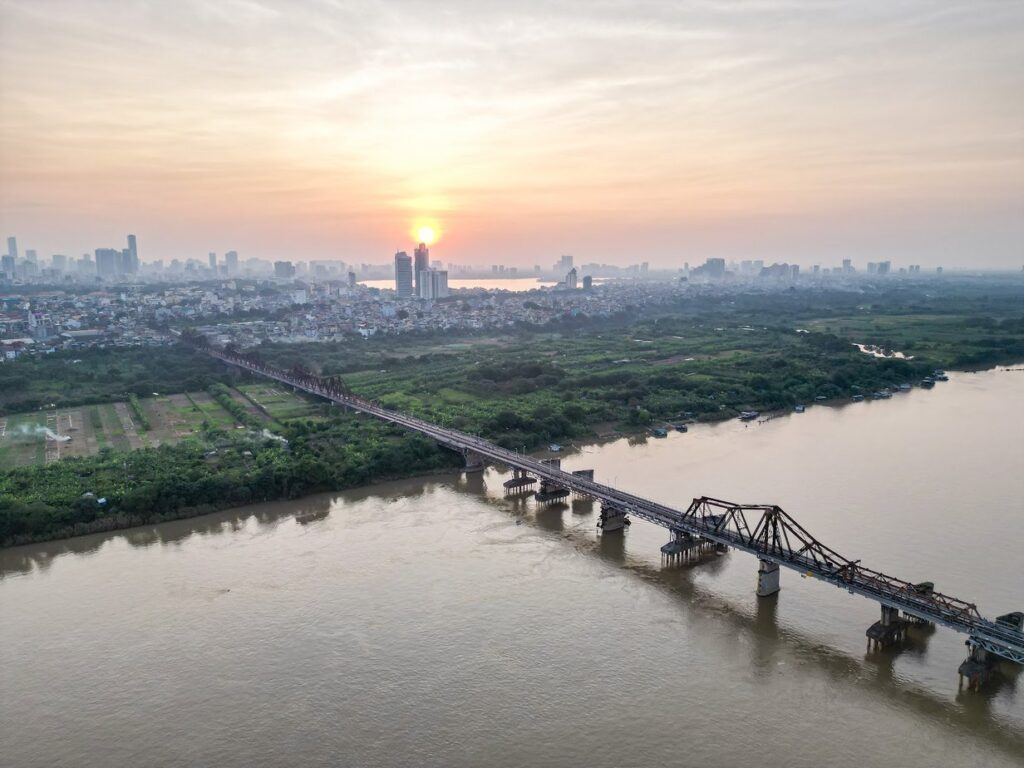
I came at sunrise for the market: vendors carrying baskets of fresh produce cross on foot and by motorbike towards the markets on both banks. It’s free, takes about 1 hour, and offers a glimpse of everyday Hanoi, far from the Old Quarter tourist circuit.
13. Cycle around West Lake
West Lake (Tay Ho) is Hanoi’s largest lake, and cycling its 17 kilometres is, for me, one of the best ways to spend a morning. Tran Quoc Pagoda, on a small peninsula, is one of Vietnam’s oldest (6th century) and a natural stop on the loop.
The area has some of Hanoi’s best international restaurants and cafés for brunch, and it’s one of the best neighbourhoods to stay in Hanoi. Rent a bike from your hotel or through Grab, and set off before 8:00: the lakeside road gets busy after that.
14. Ride through the Old Quarter in a cyclo
In a cyclo, you sit at the front while the driver pedals behind you, with street life right at eye level. The classic route takes you through the Old Quarter’s 36 streets, each named after what used to be sold there (Silk Street, Silver Street, Paper Street), and in 30 minutes I noticed more details than I would in 1 hour in a taxi.
Negotiate before getting in: 100,000 to 150,000 VND (€4 to €6) is a reasonable fare for 30 to 45 minutes. Especially near Hoan Kiem Lake, some drivers charge much more: at 300,000+ VND, walk away.
15. Visit the Imperial Citadel of Thang Long
The UNESCO-listed Imperial Citadel in central Hanoi served as the political centre for successive Vietnamese dynasties for over 1,000 years. It’s less spectacular than the Imperial City of Hue, but its excavations reveal foundations dating back to the 7th century.
I saw the Flag Tower (Cot Co), one of Hanoi’s symbols, and, above all, the underground bunker where North Vietnamese generals planned operations during the war, with its maps and communications equipment still in place. Allow 1 to 2 hours; admission costs 30,000 VND (about €1.10). It’s a good complement to the Old Quarter and my guide to what to see in Hanoi.
16. See the wreckage in B-52 Lake and have lunch in Truc Bach
At B-52 Lake (Huu Tiep Lake), a small residential lake in a quiet neighbourhood, the wreckage of an American B-52 bomber still rests in the water where it crashed in 1972, among lotus flowers and houses. With no museum or ticket booth, and only a small plaque for signage, it’s one of Hanoi’s most surreal sights: a 10-minute visit.
Truc Bach Lake, smaller and quieter than Hoan Kiem or West Lake, is where locals eat phở cuốn (phở rolls, a Hanoi speciality) in the restaurants on the eastern shore. A small memorial marks the spot where John McCain’s plane was shot down in 1967 and where he parachuted into the lake.
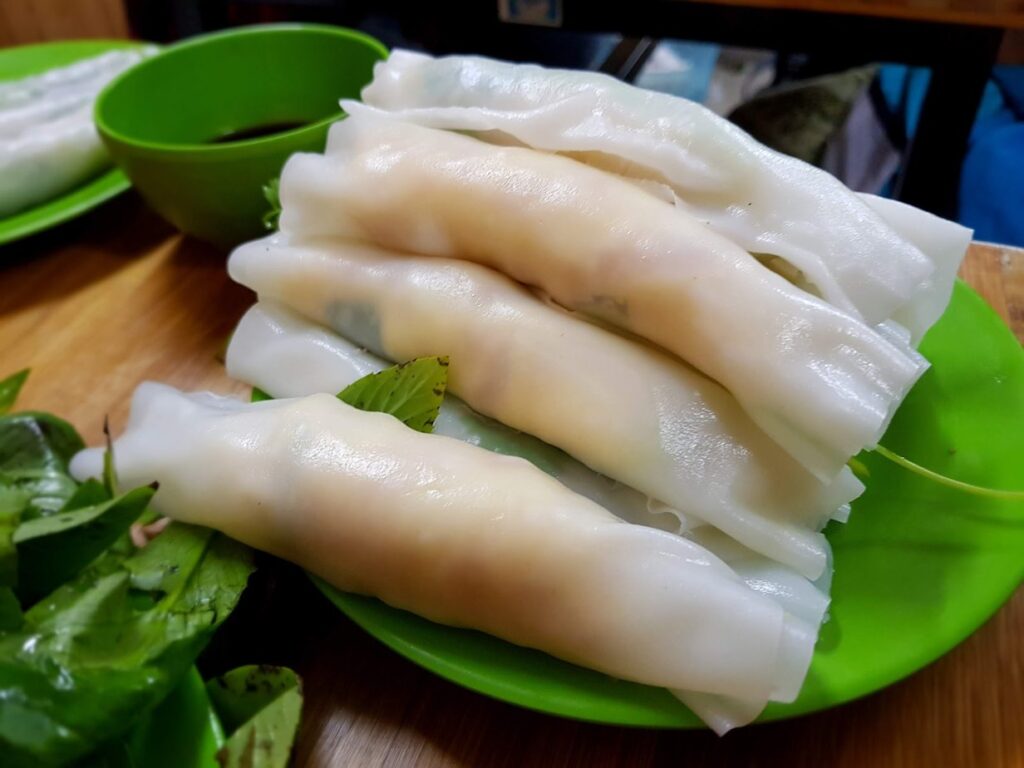
I had lunch there: excellent food, no crowds, much better than any restaurant in the tourist area of the Old Quarter. At home, I make phở as a soup: my phở recipe is here.
17. Visit the Women’s Museum and Phung Hung Street
The Vietnamese Women’s Museum, near Hoan Kiem Lake, is Hanoi’s best museum in my view, ahead of the Ho Chi Minh Museum and the Museum of Ethnology. Its exhibitions cover women’s roles in society, war and the daily lives of ethnic groups, with English and French translations; allow about 1 hour 30 minutes.
Phung Hung Mural Street, near the Old Quarter and often missed by tourists, is covered in large murals depicting life in Hanoi through the ages, painted by Vietnamese and Korean artists. A 5-minute walk, free, and ideal for photos.
18. Have an egg coffee at Cafe Giang
Egg coffee (cà phê trứng) is a Hanoi speciality: whipped egg yolk and condensed milk over strong Vietnamese coffee, a coffee tiramisu in a cup. I had mine at Cafe Giang, the original, opened in 1946 by the man credited with inventing it, down an alley near the Old Quarter whose entrance you could miss 20 times: excellent, around 35,000 VND (€1.30).
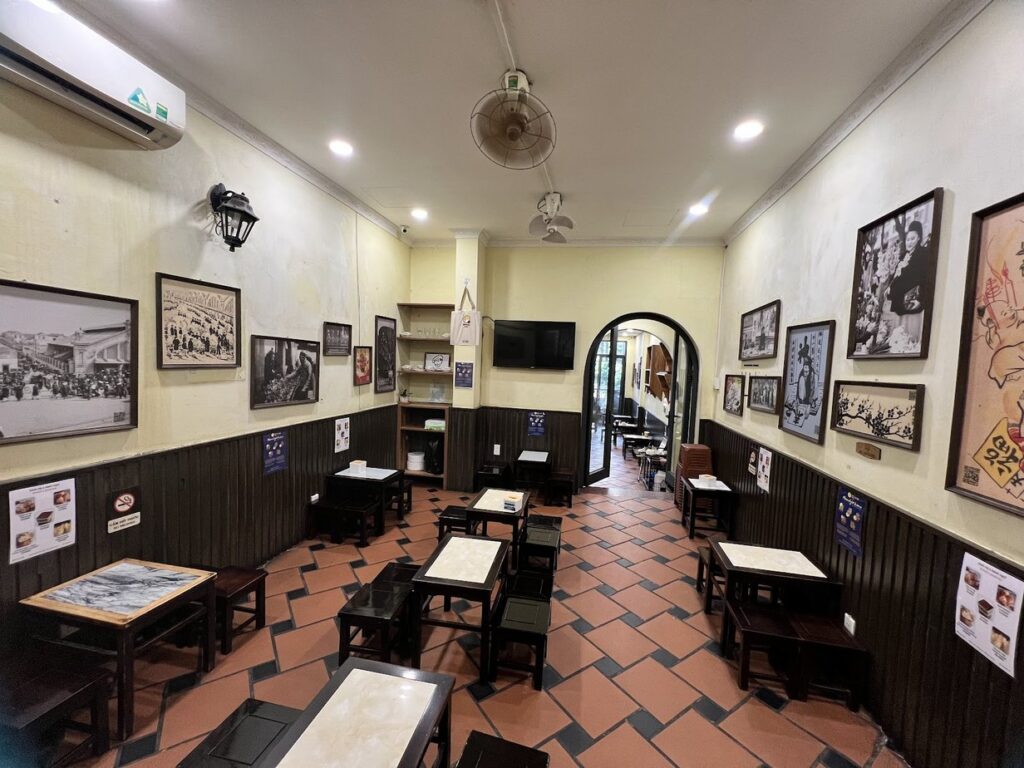
Note Coffee, covered in sticky notes left by visitors, is fun in a kitschy way. For me, Hanoi’s coffee scene is one of the best in Southeast Asia, with tiny cafés in alleyways, on rooftop terraces or behind unmarked doors.
19. Order tailored clothing and buy silk
I find the work of Hanoi’s tailors better than in Hoi An: Hoi An’s 24-hour tailoring is fast but sometimes sloppy, while Hanoi’s tailors generally ask for 3 to 5 days for more refined craftsmanship. I recommend Van Hung Tailor and Gentleman Bespoke.
For silk, Hang Gai Street (Silk Street), in the Old Quarter, is the traditional shopping area: prices are negotiable, so expect to pay 30 to 50% less than the first asking price, or go to Tan My Design for higher quality at fixed prices.
20. Get a massage and take an herbal bath
Vietnamese massage focuses less on extreme stretching than Thai massage and more on pressure points and herbs. Expect to pay 200,000 to 400,000 VND (€8 to €15) for 60 minutes, as in Bangkok. La Siesta Spa and SF Spa, in the Old Quarter, are 2 good options, and the spas at Sofitel Legend Metropole, a luxury hotel from the French colonial era, and JW Marriott are first-rate, with international hotel prices.
I also tried an herbal bath at a traditional wellness shop, a tradition from northern Vietnam: you soak in a wooden tub filled with local herbs and medicinal plants.
When to go?
Season-wise, aim for Sapa from September to October or March to May, and Tam Coc in May and June; in the city, head out early in the morning.
With 3 to 4 days, I recommend 2 days in Hanoi and 1 to 2 days on a Ha Long Bay cruise. With 5 to 7 days, add Ninh Binh (1 to 2 days) and more time in the city. Sapa needs 3 full days and becomes realistic with at least 8 days: 3 for Sapa, 2 for Ha Long Bay, 1 to 2 for Ninh Binh, and the rest in Hanoi.
The most common mistake is squeezing Ha Long Bay, Ninh Binh and Sapa into 1 week: you’d spend more time on buses than at your destinations, so choose 2 and do them properly. The reception desk at a hotel or hostel in the Old Quarter can arrange most of these excursions, at a slightly higher price than booking directly, but the convenience can be worth the small extra charge for Ha Long Bay or Sapa, where coordinating transport matters.
My other Hanoi guides
My other Hanoi guides cover where to eat, where to stay, what to see and how to plan your trip. Elsewhere in Southeast Asia, I’ve written the same kind of guide for Bangkok, Phuket and Bali. For the full picture, start with my complete guide to visiting Hanoi.