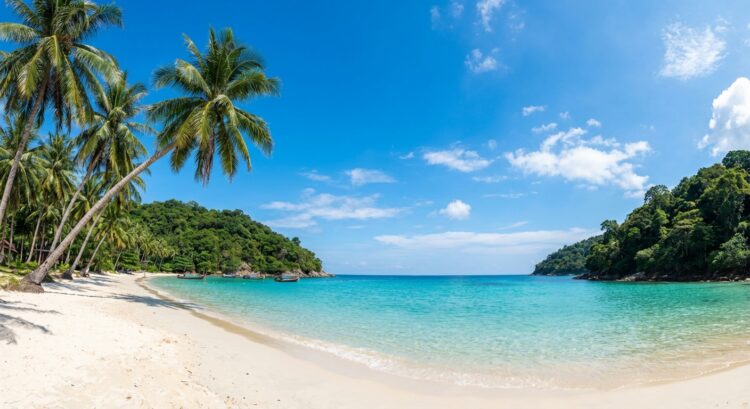
Phuket has more than 30 beaches scattered along its coastline, and many of them could hardly be more different. The lively, crowded strip of Patong has almost nothing in common with the rocky cove of Ao Sane, a snorkeling paradise, or with the empty sweep of sand at Mai Khao.
Choose the wrong beach, and you could spend your holiday dodging jet skis when you were hoping to read in peace, or find yourself on a deserted shore when what you really wanted was a cocktail bar a few steps away.
As we explain in our complete guide to visiting Phuket, the west coast has the best sunsets and the biggest waves, the south packs the greatest variety into a small area, and the east coast remains swimmable when everything else is rough. This guide covers 15 beaches worth seeking out, organized by their location on the island.
The beaches of the west coast
The west coast is where most visitors spread out their towels. It faces the Andaman Sea, offers front-row sunset views, and has the widest choice of accommodation and restaurants. In high season (November to April), the water is generally calm and clear. During the monsoon (May to October), this side of the island is hit by strong waves and rip currents ; a red flag means you absolutely should not swim.
Patong Beach
Patong is Phuket’s best-known beach and the one most people picture when they think of the island. The reality is less glamorous than its reputation. The sand is fine, yes, but the water is murky compared with almost every other beach on this list.
Jet skis go back and forth nonstop. Vendors patrol the sand constantly. The whole place has a distinctly commercial feel.
What Patong really offers is convenience. Jungceylon shopping mall is just steps away. Bangla Road and its nightlife are a few minutes’ walk from the sand. Restaurants, pharmacies, convenience stores : everything is within easy reach.
If your ideal plan is to party until 3 a.m. every night and drag yourself onto a beach the next morning without having to take a taxi, Patong delivers. It is the only area on the island where you can truly do everything on foot, without a scooter or ride-hailing app.
For actual swimming, rent a scooter or take a taxi to one of the beaches below. Phuket regulars all say the same thing : stay in Patong if you want nightlife, but leave Patong for the beach.
Tri Trang Beach, a few minutes’ drive south of Patong, is a quieter alternative if you are staying in the area but want cleaner water and fewer people. It stays shallow and sheltered when the main beaches are rough.
Karon Beach
Karon is a long, wide strip of sand 10-15 minutes south of Patong by tuk-tuk. The beach is spacious enough that it rarely feels crowded, even in peak season. The sand here is famous for squeaking under your feet as you walk — and it really does.
The downside at Karon is the sea. The waves tend to be stronger than at neighboring Kata, and a steep drop-off near the shore creates powerful shore breaks. It is not a good choice for families with young children. Many travelers have reported that this sudden drop is genuinely dangerous for toddlers.
Karon works well for couples who want quiet evenings while keeping easy access to Patong’s nightlife. The classic strategy : stay in Karon, take a taxi to Patong when you feel like going out, then come back to peace and quiet. To find out which area to choose near Karon, see our neighborhood guide.
Kata Beach
Kata lies just south of Karon and is probably the best all-round base for a first stay. The bay curves into a crescent with views of Koh Pu island. Set back from the beach, a compact, easygoing village offers restaurants with more character than the standard tourist spots — more polished and interesting than Karon’s impersonal venues. A surf school on the beach rents boards and gives lessons.
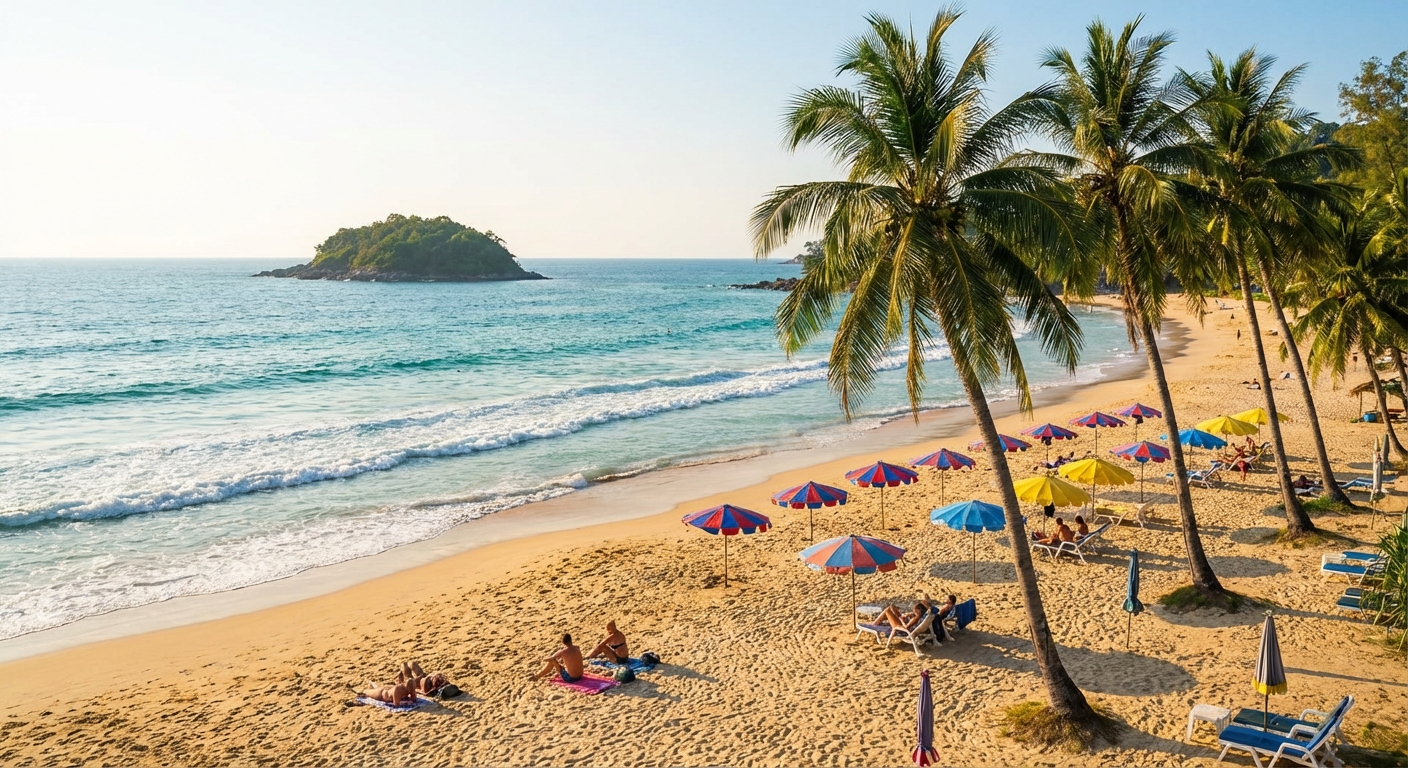
In high season, the water at the northern end of Kata is calm enough for families with children to swim with peace of mind. The beach is busier than Karon but still pleasant, and the atmosphere has a lively village feel that Karon lacks. In low season, the southern end of the beach gets bigger waves : that is when the surf school fills up.
Kata beats Karon for families thanks to calmer seas (in season) and the ability to do everything on foot with children, without needing a vehicle. The food scene is another advantage : Kata offers more variety and more inventive cooking than Karon, which leans toward classic tourist restaurants with laminated menus.
Kata Noi
Five minutes south of Kata, Kata Noi is a smaller, more peaceful version of its neighbor. The water is clearer. There are fewer people. The beach feels exclusive without the price tag of a private resort.
Kata Noi is an easy choice for couples looking for a beautiful beach without the noise. It does not have Kata’s restaurant scene, but you can get there on foot or by scooter in just a few minutes when you want dinner or a drink. Because the beach is fairly small, it fills up faster than the larger bays : it is best to arrive early, especially on weekends.
Kamala Beach
Kamala is the beach that families with children consistently recommend to other families with children. It feels like a quiet little seaside resort, with a beachfront promenade, calm water, and none of the noisy nightlife that defines Patong. Everything is walkable, even with a stroller.
The water stays calm and shallow, an essential point when traveling with children under five. The Sunwing Resort in Kamala comes up constantly in family travel discussions as one of the island’s best child-friendly hotels.
If your idea of an ideal holiday is dinner at 7 p.m. and bed by 9 p.m., Kamala is your beach. That is not a criticism : it is a genuinely peaceful place in a way most west coast beaches are not.
Surin Beach
Surin has a chic feel and moderate crowds. The beach itself is beautiful, but the main reason to go is the boats : longtail boats leave from Surin for Laem Singh Beach, a cove between Surin and Kamala that was closed for years because of a land dispute and is now accessible again, mainly by boat.
Laem Singh offers crystal-clear water, very few people, and the feeling of having found a private cove.
If you spend a day in Surin, the short boat crossing is well worth it.
Bang Tao Beach
Bang Tao is one of the island’s longest beaches, lined with upscale resorts but spacious enough that you can always find your own patch of sand. It is a quieter, more upmarket alternative to Kamala for families with a comfortable budget.
Its length is its main advantage. Even when the resorts are full, all you have to do is walk ten minutes in either direction to find space for yourself.
The atmosphere is relaxed without feeling deserted. The southern end of Bang Tao meets a lagoon where some of the largest resort complexes are located, while the northern end feels wilder and more unspoiled.
The beaches of the south coast
The southern tip of Phuket packs the greatest diversity into the smallest area. In 15 minutes of driving, you can hop from a family-friendly bay to a snorkeling cove, a kayaking beach, and one of the island’s best swimming spots. If you are staying in the south, there is no need to limit yourself to a single beach.
Nai Harn Beach
Nai Harn is the beach that comes up most often when people ask : “What is the best beach in Phuket for swimming ?” In high season, the water is clear, with a gentle slope out to sea. Behind the beach is a freshwater lagoon where toddlers can splash safely while parents keep an eye on older children in the sea.
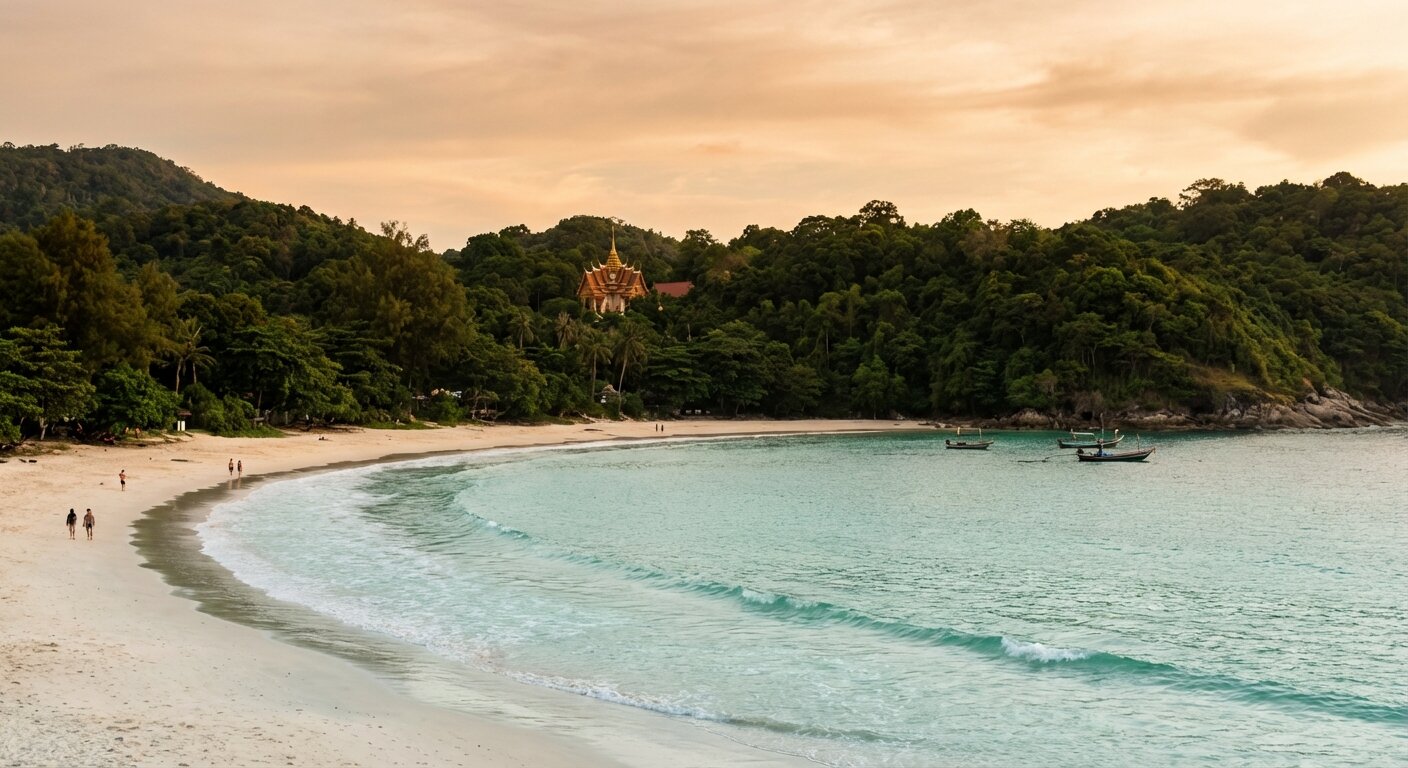
Nai Harn was once the expats’ well-kept little secret. That era is over. The beach now draws crowds, especially on weekends, but it remains far less chaotic than Patong or Kata. The village atmosphere is still there, and swimming here is genuinely enjoyable.
During the monsoon, Nai Harn can get waves : check the conditions before getting in the water. But from November to April, this is about as close as Phuket island gets to an ideal swimming beach.
Yanui Beach
Yanui is a small cove just south of Nai Harn. People come here for two things : sunsets and kayaking. You can rent a kayak on site and paddle out to Koh Man island offshore, where the snorkeling is much better than anything you will find from the shore on the main island. Masks and snorkels can be rented for 100 to 200 baht (around 3 to 5 EUR) at the beach stalls.
The beach is very busy at sunset and popular with photographers, but earlier in the day it is perfectly manageable.
You can also spot a few fish directly from the beach, near the rock formation in the center of the bay, if you do not want to go kayaking. Yanui is also near Windmill Viewpoint, one of the island’s best sunset viewpoints, reachable on foot from the beach parking area.
Ao Sane
Ao Sane is a small rocky cove near Nai Harn that most tourists never find. To get there, you have to cross the parking area of The Nai Harn resort, which leads many people to think it is private access. It is not.
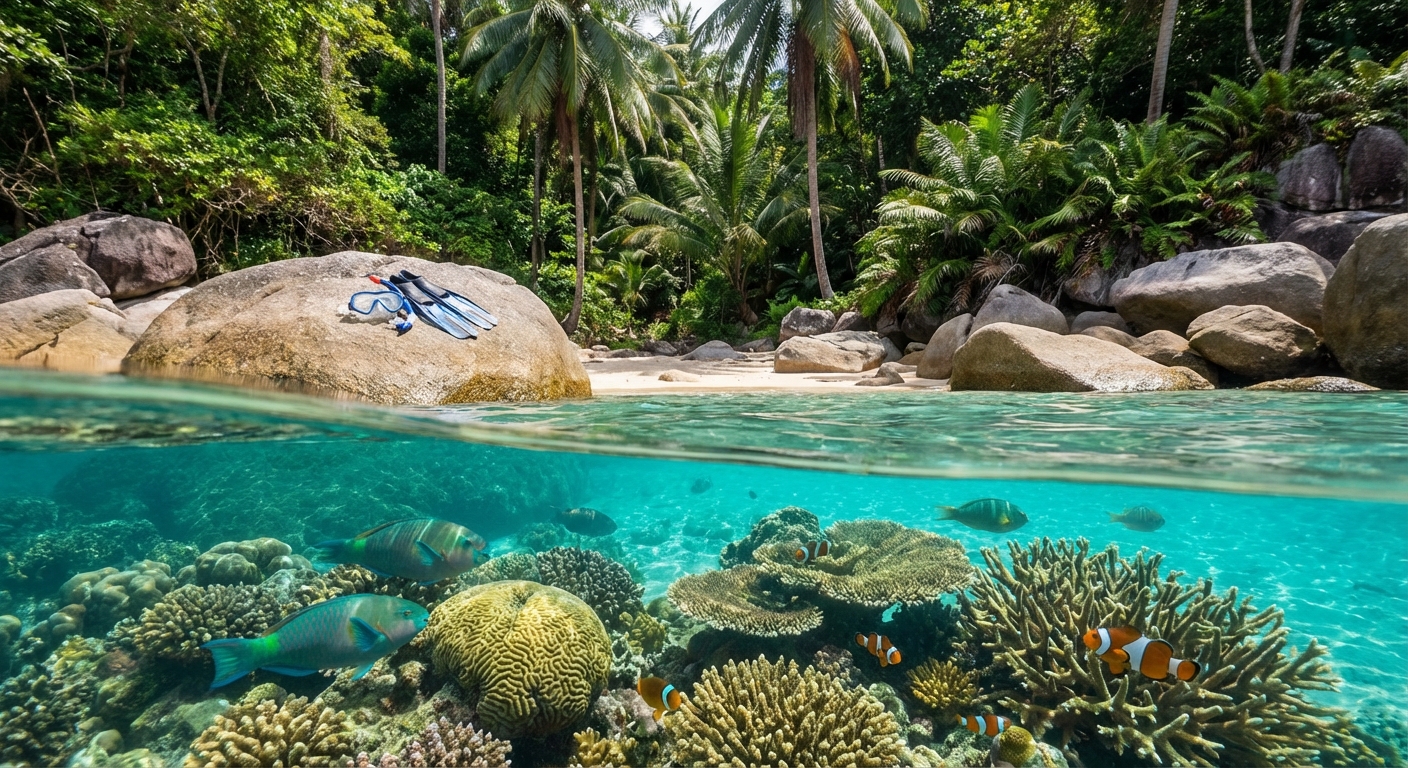
It is the number one answer whenever someone asks where to snorkel from the shore in Phuket. The rocky seabed is home to real coral and real marine life : parrotfish, clownfish, and many other species.
You can rent a mask and snorkel from the small beach restaurant for around 100 baht (less than 3 EUR). There are also simple bungalows right on the beach if you want to spend the night in a rustic, no-frills setting.
Ao Sane is not a beach for sunbathing on fine sand : the rocks are the whole point. If you want to put your head underwater without booking a boat trip, this is where you should come.
Large sandy beaches like Patong, Karon, and Kata have sandy bottoms with nothing to see beneath the surface : there is no point bringing your mask there. You can also see our complete list of water activities and excursions for other options beyond shore snorkeling.
The northern beaches
The farther north you go in Phuket, the quieter it gets. The northern beaches are closer to the airport and farther from the tourist hubs of Patong, Kata, and the southern tip. What you gain in tranquility, you lose in restaurant choice and entertainment. For some, that is exactly the trade-off they are looking for.
Mai Khao Beach
Mai Khao is the island’s longest and quietest beach. It is located in the far north of Phuket, near the airport. On weekdays, you can walk for 20 minutes without seeing another soul. The sand stretches for about 11 kilometers, largely bordered by Sirinat National Park rather than hotels.
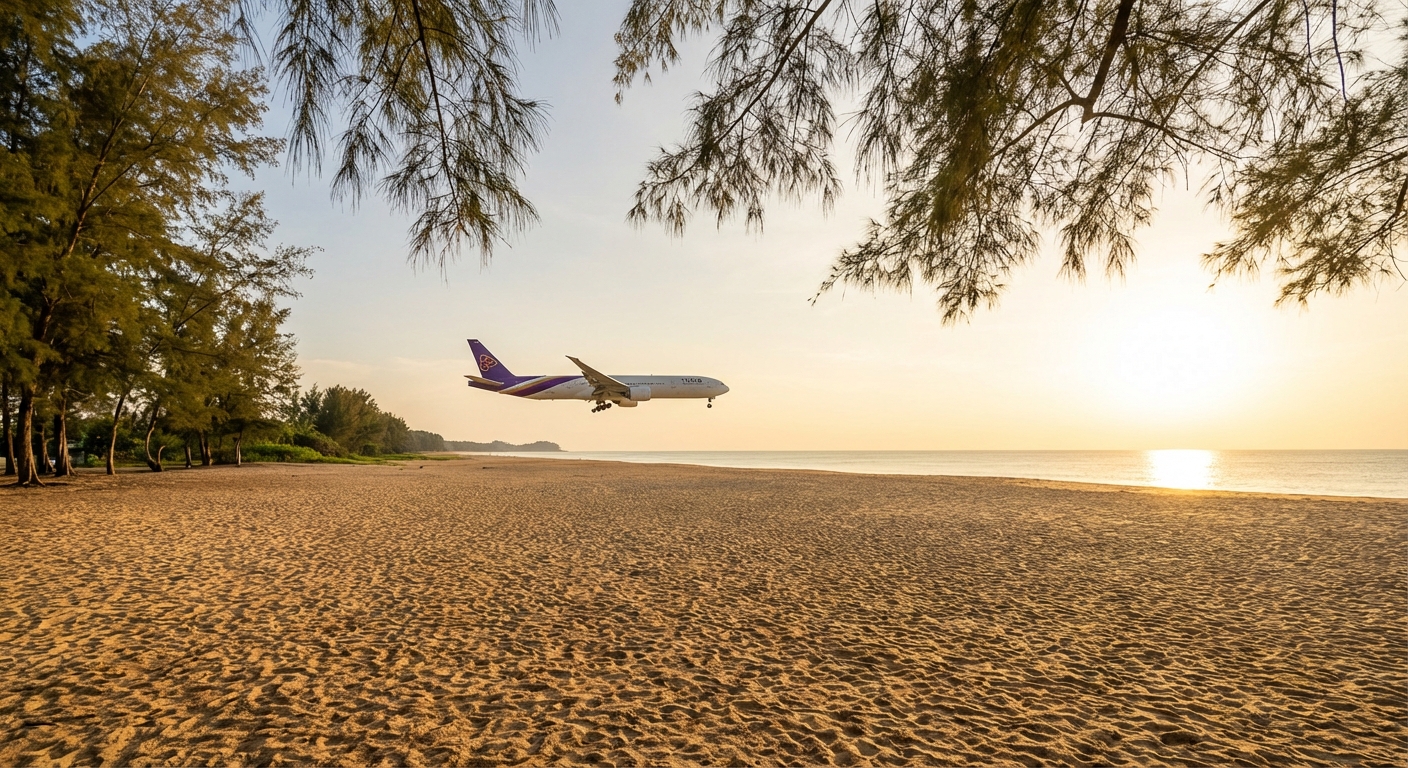
The flip side is real isolation. There are few restaurants and almost no nightlife. The resorts here (mainly high-end chains like the JW Marriott) are self-contained, because there is not much around.
If you dream of pristine sand and the sound of waves as your only company, Mai Khao is for you. If you want to be able to walk out for dinner without arranging transport, move on.
Mai Khao is also in the airport flight path : planes regularly pass overhead. Some people find this annoying. Others consider it part of the charm.
Nai Thon Beach
Nai Thon offers a good compromise in the north. The beach backs onto a sleepy little village with enough restaurants that you do not feel isolated. Crowds are light. The sand is pleasant. Nothing thrilling, and for many visitors, that is precisely the appeal.
Nai Thon suits travelers who looked at Mai Khao and thought “too remote,” but looked at Kamala and thought “too lively.” It is the middle ground. The beach is also swimmable during part of the low season, when the more exposed beaches of the west coast are not, although you should always check the flags before getting in the water.
Banana Beach
Banana Beach lies between Bang Tao and Nai Thon, hidden below a steep trail. You can reach it either on foot (bring proper shoes, not flip-flops) or by longtail boat. The effort keeps the crowds away, and what you discover at the bottom is a small beach with an end-of-the-world atmosphere.
A note about the name : there are two “Banana Beach” spots around Phuket. This one is on the main island. The other, easier to access, is on Coral Island (Koh Hey), 15 minutes by speedboat from Chalong Pier.
The Coral Island version has better facilities — toilets, food stalls, and shaded areas — and the water is shallow enough for children to stand and watch fish swim around them, with water up to their waists.
Do not confuse them when planning your day. If you are looking for the easy, family-friendly option, you want Banana Beach on Coral Island, not this one.
East coast and hidden coves
The east coast offers neither the spectacular sunsets nor the wide sandy beaches of the west. On the other hand, it has calm seas, especially during the monsoon months when the west coast becomes dangerous. Two beaches on this side are worth knowing, and one hidden cove on the west coast deserves its own section.
Ao Yon
Ao Yon is located on Phuket’s southeastern side, in the Panwa area. Very few tourists venture there. The beach is mainly visited by locals and expats, and the surroundings have a residential, off-the-beaten-path feel, very different from anything you find on the west coast.
Its real advantage is seasonal. From May to October, when the west coast beaches fly red flags and lifeguards are constantly blowing their whistles, Ao Yon remains glassy calm. The bay is protected from the swell that hits the western side of the island.
If you visit Phuket during the monsoon and want to swim in the sea (not just in the hotel pool), Ao Yon is one of the only reliable options. Nearby Cape Panwa is another sheltered choice on the east coast during the rough months, although it is less suitable for swimming than Ao Yon.
This beach also suits families with young children year-round, or anyone who is uncomfortable in waves. The water stays shallow and gentle. The beach itself is not as photogenic as the west coast options, and the sand is coarser. You come here for the swimming conditions, not the scenery.
Freedom Beach
Freedom Beach is on the west coast, between Patong and Karon, and those who have been describe the water as “Maldives-worthy.” It is often cited as the most beautiful beach on Phuket island, with white sand and the clearest turquoise water you will find without taking a boat to another island.
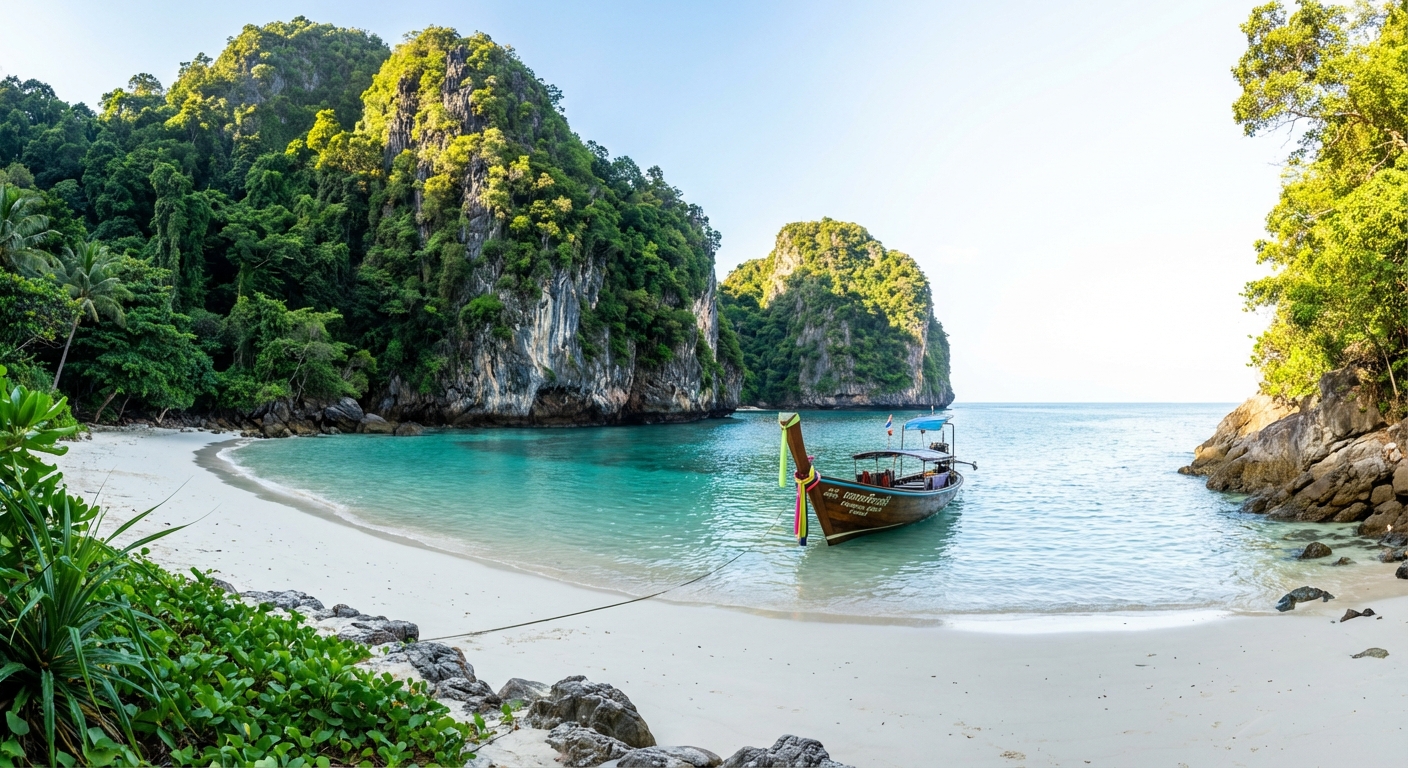
Getting there is part of the adventure. You have two options. The hike takes 15 to 20 minutes along a steep, slippery trail : wear good shoes. Locals at the top sometimes ask for a 200 baht “entrance fee,” though whether it is official remains questionable.
The alternative is a longtail boat from Patong or Karon, for 1,000 to 1,500 baht (around 25 to 40 EUR, see our budget guide) : it is the best option if you do not want to arrive drenched in sweat.
The essential timing tip : arrive before 9 a.m. Early in the morning, you can have the beach almost to yourself. Around noon, excursion boats start arriving and the cove fills up. Bring water and snacks, as facilities are limited.
Do not confuse Freedom Beach with Paradise Beach, which is a beach club with a DJ, entrance fee, and organized parties. They are two radically different places. Freedom Beach is wild and undeveloped. Paradise Beach is a commercial operation.
Which beach in which season
The season matters far more than most guides suggest. The difference between Phuket’s beaches in December and Phuket’s beaches in July is not minor. See our practical guide to choose the best time to visit.
From November to April (high season), the west coast is at its best. Kata, Karon, Nai Harn, Freedom Beach, Kamala : all are calm and swimmable. This is also the busiest period, especially around Christmas, New Year, and Chinese New Year.
Freedom Beach in particular fills up after 10 a.m., even during the so-called “quiet” months.
From May to October (monsoon), the west coast becomes dangerous. Rip currents and powerful shore breaks appear on beaches that were peaceful just a few weeks earlier. Red flags are raised.
People drown every year by ignoring these flags. If the flag is red, do not get in the water. Do not let children enter, even ankle-deep.
During the monsoon, head to the east coast instead. Ao Yon is the most reliable option for actually swimming in the sea. Cape Panwa is another sheltered choice. Some visitors opt for Blue Tree, a complex with an artificial lagoon, when the ocean is unswimmable.
Snorkeling from the shore
Most of Phuket’s large beaches have sandy bottoms with nothing to see underwater. If you want to spot marine life from the shore without booking an excursion, your options are limited, but they do exist.
Ao Sane is the first choice. The rocky cove shelters living coral and real marine life. Yanui Beach offers interesting underwater scenery near the rocks in the center of the bay, and you can enhance the experience by renting a kayak to paddle to Koh Man island.
Merlin Beach, near Patong, is a lesser-known spot with an ongoing coral restoration project. The bottom is rocky and the beach is not ideal for swimming, but at high tide, the underwater viewing is surprisingly rich for a site so close to Patong.
For more serious snorkeling, choose a day trip. Racha Yai Island and Coral Island (Koh Hey) both offer better visibility and more marine life than anything accessible from the shore in Phuket.
A private longtail to Coral Island is worth the extra cost compared with a group tour : you can arrive before or after the 10 a.m. to 2 p.m. rush, when the tour groups are there.
Choosing the beach that suits you
If you are visiting Phuket for the first time and want a bit of everything, stay near Kata. If you are traveling with young children, Kamala is the safest and most practical choice. Couples seeking tranquility should look toward Kata Noi or Karon. Solo travelers looking for nightlife will find what they want in Patong, like it or not.
You can also explore the most beautiful beaches in Bali to compare them with Phuket’s.
If you have a scooter or are willing to take taxis, the south coast offers the greatest variety within the smallest area. You can snorkel at Ao Sane in the morning, swim at Nai Harn after lunch, and watch the sunset from Yanui, all within 10 minutes of driving.
And if you are coming during the monsoon, plan your beach days around the east coast. Ao Yon will not win any beauty contests against Freedom Beach, but it will be swimmable when Freedom Beach is not.
To help you choose where to base yourself according to the beach that appeals to you, find out which neighborhood to choose in our area guide. And to find out what to do once you are on the sand (or in the water), see our complete list of water activities and excursions available around the island.
For an overview of planning your trip, return to our complete guide to visiting Phuket.
For an urban contrast after the beaches, discover the must-do activities in Bangkok.
For a cultural contrast after the beaches, discover activities in Hanoi with Ha Long Bay.