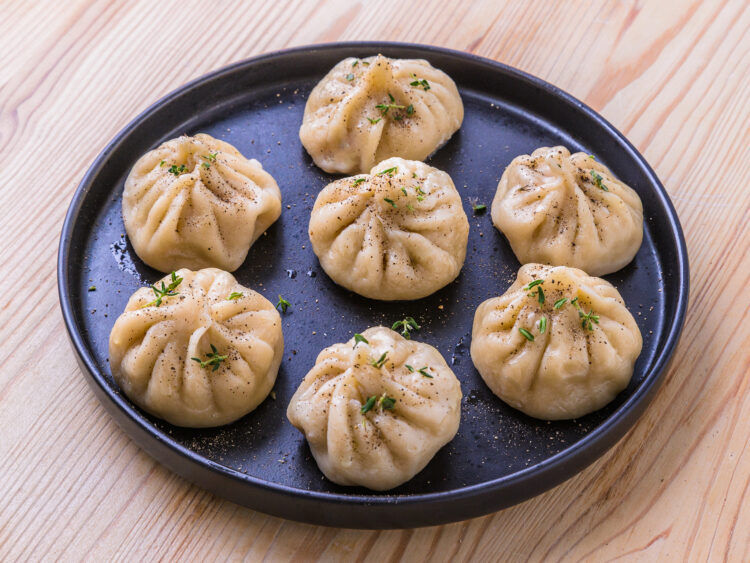
Delicious Georgian dumplings filled with ground lamb and scented with thyme
The first bite is all steam and surprise. You lift the dumpling by its pleated topknot. You take a cautious bite from the side and, pssst! Just like a xiao long bao, hot juices flood your tongue, trickling down to your chin and fogging up your glasses if you lean in too close. A grandmother from the mountains would laugh: “If you haven’t let any juice run down your chin, you’re not eating khinkali properly.”
What began as a practical shepherd’s meal in Georgia’s Greater Caucasus has become a national symbol of hospitality, a must at every beer-fueled feast in Tbilisi and beyond.
Born in the Greater Caucasus: Legends & History
The Dumpling That Kept the Cold at Bay
Khinkali appears early in Georgian literature: a dictionary from the early 18th century, compiled by Sulkhan-Saba Orbeliani, mentions a “dumi’s shashkha,” a ball of dough filled with broth considered the ancestor of khinkali, and Princess Barbare Jorjadze’s cookbook (1874) establishes the spelling we know today. The folklore, naturally, goes back further.
A legend from Tusheti credits the invention to Khinda, the resourceful wife of a village elder (a community leader), who turned flour and mutton into dumplings to honor an unexpected visitor. Another links the twenty-eight pleats of a “perfect” khinkali to the 28 year solar cycle, a nod to the pre-Christian sun cults of the Caucasus.
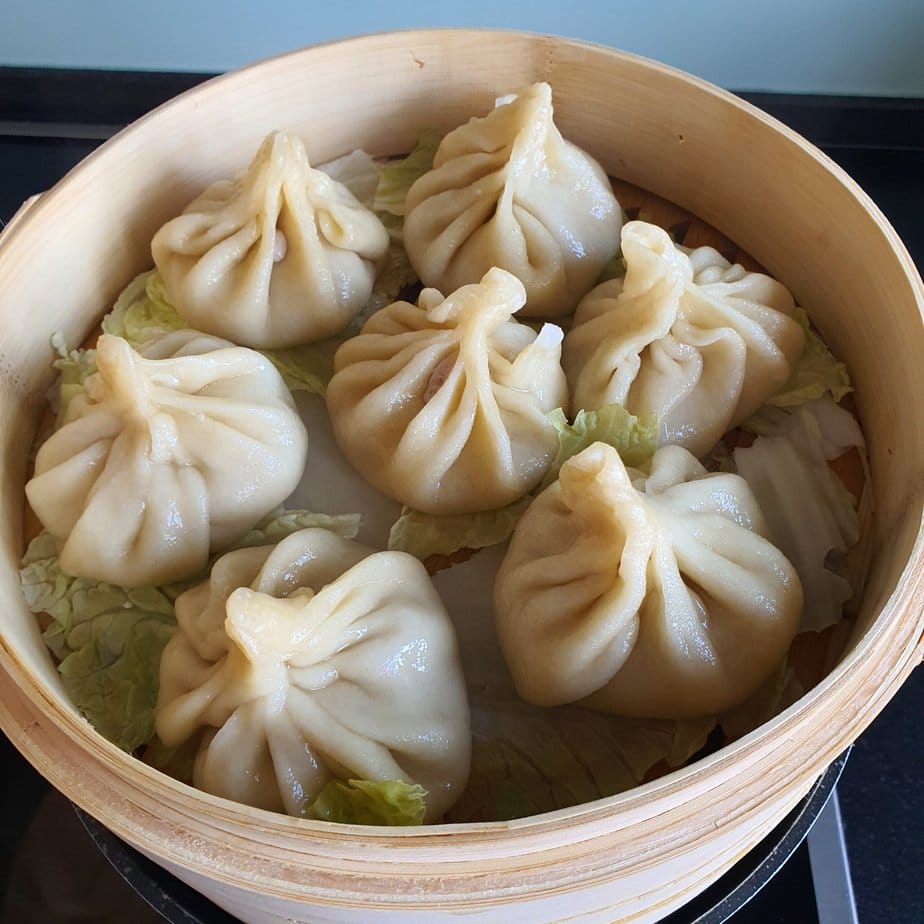
The history is less poetic but just as vivid: shepherds in Tusheti, Pshavi, and Khevsureti needed a dinner that could travel in a satchel, cook in a cast-iron cauldron, and warm numb fingers.
The meat, onion, and alpine herbs went in raw; boiling water from melted snow did the rest, trapping fat and collagen in a restorative broth. By the time lowland merchants adopted the dish in the 19th century, khinkali had already outgrown its austere birthplace, but had not lost the scent of campfire smoke and long winters.
The Anatomy of Authenticity: Dough, Filling, Pleats
The Georgian equivalent of homemade gyoza dough is deliberately sturdy: just flour, water, and salt, kneaded until it feels as firm as a wrestler’s forearm. Some grandmothers add a single egg to help it hold together (strictly optional, by no means traditional).
Roll out the rounds so that the centers remain about two to three millimeters thick. The edges should stretch until they are parchment-thin; this guards against tearing when the hot juices surge inside.
Authentic mountain-style filling favors lamb (or mutton); depending on the valley, a little beef may find its way in. It combines coarsely ground shoulder, onion, salt, cracked black pepper, and a touch of summer savory (or sometimes wild thyme).
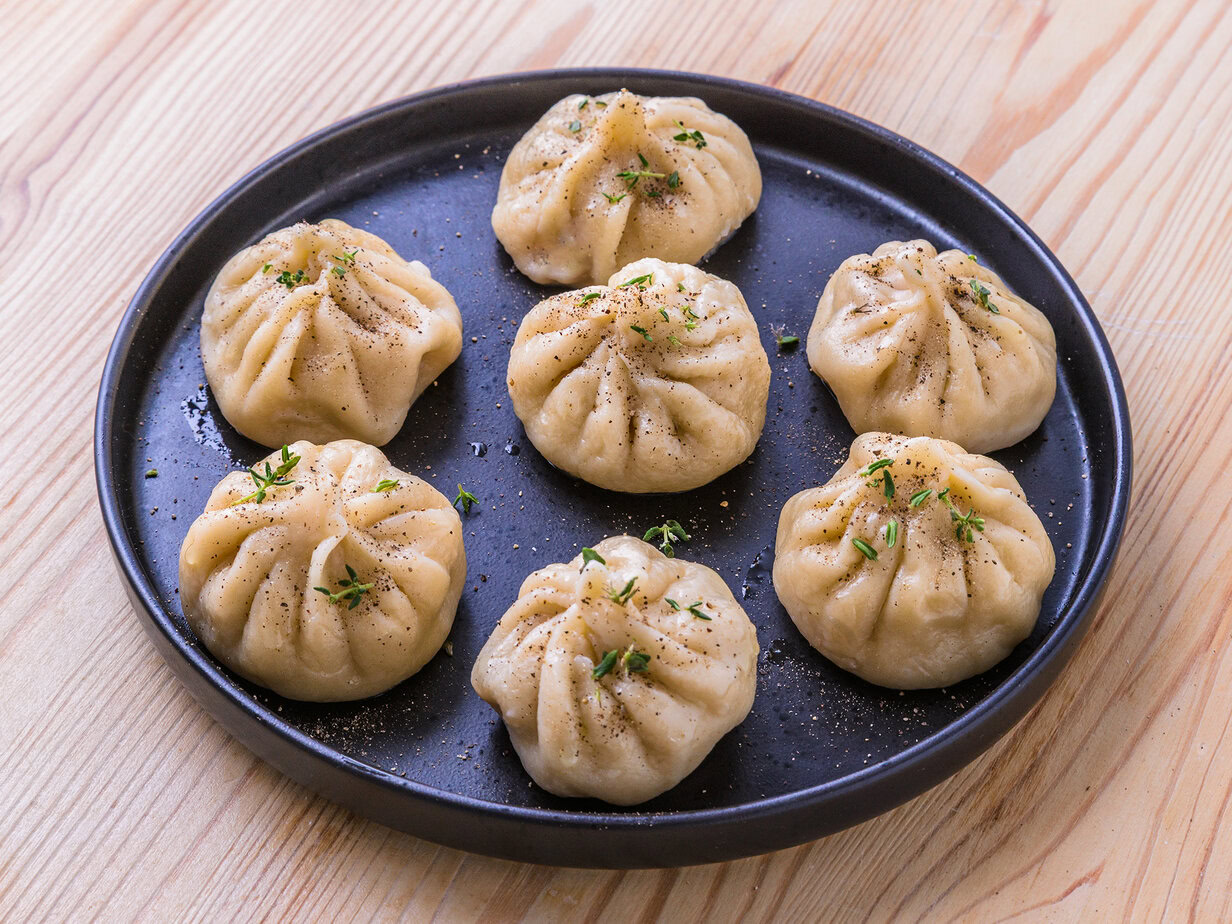
A ladleful of lukewarm water makes the mixture almost liquid; that liquid will turn into the much-prized burst of broth. Make at least eighteen pleats, then twist firmly to form the topknot, the thick “handle” you will hold later. Every choice (minimal seasoning, fatty meat, sturdy dough) serves a single purpose: to seal in the juices and heighten the flavor.
Mountain Khinkali vs. City Khinkali
When khinkali made their way down from the mountain slopes to the taverns of Tbilisi, the meat changed to reflect the market. Lamb gave way to a less expensive, fattier mix of pork and beef.
Cooks who could not find savory (or wild thyme) turned to cumin; parsley and cilantro found their way into the mixing bowl, giving rise to the now ubiquitous kalakuri, or “city style.” Yet even in neon-lit snack bars, the fundamentals endure. The filling is still raw, garlic remains largely off-limits, and flashy sauces are still taboo. A dusting of black pepper is the only acceptable adornment.
Ask a Georgian how to spot an impostor and you will get a quick list: precooked meat, miniature appetizer-sized dumplings, multicolored spice blends or (the ultimate sacrilege) ketchup on the side.
Authenticity, whether in the city or the mountains, still rests on three pillars: a size that fits in the palm of your hand, pleats tight enough to trap the juices, and a flavor profile that whispers rather than shouts.
Ingredients
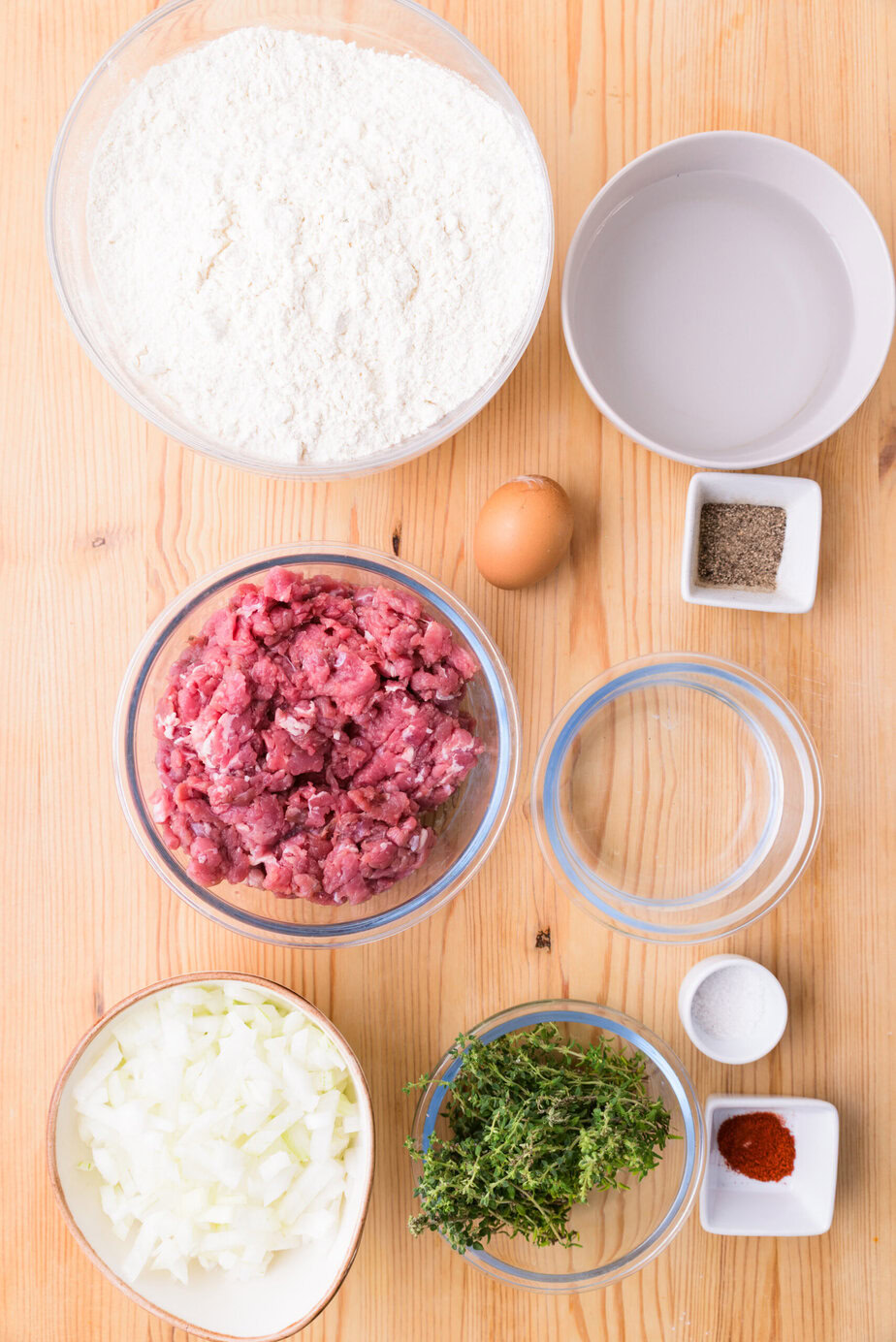
- 1.2 kg ground lamb ideally hand-chopped, with 30%-40% fat for optimal juiciness
- 20 g fresh thyme chopped
- 3 onions small, finely chopped
- 0.5 teaspoon salt
Saumure
- Salt enough to make it as salty as pasta cooking water
- 200 ml lukewarm water
- 0.5 tablespoon ground chili pepper
Pâte
- 1 egg
- 1 kg flour high-protein, ideally T65 or 10-11% protein
- 460 ml hot water
- 1 tablespoon salt
Cuisson
- 4 L water generously salted
Instructions
Pâte
- Knead the dough with the hot water, egg and salt until firm.1 egg, 1 kg flour, 460 ml hot water, 1 tablespoon salt
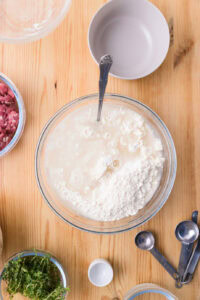
- Since the dough is quite stiff, it needs a long kneading time.
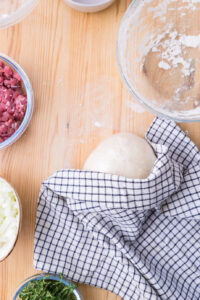
- Cover and let rest for at least 30 minutes.
Farce
- Start by mixing the brine in a bowl: dissolve the salt in the lukewarm water, then add the ground chili pepper.Salt, 200 ml lukewarm water, 0.5 tablespoon ground chili pepper
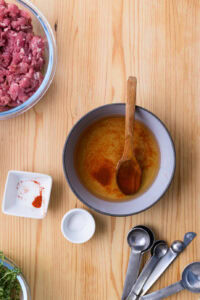
- Cover and let cool to room temperature, around 40 degrees Celsius (105°F).
- In a mixing bowl, combine the ground lamb, chopped onion and thyme.1.2 kg ground lamb, 20 g fresh thyme, 3 onions, 0.5 teaspoon salt
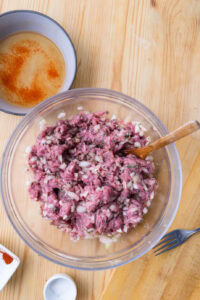
- Gradually add the brine, mixing vigorously.
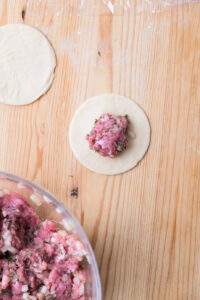
- The filling should remain thick enough to hold its shape as a ball when placed on the dough.
Pliage
- Divide the dough into 2 or 3 pieces.
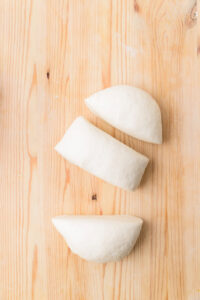
- Roll out one ball into a large disc, then cut out circles about 4 cm in diameter.
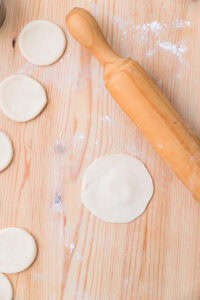
- Press down the center of each circle with your fist, then use a rolling pin to thin only the edges.
- The center stays thicker to prevent tearing, while the thinner edges are easy to pleat and cook through properly.
- Place a spoonful of filling in the center, gently gather the edges and pinch them together to form a little “purse”.
Cuisson
- Bring a large pot containing at least 4 L of well-salted water to a boil.4 L water
- Place the khinkali in the boiling water.
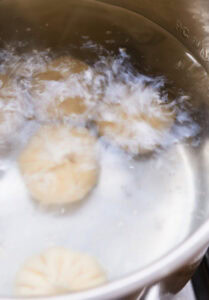
- Stir gently once to prevent them from sticking.
- Cook at a rolling boil for about 7 to 8 minutes, until they float to the surface.
- Do not overcrowd the pot; cook in small batches if necessary so the khinkali can move freely.
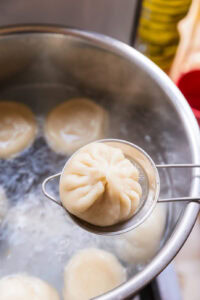
- When the dough of each khinkali is cooked but still firm, check the pleats, which should remain al dente rather than doughy.
- Remove the khinkali with a slotted spoon.
Notes
- Use lamb with a good proportion of fat to ensure a tender filling.
- The dough should be firm and kneaded thoroughly so it holds up well during cooking.
- Do not overcrowd the pot when cooking, to prevent the khinkali from sticking together.