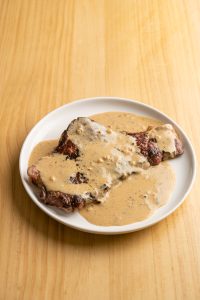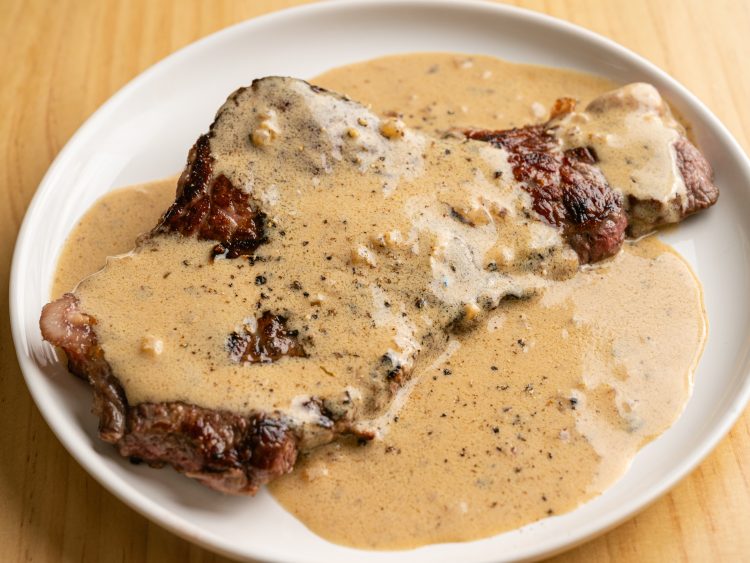
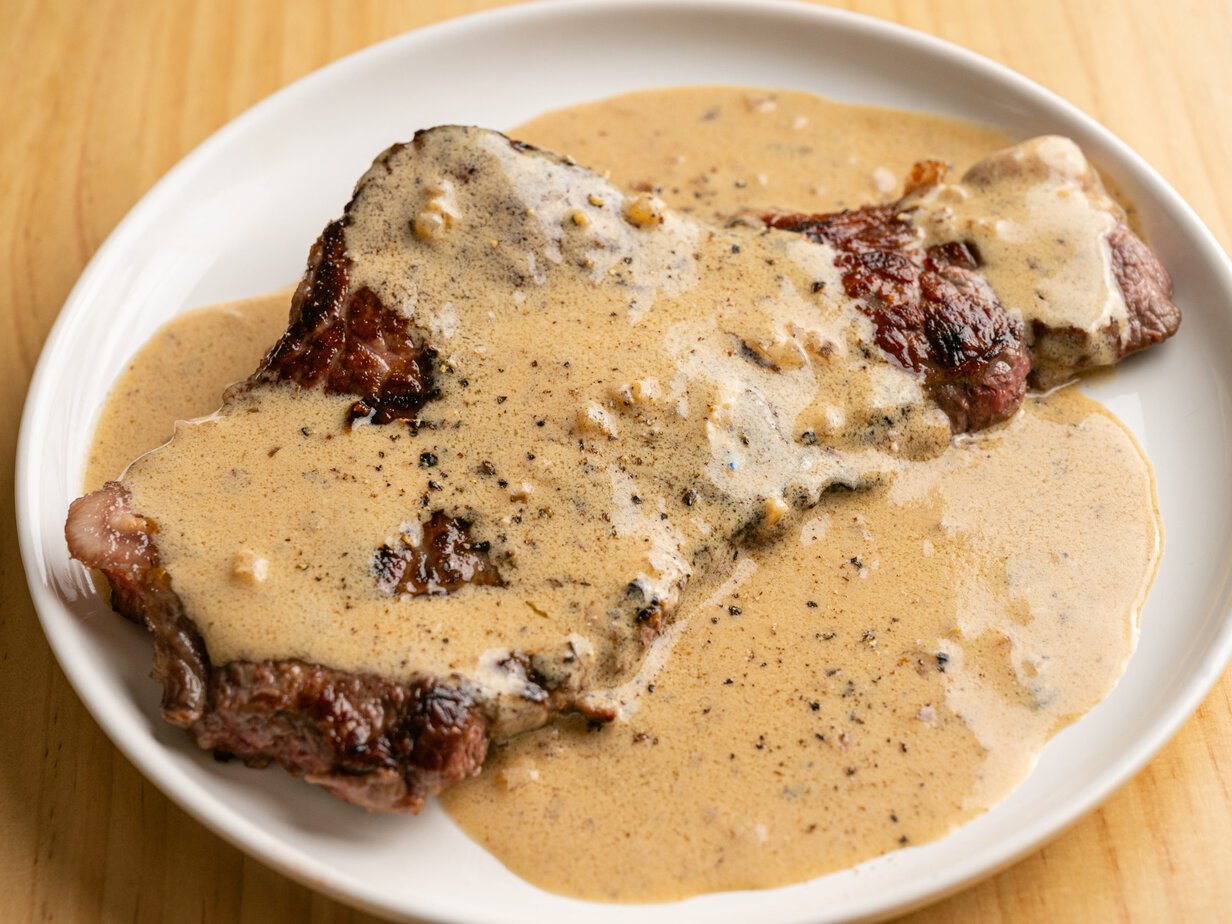
A ribeye seared in a cast-iron skillet and topped with a cracked black pepper, cognac and cream sauce made in the same pan.
Some weeknights, you want a real bistro meal without leaving the house. The ribeye sizzles in the cast iron and its crust browns, then the shallot, cognac and cream join the browned bits in the same pan.
The bits of cracked pepper crunch between your teeth and warm your mouth, the cream tames the heat, and the beef keeps all its flavor. By the time the meat has rested, the sauce is ready.
What Is Peppercorn Sauce?
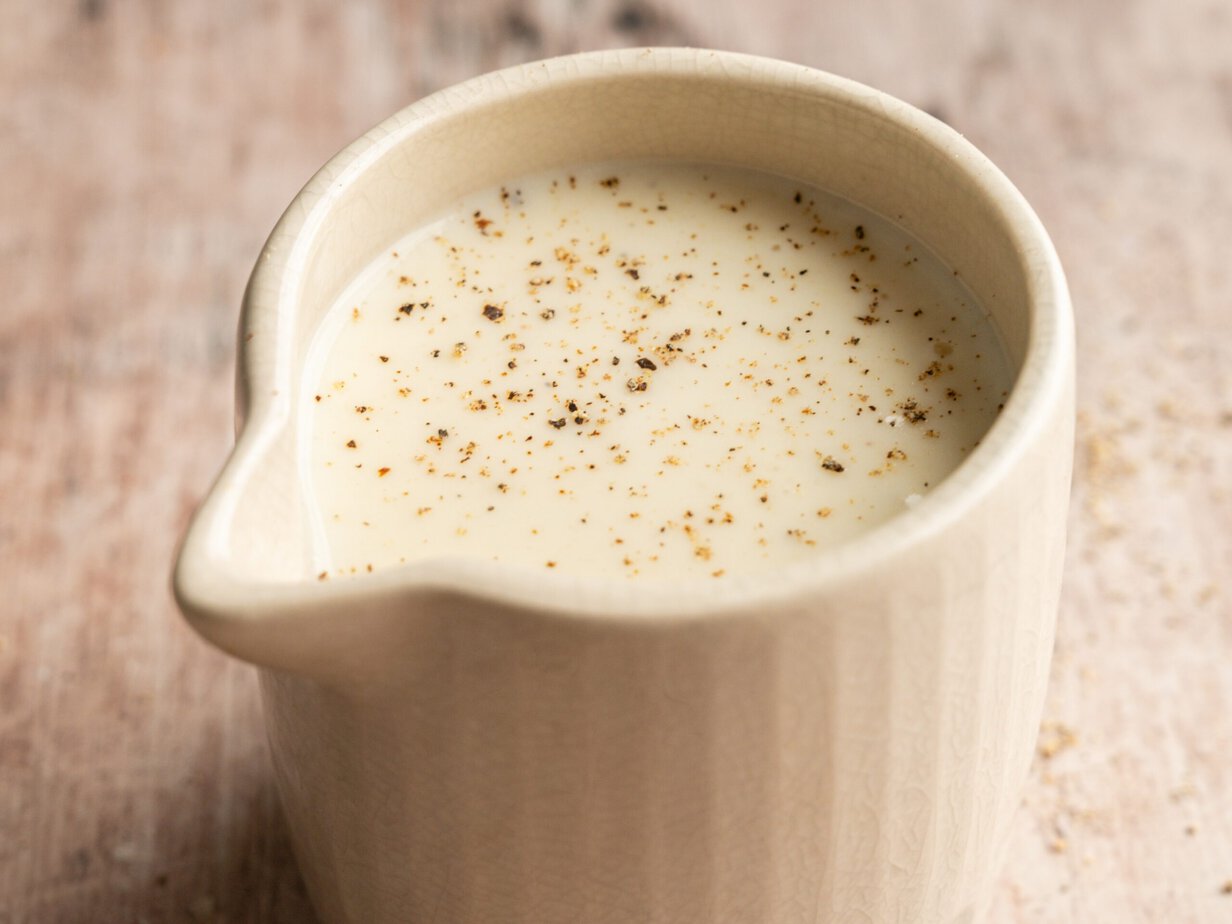
Peppercorn sauce is a hot cream sauce served over a pan-seared cut of beef, here a ribeye. It brings together cracked black pepper, shallot, cognac, veal stock and full-fat cream.
It’s made in the pan the meat was cooked in, over the fond, those brown bits the beef leaves behind, which dissolve when you deglaze and give the sauce roasty notes and a real umami taste. It thickens by reduction, without cornstarch, and keeps its pieces of pepper and shallot: it’s neither blended nor strained.
Pepper coarsely crushed in a mortar is called “mignonette.” Its rice-grain-sized pieces stay crunchy, while finely ground pepper burns quickly and turns bitter. This black pepper is very different from Sichuan pepper and sansho pepper, two spices with lemony aromas that make your tongue tingle.
A Bistro Classic
Ribeye steak au poivre is part of the French bistro repertoire, where pan-seared cuts of beef arrive with a small amount of concentrated sauce. Recipes vary from kitchen to kitchen, with green peppercorns, mustard or flambéed cognac. This version sticks to black pepper, cognac and cream.
Japan also has its own meat topped with brown sauce, Japanese hambagu, a ground beef patty served in sauce.
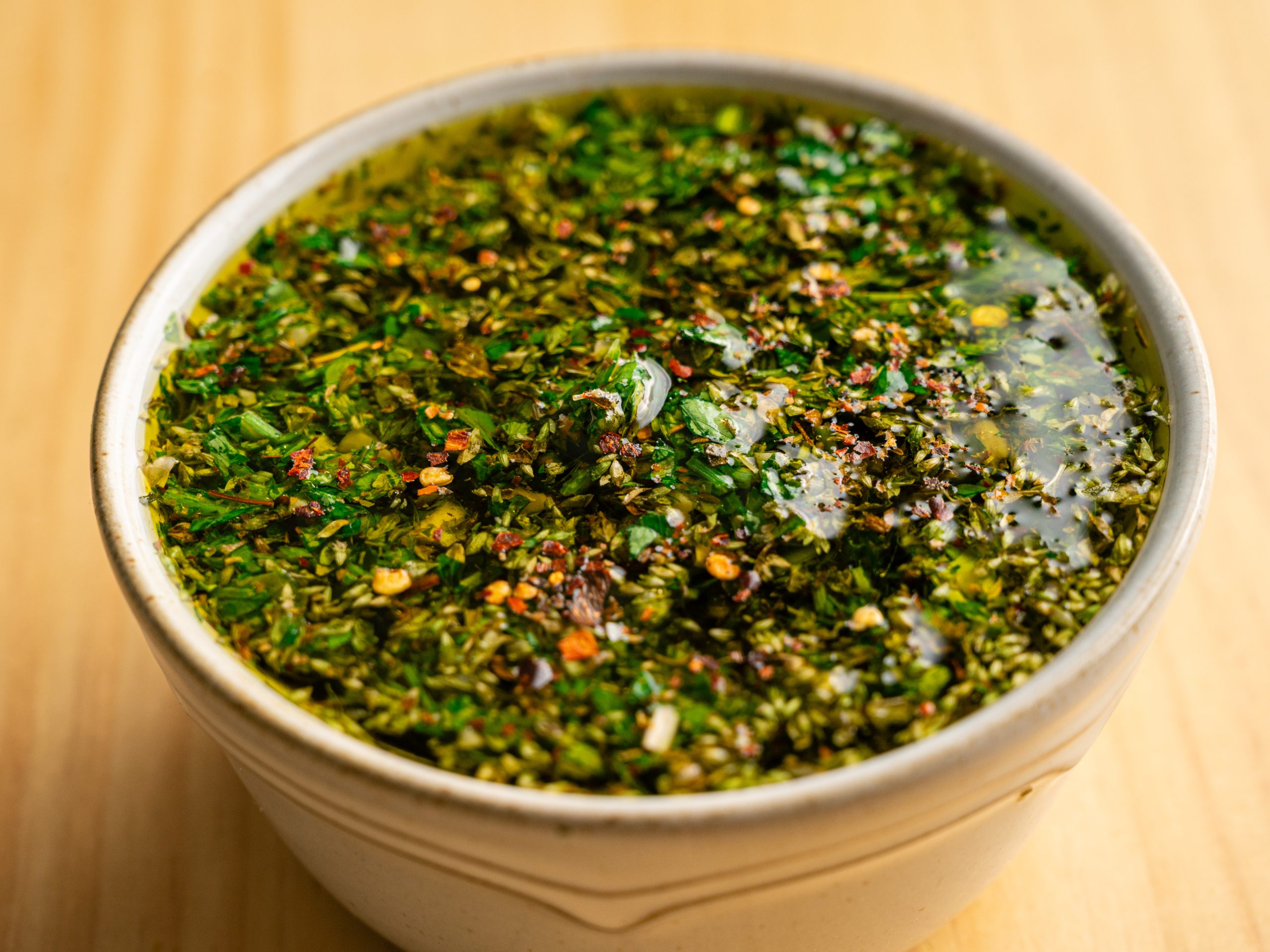
The Main Ingredients in Peppercorn Sauce
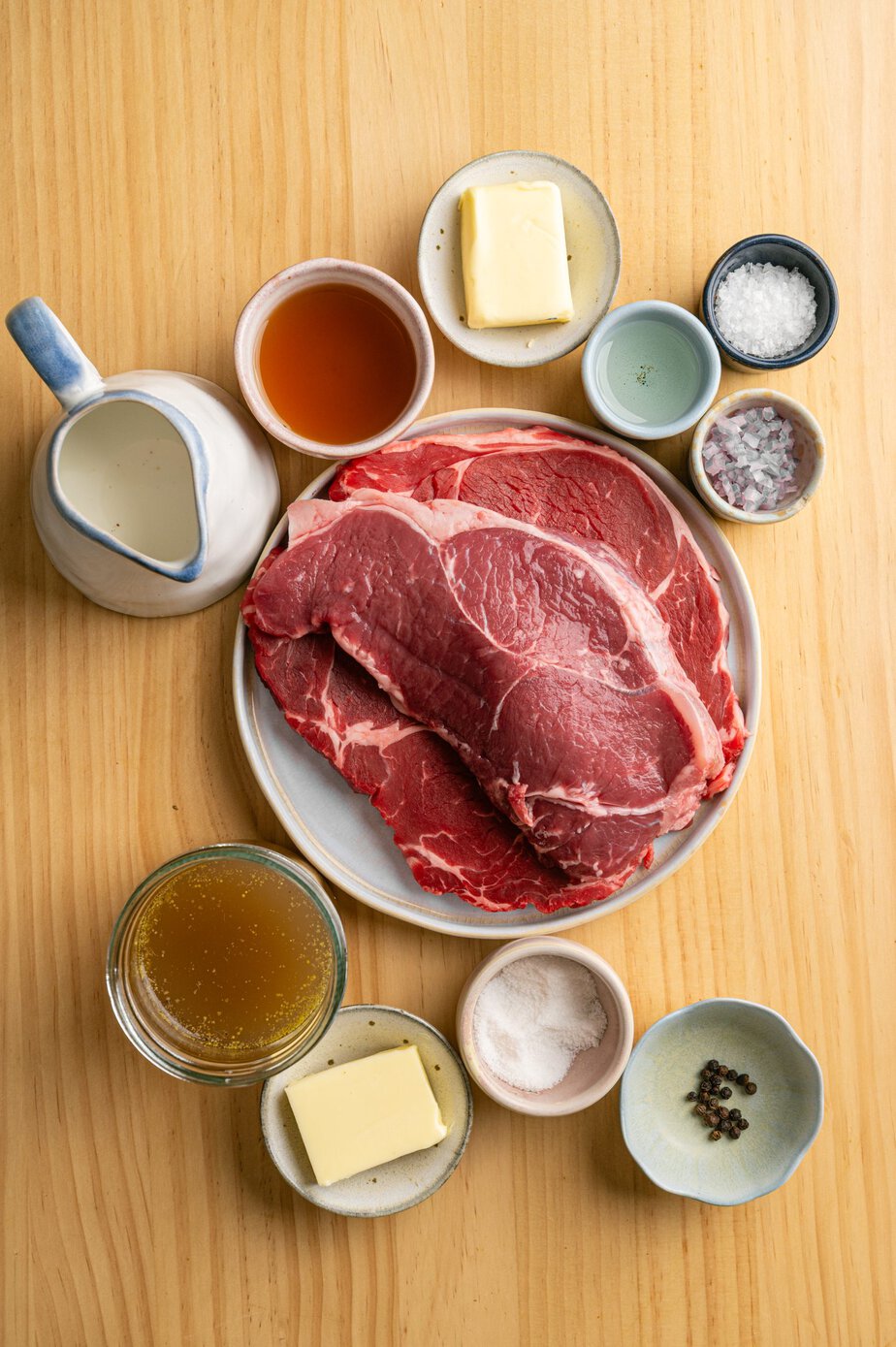
The meat is a thick ribeye. Its marbling, those thin streaks of fat running through the meat, melts as it cooks and gives the sauce a rounder flavor than a lean cut would. The whole black peppercorns are cracked, then divided in half: one half goes into the sauce, the other onto the meat after cooking, off the heat.
The sauce starts with butter and a finely minced shallot, whose sweetness tempers the bite of the pepper. The cognac loosens the browned bits as you deglaze and adds its aromas, without being flambéed. The veal stock gives the sauce body and concentrates its flavor as it reduces.
Full-fat whipping cream, with 30% butterfat, makes the sauce silky and mellows the pepper. A neutral oil, sunflower or peanut, is used to sear the meat. The fleur de sel goes on the ribeye just before cooking, while the sauce is salted only at the end.
Serving Ribeye with Peppercorn Sauce
Spoon the sauce over the steaks, or serve it on the side so everyone can take as much as they like. To start, eggs mimosa or French onion soup stay true to the bistro spirit. Crying tiger beef follows the same idea of seared meat served with its sauce on the side, in a very different Thai style.
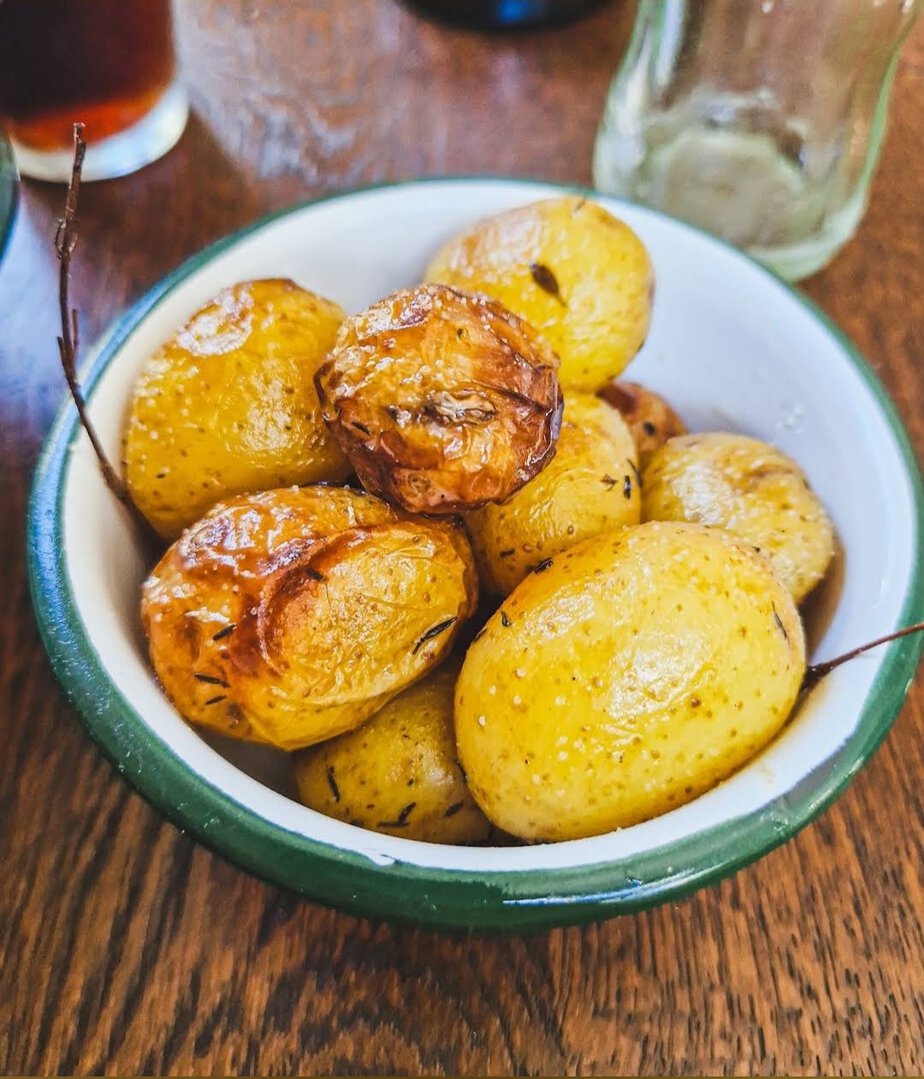
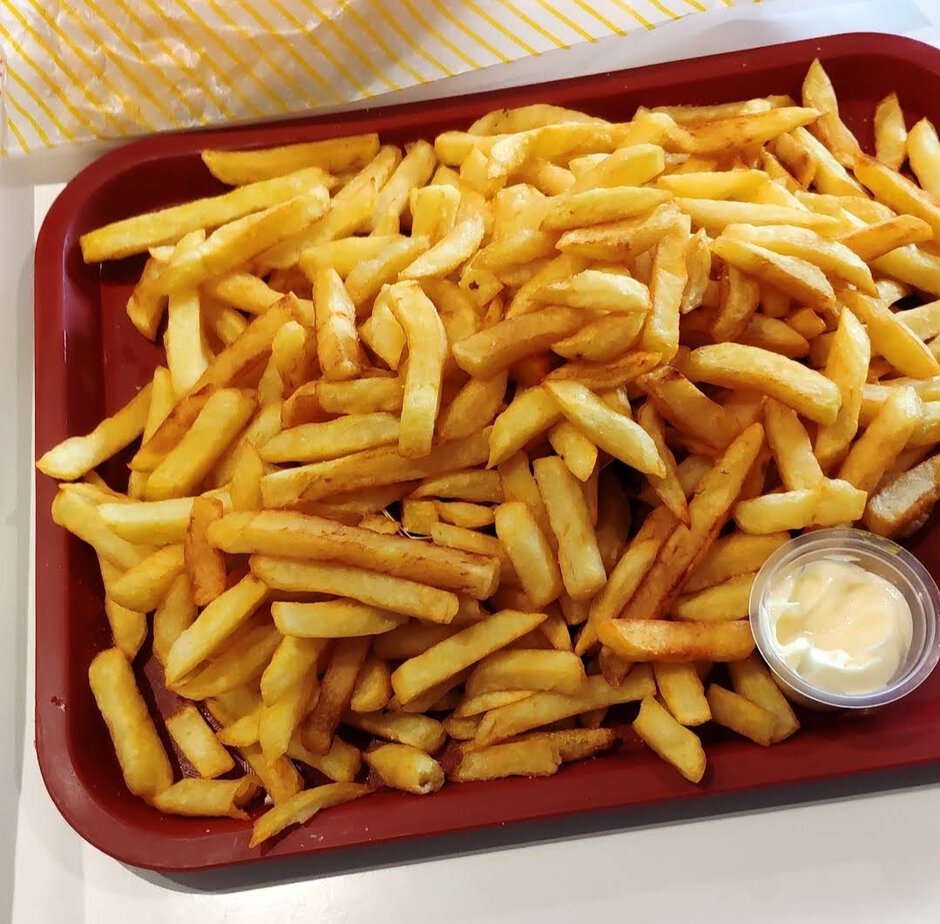
Serve with fries, pan-browned baby potatoes or green beans. For a change, air fryer gnocchi or air fryer zucchini are also great with the sauce. The next day, reheat any leftover sauce over low heat with a spoonful of water.
Ingredients
Prep
- 4 rib-eye steaks 250 g each, 3 cm thick
- 2 tablespoons black peppercorns whole, about 12 g, for the meat and the sauce
Cooking the Steaks
- 1 tablespoon sunflower oil, or peanut oil
- fleur de sel
- 10 g butter
Peppercorn Sauce
- 20 g butter
- 1 shallot, finely chopped
- 5 cl cognac
- 20 cl veal stock
- 20 cl heavy cream full-fat, 30% butterfat
Instructions
Prep
- Take the steaks out of the refrigerator 30 minutes ahead of time.4 rib-eye steaks
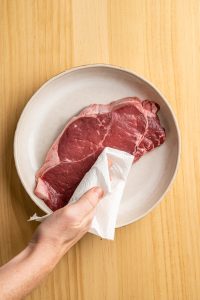
- Pat them dry with paper towels: a damp surface creates steam and keeps a crust from forming.
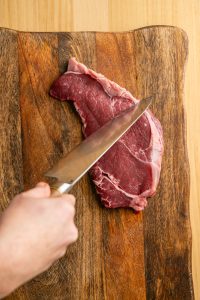
- Score the strip of fat along the edge every 2 cm, so the steak stays flat as it cooks.
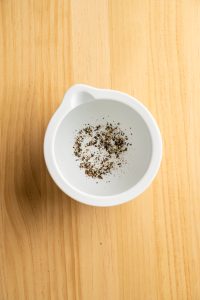
- Crush the peppercorns with a mortar and pestle into coarse pieces the size of a grain of rice, mignonette-style.2 tablespoons black peppercorns
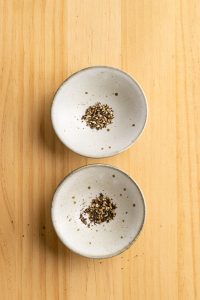
- Divide the crushed pepper in two: one half for the sauce, the other for seasoning the meat after cooking, off the heat.
Cooking the Steaks
- Heat the oil in a cast-iron skillet over high heat until it is barely smoking.1 tablespoon sunflower oil,
- Season the steaks with fleur de sel just before cooking them.fleur de sel
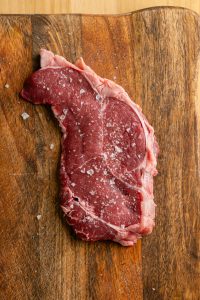
- Place them in the pan and sear without moving them, 2 minutes 30 seconds per side for rare (the other levels of doneness are in the Notes).
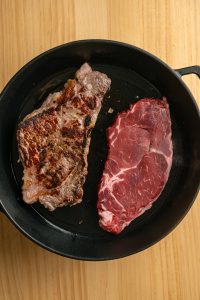
- Don’t pepper them at this stage: at this temperature, pepper burns and turns bitter.
- Toward the end of cooking, add the butter to the pan.10 g butter
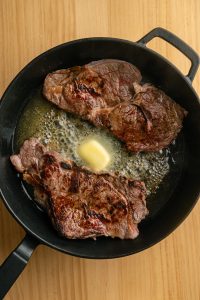
- Tilt the pan and spoon the melted butter over the meat for 30 seconds.
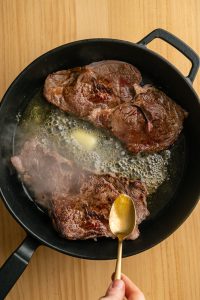
- Transfer the steaks to a warm plate.
- Season them with the half of the pepper set aside for the meat.
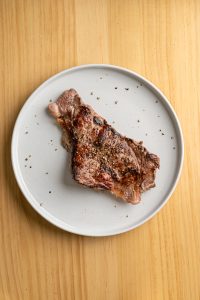
- Let them rest for 5 minutes, without covering them with plastic wrap: the sauce gets made while they rest.
Peppercorn Sauce
- Pour off the excess hot fat from the pan, keeping the browned bits stuck to the bottom: they are what give the sauce its color and roasted flavor.
- Melt the butter in the same pan and sweat the shallot in it for 2 minutes.20 g butter, 1 shallot,
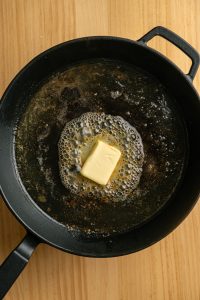
- Add the other half of the crushed pepper, kept for the sauce.
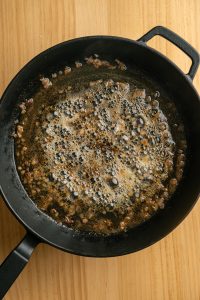
- Deglaze by pouring the cognac into the pan.5 cl cognac
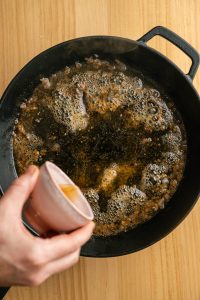
- Let it reduce by half, scraping the bottom of the pan to loosen the browned bits.
- Pour in the veal stock and reduce by a third over high heat.20 cl veal stock
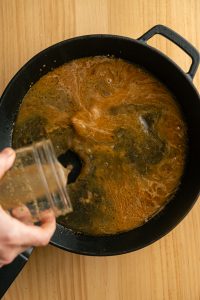
- Add the cream and let it thicken for 4 minutes at a gentle simmer, until the sauce coats the spoon.20 cl heavy cream
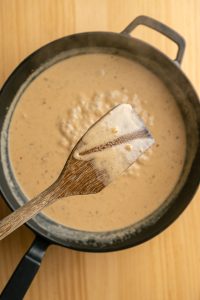
- Stir in the juices released by the meat as it rested.
- Taste, and only then add salt.
- Spoon the sauce over the steaks, or serve it on the side.