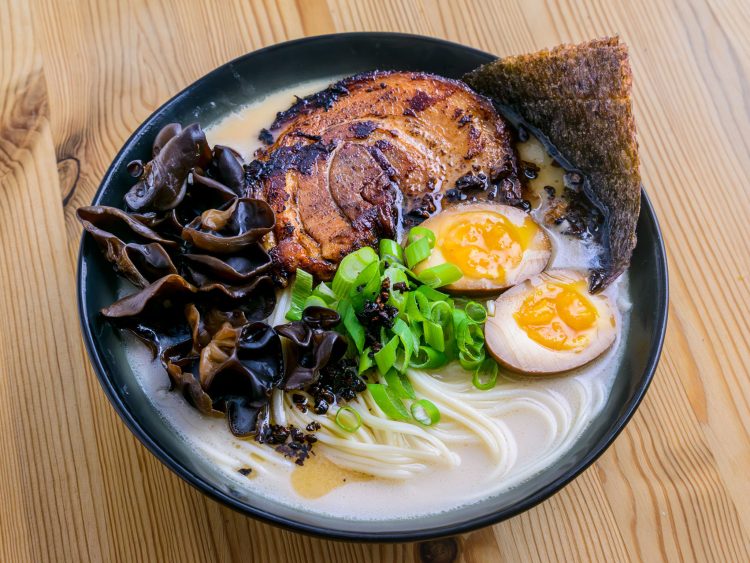
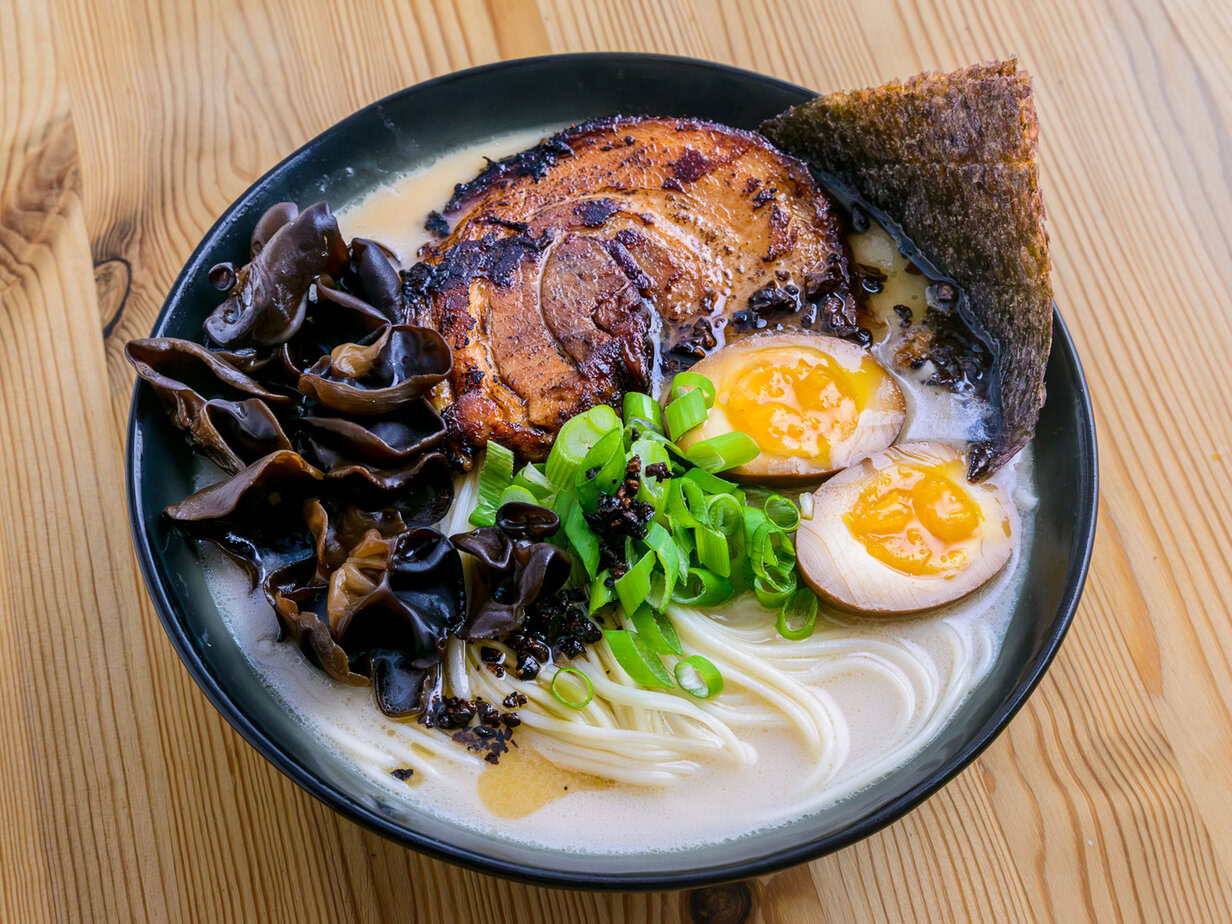
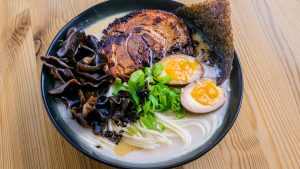
Homemade Hakata tonkotsu ramen: creamy white pork bone broth, shio tare, glazed chashu, marinated eggs, and burnt garlic oil.
On some winter evenings, only a big steaming bowl will do. Tonkotsu ramen arrives almost white, its broth coats the spoon like cream, and the caramelized slice of chashu half melts in the heat.
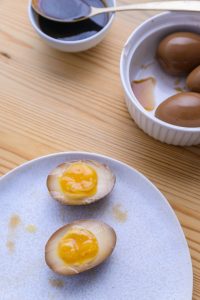
The marinated egg’s yolk runs at the first poke of the chopsticks, and a streak of burnt garlic oil cuts across the bowl, dark and smoky. Three days of preparation, and the bowl is empty in a few minutes.
What Is Tonkotsu Ramen?
Tonkotsu ramen is a bowl of thin noodles in a creamy white pork bone broth, seasoned with a tare and topped with chashu, marinated egg, wood ear mushrooms, scallions, and nori.
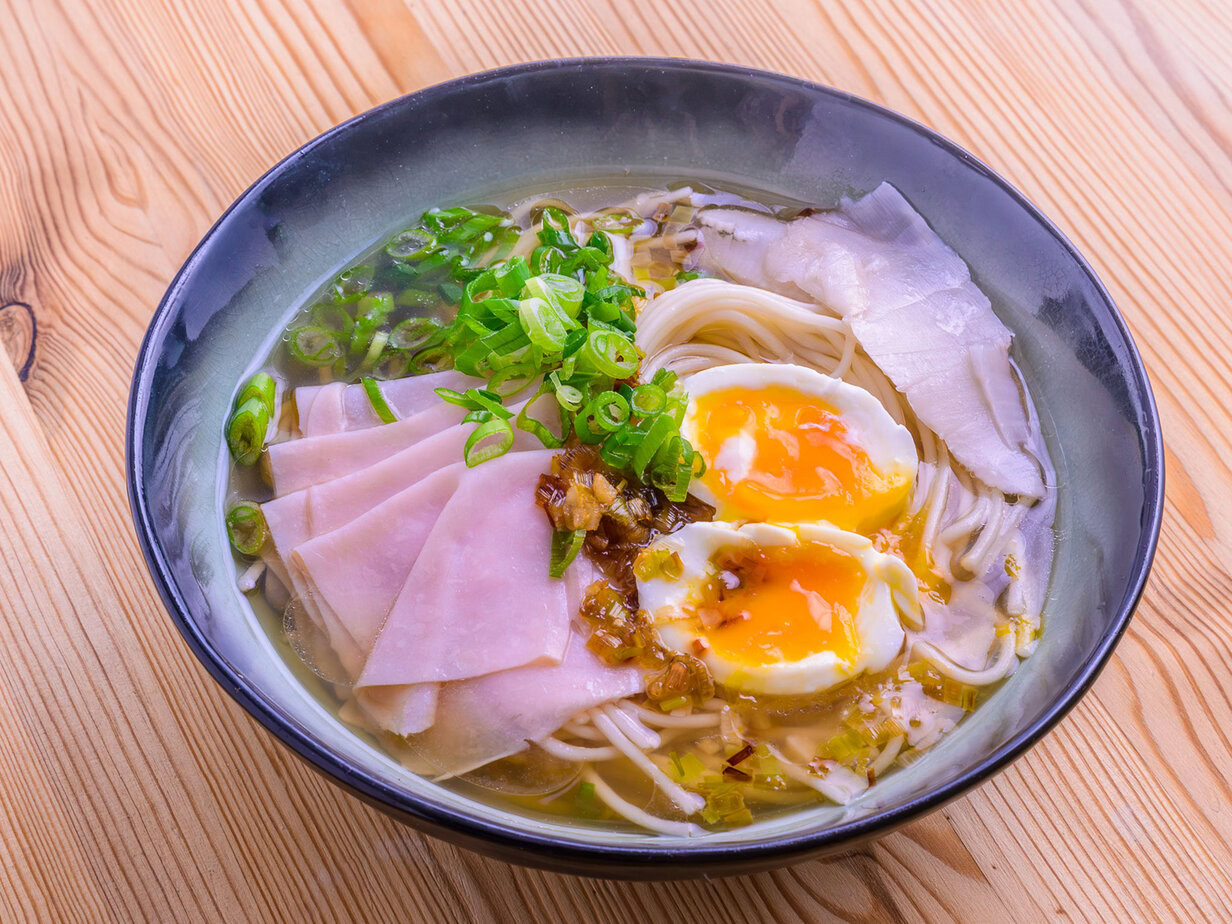
This cloudy broth is one of the paitan broths, the opposite of the clear broth in shio ramen. Its color comes from a long, hard boil that emulsifies the fat and collagen from the bones without a single drop of milk. The basic principles of the bowl are detailed in Ramen Explained.
In Japanese, “ton” means pork and “kotsu” means bones, so the name describes the broth. Don’t confuse it with tonkatsu, the breaded pork cutlet. This ramen comes from Kyushu, the large southern island, and it is one of the great regional styles of Japanese cuisine.
From Kurume to the Stalls of Hakata
Tonkotsu was born in Kurume, in Fukuoka Prefecture, where stalls were already serving noodles in a still-clear pork broth in 1937.
According to the most often told story, in 1947 a cook let his broth boil too hard and for too long, and the liquid turned white and cloudy. The anecdote has never been proven, but the milky broth went on to take over the whole region.

In Fukuoka, the stalls at Nagahama port opened in 1952 for fish market workers in a hurry. They serve very thin, quick-cooking noodles in small portions: anyone still hungry orders a second portion of noodles for the remaining broth. Hakata adopted these thin noodles and this system, to the point that the two names are now used interchangeably.
Farther south, Kumamoto adds fried garlic and mayu, a black, bitter burnt garlic oil. This recipe follows the Hakata style and keeps mayu as an option, Kumamoto-style.
The Main Ingredients of Tonkotsu Ramen
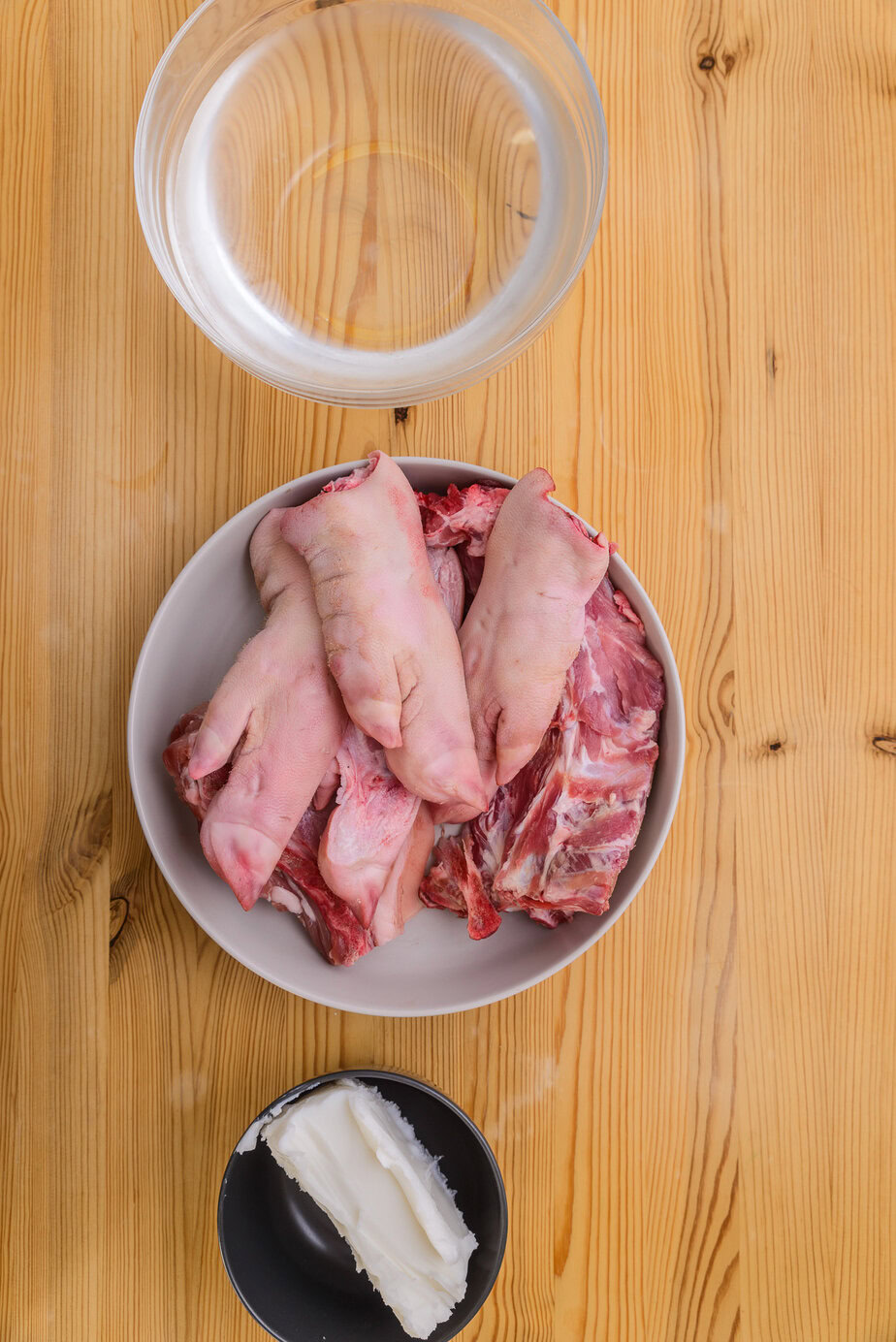
The broth relies on three cuts of pork: meaty bones (femur, neck, or back) for flavor, split pig’s feet for collagen, and back fat for richness. The ratio of meaty bones to feet matters a lot, and a butcher can split the feet in half. The noodles are thin and straight, preferably fresh.
Shio tare seasons each bowl. It starts with a dashi of kombu and niboshi (small dried sardines) infused with katsuobushi, which then gets reduced mirin and sake, salt, MSG (or salt), and usukuchi light soy sauce. It concentrates the umami of the bowl, following the principle of tare common to all ramen.

As for toppings, chashu pork is rolled pork belly braised in soy sauce, mirin, sake, and brown sugar, then glazed with a kitchen torch. The marinated eggs (ajitama) keep a runny yolk. Wood ear mushrooms (kikurage) add crunch, scallions bring freshness, and nori adds a briny note. Mayu, garlic fried until black and then blended into oil, adds a smoky, bitter flavor.
Technical Pointers for a Good Tonkotsu
The broth needs to boil hard, at a full rolling boil, for 14 hours. A mere simmer gives you a clear broth: it’s the agitation that emulsifies the fat and turns it milky. If it separates in the fridge, a quick boil just before serving or a blitz with an immersion blender re-emulsifies it.
In the bowl, use 30 ml of tare for 300 ml of broth, a 1 to 10 ratio. The noodles cook for 1 minute 30 seconds and stay firm. The work is spread over three days, and assembling the bowls on serving day takes only a few minutes.
At the Table, Hakata-Style
Tonkotsu ramen is eaten as soon as it’s served, before the noodles go soft in the hot broth. In Hakata, diners add red pickled ginger (beni shoga) at the table for acidity, along with sesame seeds and takana, spicy pickled mustard greens.
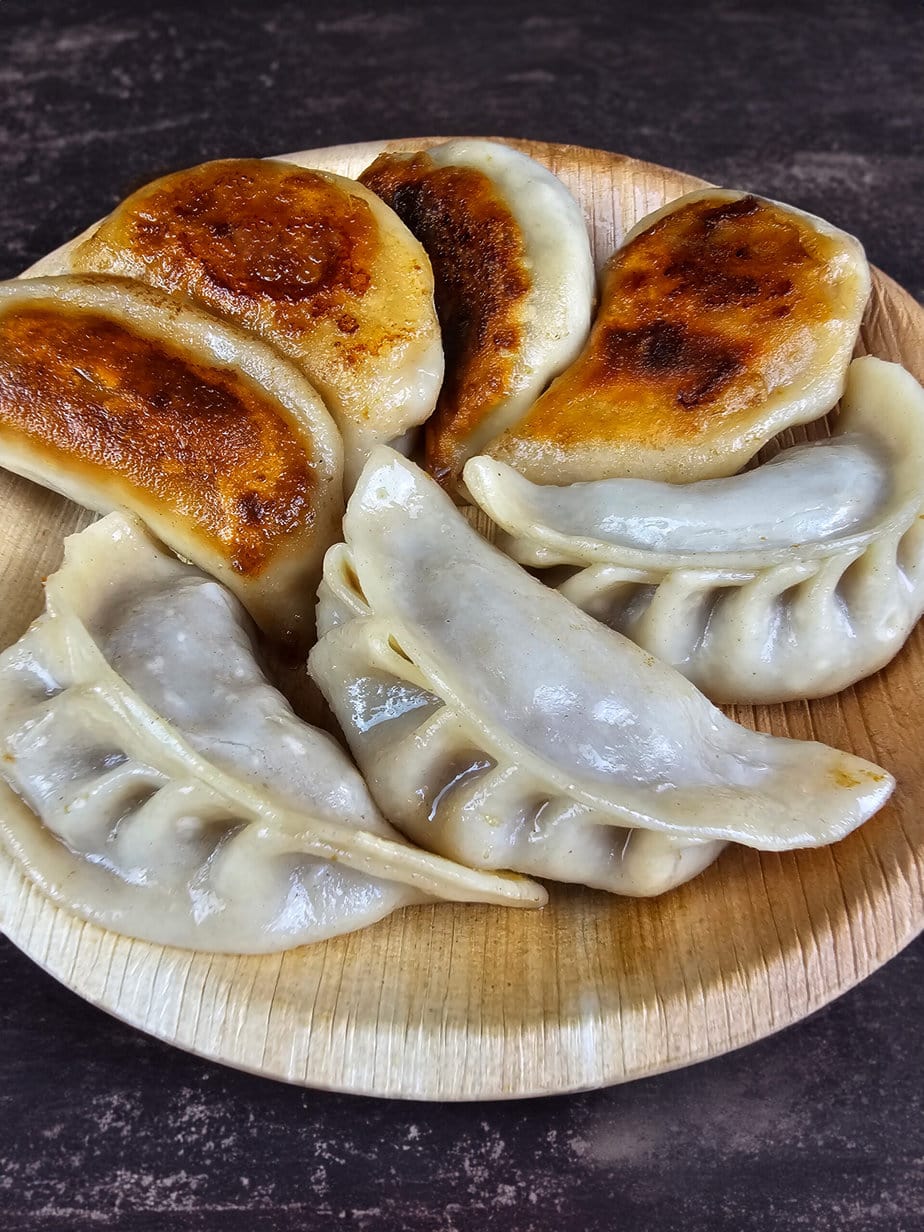
Kaedama, the second portion of noodles, works at home too: keep a little broth in the bottom of the bowl and cook a fresh portion of noodles.
Ingredients
Marinated Eggs (Ajitama)
- 10 eggs
- Water
- Japanese soy sauce, 10% of the weight of the eggs and water
- Mirin, 8% of the weight of the eggs and water
Chashu
Tonkotsu Broth
- 1 kg pork bones (femur, neck or back)
- 1 kg pig trotters, split in half lengthwise
- 300 g pork back fat
- 3 L water, plus more for topping up during cooking
- Cold water, for soaking
Shio Tare
- 10 g kombu
- 10 g niboshi (small dried sardines)
- 400 g water
- 5 g katsuobushi (dried bonito)
- 40 g mirin
- 75 g sake
- 40 g salt
- 8 g monosodium glutamate, or salt
- 45 g Japanese light soy sauce (usukuchi), regular Kikkoman soy sauce works
Mayu (Burnt Garlic Oil)
- 200 g vegetable oil
- 50 g garlic peeled
Toppings
- 100 g wood ear mushrooms dried (kikurage), thinly sliced
- 1 bunch scallions
- 4 sheets nori
Noodles
- 1.5 kg ramen noodles thin and straight, preferably fresh, in 150 g portions
Assembly (Per Bowl)
- 30 ml shio tare
- 300 ml tonkotsu broth
- 150 g noodles
- Chashu slices
- 0.5-1 marinated egg
- Wood ear mushrooms, scallions and nori
- A drizzle of mayu
Instructions
Marinated Eggs (Ajitama)
- Bring a saucepan of water to a rolling boil.Water
- Meanwhile, prick the wide end of each egg with an egg piercer.10 eggs
- Set a timer for 6 minutes and 10 seconds.
- Prepare a large bowl of ice water.
- When the water is at a rolling boil, gently lower in the eggs and start the timer.
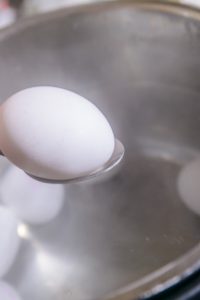
- Stir the eggs around in the water with a spoon for about 30 seconds so the air escapes and they peel more easily.
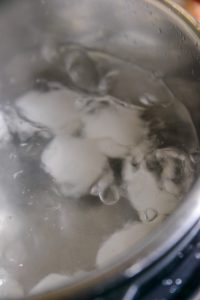
- When the timer goes off, quickly lift out the eggs and plunge them into the ice water.
- Leave them there for at least 20 minutes, until completely cold.
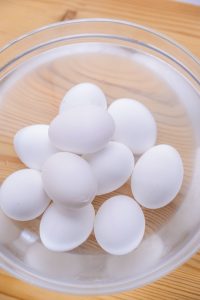
- Crack the wide end of each egg with the back of a teaspoon and remove the shell around it.
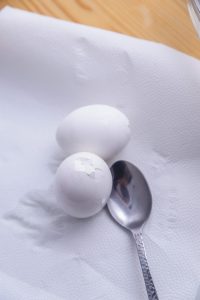
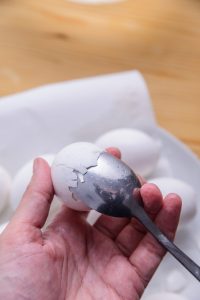
- Slide the spoon under the shell through this opening and run it around the egg to peel it cleanly.
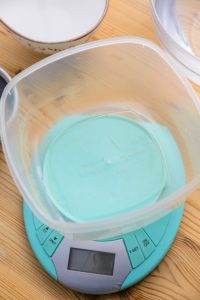
- Place the storage container on a scale and tare it.
- Put the peeled eggs in the container and add water until they are almost covered.
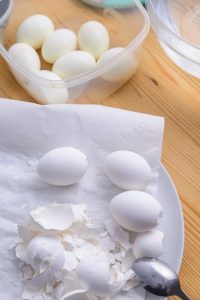
- Note the weight of the eggs and water.
- Add the soy sauce and mirin, calculated based on this weight.Japanese soy sauce,, Mirin,
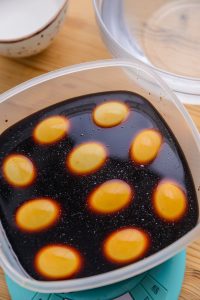
- Cover with a paper towel and refrigerate.
- Let marinate for 2 to 3 days: that’s when the eggs are at their best.
Chashu
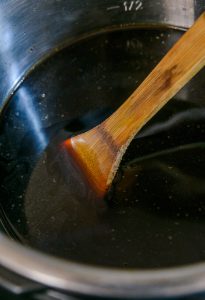
- In a stockpot, combine the water, soy sauce, mirin, sake and brown sugar.1 L water, 500 g Japanese soy sauce, 250 g mirin, 125 g sake, 100 g brown sugar
- Heat over medium heat, stirring occasionally so the sugar doesn’t stick to the bottom.
- If the pork belly is in one piece, cut it into pieces about 15 cm long.2 kg pork belly
- Roll up each piece and tie it with kitchen twine (optional step).
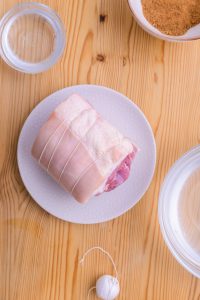
- When the liquid is simmering, gently lower in the pork belly.
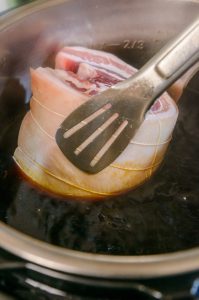
- Make sure it is fully submerged; if not, prepare a little more liquid.
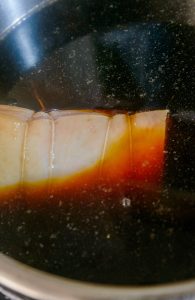
- Return to a simmer.
- Cover and cook until the meat is tender, about 2½ to 3 hours.
- Test for doneness with a skewer or thermometer: it should slide in with no resistance, which usually means an internal temperature of about 90°C.
- Carefully lift the pork belly out of the liquid and set it on a tray to cool.
- Once it reaches room temperature, cover and refrigerate it.
- Strain the cooking liquid into another saucepan.
- Bring it to a simmer over medium-high heat.
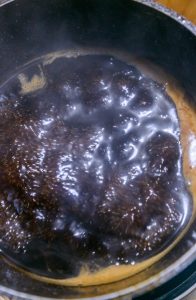
- Reduce it by half, to a glaze consistency that coats the back of a spoon.
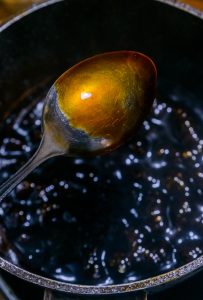
- Set this reduced liquid aside.
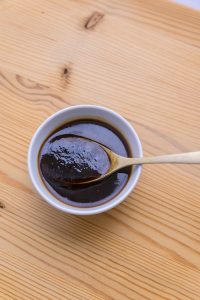
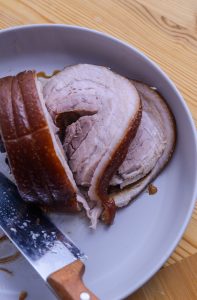
- Trim the ends of the cooled pork belly and cut it into 2 cm slices.
Tonkotsu Broth
- The day before cooking the broth, place the pork bones and trotters in a stockpot or large container.1 kg pork bones, 1 kg pig trotters,
- Cover them with cold water and let them soak overnight in the refrigerator.Cold water,
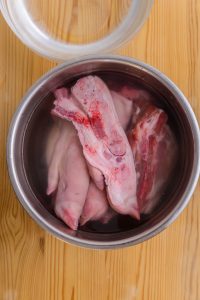
- The next day, drain the bones and trotters.
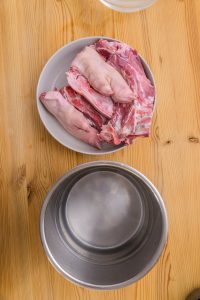
- Put them in a stockpot, cover with fresh water and bring to a boil.
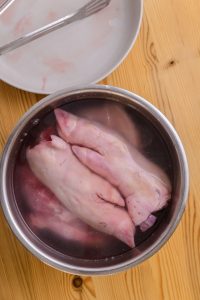
- As soon as it boils, start a 15-minute timer and reduce the heat to medium.
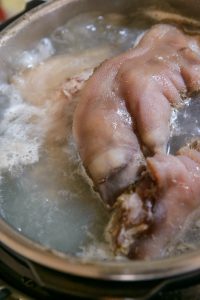
- After 15 minutes, drain the bones and trotters and discard the blanching water.
- Rinse them under cold water.
- Remove as much of the scum and dark bits clinging to the bones as possible.
- Put the blanched bones and trotters and the back fat in a clean stockpot.300 g pork back fat
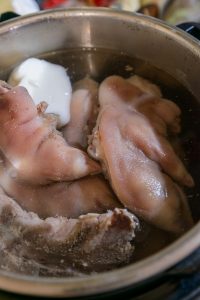
- Add the water and bring to a boil.3 L water,
- Once boiling, reduce the heat to medium, keeping it at a vigorous rolling boil with the lid on: the agitation is what makes the broth creamy.
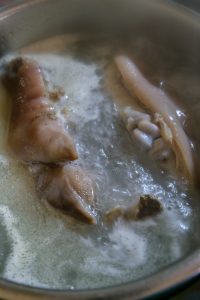
- During the first hour, skim off the scum that rises to the surface.
- Cook for 14 hours.
- Stir about once an hour so nothing sticks to the bottom.
- Top up with water as the level drops.
- After 14 hours, the bones will have broken down considerably and the broth will be milky white.
- Strain the broth into a container or another stockpot, and discard the bones and meat.
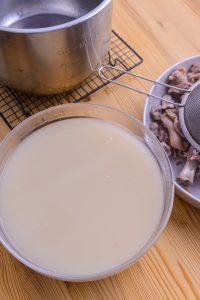
- If the broth looks a little separated, blend it with an immersion blender to emulsify it.
- Let it cool down at room temperature, then refrigerate it.
Shio Tare
- In a container or small saucepan, place the kombu and niboshi in the water.10 g kombu, 10 g niboshi, 400 g water
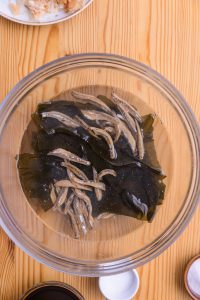
- Let soak for at least 4 hours, or overnight.
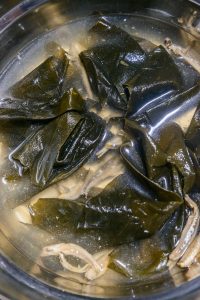
- Heat the kombu, niboshi and their soaking water to 80°C.
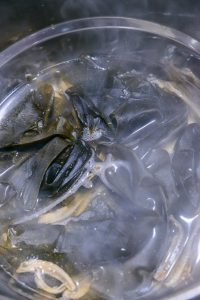
- Hold at 80°C for 10 minutes.
- Remove from the heat and take out the kombu and niboshi.
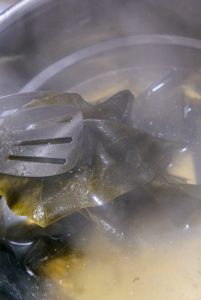
- Off the heat, add the katsuobushi and let steep for 10 minutes.5 g katsuobushi
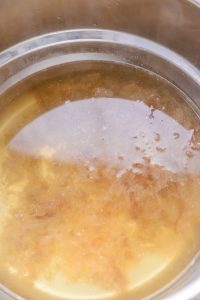
- Strain to remove the katsuobushi.
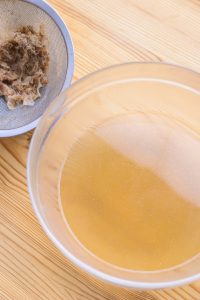
- Put the mirin and sake in another saucepan.40 g mirin, 75 g sake
- Heat over medium-high heat until simmering.
- Lower the heat to medium to cook off the alcohol and reduce by about half.
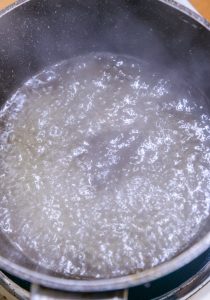
- Add the salt and MSG to the dashi and whisk until dissolved.40 g salt, 8 g monosodium glutamate,
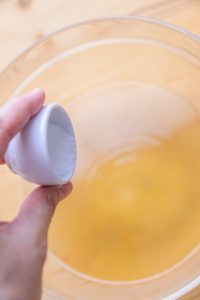
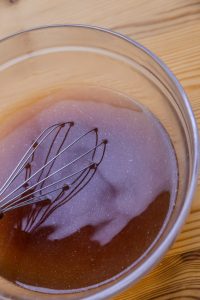
- Add the reduced mirin and sake mixture, then the usukuchi soy sauce.45 g Japanese light soy sauce
Mayu (Burnt Garlic Oil)
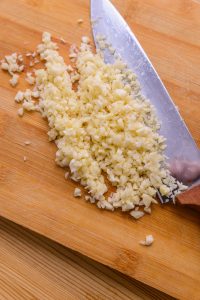
- Finely chop the garlic with a knife, or pulse it in a food processor so it doesn’t turn into a paste.50 g garlic
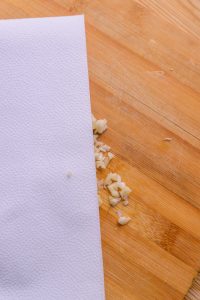
- Press paper towels onto the garlic to remove some of the moisture.
- Open the windows and turn the range hood up to full: the garlic is going to burn and smoke.
- Set up a straining station in advance: a metal mixing bowl or saucepan with a strainer set over it, and a tray lined with paper towels.
- Heat the oil to 180°C in a saucepan.200 g vegetable oil
- Add the garlic.
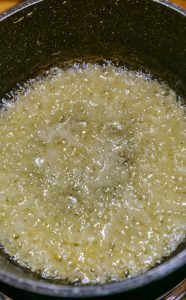
- Fry, stirring often, until the garlic is black, burnt and starting to smoke.
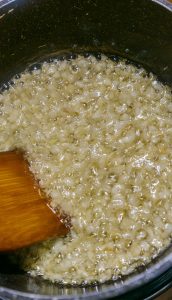
- Strain immediately.
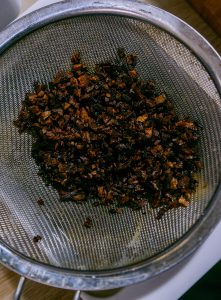
- Let the oil cool slightly: the pan should feel warm to the touch, not hot.
- First put the garlic in the blender with a little of the oil and blend on full power.
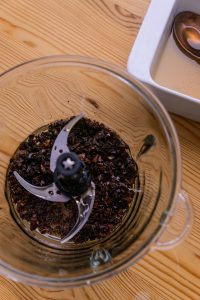
- Once the garlic is broken down into small pieces, add the rest of the oil and blend again.
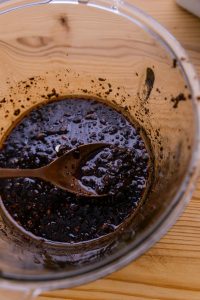
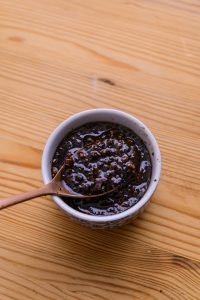
- Check by dipping in a spoon: tiny specks of burnt garlic should stay suspended in the oil.
Toppings
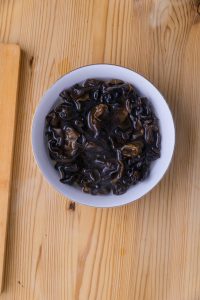
- Put the dried wood ear mushrooms in a container and cover them with water.100 g wood ear mushrooms
- Let them rehydrate overnight in the refrigerator.
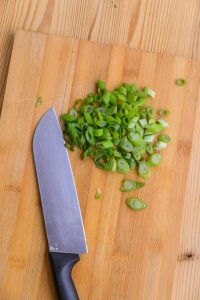
- Slice the scallions as thinly as possible.1 bunch scallions
- Cut each sheet of nori into 4 equal squares.4 sheets nori
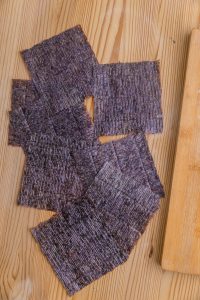
- Keep the nori in an airtight container.
Assembly
- Take all the components out of the refrigerator and keep them within reach: the ramen comes together very quickly.
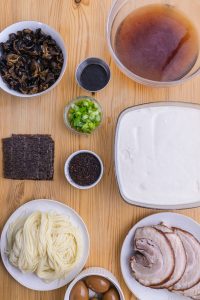
- Bring a large pot of water to a boil for the noodles.1.5 kg ramen noodles
- In another saucepan, heat the amount of broth you need over medium-high heat until it comes to a gentle boil.300 ml tonkotsu broth
- Let it bubble for a bit: the agitation brings the emulsion back together if the broth separated in the refrigerator, and a quick blitz with an immersion blender makes it nice and stable.
- Warm the reduced chashu cooking liquid in the microwave until it is runny again.
- Place the chashu slices on a baking sheet or in a frying pan.Chashu slices
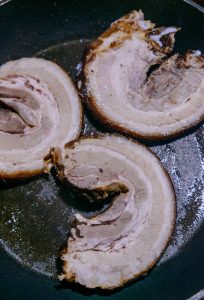
- Brush them with the reduced cooking liquid.
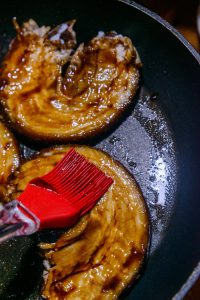
- Sear them with a kitchen torch until nicely browned, then set aside.
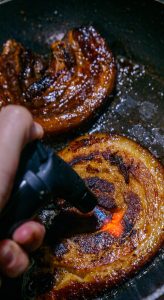
- If you like, warm the bowls by filling them with hot water, then empty them.
- Pour the tare into each bowl.30 ml shio tare
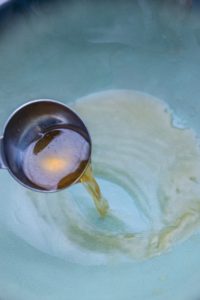
- When the noodle water is at a rolling boil, drop in the noodles, in batches if needed.150 g noodles
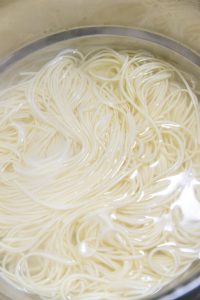
- Cook them for 1 minute 30 seconds.
- While the noodles cook, pour the hot broth into each bowl.
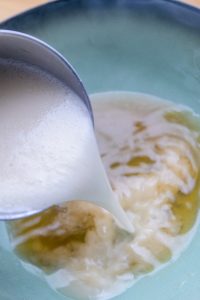
- Drain the noodles thoroughly and gently lay them in the broth.
- Fold the noodles over on themselves to form a base that holds the toppings.
- Arrange the chashu, marinated egg, wood ear mushrooms, scallions and nori.0.5-1 marinated egg, Wood ear mushrooms, scallions and nori
- Stir the mayu, as the garlic settles to the bottom.
- Finish each bowl with a drizzle of mayu.A drizzle of mayu
- Serve immediately.