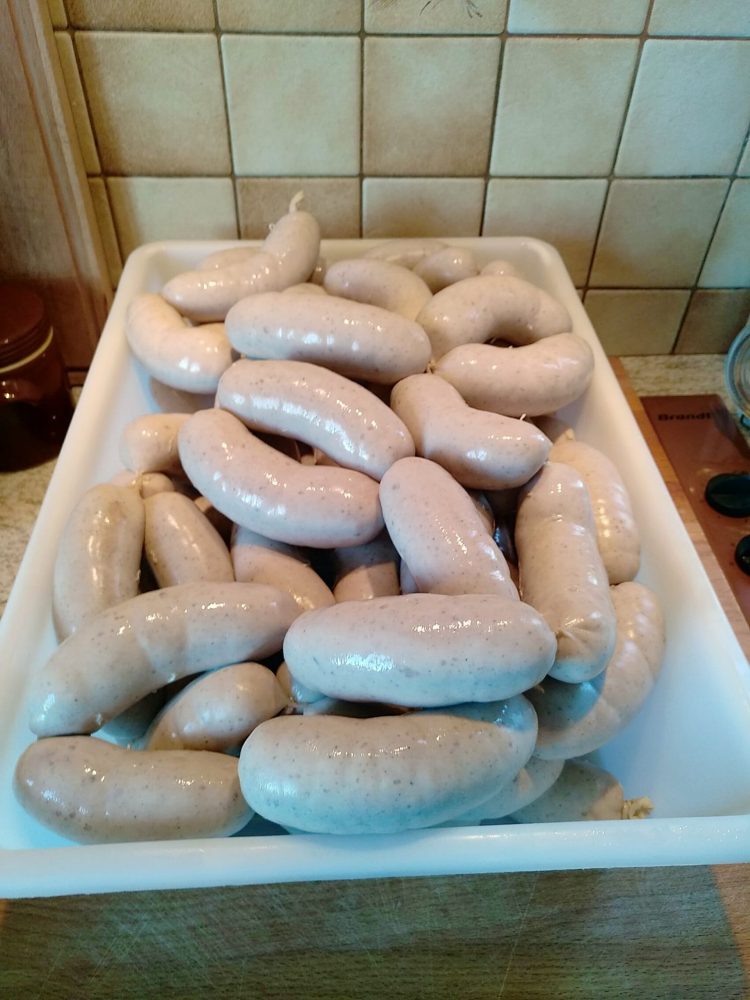
A fine-textured boudin blanc made with infused milk and port, gently poached, for holiday meals
The holidays are approaching, and a homemade boudin blanc always has its place on the table. This festive charcuterie sticks to the traditional recipe and adds port, which gives the filling a slightly sweet touch. It is easy to make but takes a little patience and precision: as with Alsatian cervelas, the texture of the filling makes all the difference to the final result. Properly poached, the boudin melts in your mouth from the very first slice.
What Is Boudin Blanc with Port?
It is a boudin blanc made with pork, milk, eggs and various seasonings, which give it its characteristic white color. Mushrooms are sometimes added, as in porcini boudin blanc.
In this version, the port goes into the filling: it enriches the flavor and brings an original, elegant note to this classic of French cuisine.
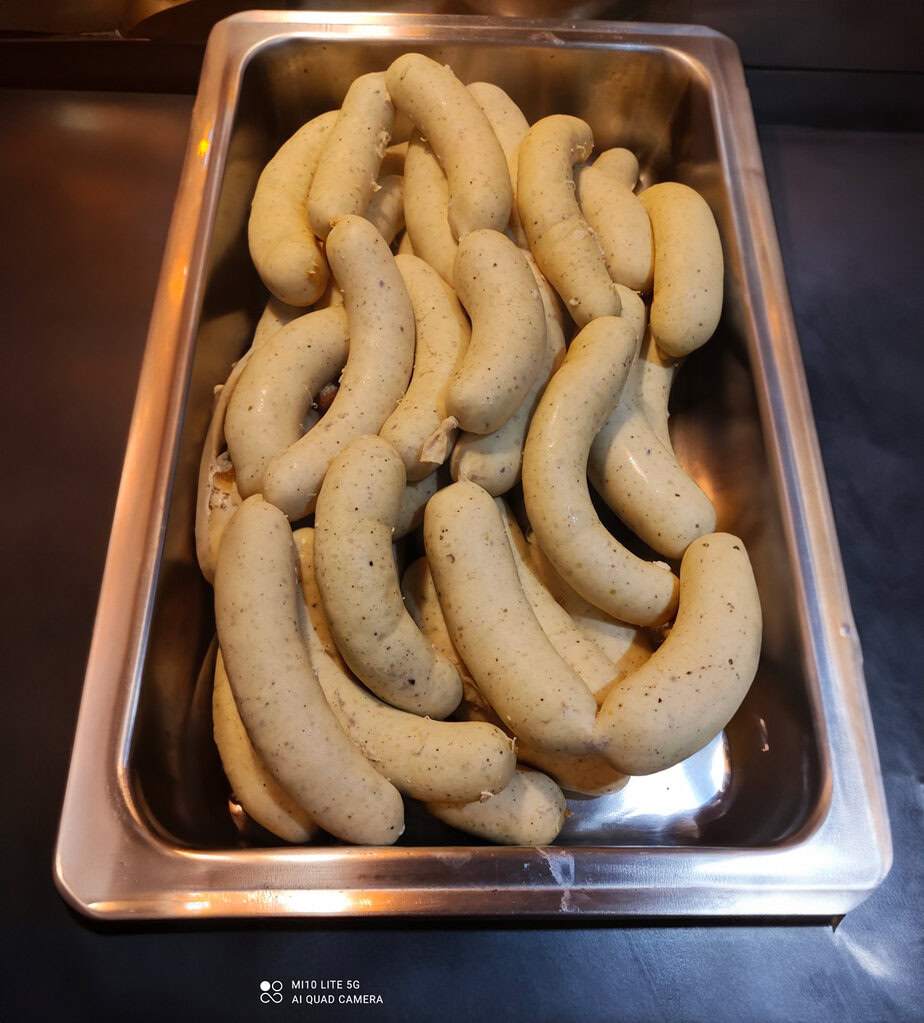
A Festive Boudin from the North and East
Boudin blanc has its origins in France, particularly in the northern and eastern regions of the country. It is traditionally eaten during the holiday season, and it stands out for its fine, tender texture.
The Main Ingredients in Boudin Blanc with Port
The filling combines lean pork, pork fat, milk, eggs, cornstarch and the port. The quality of the meat, milk and eggs matters a great deal for a flavorful boudin: choose fresh ingredients, local ones if possible.
The milk is first infused with onions, shallots, carrots, a bouquet garni, leek greens, parsley and cloves, then strained before being mixed into the ground meat.
Technical Tips for a Good Boudin Blanc
While the milk infuses, keep it at a gentle simmer, never a rolling boil, so the flavors are not spoiled. When cooking the sausages, keep the water at around 78 °C: this keeps the cooking gentle and even.
Mix the milk and port thoroughly into the ground meat until the mixture is smooth and uniform, for an even texture in the mouth. Rinse the pork casings carefully and do not pack them too tightly when filling, or they may burst during cooking.
Keep a close eye on the cooking: overcooked sausages turn dry, while undercooked ones may not hold together when sliced. As soon as they come out of the water, chill them in cold water, then hang them up to drain well, which sets the texture and prevents excess moisture.
A recipe by Gaëtan Brivot
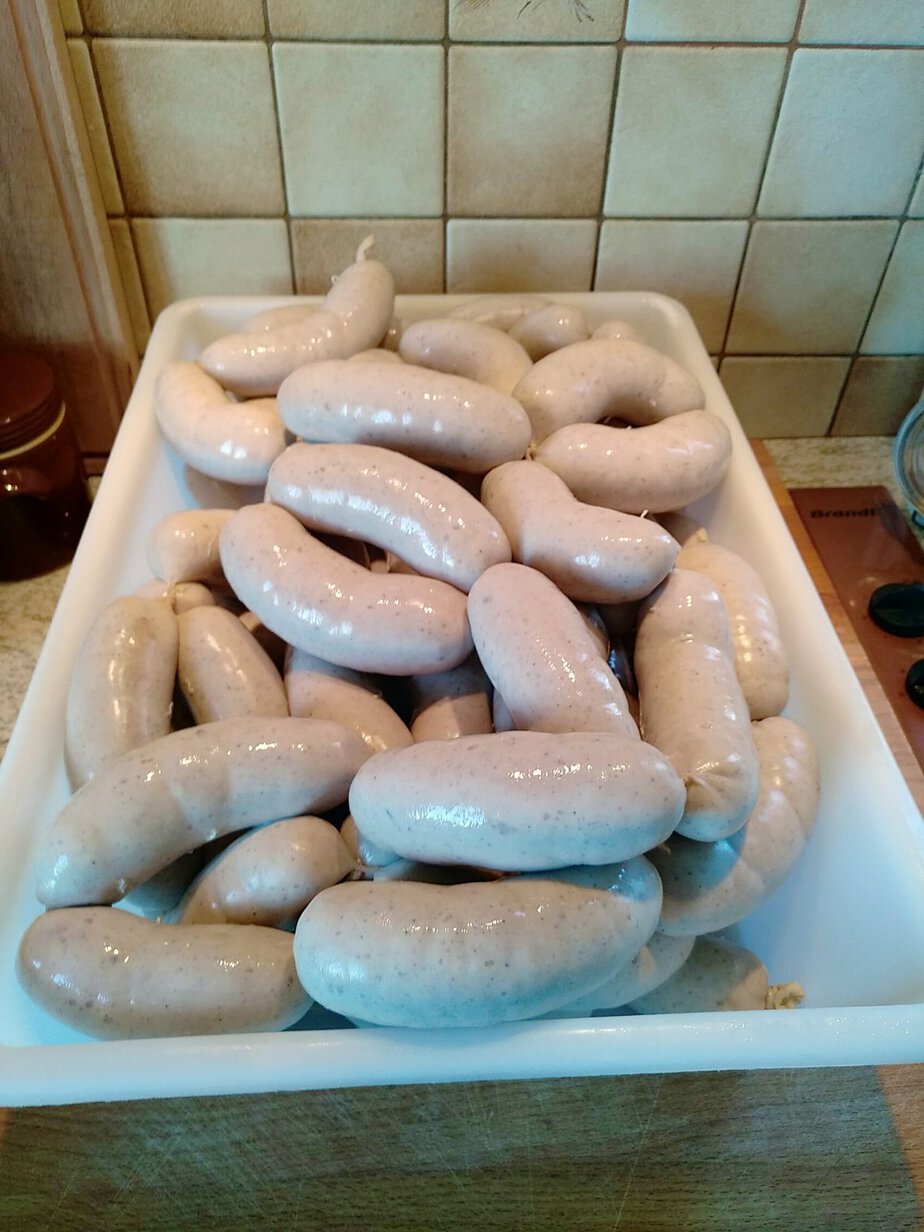
Ingredients
- 4 kg lean pork
- 2 kg pork fat
- 3.5 liters milk
- 0.5 liters port
- 2 large onions
- 4 shallots
- 600 g carrots
- 5 cloves
- 1 bouquet garni
- 200 g cornstarch
- Parsley
- Leek greens
- 800 g eggs
- 160 g salt
- 15 g pepper
- 10 g Rabelais-type fine spice blend
- Hog casings
Instructions
- Grind your meat through the finest plate of the meat grinder, passing it through twice if needed.
- Add the seasoning, eggs and cornstarch and mix.
- Bring the milk to a boil and add the onions, shallots and carrots, cut into pieces, then add the bouquet garni, leek greens, parsley and cloves and let infuse for 20 minutes at a gentle simmer.
- Strain your milk through a fine-mesh strainer, making sure the milk is at 60°C before mixing it into your meat mixture.
- Add the port and mix well.
- Stuff your mixture into the casings and form your sausages.
- Heat a stockpot of water to 90°C.
- Lower the sausages into the hot water and let the temperature drop to about 78°C, then cook for about 20 to 30 minutes.
- Remove your sausages from the water and cool them in a basin of cold water to stop the cooking.
- Hang them up and let them drain.