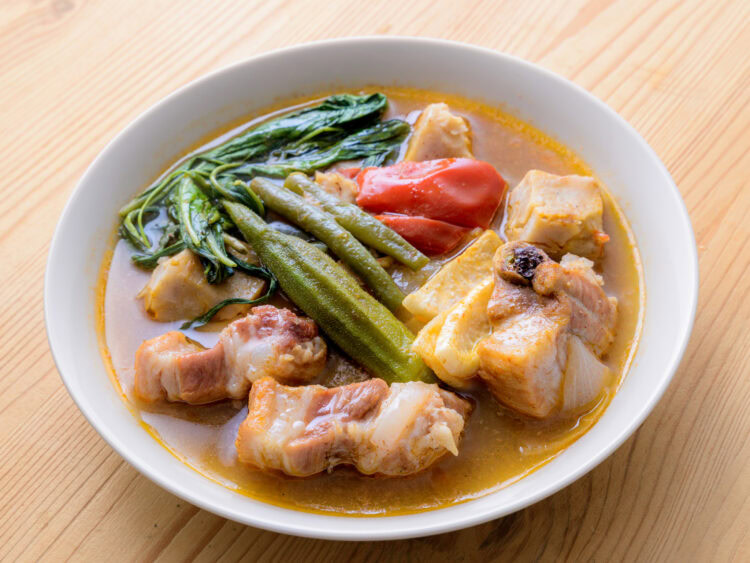
Discover Filipino sinigang, a tangy, comforting broth combining tender pork and assorted vegetables.
When the crowdsourced guide TasteAtlas crowned sinigang the best vegetable soup of 2021, Filipinos felt less surprise than a quiet sense of validation. A steaming bowl of this stew has long been the answer to a drizzly afternoon.
Tangy steam rises from a clay pot, a mound of rice waits to soak up the broth and, within reach, sits a saucer of fish sauce with calamansi. That first sip is unforgettable : mouth-puckering yet savory, bright but comforting. Its ingredient list, dictated by the seasons, reflects the nation’s spirit of improvisation. Every spoonful reveals the country’s culinary ingenuity.

From Indigenous Origins to Colonial Influences
Centuries before Spain set foot on Luzon, Austronesian cooks were already simmering meat or fish. They used bilimbi or green mango to keep food fresh longer in the tropical heat. The method became so common that the old Tagalog verb sigang simply meant “ to simmer ”.
Later, trade routes introduced tamarind, which adapted so perfectly that it now seems to grow naturally in every garden. In 1913, “ sinigang de carne ” appeared in the Spanish-language cookbook La Cocina Filipina, marking this tangy stew’s passage from oral tradition into print.
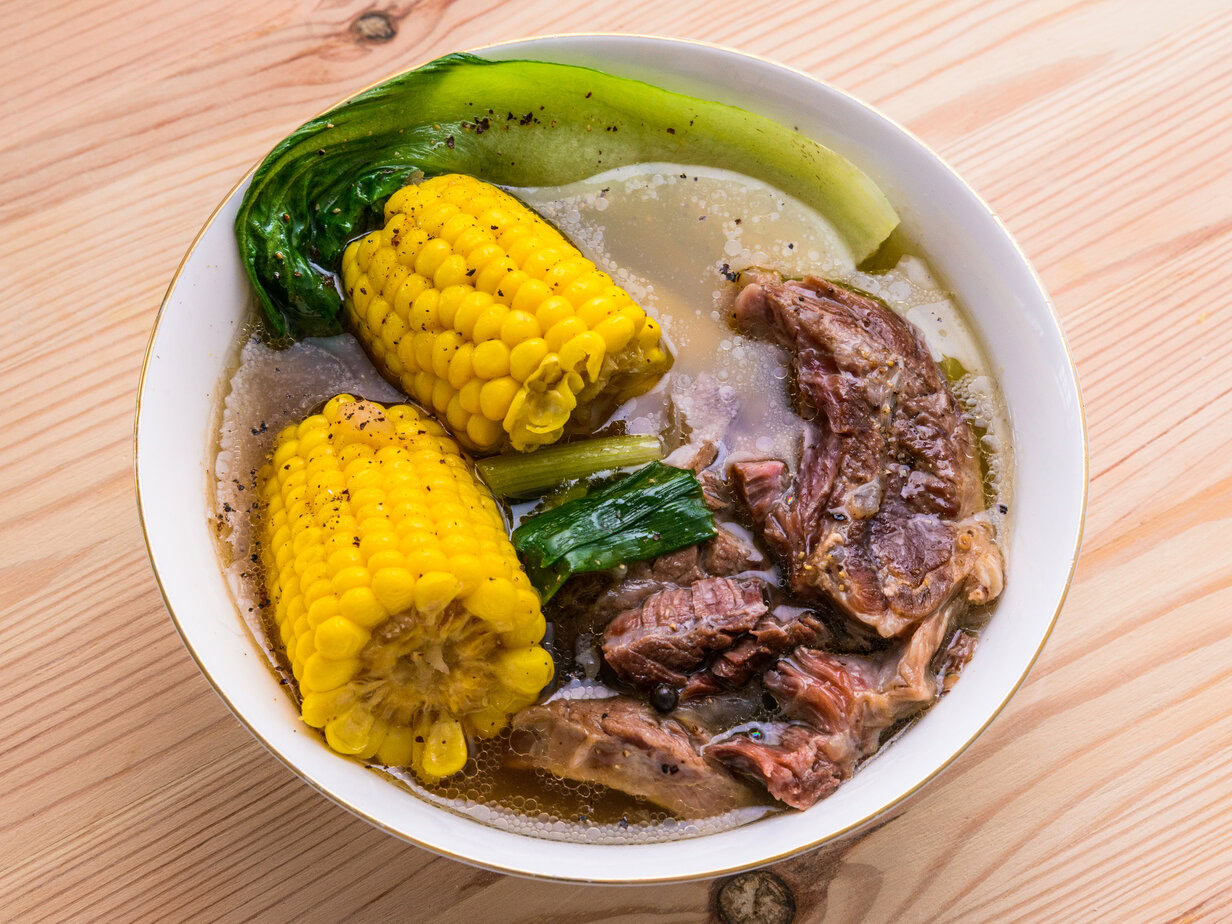
Across Southeast Asia, cousins such as Malaysian singgang or Thai tom yum reflect the same craving for lip-tingling broths. Fast-forward to the 1980s and the arrival of powdered sinigang mix : an invention that divided households between fans of convenience and purists who argued that packets were “ one-note ” compared with crushed fresh fruit. Yet whether cooked over a wood fire or whipped up after work, the dish’s signature remains unmistakable : a clear, bright broth with a bold, refreshing sourness.
What Defines “ Sinigang ” ?
The Essentials
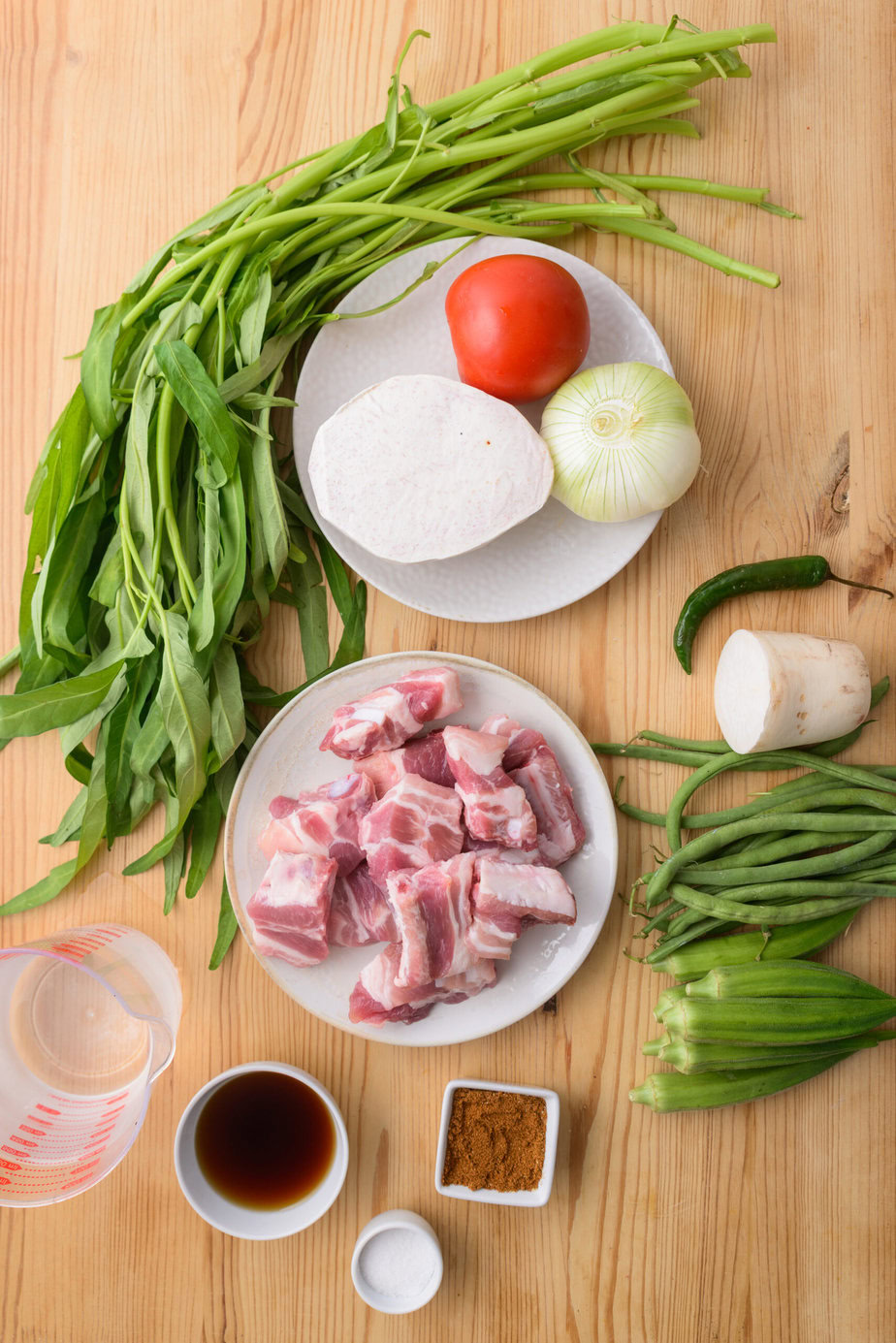
Pampaasim. Tamarind is the benchmark, prized for its sourness with a hint of sweetness. But regional cooks readily replace it with kamias, guava, calamansi or even libas leaves, though not vinegar, whose bite belongs to another dish, paksiw.
Main Protein
Pork ribs are among the most common choices. Beef shank, meanwhile, produces a richer broth. Shrimp or bangus (milkfish) make for lighter pots along the coast. Whatever the choice, the bones are kept in to add depth.
Market Vegetables
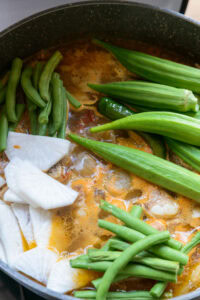
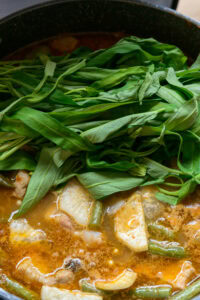
Tomatoes and onions melt together to provide umami ; taro adds body ; daikon soaks up the tangy broth ; okra and yardlong beans add crunch ; finally, a handful of kangkong leaves tossed in at the last minute dots the surface with green. Seasoning remains minimal but precise : fish sauce rather than salt, a green chili for gentle heat, sometimes a pinch of sugar to round off the edges.
True to its rustic roots, sinigang skips the sautéing. Ingredients are layered into simmering liquid, the firmest first and the leaves last, so that the broth stays clear and the vegetables vibrant. Achieving what many Filipinos call asam-kilig: a sourness so perfectly pitched that it makes you squint before breaking into a smile, remains the unspoken goal.
Today’s time pressures also play a part : most urban kitchens keep a packet of tamarind powder for emergencies. But using the fresh version has its advantages : fruitier top notes, a slight cloudiness, and a depth that packets only hint at.
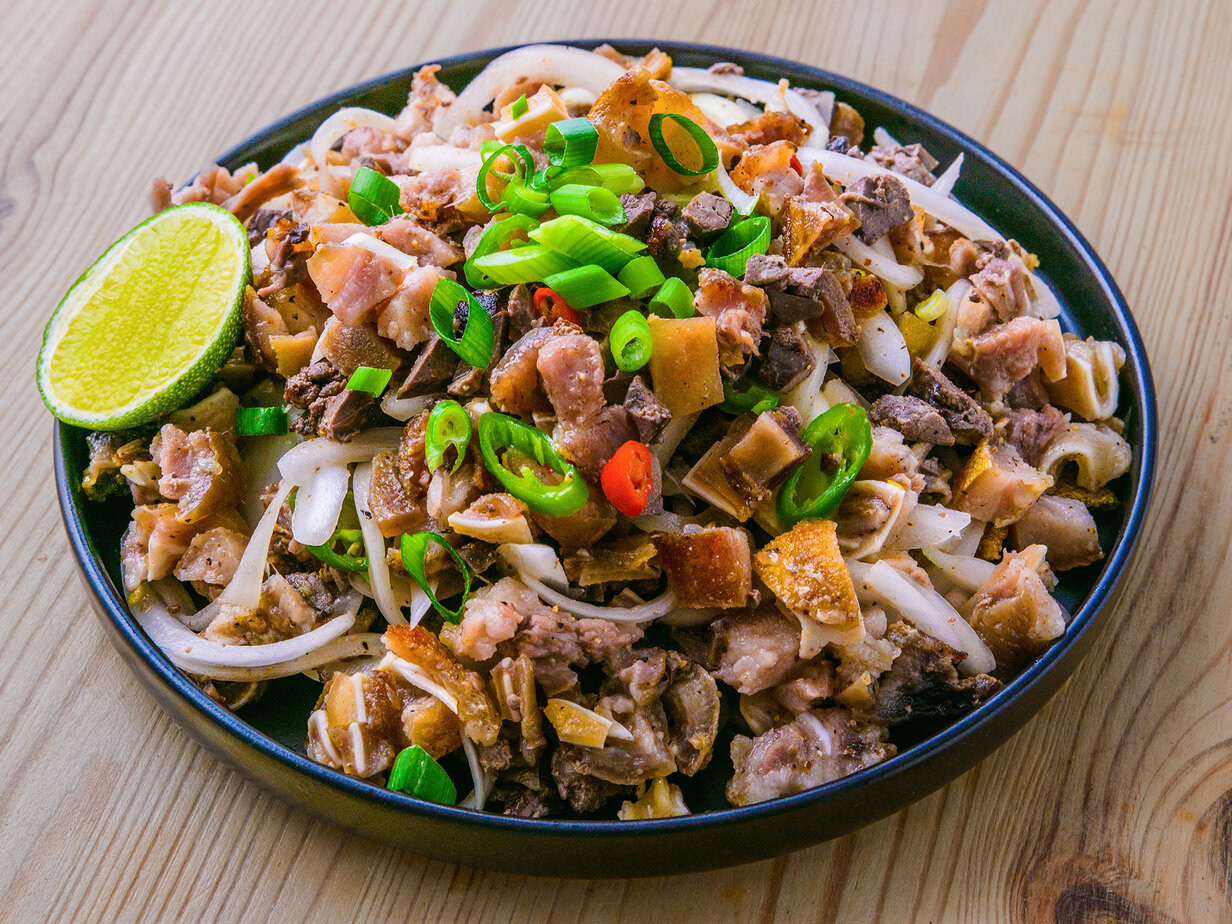
Regional Variations of Sinigang
In the Tagalog heartland, the archetypal sinigang na baboy arrives tamarind-brown and decidedly sour. Batangas fishermen favor kamias to soften the aroma of freshly caught tulingan.
Farther north, in Pampanga, the broth turns pale and slightly cloudy : this is bulanglang, where ripe guavas blur the line between sweet and sour. To the west, in Iloilo, beef shank meets batuan fruit in kansi, a marrow-rich hybrid that locals insist is neither bulalo nor sinigang while being both. Cebuanos offer linarang : reef fish simmered with kamias, coconut milk and fermented black beans.
The diaspora improvises too : spinach replaces kangkong in Western gardens. Chefs have even separated the flavor from the soup, sprinkling fried chicken with sinigang seasoning.
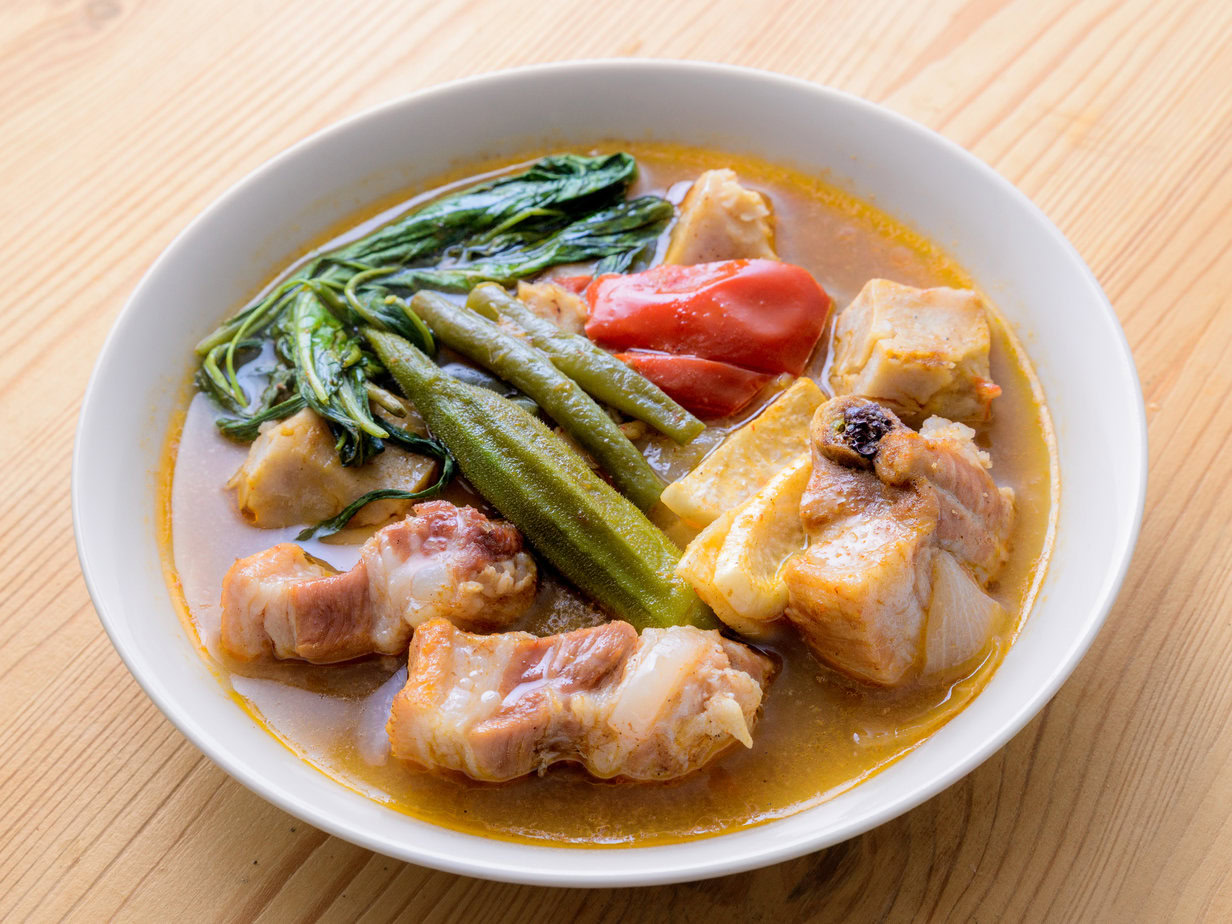
Ingredients
- 500 g pork cut for sinigang (ideally large, well-marbled cubes, with or without bone)
- water to cover and cook
- 1 tomato medium, quartered
- 1 white onion small, quartered
- 250 g taro cut into chunks
- 4 tablespoons sinigang mix with gabi
- 1 long green chili siling pangsigang
- 2 tablespoons fish sauce patis
- 1 small handful long beans sitaw, cut into 5 cm lengths
- 100 g white radish labanos, sliced
- 1 small handful okra okra
- 2 handfuls water spinach leaves washed and trimmed
- salt
Instructions
Preparation
- Place the pork, tomato, and onion in a pot, add enough water to fully submerge the meat, bring to a boil, then simmer 1 h to 1 h 30, skimming the surface and adding water as needed.500 g pork, 1 tomato, 1 white onion, water
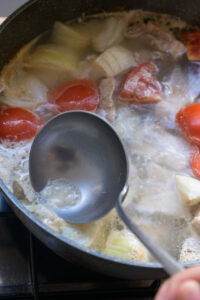
- After 30 minutes of cooking, add the taro, then when the meat is very tender, stir in the sinigang mix and the green chili; boil for 5 minutes.250 g taro, 4 tablespoons sinigang mix with gabi, 1 long green chili
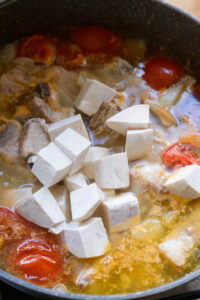
- Add the long beans, radish, and okra, and boil for another 5 minutes.1 small handful long beans, 100 g white radish, 1 small handful okra
- Season with fish sauce, add the water spinach leaves, and cook 2–3 minutes more; adjust the salt to taste.2 tablespoons fish sauce, 2 handfuls water spinach leaves, salt
Notes
Nutrition
Culinary Sources
• File: Sinigang na baboy.jpg – Wikimedia Commons (English)
• The History of Sinigang: The Philippines’ Unofficial National Dish? – Foodicles (English)
• Sinigang, the Popular Filipino Dish with Uniquely Sour Notes – Tasting Table (English)
• Sinigang – Wikipedia (English)
• Why Sinigang – Scribd (English)
• “ Hungry to learn about our roots… ” – Facebook (English)
• Our Philippine Trees: The Souring Agents of Sinigang – Pinoy Trees (English)
• The Allure of Early Philippine Cookbooks – VERA Files (English)
• Sinigang – Wikipedia (Tagalog)
• Sinigang na Baboy Recipe – Panlasang Pinoy (English)
• Bulanglang na Bangus and Hipon – Kawaling Pinoy (English)
• Sinigang nga Pasayan (Hipon) – Flavours of Iloilo (English)
• Question About Sinigang… I Normally Make It with a Mix – Reddit (English)
• Best Pork Sinigang with Sampalok Recipe – Pepper.ph (English)
• History of Sinigang – Taylor Maighdlin (English)
• Get to Know Ilonggo Soups and the Fruit That Gives Them Their Sour Kick – GMA News Online (English)
• “ Contrary to popular belief… ” – Philstar on Facebook (English)
• Chef Explains Why There Is No Sinigang sa Batwan in Iloilo – Philstar.com (English)
• Linarang – Wikipedia (English)
• Is Your Filipino Food Authentic? – Sharwin Tee (English)
• Kangkong or Petsay in Sinigang? – Reddit (English)
• Sinigang As Is, with Patis or with Bagoong? – Reddit (English)