


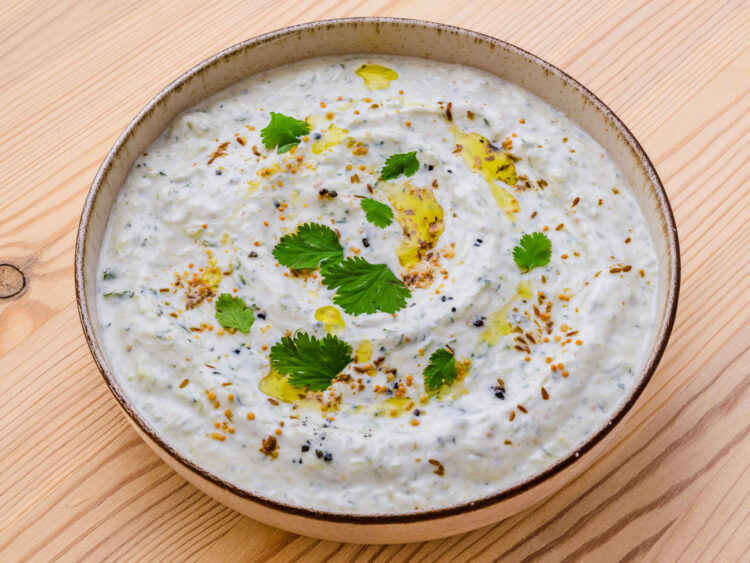
An ultra-fresh, creamy cucumber raita, fragrant with spices and perfect with naan, rotis, or rice.
Spoonful by spoonful, chilled dahi brings a creamy, bright, tangy texture. Mint adds freshness, cilantro brightens everything, and toasted cumin brings a warm, nutty depth.
A traditional cucumber raita needs neither sugar nor an overly thick texture. Its balance comes from unstrained dahi, cucumber that is grated and carefully squeezed, bhuna jeera, and kala namak. In its ancient roots, as in the Pahadi tradition, raw rai adds a brief, direct heat that hits the nose, reminiscent of horseradish or wasabi.
What is raita?
Raita holds a special place on the South Asian table: it is not simply a sauce, a salad, or something made only for dipping, but a balancing condiment. It is served with biryani, kebabs, hot parathas, or chapati.
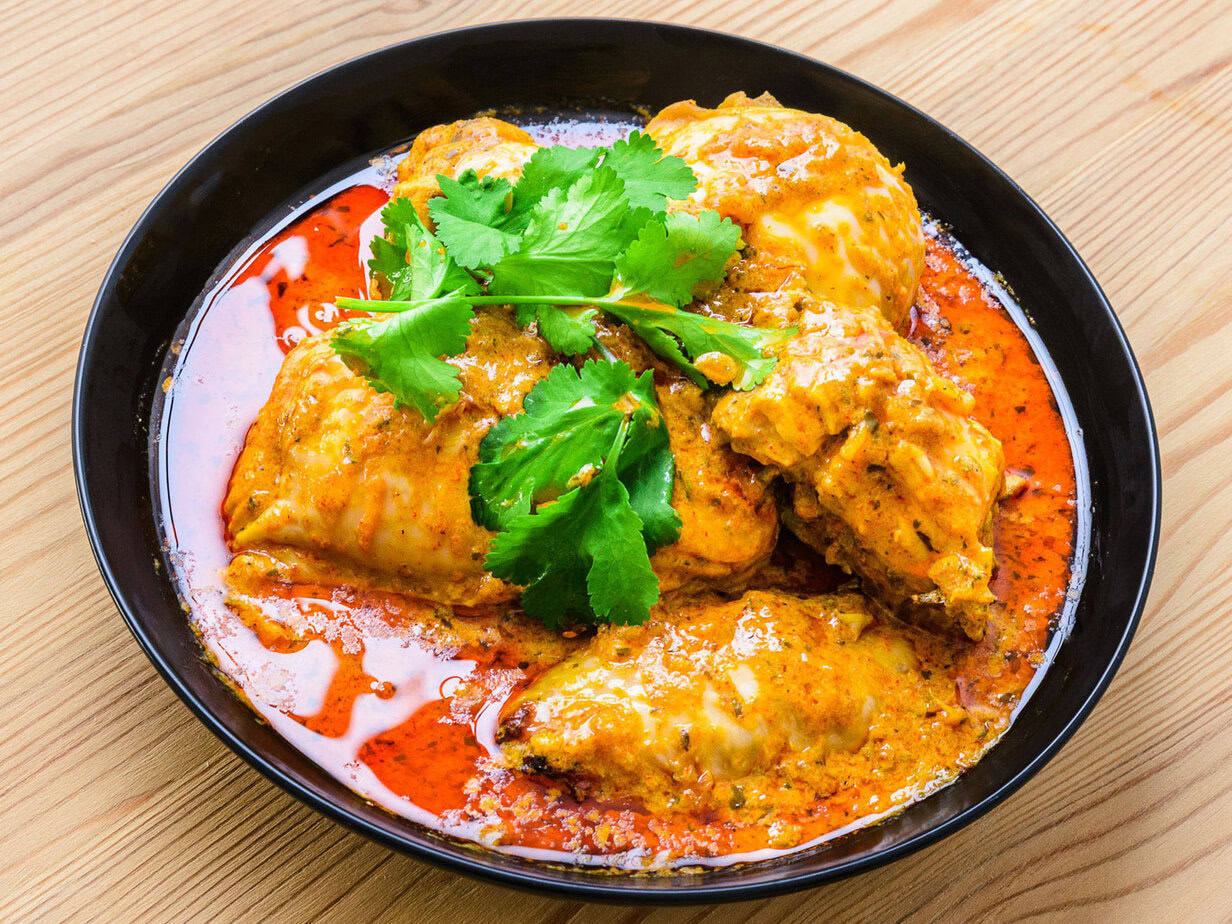
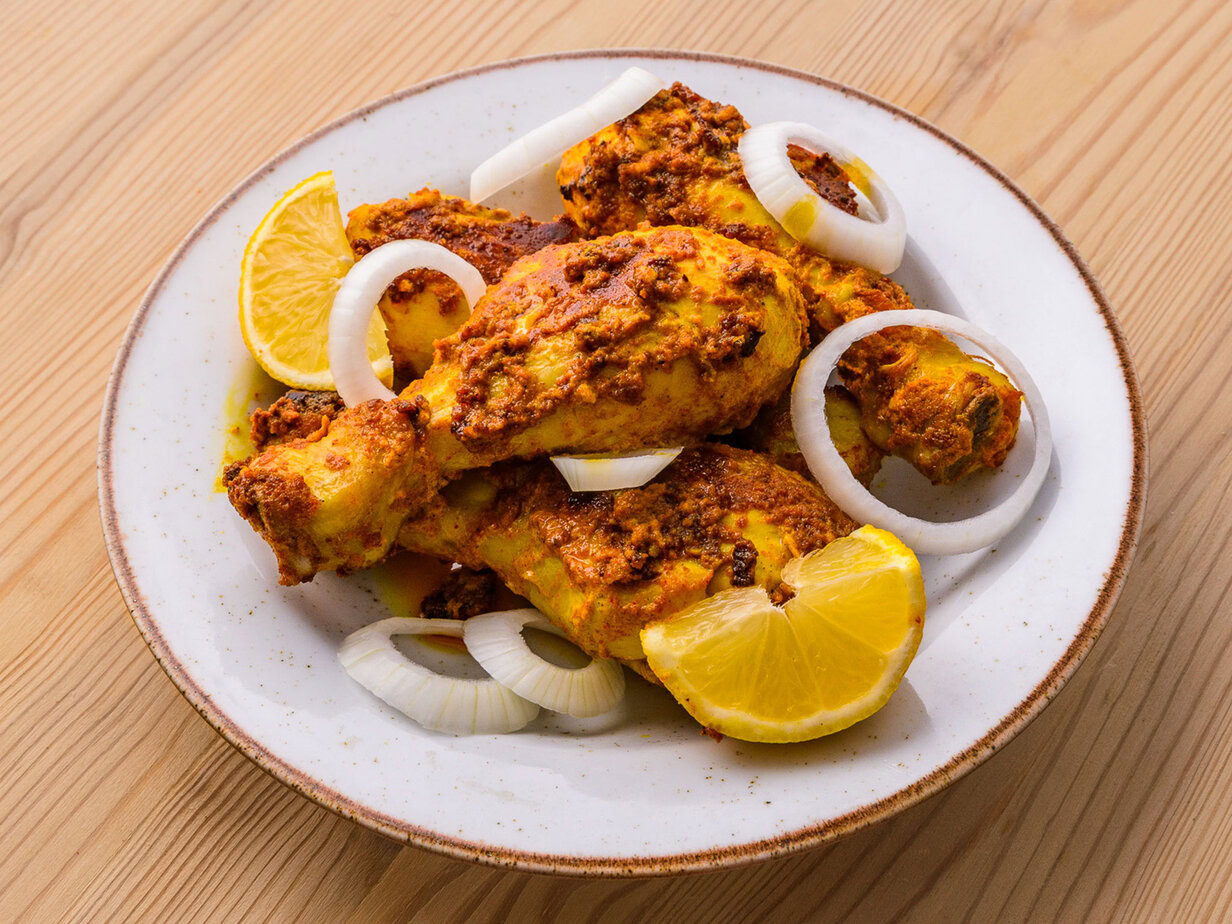
It can also balance spicy dishes, such as chicken tikka masala, or even chicken satay skewers. Its purpose is not to smooth everything into blandness, but to make the heat feel cleaner and better balanced.
Its name offers a clue to its older seasonings. “Raita” is linked to rājikā or rai, black mustard, and to tiktaka, meaning “pungent, bitter, strong.” According to this linguistic interpretation, it was a preparation seasoned with mustard. That detail matters: before raita came to be seen as a mild restaurant accompaniment, it could also have a pronounced, nose-tingling heat.
The classic base is dahi, an Indian fermented milk traditionally made from whole cow’s or buffalo milk, inoculated by back-slopping with a culture from a previous batch.
Unstrained, looser and tangier than Greek yogurt, it gives raita a smooth, fluid, creamy texture. If you use Greek yogurt, loosen it with water or milk.
Use about one part liquid to nine parts yogurt, then whisk vigorously to restore the consistency of dahi. Add kala namak, with its sulfurous note, finely ground toasted cumin, mint, and cilantro. In the most traditional savory versions, no sugar is added.
Origins of Raita
The history of raita can be pieced together from clues. It does not appear clearly in the great Sangam corpora and is absent from some classic Mughal texts ; this absence should be read as a clue rather than as proof. Its low profile suggests an everyday preparation based on fermented milk, perhaps a domestic one, long kept at the margins of court cuisines.
A first solid milestone appears in the 12th century in the Mānasollāsa, a vast Sanskrit encyclopedia whose Annabhoga section is devoted to food. The work was composed by King Someshvara III of the Kalyani Chalukyas, who ruled over the Deccan, in present-day Karnataka.
There we find mention of a “Rayatha.” In related dairy preparations from the same medieval context, cultured curd, black salt, cumin, and coriander already appear.
In the foothills of Uttarakhand, Pahadi kheere ka raita preserves this use of mustard. The cucumber, ideally a Pahadi kheera, is peeled, cut lengthwise, seeded, grated, and then squeezed firmly.
It is then folded into dahi with ground raw rai, turmeric, and, depending on the traditional recipe, garlic, green chili, mint, and cilantro. The resting time is not incidental: it allows the mustard to release its volatile heat and meld with the dahi.
In the agricultural plains of Uttar Pradesh and Bihar, Sannata raita, a traditional recipe now almost forgotten, represents another variation. Much thinner, close to a spiced chaas, it is distinguished above all by dhungar.
In this technique, a small unglazed terracotta lamp, heated until red-hot, is drizzled with mustard oil and filled with whole cumin and hing. It is then placed in the covered dahi so the smoke can infuse it.
Raita does share similarities with tzatziki and mast-o-khiar, but its logic is different: mustard, toasted cumin, black salt, and Ayurvedic balance give raita its own identity. The proteins in dahi, especially casein, capture some of the capsaicin, limit its contact with pain receptors in the mouth, and help carry it away from the palate ; the effect is stronger with full-fat dahi, which is richer in fat.
Main ingredients in cucumber raita
Dahi is the base. Its richness in milk proteins, especially casein, as well as the fat it contains when made with whole milk, does more than give an impression of freshness: it affects the sensation of heat, while its lactic acidity sharpens the flavors. It should be loose, fresh, and fluid, never dense. That said, dahi is not always easy to find, so you may often need to make do without it.
Cucumber brings water, crunch, and green freshness, but it can also dilute the mixture. When grated and squeezed firmly, it keeps its texture without releasing excess juice once salted. This step preserves the yogurt’s body and prevents an overly liquid raita from separating on the plate.
In both the etymology and Pahadi versions, rai, raw ground black or yellow mustard, plays a central role. It brings a wasabi-like heat that hits the nose and lifts the dahi without weighing it down.
Bhuna jeera, cumin toasted until dark and fragrant, adds roasted, earthy warmth without grassy bitterness. Kala namak brings sulfurous, almost mineral salinity, heightening the acidity of the fermented milk.
The herbs add aromatic freshness. Mint cools and perfumes ; cilantro ties together the milk, spice, and cucumber with its lemony, peppery note. A fresh green chili, or a touch of chili powder, can increase the heat, but the overall seasoning should stay measured, since raita often accompanies dishes that are already highly spiced. Turmeric, common in Pahadi versions, gives a warm yellow color and an earthy nuance. A final drizzle of raw mustard oil reinforces the mustard note in Himalayan versions ; black pepper, meanwhile, brings a rounder warmth when the chili is kept subtle.
Authenticity markers and pitfalls to avoid
At the table, raita should be served cold, smooth, and silky: fluid enough to coat yellow rice, but structured enough not to separate or weep onto the plate. It is a natural match for biryanis, kebabs, samosas, and golden parathas.
It can also mellow spicy curries, such as Thai red curry or Thai green curry, and temper the heat of Sichuan chili oil. Its role is practical: lighten richness, soften the burn of capsaicin, refresh the palate, and prepare you for the next bite.
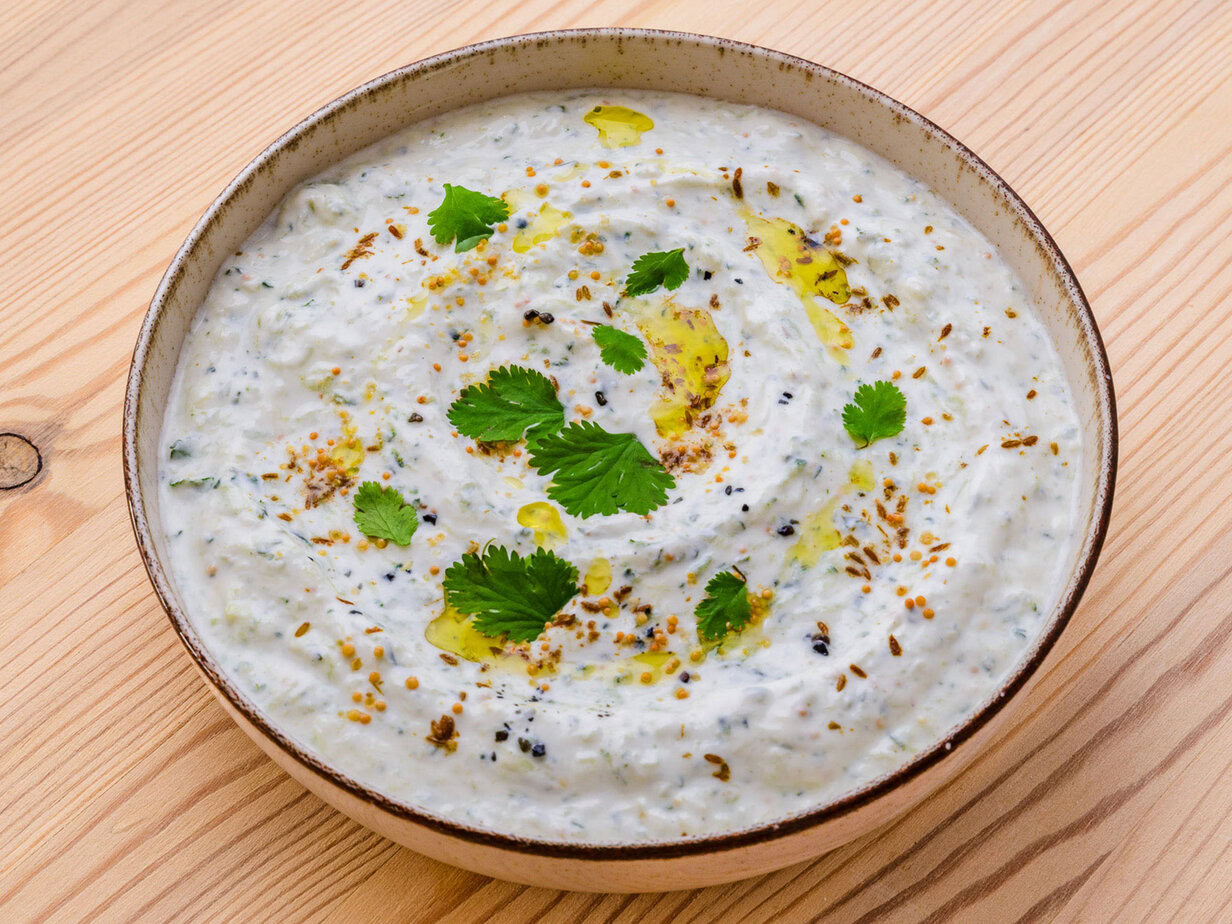
Ingredients
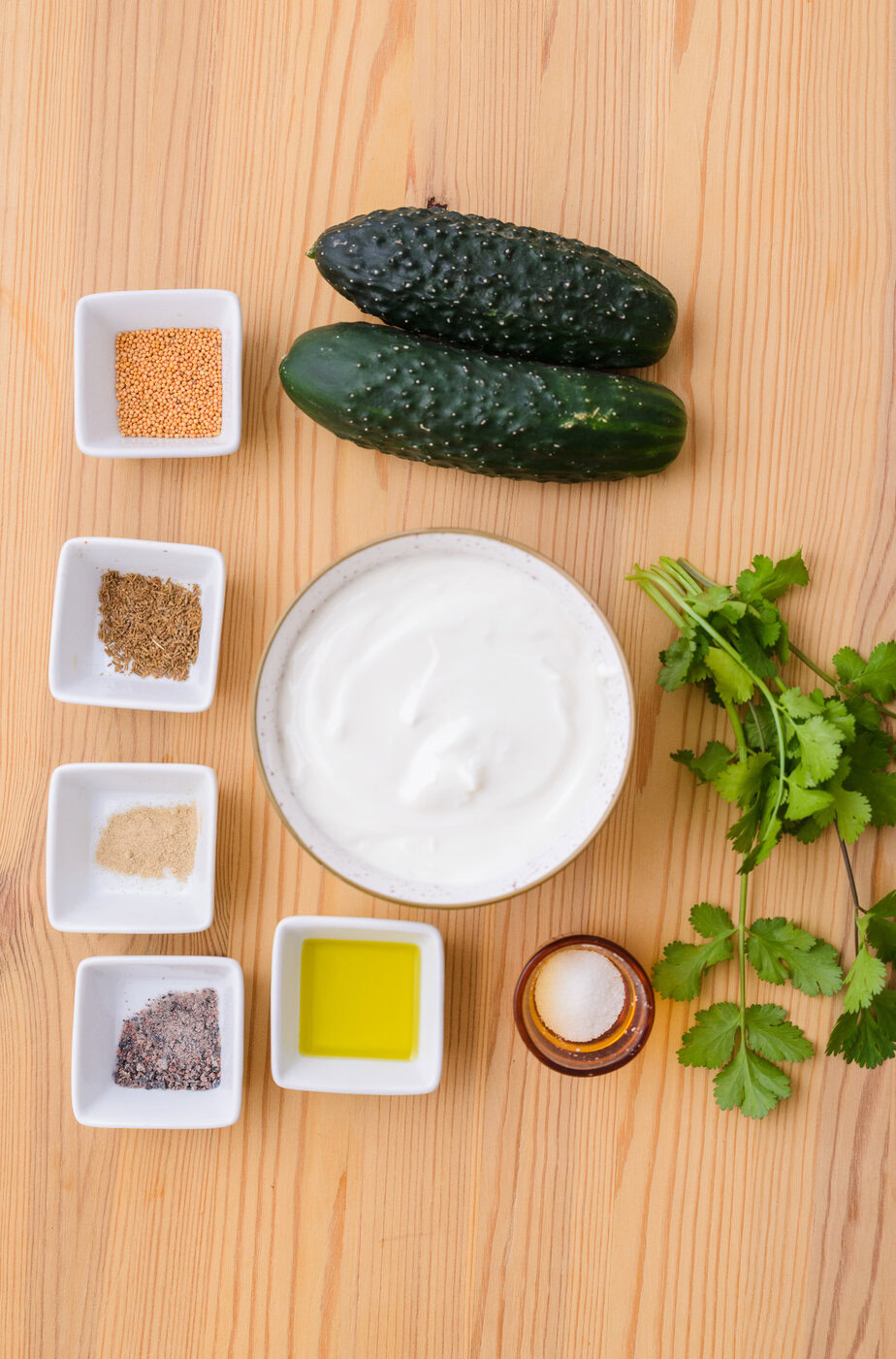
- 230 g plain yogurt
- 2 cucumbers
- 1 teaspoon yellow mustard seeds (lightly crushed) légèrement écrasées
- salt (to taste) selon le goût
- 0.25 teaspoon black salt
- 0.25 teaspoon ground cumin
- 1 teaspoon mustard oil (heated, then cooled) chauffée puis refroidie
- 0.25 teaspoon white pepper (ground) moulu
- 1 teaspoon fresh cilantro (finely chopped) finement hachée
- naan (for serving) pour accompagner
Instructions
Preparation
- Whisk the yogurt in a bowl until smooth, then set aside.230 g plain yogurt
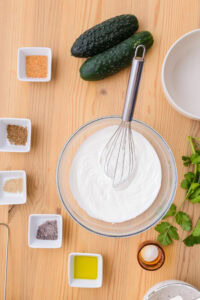
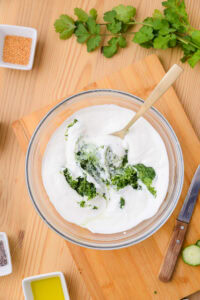
- Wash and grate the cucumbers, squeeze out the excess water, then fold them into the yogurt.2 cucumbers
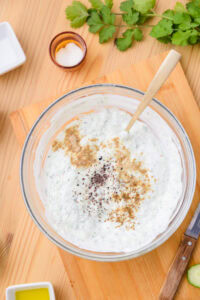
- Add the salt, black salt, ground cumin, and ground white pepper to the yogurt, then mix well.salt (to taste), 0.25 teaspoon black salt, 0.25 teaspoon ground cumin, 0.25 teaspoon white pepper (ground)
- Lightly crush the mustard seeds, then stir them into the yogurt.1 teaspoon yellow mustard seeds (lightly crushed)
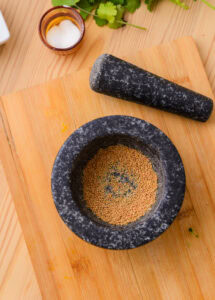
- Stir well, then transfer the cucumber raita to a serving bowl.
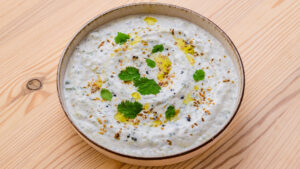
- Heat the mustard oil, let it cool, then drizzle 1 teaspoon over the top.1 teaspoon mustard oil (heated, then cooled)
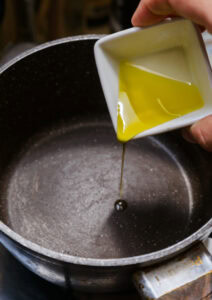
- Serve with naan.naan (for serving)
Notes
- For a thicker, less watery raita, lightly salt the grated cucumber, then squeeze it thoroughly before adding it to the yogurt.
- If the mustard oil tastes too strong, reduce the amount or replace it with a neutral oil.


Merci pour cette recette de raita au concombre, elle m’a été vraiment utile et les explications sur le dahi et les épices m’ont aidé à obtenir une texture bien équilibrée 😊