Planning a trip to Phuket takes more thought than you might expect. When should you go? What budget should you realistically plan for? How do you get around an island with virtually no public transport? This guide breaks it down with real prices and warnings drawn from the experience of recent travelers. For an overview, also check out our complete guide to visiting Phuket, which covers beaches, excursions and life on the island.
When to Go
Phuket’s climate follows a simple pattern: dry season, hot season and monsoon. But the difference between a trip in January and a trip in September is significant, and it goes beyond just rain.
High season (December to March)
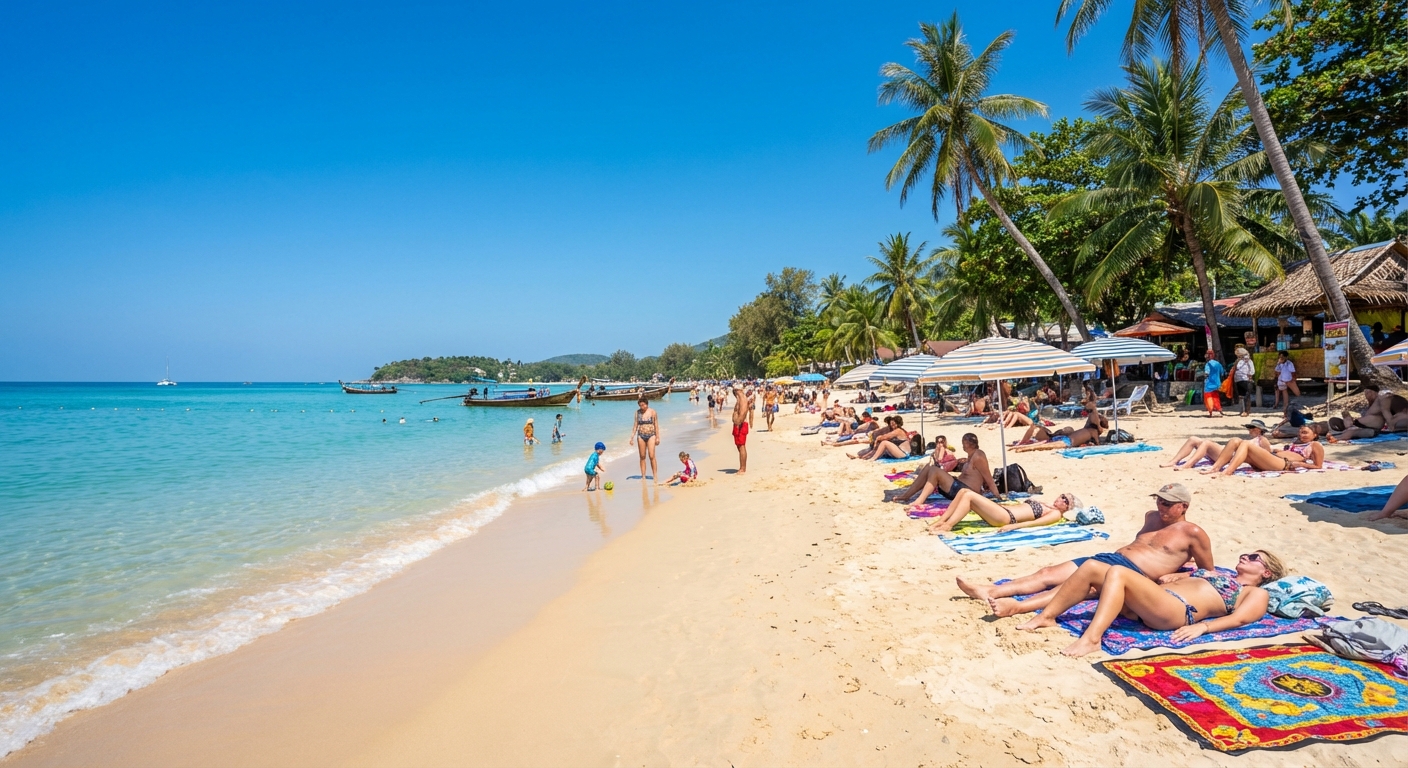
This is the best time to visit Phuket. Clear skies and calm seas for enjoying beaches and island-hopping excursions. It is also the most expensive and most crowded period.
If snorkeling at the Phi Phi Islands or diving off the west coast is on your list, these months offer the calmest waters. The trade-off: hotel prices soar and beaches fill up.
Hot season (April to May)
April is grueling. Temperatures easily exceed 35°C with oppressive humidity, and the only relief comes from Songkran, the Thai water festival, in mid-April.
May marks the transition to the rainy season. Showers become more frequent but take the form of heavy, brief downpours rather than continuous drizzle.
Prices drop significantly. If you can handle the heat, April and May offer deserted beaches and genuine bargains on accommodation.
Monsoon season (June to October)
This is where things get nuanced. From June to August, showers are regular: typically 30 to 60 minutes of intense rain followed by sunshine. You can absolutely have a great trip. Beaches are quiet, prices are low, and many travelers appreciate the restored calm.
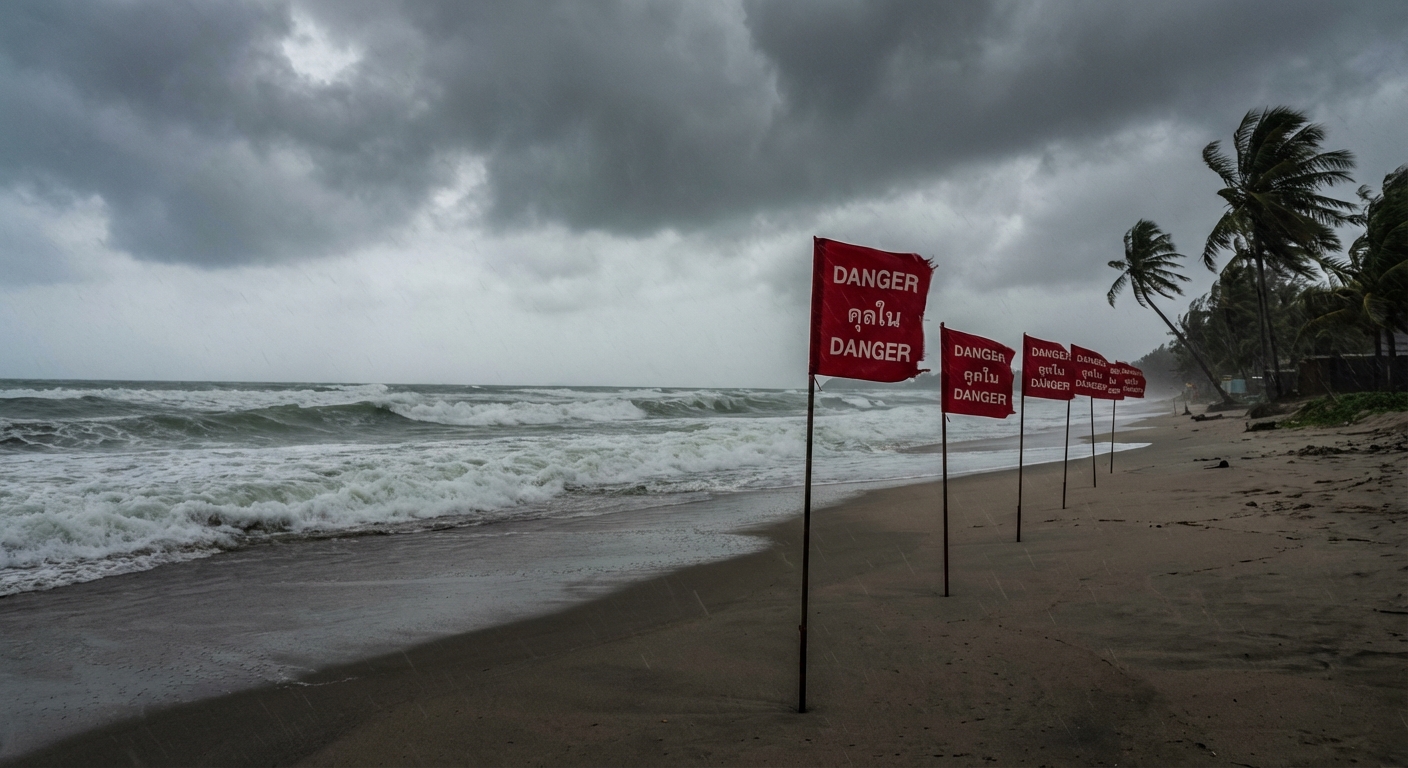
However, the sea on the west coast becomes rough. Red flags are regularly raised on Patong, Kata and Karon beaches, which means: swimming prohibited.
September is the wettest month and the worst time to visit Phuket if the beach matters to you. Dangerous rip currents and large waves make water activities impossible. Ferries to neighboring islands are often canceled. Avoid this month unless you are coming solely for food and culture.
Late October is what regulars call the sweet spot. Rain decreases, prices have not yet climbed back up, and you enjoy near-high-season conditions at low-season rates. One traveler on Reddit summed it up as: “high-season vibes at low-season prices.”
Shoulder season (November)
Weather clears quickly in November. High-season rates start returning but have not yet peaked. A good compromise if you want decent weather without the full-season crowds.
A tip for low season
If you travel between May and October, choose a hotel with a good pool. The sea will be too rough on many days, and the pool will become your main swimming spot.
When it rains, there are plenty of alternatives: the Aquaria aquarium at Central Phuket Floresta mall, affordable VIP cinemas, long Thai massage sessions, or a stroll through the Sino-Portuguese architecture of Phuket Old Town.
Visa Requirements for French Citizens
France is on Thailand’s visa exemption list. French passport holders can enter without a visa for tourist stays. The standard exemption allows a 30-day stay, although Thailand has periodically extended this to 60 days (check the current policy before booking).
Your passport must be valid for at least six months beyond your arrival date.
Immigration officers may ask for proof of a return flight (a return ticket or a ticket out of Thailand). Some airlines also check this at boarding. If you do not have a fixed departure date, a low-cost onward ticket booking will save you complications at the check-in counter.
No specific vaccinations are required to enter Thailand, but travel insurance is strongly recommended. More details in the health section below.
Getting to Phuket from France
Phuket International Airport (HKT) receives direct flights from several Asian hubs. From France, you will most often transit through Bangkok (Suvarnabhumi or Don Mueang), Doha, Dubai or Singapore. Airlines such as Thai Airways, Qatar Airways, Emirates and Singapore Airlines serve these routes.
Prices departing from Paris typically range from 400 to 700 EUR round trip in economy class, depending on the season and how far in advance you book. High-season flights (December to February) are at the upper end. Booking two to three months ahead generally gets you the best fares during peak season.
If you transit through Bangkok, you can take a domestic flight to Phuket (about 1 hour, 1,500 to 3,000 THB one way, or 40 to 80 EUR, with AirAsia, Nok Air or Thai Lion Air) or drive down, which takes 10 to 12 hours and only makes sense if you want to make stops along the way.
Detailed Budget: What Phuket Actually Costs
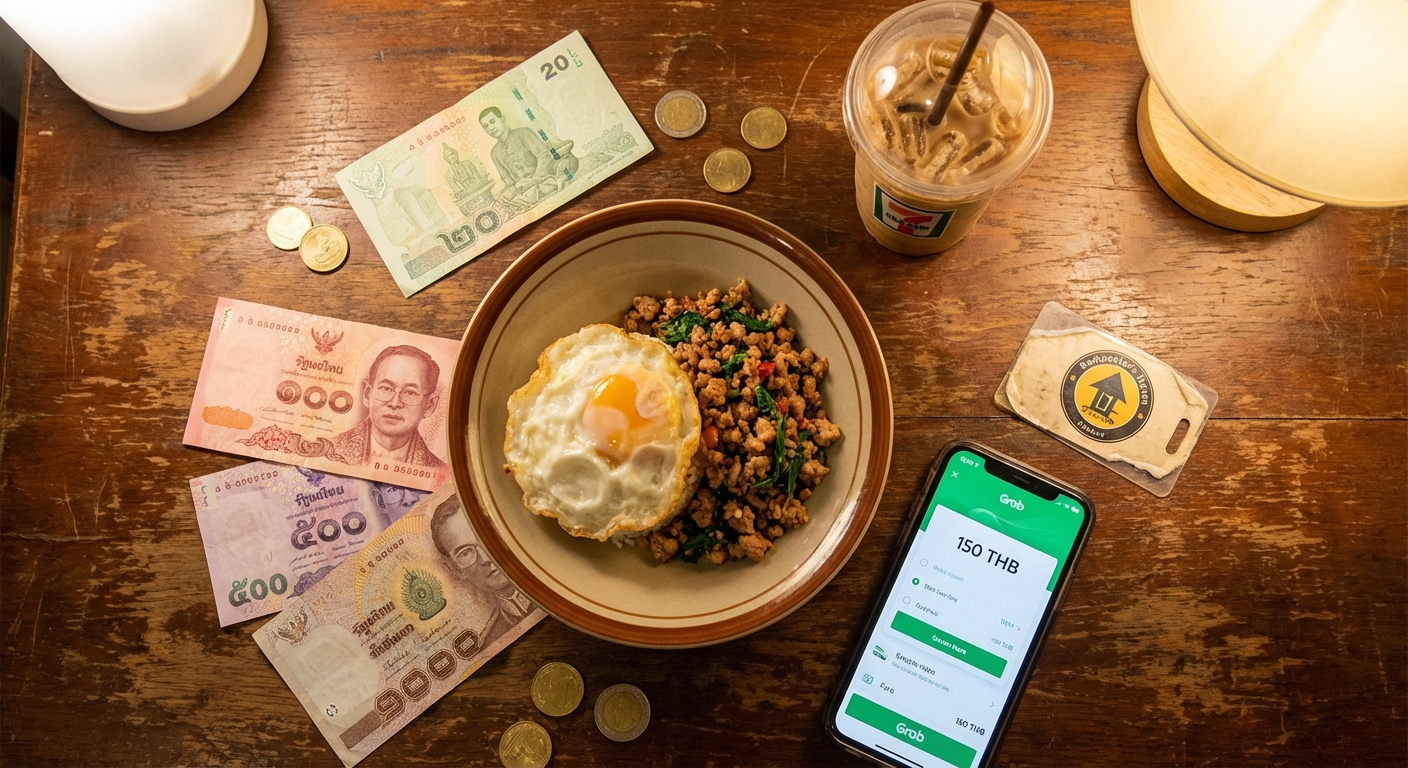
One of the most common misconceptions about Phuket is that everything is cheap. Experienced travelers describe “two Phukets” when it comes to prices. There is the local Phuket, where you ride a scooter, eat at open-air food stalls, and buy your beers at 7-Eleven. And there is the tourist Phuket, where you sit in air-conditioned restaurants, take tuk-tuks everywhere, and order cocktails at beach clubs.
The gap between these two realities is striking.
Daily expenses (excluding accommodation)
A budget traveler spending 1,000 to 1,500 THB per day (about 26 to 40 EUR) can get by with street food, free beaches and minimal alcohol. In practice: pad thai from a street stall, no cocktails and getting around on foot or by Smart Bus.
A mid-range traveler will spend 2,500 to 3,500 THB per day (65 to 90 EUR). This covers meals at sit-down Thai restaurants, the occasional cocktail, ride-hailing for transportation, and one or two paid activities like an island boat trip or a diving excursion.
If you are going upscale, expect 5,000 THB and above per day (130+ EUR) for fine dining, beach clubs, private transfers, and all the activities you want without counting.
Food costs in detail
Street food and local canteen dishes cost 50 to 80 THB per plate (1.30 to 2 EUR). This means pad kra pao, som tam or rice with grilled meat. A meal at a sit-down Thai restaurant runs 100 to 400 THB depending on the place (2.60 to 10 EUR).
Night markets also offer excellent value, with for example 15 to 20 freshly shucked oysters for about 70 THB and fruit milkshakes for 50 THB. Eating street food is one of the best ways to save money, and our Phuket food guide lists the best spots.
Western food is often more expensive than in France. Imported ingredients (cheese, wine, beef) are heavily taxed, so a pizza or burger easily costs 300+ THB in a restaurant (8+ EUR). If you crave Western food, expect to pay European prices or more.
7-Eleven deserves a special mention. It is the budget traveler’s best friend in Thailand. Beer costs 50 to 60 THB (compared to 80 to 120 in a bar), grilled sandwiches are cheap, and water costs next to nothing. Many travelers grab a drink there before heading out for a night on Patong’s bar strip.
Activity prices
A diving excursion costs 2,000 to 3,000 THB (52 to 78 EUR). Visiting an ethical elephant sanctuary costs about 2,500 THB (65 EUR). Find all the activities and excursions in Phuket in our dedicated guide. Island-hopping excursion prices vary widely, but here is a useful tip: book through local kiosks rather than via Viator or TripAdvisor. You will pay 30 to 50% less, and you can negotiate in person.
ATMs and money tips
Thai ATMs charge a fixed fee of about 220 THB (about 6 EUR) per withdrawal, on top of any fees from your own bank. Withdraw the maximum allowed amount (usually 20,000 to 30,000 THB) each time to minimize fees.
Better yet: bring euros in cash and exchange them at a SuperRich bureau (look for the green or orange signs). Their rates are consistently better than banks and ATMs.
Getting Around the Island
Transport is the number one surprise expense in Phuket. Unlike Bangkok with its BTS, MRT and cheap taxis, Phuket has virtually no public transport. This catches many first-time visitors off guard. Your transport costs depend heavily on where you stay; choosing the right neighborhood matters when booking your accommodation.
Ride-hailing apps
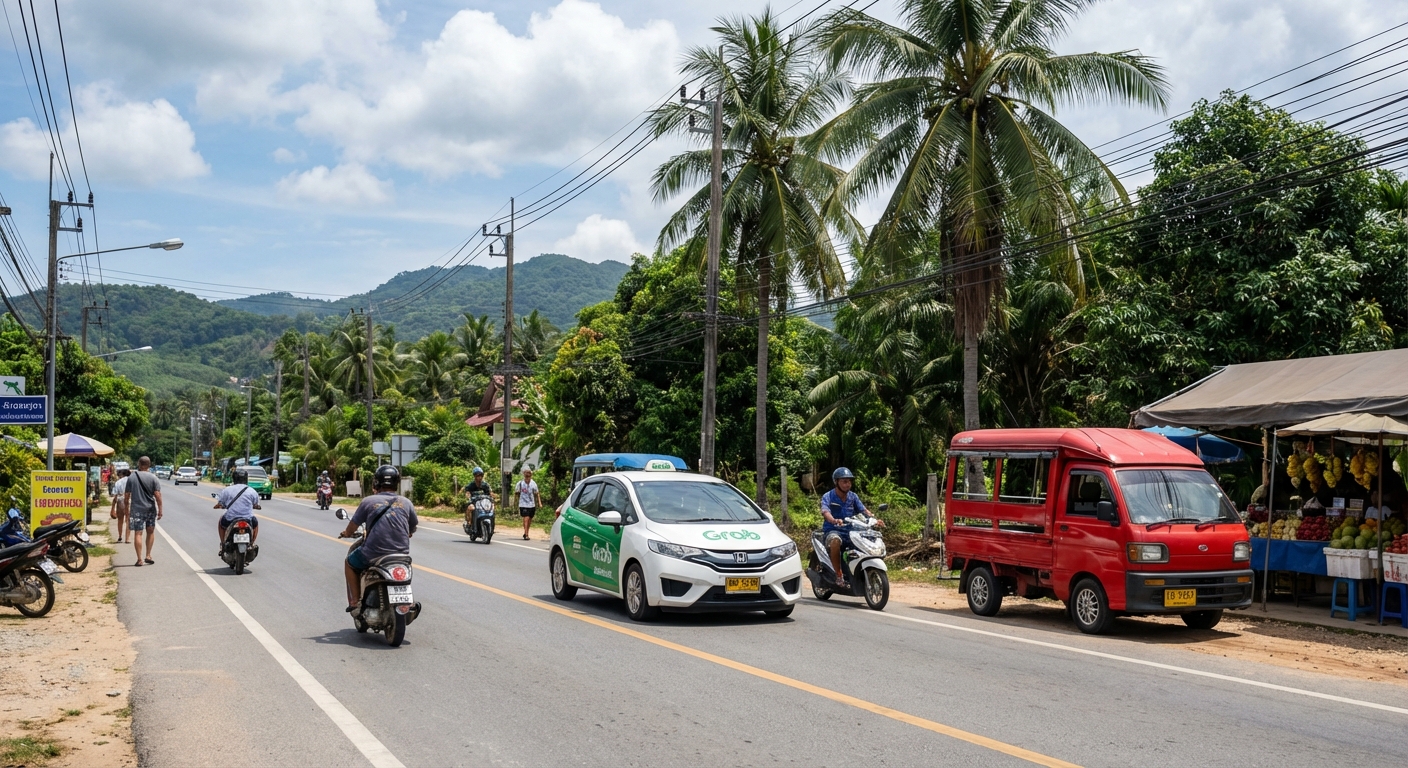
Download three apps before landing: Bolt, InDrive and Grab. Bolt is usually the cheapest option, with fares 20 to 30% lower than Grab. InDrive lets you propose your own price, which works well for long trips, but drivers may ignore offers that are too low. Grab is the most reliable with the best driver coverage, but also the most expensive.
The strategy that works: open Bolt first and check the price. If no driver accepts after a minute, switch to Grab. Use the Bolt price as a reference if you end up negotiating with a tuk-tuk driver. Save a bank card on all three apps so you never have to deal with the “I don’t have change” trick.
Good to know: in some areas (outside beach clubs, near Bangla Road late at night), ride-hailing drivers cannot pick you up because local tuk-tuk drivers block access. Walk a block or two away to meet your driver.
Tuk-tuks
Phuket’s tuk-tuks are not the three-wheeled vehicles you see in Bangkok. They are small red vans, usually Daihatsu Hijets. They are also controlled by what travelers unanimously describe as a transport “mafia,” with coordinated fixed prices that no driver will undercut.
Expect a minimum of 200 THB (5 EUR) for a short ride within Patong. A ride between beaches (Patong to Karon, for example) costs 400 to 500 THB (10 to 13 EUR). Always agree on the price before getting in. Once you are seated, you lose all bargaining power. If a tuk-tuk asks more than what Bolt shows for an air-conditioned car, walk away.
Phuket Smart Bus
The Smart Bus connects the airport to the main beach resorts for a flat fare of 100 THB (2.60 EUR).
It is the cheapest option for solo travelers, but it is slow (up to two hours to reach Kata due to traffic) and the air conditioning is set to freezing. It runs approximately every hour.
Payment is by PromptPay QR code or cash (exact amount, as they do not give change). Stops are not always well marked: wave vigorously when you see the white and blue bus approaching.
If you are traveling in a group of three or four, sharing a Bolt ride is faster and costs roughly the same per person.
Scooter rental
At 200-250 THB per day (5 to 7 EUR), scooter rental is the cheapest and most flexible way to get around.
But every experienced Phuket traveler gives the same warning: only rent a scooter if you already ride motorized two-wheelers at home.
Phuket’s roads are genuinely dangerous. Sand accumulates in corners. Hills are steep. Local drivers are unpredictable. Hospital bills after an accident run into tens of thousands of euros, and crowdfunding pages from tourists who learned the hard way are not hard to find.
If you decide to rent, you need an International Driving Permit (IDP) with the motorcycle category, obtained before your departure. Without this permit, your travel insurance will not cover any accident, and police checkpoints (frequent near the Chalong roundabout and at the entrance to Patong) will cost you a fine of 500 to 1,000 THB (13 to 26 EUR).
Never leave your passport as a deposit. Offer a cash deposit of 3,000 to 5,000 THB along with a photocopy of your passport. If the rental company insists on keeping the original, go elsewhere.
Before hitting the road, film the entire scooter on video, zoom in on every scratch, and send the footage via WhatsApp to the rental company with a timestamp. This protects you against fake damage claims when you return it.
Reliable rental companies include Renty in Rawai and Cheap2Rent. Avoid rentals on the Patong beachfront, where prices are inflated.
Motorcycle taxis
If you want the speed of a scooter without driving yourself, Grab Bike and Bolt Bike let you ride on the back of a motorcycle taxi. It is much cheaper than a car ride and faster in traffic.
Airport transfers
A taxi from the airport to most beach areas costs 600 to 800 THB or more (16 to 21 EUR). The Smart Bus is 100 THB but slow. Check Bolt and Grab prices in the app as soon as you land and compare.
Scams to Know About
Phuket has several well-established scams that target tourists year after year. Knowing about them in advance is the best defense.
The jet ski scam
This one is particularly common in Patong. You rent a jet ski, return it, and the operator suddenly claims you scratched the hull. They demand 30,000 to 50,000 THB in “compensation” (780 to 1,300 EUR) and threaten to call the police, who are likely to side with them. The safest advice: simply do not rent jet skis in Phuket. If you absolutely must, film the machine in detail before touching it, with the operator visible in the video.
The scooter damage scam
Same principle as the jet ski scam. You return a rental scooter and the owner points to a “scratch” (often pre-existing) while demanding 15,000 THB or more (390+ EUR). Prevention is the same: never leave your passport, pay a cash deposit, and send a timestamped video of the scooter to the rental company before riding off.
The ping-pong show scam
Touts on Bangla Road wave menus showing cheap drinks (100 THB) to lure you inside. Once seated, hidden charges pile up: mandatory “lady drinks” at 200+ THB each, exit fees, inflated bills. Bouncers become aggressive if you refuse to pay.
Stick to open-air bars along Bangla Road or well-known establishments like Illuzion, where pricing is transparent.
The tailor shop redirect
A friendly stranger or tuk-tuk driver tells you an attraction is “closed today” and offers to take you to a “factory outlet” or tailor shop. The suits sold there are cheap polyester, glued rather than sewn, and fall apart within weeks.
Reputable tailors do not need street touts. If you want a custom suit, find a well-reviewed tailor on your own and insist on multiple fittings spread over several days. Be wary of anyone promising a suit in 24 hours.
Scratch cards and timeshare traps
A friendly Western couple approaches you with a survey or a scratch card. You “win” a prize. The catch: you must sit through a 90-minute high-pressure timeshare presentation to claim it. Your time is worth more than a free t-shirt. Decline and walk away.
Police checkpoint fines
Police checkpoints are frequent, especially near Chalong and on the road into Patong. If you are on a scooter without an IDP, the official fine is 500 to 1,000 THB (13 to 26 EUR). Some officers will ask for on-the-spot cash payment. If you pay, ask for a receipt: it is valid at other checkpoints for a few days. Never argue aggressively with Thai police.
Health and Safety
General safety
Phuket is generally safe. Assaults against tourists are rare. The main risks are scams (detailed above), scooter accidents and drink spiking in Patong’s nightlife areas. Women traveling alone can move freely, including at night in tourist zones. Massage parlor and bar touts will call out to you, but a firm “no thank you” is enough.
Avoid walking alone on unlit roads between beaches at night: there are no sidewalks and traffic is dangerous. Take a Grab instead.
Travel insurance
This is not optional. Medical care in Thailand is high quality (Bangkok Hospital Phuket and Vachira Phuket Hospital are both well equipped), but costs escalate quickly without coverage.
A scooter accident without insurance can result in bills of tens of thousands of euros. Important: the European Health Insurance Card does not work in Thailand. Get travel insurance before you leave, and make sure it covers motorized two-wheeler use if you plan to rent one. Most insurance policies require a valid IDP for coverage to apply.
Sun and heat
The tropical sun is far more intense than in France. Apply sunscreen generously and reapply after every swim. Heatstroke is common among tourists, especially during the hot season (April-May). Drink more water than you think you need. Bottled water is cheap and available at every 7-Eleven.
Water and food hygiene
Do not drink tap water. Bottled water costs just a few baht and is available everywhere. Street food is generally safe (high turnover means fresh dishes), but use common sense: eat at stalls popular with locals.
Mosquitoes
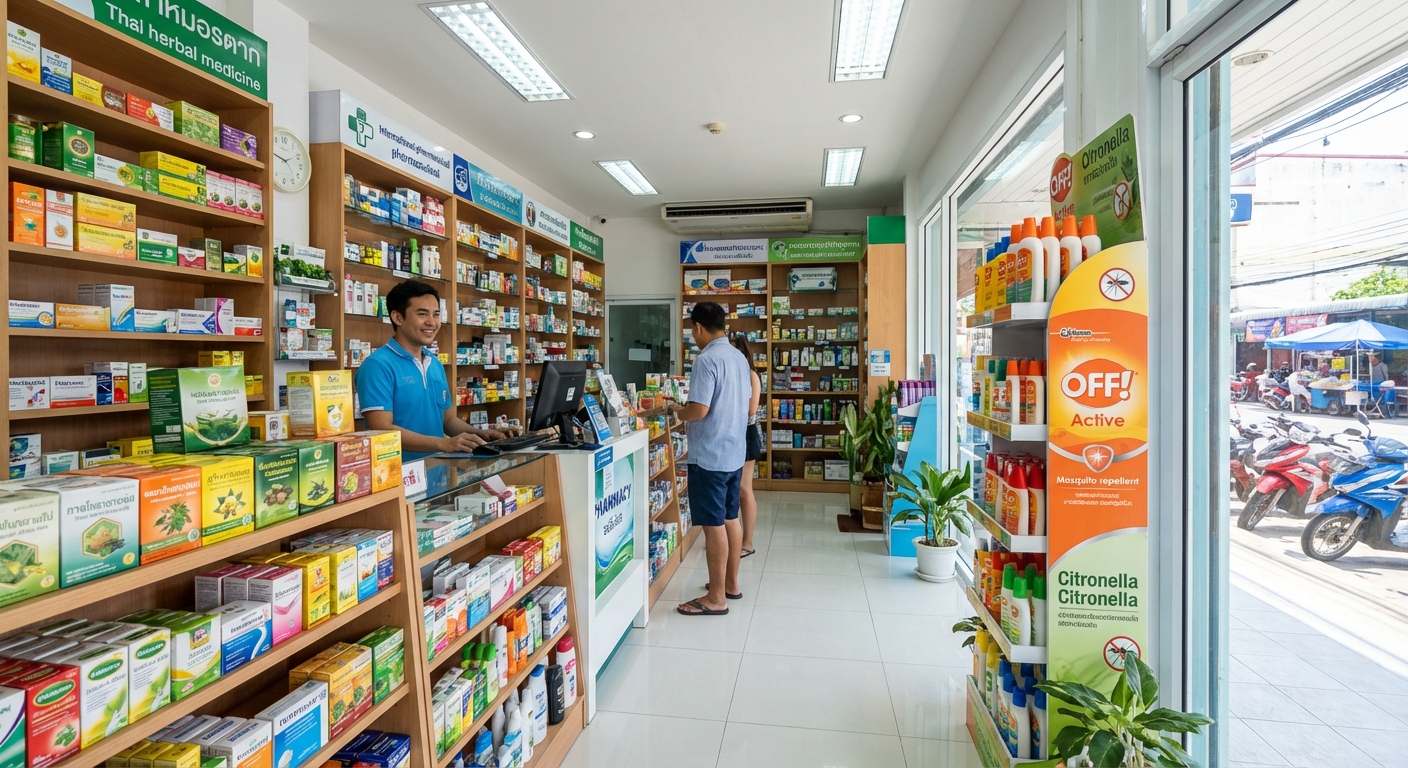
Dengue exists in Thailand and mosquitoes are particularly active at dusk. Use a DEET-based repellent, especially if you are outdoors in the evening. Phuket pharmacies sell effective local brands for next to nothing.
Sea safety
Red flags on the beaches mean swimming is prohibited. Period. Rip currents off Phuket’s west coast beaches kill tourists every year, mainly during the monsoon (May to October). Check the flags before entering the water and do not overestimate your swimming ability in rough seas.
SIM Cards and Internet Connection
Do not buy a tourist SIM card at the airport: they are overpriced. Instead, go to any 7-Eleven or AIS shop in town and get a prepaid SIM for half the price.
The main carriers are AIS, DTAC and TrueMove. All offer data packages that work across the entire island.
If your phone supports eSIM, you can set one up before you even land. Check compatibility before departure. WiFi is available at most hotels, restaurants and cafes, but a local SIM with data is far more convenient, especially for ride-hailing apps like Bolt and Grab that need mobile data to function.
Etiquette and Cultural Customs
A few rules matter in Thailand and may surprise you.
At temples, cover your shoulders and knees. Remove your shoes before entering any temple building. This applies to both men and women.
Never make disrespectful comments about the Thai monarchy. Lese-majeste is a criminal offense in Thailand, and it is enforced. This includes casual comments, social media posts, and defacing banknotes (which bear the king’s image).
Feet are considered the lowest and most impure part of the body. Do not point your feet at people or Buddha images. Do not put your feet on furniture in the presence of others. Conversely, the head is the most sacred part of the body. Do not touch anyone’s head, including children’s.
Bargaining is expected at markets and with tuk-tuk drivers, but not in restaurants, 7-Elevens, or shops with fixed prices. At markets, start at about 60% of the quoted price and negotiate from there.
Tipping is not mandatory, but 20 to 50 THB for good restaurant service is appreciated. Rounding up the bill works perfectly well.
An important social rule: do not argue aggressively with locals, especially police or transport drivers. Confrontation in Thailand does not work the way it does in France. People close ranks, and an argument that would have no consequences at home can escalate here. Stay calm, smile, and walk away from situations that feel tense.
What to Pack
Travel light. Phuket is hot and humid year-round, so you will be in shorts and t-shirts most of the time. Here is what actually matters.
Lightweight, breathable clothing (cotton or linen) is enough for daily wear. A waterproof windbreaker or compact umbrella is essential if you travel between May and October. Reef-safe sunscreen protects both your skin and the coral. DEET-based mosquito repellent is a must.
Water shoes are useful for rocky beaches and reef walking.
Bring a photocopy of your passport (for scooter rental deposits, so you never hand over the original). If you plan to ride a scooter, your International Driving Permit must be in your bag before leaving France: get it from your local prefecture.
A universal plug adapter covers the various socket types used in Thailand. And leave the formal wear at home: even the fanciest restaurants in Phuket are casual by European standards.
Before You Leave
A few things to take care of before your flight. Get your IDP from your local prefecture if you plan to rent a scooter. Download Bolt, Grab and InDrive on your phone. Make sure your travel insurance covers Thailand and, if applicable, motorized two-wheeler riding. Notify your bank of your trip to prevent your card from being blocked abroad.
Exchange a few euros for baht at a SuperRich bureau upon arrival (rates are much better than at exchange offices in France).
If Bali is also on your list, check out our practical guide to planning a trip to Bali.
Phuket rewards travelers who do a minimum of preparation. The gap between a well-planned trip and an improvised one is bigger here than at most destinations, mainly because of transport costs and the need to know about scams. Spend an hour getting organized and you will avoid the most common frustrations.
For all the details on beaches and excursions, head back to our complete Phuket guide.
If you are arriving via Bangkok, check out our practical guide to preparing your stay in the capital.
If you are continuing on to Vietnam, check out our guide to planning a trip to Hanoi.