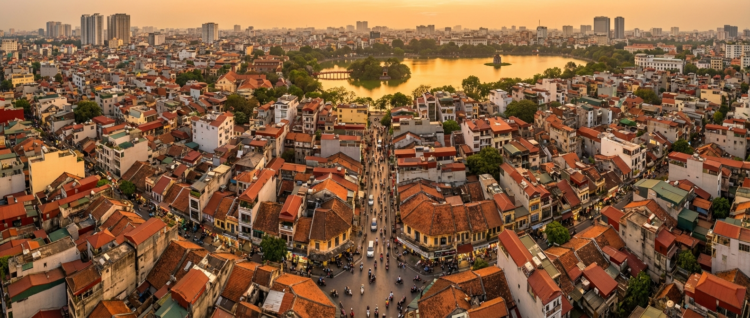
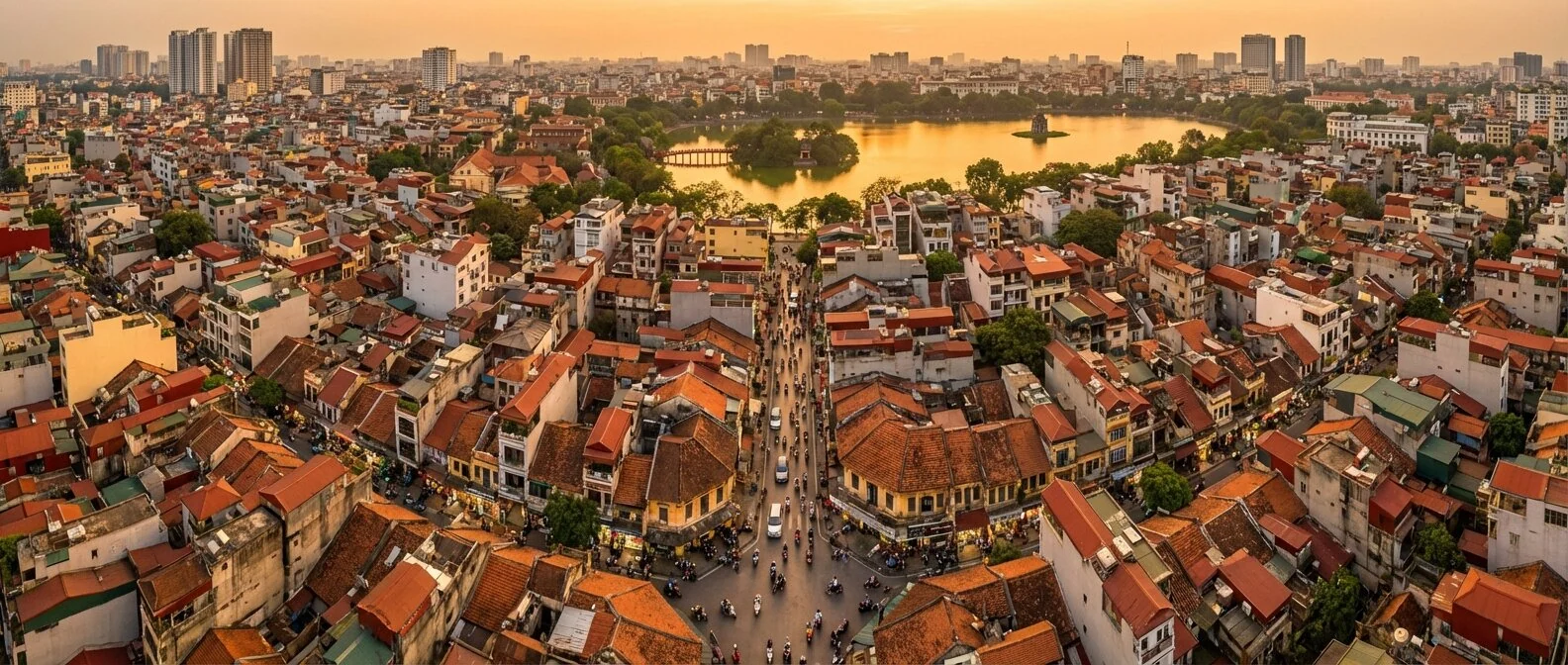
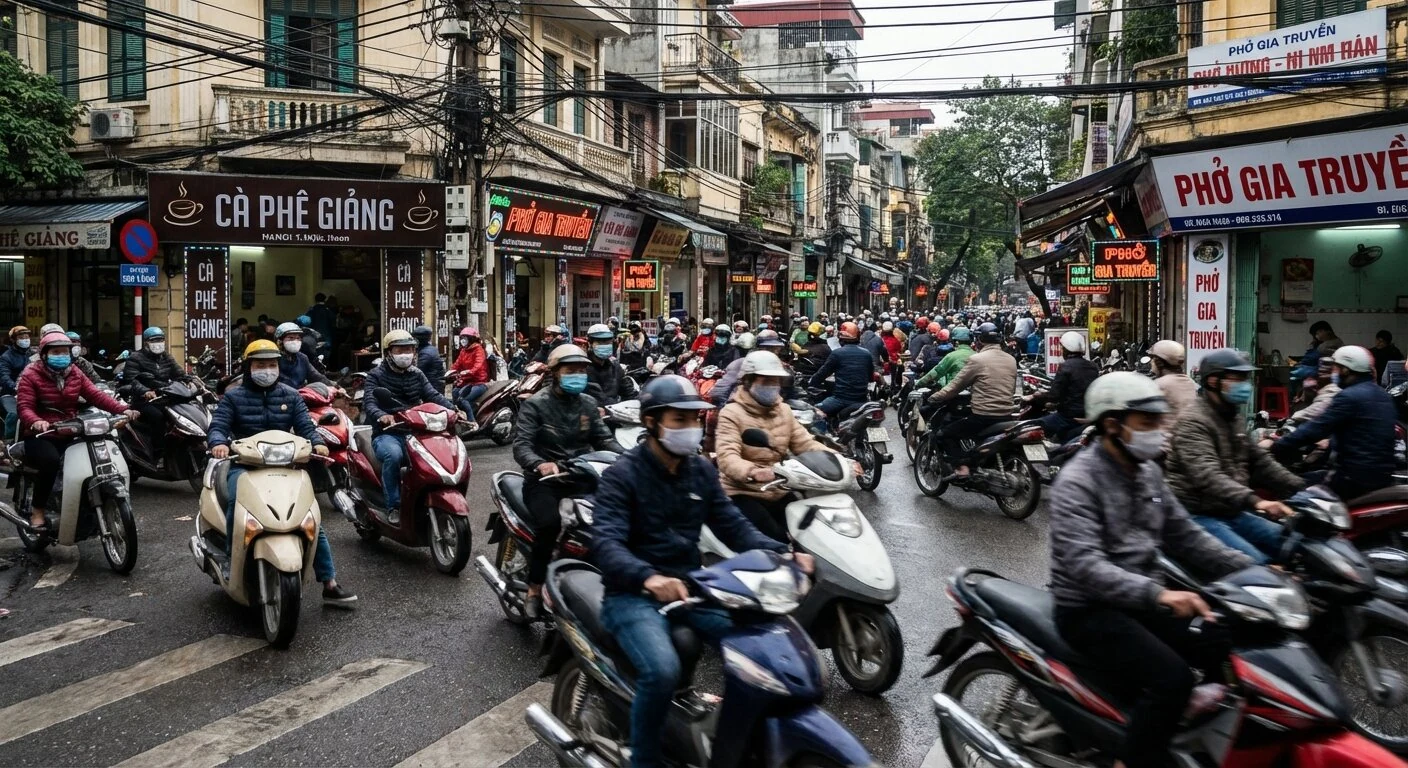
Hanoi seizes your senses before you even have a chance to settle in. You step off the plane into warm, humid air, and within minutes you’re on the back of a Grab, hypnotised by a river of motorbikes that splits around your vehicle like water around a stone. There are no lanes. There are no real rules—at least none you’ll grasp in the first 48 hours. Someone is grilling pork on the sidewalk. A woman in a conical hat (nón lá) balances two baskets of mangoes on a yoke, slipping through traffic without looking up. An old man sits on a plastic stool the size of a dinner plate, sipping tea and reading the newspaper while the city roars around him.
That’s Hanoi. It’s loud, chaotic, sometimes exasperating, and it’s one of the most magnetic cities I’ve encountered in Southeast Asia. The city runs on a frequency that takes a day or two to tune into, but once you do, everything clicks.
The city’s street food alone would justify the trip. History and architecture add layers that Saigon and the southern beach towns simply can’t match. And from Hanoi you’re only a short ride away from Ha Long Bay, Ninh Binh, Sapa and the most stunning landscapes in northern Vietnam. For French travellers, Hanoi holds a special resonance: this is where the heart of French Indochina beat, and traces of that era are everywhere, from the plane-tree-lined boulevards to the ochre-yellow facades of colonial buildings.
This guide covers everything you need for a first trip to Hanoi and northern Vietnam. I detail the Old Quarter, the unmissable dishes and where to find them, the activities that are truly worth your time, practical logistics, the best neighbourhoods to stay, and a 5-to-7-day itinerary. To dive deeper into each topic, I’ve written five dedicated guides that are linked throughout the article.
Hanoi at a glance
Hanoi is the capital of Vietnam and one of the oldest continuously inhabited cities in Southeast Asia. The city was originally called Thăng Long (“Rising Dragon”) when Emperor Lý Thái Tổ moved the capital here in AD 1010. The name changed to Hanoi (“City Between Rivers”) in 1831 under the Nguyễn dynasty. It sits on the banks of the Red River (Sông Hồng), which explains the flat terrain and the occasional monsoon flooding.
Greater Hanoi’s population is around 8.5 million. It’s smaller and quieter than Ho Chi Minh City (Saigon)—though “quiet” is a very relative word in a Vietnamese city. Hanoi feels older, more layered, more atmospheric.
French colonial architecture remains omnipresent in the wide tree-lined boulevards, mustard-yellow facades and Art-Deco buildings that now house government offices and endearingly old-school cafés. Anyone familiar with the streets of Paris will recognise something in these Haussmann-like proportions transposed to the tropics. Beside these relics, the Old Quarter’s narrow tube houses squeeze into plots only three metres wide, stretching 40 or 50 metres deep.
Climate and when to visit
Unlike southern Vietnam, which is hot year-round, Hanoi experiences four distinct seasons—a surprise to many travellers.
- Cool, dry season (November to April): The best time to visit. From November to January it’s cool (15–22 °C during the day, dropping to 8–12 °C at night in December and January). From February to April temperatures climb again. Pack layers for the winter months. This is peak tourist season, so hotel prices rise and the Old Quarter is crowded, but the weather makes walking the city a pleasure.
- Hot, humid season (May to September): Temperatures soar to 35–40 °C with stifling humidity. Afternoon thunderstorms are frequent, sometimes heavy enough to flood the streets for an hour. Mornings are usually clear. Prices drop, crowds thin. If you can handle heat, it’s a perfectly viable time to visit.
- Shoulder month (October): October is often ideal. The worst of the summer heat is gone, rainfall decreases, and high season hasn’t started yet. Think of it as the perfect sweet spot.
One thing nobody tells you: winters in Hanoi can feel bone-chilling. The temperatures look mild on paper, but the humidity and the lack of central heating in most buildings make 12 °C in Hanoi feel colder than 5 °C in Paris. If you visit in December or January, bring a real jacket, not just a windbreaker.
The Old Quarter and cultural heritage
The Old Quarter is the first picture most people have in mind when they think of Hanoi: a dense grid of narrow streets, each historically named after the craft once practiced there. Hàng Gai (Silk Street), Hàng Bạc (Silver Street), Hàng Mã (Paper Offerings Street). Some streets still match their original trade. Others have morphed into cafés and souvenir shops, but the old guild system is still legible in the architecture.
Wandering the Old Quarter is an activity in itself. The streets are narrow, the sidewalks clogged with parked motorbikes and plastic-stool cafés, so you inevitably end up walking in the roadway, among the traffic. It sounds terrifying, and for the first 30 minutes it is. Then you pick up the rhythm: walk slowly, walk predictably, don’t stop abruptly, and the motorbikes flow around you like water around a rock. That image comes from travellers who’ve figured it out, and it’s perfectly true.
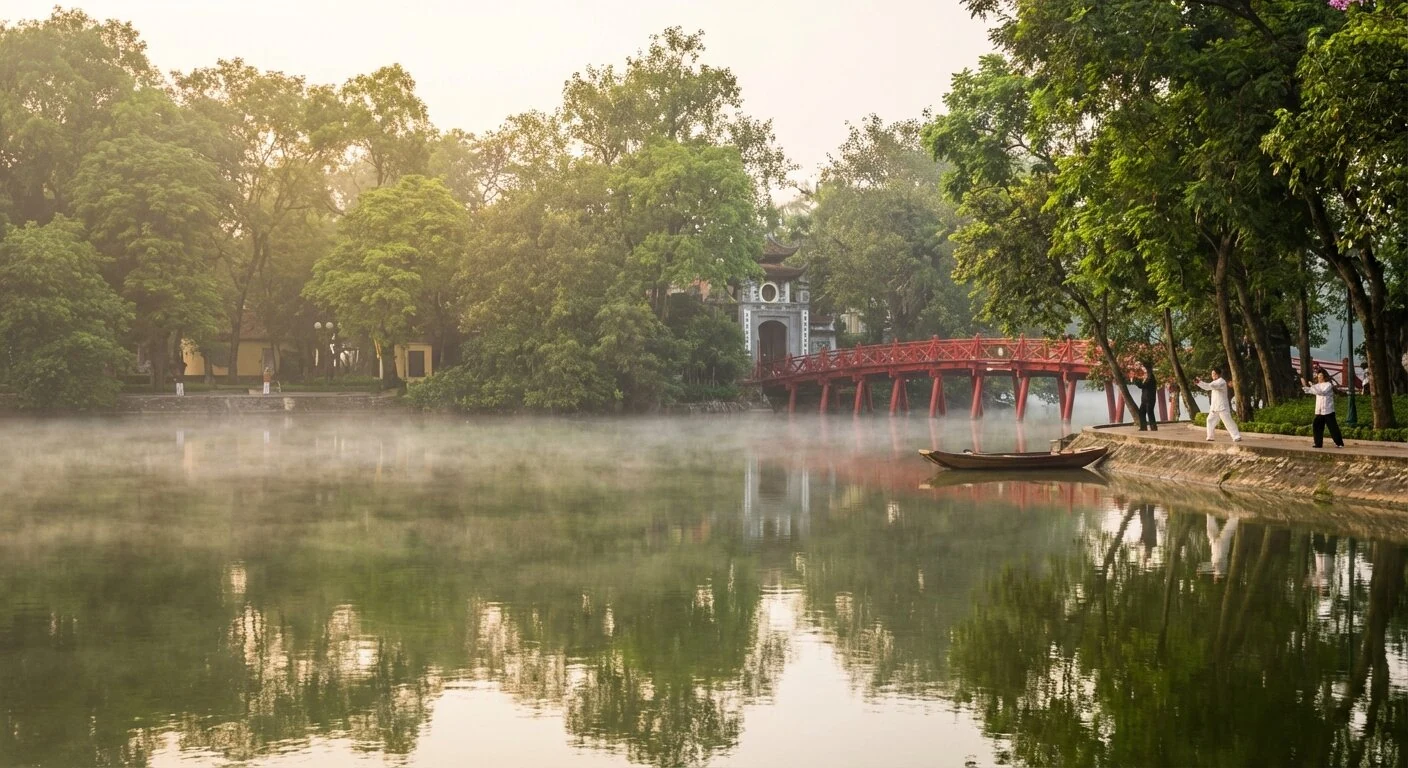
Hoàn Kiếm Lake sits at the southern edge of the Old Quarter and is the city’s heart. It’s not large, but it’s beautiful—especially at dawn when hundreds of Hanoians gather on its banks for tai chi, ballroom dance, laughter yoga and morning exercise. I recommend getting up early at least once to witness this scene. Around 5:30 or 6:00 a.m., the lakeside is filled with people of all ages moving in synchrony. It’s free, it’s authentic, and it gives you a glimpse of how Hanoi really lives beyond the tourist layer.
On Friday, Saturday and Sunday evenings, the streets around Hoàn Kiếm Lake are closed to traffic and turn into a vast pedestrian zone. Families come out, children play, street performers set up, and the whole neighbourhood turns into a gentle party. If your visit coincides with a weekend, don’t miss it.
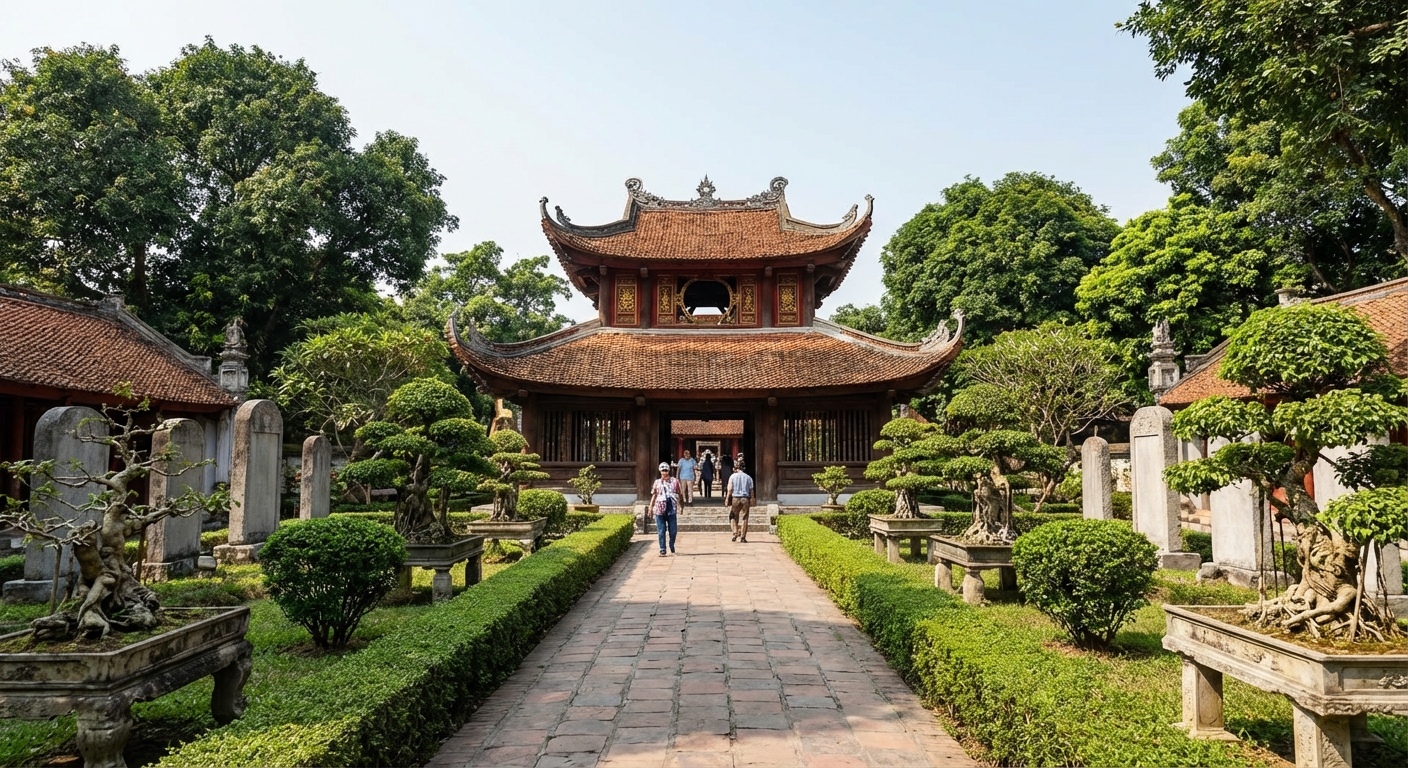
Can’t-miss heritage sites include the Temple of Literature (Văn Miếu), Vietnam’s first university founded in AD 1070, and Hỏa Lò Prison (the “Hanoi Hilton”), which chronicles both its French colonial history as a prison for Vietnamese revolutionaries and its later use during the American war.
The Vietnam Museum of Ethnology, located farther from the centre in Cầu Giấy District, is often praised by travellers for its detailed collections on Vietnam’s 54 ethnic groups. The Vietnamese Women’s Museum, near Hoàn Kiếm Lake, is another that visitors report as surprisingly well curated.
For the full rundown of every temple, museum and hidden nook—including Train Street (which divides opinions and is regularly closed by police), Long Biên Bridge at sunrise, and the French Quarter—see the complete heritage and sightseeing guide to Hanoi.
Street food and restaurants
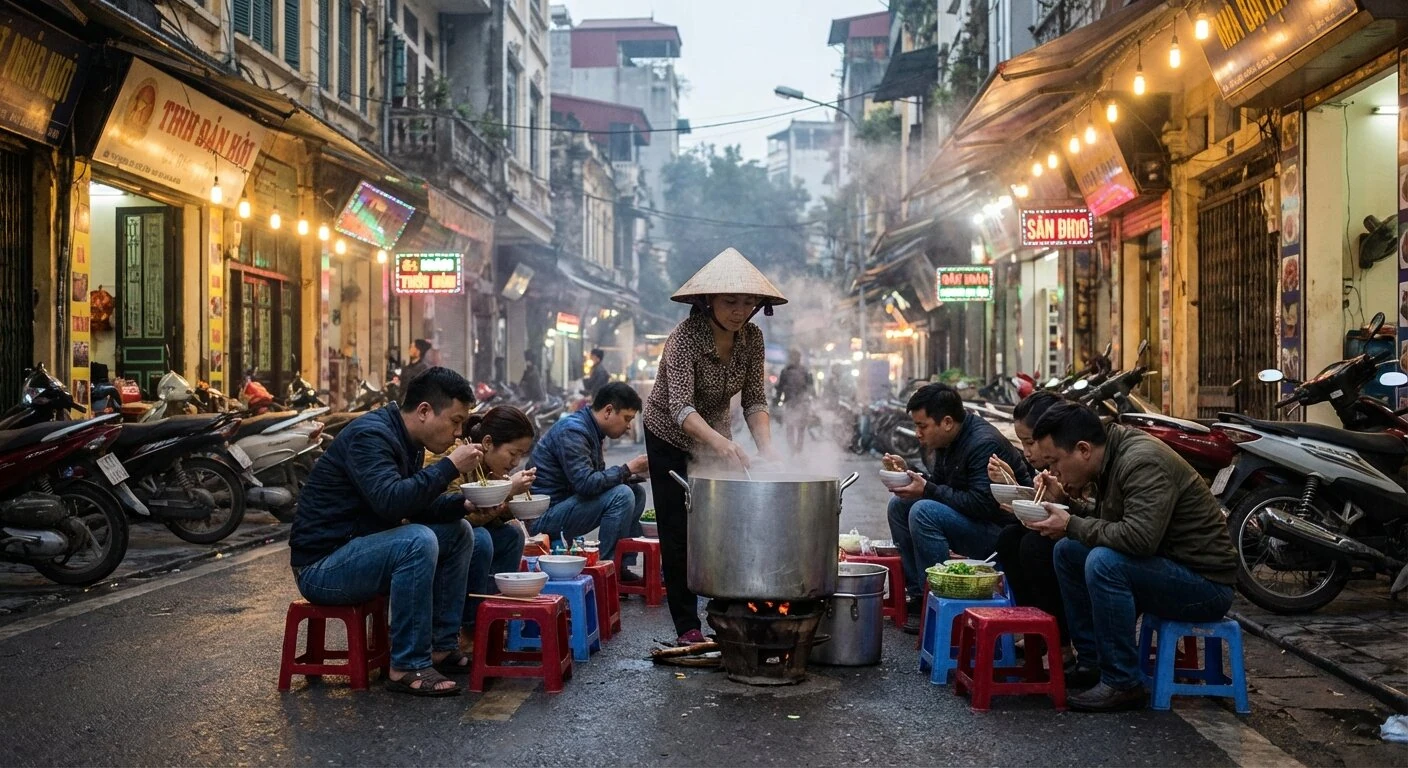
Hanoi might be the best street-food city I’ve ever eaten in. That’s a bold claim, and I’ve scoured Bangkok, which is no slouch (see the Bangkok guide for comparison).
But Hanoi’s food culture has a specificity that Bangkok’s vastness sometimes dilutes. In Hanoi, one stall often serves a single dish, and that’s all it has made for 20 or 30 years. The menu is the dish. When you serve only one thing, it’s usually exceptional.
Here’s what to eat, in order of priority.
Bún chả. It’s the king of the Hanoian lunch. Grilled pork patties and sliced pork belly in a sweet-and-sour broth, served with rice vermicelli and a plate of fresh herbs. You dip the noodles and pork into the broth and eat. It’s simple, and for many travellers it defines Hanoi.
Bún Chả Hương Liên on Lê Văn Hưu Street became famous after Obama and Anthony Bourdain stopped by in 2016. It’s still good, though some Hanoians prefer Bún Chả 34 or Bún Chả Đắc Kim for a more neighbourhood vibe. A full meal costs 40,000–60,000 VND (about €1.50–2.30).
Egg coffee (cà phê trứng). Beaten egg yolk with sweetened condensed milk and sugar, spooned over a strong Vietnamese coffee. It sounds odd. It tastes like liquid tiramisu. Café Giảng on Nguyễn Hữu Huân Street is the original creator and the most famous address. Café Đinh, hidden upstairs in a building overlooking Hoàn Kiếm Lake, is rougher but offers a better view. A cup costs 25,000–35,000 VND (about €1).
Phở. Hanoi phở is the original. The broth is clearer and more restrained than the southern version—fewer herbs, fewer add-ons. Just a good bone broth, rice noodles, and thinly sliced beef or chicken. Phở Thìn on Lò Đúc Street and Phở 10 on Lý Quốc Sư Street are two reliable addresses. A bowl costs 40,000–60,000 VND (€1.50–2.30). Eat it for breakfast, like Hanoians do.
Chả cá (turmeric-dill fish). It’s a northern specialty you won’t find properly made anywhere else in Vietnam.
Fish (usually snakehead or catfish) seared with turmeric and dill at your table in a sizzling pan, then mixed with rice noodles, peanuts and fresh herbs. Chả Cá Lã Vọng on Chả Cá Street is the historic restaurant. A meal costs 150,000–200,000 VND (€5.70–7.60), making it one of the pricier street-food experiences, but it’s unique to Hanoi.
Bánh cuốn. Steamed rice rolls stuffed with minced pork and wood-ear mushrooms, topped with fried shallots and served with nước mắm. It’s a breakfast dish. Look for it at morning stalls, especially around the Old Quarter.
Phở cuốn. Fresh, un-soupy phở sheets rolled around beef and herbs. A speciality of the Trúc Bạch area, especially Ngũ Xã Street. Phở Cuốn Hương Mai is the reference stall.
Bánh mì. Bánh Mì 25 near Hoàn Kiếm Lake is the most famous tourist spot, and the queue proves it. The bread is good (a legacy of French baking). But anonymous street carts sell bánh mì just as tasty for 15,000–25,000 VND (€0.60–1) without the wait. Don’t limit yourself to one famous address.
Bún riêu. Crab noodle soup with a tomato-based broth. Little known to tourists, adored by anyone who tries it. Just ask around for the nearest bún riêu stall; there’s one on every corner.
How to tackle street food
A guided street-food tour on your first evening is the best investment you can make. For US$15–25 (€14–23), a local guide will lead you through five to eight dishes, show you how to order, explain the condiments (those little bowls of chili, nước mắm and lime), and teach you how to perch on the tiny plastic stools without falling over. After that, you’ll have the confidence and vocabulary to eat on your own for the rest of your stay.
Beyond that first tour, look for stalls with one dish on the menu and a crowd of locals on stools. If Vietnamese office workers are queueing, that’s your signal. You don’t bargain at food stalls where prices are posted. Haggling is for markets like Đồng Xuân, not for a bowl of phở.
Download Google Translate with the offline Vietnamese pack before you arrive. Older street-food vendors speak little or no English (or French), and showing pictures isn’t always enough. The camera-translation function works surprisingly well on Vietnamese menus.
For the full food guide with more restaurants, prices and neighbourhood-by-neighbourhood recommendations, see the complete street-food and restaurant guide to Hanoi.
Activities, excursions and day trips
Hanoi itself takes two to three days to explore properly. But the city’s main strength is its role as a base for northern Vietnam. With five to seven days you can see the city and add one or two of the region’s best side trips. For the complete list of activities, hidden corners, nightlife and excursion logistics, see the activities and excursions guide to Hanoi.
In the city
Beyond the Old Quarter, temples and museums already mentioned, here are the activities travellers consistently recommend.
The bia hơi corners. Bia hơi is fresh draft beer brewed daily and served straight from metal kegs at street stands. A glass costs 5,000–10,000 VND (€0.20–0.40), making it arguably the cheapest draft beer on earth. You sit on a plastic stool about 15 centimetres off the ground, surrounded by Hanoians, and drink while watching the motorbike ballet.
The intersection of Tạ Hiện and Lương Ngọc Quyến streets in the Old Quarter is the most famous bia hơi crossroads, though it’s become quite touristy. For a more local vibe, seek out a bia hơi stand in Hai Bà Trưng or Ba Đình districts.
West Lake (Tây Hồ). The largest lake in Hanoi, bordered by a quieter, expat-favoured district with wider streets, good cafés and restaurants. Rent a bike and loop the lake (about 17 km). The west shore offers great sunset views. Trấn Quốc Pagoda, on a small island in the lake, is one of Vietnam’s oldest temples (dating to the 6th century).
Long Biên Bridge. The old steel cantilever bridge over the Red River, built during French Indochina by the Daydé & Pillé workshops (the same engineers who worked with Gustave Eiffel). Go at sunrise or sunset. The bridge is still used by motorbikes, bicycles and pedestrians, and the views of daily life along the river below are worth the detour for photographers.
Complex 01. A former factory turned creative space with shops, cafés and art exhibitions. It draws a young Hanoian crowd and offers a welcome break from the classic tourist circuit.
Coffee culture. Hanoi takes its coffee very seriously. Beyond egg coffee, the city has hundreds of small cafés hidden in alleys and at the tops of narrow stairways. Exploring them is an activity in itself. Ba Đình District and the streets around Trúc Bạch Lake have good options.
Nightlife
Tạ Hiện Street in the Old Quarter is the backpacker nightlife hub—cheap beer, loud music, chaotic energy. Fun for one night.
For something more refined, Hanoi has several speakeasy-style bars: Polite and Co, The Kumquat Tree and Né Cocktail Bar are the names most often mentioned. For techno and house, Savage and Unmute are compared to Berlin clubs. Binh Minh Jazz Club has hosted live jazz for years and is a Hanoi institution. Summit Bar at the Pan Pacific Hotel offers panoramic views of West Lake from its rooftop terrace.
Day trips from Hanoi
Ninh Bình. About two hours south of Hanoi by bus or limousine van. Often dubbed “dry Ha Long Bay” for its similar karst formations, except here they rise out of rice fields and rivers instead of the sea. The Tràng An boat tour is the most popular and is consistently rated higher than the Tam Cốc alternative by travellers.
You sit in a small rowboat while a local paddler navigates through caves and along soaring cliffs. Rent a motorbike or bicycle in Tam Cốc to explore the surrounding countryside.
Many travellers say that Ninh Bình was the highlight of their entire Vietnam trip. One to two days on site is ideal.
Ha Long Bay. The must-see. Thousands of limestone islands and islets rising from emerald water. The catch: a day trip from Hanoi involves four to five hours of driving round-trip for only three to four hours on the water. That’s not enough.
Book an overnight cruise (at least two days, one night) to really enjoy it. Cát Bà Island is an alternative base if you want to explore Ha Long Bay without a cruise, combining trekking, kayaking and boat trips from a less expensive home base.
Sapa. Mountain town in the northwest, known for its terraced rice fields and ethnic-minority villages. Getting there requires an overnight train (6–8 hours) or a long bus ride, so only attempt it if you have at least five total days in northern Vietnam. Winter (December to February) can be foggy and freezing. The treks draw people, as do the distinct cultures of the Hmong, Dao and Tày.
The Hà Giang Loop. Vietnam’s most spectacular road, winding through mountain passes along the Chinese border. Strictly for experienced riders and requires three to four dedicated days. If you’re qualified (and hold your international licence, mandatory in Vietnam), the scenery is breathtaking. If you don’t ride, you can hire a local driver (“easy rider”).
A time-saving logistics tip: you don’t always need to return to Hanoi between destinations. Direct transfers exist between Ninh Bình and Ha Long Bay, for example. Limousine vans (minibuses with reclining seats) are comfortable, affordable and cover most routes in three to five hours. Book via your hotel or through 12Go.asia.
Practical info: visa, budget and transport
Practical details can make or break a trip to Hanoi. The complete practical tips guide covers everything in depth, but here’s what you need to know before booking your flights.
Visa
French citizens benefit from a 45-day visa exemption for Vietnam (extended from 15 days in 2023). Check the current policy on the Vietnamese embassy website in Paris before you book, as these rules have changed several times in recent years.
If you need a longer stay, apply for an e-visa online (about US$25 / €23) before departure. At Nội Bài Airport, immigration queues can be long for late-evening arrivals. The VIP Fast Track service (US$15–25 depending on provider) gets you through in minutes and is worth every cent after a 10–12-hour flight from Paris-CDG.
How to get there from France
There is no direct flight from Paris-CDG to Hanoi. The best options connect via Bangkok (Thai Airways, VietJet), Singapore (Singapore Airlines), Doha (Qatar Airways) or Istanbul (Turkish Airlines). Expect 10–14 hours total travel time depending on the stopover. Vietnam Airlines offers a Paris-Hanoi route with a layover in Ho Chi Minh City. Book two to three months ahead and return fares run €500–800 in economy. Compare on Google Flights or Skyscanner.
Getting around Hanoi
Grab is the most important app on your phone in Vietnam. It’s the local version of Uber and works for both cars and motorbikes. Use it for every ride. It eliminates rigged meters, language barriers and “tourist prices.” The Be app is a Vietnamese competitor that sometimes offers lower fares. Download both.
For taxis, use only Mai Linh (green) or G7 (white). These companies use honest meters. Any other taxi company is a gamble.
Don’t rent a motorbike unless you’re an experienced rider with your international licence (mandatory in Vietnam). Hanoi traffic is not the place to learn. The traffic looks chaotic but follows its own internal logic. Locals have spent years reading that logic. You haven’t.
A Grab motorbike ride costs 10,000–30,000 VND (€0.40–1.15) for short trips and will get you there faster than a car during rush hour.
Walking is the best way to explore the Old Quarter and the area around Hoàn Kiếm Lake. Just accept that you’ll share the roadway with motorbikes. The golden rule for crossing streets: walk slowly and steadily at a constant pace. Don’t run. Don’t stop. The bikes will adjust around you. If you don’t dare cross, wait for a local pedestrian to step off and follow close behind.
Money
Vietnam uses the đồng (VND). The numbers look huge: 100,000 VND is about €3.80. Cash is essential for street food, markets and small shops. ATMs are everywhere and dispense VND.
The catch: most charge a 20,000–50,000 VND (€0.75–1.90) fee per withdrawal. Take out larger amounts to minimise these fees. If you have a Boursorama Ultim or a Revolut card, you’ll avoid foreign-exchange fees on the French bank side, but the local ATM fee is unavoidable.
A warning many travellers repeat: the 500,000 VND note and the 20,000 VND note are both blue and similarly sized. In dim light or when you’re tired, it’s easy to hand over a 500k note thinking it’s 20k. That mistake costs you about €18. Sort your bills by value and pay close attention at street stalls.
When an ATM screen offers a currency conversion, always choose “Vietnamese đồng” and refuse any conversion to euros. The “convenience” conversion skims 3–5 % in the bank’s favour.
Daily budget
- Budget traveller: 500,000–800,000 VND/day (€19–30). Hostels, street food, walking and Grab motorbikes, free temples and parks.
- Mid-range: 1,500,000–2,500,000 VND/day (€57–95). Hotels, a mix of street food and restaurants, Grab cars, museum entries, cooking class or food tour.
- Comfort: 4,000,000+ VND/day (€150+). Boutique hotels, sit-down restaurants, private excursions, cocktail bars.
Vietnam is one of the cheapest countries in Southeast Asia for travellers. A full bún chả with a beer costs under 80,000 VND (€3). A one-hour traditional massage runs 200,000–300,000 VND (€7.60–11.40). Even mid-range hotels in the Old Quarter cost 600,000–1,200,000 VND (€23–46) per night. For French visitors used to Paris prices, it’s another world.
Scams to avoid
Hanoi has a few recurring scams that target tourists. They’re predictable and easy to dodge once you know them.
The fruit vendor scam. A woman approaches carrying baskets on a yoke. She places the yoke on your shoulders “for a photo.” The moment you touch it, she demands 200,000–500,000 VND (€7.60–19). The fix is simple: don’t touch the baskets. Say “no” firmly and keep walking.
The shoe-shine scam. Someone squats near your feet and starts cleaning your shoes without permission—even if you’re wearing sandals—then demands payment. Pull your feet away and walk on.
Rigged taxi meters. Some taxis use modified meters that jump in big increments. That’s why you use Grab for everything. If you take a taxi, insist on Mai Linh or G7.
The “free” samples. Anyone offering you free fruit, doughnuts or snacks on the street is setting up a request for payment. In a tourist zone, nothing is ever free.
The big picture: Hanoi is very safe by the standards of any major city. Violent crime against tourists is extremely rare. The risks are financial (scams, overcharging) rather than physical. Keep your phone secure in traffic (snatch-and-grab thefts from motorbikes happen occasionally) and you’ll be fine. More details on scams and safety in the practical tips guide.
Health
No vaccinations are mandatory to enter Vietnam, but check current recommendations with your GP or on the Institut Pasteur website before departure. Note: your European Health Insurance Card (EHIC) does not cover Vietnam. You must take out travel insurance with repatriation before leaving.
Insurers like Chapka (Cap Assistance) or ACS offer policies tailored to French travellers in Asia from around €30 a month.
Bring or buy Berberine at any pharmacy in Hanoi: it’s a plant-based medicine locals and expats swear by for stomach upsets. Air pollution in Hanoi can be significant, especially during winter months when smog sits over the city. An N95 mask deserves a spot in your suitcase. Mosquito repellent is useful year-round.
Communication and connectivity
Buy a Viettel SIM at Nội Bài Airport on arrival. It gives you 4G across the country for about 150,000–200,000 VND (€5.70–7.60) for a tourist package. Download Google Translate with the offline Vietnamese pack and offline Google Maps before you leave. Those two apps will solve 90 % of your communication and navigation problems.
Where to stay: the neighbourhoods

Your choice of neighbourhood will shape your Hanoi experience more than almost any other decision. Book preferably on Booking.com, where French-language reviews are numerous and often very reliable. For the full breakdown with specific hotel recommendations and price ranges, see the where to stay in Hanoi guide.
Old Quarter (Hoàn Kiếm District)
The default choice for a first visit—and rightly so. You’re within walking distance of Hoàn Kiếm Lake, the weekend pedestrian zone, the best street-food stalls and the bia hơi corners. The trade-off is noise. The Old Quarter never really sleeps. Motorbike horns, karaoke and street vendors start early and finish late.
If you’re a light sleeper, favour hotels tucked into quieter alleys or choose a room that doesn’t face the main street. Staying near Hoàn Kiếm Lake but slightly away from the densest part of the Old Quarter offers the best balance of accessibility and tranquillity.
Expect 400,000–1,000,000 VND (€15–38) per night for a clean hotel with air-conditioning and breakfast in the Old Quarter. Boutique hotels with rooftop bars and better rooms run 1,200,000–3,000,000 VND (€46–114).
West Lake (Tây Hồ)
The expat district. Wider streets, more trees, less noise, better air quality. Good international restaurants, yoga studios and brunch cafés. The lakefront is pleasant for morning walks or cycling.
The downside: you’re 15–20 minutes by Grab from the Old Quarter and the main sights. For travellers who want a quieter base and don’t mind using Grab to get around, Tây Hồ is excellent. It’s also where many long-term visitors and digital nomads settle.
French Quarter (Hai Bà Trưng and southern Hoàn Kiếm)
South and east of Hoàn Kiếm Lake. Wider, tree-lined streets with colonial architecture that may remind some of France’s provincial boulevards. The area around the Opera House hosts high-end hotels (Sofitel Legend Metropole is the most famous, steeped in colonial history). It’s quieter than the Old Quarter, still central, with a good mix of Vietnamese and international dining. An excellent compromise between the Old Quarter’s chaos and West Lake’s distance.
Hai Bà Trưng District
South of the French Quarter. Less touristy, more residential, with a growing number of cafés and restaurants aimed at Hanoi’s youth. Travellers who like to get away from tourist infrastructure appreciate this district. Prices are lower, and the area exudes what some describe as a “trendy” energy. Still reachable from the Old Quarter by a short Grab ride.
Trúc Bạch
A neighbourhood around a small lake, halfway between the Old Quarter and West Lake. Quieter than the Old Quarter, close to some of the city’s best phở cuốn stalls (Ngũ Xã Street), and home to the John McCain monument marking where his plane was shot down. It’s an underrated base that combines proximity to the centre with a more relaxed vibe.
Suggested 5-to-7-day itinerary for Hanoi and northern Vietnam
This itinerary uses Hanoi as a base and groups activities geographically so you’re not zig-zagging across the city. Adapt it to your interests and energy. The core principle: don’t overstuff your schedule. Hanoi traffic eats time, the heat (or cold, depending on season) drains energy, and the best moments often happen when you’re sitting on a plastic stool with no plan at all.
Day 1: Arrival and Old Quarter orientation
Arrive at Nội Bài Airport. Grab to your hotel. If you land in the afternoon, spend a few hours wandering the Old Quarter to get your bearings. In the evening, take a guided street-food tour. It’s the best first activity because it teaches you how to order, what to eat and how the whole sidewalk dining system works.
End the night with a bia hơi on Tạ Hiện Street to watch the surrounding chaos. If it’s a weekend, head to Hoàn Kiếm Lake for the pedestrian zone.
Day 2: Sightseeing in Hanoi
Early morning: go to Hoàn Kiếm Lake between 5:30 and 6:00 a.m. for tai chi and morning exercises. Breakfast phở at Phở Thìn or Phở 10. Late morning: Temple of Literature. Late morning continued: Hỏa Lò Prison. Lunch: bún chả at Bún Chả Hương Liên or Bún Chả Đắc Kim. Afternoon: Vietnam Museum of Ethnology (take a Grab; it’s outside the centre but worth it). Evening: egg coffee at Café Giảng or Café Đinh, then roam the Old Quarter’s streets at your own pace.
Day 3: Day trip to Ninh Bình
Take an early-morning limousine van (book via your hotel, about 200,000–300,000 VND / €7.60–11.40 one-way, two hours). Do the Tràng An boat circuit in the morning (about 200,000 VND / €7.60 entrance).
If time allows, rent a bike in Tam Cốc and ride through the rice fields in the afternoon. Return to Hanoi in the evening. If you have the luxury of time, spend a night in Ninh Bình instead of rushing back. The extra morning cycling through the countryside at dawn is well worth rejigging your schedule.
Days 4–5: Overnight cruise in Ha Long Bay
Leave Hanoi early for Ha Long Bay (3.5–4 hours by bus, usually included in the cruise package). Board around noon. Afternoon: kayaking, swimming, cave visits. Night on board.
Morning of Day 5: further bay exploration, then transfer back to Hanoi late afternoon.
Two-day/one-night cruises run 2,500,000–6,000,000 VND (€95–228) per person depending on boat quality. Mid-range options usually do the job nicely. Avoid the cheapest boats, which skimp on food and safety.
Day 6: West Lake, hidden Hanoi and slow exploration
This is your decompression day after two excursion days. Morning: rent a bike and lap West Lake. Stop at Trấn Quốc Pagoda. Treat yourself to brunch in one of Tây Hồ’s cafés.
Afternoon: explore Trúc Bạch (phở cuốn on Ngũ Xã Street), walk across Long Biên Bridge, or visit Complex 01. Evening: your choice—cocktail in a hidden bar (Polite and Co, The Kumquat Tree) or live jazz at Binh Minh Jazz Club.
Day 7: Last morning and departure
Final breakfast of phở or bánh cuốn. Pick up your last souvenirs in the Old Quarter. If you have a late flight, visit the Vietnamese Women’s Museum (near Hoàn Kiếm) or simply spend the morning café-hopping. Grab to Nội Bài Airport. Allow 45–60 minutes for the ride depending on traffic.
Itinerary tips
- If you only have five days, drop either Ha Long Bay or Ninh Bình. Trying to fit both into a five-day trip leaves no wiggle room. If you must choose one, most travellers recommend Ninh Bình for a short stay (simpler logistics, less travel time) and Ha Long Bay if you can spare the extra day.
- Don’t try to add Sapa to this itinerary unless you have eight days or more total. Sapa requires an overnight train each way and at least two days on site.
- Book your Ha Long Bay cruise and your Ninh Bình transport in advance during high season (November to February). In low season, booking a day or two ahead through your hotel is plenty.
- Plan for half a day with nothing scheduled. Some of the best experiences in Hanoi happen when you wander into an alley, stumble upon a stall you weren’t planning to discover, sit down and order whatever the person next to you is eating.
Hanoi vs. Bangkok: two Southeast Asian capitals compared
If you’re planning a trip to Southeast Asia, you’re probably weighing Hanoi against Bangkok. I’ve spent time in both, and they satisfy different cravings.
Bangkok is larger, more modern and more outward-looking. The BTS Skytrain makes getting around easy. The food scene is broader (more regional Thai cuisines, more international options, more fine-dining restaurants).
Shopping ranges from street markets to luxury malls. Nightlife is bigger and more varied. English is more widely spoken. Bangkok is also your gateway to the Thai islands, Chiang Mai and the south.
Hanoi is smaller, grittier and more atmospheric. Its French colonial heritage gives it an architectural character Bangkok lacks, and which speaks particularly to French travellers. The food is more concentrated and specialised: fewer dishes, each perfected over generations. Hanoi is quieter at night (relatively speaking) and cheaper across the board. The coffee culture is unmatched. And Hanoi connects you to northern Vietnam’s landscapes, among the most spectacular in Southeast Asia.
The honest comparison: Bangkok is easier and more comfortable. Hanoi is more intense and more rewarding if you’re willing to make the effort. Bangkok is the city where you relax and eat well. Hanoi is the city that sticks with you.
If you’re doing both in one trip, the usual advice is to start with Hanoi. Going from Hanoi’s relative chaos to Bangkok’s infrastructure feels like an upgrade. The reverse can feel like a downgrade, which unfairly skews your perception.
For the full Bangkok experience, see the complete Bangkok guide. And if a bit of beach is in the cards, Phuket and Bali are natural follow-ups.
Common mistakes to avoid
These come up regularly in traveller reports, and they’re all avoidable.
Spending all your time in the Old Quarter. The Old Quarter is great, but it’s also the city’s most chaotic, loud and tourist-saturated part. West Lake, Trúc Bạch, the French Quarter and Hai Bà Trưng District all offer excellent food, quieter streets and a more local vibe. Get out of the Old Quarter for at least a full day.
Trying to tick every box. Attempting to see Hanoi, Ninh Bình, Ha Long Bay and Sapa in five days guarantees you’ll enjoy none properly. Pick two and give each time. Better to spend two nights in Ninh Bình cycling rice fields at dawn than to cram it all into four hours just to say you’ve been.
Underestimating travel times. Hanoi traffic is slow. A destination that looks 3 km away on the map can take 30 minutes at rush hour. Build travel time into every activity, and don’t schedule back-to-back visits in different parts of the city.
Skipping a food tour on the first night. The street-food scene is intimidating when you’ve never pointed at an unreadable menu, sat on a child-sized stool and eaten something you can’t identify. A guided tour the first evening breaks that barrier for the rest of the trip. It’s US$15–25 (€14–23) very well spent.
Renting a motorbike without experience. Hanoi traffic kills people. That’s not an exaggeration. If you’ve never ridden a motorbike in Asian traffic, Hanoi is not the place to start. Use Grab motorbikes instead. You get the thrill of weaving through traffic without the responsibility of staying alive.
Mixing up your VND bills. The 500,000 and 20,000 đồng notes look alike. Handing over the wrong one means overpaying 25-fold. Sort your bills. Stay alert.
Ignoring the pollution. Hanoi’s air quality can be bad, especially in winter. If you have respiratory sensitivities, bring a mask. Even without, your throat and eyes may feel it after a few days of city walking at rush hour.
Fighting the chaos instead of accepting it. Hanoi doesn’t run on your schedule. The city has its own rhythm, and the sooner you stop trying to impose order on it, the sooner you’ll start enjoying it. Sit on the plastic stool. Drink the bia hơi. Watch the motorbikes. That’s the experience.
Hanoi is a city that rewards patience and curiosity. The first few hours may overwhelm you. By the second day you’ll be crossing six-lane streets without slowing your step and ordering bún chả by pointing at the grill. By the third day you’ll be wondering whether you have enough time to add an extra night. Most people leave wanting more. That’s the best reason to come back.