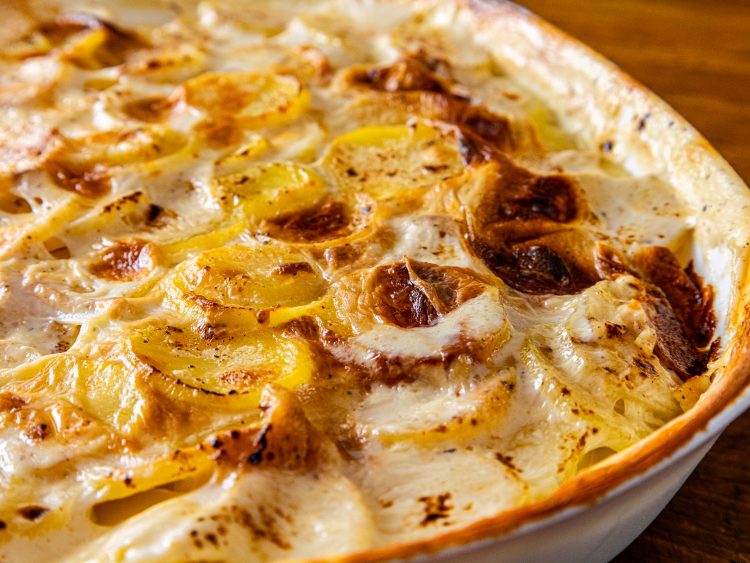
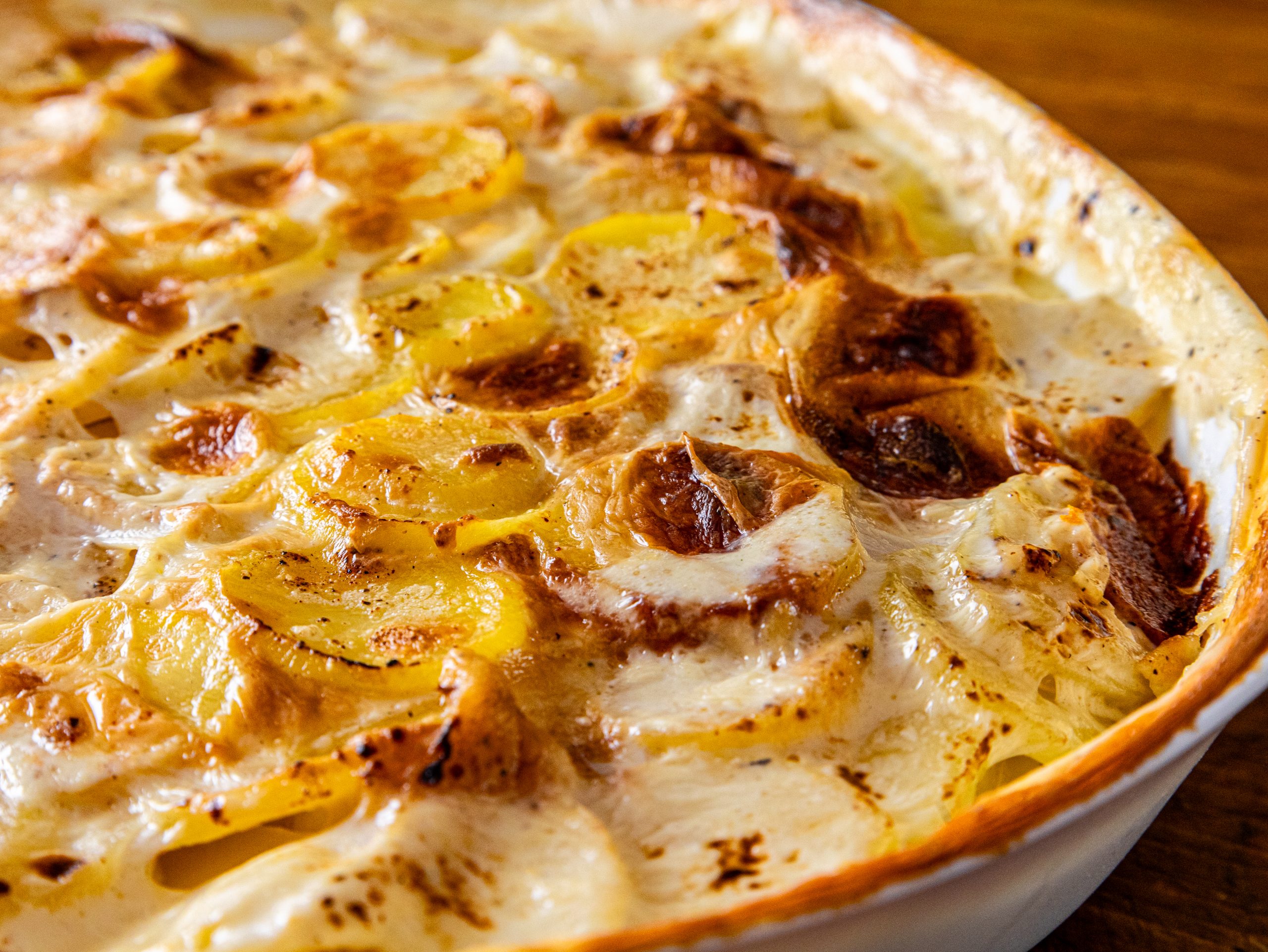
Thinly sliced potatoes, precooked in milk and cream, then baked slowly in the oven until the top is golden, with no cheese or egg.
On a November evening, the oven hums gently and the smell of warm milk and nutmeg fills the whole kitchen. The spoon breaks through a golden crust, spotted with brown around the edges, then lifts out layers of meltingly soft potatoes wrapped in cream.
It’s the starch from the potatoes, released during cooking, that binds the milk and cream. Set in the middle of the table next to a roast, the gratin always disappears faster than expected.
What Is Gratin Dauphinois?
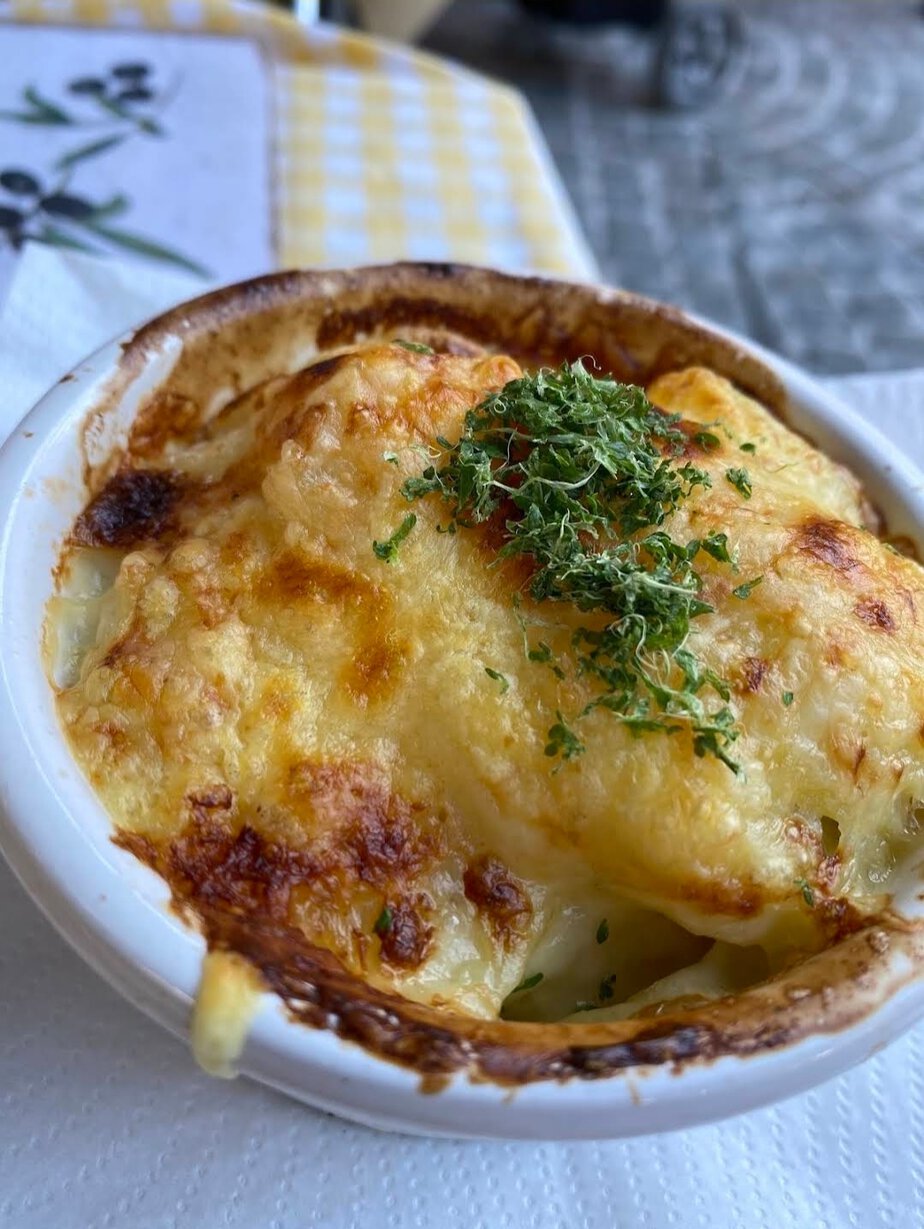
Gratin dauphinois is a dish of thinly sliced potatoes baked in a mixture of milk and cream until the top turns golden. The classic version contains no cheese or egg: the starch from the potatoes thickens the sauce, with no flour or cornstarch.
In this recipe, the slices are first precooked in the milk for 10 minutes, then layered in a buttered dish and baked slowly in the oven.
Its name comes from the Dauphiné, a former province in southeastern France, between the Rhône Valley and the Alps. Grated cheese is only a variation: it brings the dish closer to gratin savoyard, made with stock, or to German and Nordic potato gratins.
A Peasant Dish Served in Gap in 1788
Gratin dauphinois comes from the peasant cooking of the Dauphiné, in the Vercors, the Chartreuse and the Trièves. Potatoes kept all winter, and there was no shortage of milk in the livestock-farming valleys: the two were enough to make a filling dish.
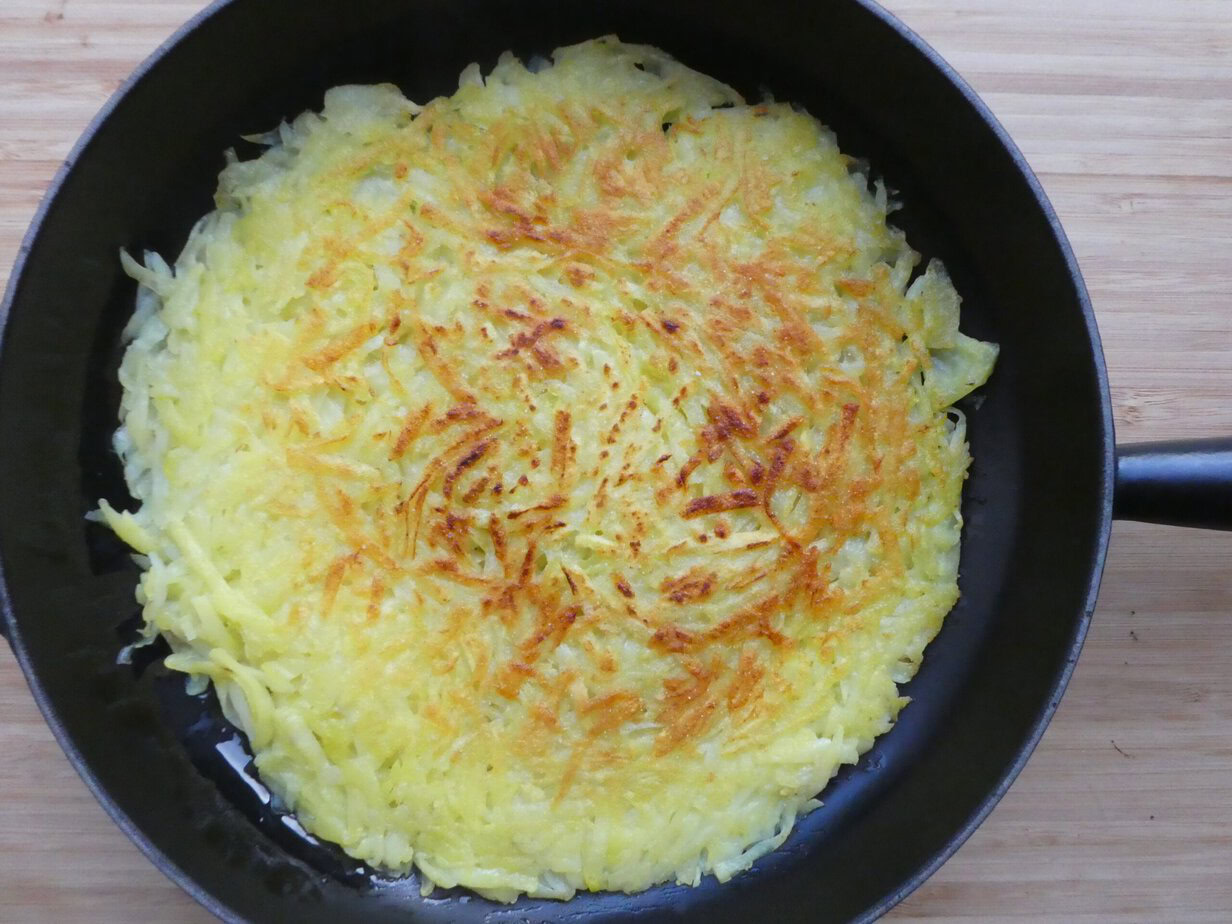
The first written mention dates from July 12, 1788. On that day, Charles-Henri, Duke of Clermont-Tonnerre and lieutenant general of the Dauphiné, served it in Gap at a meal given for the town’s municipal officers. The dish probably existed in farmhouse kitchens long before that.
The Main Ingredients in Gratin Dauphinois
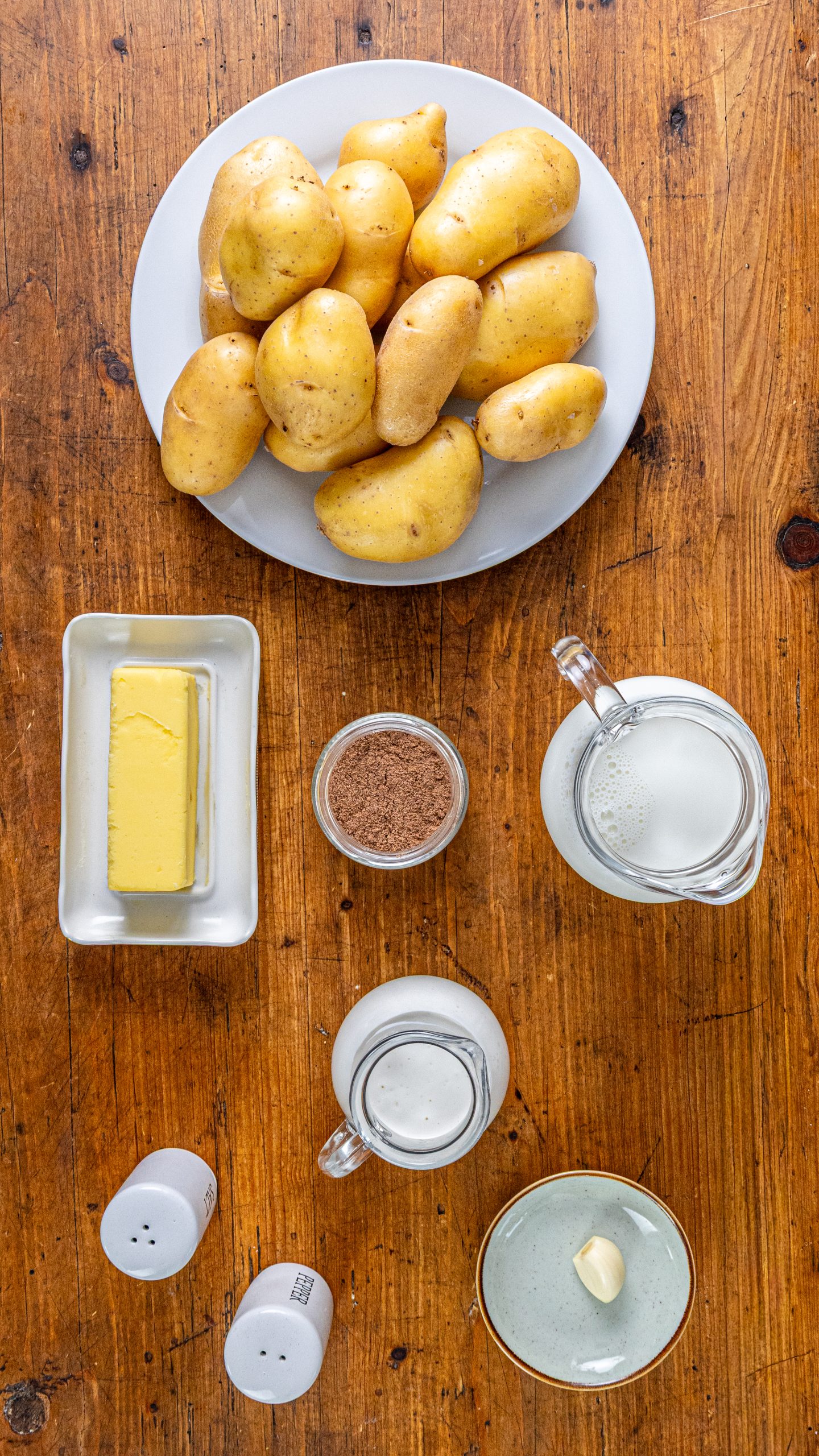
You need 1.1 kg of potatoes for 4 people. Both starchy and waxy varieties work: the former break down more, the latter hold their shape better. Once sliced a few millimeters thick, the potatoes aren’t rinsed, because the starch left on their surface goes into the milk and thickens the sauce.
The liquid combines 400 ml of fresh whole milk and 300 ml of heavy cream or whipping cream. Both the milk and the cream must be full-fat: their fat protects the sauce, which can split if made with skim milk or reduced-fat cream.
The seasoning is kept simple: fine salt, freshly ground black pepper and a good pinch of nutmeg, divided between the precooking and the two layers when assembling. A halved garlic clove can infuse in the milk, and 50 g of butter is used to grease the dish.
Technical Pointers for a Good Gratin Dauphinois
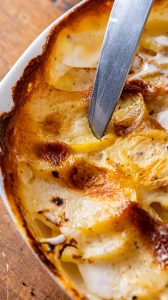
The gratin is done when the potatoes have absorbed much of the liquid while staying creamy, and a knife blade slides in with no resistance. A well-browned top is no guarantee: it’s the center of the dish you need to check.
A gratin that stays runny is almost always short on starch, often because the slices were rinsed. A sauce that splits, turning grainy and greasy, comes from an oven that’s too hot or from low-fat dairy products.
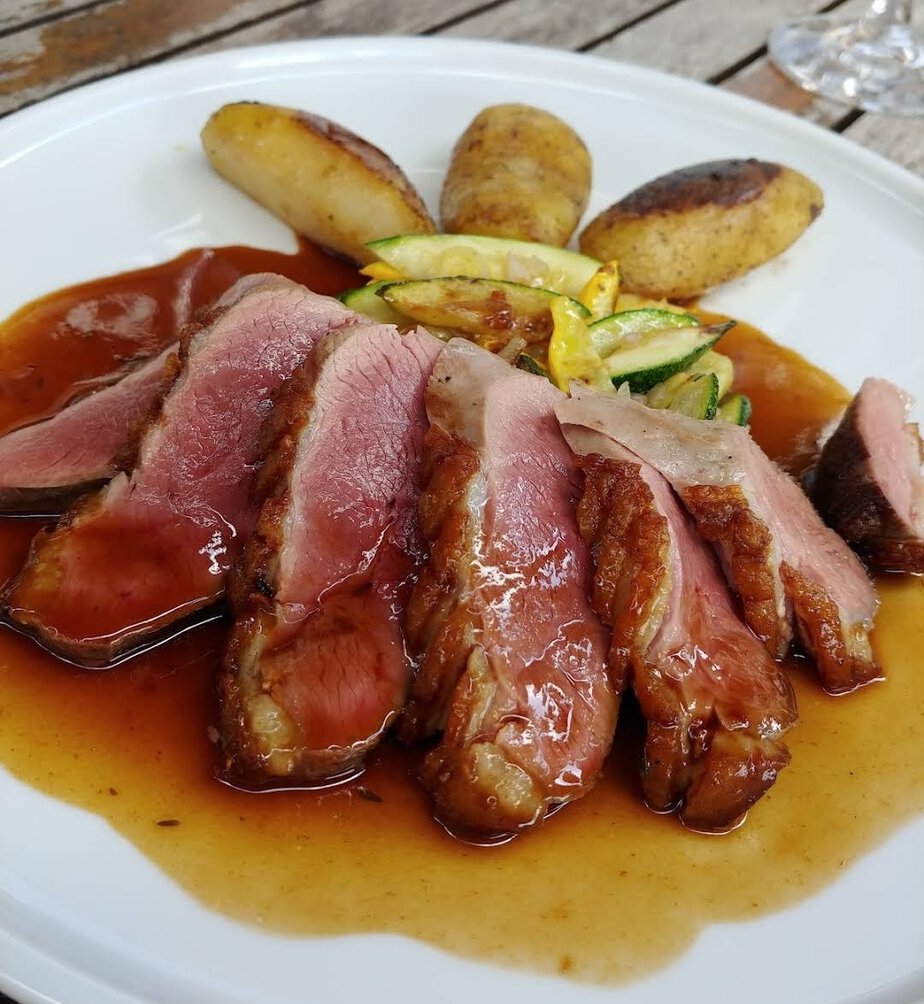
A few minutes of resting once it comes out of the oven lets the sauce thicken and makes serving easier. The gratin also goes well with pork tenderloin, chicken breasts or salmon cooked in the air fryer, with zucchini for a touch of green.
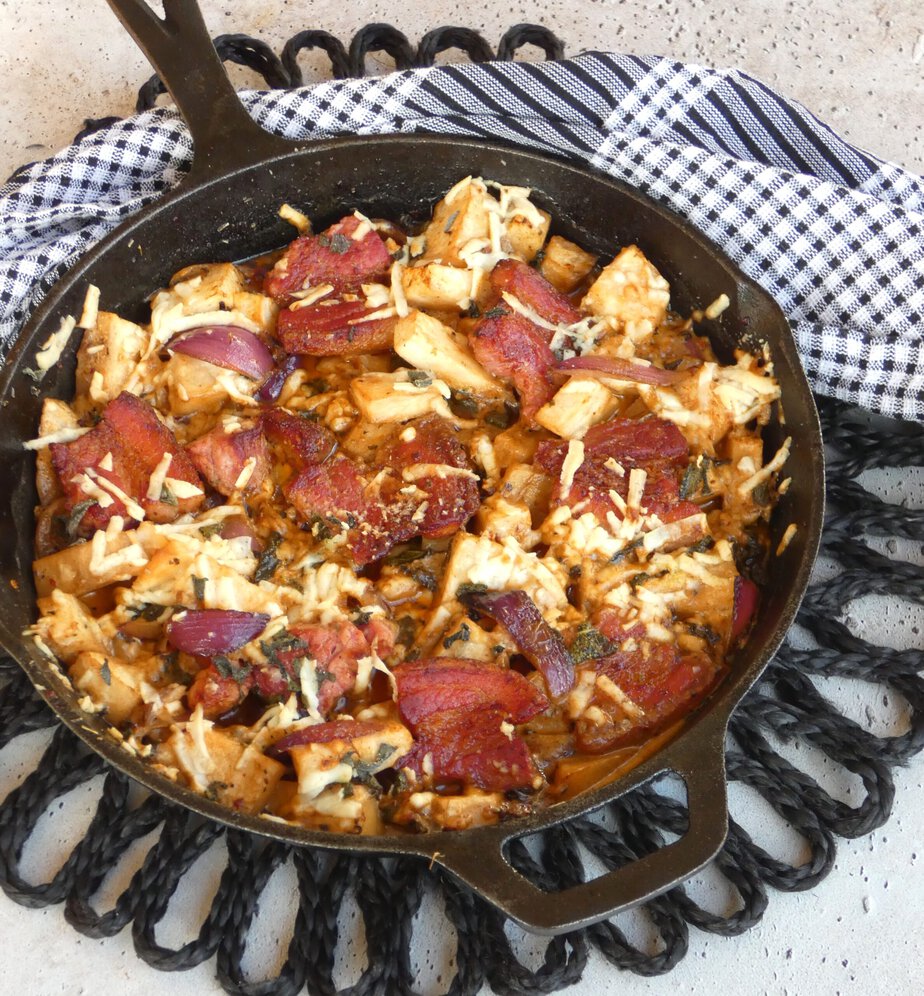
For a different way to cook potatoes, there’s aloo gobi, with cauliflower and spices, or Japanese korokke, breaded croquettes. And for a complete meal, start with French onion soup or an air fryer quiche, and finish with an egg custard.
Ingredients
Cooking Milk
- 400 ml milk fresh whole
- 300 ml whipping cream full-fat, or full-fat heavy cream
- 1 clove garlic, halved, optional
Potatoes
- 1.1 kg potatoes, starchy or waxy
Seasoning
- 1 teaspoon salt fine
- 0.25 teaspoon pepper freshly ground black
- 1 generous pinch nutmeg grated
Gratin Dish
- 50 g butter
Instructions
Cooking Milk
- Pour the milk and cream into a large saucepan.400 ml milk, 300 ml whipping cream
- Add the halved garlic clove.1 clove garlic,
- Bring to a simmer.
- Turn off the heat.
Potatoes
- Wash the potatoes.1.1 kg potatoes,
- Peel them.
- Cut them into thin slices a few millimeters thick.
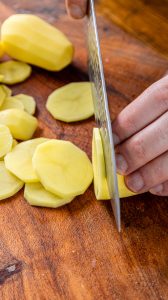
- Don’t rinse the slices: their starch adds flavor, helps bind everything together and gives the gratin a creamy texture.
Precooking in the Milk
- Slide the potato slices into the hot milk.
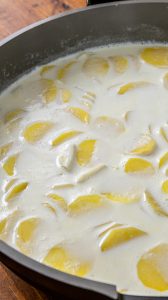
- Bring to a gentle simmer.
- Simmer for 10 minutes, stirring gently from time to time so the potatoes don’t stick to the bottom of the saucepan.
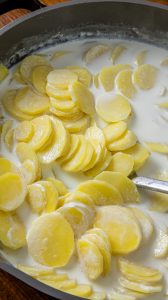
- Season with a third of the salt.1 teaspoon salt
Preparing the Oven and Dish
- While the potatoes are precooking, preheat the oven to 160 °C.
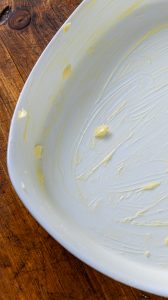
- Grease a round or rectangular gratin dish, about 20 x 30 cm, with the butter.50 g butter
Assembly
- Drain the potatoes with a skimmer, keeping the milk and cream mixture in the saucepan.
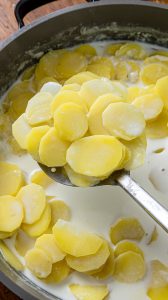
- Arrange half the potatoes in the dish.
- Season with a third of the salt and half the pepper, and add half the nutmeg.0.25 teaspoon pepper, 1 generous pinch nutmeg
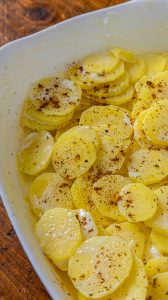
- Arrange the rest of the potatoes on top.
- Season with the rest of the salt and pepper, and add the rest of the nutmeg.
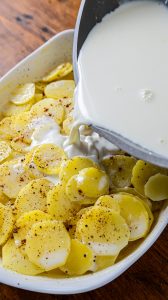
- Pour all of the milk and cream mixture over the potatoes.
Baking
- Bake at 160 °C for about 50 minutes, keeping an eye on the top so it doesn’t burn.
- Raise the oven temperature to 180 °C.
- Bake for another 10 minutes to brown the top.
- Check for doneness: the potatoes should have absorbed much of the liquid while staying creamy, and a knife blade should slide in easily.
- Serve hot or warm.