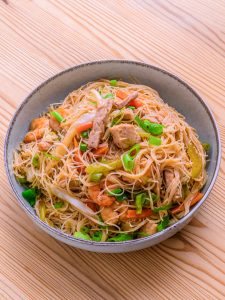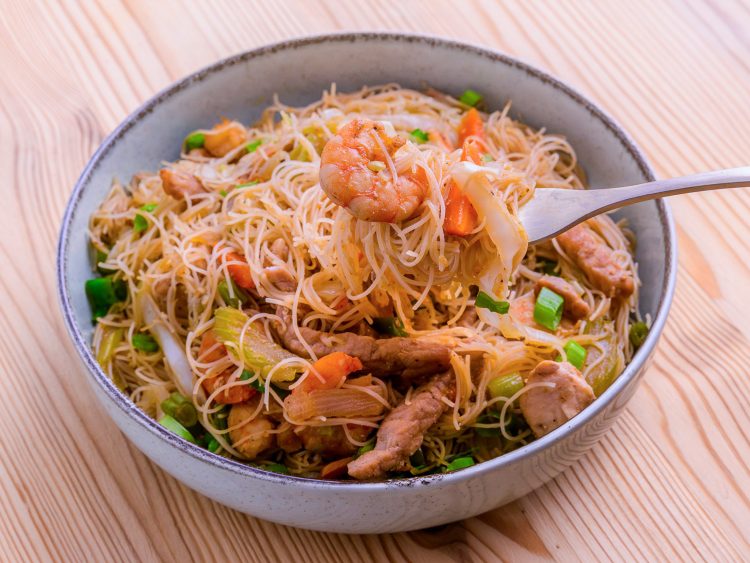
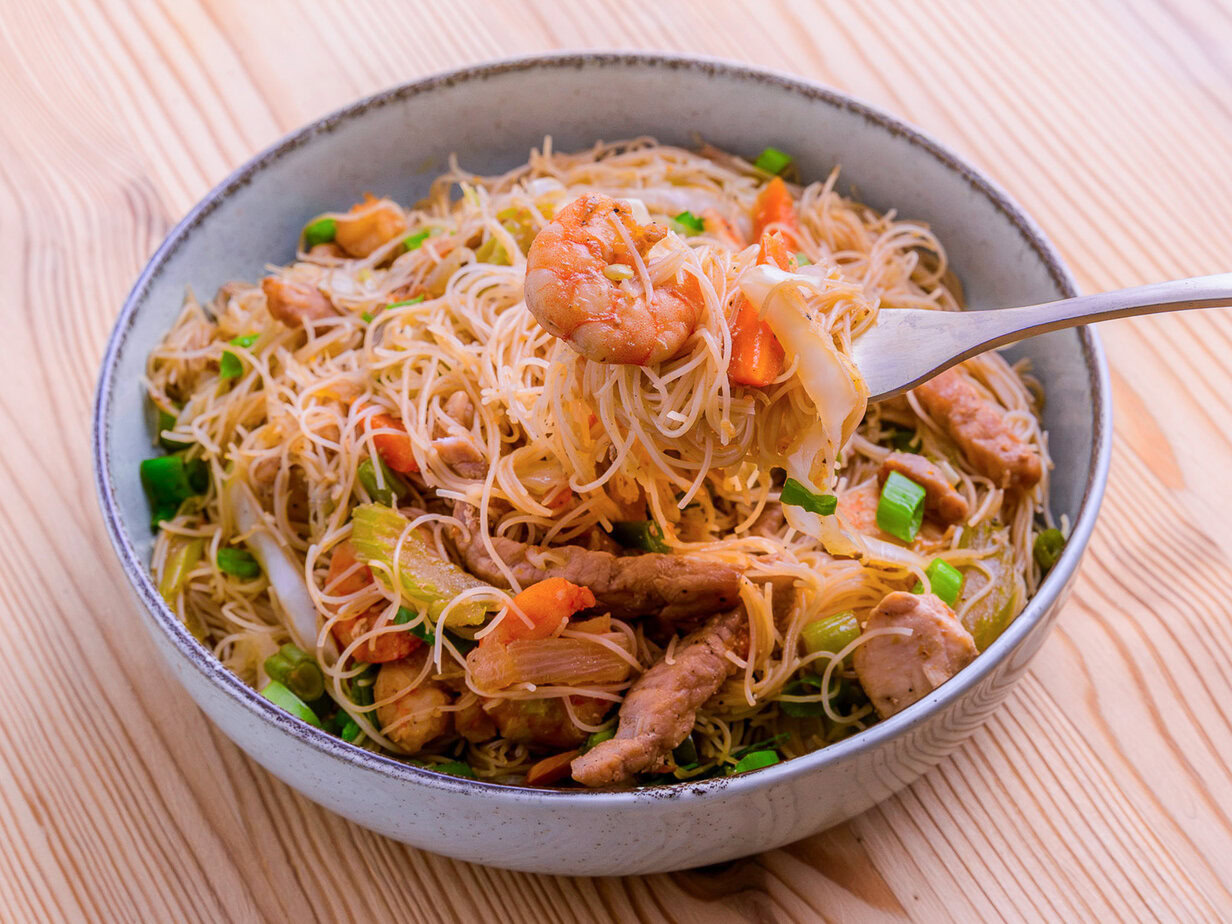
Filipino-style stir-fried rice vermicelli with pork, chicken, shrimp and vegetables, cooked in broth and served with lemon.
On a weeknight, garlic and onion sizzle in the sauté pan and everyone ends up wandering into the kitchen. The thin vermicelli soak up the broth and soy sauce, then tangle with the cabbage, carrots, marinated pork and shrimp.
A squeeze of lemon just before serving brightens everything up. In Filipino cuisine, it’s the birthday dish, and it disappears just as fast on a Tuesday night.
What Is Pancit Bihon?
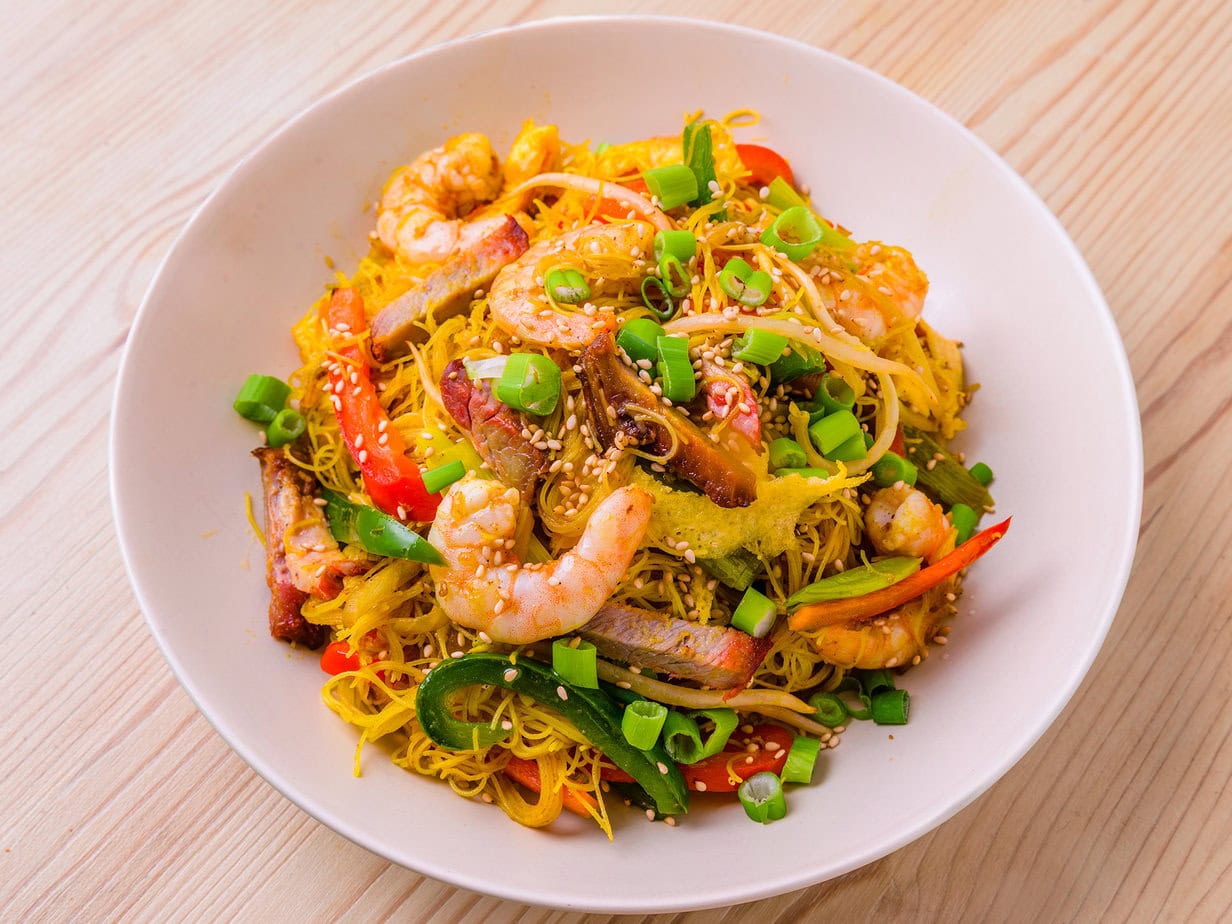
Pancit bihon is a Filipino dish of thin rice vermicelli stir-fried with garlic, onion, vegetables and, most often, chicken, pork and shrimp. The noodles cook right in the seasoned broth, absorbing it until they turn tender, while the vegetables keep a bit of crunch. The finished dish is moist, with no liquid left at the bottom. It stands apart from pancit canton, made with firmer wheat egg noodles, and from sotanghon, which uses translucent vermicelli made from mung bean starch.
The word pancit is generally traced to the Hokkien phrase pian i sit, “something cooked quickly,” and refers to the whole family of Filipino noodle dishes. Bihon is the name for rice vermicelli. The stir-fried version is called pancit bihon guisado, from a word derived from the Spanish guisar, which here refers to sautéing with aromatics.
From Chinese Merchants to Filipino Birthdays
Chinese merchants, largely Hokkien-speaking, traded with the archipelago long before Spanish colonization, and the communities they established there brought noodles into the local cuisine. During the Spanish period, Chinese pancit vendors and later the panciterias, small noodle restaurants, took it beyond the home. No record, however, dates the birth of pancit bihon itself.

Today, pancit shows up on the table at birthdays, baptisms, New Year’s and family gatherings, as well as at everyday meals. Its long noodles symbolize long life, an idea from China that also appears in longevity noodles. That’s why many families avoid cutting them.
It’s served on a large platter or on a bilao, a round woven bamboo tray, with halved calamansi on the side. Everyone squeezes the citrus over their own portion. Filipino families living abroad hold on to it for every birthday.
The Main Ingredients in Pancit Bihon
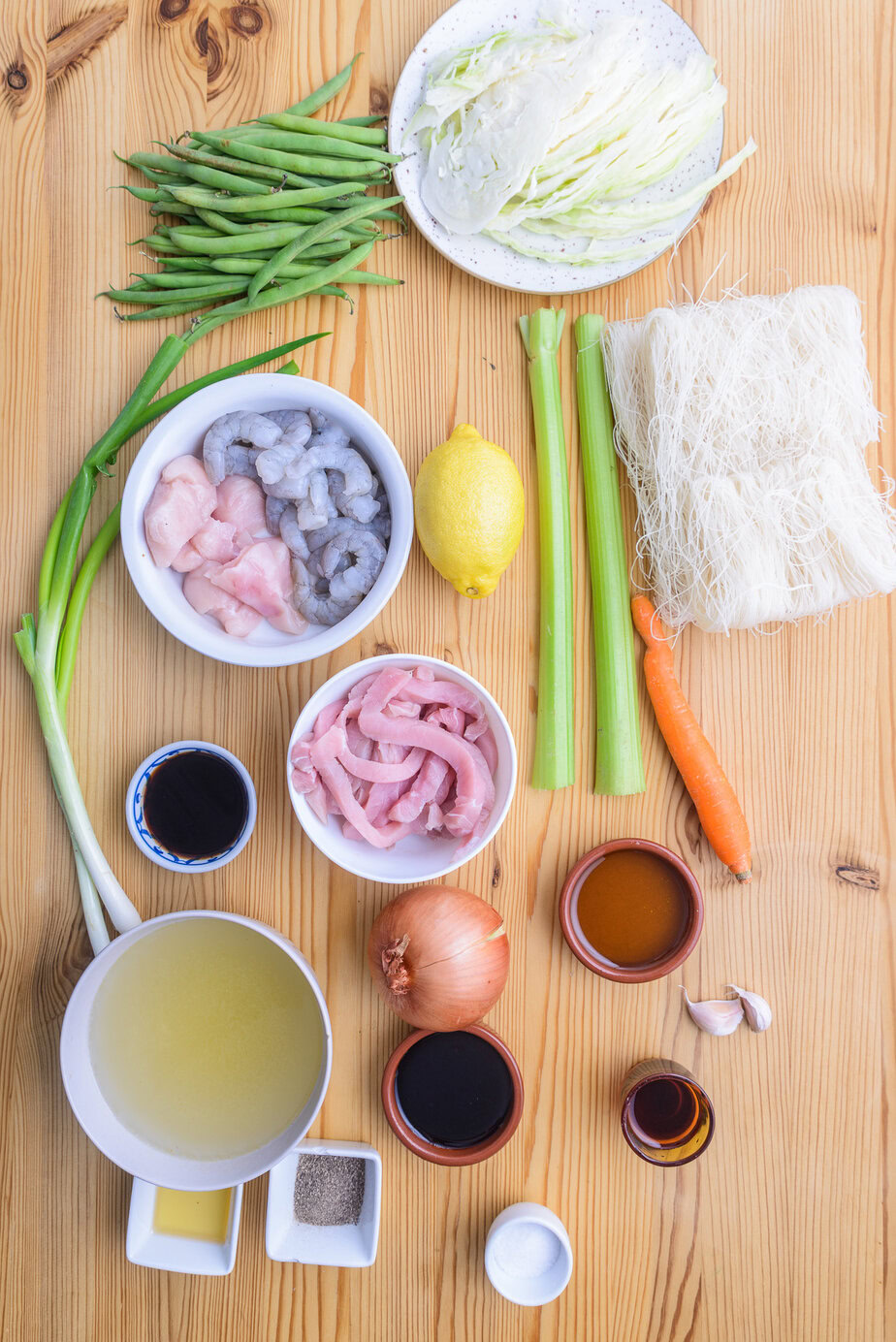
Bihon vermicelli are made from rice flour, sometimes mixed with cornstarch for extra elasticity. Here, they share the sauté pan with three proteins: pork shoulder marinated in soy sauce, chicken breast and shrimp. Cabbage, carrots, green beans and celery add bulk, color and crunch. Depending on the household, snow peas stand in for the green beans, or a single meat is enough.
Garlic and onion sautéed in oil form the aromatic base of the guisado. Chicken broth hydrates the noodles, soy sauce seasons them and gives them their golden color, and fish sauce, Filipino patis, adds a fermented depth rich in umami. Some families add a little oyster sauce as well. A few drops of sesame oil and some black pepper finish the seasoning.

In the Philippines, every plate gets a squeeze of calamansi, a small green citrus fruit that is tart and fragrant. In Europe, lemon takes its place. A mix of lemon juice and orange or mandarin juice comes even closer.
Technique Tips for Good Pancit Bihon
The vermicelli go into the hot broth dry, in two or three batches. Long and stiff at first, they soften as they cook and are then easy to pick up with a fork. Don’t cut them. The cabbage cooks for just a minute or two, or it turns transparent and vanishes into the dish. The pancit is ready when the noodles have turned golden and there’s no liquid left at the bottom of the sauté pan.
Ingredients
Marinated Pork
- 225 g pork shoulder, cut into thin 5 cm strips
- 1 tablespoon soy sauce
Pancit
- 4 tablespoons neutral oil, corn oil, sunflower oil, …
- 1 teaspoon garlic, minced
- 1 onion, chopped
- 100 g celery, chopped
- 115 g chicken breast, cut into 2.5 cm pieces
- 115 g shrimp medium, raw, peeled, heads and tails removed
- 360 ml chicken broth, or vegetable broth
- 1 tablespoon fish sauce
- 1 tablespoon soy sauce
- 1 carrot, peeled and chopped
- 200 g green beans, cut into 0.5 cm pieces
- 140 g cabbage, thinly sliced
- 225 g rice vermicelli, dry weight
- 1 teaspoon salt
- 1 teaspoon black pepper ground
- 0.125 teaspoon sesame oil
To Serve
- 2 green onions, green parts only, thinly sliced
- 1 lemon, juiced
Instructions
Marinated Pork
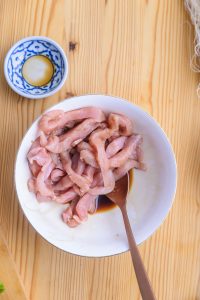
- Mix the pork strips with the soy sauce to marinate them.225 g pork shoulder,, 1 tablespoon soy sauce
Pancit
- Heat the oil in a large sauté pan over medium-high heat.4 tablespoons neutral oil,
- Add the garlic, onion, and celery.1 teaspoon garlic,, 1 onion,, 100 g celery,
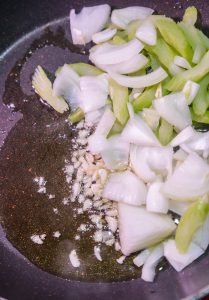
- Sauté quickly for 1 to 2 minutes, until the onion turns translucent.
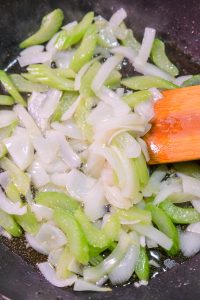
- Add the pork, chicken, and shrimp.115 g chicken breast,, 115 g shrimp
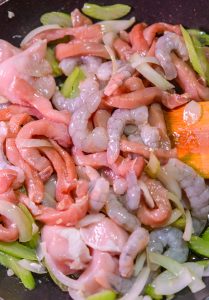
- Stir-fry for about 8 minutes, until the meat turns from pink to brown.
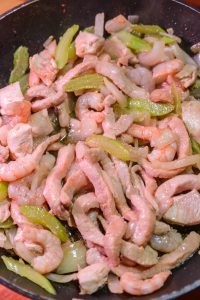
- Pour in the broth and fish sauce.360 ml chicken broth,, 1 tablespoon fish sauce
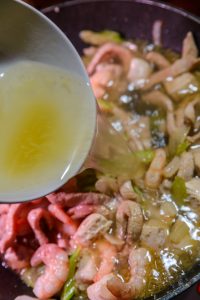
- Stir well.
- Add the soy sauce.1 tablespoon soy sauce
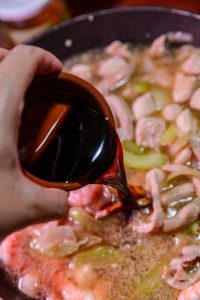
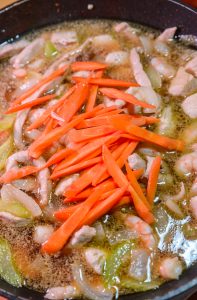
- Add the carrot and cook for 1 to 2 minutes to soften it.1 carrot,
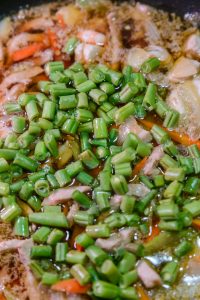
- Add the green beans and cook for 6 minutes.200 g green beans,
- Add the cabbage and cook for 1 to 2 minutes, no longer: if overcooked, it turns transparent and disappears into the dish.140 g cabbage,
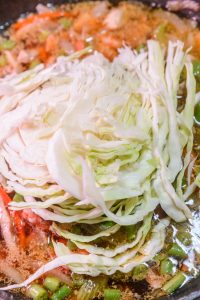
- Make sure the broth is very hot and full of flavor from the meat and vegetables.
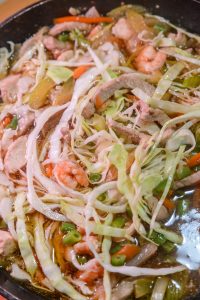
- Add the vermicelli a little at a time, in two or three batches, without cutting the noodles.225 g rice vermicelli,
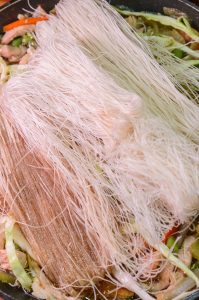
- Coat the vermicelli in the mixture of meat, vegetables, and broth.
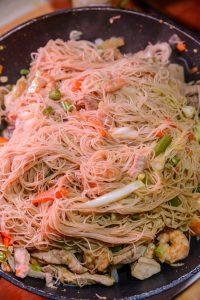
- Keep tossing everything in the pan until the vermicelli turns from white to golden.
- Season with salt and pepper.1 teaspoon salt, 1 teaspoon black pepper
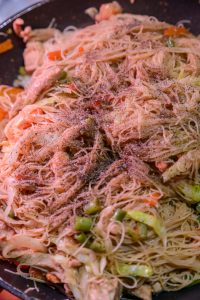
- Add the sesame oil, drop by drop.0.125 teaspoon sesame oil
To Serve
- Sprinkle with the green onion.2 green onions,
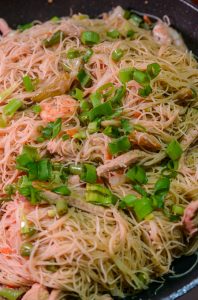
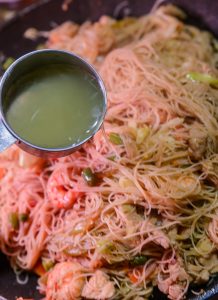
- Drizzle with the lemon juice.1 lemon,
- Serve hot.