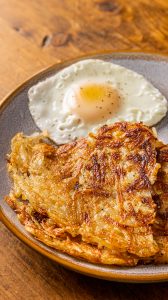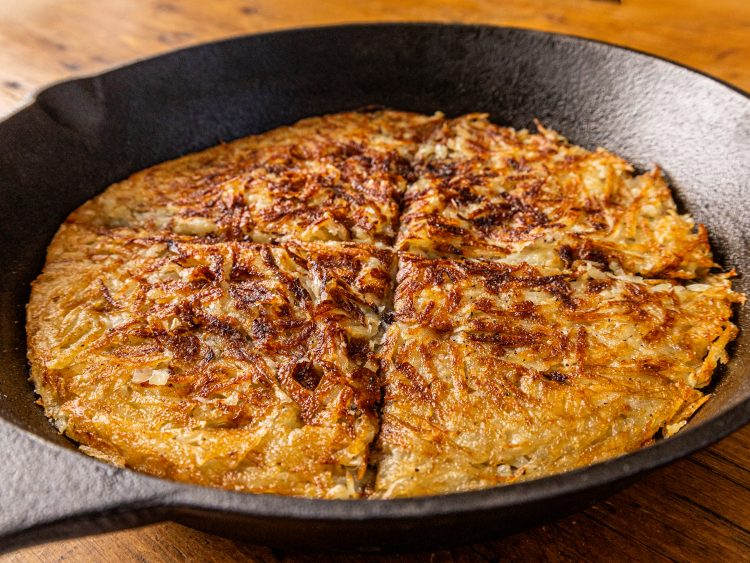
Grated raw potatoes, rinsed, squeezed completely dry, then pan-fried in butter until golden and crispy, the way American diners make them.
On Sunday morning, the frying pan heats up, the butter starts to foam and the grated potatoes begin to sizzle. A few minutes later, the shreds have turned golden, crunching under your fork while staying tender inside.
On the side, a fried egg with its yolk running over the crispiest bits. This is the breakfast of American diners, and all it takes is potatoes, butter and a little patience.

What Are Hash Browns?
Hash browns are grated raw potatoes, rinsed and squeezed thoroughly dry, then fried in a thin layer in butter and a little oil until golden and crispy on both sides.
This classic of American cuisine is served at breakfast with eggs and bacon in diners, the casual, inexpensive restaurants that open first thing in the morning. Swiss rösti is a thicker potato cake, often made with precooked potatoes, and the frozen patties from the supermarket are a different, factory-made product. Japanese korokke are something else again: breaded croquettes made from mashed potatoes.
The English verb to hash, “to chop into small pieces,” comes from the French hacher, and browned means “cooked until golden.” The full name, “hashed and browned potatoes,” therefore describes potatoes that are chopped up and then browned in a frying pan.
From the 19th Century to Diner Plates
The phrase “hashed and browned potatoes” appears in American culinary writing of the 19th century, before the short form “hash browns” caught on. It referred to a method, chopping and then browning potatoes, rather than a specific recipe, and these early mentions don’t always refer to grated potatoes.
Diners turned them into a breakfast staple, alongside eggs and bacon. The potatoes make the plate more filling, and their crust contrasts with the soft eggs. At brunch, American pancakes or American cinnamon rolls round out the table nicely.
The Main Ingredients in Hash Browns
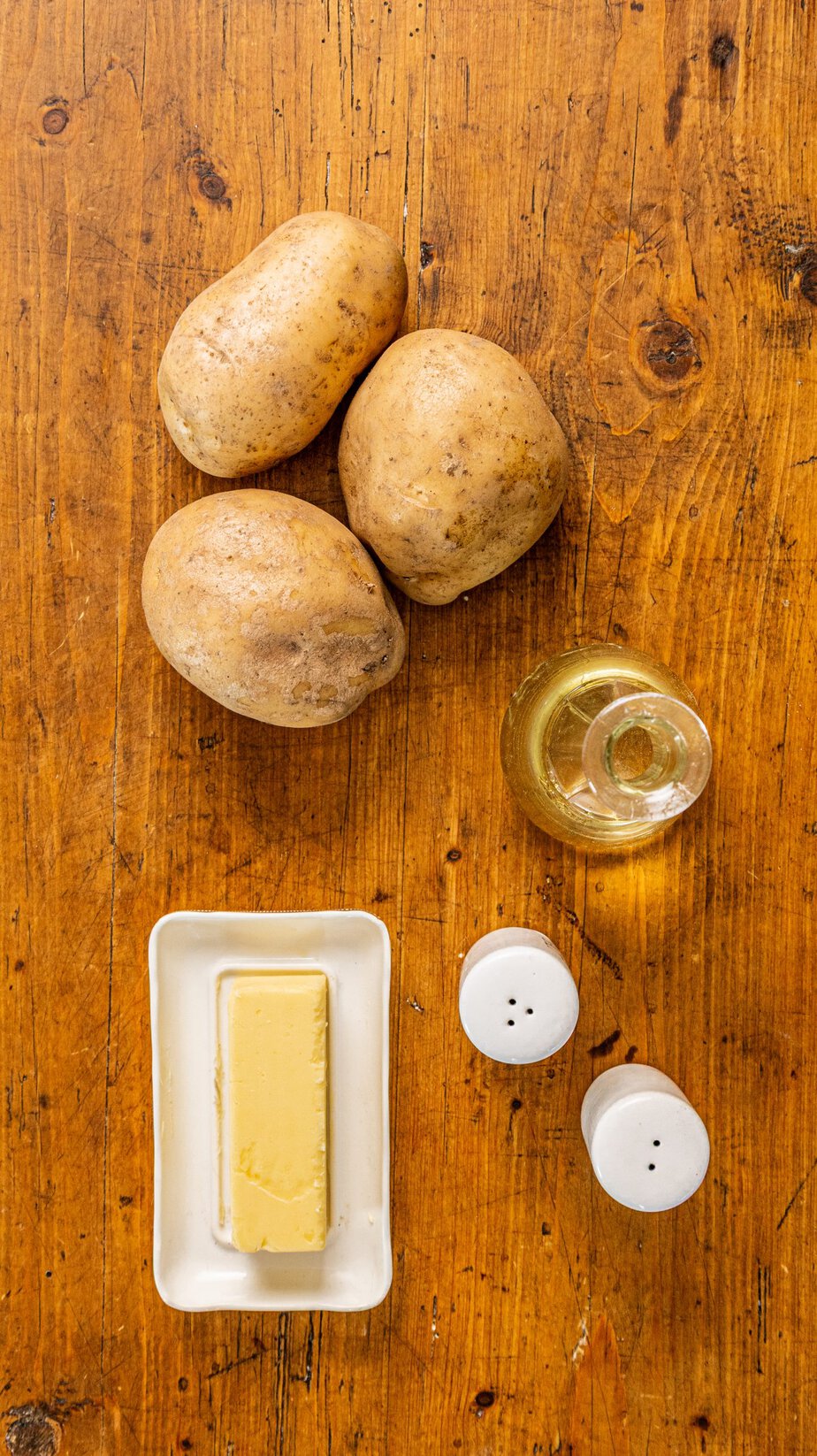
You’ll need about 680 g of starchy potatoes, or 3 potatoes, for four people. High in starch and low in moisture, they brown quickly and stay tender inside. In Belgium and France, Bintje works very well; in the United States, people use russets, and in the UK, King Edward or Maris Piper. In Germany, look for the word mehligkochend (starchy) on the bag.
Lightly salted butter brings the flavor, and sunflower or canola oil keeps it from burning over medium-high heat. One tablespoon of each is enough to start; add a little more butter as soon as the pan starts to look dry. Season with salt and freshly ground black pepper before cooking, then adjust the seasoning when serving, keeping in mind the salt in the butter. For a fragrant finish, a pat of chive blossom butter melts beautifully over the hot pieces.
Technical Tips for Crispy Hash Browns
Grating releases starch onto the surface of the shreds. Rinsing removes that excess, which would make the potatoes gummy, and the starch left inside is enough for a tender center. The gray patches on grated raw potatoes come from oxidation on contact with air and have nothing to do with the golden crust you get from cooking.
Squeezing out the water matters even more. Any water left behind steams the potatoes, and that’s the number one cause of limp, soggy hash browns. The same principle applies to air fryer sweet potato fries, which you dry before cooking.
In the pan, a thin layer lets the steam escape, just as Cantonese fried rice stir-fries better in an uncrowded pan. Flipping the potatoes too soon tears the crust before it has set. Neither flour nor egg binds the hash browns, unlike Korean yachaejeon with their flour batter.
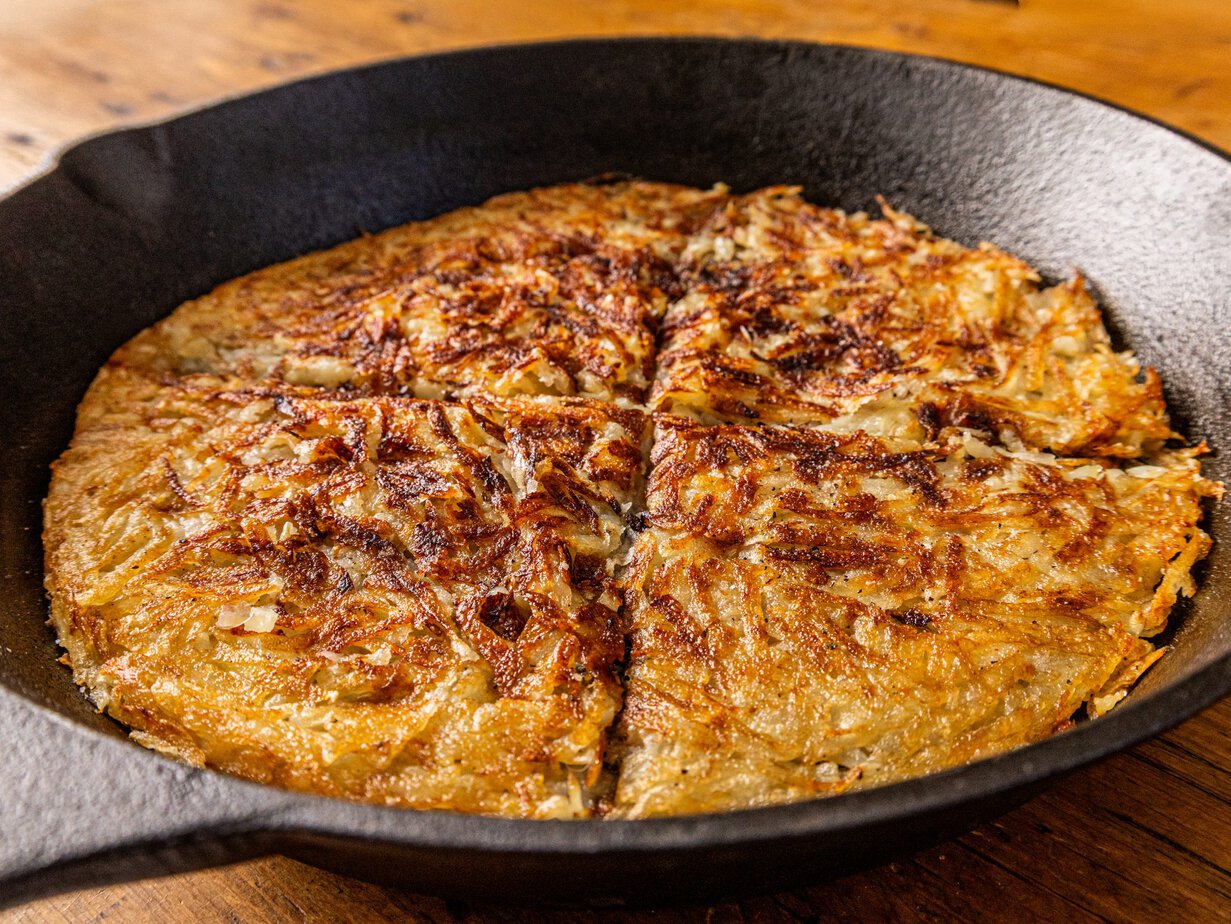
Serve hash browns straight from the pan, with a fried egg or an air fryer soft-boiled egg, and a dash of sriracha sauce for those who like some heat. To save time on another morning, you can freeze the grated, rinsed and well-squeezed potatoes raw in an airtight bag.
Ingredients
Potatoes
- 3 potatoes starchy (such as russet), about 680 g total
Seasoning
- 1 teaspoon salt
- 1 pinch black pepper freshly ground
- Salt and black pepper, to finish
Cooking
- 1 tablespoon salted butter, or more
- 1 tablespoon neutral oil (sunflower or canola)
Instructions
Peel and Grate
- Fill a mixing bowl with room-temperature water.
- Peel the first potato.3 potatoes
- Put it in the bowl of water.
- Peel the remaining potatoes, adding each one to the water as you go.
- Set a colander in the sink.
- Grate the potatoes over the colander on the large holes of a cheese grater or a box grater (or with the grating disk of a food processor).
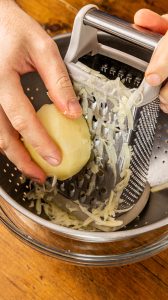
Rinse
- Rinse the grated potatoes in the colander until the water runs clear: this is what removes the excess starch.
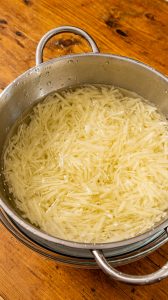
- Drain well.
Squeeze Dry
- Spread the potatoes in the center of a large clean kitchen towel.
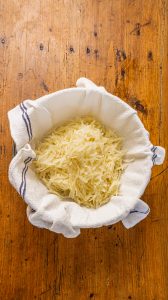
- Gather up the corners of the towel.
- Twist and squeeze the towel to wring out as much water as possible.
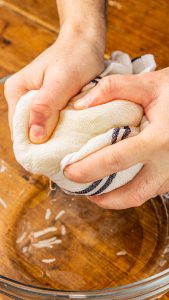
- Open the towel.
- Fluff the potatoes with your fingers.
- Close the towel again.
- Squeeze again.
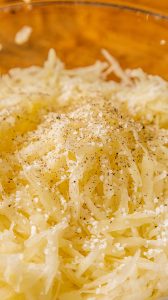
Season
- Transfer the potatoes to a mixing bowl.
- Sprinkle them with the salt and pepper.1 teaspoon salt, 1 pinch black pepper
Cook
- Heat a large frying pan, preferably nonstick, over medium-high heat.
- Add the butter and oil.1 tablespoon salted butter,, 1 tablespoon neutral oil
- Wait until the butter has melted and the pan is very hot.
- Add the potatoes in a thin, even layer.
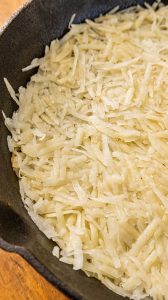
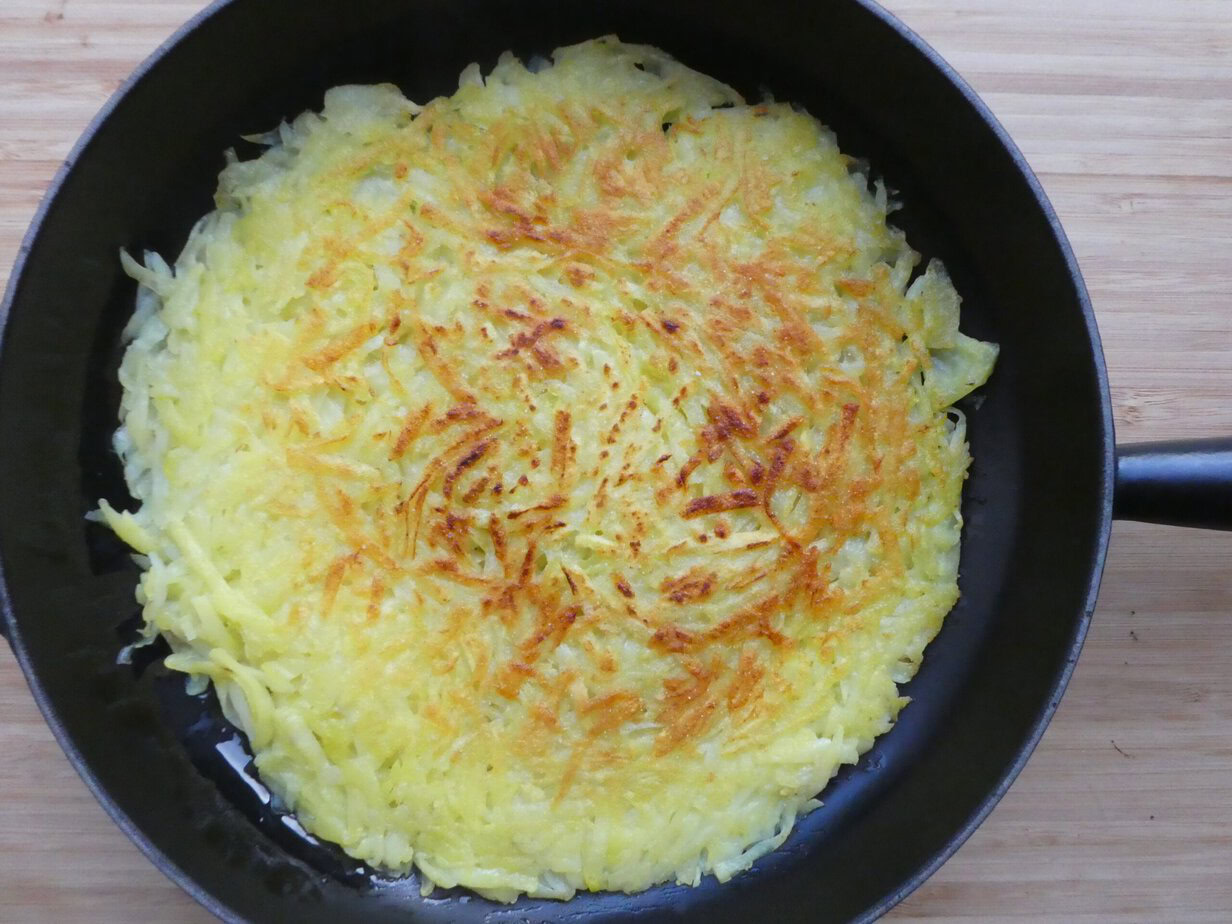
- Cook undisturbed for about 5 minutes, until a deep golden crust forms on the bottom.
- Listen to the pan as they cook: the potatoes should sizzle. If the sizzling stops, add a little butter.
- Break the potato cake into several pieces with a spatula.
- Flip the pieces.
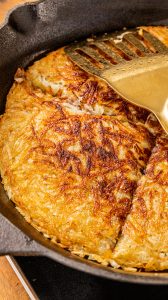
- Cook for another 5 to 8 minutes, until the other side is golden brown.
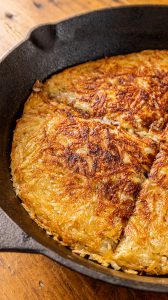
- Add a little butter if the pan gets dry.
Serve
- Adjust the seasoning with salt and pepper.Salt and black pepper,
- Serve, for example with a fried egg.