A rich, deeply flavored curry made over two days, with homemade broth, spiced roux, and slow-simmered beef for an intensely aromatic sauce.
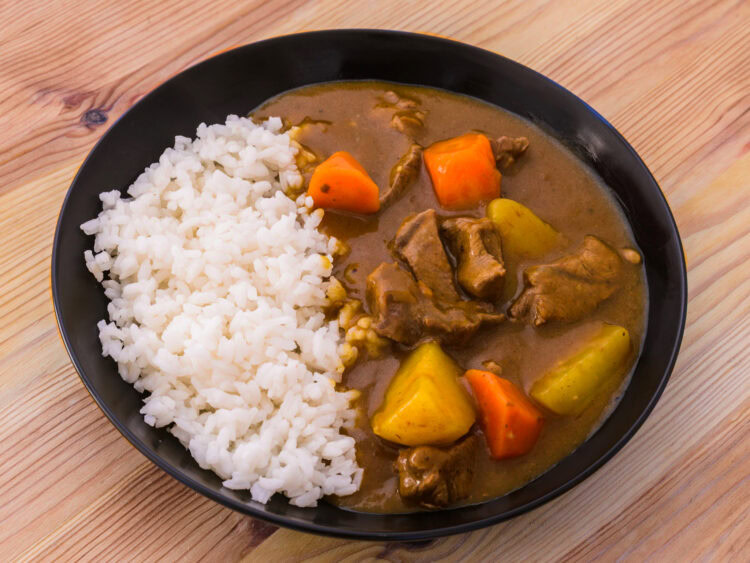
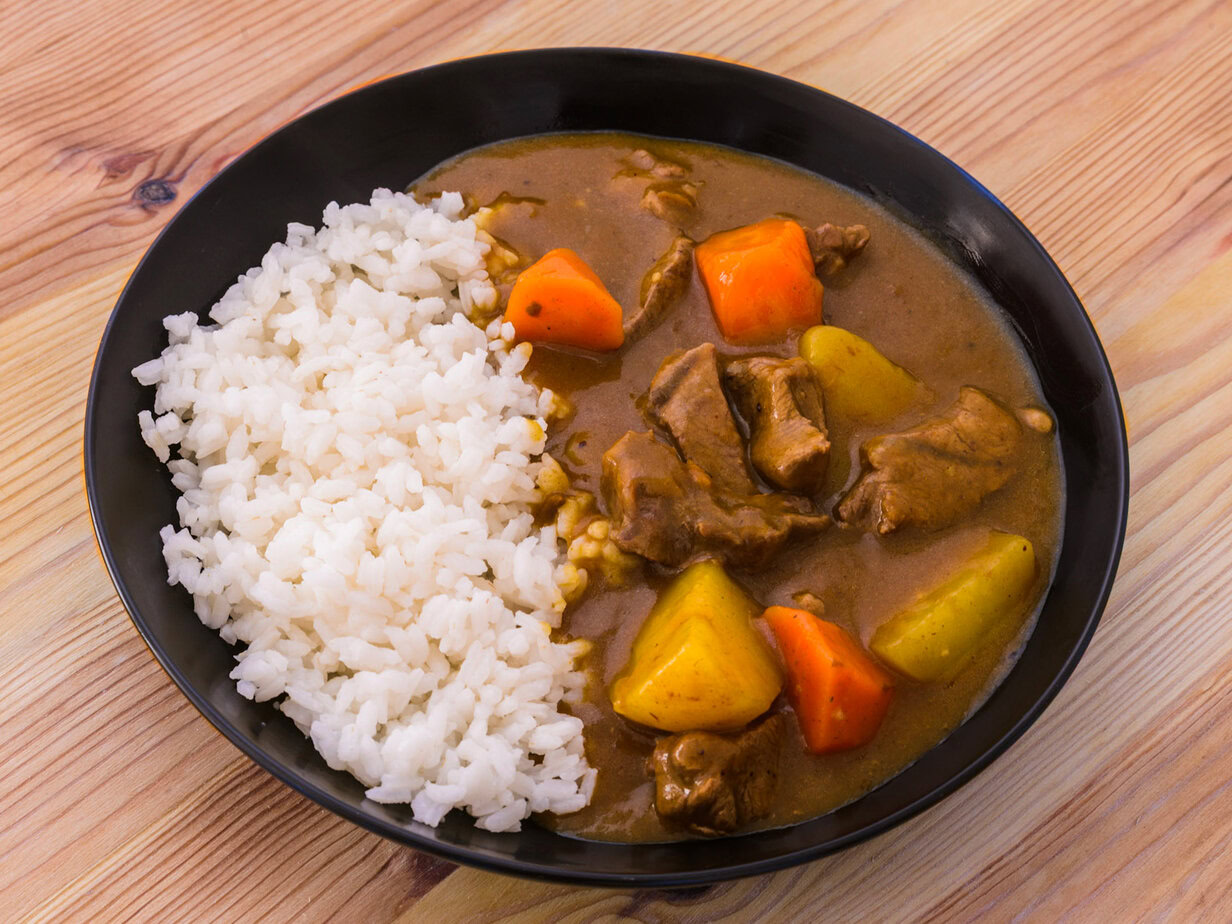
Steam curls up from a mound of pearly short-grain Japanese rice, while tender beef soaks up a glossy, gently spiced sauce. On the palate, it is pure comfort: savory, just barely sweet, with a rounded warmth rather than a fiery kick.
Today, as the weather keeps swinging from one extreme to the other, we’re diving into Bīfu Karē, Japanese-style beef curry. Often overshadowed by karē raisu, a great classic of yōshoku, I hope this article will make you eager to try this comforting dish, perfect for sharing with a small table or a crowd.
What is bīfu karē?
Bīfu karē (ビーフカレー) simply means “beef curry.” In practice, it is a form of karē raisu (カレーライス), or curry served over rice, one of the pillars of yōshoku (Western-inspired Japanese cuisine).
Its foundation is a sauce thickened with Japanese curry roux. Reconstructions and navy curry-style versions often mention beef fat (hett), while the oldest sources refer instead to butter. Overall, it is closer to an English-style curried stew than to an Indian-style spice paste.
It typically includes beef, the classic trio of vegetables (onion, carrot, and potato), a simple broth (or water) so the curry powder remains front and center, and straightforward seasoning: salt, sometimes with a hint of pepper. The dish is meant to be mixed with the rice as it is served: the sauce coats each grain with a smooth, cohesive texture. The heat stays gentle, and the umami builds gradually, with a restrained sweetness.
Note: milk appears frequently in late Meiji-era recipes (1907–1911) to mellow the spices. Older versions, from around 1872, focus instead on leek, ginger, and garlic, and allow for a wider range of proteins, sometimes with apple or a final touch of yuzu. With these reference points in mind, two frameworks of authenticity can coexist.
The origins of Japanese beef curry
Two milestones shape this story. First, the earliest identified printed recipes appeared in 1872, at the beginning of the Meiji era: guides such as Seiyō ryōri shinan and Seiyō ryōri tsū describe a stew-like curry, thickened with flour and seasoned primarily with curry powder, with an aromatic base centered on leek, ginger, and garlic. A menu from 1867 already mentions “shrimp” and “chicken” curries in a Westernized dining context.
Next, a more “canonical” form took hold between 1908 and 1911, built around a combination of ingredients that became highly recognizable. The proteins vary in older texts (beef, chicken, seafood, even frog), and some versions add apple or finish with yuzu. Serving it with rice was already taken for granted, with some early texts even describing rice arranged in a ring.
The move toward a clear standard happened especially in military kitchens. In the Kaigun kappōjutsu sankōsho (1908), the recipe is titled カレイライス in the facsimile (period spelling) and lists beef (or chicken), onion, carrot, potato, curry powder, flour, salt, and rice. This model was taken up by cookbooks from the late Meiji period, which standardized the vegetable trio and often tempered the heat with milk.
Its development is especially associated with open port areas, notably the Yokohama area, as well as military institutions. The simplified story that “the navy invented it” remains debated, but Yokosuka would eventually codify a citywide “navy curry.” In 1999, a revitalization committee launched and formalized the “Yokosuka Navy Curry” initiative; certified establishments often serve it as a set meal, with salad and milk.
The main ingredients in Bīfu Karē
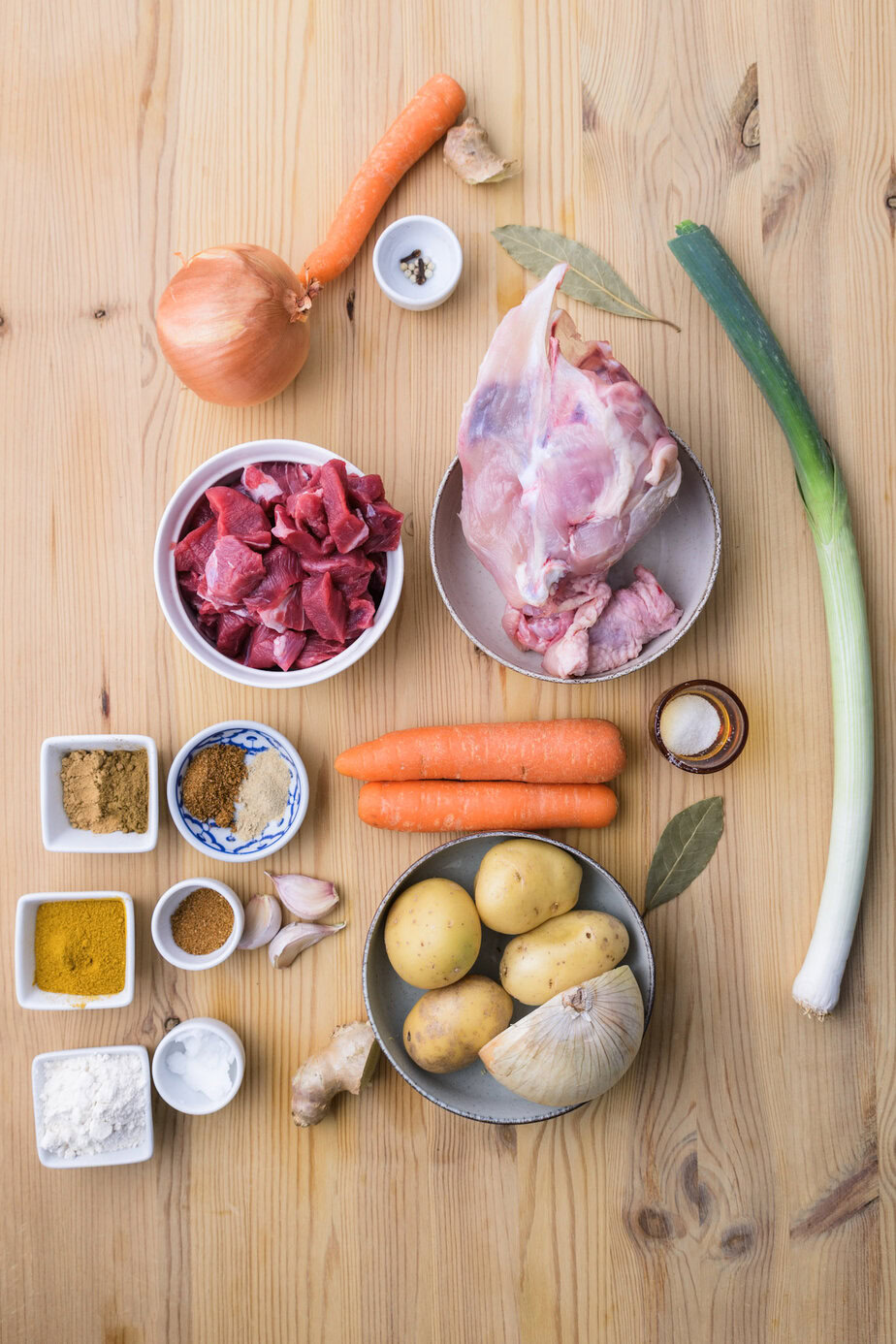
- Beef: the central protein; its gelatin and fat enrich the sauce and give it body as it cooks.
- Onion: brings aromatic depth and sweetness; it melts into the sauce and helps thicken it.
- Carrot: adds gentle sweetness and color; it balances the salt and spices without masking the curry flavor.
- Potato: adds structure and substance; its starch works with the roux to create a sauce that clings to the rice.
- Beef tallow (ヘット, hett) or neutral fat: the fat used to cook the flour and develop the aroma of the curry powder; tallow (beef dripping) is often specified in navy-style reconstructions.
- Flour: the signature thickener; it creates a smooth, bound sauce, distinct from a simple reduced broth.
- Curry powder (British style): defines the flavor profile: a warm, rounded spice blend, less sharp than an Indian-style spice paste. (For a homemade version, see Japanese curry powder.)
- Simple broth or water: keeps the flavors clear and lets the curry powder shine; avoids competing aromatics.
- Rice (Japanese short-grain): the essential partner; the dish is designed to be mixed with the rice as you eat.
- Condiment: chutney or Japanese pickled vegetables (tsukemono): a tangy or sweet-and-sour counterpoint, long present in “navy” and local servings, as documented by the regional cuisine page from Japan’s Ministry of Agriculture, Forestry and Fisheries (MAFF) on yokosuka kaigun curry.
- Variation (late Meiji): milk: softens the heat and bitterness; a domestic adaptation frequently attested around 1907–1911.
A few markers of authenticity and common mistakes
Authenticity comes through in a curry-powder base thickened with roux, beef and diced vegetables, simple seasoning, and service with rice. In navy curry-style reconstructions, beef fat (hett) is also used, often accompanied by pickled condiments or chutney; in Yokosuka, the set generally includes salad and milk.
The period markers are clearly distinct: in 1872, leek, ginger, and garlic were favored; between 1908 and 1911, the onion-carrot-potato trio became standard.
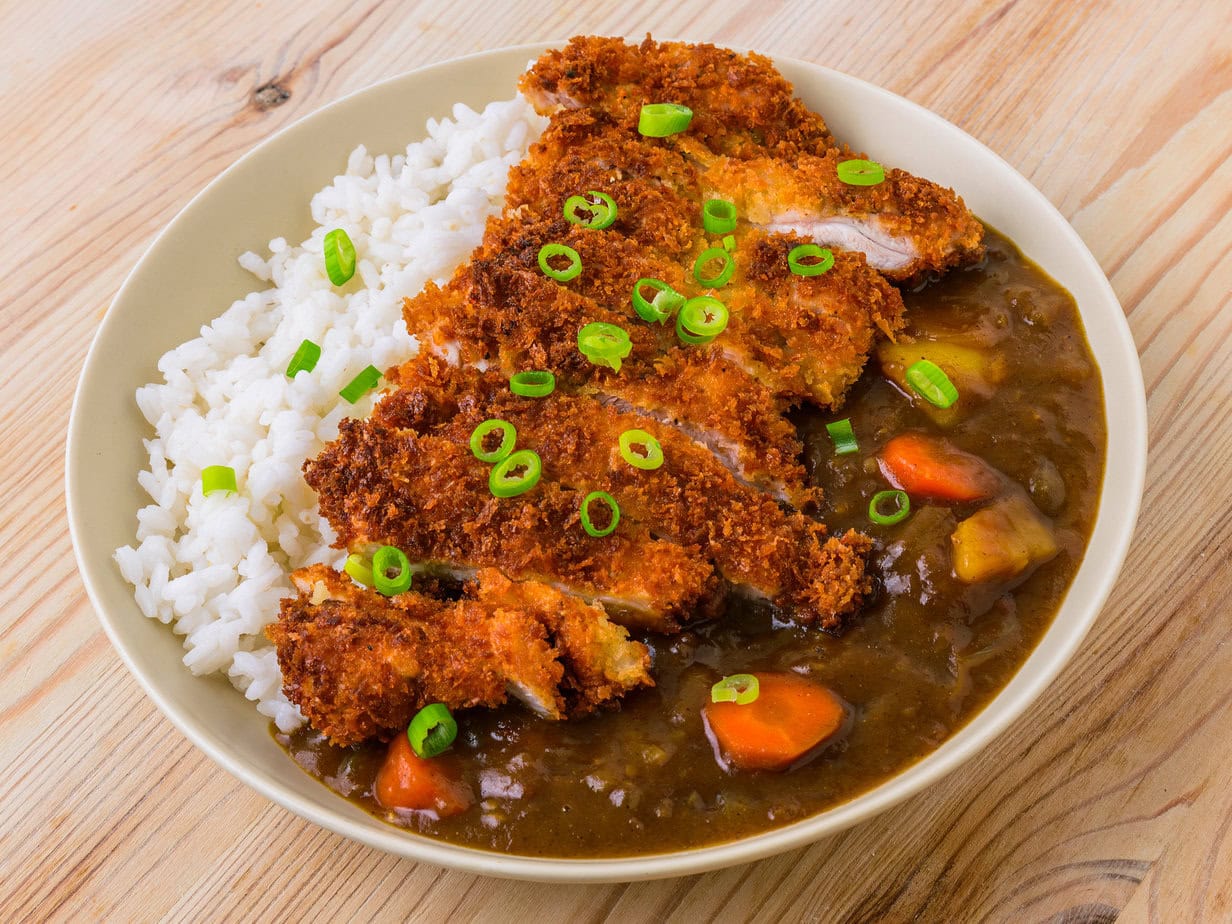
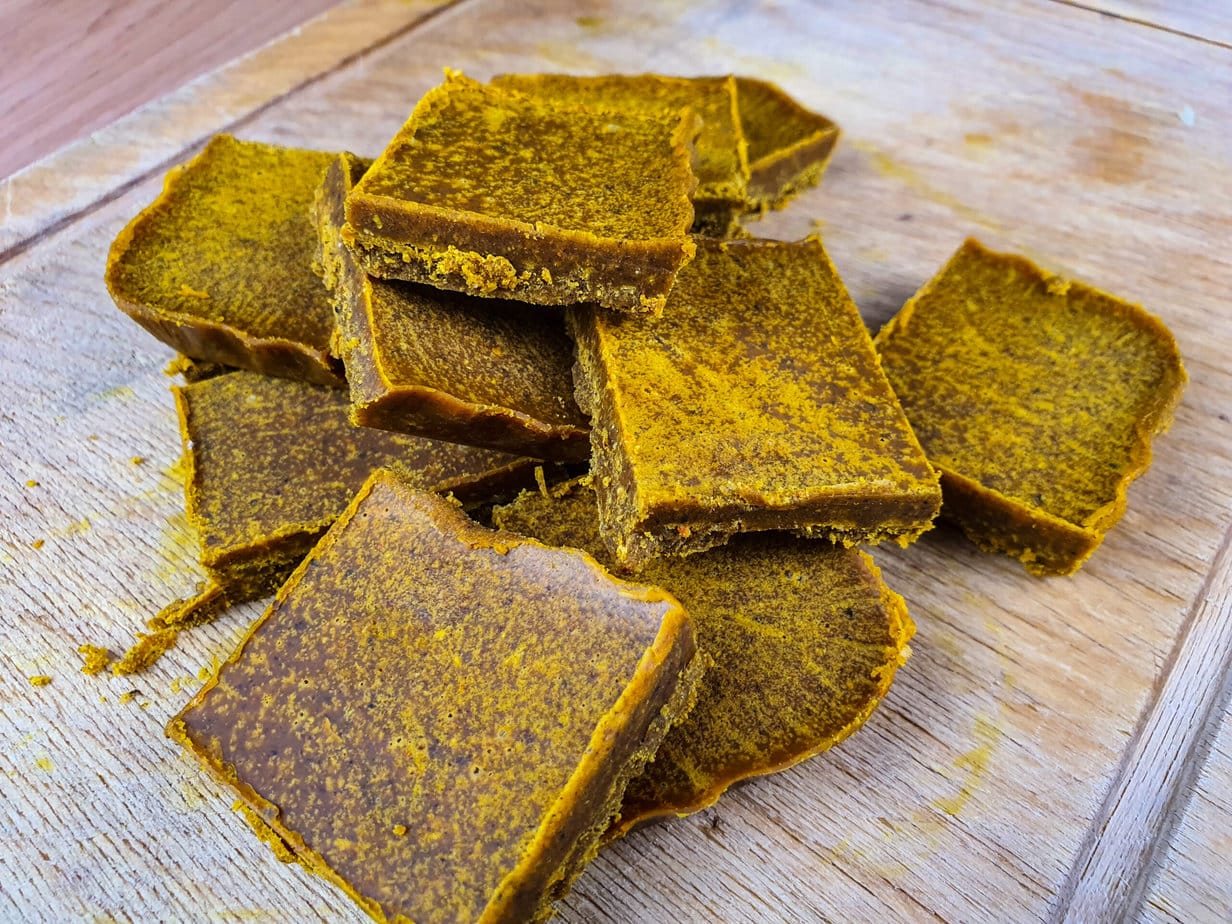
If the goal is historical accuracy, warning signs include postwar industrial roux blocks (absent from the 1908 sources), garam masala or coconut milk, as well as modern additions that blur the structure. To compare with highly codified contemporary versions, you can also consult katsu curry or curry udon. It is better to choose one approach and keep the structure coherent.
Ingredients
Curry
- 200 g beef brisket cut into cubes
- 170 g onion diced
- 80 g carrot diced
- 150 g potato diced
- 15 g garlic finely chopped
- 20 g ginger finely chopped
- 10 g beef fat
- 28 g bread flour
- 8 g curry powder approximately
- 500 ml stock plus more as needed
- 1 leaf bay leaf
- 5 g ground cumin
- 4 g ground ginger approximately
- 4 g ground coriander approximately
- garam masala to taste
- salt to taste
- white pepper to taste
Stock
- 1 chicken carcass from 1 chicken
- 1 onion
- 0.5 carrot
- 0.5 leek if available
- ginger peels to taste
- 1 L water
- 1 leaf bay leaf
- 2 cloves
- 10 white peppercorns
- 9 g salt
Instructions
Day 1 — Stock and Curry Base
- Prepare the stock: place the water in a large stockpot, add the rinsed chicken carcass, and bring to a boil. Skim off any foam, then cook for 30 minutes, skimming as needed.1 L water, 1 chicken carcass
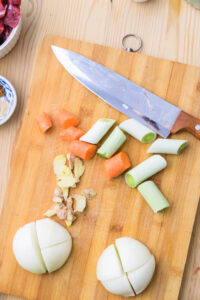
- Cut the onion, carrot, and leek into large pieces. Add them to the pot with the ginger peels, then add the bay leaf, cloves, white peppercorns, and salt. Return to a boil, reduce the heat, and keep at a gentle simmer for 3 to 4 hours, adding a little water as needed to maintain the level.1 onion, 0.5 carrot, 0.5 leek, ginger peels, 1 leaf bay leaf, 2 cloves, 10 white peppercorns, 9 g salt
- Strain the stock and set aside.
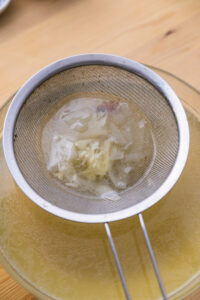
- In a saucepan over low heat, add the beef fat and melt it if solid, then sauté the garlic. When the garlic begins to color, add the ginger and continue sautéing gently. If using solid pieces of fat, remove them once they have shriveled and no longer release oil.10 g beef fat, 15 g garlic, 20 g ginger
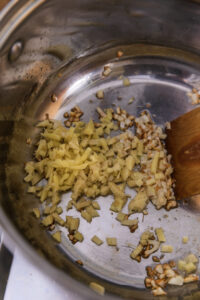
- Add the onion and sauté over low heat until deeply caramelized.170 g onion
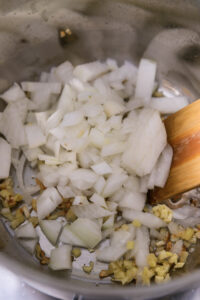
- Add the flour and stir well, then add the curry powder and mix until you have a smooth roux.28 g bread flour, 8 g curry powder
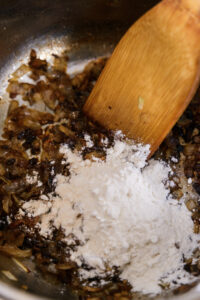
- Gradually add the hot stock, whisking to loosen the roux, then add the cumin, coriander, bay leaf, and ground ginger. Simmer for at least 2 hours.500 ml stock, 5 g ground cumin, 4 g ground coriander, 1 leaf bay leaf, 4 g ground ginger
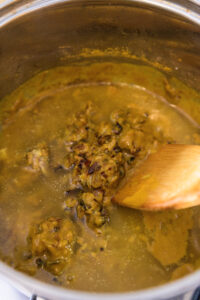
- Let cool completely, then refrigerate overnight.
Day 2 — Meat, Vegetables, and Finishing
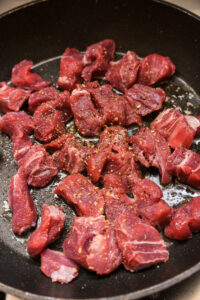
- Season the meat with salt and pepper, then sear it in a pan until browned. Add enough stock to just cover the meat and simmer for 2 hours.200 g beef brisket, salt, white pepper
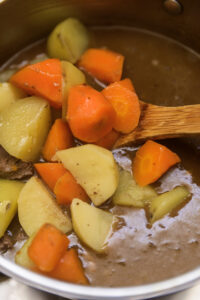
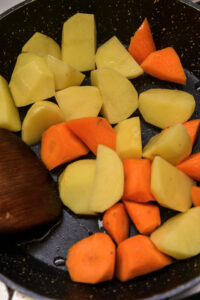
- Sauté the carrot and potato, then cook them in a little stock until tender. Adjust the heat so the potato does not break apart. Remove the vegetables from the stock and set aside.80 g carrot, 150 g potato
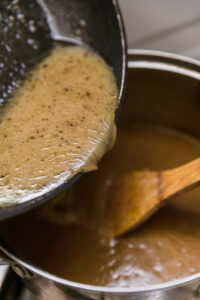
- Remove the meat, then add the meat cooking liquid to the curry to adjust the consistency. Let simmer, then season with salt to taste.
- Add the garam masala at the end of cooking, then return the meat, carrot, and potato to the curry and warm through gently.garam masala