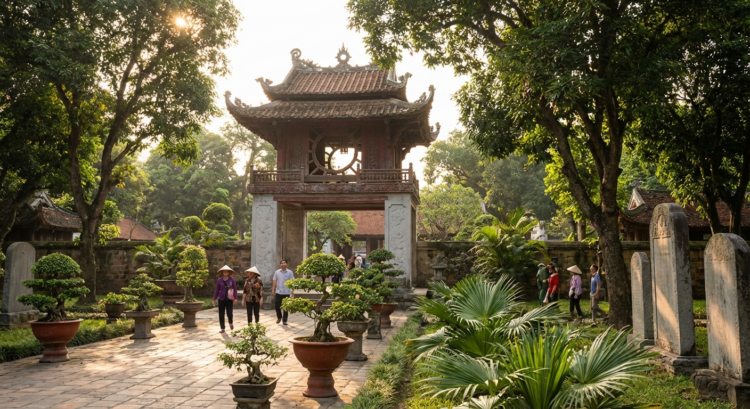
Hanoi was founded in 1010, when Emperor Ly Thai To moved his court to the banks of the Red River: 1,000 years later, a Confucian temple dating from 1070 stands a 15-minute walk from a French colonial opera house completed in 1911.
What should you see in Hanoi? Here are my 18 sights, with entrance fees, dress codes, the best time to visit and scams to avoid. For the most part, comfortable shoes and a willingness to cross the traffic were all I needed, without a car or tourist bus.
- 1. Get lost in the 36 streets of the Old Quarter
- 2. See the Phùng Hưng murals and St. Joseph’s Cathedral
- 3. Stroll through the weekend pedestrian streets around Hoan Kiem Lake
- 4. See Hoan Kiem Lake at dawn
- 5. Cross The Huc Bridge to Ngoc Son Temple
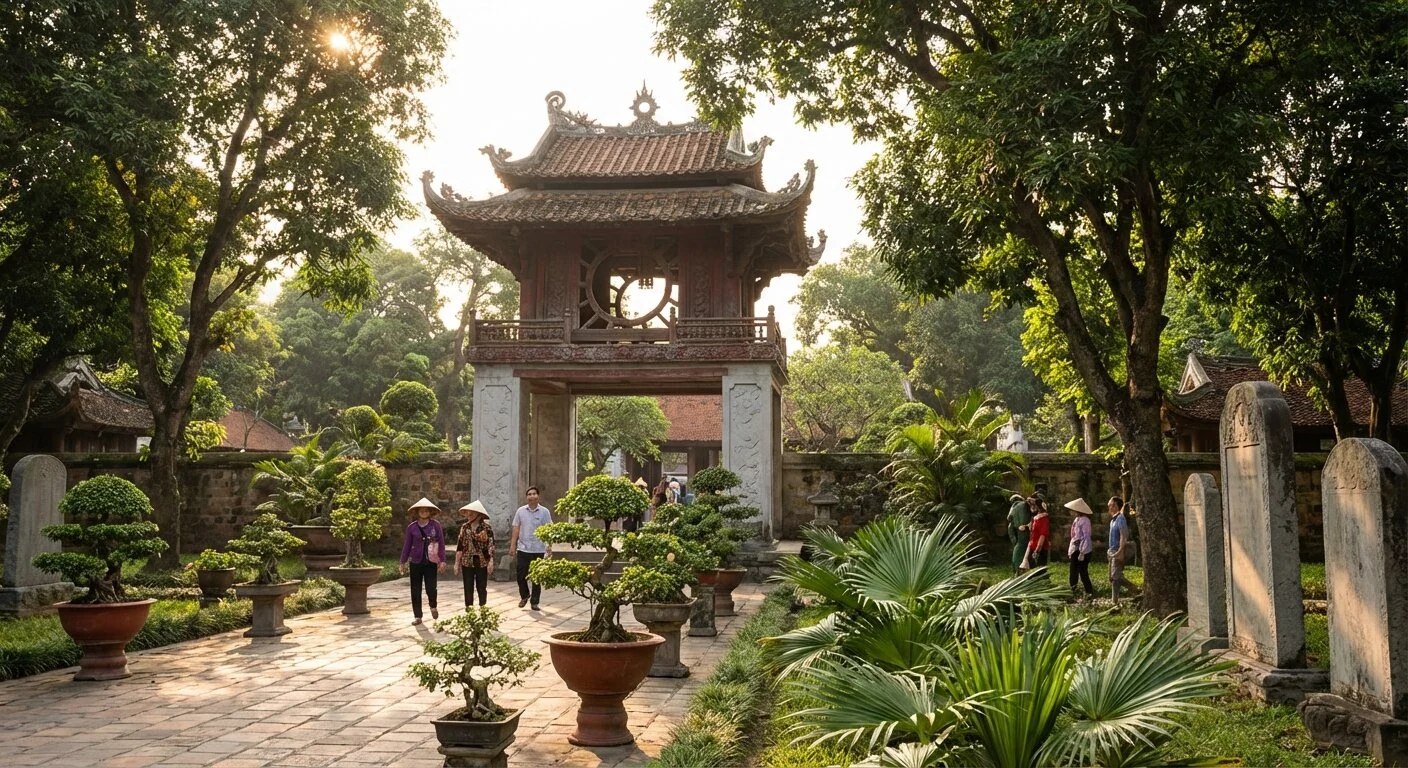
- 6. See the 82 steles at the Temple of Literature
- 7. File past the Ho Chi Minh Mausoleum in Ba Dinh Square
- 8. See the stilt house and the One Pillar Pagoda
- 9. See West Lake from Tran Quoc Pagoda
- 10. Visit Hoa Lo Prison, the “Hanoi Hilton”
- 11. See the Hanoi Opera House in the French Quarter
- 12. Have an espresso at Sofitel Legend Metropole
- 13. Walk from the Opera House to Tràng Tiền for ice cream
- 14. Visit the Vietnam Museum of Ethnology
- 15. Cross Long Bien Bridge at sunset
- 16. See the B-52 wreckage at Huu Tiep Lake
- 17. See the bronze statue of Trấn Vũ at Quan Thanh Temple
- 18. Explore Dong Xuan Market
- When to go?
- My other Hanoi guides
1. Get lost in the 36 streets of the Old Quarter
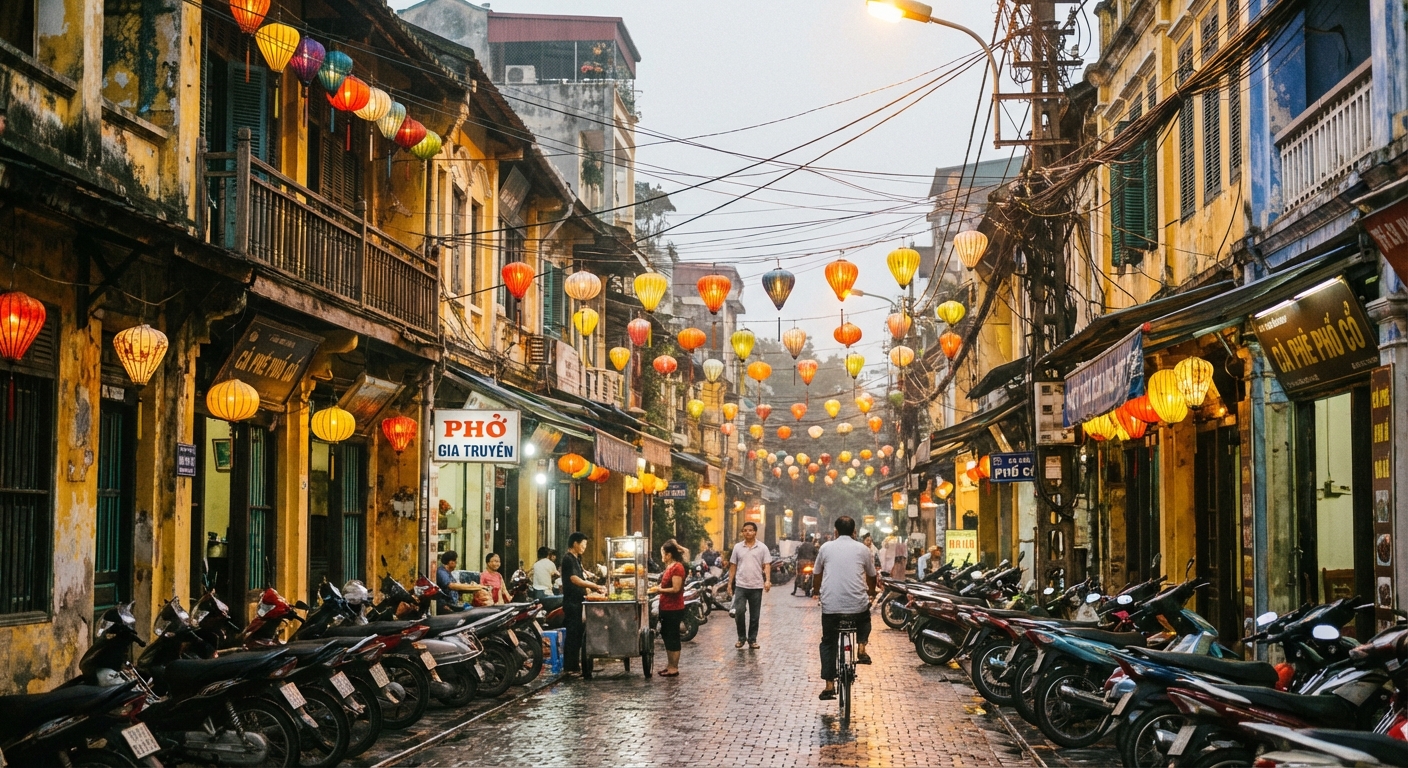
The Old Quarter (Phố Cổ) is the birthplace of Hanoi. Its 36 streets were organized by guild in the 13th century, with a street for each trade: Hàng Gai for silk, Hàng Bạc for silver, Hàng Mã for paper goods and ceremonial items. Most now rely on tourism, but Hàng Gai still sells silk and made-to-measure clothing, and Hàng Bạc sells jewelry alongside its silverware. I deliberately got lost in the alleyways, the “ngõ,” which lead to unexpected covered markets, family workshops and small Buddhist shrines missing from the maps.
The anxiety when crossing the road is very real: very few traffic lights, 10 times more motorbikes than cars. My technique: walk at a steady pace, without stopping or making sudden movements, and the motorbikes flowed around me like water around a rock. Don’t run, don’t freeze, don’t try to make eye contact with the drivers: they adjust.
If you’re nervous, follow a local crossing the road and stay on their traffic-facing side, with your hand slightly raised. The edge of the road is often easier to walk along than the sidewalk, which is cluttered with parked motorbikes, plastic stools and street vendors.
2. See the Phùng Hưng murals and St. Joseph’s Cathedral
On the western edge of the Old Quarter, Phùng Hưng mural street decorates the arches of the old railway viaduct with scenes of Hanoi in days gone by: street vendors, cyclos and the old tram network. I made this my photo stop, away from the crowds on the main shopping streets.
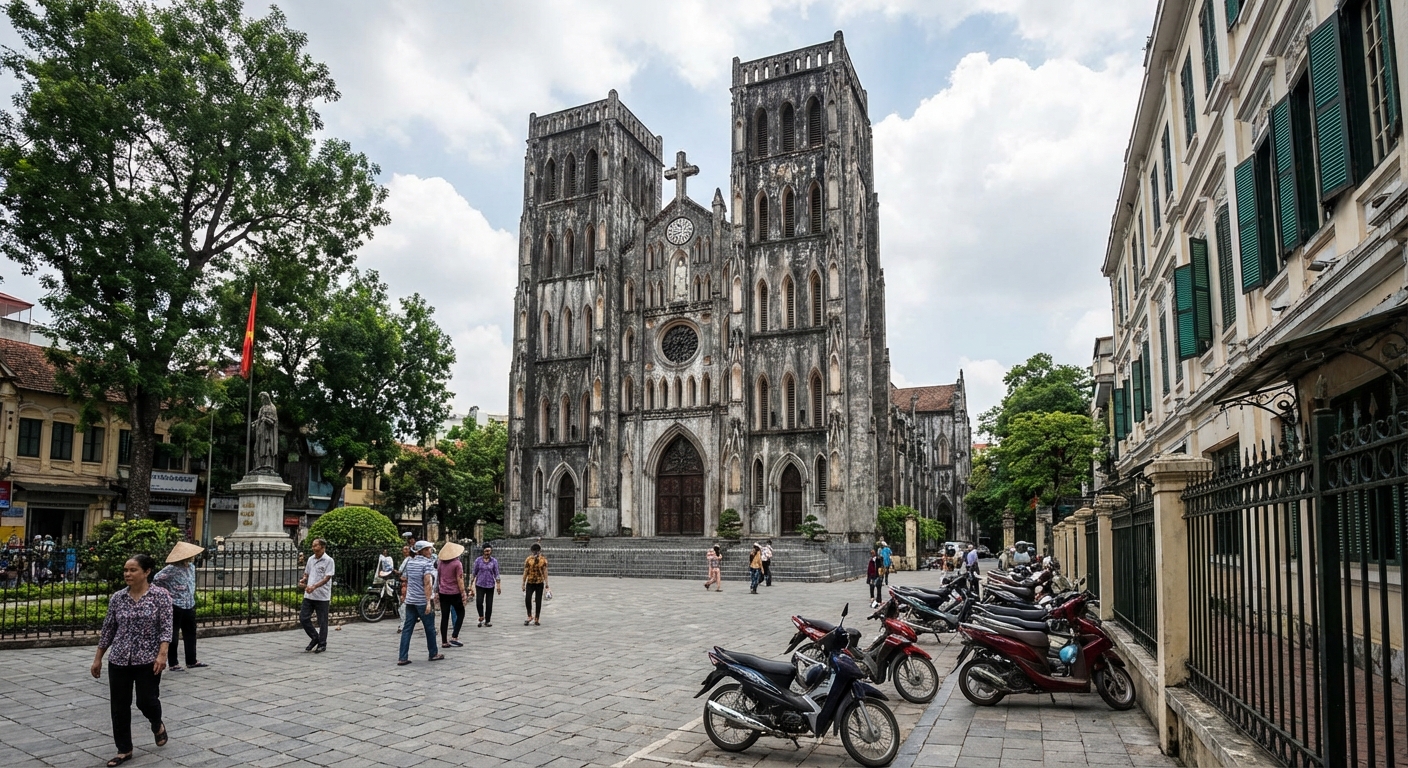
Nearby, St. Joseph’s Cathedral (1886), inspired by Notre-Dame de Paris, has a neo-Gothic facade blackened by tropical weather that looks much older than its 140 years. For me, the surrounding streets, Nhà Thờ and Lý Quốc Sư, are the best setting in the Old Quarter for sitting outside a café: I had a trà chanh (iced lime tea) there while watching the evening crowds.
3. Stroll through the weekend pedestrian streets around Hoan Kiem Lake
From Friday to Sunday evening, the streets around Hoan Kiem Lake become pedestrian-only, and for me this is the best time to explore the Old Quarter: families, street performers, traditional games (tug-of-war, bamboo dancing), children in mini electric cars and K-pop covers on makeshift stages replace the motorbikes. The night market mainly sells cheap souvenirs and clothes; I went for the atmosphere, and if your dates fall on a weekend, don’t miss these evenings.
The neighborhood is extremely safe when it comes to violent crime, but petty scams are common. Women carrying baskets on a shoulder pole place their gear on your shoulders for a “photo,” then demand 500,000 VND (about €18); a shoe shiner touches your shoes while you’re sitting outside a café, cleans or reglues them without being asked, then demands an excessive sum. For a cyclo ride, agree on the price in writing before getting in: “confusion” over the number of zeros is a classic trick. A firm, polite “no” is enough, and my guide to planning a trip to Hanoi covers the common scams in detail.
4. See Hoan Kiem Lake at dawn
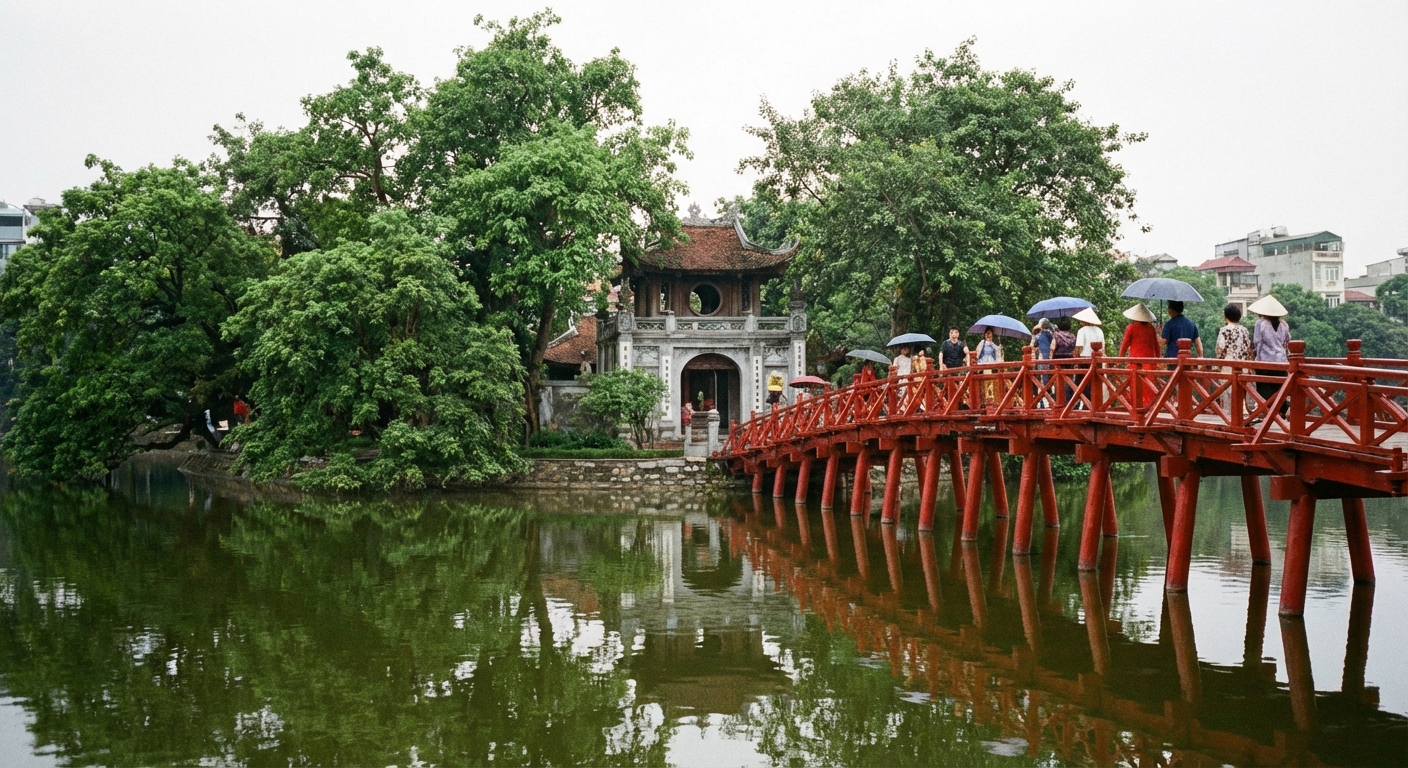
Hoan Kiem Lake, between the Old Quarter to the north and the French Quarter to the south, is Hanoi’s geographical and emotional center. Its name, “Lake of the Returned Sword,” comes from the legend of Emperor Lê Lợi: a golden turtle gave him a magical sword to repel Chinese invaders in the 15th century, and he returned it to the turtle in the waters of the lake. The stone Turtle Tower stands on a small island in the center.
I went early in the morning, between 5:30 and 6:30, the best time: hundreds of locals practice tai chi, laughter yoga, badminton and group dancing by the water, in the soft light and cool air, before the pushy vendors arrive. It’s my favorite moment in Hanoi. After sunset, The Huc Bridge and Turtle Tower light up, with striking reflections during the weekend pedestrian-only evenings.
5. Cross The Huc Bridge to Ngoc Son Temple
Ngoc Son Temple (Temple of the Jade Mountain) occupies a small island at the northern end of Hoan Kiem Lake, and I entered via The Huc Bridge, the red-lacquered wooden bridge on every Hanoi postcard. The temple is modest, the visit took me about 30 minutes, and the centerpiece is a taxidermied giant softshell turtle linked to the sword legend. Entry costs 30,000 VND (about €1.10).
Keep your shoulders and knees covered: the guards check, and tank tops and short shorts mean a flat refusal. Sarongs are sometimes available to borrow, but a light scarf in your bag is a safer bet. Aim for opening time at 8:00 or late afternoon, outside the tourist bus hours.
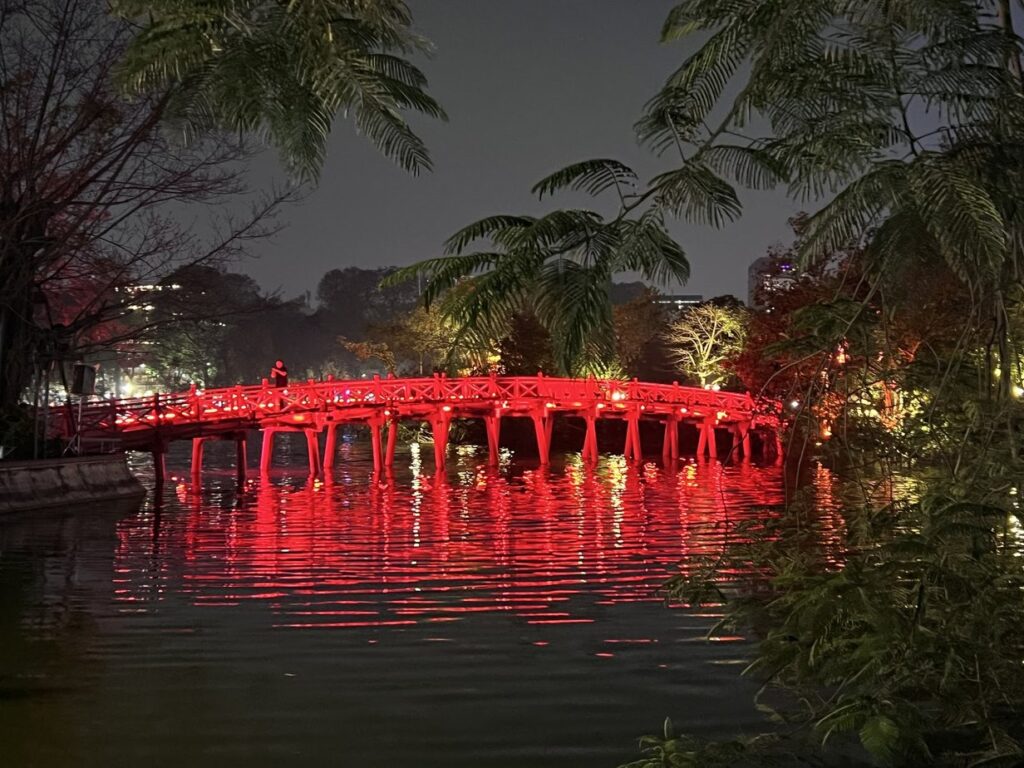
If you have to choose just 1 temple in Hanoi, head to the Temple of Literature, which I find much grander and richer in history for an hour-long visit. Ngoc Son, conveniently located by the lake, deserves a quick stop during a walk through the Old Quarter.
6. See the 82 stelae at the Temple of Literature
The Temple of Literature (Văn Miếu) is Hanoi’s most important historic site: a Confucian temple built in 1070 under Emperor Lý Thánh Tông, where Vietnam’s first university, the Imperial Academy (Quốc Tử Giám), opened in 1076. For nearly 7 centuries, scholars sat the imperial examinations here to become mandarins, a meritocracy reminiscent of France’s competitive civil service exams.
5 walled courtyards follow one another, each more sacred than the last. In the third, I found the most remarkable feature: 82 stone stelae resting on carved turtles, engraved with the names, birthplaces and results of graduates from examinations held between 1442 and 1779, listed on UNESCO’s Memory of the World Register. The courtyards are peaceful, shaded by century-old trees, and the architecture is distinctly Vietnamese rather than Chinese-influenced.
Without context, the site can look like a succession of empty stone spaces: read up beforehand or get the audio guide at the entrance. Admission costs 30,000 VND (around €1.10); arrive at 8:00, when it opens, before the tour buses and school groups, and allow 45 to 60 minutes. From May to July, graduation season, students posing for photos in caps and gowns add energy but break the peace.
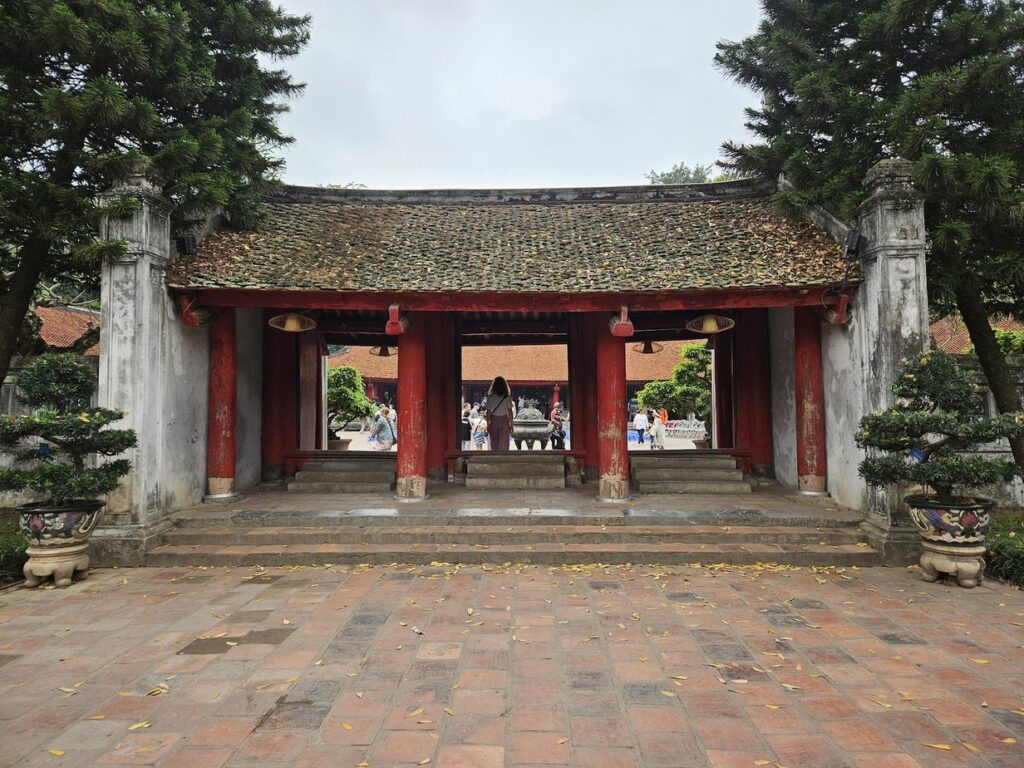
The temple is about a 20-minute walk southwest of Hoan Kiem Lake, or a short taxi ride away. My morning in the west of the city: Ho Chi Minh Mausoleum before 8:00, the One Pillar Pagoda and the stilt house on the same grounds, then a 15-minute walk south to here, finishing around 11:00. The modest clothing required at the mausoleum is suitable for the temple.
7. File past Ho Chi Minh at his mausoleum in Ba Dinh Square
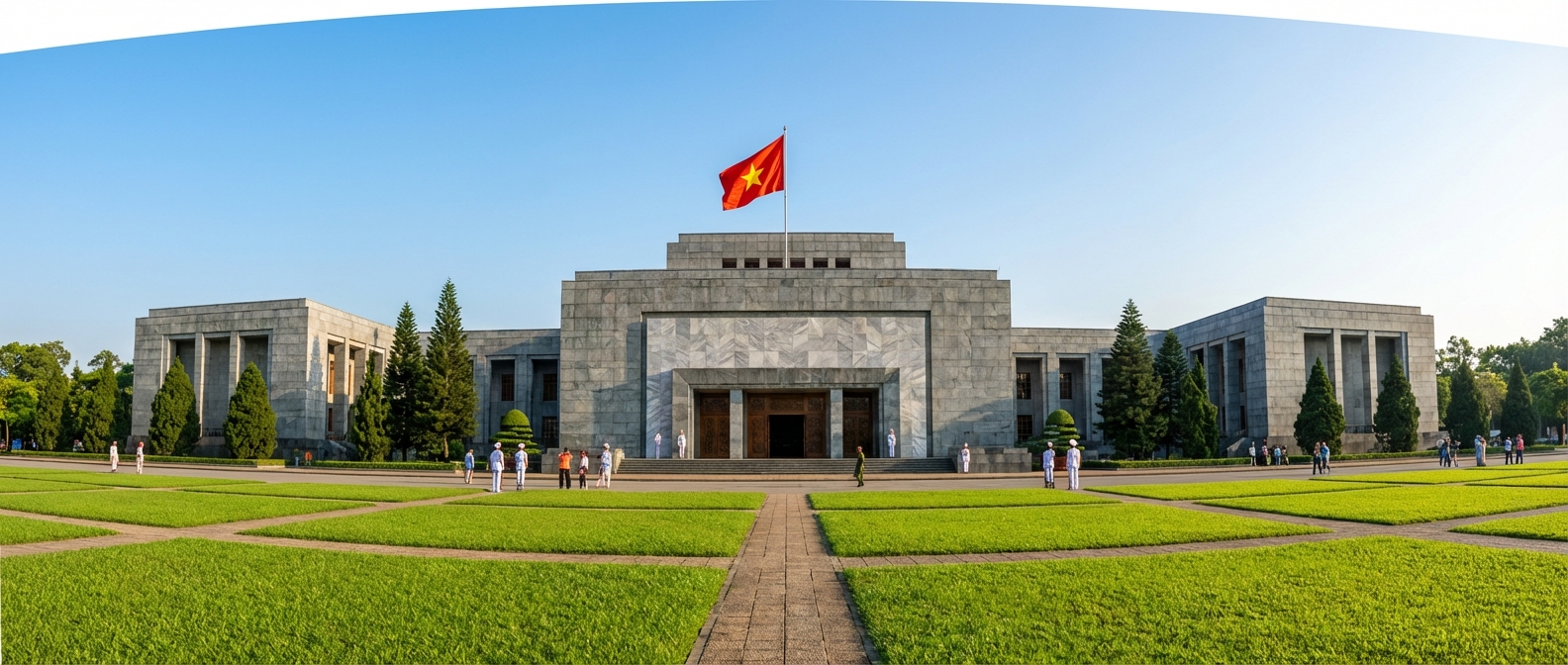
The granite and marble mausoleum dominates Ba Dinh Square, where Ho Chi Minh declared Vietnam’s independence on 2 September 1945. I filed past his embalmed body in a double line, in absolute silence and flanked by guards, as it lay in a glass coffin under dim lighting: barely 5 to 10 minutes.
It is one of the few places where you can see an embalmed national leader, alongside Lenin in Moscow, Mao in Beijing and Kim Il-sung in Pyongyang. If the idea makes you uncomfortable, or you dread “a well-preserved dead body for 1 minute,” the outside of the mausoleum and the changing of the guard in Ba Dinh Square are worth a look, without any waiting in line.
The rules apply without exception: legs and shoulders covered (shorts, tank tops and short skirts are not allowed), double file, no hats or sunglasses, hands out of pockets, complete silence, bags and cameras left at the storage counter. The guards call out the slightest breach: the Vietnamese state treats this visit as a solemn, almost religious experience.
Arrive before 9:00, or prepare for a long line in full sun, without shade. The mausoleum closes on Mondays and Fridays, and for several weeks each year (usually from October to November) for preservation work on the body. Admission is free: do not pay anyone selling “tickets” nearby, it is a scam.
8. See the stilt house and the One Pillar Pagoda
The gardens around the mausoleum contain 2 sites I found more interesting than the mausoleum itself. Ho Chi Minh lived and worked in the stilt house on the Presidential Palace grounds, a modest wooden home beside a carp pond, which he preferred to the lavish French colonial palace next door, built for the governor-general of Indochina. This contrast between colonial grandeur and voluntary austerity is the central point of the visit, and I found it striking.
The One Pillar Pagoda (Chùa Một Cột), originally built in 1049, is a small wooden pagoda perched on a single stone pillar in the middle of a lotus pond, designed to evoke a lotus flower rising from the water. The current structure is a 1954 reconstruction: French troops destroyed the original during their withdrawal from Indochina, a painful memory for Hanoians. Faithful to historical descriptions, it is among the capital’s most photographed monuments. The pagoda and the stilt house are a short walk from the mausoleum and add around 30 minutes to the visit.
9. See West Lake from Tran Quoc Pagoda
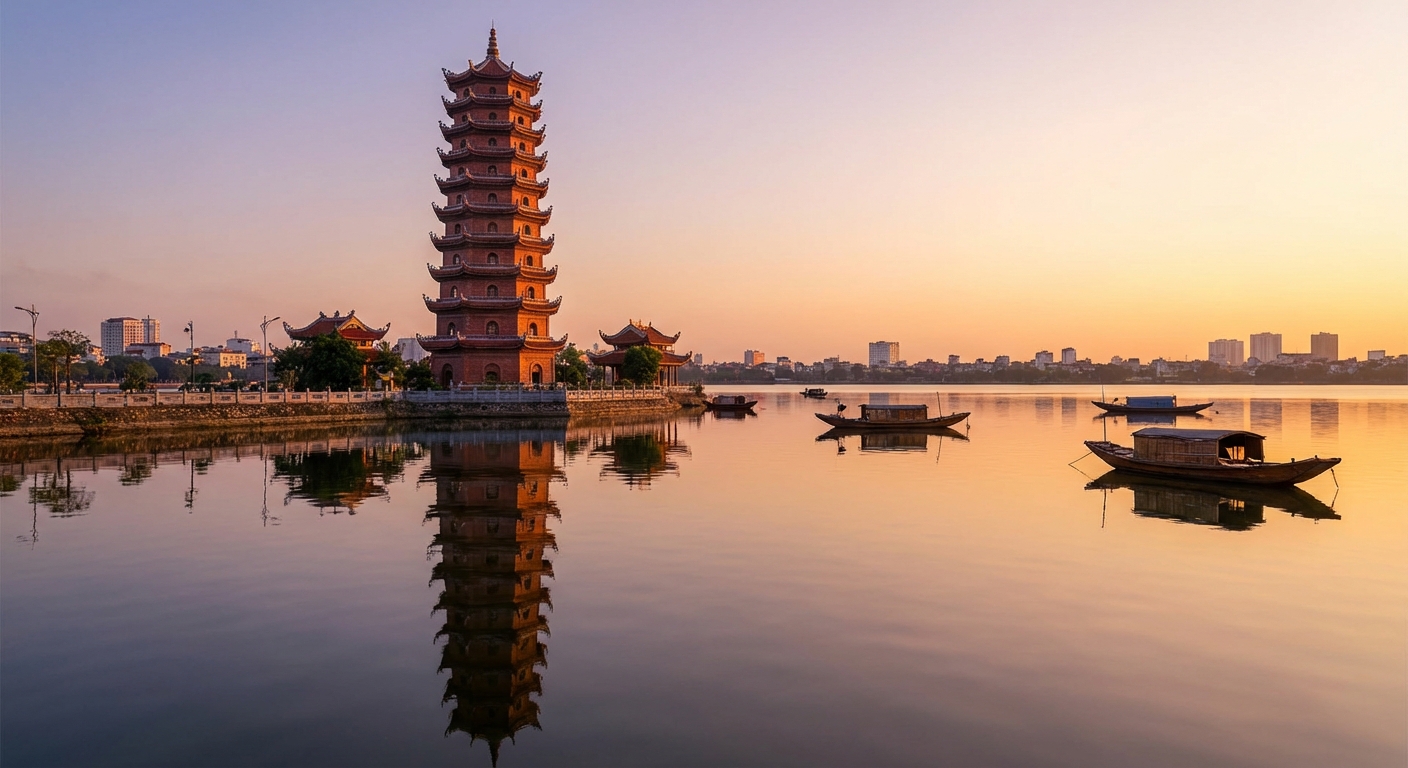
Tran Quoc Pagoda occupies a small peninsula on West Lake (Hồ Tây), around 2 kilometres north of the Old Quarter. Founded in the 6th century, with some 1,500 years of history, it is Hanoi’s oldest Buddhist temple: an 11-storey tower in a garden of stupas containing the ashes of deceased monks, and a Bodhi tree said to have grown from a cutting of the original tree in Bodh Gaya, India, under which the Buddha attained enlightenment. What struck me was the setting: almost surrounded by West Lake, Hanoi’s largest body of water, the pagoda offers views in every direction, especially in the late-afternoon light.
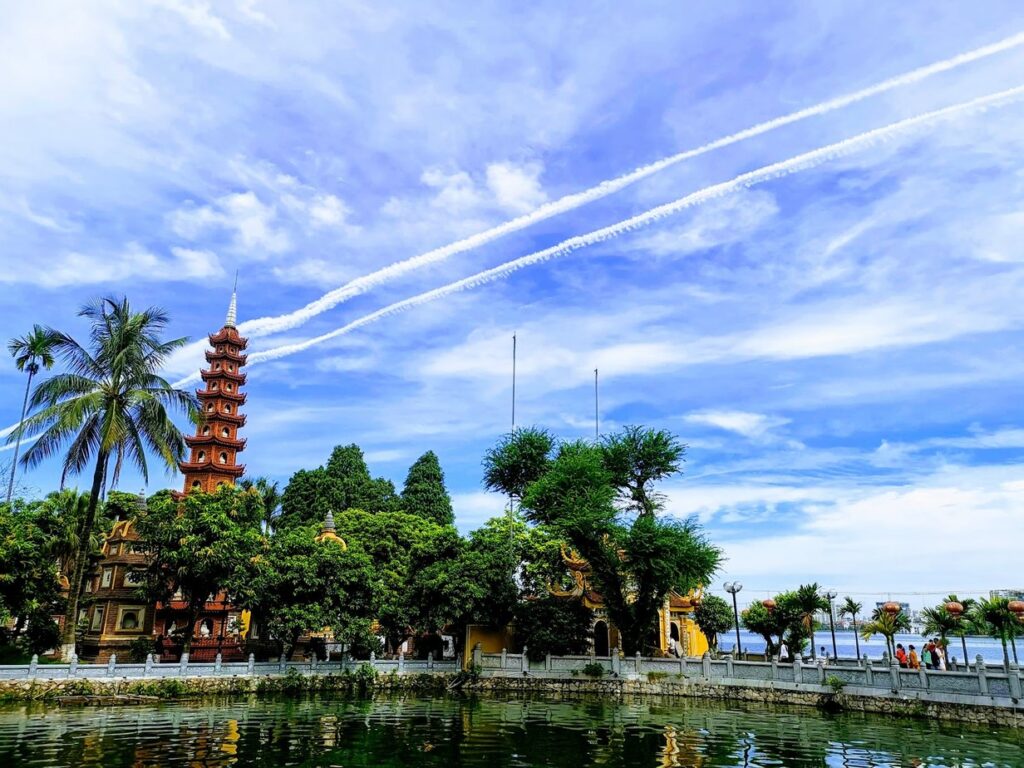
Admission is free, but the pagoda closes during certain religious ceremonies, and modest clothing is required (shoulders and knees covered). Combined with a walk or bike ride along the shores of West Lake, it makes for a relaxing half-day away from the intensity of the Old Quarter.
10. Visit Hoa Lo Prison, the “Hanoi Hilton”
For me, Hoa Lo Prison is Hanoi’s most intellectually stimulating site. Built in 1896 by the French colonial administration for Vietnamese political prisoners, it shows the guillotine, leg shackles, cramped communal cells and execution chamber without sugarcoating anything: for a French visitor, this is the dark side of the French presence in Indochina, far from the romantic image of boulevards and villas.
During the Vietnam War, the same prison held American prisoners of war (including Senator John McCain, who spent 5 and a half years there), who nicknamed it the “Hanoi Hilton.” What struck me was the contrast: life-size dioramas of shackled prisoners and detailed accounts of torture methods on the colonial side, photos of American prisoners playing volleyball, decorating a Christmas tree or receiving medical care on the other. This gap is deliberate, and noticing it is the whole experience: go to see how history is told, because here, the propaganda is the exhibit.
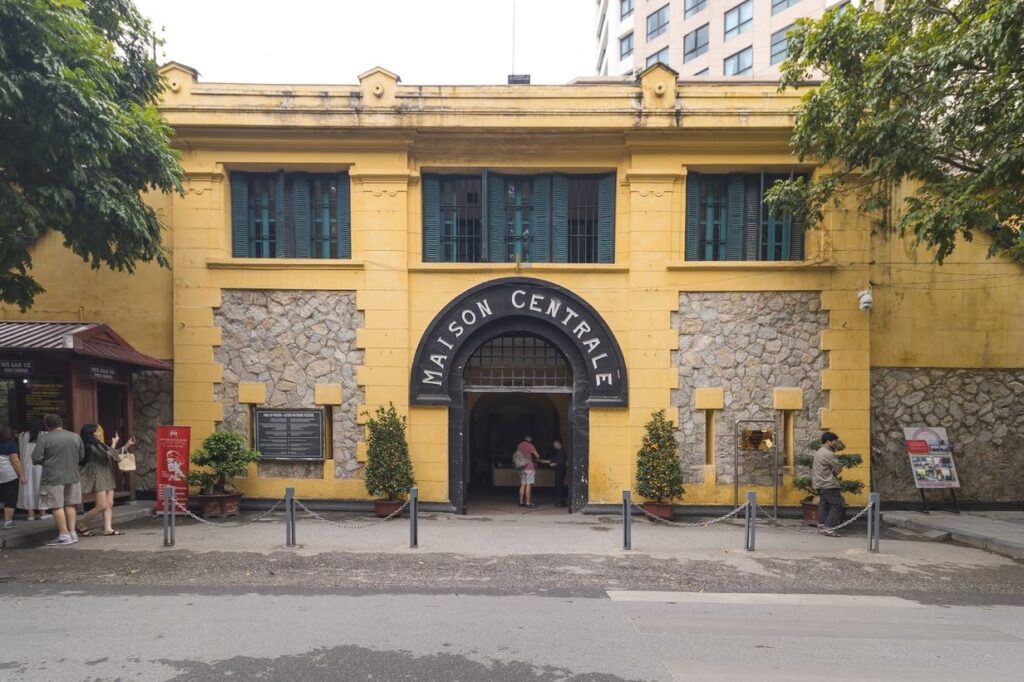
Admission costs 30,000 VND (around €1.10), and I got the audio guide, an extra 50,000 to 70,000 VND (€1.80 to €2.50), which is almost essential given how basic the signage is. Allow 1 hour 30 minutes to 2 hours; the depictions of torture and execution during the French period are distressing for some visitors. The prison is on Hỏa Lò street, a few minutes’ walk south of Hoan Kiem Lake.
11. See Hanoi Opera House in the French Quarter
The capital of French Indochina from 1902 to 1954, Hanoi has retained an entire European quarter south and east of Hoan Kiem Lake, where I had a strange sense of déjà vu: the proportions and louvred shutters of provincial French streets, under a tropical sky. It is the opposite of the Old Quarter, with broad, tree-lined boulevards, large yellow villas instead of tube houses and proper pavements, without motorbikes to dodge.
Hanoi Opera House, completed in 1911 and directly inspired by the Palais Garnier in Paris, stands at the end of Tràng Tiền street, facing a small esplanade. You can only visit the interior with a performance ticket, but the cream-coloured facade alone is worth a stop, especially at golden hour. To see the auditorium, look into “Làng Tôi” (My Village), a bamboo circus featuring Vietnamese acrobats, performed several times each week, with tickets available online.
12. Have an espresso at Sofitel Legend Metropole
Sofitel Legend Metropole, opened in 1901, is Hanoi’s most famous hotel and a landmark in its own right: a white colonial building with green shutters that transports you to another era. The lobby is open to non-guests, and I settled in at La Terrasse, its pavement café, for an espresso at luxury French Indochina prices: expect to pay 150,000 to 200,000 VND (around €5.50 to €7.30) per drink. Its underground bunker, discovered during renovations in 2011, occasionally opens for guided tours.
13. Walk from the Opera House to Tràng Tiền ice cream
My walk starts at the Opera House and follows Ngô Quyền and Lý Thái Tổ, the 2 most imposing colonial boulevards, whose neighboring streets house embassies and government buildings in restored villas. I went past St. Joseph’s Cathedral, on the edge of the Old Quarter, and finished on Tràng Tiền Street at Tràng Tiền ice cream (kem Tràng Tiền), a Hanoi institution since 1958 that sells sticky rice ice cream through a small street-facing window. Allow about 1 hour for a leisurely stroll, preferably in the early afternoon, when the light is best for photographing the architecture.
If you know Phnom Penh, Ho Chi Minh City or Pondicherry, this so-called “Indochinese” style will feel familiar: French neoclassical architecture adapted to the tropical climate (louvered shutters, deep verandas, high ceilings for air circulation), found here in an exceptionally dense concentration. The National Museum of History building, a short walk from the Opera House, is among its finest examples.
14. Visit the Vietnam Museum of Ethnology
The Vietnam Museum of Ethnology is about 7 kilometers west of the Old Quarter, a taxi ride away (80,000 to 100,000 VND, or €3 to €3.60 from the center). For me, it’s the best museum in Hanoi and among the best in Southeast Asia: it tells the story of Vietnam’s 54 recognized ethnic groups through full-scale reconstructions of traditional houses, textiles, ceremonial objects and video documentaries.
The highlight is the outdoor section, where I went inside most of the life-size houses: a Bahnar communal house (rông) with a dizzyingly high thatched roof, a Tày stilt house, an Êdê longhouse and others. Inside, the galleries cover weddings, funeral rites, farming practices and material culture from both the highlands and the plains; allow 2 to 3 hours to explore without rushing.
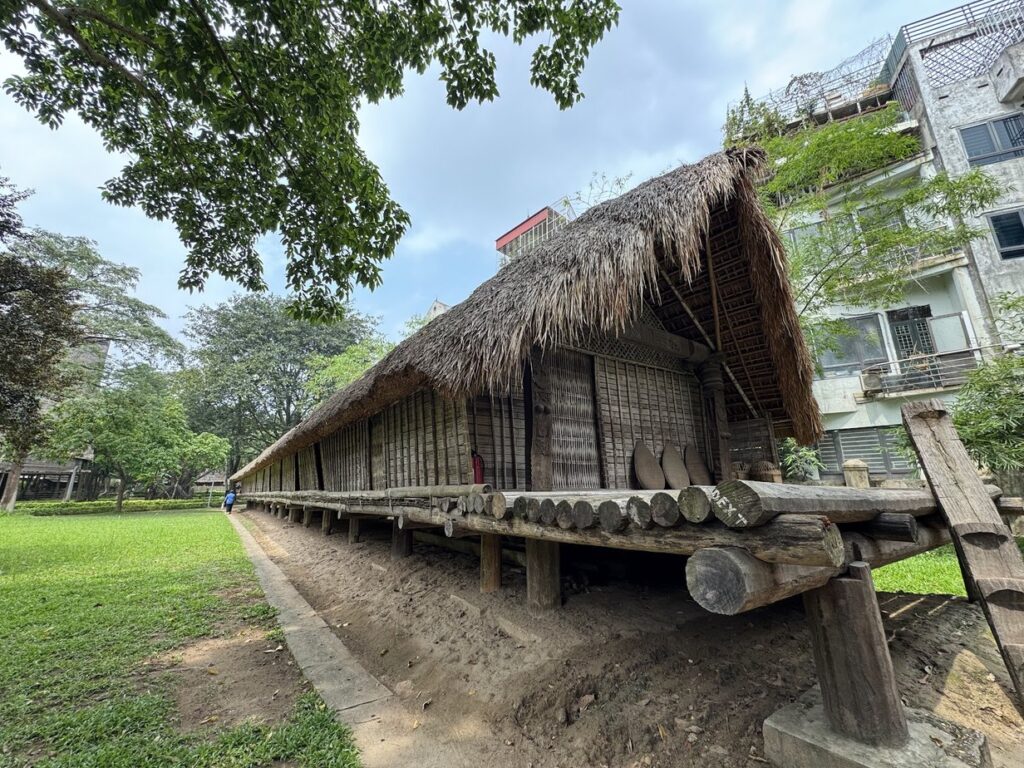
Admission costs 40,000 VND (about €1.45), and the museum is closed on Mondays; it pairs well with an afternoon at nearby West Lake and Trấn Quốc Pagoda. If you’ve seen other temples in Southeast Asia, such as the great temples of Bangkok, you’ll appreciate its radically different take on Vietnamese culture, beyond religious architecture.
15. Cross Long Biên Bridge at sunset
Long Biên Bridge spans the Red River about 1 kilometer north of the Old Quarter. Designed by the workshops of Daydé & Pillé (often attributed to Gustave Eiffel’s company, a claim historians debate), it was completed in 1903 for the French colonial administration. Bombed repeatedly during the Vietnam War and rebuilt each time, it combines original riveted steel with more recent concrete repairs.
I walked across it at sunset, the ideal time. From the middle, the view is striking: the Red River below, banana plantations on the opposite bank, and the occasional train on the single remaining railway track.
16. See the B-52 wreckage at Hữu Tiệp Lake
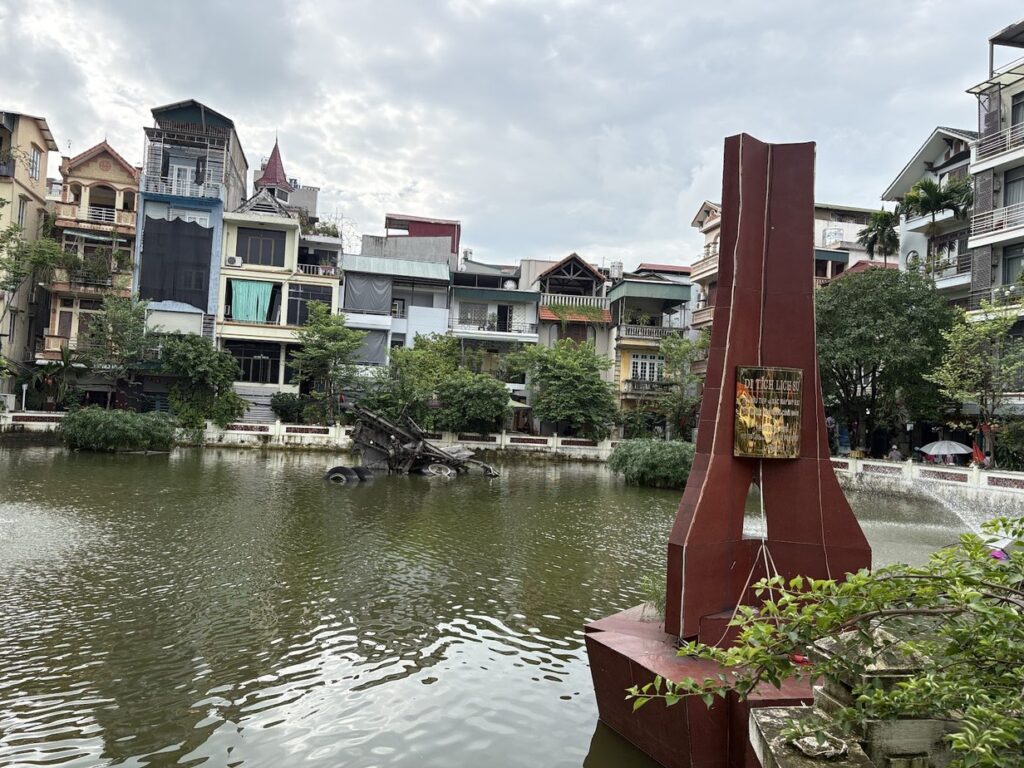
In a small residential neighborhood about 2 kilometers west of the Old Quarter, the wreckage of an American B-52 bomber still lies in the tiny lake where it crashed during the Christmas bombings of 1972. The twisted fuselage panels and wing sections remain where they fell more than half a century ago, surrounded by ordinary homes.
There’s no museum, ticket booth or signage, apart from a modest commemorative plaque. I stood on the edge of this neighborhood pond looking at the wreckage while daily life carried on around me, and I found it surreal. The site is free and accessible at any hour, on Hoàng Hoa Thám Street, near the intersection with Ngọc Hà Street.
17. See the bronze statue of Trấn Vũ at Quán Thánh Temple
The Taoist Quán Thánh Temple, on the southern shore of West Lake, near Trấn Quốc Pagoda, dates from the Lý dynasty (11th century). It houses a bronze statue of Trấn Vũ, the Taoist god of the north, standing nearly 4 meters tall, cast in 1677 and weighing about 4 tonnes: it ranks among Vietnam’s finest bronze castings.
The temple receives far fewer visitors than the major sites, and admission costs just 10,000 VND (about €0.36). I combined it with Trấn Quốc and a walk along West Lake in the late afternoon, when the low light on the water is at its most beautiful, before dinner at a lakeside restaurant.
18. Explore Đồng Xuân Market
Đồng Xuân Market, at the northern end of the 36 streets, is the largest covered market in the Old Quarter. The ground floor sells wholesale goods (clothes, fabrics, household items), with little of interest for a visitor; I went up to the more captivating upper floors, which, like the surrounding streets, sell dried foods, spices, traditional remedies and kitchen utensils.
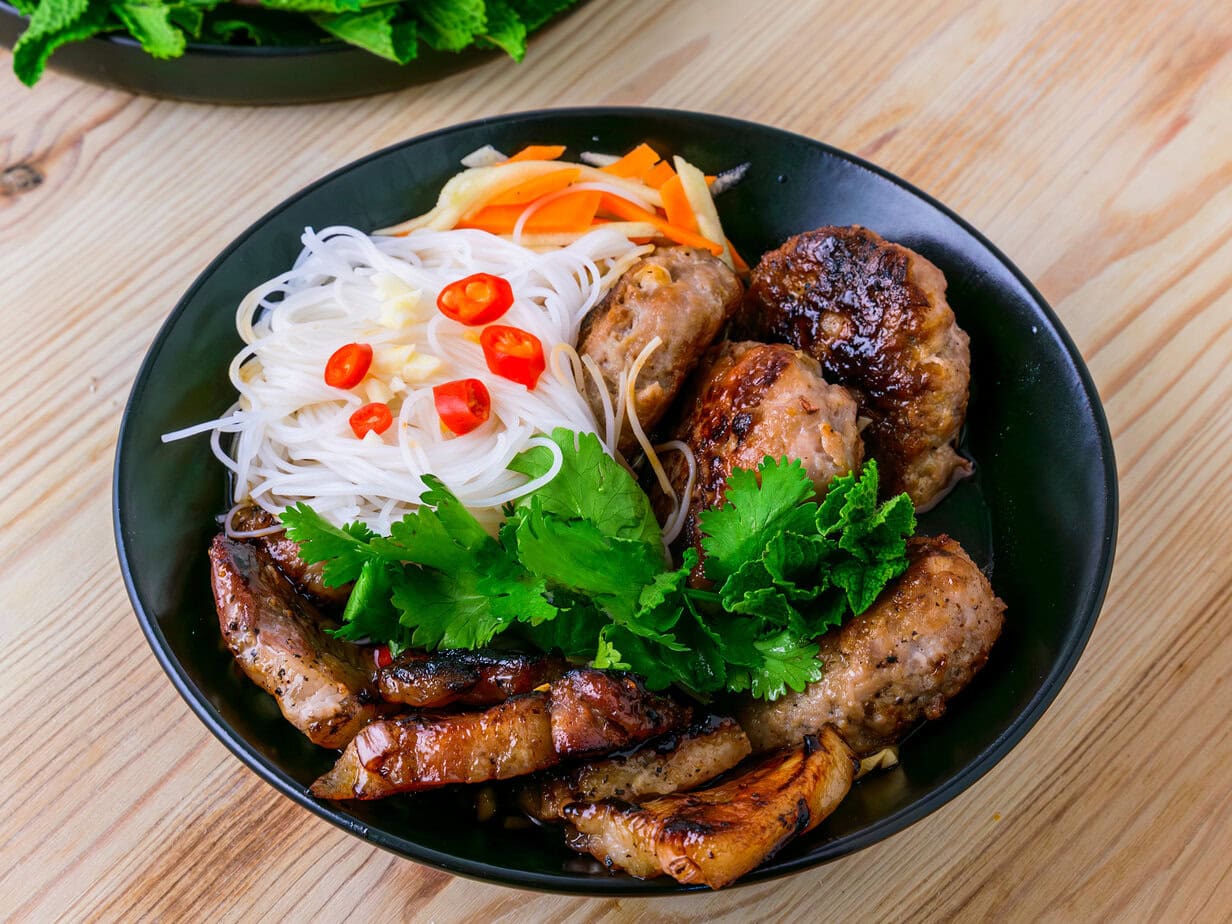
On weekend evenings, the night market that sets up in the streets around Đồng Xuân feels more like a local community celebration than a tourist attraction, with food stalls and cheap goods spread across several streets. I went for the atmosphere and a bowl of bún chả at a nearby stall; as for shopping, there was nothing useful to bring home.
I also cook phở at home, and my phở recipe is here. I cover other dishes from Vietnamese cuisine on my dedicated page.
When to go?
To help you choose your days: the mausoleum closes on Mondays and Fridays and for several weeks a year (usually from October to November), the Museum of Ethnology closes on Mondays, and the streets around Hoàn Kiếm Lake are pedestrian-only from Friday through Sunday evening. From May to July, graduation season fills the Temple of Literature.
I grouped the sites by neighborhood: the mausoleum and the Temple of Literature in the morning, the French Quarter followed by a taxi ride to West Lake in the afternoon, and a full day for the Old Quarter. That day starts at the lake at dawn (5:30 to 6:30) and at Ngọc Sơn at 8:00, then takes in the 36 streets with a stop for an egg coffee at Café Giảng, the birthplace of egg coffee, or at the more intimate Café Đinh, with a small balcony overlooking the lake, reached through a narrow alley.
After lunch, it’s Hoa Lo, then a trà chanh on a terrace near St. Joseph’s Cathedral, and the pedestrian street around the lake if it’s the weekend. My essentials: a scarf in my bag, the audio guide at Hoa Lo and the willingness to get up before dawn.
My other Hanoi guides
My guide to things to do in Hanoi suggests itineraries combining heritage sites, food tours and day trips. For accommodation, the Old Quarter and the French Quarter are the 2 best bases, with every major site within walking distance or a short taxi ride away: I compare them in where to stay in Hanoi. Walking between temple courtyards and colonial facades, Hanoi reminded me of the pace of Bali’s cultural sites or historical excursions around Phuket, but denser and more urban. For flights, accommodation and budgeting, everything is in my complete guide to visiting Hanoi.