


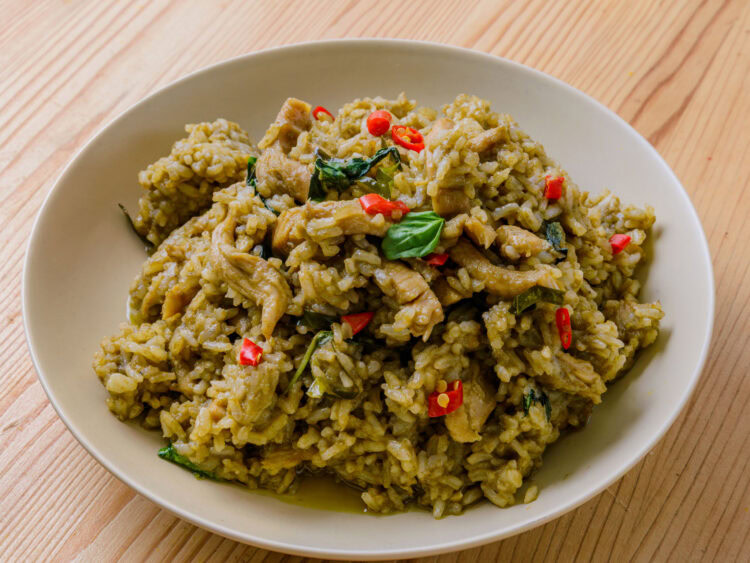
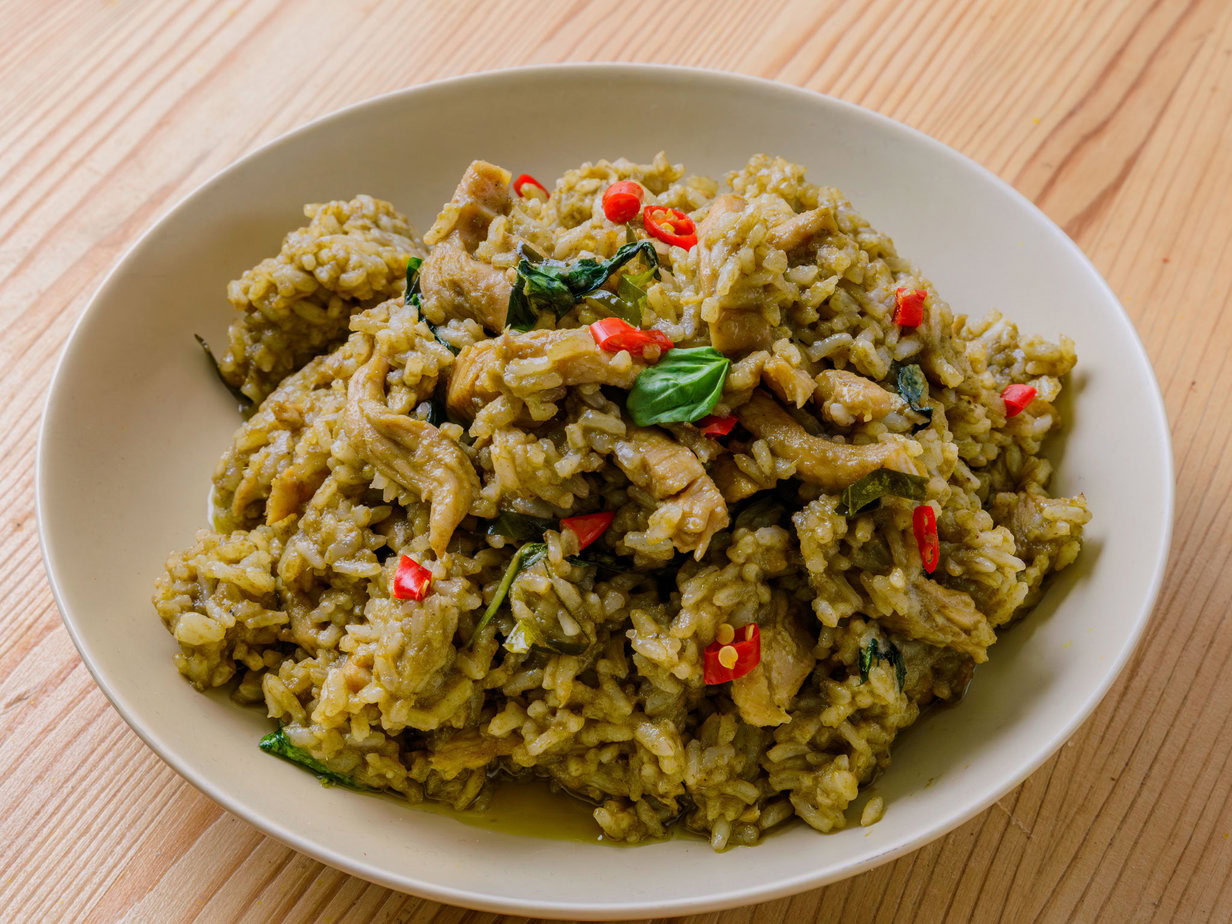
Thai green curry fried rice with tender chicken, fragrant coconut milk, and fresh herbs—a speedy, flavor-packed meal.
Jasmine-scented steam rises as a wok tosses coconut-lacquered green rice, crowned with a Thai omelet and thin cucumber slices. At the first bite, basil and makrut lime lead; green chilies prickle gently; the fish sauce adds salinity; a light sweetness rounds everything out.
What is Khao Phat Gaeng Kiew Wan?
Khao phat kaeng khiao wan (ข้าวผัดแกงเขียวหวาน) states its principle clearly: khao phat is fried rice; kaeng khiao wan literally means ‘sweet green curry’ (‘khiao’ = green; ‘wan’ = sweet).
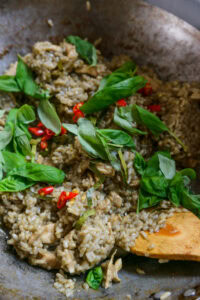
The core idea is simple: stir-fry day-old jasmine rice in a concentrated green curry base—a paste fried in oil until aromatic—with a splash of coconut milk, then finish with Thai basil and red chilies.
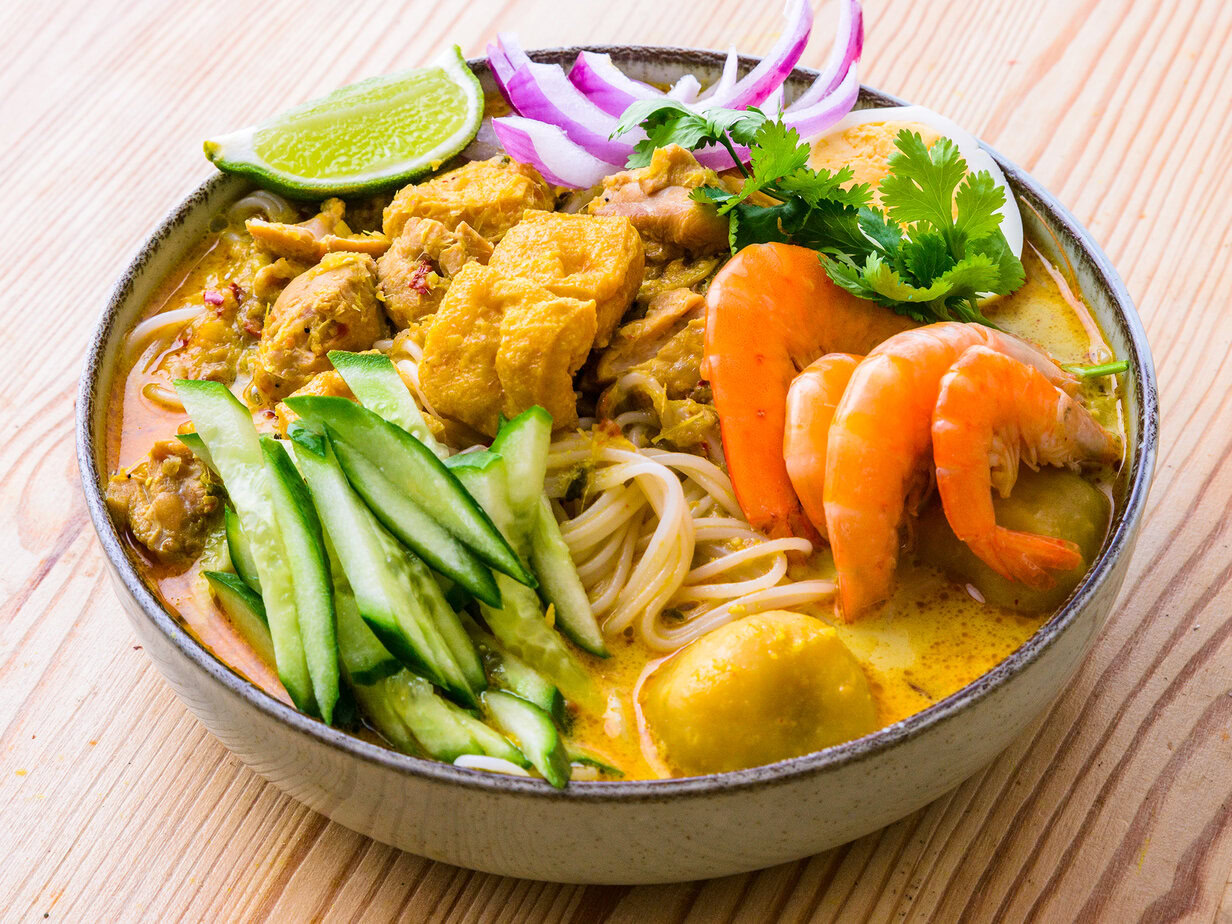
The rice should finish as distinct grains that hold their shape and aren’t wet. It should be coated rather than soaked, carrying the curry’s flavor without turning watery. It’s a self-contained อาหารจานเดียว—a single-dish meal—often garnished with cucumber, lime, and an egg in one form or another, quick and complete.
The origin of the dish
Green curry took its recognizable modern form in central Thailand in the 20th century, while Chinese-inspired wok cooking reshaped Thai urban kitchens.
The technique of khao phat (searing-hot wok, day-old rice, swift motions) met an emblematic duo: curry and rice. By the mid-20th century, home cooks and street-food stalls were mixing leftover green curry with cold rice, then cooking it down over heat until the grains turned glossy and green.
The dish seems a modern, urban creation rather than a classic court recipe. It’s popular in Bangkok and the central regions; its presence varies elsewhere. The pairing is clear: curry for flavor, wok fire for texture, rice as the base.
Key ingredients in green curry fried rice
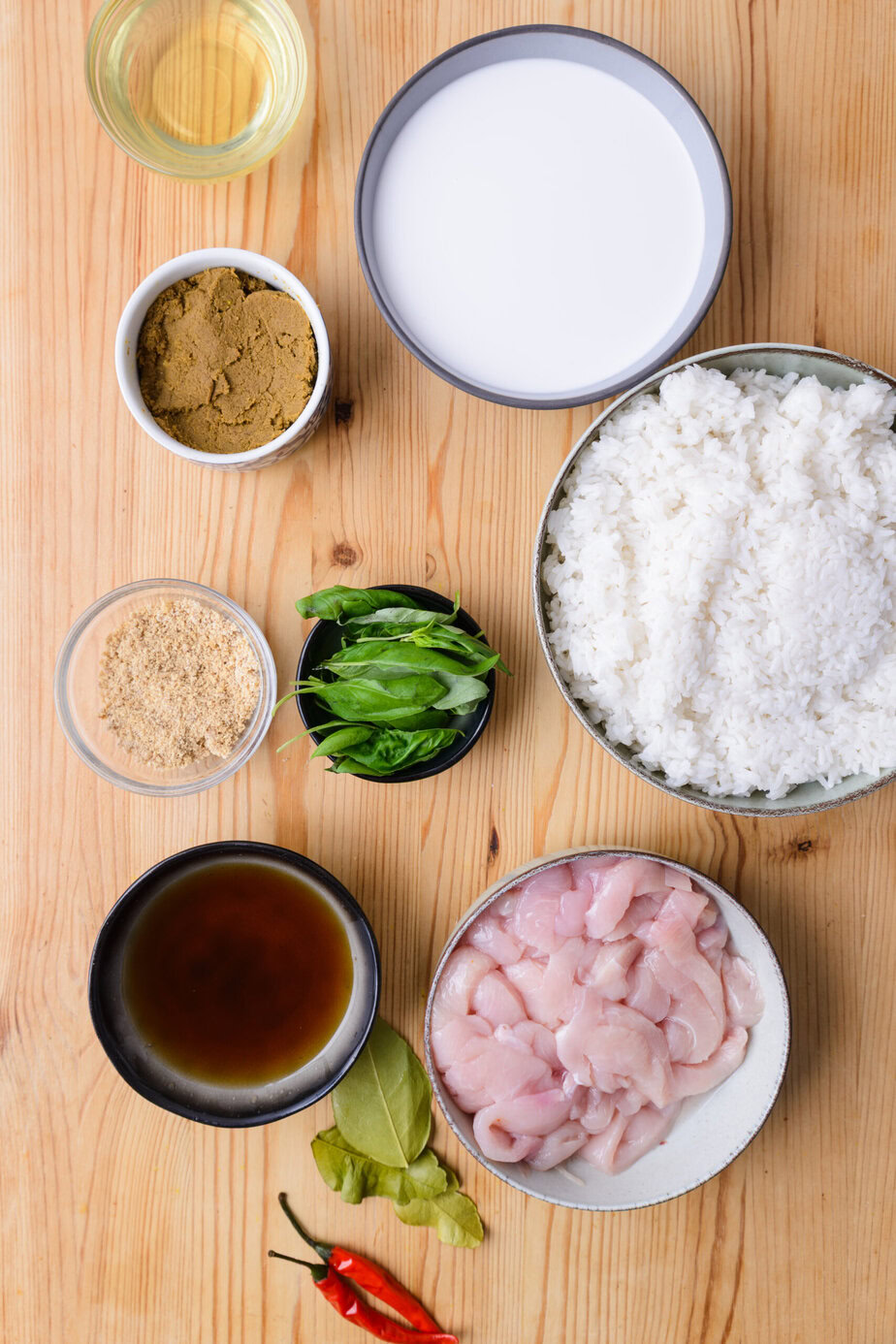
Day-old, well-chilled jasmine rice provides the base. Its floral aroma suits green curry, and its slightly dried surface sears cleanly, keeping each grain intact.
The aromatic engine is phrik kaeng khiao wan, Thai green curry paste made from lemongrass, galangal, makrut lime zest (sometimes labeled “kaffir”; the leaves can be used instead), coriander root, garlic, shallots, green chilies, and often dried spices like coriander seed and cumin, as well as shrimp paste. The quality of the paste is crucial: homemade or from a recognized Thai brand, it keeps the dish in the expected style.
A touch of thick coconut milk (coconut cream) supplies the fat that carries the aromatics, helps the paste bloom, and lightly glosses the rice. Sometimes it’s cooked until the oil splits, which intensifies the flavor. Some Thai cooks prefer a drier style, with little or no coconut milk; others aim for a barely creamy cling. In all cases, the rice should be coated, not wet or watery.
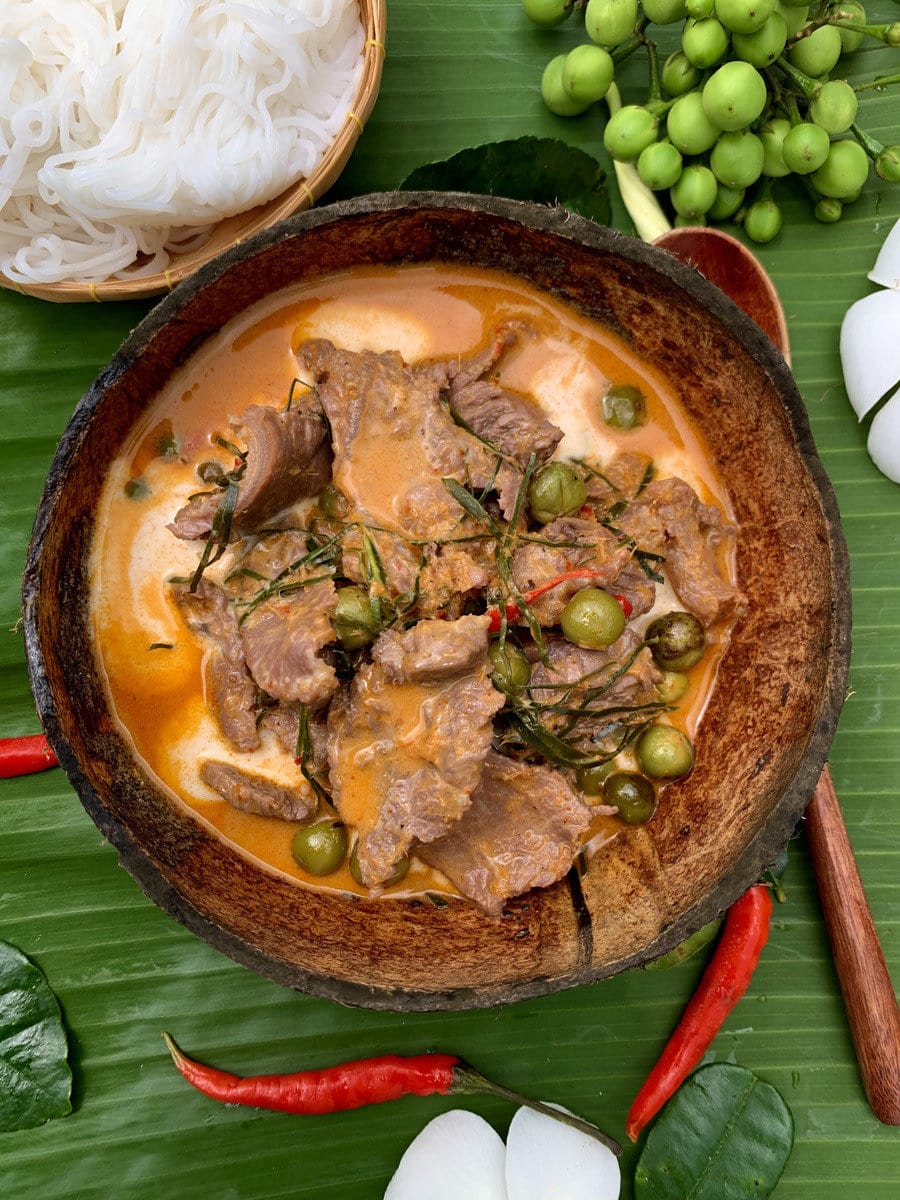
Proteins follow the curry canon: chicken is classic; pork, beef, shrimp, or firm tofu are common alternatives. The vegetables reflect the green curry pantry, with Thai eggplant and pea eggplant for bite and a hint of bitterness, or bamboo shoots for crunch, used whenever available.
Thai basil (bai horapha, โหระพา) is a key aromatic, added off the heat so its gentle anise note stays intact; omitting it pulls the dish away from a green curry profile. Finely sliced makrut lime leaves (bai makrut, ใบมะกรูด) are often added, threading a citrus note through the rice, though some versions omit them; their presence reinforces the green curry signature.
Mild red chilies (phrik chi fa) bring color and moderate heat. The seasoning is typically Thai and balanced: fish sauce for salty umami and a touch of sugar to round off the spice and salt. Some modern home cooks add a dash of seasoning sauce (Maggi-style) or MSG; it’s common in everyday cooking, though not essential.
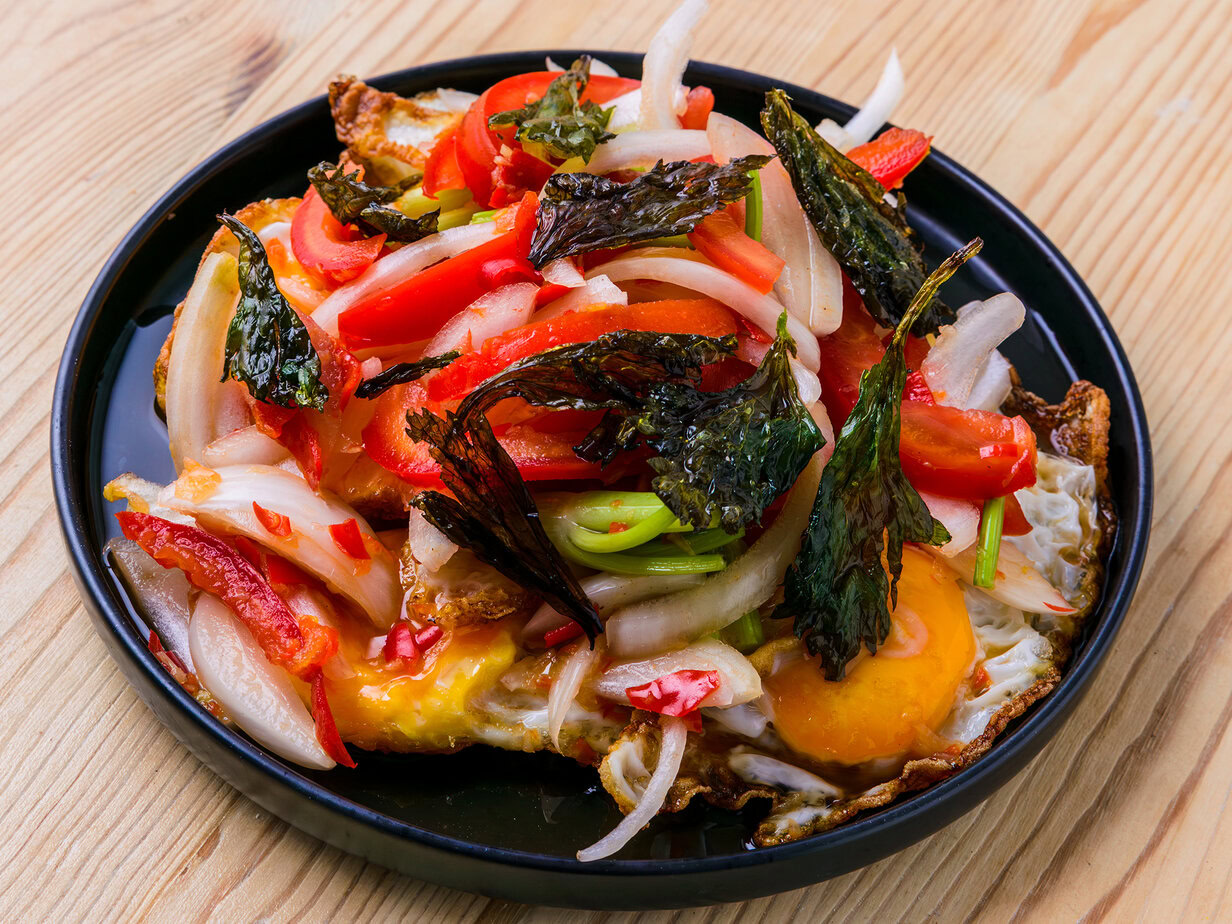
Use a neutral oil that tolerates high heat (for example, rice bran, soybean, or canola oil), and serve the extras at the table: a wedge of lime, cucumber, and a small dish of phrik nam pla (fish sauce with fresh chilies). A fried egg (Khai Dao) or a Thai omelet (khai jiao) adds richness and a crisp edge.
Authenticity and variations
The dish signals itself with a few clear markers: real green curry paste—not curry powder—and jasmine rice. For an authentic result, avoid ketchup or curry powder; the flavor should come from real green curry paste.
Within those markers, everyone balances it their own way. A light binder—just enough to coat—is welcome; greasy, wet, or soupy is not. Some kitchens sauté the paste with a small splash of coconut cream for richness; others omit it for a drier, wok-driven result.
Vegetables like Thai eggplant or bamboo shoots keep it in the green curry family; broccoli, peas, and carrots are common abroad but not typical in Thailand—those versions are more Thai-inspired than traditional. Jasmine rice provides the right aroma and bite; other grains shift the profile.
For texture, aim for distinct grains that hold their shape and aren’t wet (khao ruan bpen met, grains separate and intact). What matters is the opening impression—basil and makrut lime—followed by a bite that unmistakably evokes green curry, translated for the wok.
Ingredients
- 300 g chicken breast sliced
- 750 g cooked jasmine rice day-old; cooked weight
- 200 g green curry paste
- 300 g coconut milk thick
- 100 g rice bran oil or vegetable oil
- 100 g fish sauce
- 140 g coconut sugar semi-liquid; or use palm sugar or brown sugar
- 3 leaves makrut lime leaves very finely sliced
- 30 g Thai basil leaves about 1 large loosely packed handful
- 2 small red Thai chilies finely sliced
Instructions
Preparation
- Heat a wok over medium heat, add the coconut milk and green curry paste, then stir-fry until fragrant and the oil separates from the coconut milk.300 g coconut milk, 200 g green curry paste
- Add the chicken breast and stir-fry until just cooked and well coated in sauce.300 g chicken breast
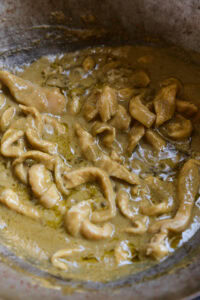
- Season with fish sauce and coconut sugar, taste and adjust the salty-sweet balance, then remove the wok from the heat.100 g fish sauce, 140 g coconut sugar
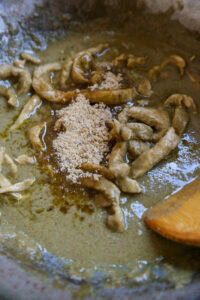
- Add the cold jasmine rice; gently fold by lifting and turning to keep the grains intact and to coat them evenly with the sauce.750 g cooked jasmine rice
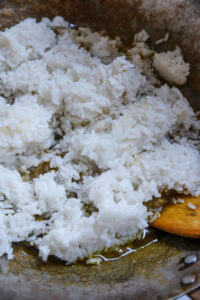
- Return the wok to medium-high heat, drizzle the oil around the edge of the wok, and continue stir-frying until the rice is glossy and very fragrant.100 g rice bran oil
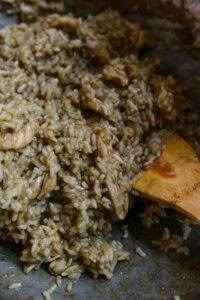
- Scatter the makrut lime leaves, basil, and chilies; toss just enough for the herbs to wilt, then serve immediately.3 leaves makrut lime leaves, 30 g Thai basil leaves, 2 small red Thai chilies


Ce khao phat gaeng kiew wan me ramène aux dimanches chez ma tante, quand elle recyclait le riz de la veille avec un peu de curry vert et que toute la cuisine sentait le basilic et le citron vert. J’adore l’idée de garder les grains bien séparés avec juste ce qu’il faut de lait de coco, c’est exactement ce côté simple et réconfortant dont je me souviens 🙂
Tellement bon et étonnamment léger pour un plat au curry, avec des grains bien séparés et des herbes fraîches qui donnent une impression très équilibrée. Le combo poulet, basilic thaï et feuilles de combava en fait un repas complet et nutritif sans être lourd 🙂
So good and surprisingly light for something with coconut milk, thanks to the fresh basil and makrut lime keeping it bright and balanced. Love that it feels like a complete, nutritious one-pan meal with lean chicken and perfectly separate grains 🙂
This green curry fried rice is ultimate comfort food, all cozy vibes with that coconut milk and basil wrapping everything up so warmly. Perfect for a rainy day when you want something quick that still feels deeply comforting 😊