Where to stay in Phuket depends above all on the type of trip you’re planning. The island has about a dozen distinct neighborhoods, and they have absolutely nothing in common with each other.
Patong is loud and chaotic. Rawai feels like a small town where half the residents are expats. Phuket Town has no beach at all, but offers the best food on the island. As we explain in our complete guide to visiting Phuket, the neighborhood you choose shapes your trip far more than any hotel or flight deal.
This guide covers every neighborhood with no sugarcoating, including real price ranges, transport realities, and everything the tourist brochures leave out. I’ve gathered dozens of testimonials from travelers who actually stayed in these places.
Patong: the loud and convenient neighborhood
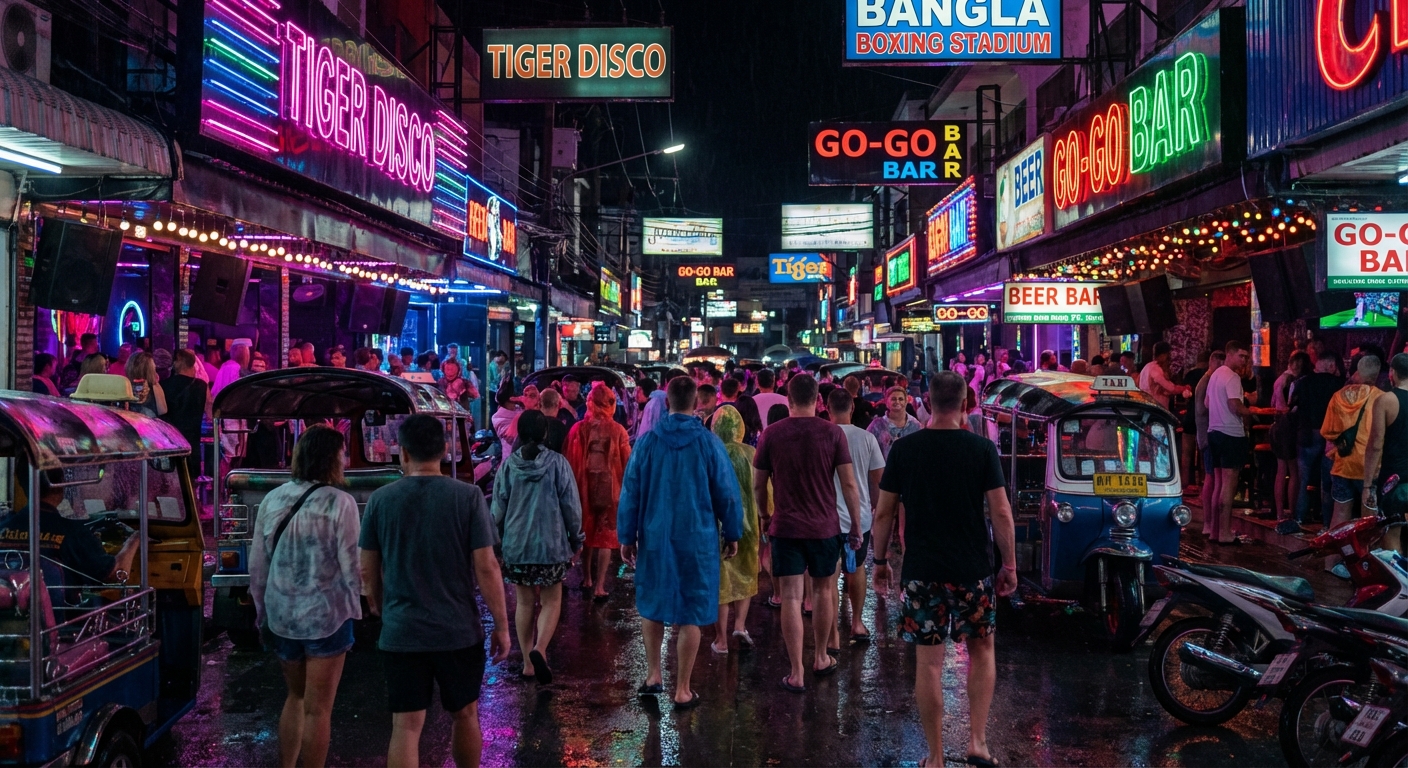
Patong is the default answer when looking for where to stay in Phuket for the first time. It’s the most developed neighborhood on the island, packed with hotels, restaurants, pharmacies, tailors, and travel agencies. Everything is within reach.
Most tour operators offer a free transfer from Patong, or charge less than from other areas. Grabs are easy to find. It is, by far, the most convenient base camp on the island.
That convenience comes at a cost. Bangla Road, the nightlife street, is a full-on sensory assault. Neon lights, deafening bass, touts grabbing your arm every three steps. On Reddit, travelers describe it with words like “seedy,” “sketchy,” and simply “a dump.” If that scene appeals to you, you’ll have a blast. If not, Patong is just exhausting.
Who this neighborhood suits
Solo travelers who want nightlife and the social vibe of hostels. People on a short three-day trip where minimizing travel time is essential. Anyone who wants to be in the middle of the action. Lub d Phuket Patong hostel is consistently mentioned for its cleanliness and beachfront location.
Who should avoid it
Families. Couples looking for romance. Solo female travelers who want to feel safe at night. Anyone who values peace and quiet. Pushy touts and scams are a real problem here, and the beach itself is mediocre and crowded.
Prices and logistics
Hostels start around 300 to 500 THB per night (about 8 to 13 USD). Mid-range hotels run between 1,500 and 3,000 THB (40 to 80 USD). High-end resorts start at 5,000 THB (130 USD) and up.
Transport is the best on the island: Grab is available everywhere and tuk-tuks are on every corner (but tuk-tuks charge inflated prices, so stick with Grab). Patong is about 20 minutes from the Big Buddha and 15-20 minutes from Kata and Karon.
One tip that comes up again and again: even if you’re staying elsewhere, go check out Bangla Road for one evening. It’s worth seeing once. Check out our activities guide for more outing ideas. But don’t make it your base camp unless partying is the whole reason you’re here.
Kata Beach: the best all-around choice
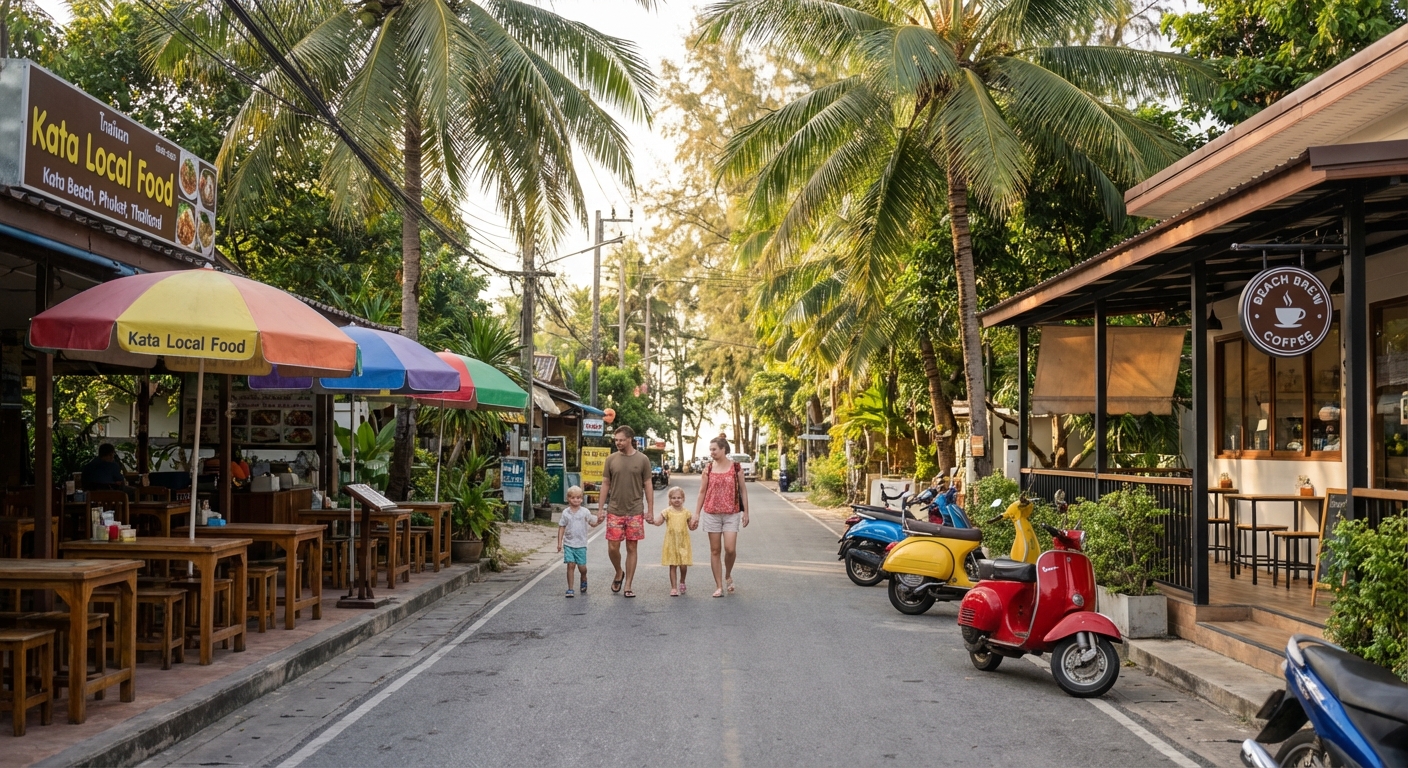
If you asked a hundred people on Reddit where to stay in Phuket, Kata would win by a landslide. This neighborhood comes up consistently as the best spot for first-timers, couples, families, and solo travelers. The reason is simple: it does everything right without dropping the ball on anything.
Kata has a walkable town center with a good density of restaurants and street food stalls on the main road (not on the beach).
Kata is steps away from one of Phuket’s most beautiful beaches, with good swimming conditions in high season and decent surf in low season. There’s a small lively area called Soi Spiderman if you feel like going out at night, but the overall vibe stays family-friendly and relaxed.
How the neighborhood is laid out
Everything is walkable. You can go from your hotel to the beach, have dinner at a street food stall, buy sunscreen at 7-Eleven, and come back without ever needing a taxi. That’s a real asset in Phuket, where most neighborhoods require a car or scooter for the slightest errand. Club Med occupies a large stretch of the beachfront, which forces you to walk around it, but that’s a minor detail.
Kata Noi, a smaller bay just south of Kata Beach, is worth knowing about. It’s quieter, more upscale, and sometimes called the “secret third option” for those who want the convenience of Kata with fewer crowds.
Who it suits
Just about everyone. First-time visitors to Phuket, families with kids, couples, solo travelers looking for a friendly but mellow vibe. If you want nightlife, Patong is 15-20 minutes away by Grab. If you prefer peace and quiet, walk south to Kata Noi.
Prices
Guesthouses start around 500 THB per night (about 13 USD). Most mid-range resorts run between 2,000 and 4,000 THB (55 to 110 USD). The Beyond Resort Kata is often mentioned for being one of the few properties with direct beach access, since most hotels in Kata and Karon are separated from the sand by a road. Kata Noi villas start around 8,000 THB (210 USD) for upscale options.
Karon Beach: quieter, wider, a bit less character
Karon sits between Patong to the north and Kata to the south. Its long, wide beach is known for sand that squeaks under your feet. The water is generally cleaner than at Kata or Patong. The beach is less crowded, and the whole neighborhood has a more spread-out, tranquil feel.
The downside is character. Several travelers describe Karon as “a bit bland” compared to Kata. There are fewer restaurants, less of a walkable town center, and the main area can feel rather impersonal. But if what you’re after is a big, clean beach with space to breathe and a peaceful, reassuring atmosphere, Karon is for you.
Who it suits
Karon is regularly recommended for solo female travelers, as the area is safe and quiet. Couples who want space on the beach. Families with strollers, thanks to the long, wide, flat beachfront promenade. People looking for a central location, since Karon is roughly halfway between Patong to the north and Nai Harn to the south.
Prices
Hotels start around 800 THB (about 21 USD). Mid-range resorts run from 2,000 to 4,000 THB (55 to 110 USD). For a splurge, The Paradox Resort Karon offers penthouses with private infinity pools, starting at 10,000 THB per night (260 USD).
Rawai and Nai Harn: the authentic side of Phuket
The southern tip of the island is where Phuket stops looking like a tourist destination and starts looking like a place where people actually live. Rawai and Nai Harn are two neighboring areas that attract expats, digital nomads, long-term travelers, and anyone who already knows Phuket and has decided to look for something different.
Rawai
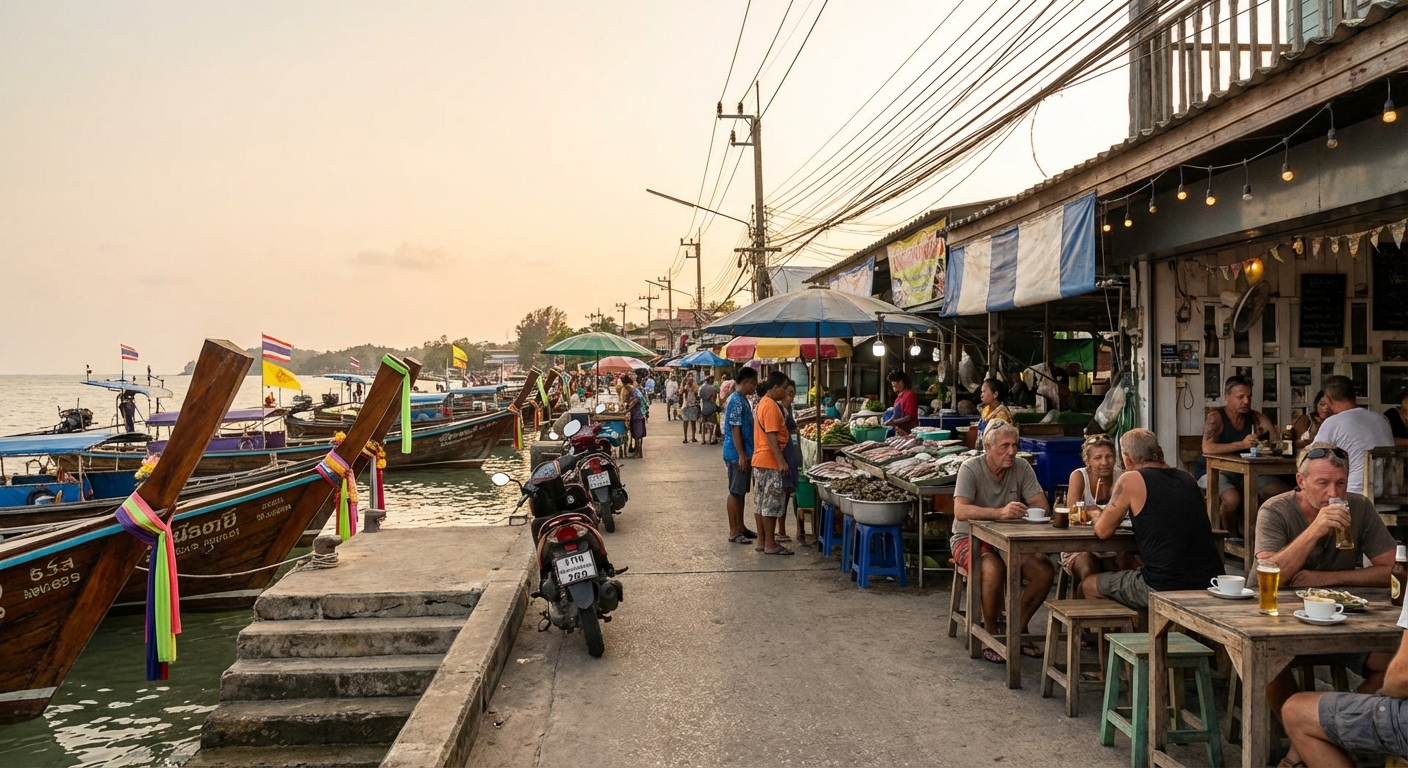
Rawai is Phuket’s expat capital. You’ll find Muay Thai gyms, healthy cafes, Western-style brunches, coworking spaces, and a seafood market where locals come to buy their dinner.
It feels like a real town, not a tourist zone. Monthly rental apartments run around 10,000 to 15,000 THB (260 to 400 USD), which explains why so many people end up staying for months.
One essential detail to know: Rawai Beach is not suitable for swimming. It’s a pier area where longtail boats dock. You need to drive five minutes south to Nai Harn or the small Yanui Beach to go swimming.
Nai Harn
Nai Harn is the beach that justifies the south all by itself. Located at the very bottom of the island, it’s bordered by a lake and a temple, with Cape Promthep (Phuket’s most famous sunset spot) right next door. The beach is stunning and far less crowded than anything on the west coast.
Phuket Town has the best food scene on the island, but Rawai comes in second, especially for seafood. The Rawai Seafood Market is a market where you pick your fish and have it cooked to order.
The downsides are real
You’ll need a scooter here. Taxis are expensive and hard to find, especially around Nai Harn. Check our transport and budget guide for rates and tips. The drive from the south to the airport takes 45 to 60 minutes, and Chalong Circle, a roundabout on the main road heading north, is a notorious bottleneck.
In low season (May to October), Nai Harn can have strong waves that are dangerous for young children. And after four or five days, the restaurant options can start to feel repetitive.
Who it suits
Long stays of a month or more. Digital nomads. Couples who want romance and peace for three or four nights.
Regulars who’ve already done the Kata/Patong circuit. Foodies who want authentic seafood at local prices. It’s not ideal for families with young children, as there are few sidewalks and you’ll need a vehicle for everything.
Prices
Affordable by Phuket standards. Monthly rentals run around 10,000 to 15,000 THB (260 to 400 USD). Hotels range from 1,500 to 3,000 THB per night (40 to 80 USD). For luxury, The Nai Harn is a beachfront hotel with views, starting at 8,000 THB (210 USD) and up.
Bang Tao, Surin, and Layan: the luxury corridor
Phuket’s northwest coast is resort territory. Bang Tao Beach stretches for six kilometers, Surin has coves shared with five-star hotels, and Layan, at the far north, is one of Phuket’s quietest corners. The Laguna complex, a cluster of resorts including Banyan Tree, Angsana, and Dusit Thani, is the neighborhood’s anchor.
Some people love it. The beaches are large and good for swimming. The Laguna complex is safe, clean, and self-contained. Boat Avenue, the local dining and shopping hub, has good options. If you want a resort vacation where you barely leave the property, this neighborhood fills that role perfectly.
The flip side
Bang Tao is six kilometers long. That sounds great until you realize you can’t walk to a restaurant from your hotel. The neighborhood feels sprawling and disconnected. Several travelers on Reddit describe it as “sterile” and lacking Thai character. It’s far from southern attractions like the Big Buddha and Cape Promthep. And prices are among the highest on the island.
Surin and Pansea Beach are a different story. These are small, exclusive bays where hotels like The Surin and Amanpuri share the sand with just a handful of guests. If budget isn’t a concern, Surin is one of the most beautiful spots on the island.
Who it suits
Luxury travelers and honeymooners who want privacy. Families who want a safe, stroller-friendly environment with pools and kids’ clubs. People who plan to spend most of their time within the resort grounds. Anyone with a comfortable budget who prioritizes comfort over authenticity.
Prices
Few budget options in this neighborhood. Mid-range resorts run from 3,000 to 6,000 THB (80 to 160 USD). Laguna resorts start at 10,000 THB (260 USD) and climb quickly. The Pavilions, a villa complex with private pools, offers total privacy for couples. The Surin on Pansea Beach is the prestige pick.
Transport note: Bang Tao is 20-30 minutes from the airport, closer than the southern areas. But you’ll need a taxi or shuttle to get around, even within the neighborhood.
Kamala: the family favorite
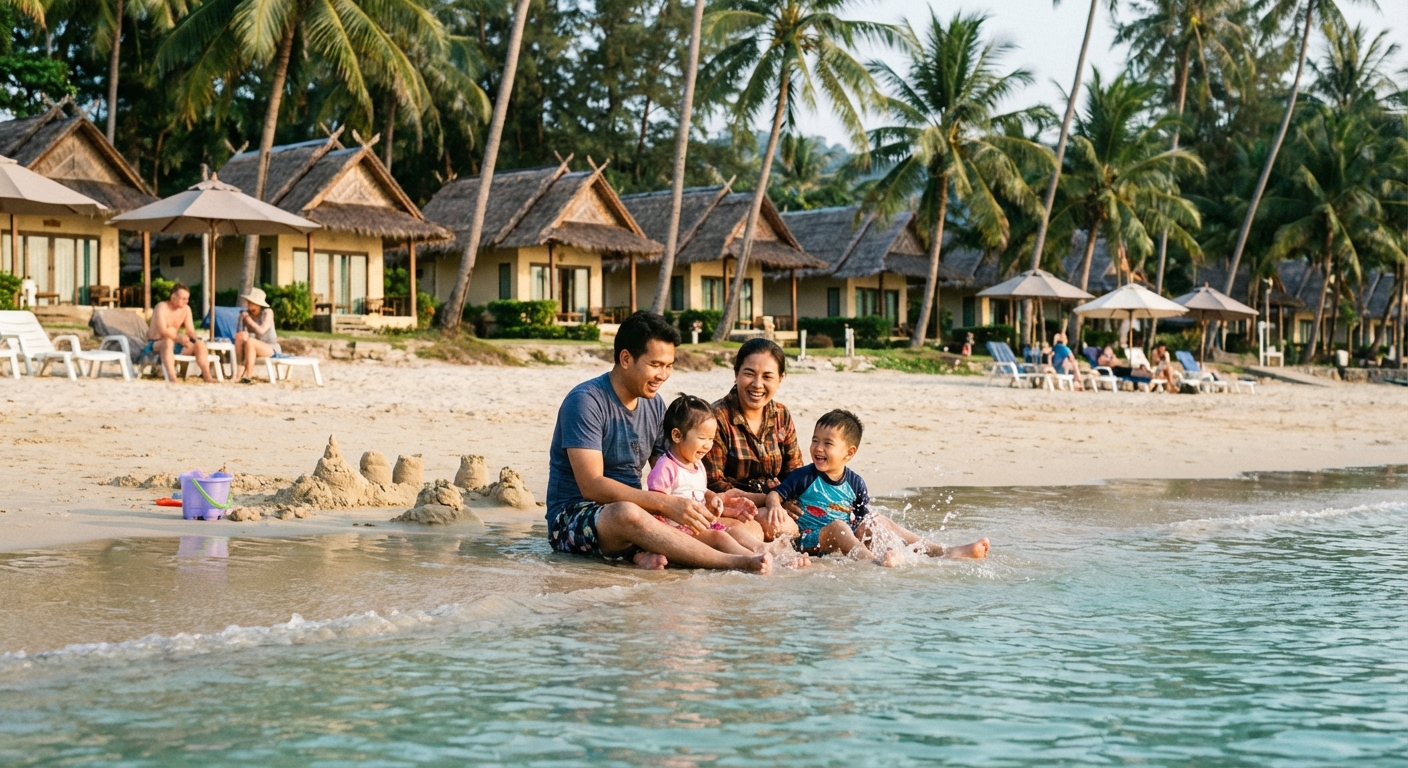
Kamala is a compact, walkable village on the west coast, between Patong and Bang Tao. It comes up again and again as the best neighborhood in Phuket for families with young children.
The reasons are obvious: the beach is shallow and calm, the village is easy to walk around, and there is absolutely no red-light district vibe. Kamala is also well positioned to reach the island’s best activities.
Unlike Kata or Karon, where a road separates most hotels from the beach, Kamala has real beachfront restaurants. The village has everything you need within walking distance: restaurants, a 7-Eleven, massage parlors, and Cafe del Mar, a beach club that lets parents have a nice evening out without Bangla Road’s seedy atmosphere.
The limitations
Kamala is quieter than Kata in terms of restaurant variety. Dining options are fewer, and nightlife beyond Cafe del Mar is virtually nonexistent. The beach is smaller than Bang Tao’s or Karon’s. But for families, those trade-offs are well worth it.
Prices
Mid-range and better value than Bang Tao for families. Guesthouses start at 600-1,000 THB per night (16 to 26 USD). Sunwing Kamala Beach is the go-to family resort, consistently recommended for its eight pools and kids’ area. Expect around 3,000 to 5,000 THB per night (80 to 130 USD).
Phuket Town: culture, food, zero beach
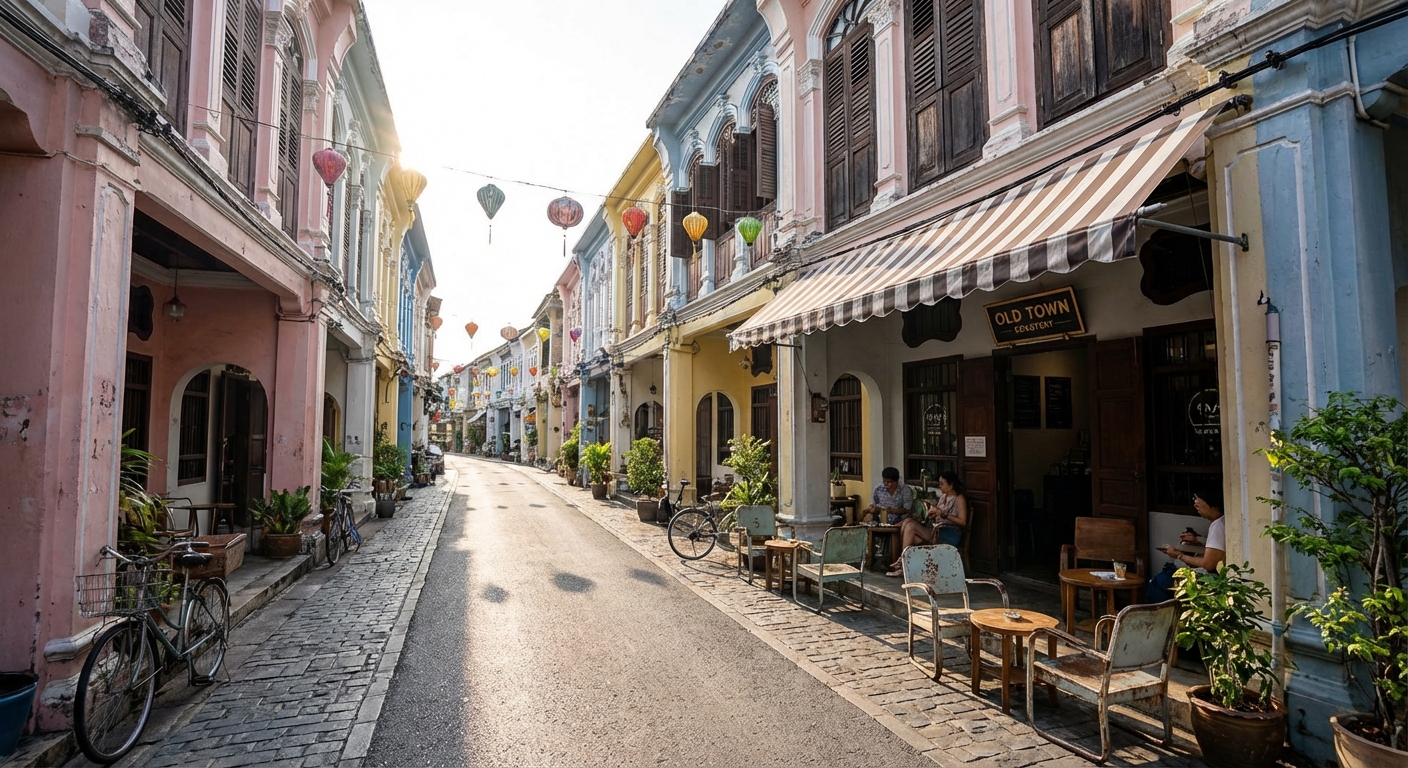
Phuket Town is the only neighborhood on this list with absolutely no beach. The nearest swimmable beach is 30-45 minutes away by taxi. And yet, for a certain type of traveler, it’s the most interesting place on the island.
The old town is lined with streets of Sino-Portuguese architecture, colorful shophouses, alleyways full of cafes, and a food scene that puts every beach area to shame.
Phuket Town is where you’ll find Moo Hong (braised pork belly), Kanom Jeen (rice noodles with curry), Oh Aew (a local shaved ice dessert), and crab curry at places like Raya Restaurant and One Chun. The Sunday night market on Thalang Road, the Sunday Walking Street, is one of the best night markets in southern Thailand.
The cafe scene
Phuket Town has a real coffee culture. Campus Coffee Roaster, Bookhemian, Dou Brew, Graph. Digital nomads and remote workers are drawn here because the cafes have good wifi, the coffee is quality, and a day spent working in town costs a fraction of what it would at a beach resort.
The reality check
Most travelers find that two nights in Phuket Town is enough. The neighborhood can feel dead after 8 PM outside of Sundays. The heat is more stifling than at the beaches, with no sea breeze. And the lack of ocean access makes it a poor base camp for a full week, unless swimming truly doesn’t matter to you.
Who it suits
Foodies. Budget travelers and backpackers. Digital nomads who want cafe culture and a low cost of living. Solo travelers looking for a cultural vibe. People willing to spend two nights here and then move to a beach neighborhood for the rest of their stay.
Prices
The cheapest neighborhood in Phuket, by far. Hostels run 200-400 THB per night (5 to 10 USD). The Memory at On On Hotel is the oldest hotel on the island and served as a filming location for the movie The Beach; it’s been renovated into a stylish boutique property.
EcoLoft offers a rooftop pool and modern rooms at gentle prices. Book a Bed Poshtel is a popular choice for solo travelers. Mad Monkey is the quintessential social hostel for meeting people.
Getting to the beaches from town is perfectly doable. The Blue Bus (songthaew) serves Patong, Kata, and Karon for 40 to 50 THB (about 1 USD). Grab rides take 30 to 45 minutes depending on traffic.
Cape Panwa and Ao Yon: the peace and quiet option
Cape Panwa, on the southeast coast, is the farthest spot from the tourist trail while still being on Phuket. You’ll mainly find luxury resorts and residential properties here. The neighborhood is isolated, with limited dining options and virtually no entertainment.
So why mention it? Because of Ao Yon Beach. The west coast beaches (Patong, Kata, Karon, Bang Tao, Kamala) all face the Andaman Sea. During the monsoon season, roughly May to October, they can have dangerous riptides and red flags banning swimming.
Ao Yon, being on the sheltered east coast, stays calm year-round. If you’re visiting Phuket in low season and want to be certain you can swim safely, this is the neighborhood to keep in mind.
Mai Khao: deserted beach, nothing else
Mai Khao is at the far north of the island, near the airport. The beach is long and virtually deserted. The resorts are high-end: JW Marriott, Anantara. Nai Yang, a neighboring beach protected by a reef, offers calm water and a national park atmosphere.
The problem is that Mai Khao is far from everything. Big Buddha, Cape Promthep, Phuket Town, Patong: everything is 45 minutes to an hour away.
The place doesn’t really feel like Phuket. It feels like a luxury resort that could be anywhere in Southeast Asia. For those who want total seclusion and don’t plan to leave their property, it might be exactly right. For everyone else, it’s too remote.
How to choose: practical guide
Here’s the short version, sorted by type of trip.
If it’s your first visit and you want to play it safe, stay in Kata. It works for almost everyone and you won’t regret it.
If you’re here to party, Patong is the only real option. Set up there for the nightlife and embrace the chaos.
If you’re traveling with young children, Kamala is the top pick. Shallow beach, walkable village, zero sleazy vibes. Bang Tao also works if you want a larger resort with more amenities, but it’s pricier and less walkable.
If you’re a couple looking for romance, Nai Harn for three or four nights is hard to beat. Sunsets at Cape Promthep, quiet beaches, seafood dinners at Rawai market. Kata Noi and Surin are also excellent choices.
If you’re staying a month or longer, Rawai is the neighborhood where the long-term traveler community lives. Affordable apartments, gyms, good food, and a real small-town vibe.
If food and culture matter more to you than lounging on the beach, spend two nights in Phuket Town and taste everything. Then head to a beach neighborhood.
If you’re visiting during monsoon season (May to October), book a hotel with a good pool on the west coast, or consider Cape Panwa for calm swimming on the east coast.
Getting around between neighborhoods
Phuket doesn’t have a real public transport system. The Blue Bus runs a few routes between Phuket Town and the beaches, but that’s about it. For getting around, you have three options.
Grab is the most reliable and affordable option. The app works across the whole island, costs a fraction of what tuk-tuk drivers will quote you, and you know the fare before you get in. Download it before you arrive.
Scooter rental is practically essential if you’re staying in the south (Rawai/Nai Harn) and useful everywhere else. Rentals run around 200 to 300 THB per day (5 to 8 USD). Read our practical tips on scooters and licenses before renting.
Just know that driving in Thailand is unforgiving, and medical bills from scooter accidents are among the most common mishaps for travelers.
Tuk-tuks are the worst option. They’re everywhere but notorious for overcharging tourists, often demanding three to five times the normal fare. Use them only as a last resort.
The Patong-Kata-Karon triangle has the best transport coverage on the island. If you’re staying in any of these three neighborhoods, getting to the other two is easy and cheap. The farther you go south or north, the more you depend on your own wheels.
Splitting your stay between neighborhoods
For trips of a week or longer, many travelers split their stay between two areas. The most common combinations: two nights in Phuket Town for food and culture, then the rest at the beach (usually Kata or Karon). Or three nights in Kata for convenience, then three nights in Rawai/Nai Harn for a change of pace.
Also check out our guide to where to stay in Bali, from Ubud to Uluwatu.
Getting between neighborhoods is fairly easy with Grab, and most hotels are used to receiving guests coming from other parts of the island. Splitting your stay lets you experience all of Phuket’s diversity without locking yourself into a single neighborhood that might not match your pace.
To learn more about planning your trip, check out our complete Phuket guide.
For your stop in Bangkok, check out our neighborhood-by-neighborhood guide to where to stay in Bangkok.
Also see our guide to where to stay in Hanoi from the Old Quarter to West Lake