


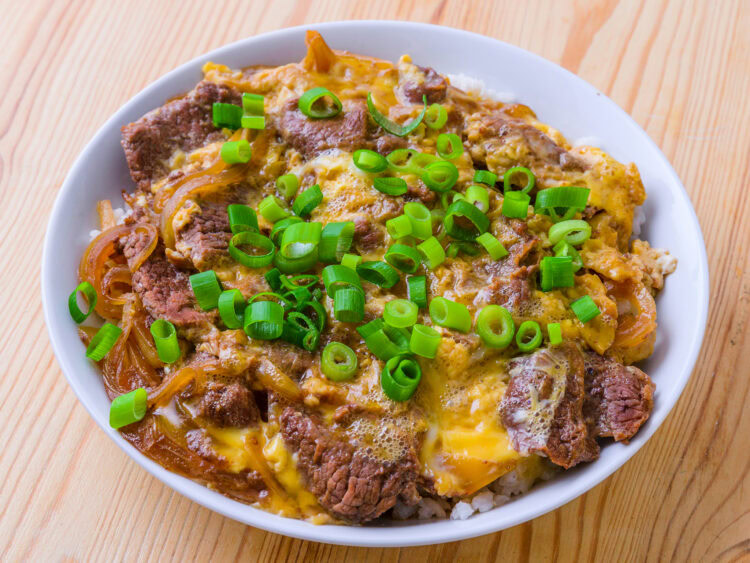
Sweet steam rises from the bowl, carrying the aroma of soy‑kissed beef, melting onions, and barely set ribbons of egg. This familiar trio evokes a motherly warmth, even though its name admits the ingredients are perfect strangers.
Tanindon—playfully dubbed the “strangers’ bowl,” the counterpart to the chicken‑and‑egg classic, oyakodon—is weeknight comfort, ready in 10 to 20 minutes: 150 years of culinary culture distilled into a single pan.
Across Japan and, increasingly, abroad, this dish offers more than speed : it marks the move away from old taboos and official warnings against eating four‑legged animals toward a modern appetite for beef. To truly appreciate it, it helps to know what defines a real tanindon—and why those details matter.
Origins and Name : From Meiji to Kansai
In the 1870s, Meiji‑era Japan loosened religious and social taboos that had for centuries banned eating four‑legged meat. In Tokyo, intellectuals asserted their modernity with the kaikadon, a beef‑and‑egg rice bowl that proclaimed bunmei kaika : “civilization and enlightenment.”
In Osaka’s merchant districts, cooks ran with the idea—Kansai humor in tow : if chicken and egg are parent and child (oyako), then beef (or pork) and egg are, by definition, strangers, tanin. The pun stuck, and by the Taishō era Namba’s counters were serving tanindon to office workers and passersby.
Institutions quickly followed. Harijū, a sukiyaki house opened in 1919, poured its rich warishita over rice and dubbed the bowl Beef Wan, cementing it as an Osaka staple. Actor Tsuyoshi Naitō recalls arriving in Tokyo decades later and being “truly shocked” that no soba stand offered tanindon ; for Kansai natives, this bowl is as common as miso soup.
Essentials : How to recognize (and make) an authentic tanindon
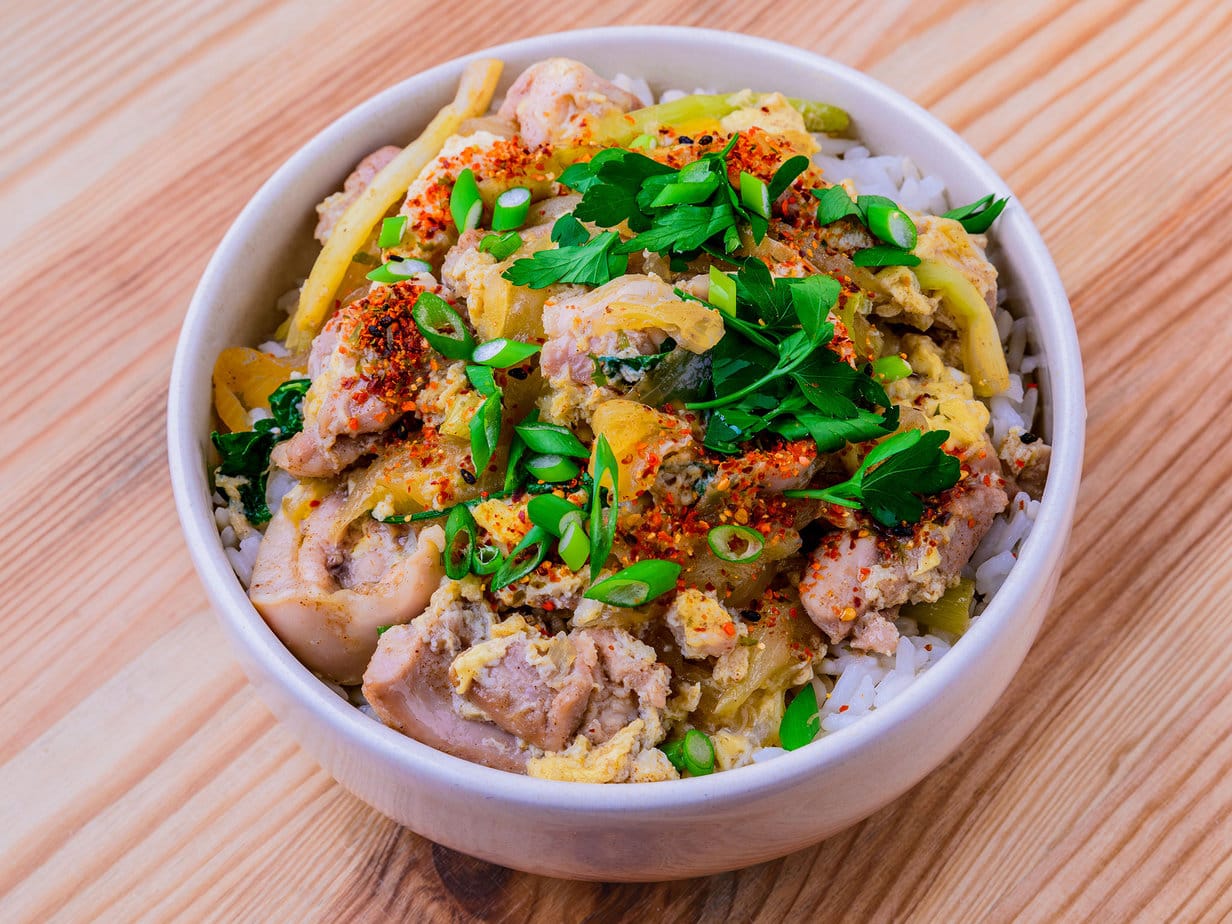
Authentic versions use thinly sliced meat : well‑marbled beef is the norm in Kansai, while cooks in Kantō often reach for pork ; with chicken, it’s a different dish (oyakodon).
Onion rounds simmer first, releasing their sweetness into a warishita based on dashi, soy, mirin, and often sake, creating a balance rich enough to coat the lips without turning cloying. In this gentle simmer, the meat cooks briefly—just until tender.
The eggs, added at the end, are pivotal. Lightly beaten and poured in a casual zigzag, they traditionally remain runny (about 70 % set—that toro‑toro texture beloved in donburi) so they mingle with the hot rice and gleam. The topping then slides over short‑grain rice freshly steamed, letting the sauce seep into every grain.
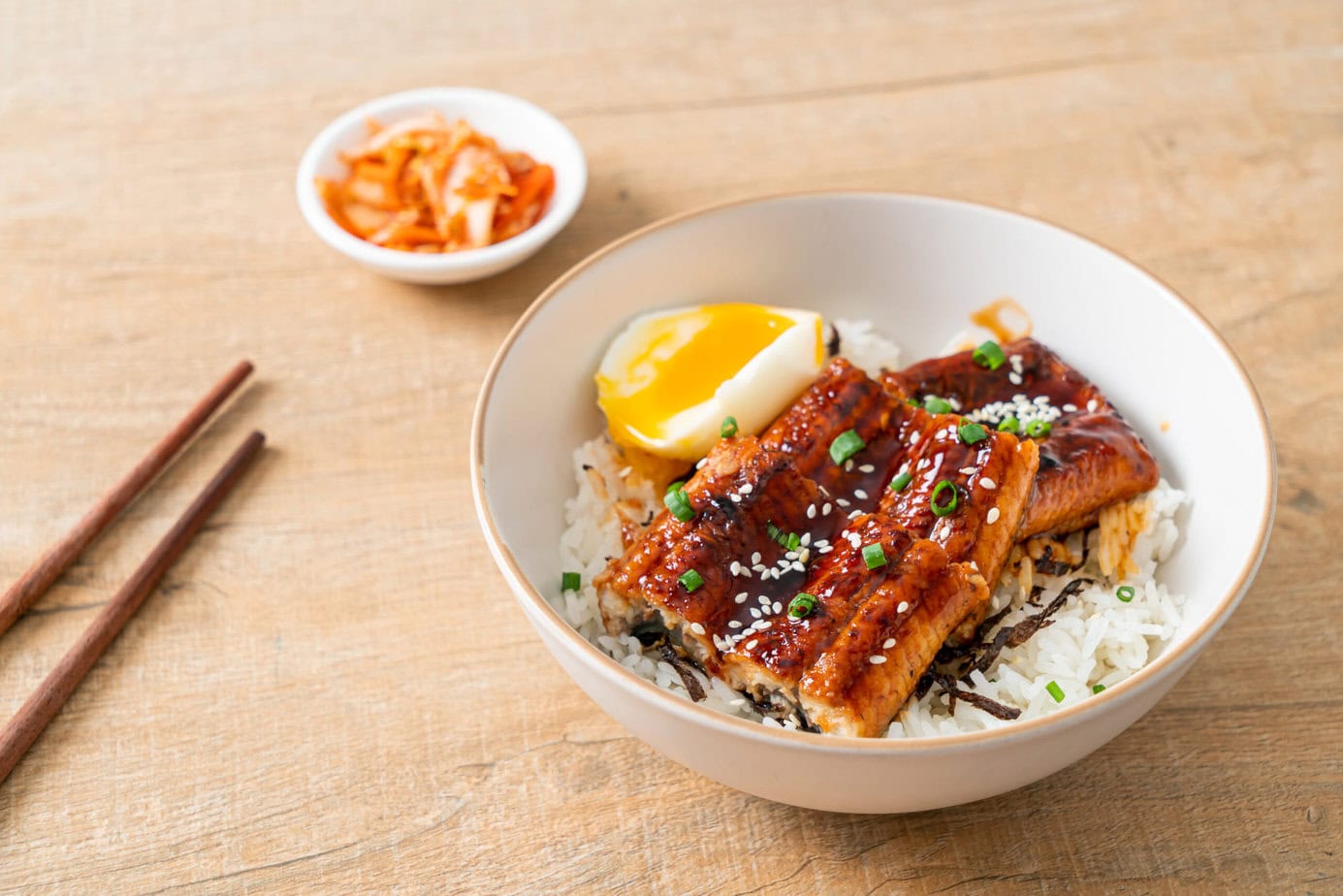
Finishing touches vary : sprigs of mitsuba or slices of scallion are common everywhere, while beni shōga and a pinch of shichimi appear more often in the east. Red flags are easier to spot : a broth without dashi, hard‑cooked eggs, forgotten onions or—unthinkably—a version served without rice.
Regional nuances at a glance
In Kansai, if you order “tanindon,” beef is the implicit choice. The broth sometimes shows a paler hue when usukuchi is used (light soy sauce). Its sweetness is often tuned to evoke sukiyaki. Osaka pride shines in specialty stalls and historic beef houses that treat this as a sukiyaki‑style donburi. The same topping has noodle cousins : tanin‑udon and tanin‑soba, which cement the beef‑and‑egg profile as a local reflex.
In Kantō, the terminology differs. Historically, “kaikadon” signaled the modern pairing of meat and egg ; pork appears more often, and in soba‑yasan culture tanindon can read as pork‑and‑egg, since beef already has its own gyudon.
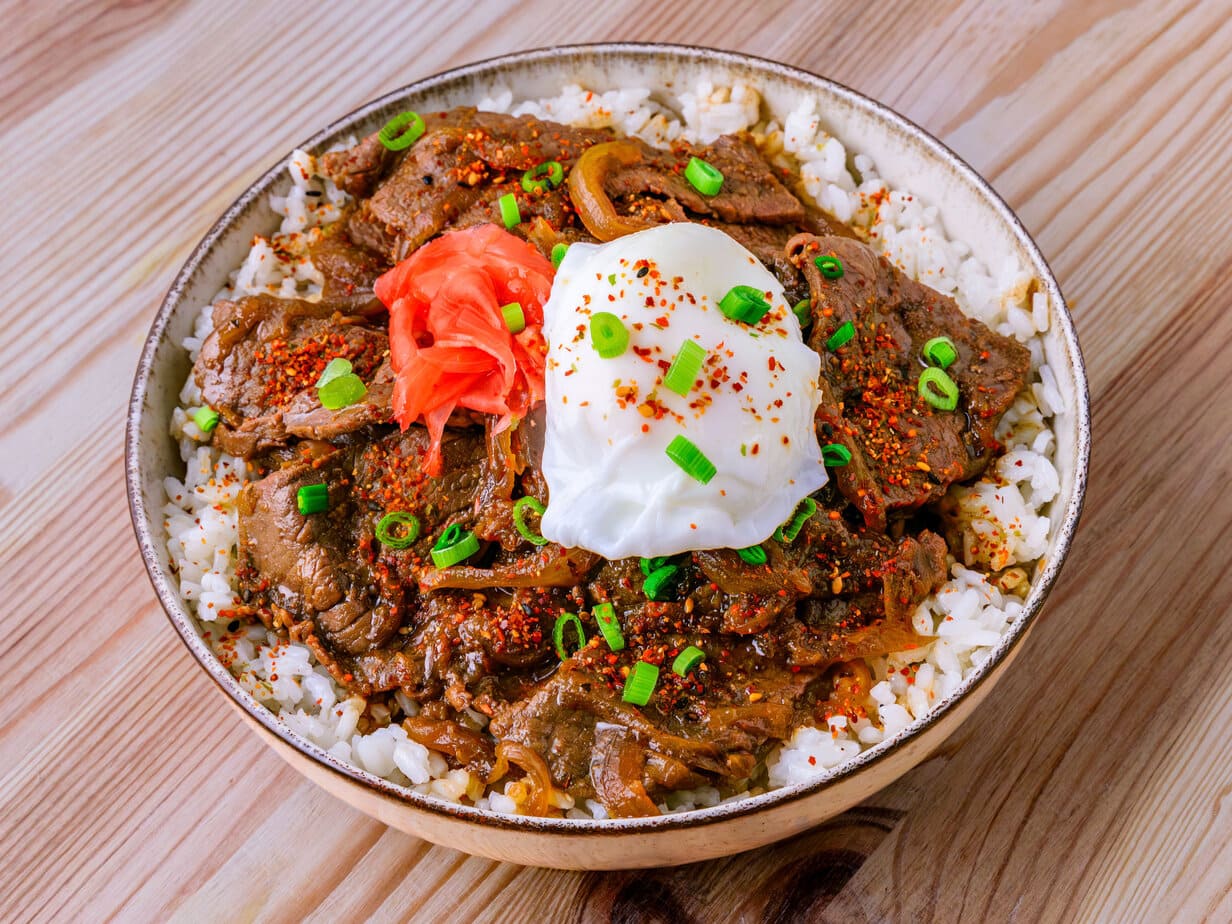
Chains avoid ambiguity with descriptive names : 牛とじ丼 (gyū‑toji‑don) for beef‑and‑egg ; for pork you’ll see, for example, 豚生姜丼 (buta‑shōga‑don) (at Nakau) or, depending on the region, names like “butatamako‑don.” Not to be confused with しょうが焼き丼 (ginger pork bowl in the shōgayaki style, without egg‑toji), which does not use egg‑toji.
Markers of authenticity
The essentials are clear : a dashi‑based warishita, sliced beef or pork (never chicken : that’s oyakodon), onions, a barely set egg, and rice. Over low heat the broth should only simmer : a gentle bubble that sweetens the onion and pulls umami from the dashi before the meat slips in for a brief, tender cook. The aroma should evoke sukiyaki—balanced and savory—rather than a blunt mix of soy and sugar.
Red flags are just as clear. No dashi ? You’ll notice right away : the bowl lacks depth. A “tanindon” without onion or negi, or with eggs scrambled to dryness, misses the essential textures and aromas. Rice‑less versions (keto‑style) may be tasty, but by definition they aren’t donburi. And names matter : calling a chicken‑and‑egg bowl “tanindon” erases the oyako/tanin distinction that gives the dish its spirit.
Debate centers on egg doneness. In the pure form, the finish is toro‑toro. In sukiyaki‑influenced presentations, you sometimes see a raw yolk on top ; Japanese egg practices make raw common in contexts like sukiyaki or tamago‑kake‑gohan, but outside Japan diners often prefer pasteurized eggs or a slightly firmer set. Variations exist : ground meat, while faster, loses the supple chew of slices ; salmon and egg are more of a wordplay and belong to other donburi families.
Reasonable tweaks stay faithful to the spirit : a handful of shiitake or shimeji boosts umami ; a touch of flour or potato starch on the pork can give the sauce a velvety body. Authenticity respects the core profile and the integrity of the names (“kaikadon,” “gyū‑toji‑don,” or “豚生姜丼” in Tokyo ; “tanindon” in Osaka) so diners know exactly which meat‑and‑egg pairing is being served.
Traveling to Japan? A quick ordering guide
Menu labels are your guide. In Osaka and across Kansai, look for 他人丼 (tanindon). In Tokyo and the wider Kantō, spot 開化丼 (kaikadon), especially at traditional shops (soba‑yasan). Elsewhere, menus often use descriptive labels like “牛とじ丼 (gyū‑toji‑don)” for beef, or “豚生姜丼 (buta‑shōga‑don)” for pork versions seasoned with ginger. Confirm the meat (beef or pork), since implicit norms vary by region and type of establishment (Kantō soba‑yasan often lean pork‑ward).
Toppings set the tone : scallion or mitsuba are common ; with beef, a tuft of red pickled ginger sometimes appears ; shichimi waits on the table. Texture‑wise, look for : soft, glossy egg; integrated broth; hot, slightly sticky rice. For home cooking, the appeal is weeknight speed : favor thin slicing, a balanced warishita, and a gentle egg set over fussy steps.
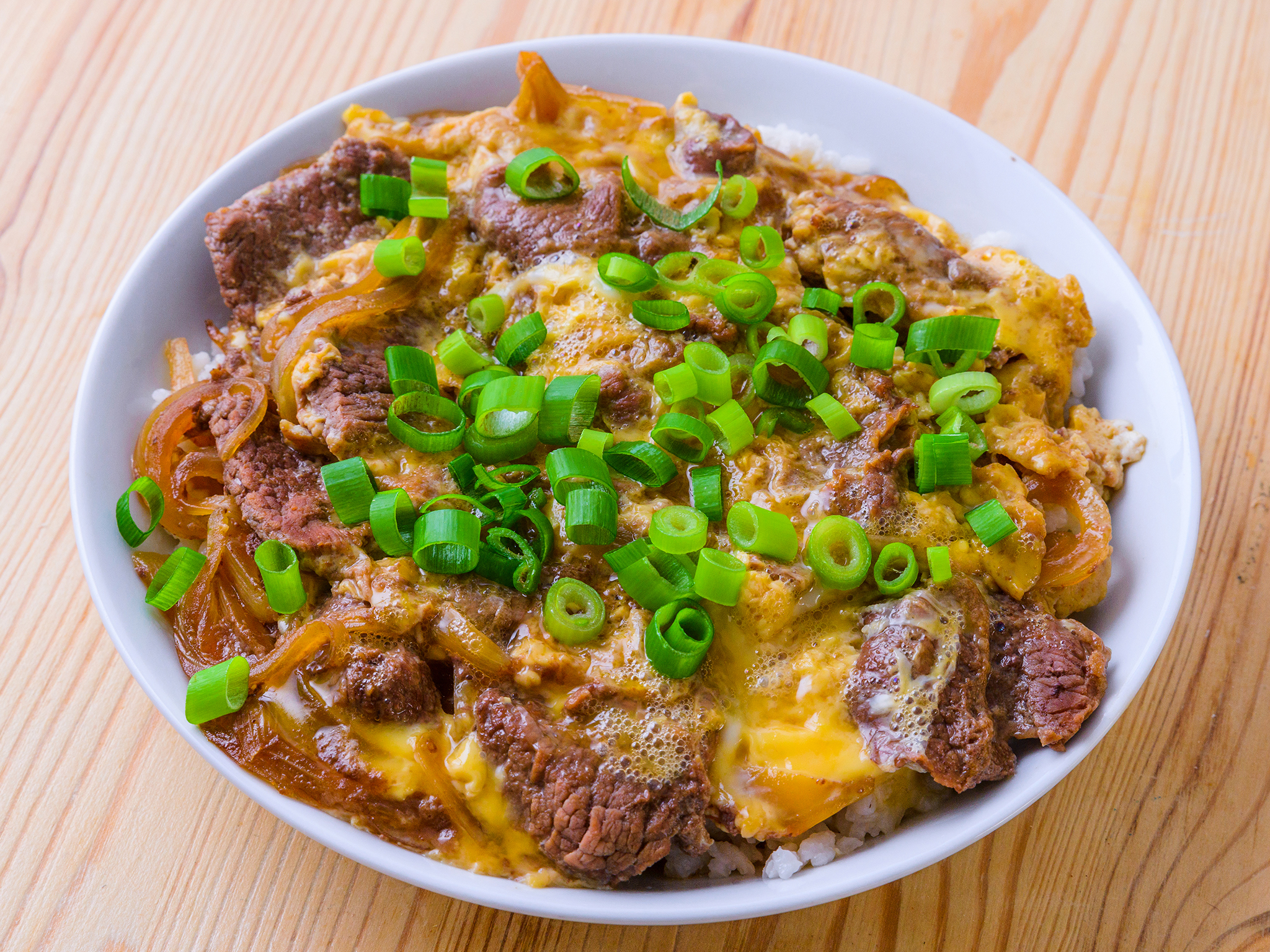
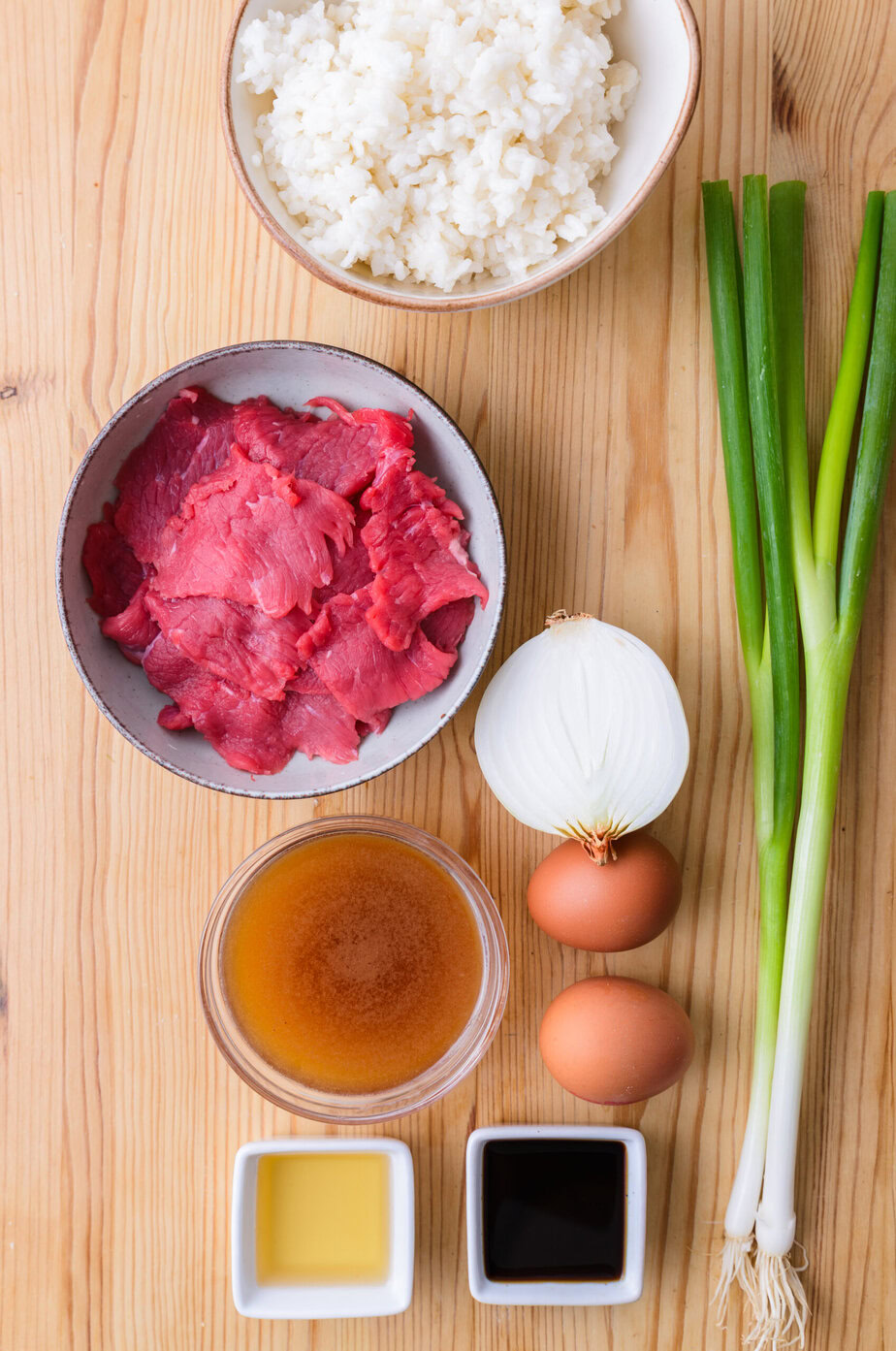
Ingredients
- 2 tablespoons mirin
- 2 tablespoons light soy sauce
- 120 ml dashi homemade or made from powder
- 100 g beef finely sliced
- 0.5 medium onion thinly sliced
- 2 eggs lightly beaten
- A few sprigs mitsuba or thinly sliced scallions
- 2 bowls hot Japanese rice cooked
Instructions
- Combine the mirin, soy sauce, and dashi in a small skillet (18–20 cm). Bring to a gentle simmer and boil for 30 seconds to cook off the alcohol.2 tablespoons mirin, 2 tablespoons light soy sauce, 120 ml dashi
- Add the onion and simmer until translucent.0.5 medium onion
- Add the beef, spread it out, and cook just until the color changes, taking care not to overcook so it stays tender.100 g beef
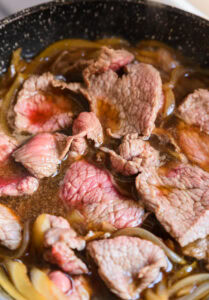
- Pour in half of the eggs; cover and cook over low heat until the surface is just set.2 eggs

- Pour the remaining eggs over the center, cover again, and cook for a few seconds, leaving the eggs slightly runny.
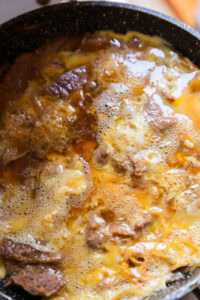
- Slide everything over the hot rice and garnish with mitsuba or scallions; serve immediately.2 bowls hot Japanese rice, A few sprigs mitsuba
Notes
- Overcooking will make the beef tough; remove the pan from the heat as soon as the second addition of egg is half set.
- In Kansai households, slices of fish cake can replace the beef to make kinō-don (“leaf bowl”).
Nutrition
Culinary sources
Recipe source: https://www.honmirin.org/recipes/218
• Tanindon (beef and egg rice bowl) 他人丼 – Just One Cookbook (English)
• Tanindon recipe (他人丼) – Beef and egg rice bowl – No Recipes (English)
• Specialist 他人丼 restaurant あか乃 – Tenma / Donburi – Tabelog (Japanese)
• Why “他人丼”? The unexpected origin of the name – 高齢者の食卓 (Japanese)
• What shocked 内藤剛志 most upon arriving in Tokyo was the absence of “〇〇丼”! – 文化放送 (Japanese)
• 他人丼 – Wikipedia (Japanese)
• Tanindon (Japanese pork and egg rice bowl) – Sudachi (English)
• 他人丼 [Japan] – 世界の地方料理 (Japanese)
• Tanindon – Salmon and egg donburi (rice bowl) – delectabilia (English)
• What is 他人丼 (tanindonburi)? Meaning and usage – Kotobank (Japanese)
• Your go‑to Japanese home‑cooked meals: r/JapaneseFood – Reddit (English)


So quick and comforting, and the dashi-mirin balance was spot on with perfectly silky eggs; made extra on purpose because the leftovers were just as good the next day 🙂
Made this tanindon last night and the dashi warishita with the silky, barely set egg tasted every bit as good as what I’ve had at Japanese restaurants, maybe even better since the beef stayed so tender. Quick, comforting, and absolutely going into the weeknight rotation 🙂
Made this on a rainy evening and it was ultimate comfort food, with the cozy vibes of sweet onion, tender beef, and that softly set egg melting into the rice. The gentle dashi warishita makes everything feel so warm and comforting 😌
Made this last night and swapped the light soy sauce for regular soy, just using a little less to keep it from getting too salty. Let the second egg set about 10 seconds longer since my family prefers it slightly firmer, and it was still silky and delicious 😊