
In Hanoi, 2 hotels at the same price can give you radically different stays. A €35 boutique hotel in the Old Quarter puts you 30 seconds from the best phở in the city, with motorbike horns below your window from 5:00; the same €35 in West Lake buys you silence, a lakeside cycle path and a 20-minute Grab ride every time you want to visit a temple.
Here are my 6 neighborhoods, with my hotel picks, prices in euros and my honest take on who should stay where.

- Where should you stay in Hanoi for your trip?
- Where should you stay on your first visit?
- How can you get a quiet night’s sleep in the Old Quarter?
- Which hotel should you choose in the Old Quarter?
- Where should you stay as a couple or family?
- Where should you stay for a longer trip or remote work?
- Where should you stay for good food?
- How much does it cost?
- How do you get around from each neighborhood?
- My other Hanoi guides
Where should you stay in Hanoi for your trip?
For a first visit of 2 to 4 days, choose the Old Quarter, with La Siesta or Tirant Hotel for a mid-range stay and Little Charm Hostel for a budget option. For 3 nights, stay there, walk everywhere and eat street food at every meal: it’s Hanoi in concentrated form.
For couples, or if sleep comes first, I choose the French Quarter for its colonial architecture and peace without sacrificing proximity, with 1 or 2 nights at Sofitel Metropole if the budget allows, otherwise Somerset Grand. For families, choose Somerset Grand or the shores of Hoàn Kiếm Lake, and never take a stroller onto Beer Street or deep into the Old Quarter’s alleys.
For 1 week or more working remotely, it’s West Lake, no debate, and your mental health will thank you. For luxury, Sofitel Metropole keeps you connected to the city, while InterContinental Westlake offers a resort-style escape.
For stays of 5 to 7 nights or more, I recommend splitting your time: 2 to 3 nights in the Old Quarter for the heritage sights and food scene, then West Lake to unwind and take day trips (Ha Long Bay, Ninh Bình), returning to the calm of the lake each evening. Over 2 weeks, add a work routine at Toong or Oriberry, walks in Trúc Bạch for local food and a weekend at the Ba Đình mausoleum complex, and Hanoi becomes somewhere you live for a while.
Where should you stay on your first visit?
If you’re new to Hanoi, spend at least 2 or 3 nights in the Old Quarter, in Hoàn Kiếm district. This is the Hanoi you came for: narrow alleys packed with noodle stalls, motorbikes weaving past just centimeters from your elbows, horns as a constant soundtrack, vendors carrying baskets of baguettes on shoulder poles (I make bánh mì at home, here’s my bánh mì recipe). Imagine the Marais on a street-sale day, multiplied by 10 and without a single red light.
The streets are named after the goods once sold there (Hàng Gai for silk, Hàng Mã for paper goods, Hàng Bạc for silver), and many still bear traces of those trades. It’s noisy, relentless and magnetic.
The neighborhood surrounds the northern tip of Hoàn Kiếm Lake, your landmark. The streets near St. Joseph’s Cathedral (the Nhà Thờ neighborhood) and Hàng Bông are a little more upscale and quieter than the alleys further in. The southern edge, near the lake, attracts a more refined crowd, while the north becomes increasingly local and chaotic.
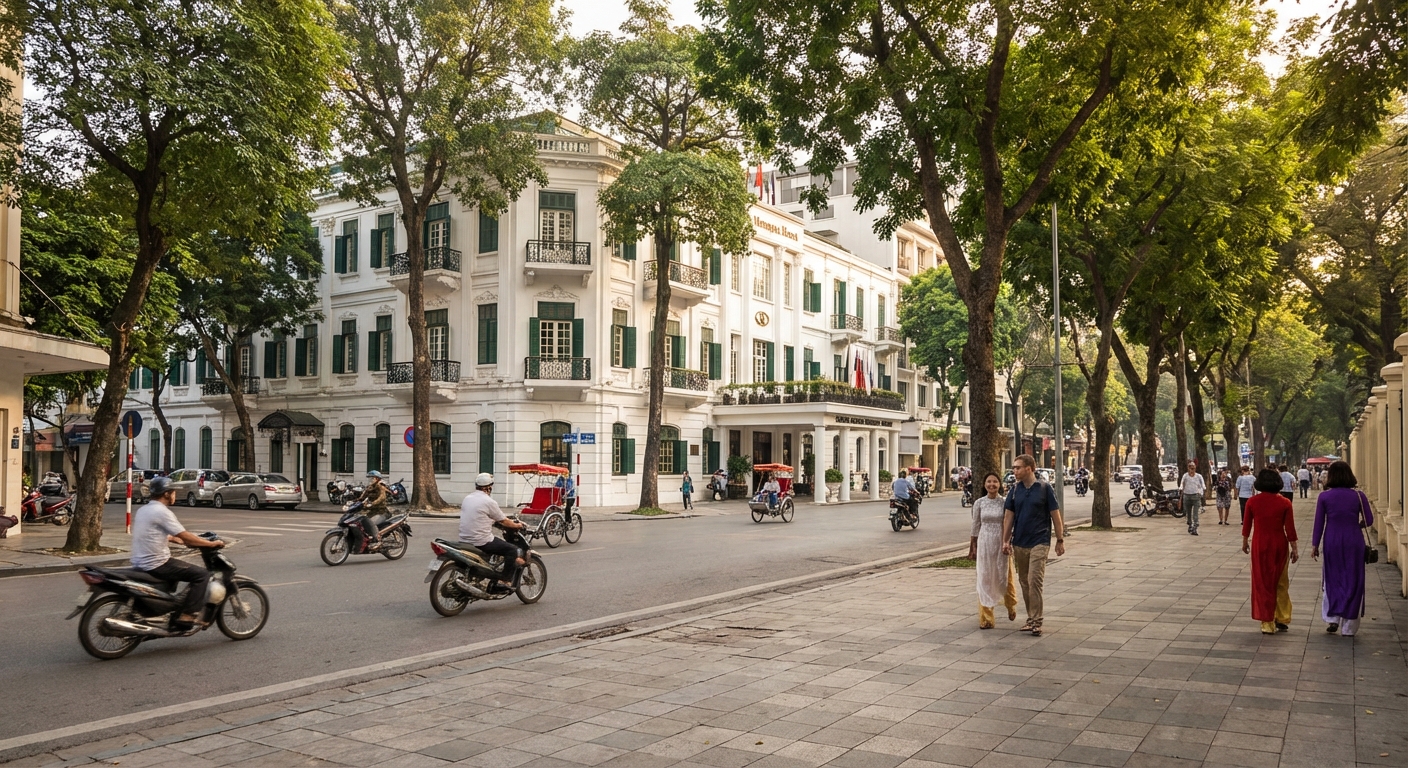
For families, aim for Hoàn Kiếm Lake, where the streets close to traffic every weekend, from Friday evening to Sunday evening. The lakeside then becomes a pedestrian zone where children can run around safely, and I’ve walked all the way around it. For them, traffic is much more of a risk here than crime, so avoid the Beer Street area and choose a hotel with a pool, essential during the hot, humid summer months.
You’re within walking distance of the most important heritage sights and temples, and for me, the street food here ranks among the best in Southeast Asia. With Hanoi’s best nightlife and very high noise levels, this is the neighborhood for first-timers, backpackers and food lovers.
How can you get a quiet night’s sleep in the Old Quarter?
Noise is the number 1 complaint here: motorbikes idle beneath the windows at all hours. Tạ Hiện Street, nicknamed “Beer Street,” is the backpacker nightlife strip, where bars battle it out with sound systems. If your room faces Tạ Hiện, expect music until 1:00 or 2:00 on weekdays, later on weekends.
3 strategies work. Choose a hotel set back in an alley, a “ngõ” in Vietnamese, because just 20 meters from a main street the noise already drops noticeably. At check-in, ask for a room with an inward-facing window or on a high floor, without a window onto the street. And stay on the edges, near Hoàn Kiếm Lake or the Cathedral neighborhood, to keep everything within walking distance without sleeping above a karaoke bar.
The buildings follow the “tube house” layout, with very narrow frontages and great depth, so many rooms, especially the cheapest, have no outside window at all, and you wake up in a dark box without natural light. Check photos and reviews on Booking.com or Agoda to look for windows, because paying €5 to €10 more for a real window is a worthwhile investment.
Here, I choose a hotel over Airbnb. Airbnbs in the Old Quarter often have paper-thin walls, roosters crowing at 4:00, mold and alleyway entrances that are impossible to find with luggage. Vietnam’s short-term rental regulations remain unclear, last-minute cancellations aren’t rare, and my guide to planning your Hanoi trip covers the legal aspects and scams to avoid.
Above all, you’d miss out on the reception desk, whose staff I find among the most helpful in Southeast Asia. They book your excursions, arrange airport transfers, warn you about scams and solve problems you didn’t even know existed.
Which hotel should you choose in the Old Quarter?
For luxury and high-end stays (€70 to €130 and up per night), Peridot Grand Luxury Boutique Hotel is the neighbourhood’s most photographed hotel on Instagram, with its infinity pool and very photogenic rooftop. La Siesta, a local chain with several locations in the neighbourhood, is my go-to for mid-range boutique hotels, thanks to its excellent soundproofing despite the central locations and its rooftop bars, a real bonus; La Siesta Premium Hàng Bè has the best layout in the chain. Apricot Hotel, near the lake, has a rooftop bar, but service is a notch below the Metropole, on the other side of the water.
In the mid-range bracket (€25 to €70 per night), I stayed at Tirant Hotel, whose loyal guests have been returning trip after trip for years. The building is old, but the staff are exceptional and there is a pool.
Hôtel du Lac has lovely decor and an “incredible” breakfast, Solaria Hotel has a rooftop bar overlooking the lake, and Aira Boutique Hotel and Spa offers a polished experience for a fraction of the luxury price, with a small pool. For families, I recommend Hanoi Pearl Hotel, far enough from the main streets to actually get some sleep and good value for its large rooms, or Bonsella Hotel, a child-friendly option near the lake.
For smaller budgets (€12 to €35 per night), Concon House has good-value rooms, a decent breakfast and clean facilities, and Hanoi Royal Palace 2 is well located, with a decent free breakfast. Their reception teams arrange your airport transfer, book your Ha Long Bay cruise and tell you which taxi drivers to avoid. Especen Hotel, a budget favourite for years, has basic private rooms, sometimes for less than €18.
For hostels, Little Charm Hanoi Hostel is my number 1 recommendation, with clean capsule beds, a pool (rare for a hostel in the neighbourhood) and a friendly atmosphere that doesn’t turn into a party. If you’re backpacking solo, Old Quarter View Hostel has an excellent location and organises excursions, while Buffalo Hostel has a pool and a social atmosphere. Central Backpackers and Mad Monkey are party hostels, complete with free beer hours and loud music. Only choose them if that’s exactly what you’re looking for.
Where should you stay as a couple or family?
French Quarter
I crossed over to the southern shore of Hoan Kiem Lake, and the city’s character changed: wider boulevards lined with tamarind trees, colonial government buildings with yellow facades, walkable pavements. Haussmann-style facades, louvred shutters and wrought-iron balconies, inherited from the French presence in Indochina, feel more like a Parisian arrondissement than a Southeast Asian capital. Less traffic, less honking, and the Old Quarter is 10 or 15 minutes away on foot, close enough to visit the chaos without sleeping in it.
I find it beautiful, but it could be any European colonial neighbourhood in Southeast Asia, whereas the Old Quarter has an unmistakable character unique to Hanoi. For 2 or 3 nights of maximum immersion, it might feel too polished, but for couples or families wanting proper sleep, wider pavements and fewer motorbikes, it’s the answer.
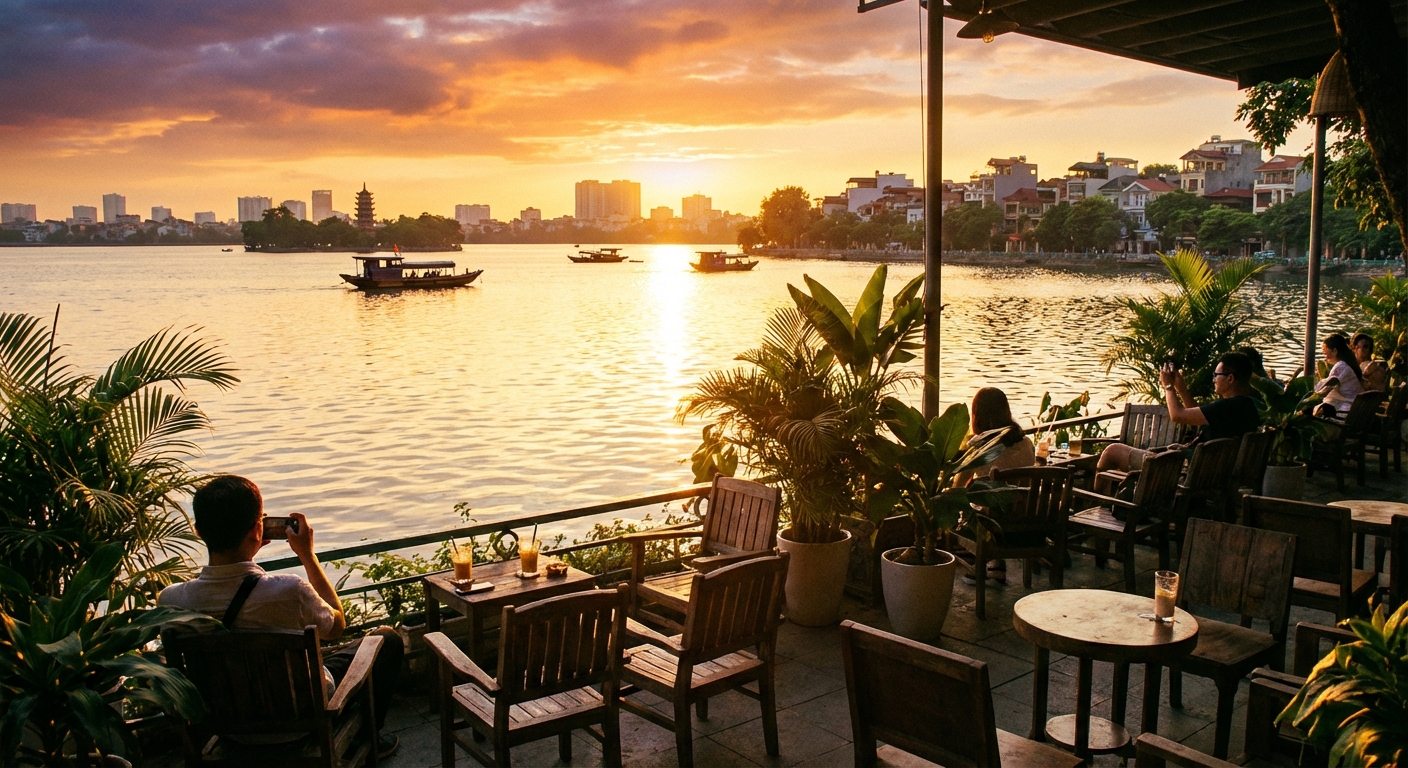
If the Old Quarter has the raw, down-to-earth energy of the Marais, the French Quarter has the poised, bourgeois elegance of Saint-Germain-des-Prés. It’s Hanoi’s Saint-Germain, with good street food and limited nightlife.
Sofitel Legend Metropole (€270 to €450 and up per night) is Vietnam’s most famous hotel, and a must in my book if colonial history interests you. Built in 1901, it has seen Graham Greene write on its terrace and war correspondents send their dispatches from the bar, and guests can visit the wartime bunker beneath its foundations. The pool, service and atmosphere put it in a category of its own: if your budget allows, even for a night, the experience is worth the price, and by booking through Booking.com or directly with Sofitel, you benefit from the Accor loyalty programme.
The newer Capella Hanoi offers meticulously detailed Art Nouveau luxury for anyone wanting something more contemporary than the Metropole’s colonial grandeur, and both range from €180 to €450 and up. For families, Somerset Grand Hanoi is my number 1 recommendation for space: apartment-style rooms with kitchens, a pool, proximity to the Old Quarter and room for the kids to spread out. Hilton Garden Inn is reliable and quiet if you want something familiar.
My rule of thumb? South of Hoan Kiem Lake, you’re in the French Quarter (quieter); north of it, you’re in the Old Quarter (noisier). The lake is the dividing line.
Ba Đình
Just west of the Old Quarter, Ba Đình is the neighbourhood of embassies (including the French embassy, a useful landmark for French speakers), government buildings on broad, tree-lined boulevards and the Ho Chi Minh Mausoleum, where crowds of Vietnamese visitors come each day to pay their respects. It’s a short Grab ride away, enough for the noise and chaos to drop to a completely different level.
No backpacker bars, no souvenir shops, very few Western restaurants: Ba Đình isn’t courting tourists. I found a quiet, safe neighbourhood with good food stalls and the atmosphere of residential Hanoi rather than the version put on for show. I recommend it to families and anyone who prefers peace and quiet to action.
Lotte Hotel Hanoi is the go-to option, a high-end hotel with an observation deck and a large shopping centre below, handy for a family break from the heat. A good hotel, but far from the Old Quarter: you’ll rely on Grab for most of your outings.
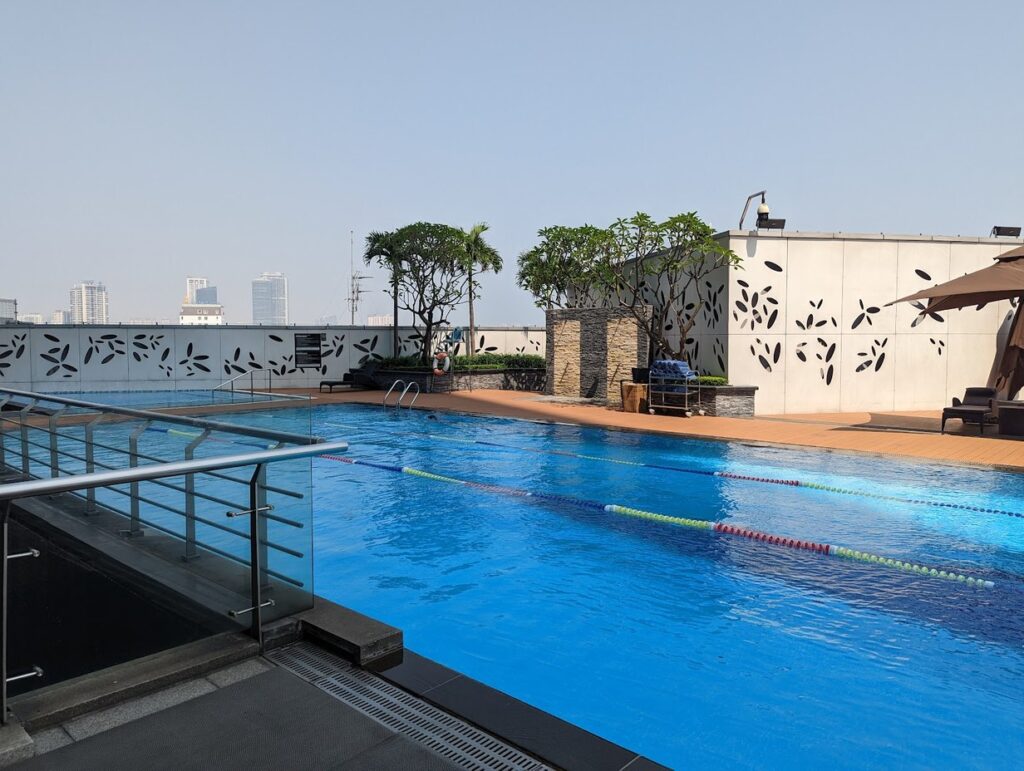
JW Marriott Hanoi sits in the luxury category, with a major caveat: it’s very far from the city centre, making it an inconvenient base unless you have a specific reason (a conference, a Vietnamese friend who lives nearby). The hotel is excellent, but location matters more than the thread count per square centimetre of your sheets.
Where to stay for a long visit or remote work?
West Lake (Tây Hồ)
West Lake is Hanoi’s largest lake, and its neighborhood feels like another city: wide streets and proper sidewalks, a lakeside promenade where people cycle and jog, craft beer bars, brunch spots, yoga studios, and an international community that has made it a self-contained bubble. If the Old Quarter is the Hanoi that has existed for 1000 years, Tây Hồ is the one that has emerged over the last 15 years.
The neighborhood is north of the Old Quarter, 15 to 20 minutes away by Grab, and that’s the whole trade-off. You gain peace, space, and a social life centered on cafés and Facebook groups rather than Beer Street, but you can no longer walk to the temples or the lake on a whim, and every sightseeing outing calls for a Grab or a fairly long walk.
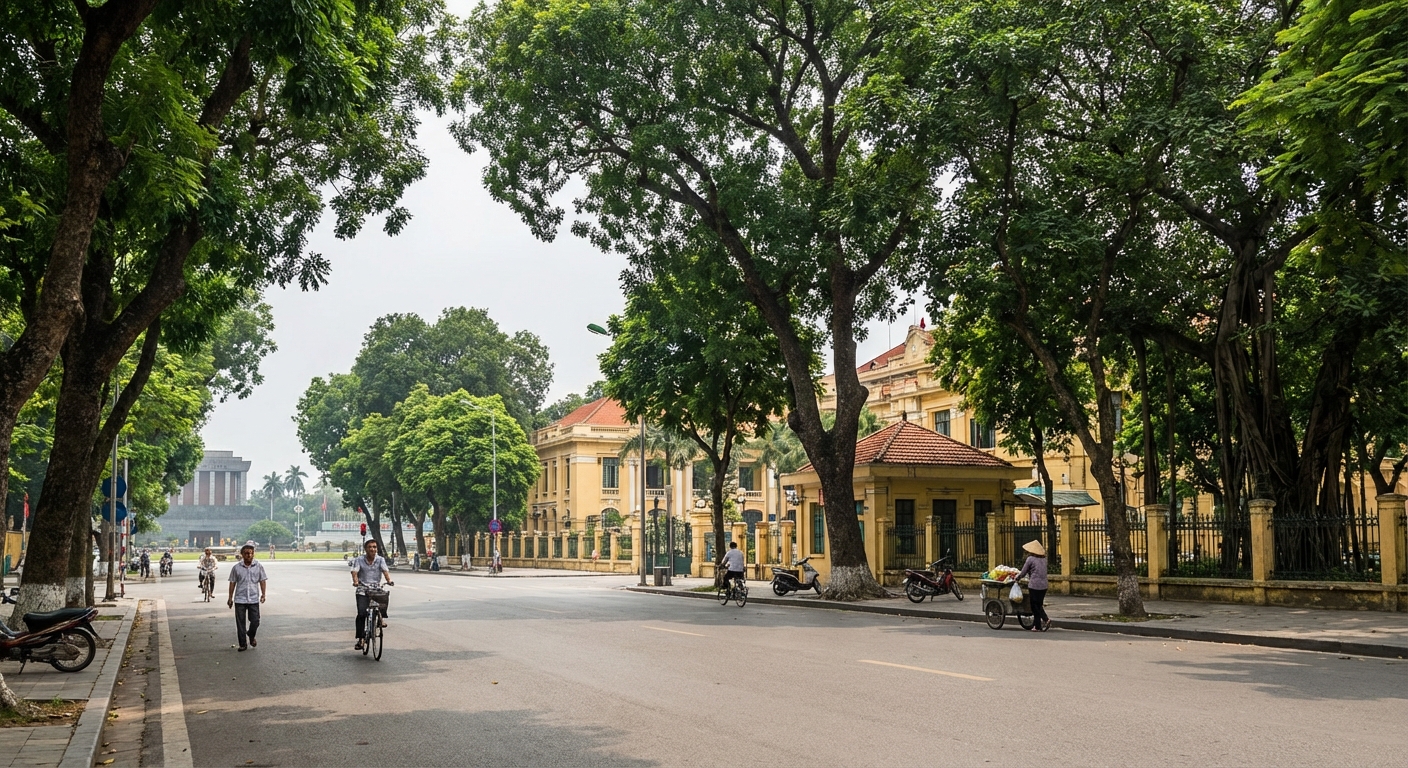
I recommend it for digital nomads, anyone staying a week or more, families with young children (sidewalks, quiet streets), seniors, and anyone who hates crowds or has already explored the Old Quarter on a previous trip. I wouldn’t recommend it for a short first visit, backpackers looking for nightlife, or anyone wanting “authentic, chaotic” Hanoi. In 3 to 4 days, you would have visited a pleasant lakeside town and missed Hanoi. Western-oriented street food, nightlife limited to expat bars.
InterContinental Westlake (€130 to €270 and up per night) is the luxury option, with overwater pavilions and a resort atmosphere. It really does feel like an escape, but the hotel is so disconnected from the city that you could be at any resort in Asia, so I save it for those who already know Hanoi and want to relax. Compare its rates on Booking.com with booking direct, and for a budget option, choose Lilo’s Homestay, which offers fair value for money.
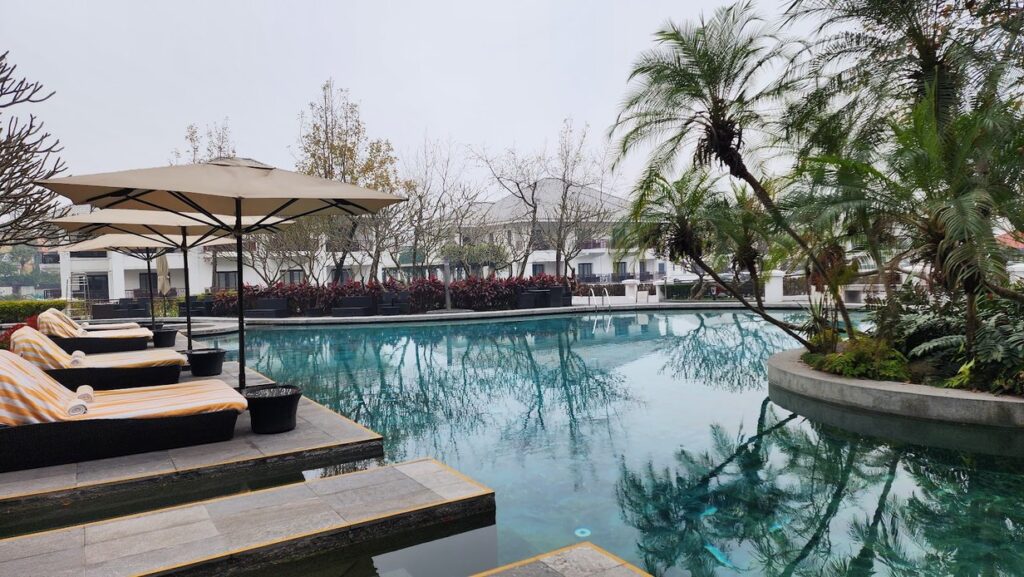
Watch the air quality, because West Lake is one of Hanoi’s most polluted areas, due to wind patterns and surrounding traffic. Winter, from December to March, is the worst, with thick smog that can make outdoor exercise unpleasant or even dangerous for your health. Check the AirVisual app every day, and when the air quality is red or purple, exercise indoors, for example at CrossFit Tay Ho.
Quảng An
The Old Quarter is too chaotic for focused work, whereas Tây Hồ has proper coworking spaces like Toong, with several locations and fully equipped offices. In the Quảng An neighborhood, cafés like Oriberry are quiet during the day, and The Coffee House chain has reliable wifi but can get noisy.
Quảng An has the highest concentration of expat amenities, international restaurants, and gyms, enough to make a month-long stay comfortable. The Hanoi Massive Facebook group is the go-to resource for housing, events, and the expat community. Social life revolves around a few bars (The 100, Standing Bar for craft beer, Savage for club nights) and Western-style restaurants like Bao Wow and Naco Taco.
For a month or more, get a serviced apartment in Quảng An, with wifi and cleaning included: this is the standard format for long-term rentals, almost all of them in West Lake, from €350 to €550 per month for 1 or 2 bedrooms, around €450 for a 2-bedroom apartment, more without local help. Go through Facebook groups or local agents and negotiate directly, because an apartment listed at €550 per month on Airbnb, which is more expensive in this market and subject to uncertain long-term rental regulations in Vietnam, can often be found through these channels for €350 to €450.
Where to stay for great food?
Trúc Bạch
If I were to live in Hanoi, it would be in Trúc Bạch, between the Old Quarter and West Lake. It doesn’t appear in most guides, and that’s why I like it.
It feels like a village in the middle of a capital, like those little streets in the 10th or 11th arrondissement of Paris where neighborhood life endures, with quiet streets, stalls that tour groups haven’t discovered, and a residential pace. The John McCain monument, a neighborhood landmark, marks the spot where his plane was shot down and he fell into Trúc Bạch Lake, which is smaller than and separate from West Lake, lined with trees, and popular with morning walkers. I walked all the way around it.
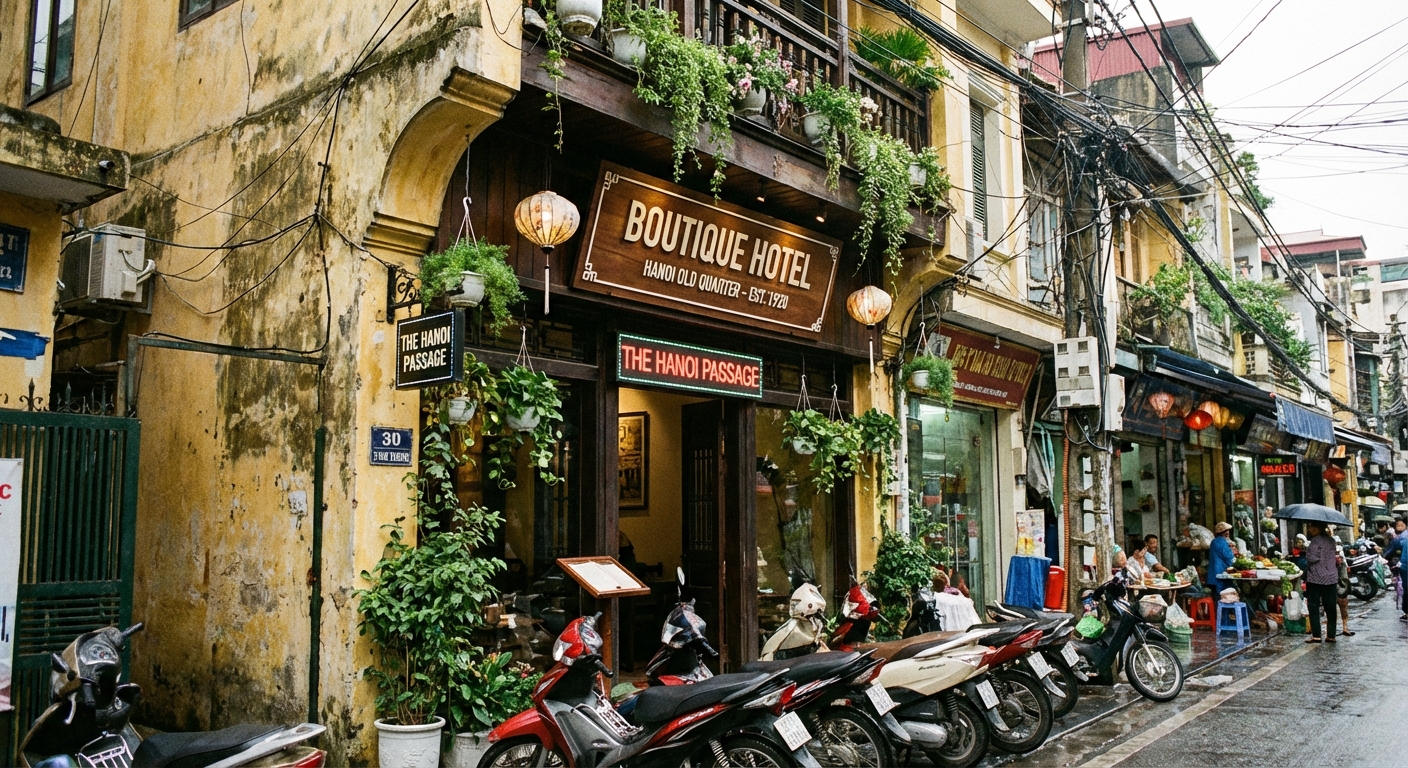
If you’re coming for Vietnamese food, Trúc Bạch might be the city’s strongest neighborhood, combining local authenticity with a lack of crowds. It’s famous among Hanoi food lovers for phở cuốn, a rolled rice noodle dish born in this neighborhood, and I ate mine here. Its stalls, each specializing in its own dish, are known to locals and haven’t yet been overrun by tourists, and my Hanoi food guide tells you which ones are worth a visit.
Maison Nhà is the standout accommodation, a cross between a homestay and a boutique hotel with charming design and a peaceful setting, and it’s the place I recommend. The choice of hotels is more limited than in the Old Quarter or West Lake, especially on a budget, the trade-off for this “undiscovered” atmosphere. With no nightlife, but a 20 min walk from the sights, Trúc Bạch is my choice for food lovers and returning visitors to Hanoi, if atmosphere matters more to you than a choice of hotels.
Hai Bà Trưng
Hai Bà Trưng, southeast of the Old Quarter, is starting to attract budget travelers and those seeking a more local experience, with fewer tourists, lower prices, and neighborhood stalls where you’re the only foreigner at the table. I don’t recommend it for a first visit yet. If you’ve already been to Hanoi and want something different, it’s becoming increasingly interesting.
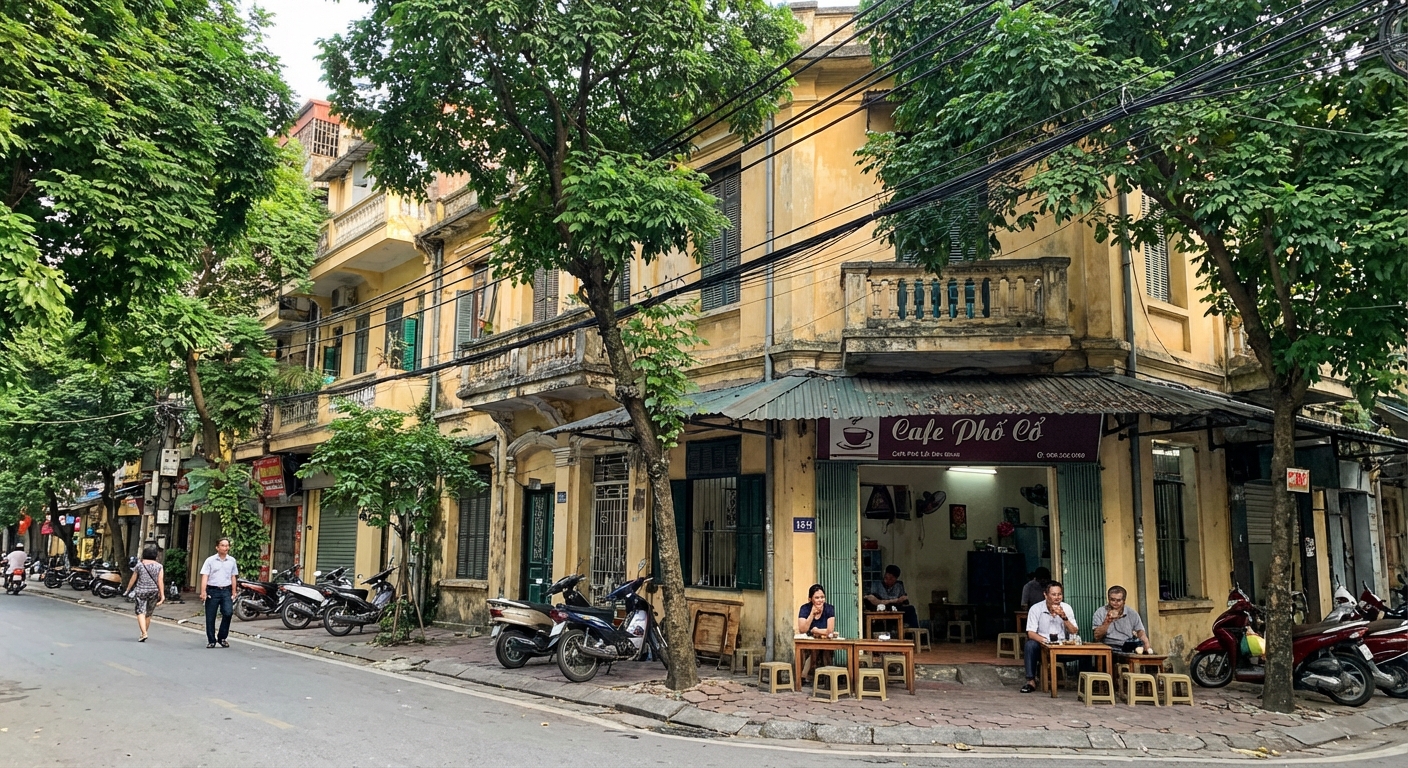
About 15 to 20 minutes on foot from Hoàn Kiếm Lake depending on your location, you’re still close to the center, in an atmosphere that feels much more like a Vietnamese residential neighborhood than a tourist area, with low to moderate noise and no nightlife. My morning phở here cost less than €1 instead of €3, and nobody tried to sell me a tour. I also cook it at home: my phở recipe is here.
How much does it cost?
By neighborhood, budget €4 to €130 and up per night in the Old Quarter, €45 to €450 and up in the French Quarter, and €13 to €270 and up in West Lake. Trúc Bạch runs from €25 to €70, Ba Đình from €45 to €180, and Hai Bà Trưng, with its excellent, cheap local street food, from €9 to €55.
Hostels (€4 to €13 for a dorm bed) are concentrated in the Old Quarter. At €4, you get a basic bed, potentially dirty bathrooms, and questionable security; at €7 to €10, places like Little Charm Hanoi Hostel, with privacy curtains, working lockers, and common areas without a nonstop party. My best budget tip for Hanoi: spend €7 to €10 rather than €3 to €5, the jump in cleanliness and security is spectacular.
Budget hotels and guesthouses (€12 to €35 per night) are where Hanoi’s value for money becomes absurd compared with European standards. In the Old Quarter, €25 to €35 already gets you a clean room with air conditioning, hot water, wifi, and often a buffet breakfast, in a boutique hotel with a rooftop terrace.
Mid-range boutique hotels (€35 to €70 per night) offer the best value for money in my view: at Tirant Hotel, La Selva, or Solaria Hotel, the rooms, service, and location would cost 3 times as much in Paris, Lyon, or Barcelona. If you budget €70 to €90 expecting something “decent,” you’ll be amazed, because at that price an Old Quarter room includes a pool, rooftop bar, breakfast, and staff who remember your name by day 2.
For bookings, Booking.com works very well in Vietnam, but I always check Agoda, which is often cheaper in Southeast Asia, with differences of 15 to 25% for the same room. Comparing takes 2 minutes and can save you several dozen euros over a week. Booking direct sometimes gives you better cancellation terms or an upgrade at small boutique hotels, and my practical guide breaks down the overall budget for Hanoi.
My location tip? Hotels on the edge of the Old Quarter, near the lake or the Cathedral, cost 20 to 30% less than those on the most famous streets and are better placed for both sightseeing and sleeping, 5 minutes farther from Beer Street, exactly where you want to be at midnight.
How do you get around from each neighborhood?
Hanoi is compact enough that no neighborhood is really far from another. Grab is the essential app, the equivalent of the Uber you know from France, with a monopoly here. I got around by Grab bike (motorbike taxi), the fastest option at rush hour when cars are stuck in traffic, for less than €2 and 15 to 20 minutes from West Lake to the Old Quarter. Grab cars cost a little more but keep you dry during the rainy season.
In the Old Quarter, Hoàn Kiếm Lake, the Temple of Literature, St. Joseph’s Cathedral and the street markets are all within a 15- or 20-minute walk of one another. From the French Quarter, add 5 to 10 minutes of walking to the south. From Ba Đình, the Ho Chi Minh Mausoleum complex and the One Pillar Pagoda are within walking distance, but the Old Quarter takes 10 minutes by Grab.
West Lake is the neighborhood where you’ll rely most on transport. Its promenade is excellent for cycling and jogging, but no tourist sights are within walking distance. Trúc Bạch offers a middle ground, a 20-minute walk from the Old Quarter and 10 from the shore of West Lake.
Hanoi doesn’t yet have a large-scale operating metro network (a line has been under construction for years), or an equivalent of Bangkok‘s BTS or Saigon’s expanding metro, and tourists rarely take the bus. You’ll use Grab, walk or take a taxi now and then. Your neighborhood therefore matters more here than in a city with a rail network, where you can “hop on the metro” to make up for a hotel that’s far away.
My other Hanoi guides
My Southeast Asia neighborhood guides follow the same approach: where to stay in Bangkok, where to stay in Phuket and where to stay in Bali. Hanoi’s neighborhood layout is simpler than Bangkok’s, where you rely heavily on transport, but where you stay shapes your entire trip. To plan the rest of your visit, you’ll find everything in my complete Hanoi guide.