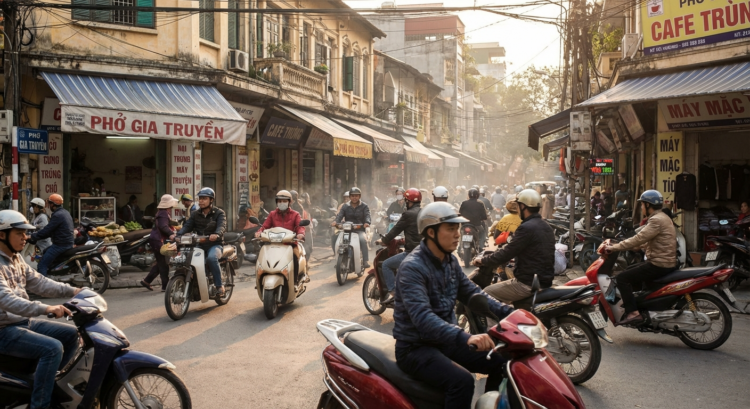
Hanoi rewards those who do their homework before landing: a single official visa website, buried beneath a dozen paid impostors, banknotes with so many zeros that I briefly felt like a millionaire, damp winters at 10 degrees and monsoon summers at 35 degrees. Here is my practical preparation guide; the rest is in my complete guide to Hanoi.
- Planning a trip to Hanoi: which visa should you apply for?
- How much does it cost?
- How do you get there?
- How do you get around Hanoi?
- How do you pay once you’re there?
- Health, safety, scams: is it safe?
- Which SIM card and apps should you use?
- When should you go and what should you pack?
- Which words and local customs should you know?
- My other Hanoi guides
Planning a trip to Hanoi: which visa should you apply for?
French citizens are eligible for Vietnam’s e-visa, which has been open to all nationalities since late 2023. I applied online, received the approval letter by email and presented it at immigration, with no embassy visit, invitation letter or agency.
Only use the official website, evisa.xuatnhapcanh.gov.vn. The top Google results for “Vietnam e-visa” are professional-looking third-party agencies that charge €50 to €80 for a USD 25 service. The real website looks like it was designed in 2003, and that’s a good sign.
Single entry costs USD 25 (around €23) for up to 90 days, while multiple entry costs USD 50 (around €46), useful for a detour through Laos or Cambodia before returning to Vietnam. If you’re asked for more than USD 25, you’re on a third-party website.
To avoid a rejection, enter your name in Vietnamese order (surname, then first name and middle names) exactly as it appears in the machine-readable zone (MRZ) at the bottom of your French passport, the 2 lines of capital letters and angle brackets, without leaving out any middle names. Photo: no glasses (even prescription ones), ears visible, no smile, looking straight ahead; a phone selfie in front of a white wall is enough. Scan the entire passport page, including edges and corners, without cropping it tightly.
The official processing time is 3 working days, excluding weekends and Vietnamese public holidays. Apply at least 1 to 2 weeks before departure. The status changes from “Received” to “Approved” one day, with no intermediate stage.
Enter the port of entry you will actually use. Changing airports (applying for Ho Chi Minh City, arriving in Hanoi) generally works but technically remains a risk, and switching to a land border crossing is much riskier, sometimes resulting in refusal. A visa on arrival remains an expensive fallback (USD 100+) if your e-visa doesn’t arrive in time; given how simple the e-visa is, there’s no reason to use it.
How much does it cost?
Hanoi is one of Southeast Asia’s cheapest capitals, and your spending depends almost entirely on where you sleep and whether you choose street food or air-conditioned restaurants.
| Budget level | Daily cost | Accommodation | Food | Transport |
|---|---|---|---|---|
| Backpacker | €20-30 | Hostel dorm (€3-7/night) | Street food only, bia hơi | Walking, city bus |
| Mid-range | €40-60 | Private hotel room (€18-37/night) | Street food and restaurants | Grab, occasional taxis |
| Comfortable | €70-90 | Nice hotel (€37-55/night) | Sit-down restaurants, cafés | Grab everywhere, guided tours |
| Luxury | €100-150+ | Boutique or 5-star hotel | Fine dining | Private car, premium tours |
For me, mid-range offers the best value: at €40-60 per day, you eat well, take a Grab when you’re tired, visit every museum and temple, and still treat yourself to a cooking class or a day trip. A €15 lunch in a Parisian brasserie costs €1.50-2.50 at a street stall in the Old Quarter.
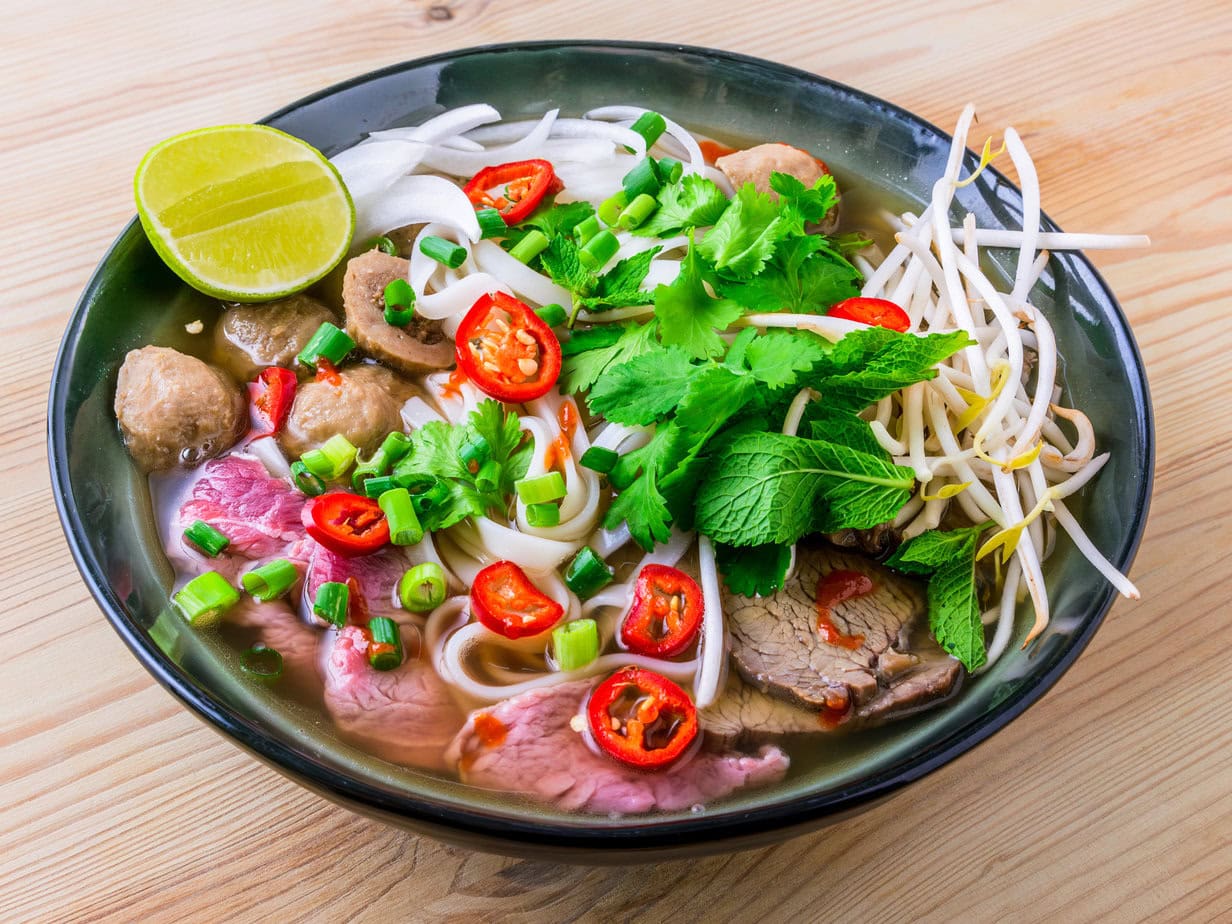
A bowl of phở from a street vendor costs VND 40,000 to 60,000 (€1.50 to €2.30), as does bún chả for lunch, and a cà phê (Vietnamese coffee) costs VND 25,000 to 60,000 (€0.90 to €2.30). Bia hơi, fresh draught beer served on the street, costs VND 5,000 to 10,000 (€0.20 to €0.40), a bottled beer VND 30,000 to 50,000 (€1 to €1.85), and a cocktail in a Western-style bar VND 150,000 to 200,000 (€5.50 to €7.40).
A restaurant meal for 2 or a 1-hour foot massage costs VND 150,000 to 300,000 (€5.50 to €11), and museum admission around VND 50,000 (€1.85), with opening hours and prices for each site in my guide to Hanoi’s heritage.
I cook phở and bún chả at home: my phở recipe and my bún chả recipe are on the site, along with my other Vietnamese recipes.
The biggest budget trap is alcohol, especially Western-style cocktails: €0.20 for a bia hơi on the street corner, €6 to €8 for a cocktail in a rooftop bar, a gap that adds up quickly over 2 weeks of travel.
Book your excursions locally, through your hotel or a local agency in the Old Quarter, rather than online from France through Viator or travel review sites. The same day trip to Ha Long Bay drops from €80-100 online to €30-50. My recommendations for every budget, from bia hơi spots to sit-down restaurants, are in where to eat in Hanoi.
How do you get there?
As of early 2026, there are no scheduled direct flights from France to Hanoi. From Paris-CDG, routes with 1 stop mostly go through the Gulf (Qatar Airways via Doha, Emirates via Dubai) or with Vietnam Airlines via Bangkok or Singapore; from Lyon-Saint-Exupéry or Marseille-Provence, they tend to go through Istanbul (Turkish Airlines) or Doha. Allow 13 to 17 hours of travel with 1 stop.
A return flight from Paris generally costs €450 to €850 depending on the season and how far ahead you book, with departures from November to January and around Tết (Vietnamese New Year, usually in late January or February) being the most expensive, and May and June generally the cheapest. Compare on Google Flights, Liligo or Kayak, using price alerts.
Noi Bai Airport
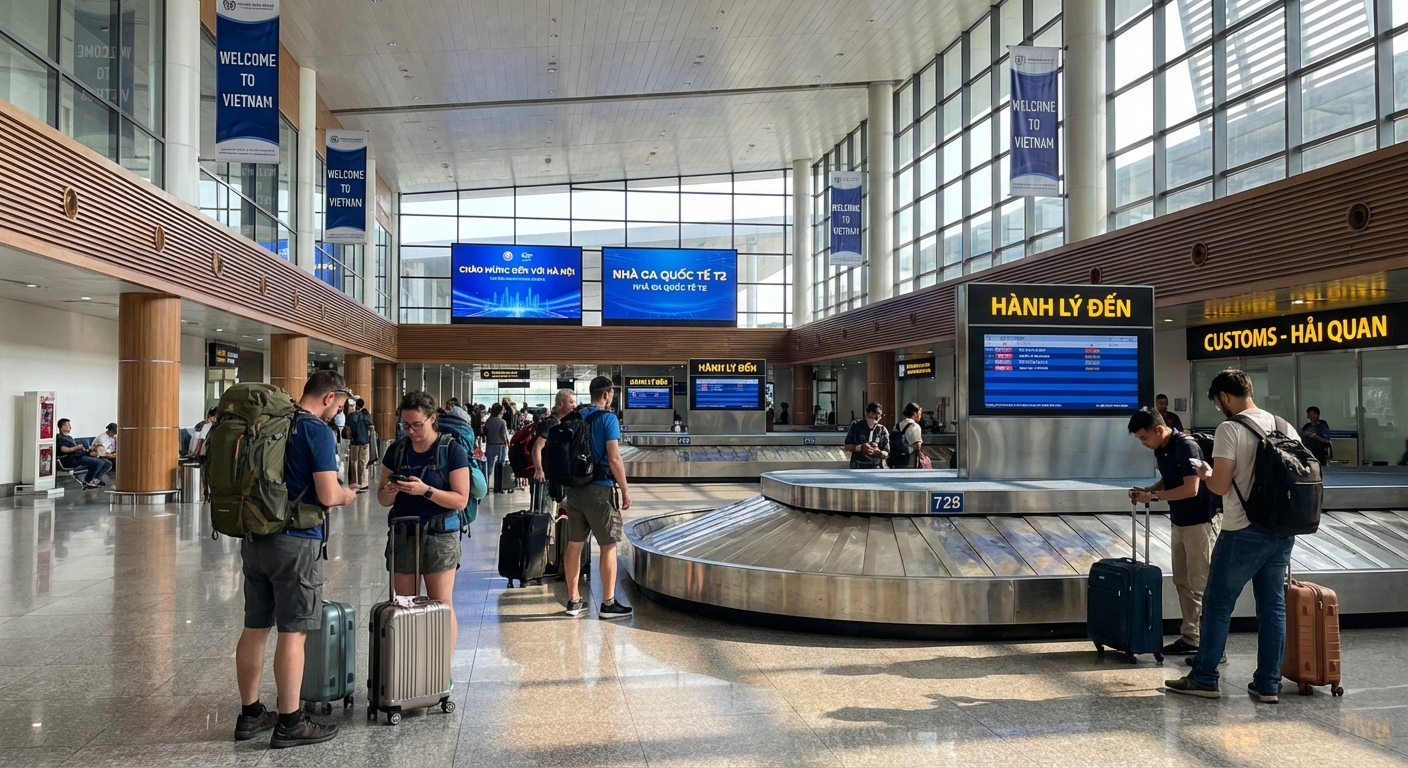
Noi Bai International Airport is around 25 km north of the city centre. I took bus 86, the cheapest option: orange, air-conditioned, with luggage space and Wi-Fi, VND 45,000 (around €1.65), direct to the Old Quarter (Hoàn Kiếm area) in 45 to 60 minutes depending on traffic. Its stop is on the left as you leave international arrivals, and it runs from early morning until late evening.
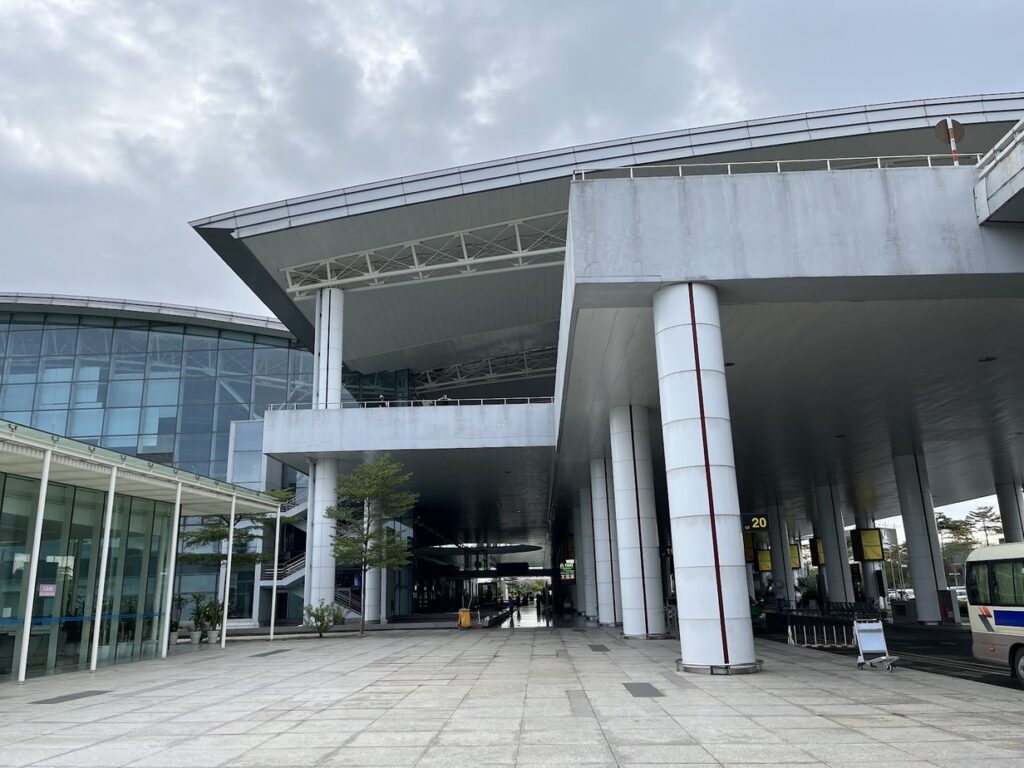
A Grab car costs VND 250,000 to 350,000 (€9 to €13) to the centre, and should only be booked through the app. Its drivers cannot access the arrivals lane. Walk to the designated ride-hailing area, check the number plate in the app before getting in, and ignore anyone claiming to be your Grab driver in the hall.
A transfer through your hotel or Klook costs roughly the same as a Grab, with a driver waiting for you with a sign, which is easier after a long flight. Avoid the unofficial taxi touts in the hall, who quote VND 500,000 to 800,000 for a ride that should cost half as much.
How do you get around Hanoi?
The neighborhood you stay in determines how much time you spend in traffic rather than walking. The noisy Old Quarter puts most sights within walking distance, the French Quarter is quieter with wider streets, and Tây Hồ (West Lake), the expat neighborhood with quieter nights, is a Grab ride from the main sights. I cover them in detail in where to stay in Hanoi.
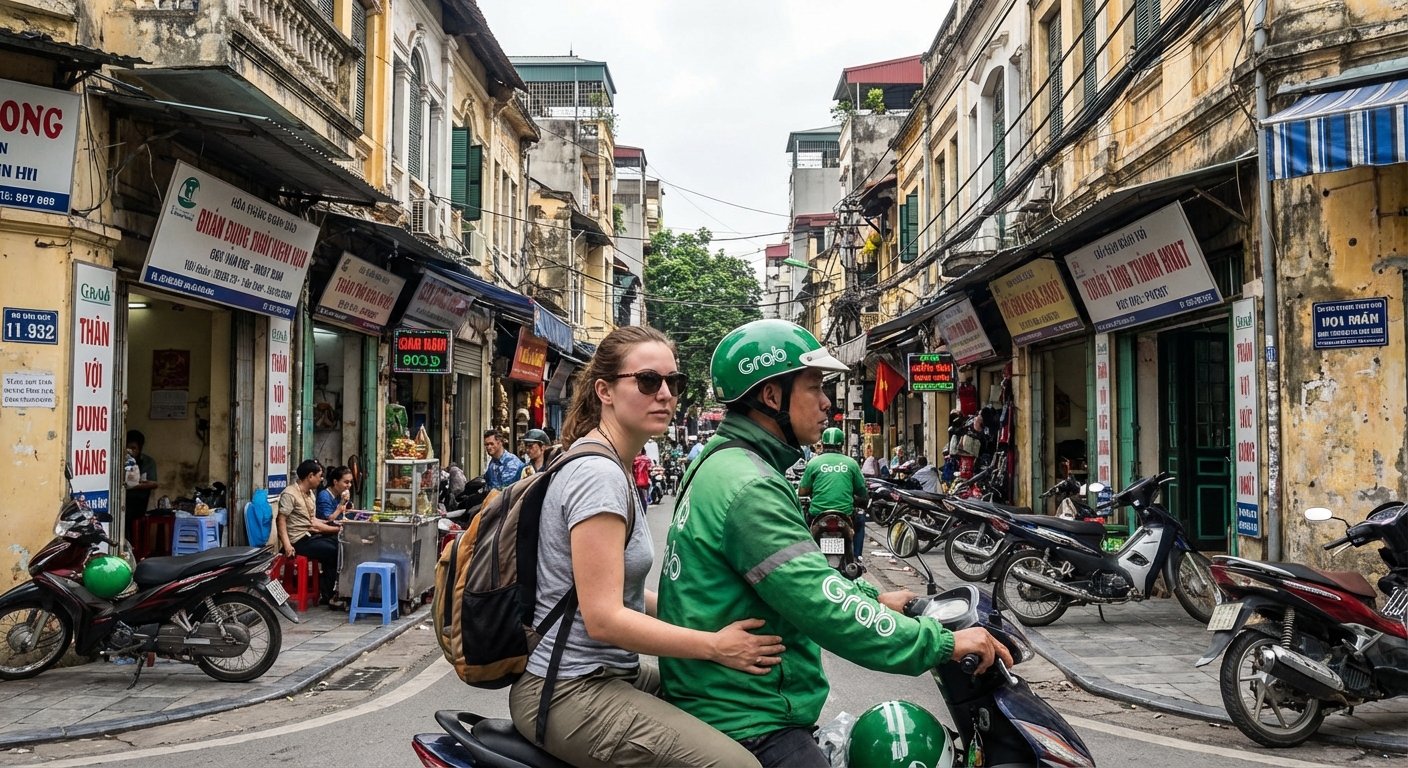
You can explore the Old Quarter, Hoàn Kiếm Lake and the French Quarter on foot, with most sights within a 2-3 km radius. Between parked motorbikes, food stalls and plastic stools on the sidewalks, I ended up walking in the street more than expected. Bring comfortable shoes with good grip.
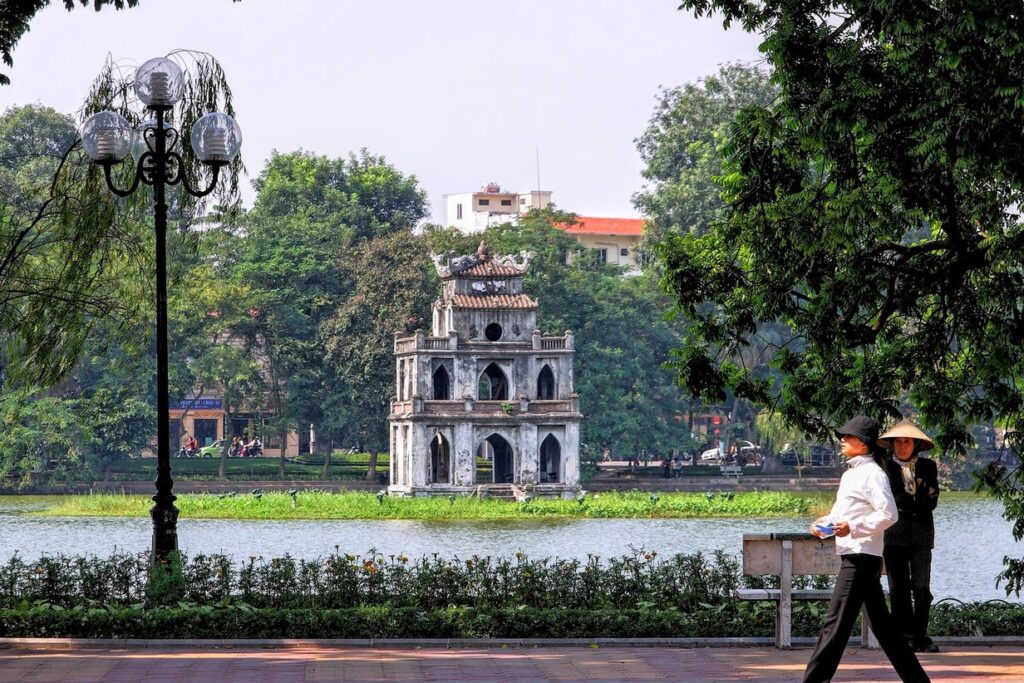
Before you arrive, download Grab, Southeast Asia’s equivalent of Uber and the app I used most. Prices are set in advance, with no rigged meters or haggling; GrabBike (motorbike taxi) is the fastest way to weave through traffic on your own, while GrabCar is better for groups or when you have luggage. Link your bank card before you leave, as paying in cash often leads to “I don’t have change,” and use the chat’s automatic translation if a Vietnamese-speaking driver can’t find your pickup point.
The public bus network (7,000 to 9,000 VND per trip, around €0.30) covers most of the city, and 2 routes are useful for tourists: the 86 (airport) and the 14, from the Temple of Literature to the Ho Chi Minh Mausoleum area. Signs and announcements are mostly in Vietnamese, but Google Maps handles bus routes reasonably well.
A scooter costs 150,000 to 200,000 VND per day (€5.50 to €7.40) to rent. The law requires an International Driving Permit (IDP) with a motorcycle endorsement, which you must apply for on the ANTS website before departure, and a French license that includes category A. With only a category B (car) license, you aren’t legally covered, and your travel insurance will reject any claim after a motorbike accident. Traffic is intense, and if you’ve never driven in heavy traffic in Asia, this isn’t the place to learn: save the scooter for the Hà Giang Loop or the Ninh Bình countryside, with the right license.
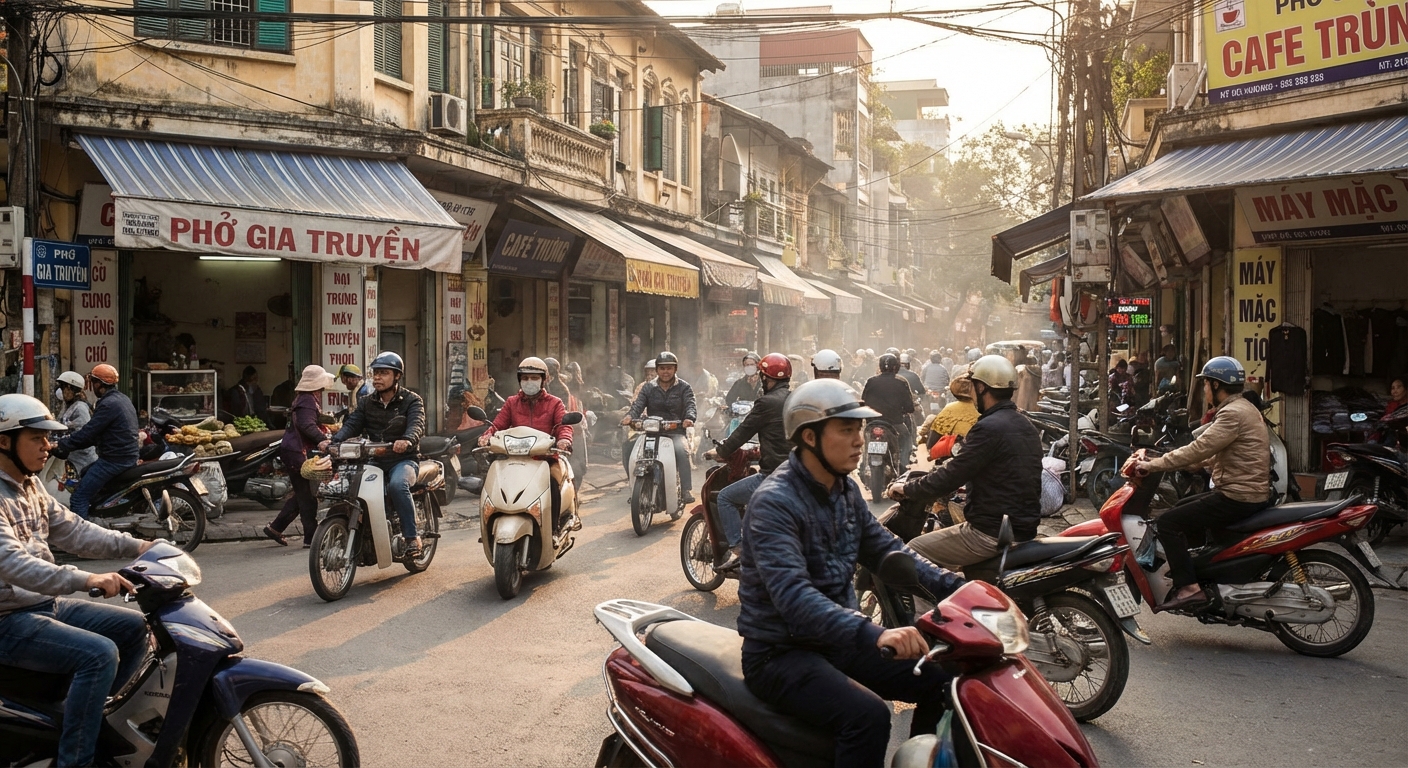
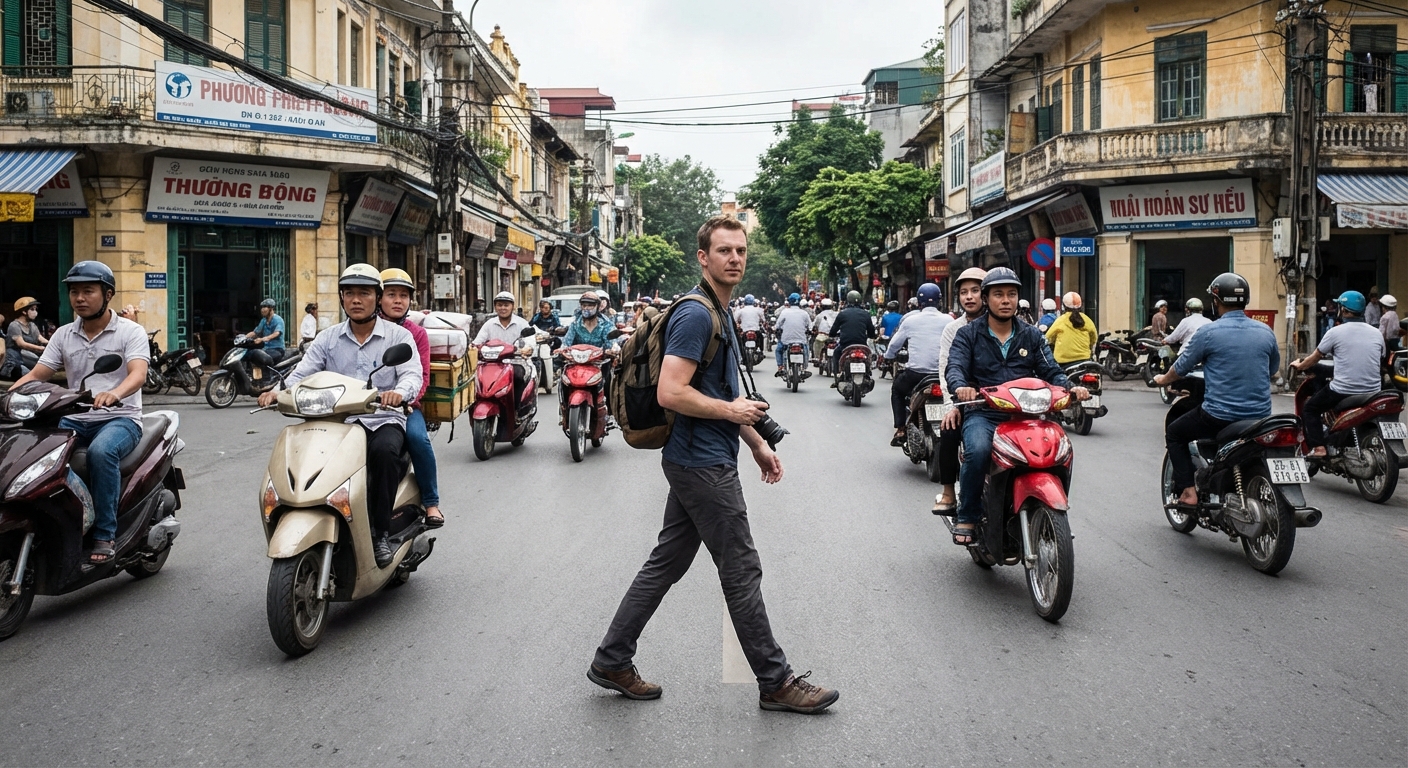
Crossing the street is something you learn from day 1. Traffic doesn’t stop for pedestrians, traffic lights are rare and often ignored by motorbikes, and faced with my first stream of motorbikes across 6 lanes, I wondered how anyone made it across alive. Walk slowly, steadily and predictably, without stopping, running or stepping back. Motorbikes go around you like water around a rock, because their riders are constantly calculating your path, and stopping or changing direction throws off their calculations.
Raise your hand slightly to make yourself visible, make eye contact with drivers and let buses and cars pass, as they won’t swerve; motorbikes will adjust. At first, walk alongside a local who is crossing, on the side facing traffic: by day 3, you’ll be crossing without thinking about it.
How do you pay while you’re there?
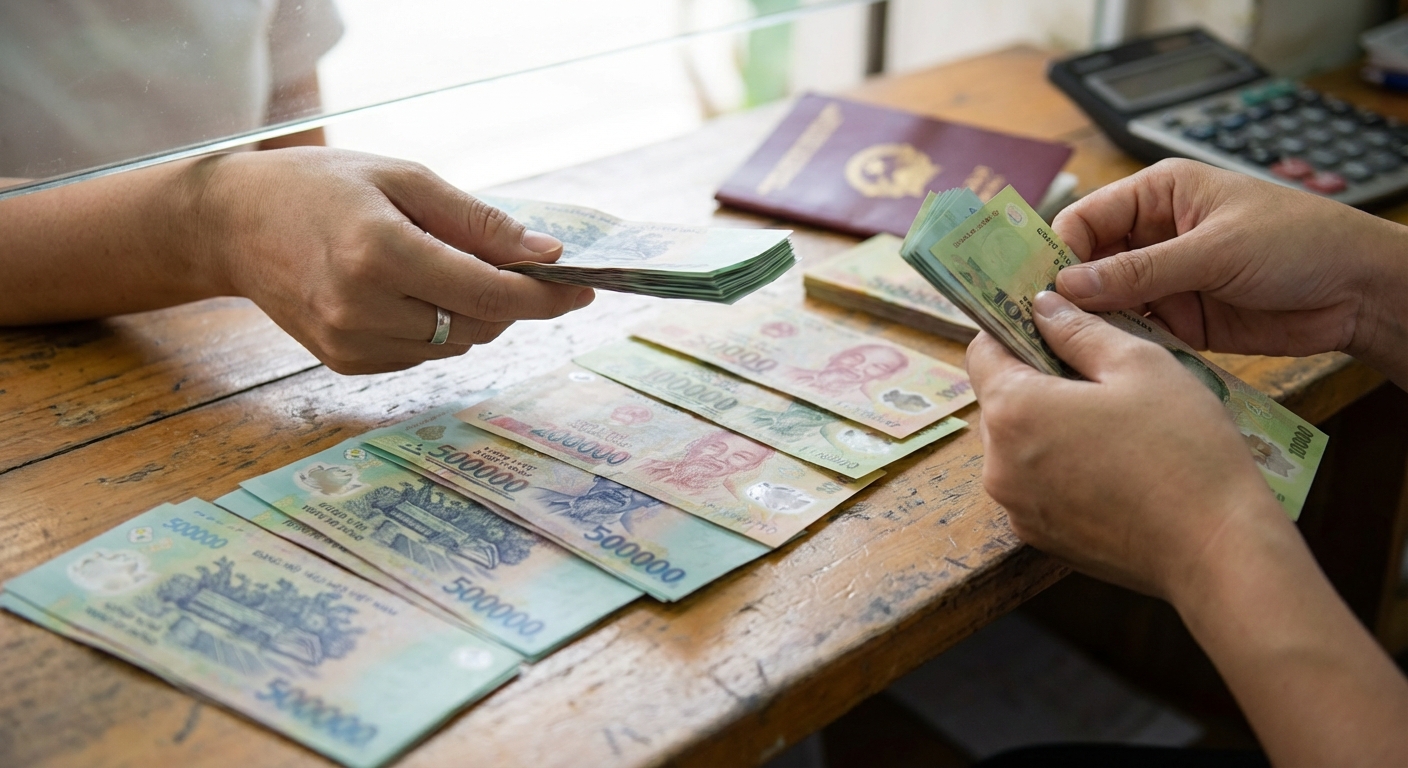
The Vietnamese dong (VND) is the only practical currency: street vendors and small restaurants don’t take USD or euros, and street food stalls, markets, cyclos and most local restaurants only accept cash. Large hotels, upscale restaurants and Grab take cards, but smaller establishments often add 3% for card payments.
For a foreign card, my go-to ATMs are VPBank, often with low or no fees, and ACB (Asia Commercial Bank), with higher limits, often 5,000,000 VND (around €185) per transaction. TPBank used to be free, but since late 2025 it has charged fees for some foreign cards. Avoid Agribank and Vietinbank (low limits of 2-3 million VND per transaction, high fees, so a higher cost per euro withdrawn) and Euronet ATMs.
At the ATM, when the screen offers to convert the withdrawal into your currency, always choose “No.” This is Dynamic Currency Conversion (DCC): the Vietnamese bank applies a terrible exchange rate and pockets the difference, meaning a loss of 3 to 5%, so let your French bank handle the conversion.
To exchange euros, the best rates are at gold and jewelry shops, especially on Hà Trung street in the Old Quarter, where I exchanged mine at Quoc Trinh Gold Shop. Bring new €50 or €100 notes in good condition. Smaller denominations get worse rates, and torn or badly creased notes may be refused.
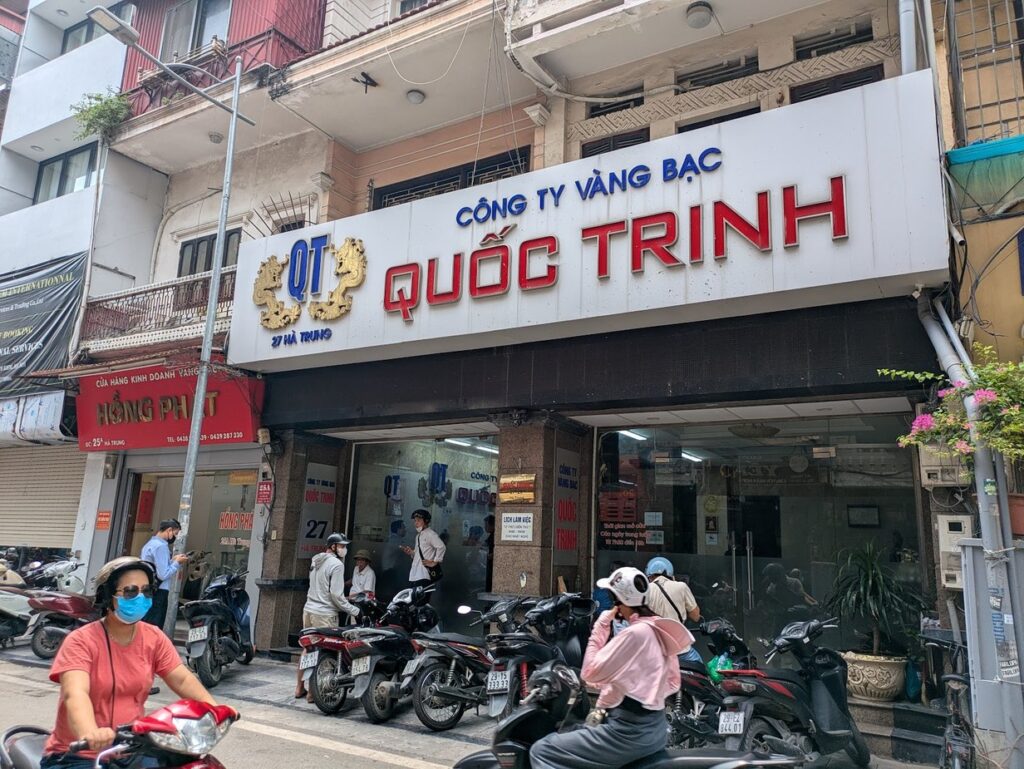
Bank exchange counters offer the official rate, but require your passport and pristine notes; airport counters offer the worst rates. If you arrive late, exchange only €20-30 there for the bus and change the rest in town. Tipping isn’t common in Vietnam, rounding up the bill is appreciated but not required, and tips are only expected for tour guides (50,000 to 100,000 VND) and hotel porters (20,000 to 50,000 VND).
Bring a card with no international withdrawal fees (Boursorama Ultim, Fortuneo Fosfo or Revolut), a real bonus when you’re withdrawing dong a few times a week. Don’t carry weeks’ worth of cash, as ATMs are everywhere in the center, and keep an emergency reserve separate from your wallet, at the bottom of your luggage.
Health, safety, scams: is it safe?
The EHIC (European Health Insurance Card) only covers the EU and EEA, so it is useless in Vietnam. Take out dedicated travel insurance with medical repatriation cover: treatment locally is cheap, but a medical evacuation to France can cost more than €50,000. Chapka Cap Aventure, ACS Globe Traveller and AXA Assistance cover Southeast Asia and are suitable if you are travelling from France.
If you ride a motorbike, check that your policy explicitly covers 2-wheeled vehicles, which are often excluded by default. A Visa Premier or Mastercard Gold often includes travel insurance for stays of less than 90 days if you paid for your flight with the card: a useful supplement, but rarely enough on its own.
No vaccinations are legally required to enter Vietnam from France. The Institut Pasteur recommends being up to date on hepatitis A and B, typhoid and tetanus vaccinations, and for rural areas (Ha Giang, Sapa), Japanese encephalitis and rabies vaccinations may also be recommended. Consult an international vaccination centre or your doctor at least 6 weeks before departure.
Do not drink tap water, and brush your teeth with bottled water (5,000 to 10,000 VND, or €0.20 to €0.40, at any grocery shop). Ice cubes in restaurants and cafés, commercially produced from filtered water, are generally safe, but to be cautious, avoid them for the first few days while your stomach adjusts.
For street food, I eat where the locals eat: a long queue of Vietnamese customers signals fresh food and high turnover, an empty restaurant with a menu in 5 languages is a red flag, and dishes cooked at high temperatures in front of you (phở, bún chả, stir-fries) are the safest.
Hanoi has some of the worst air quality in Southeast Asia, especially from November to March. If you are sensitive to pollution or have respiratory problems, bring N95 or KN95 masks and check the Air Quality Index (AQI) every morning on the IQAir app or website; above 150, limit your time outside and favour indoor activities.
Pharmacies are everywhere and very cheap. They sell most medicines without a prescription, including antibiotics, as well as treatments for stomach trouble, headaches and insect bites. Bring your prescription medication with a copy of the prescription.
Hanoi is very safe for tourists: violent crime against foreigners is practically nonexistent, and the main physical danger is traffic. To guard against occasional theft (phones snatched from motorbikes, pickpockets in crowded markets), keep your phone in a front pocket or a closed bag along busy roads, and choose a crossbody bag over a backpack in the Old Quarter crowds. Emergencies: Police 113, Ambulance 115, Fire 114, and the French Embassy in Hanoi on +84 24 3944 5700 for consular emergencies.
Hanoi’s well-documented scams are more annoying than dangerous and easy to avoid. A shoe shiner points at your shoes and starts polishing them without asking, then demands 200,000 to 500,000 VND. Wear sandals or firmly turn him down while continuing to walk.
Women put their fruit basket on your shoulder for a “nice photo” or offer you a free sample, then demand 200,000 to 500,000 VND for an item worth 20,000 VND. Never accept an object a stranger puts in your hands or on your shoulder. The cyclo, Hanoi’s typical 3-wheeled rickshaw, has its own scam too: the driver agrees to 50,000 VND for a ride around Hoan Kiem Lake, then claims on arrival that it was per person or per kilometre, and the ride turns into a dispute over 300,000 VND. I booked mine through my hotel: go through your hotel or a reputable tour operator rather than drivers who approach you.
On Tinder, a “match” suggests a specific bar that charges exorbitant prices for drinks and “bottle packages”, then disappears when the bill arrives. Always choose the venue yourself: if a match insists on a particular bar, it is a scam.
On Train Street, aggressive touts pull you towards their café, sometimes by the arm: I walked past them and chose my café myself. Some restaurants serve food without showing prices, then present an inflated bill: always check that the menu displays prices before ordering.
My general rule: refuse anything you did not ask for, say “không” (no) firmly but without aggression, stay calm and keep walking.
Which SIM card and apps should you use?
With Free Mobile (the €19.99/month plan), Vietnam is among the 110 roaming destinations: 25 GB of data per month at no extra cost, enough for Grab, Google Maps and WhatsApp, provided you activate roaming in your subscriber account before departure. With another provider, a local SIM or eSIM works out much cheaper than standard roaming.
Viettel has the best coverage in Vietnam, especially around Sapa, Ha Giang or Ninh Binh, and Vinaphone works well in the city. I bought my SIM card in the arrivals hall: expect to pay around 200,000 to 300,000 VND (€7 to €11, 30 days of data), a little more than in town, but you get internet straight away for Grab and Google Maps.
Otherwise, go to an official Viettel shop with your passport, as SIM registration is required by law, and avoid SIMs from street vendors, which are sometimes not registered in your name and deactivated without warning. Tourist plans cost around 5-10 USD for 30 days, but beware of “unlimited data” with a hidden daily cap (4 GB at full speed, then reduced speeds). An Airalo or MobiMatter eSIM activates as soon as you land, with no queue at the airport SIM counter, and Wi-Fi is available almost everywhere in hotels, cafés and restaurants.
My apps to download before leaving: Grab (also for getting to excursions and activities), Google Maps with an offline map of Hanoi as a backup, XE Currency to convert VND and EUR and check prices in real time, IQAir for air quality on heavily polluted days, and Google Translate, whose camera translates Vietnamese signs and menus.
When should you go and what should you pack?
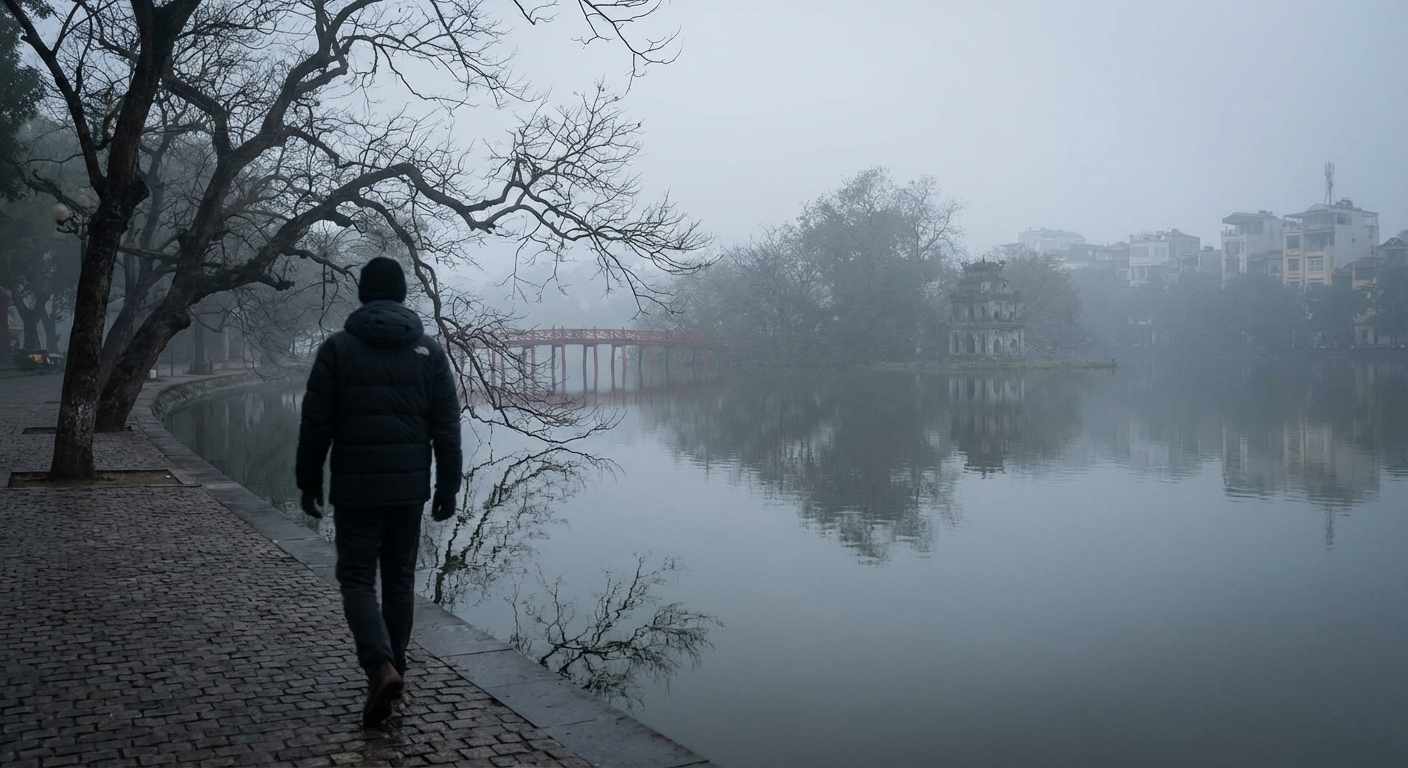
For me, the best window is autumn, from October to November: 20 to 28 degrees, low humidity, minimal rain, clear skies, and pleasant walks around lakes and parks. The season is attracting more and more tourists: book your accommodation in advance.
Spring (March to April) comes second: 18 to 25 degrees after the winter cold, some light drizzle that does not disrupt your plans, and flowers around Hoan Kiem Lake and the Botanical Garden, without the high-season crowds.
Summer (May to September) reaches 30-35+ degrees with high humidity, and the monsoon brings heavy afternoon downpours, generally lasting 1 to 2 hours before clearing up; mornings are usually dry, with July and August the rainiest months. In return, hotels lower their prices, crowds thin out, and rain rarely ruins a whole day if you plan indoor activities for the afternoon, with a good raincoat and a waterproof bag for your electronics.
Winter (December to February) surprises most visitors: cold, damp and grey, between 10 and 15 degrees, sometimes lower, with persistent drizzle that can last for days, and no heating in most buildings, making it feel much colder than the thermometer suggests. Tết brings celebrations, but many shops and restaurants close for several days.
Packing badly can ruin a whole week, because Hanoi has 4 distinct seasons. From November to February (10-15 degrees, damp air, no central heating in most buildings, including some hotels), bring a lightweight down jacket or warm fleece, long-sleeved layers and at least 1 pair of long trousers, as you would for a mild winter or cool autumn in Paris.
Year-round: comfortable walking shoes with grip for uneven pavements, a compact umbrella or lightweight waterproof windbreaker, sandals or flip-flops for the heat and temples (I was constantly taking my shoes off there), modest clothing for temples, sunscreen brought from France (much more expensive in Vietnam), mosquito repellent and a photocopy of your passport stored separately from the original. Sockets are types A, C and G. Most European 2-pin plugs (type C) work without an adapter, but I brought a universal adapter because some older hotels only have American-style sockets.
What words and etiquette should you know?
English is spoken in hotels and tourist restaurants, but quickly disappears elsewhere. Vietnamese is tonal, so pronunciation matters, but locals appreciate any attempt.
My basic words: Xin chào (sin chow), hello; Cảm ơn (kahm uhn), thank you; Không (kohm), no; Bao nhiêu ? (bow nyew), how much?; Một, hai, ba (moht, high, bah), one, two, three; Ngon quá (ngon kwah), delicious, which always brings a smile at food stalls; Xin lỗi (sin loy), sorry or excuse me; Tính tiền (tin tyen), the bill. On a vendor’s calculator or phone, the currency has so many zeros that “50” means 50,000 VND (around €1.85).
At temples and pagodas, take off your shoes before entering any building, cover your shoulders and knees, speak quietly, don’t point your feet towards altars or Buddha statues, and ask permission before photographing people praying. These rules apply at every temple, from the Temple of Literature to Trấn Quốc Pagoda, and my heritage guide details the dress code for each site.

Most Hanoians are happy to be photographed, but always ask first, with a gesture or a smile, and don’t photograph military installations. At the Ho Chi Minh Mausoleum, follow the posted rules strictly: no shorts, no hats, no photos inside the building.
A quick beep from a motorbike horn means “I’m here, coming through.” Once I understood that, the constant noise became just background sound.
When eating, tiny plastic stools on the pavement are the norm. That’s how Hanoi eats, and how I ate there too. Bring tissues, as street stalls don’t always provide them. Slurping your noodles isn’t rude, leaving a little food on your plate signals that you’re full, and asking for a fork instead of chopsticks is perfectly acceptable. No one will judge you.
My other Hanoi guides
If Bangkok is your next stop, my guide to planning a trip to Bangkok explains what’s different when it comes to visas, budget and transport, and my guides to Phuket and Bali cover those beach destinations. Everything else to see, eat and experience is in my complete Hanoi guide.