
Bali is not a single place. It’s a collection of towns and neighborhoods separated by traffic-clogged roads, each with its own personality, price range, and type of clientele.
Choosing the wrong base can ruin a trip. You stay in Kuta when you wanted peace and quiet, and you spend your vacation listening to drunk Australians at 2 AM. You book a month in Amed when you needed fast internet, and you miss all your deadlines. You choose Canggu for a romantic getaway, and you find yourself stuck in scooter traffic jams, surrounded by influencers photographing their brunch.
As we explain in our complete guide to visiting Bali, the island rewards travelers who split their time between two or three areas rather than trying to see everything from a single base. This guide breaks down the main neighborhoods, what each really delivers on the ground, and who should book there or avoid it.
Ubud: The Cultural Center of the Interior
Ubud is located about an hour north of the airport, in the middle of the island, surrounded by jungle, terraced rice fields, and Hindu temples. This is postcard Bali: green valleys, morning mist, monkeys crossing the road, women carrying offerings on their heads. The town center is small and walkable, but the surrounding areas stretch along narrow roads that wind between villages and ravines.
The cultural scene here is authentic. Ubud has been an artistic center since the 1930s, when European painters settled here and collaborated with local artists. Today, the town still has working artists, dance performances and temples where ceremonies take place for genuine religious reasons, not to entertain tourists.
The Monkey Forest, the Tegalalang rice terraces, Tirta Empul temple, and the Campuhan Ridge Walk are the main attractions, but the real pleasure of Ubud is the slower pace.
The main trade-off is that Ubud is not a beach destination. It’s hotter, more humid, and rainier than the coast. Mosquitoes are more aggressive. Everything closes around 9 or 10 PM, so if you want nightlife, forget it. The town center is congested during the day, although the surrounding villages (Penestanan, Nyuh Kuning, Sayan, Kedewatan) remain quieter.
Accommodation in Ubud has one of the best quality-to-price ratios on the island. On the outskirts, villas with private pools can be found for less than 90 euros per night, a rate that would cost double or triple in Seminyak or Uluwatu.
Hanging Gardens of Bali is the big luxury splurge. For budget travelers, Puri Garden is a hostel with a pool, free yoga, and a friendly atmosphere regularly cited among the best in Southeast Asia. Arya Wellness specifically caters to women.
Ubud is best suited to culture-focused travelers, yoga enthusiasts, honeymooners dreaming of a jungle villa (see our complete guide to staying in Ubud), and anyone whose ideal evening consists of dinner at 7 PM and a book at 9 PM. It’s not suitable for surfers, party-goers, or families with toddlers (the steep slopes and lack of sidewalks make it a trap for young children).
If you’re spending a week or more in Bali, Ubud should be your first stop. Do the temples, hikes, and cultural visits while your energy is at maximum, then head to the coast to decompress.
Canggu: The Digital Nomad Capital
Canggu is located on the southwest coast, about 40 minutes north of the airport. Five years ago, travelers described it as a laid-back surf village with a handful of cafes. That version of Canggu has disappeared.
Today, it’s the digital nomad capital of Southeast Asia, packed with coworking spaces, brunch spots, smoothie bowls, and Instagram content creators. The vibe oscillates between startup co-living retreat and outdoor nightclub, depending on the time of day.
The area divides into distinct sub-neighborhoods. Batu Bolong is the lively center, with surf shops, bars (Old Man’s is the classic), and the highest density of backpackers. Berawa, slightly to the south, is quieter and more popular with couples.
Pererenan, to the north, looks like what Canggu was five years ago: quieter, more upscale, with better restaurants and less foot traffic. Some long-term residents have already migrated to Pererenan or Seseh to escape the crowds.
For digital nomads, Canggu is easy mode. You land, get a SIM card, walk into Dojo Coworking (an institution in the nomad world), and have a social circle within 48 hours. Tribal, on the Canggu-Pererenan border, functions as a hybrid between coworking space and hostel. The networking opportunities are real. If you work remotely and want to meet other people in the same situation, no other Bali neighborhood competes.
Canggu’s problems are well-documented and come up in every online discussion about the area. Traffic is terrible. Getting from Canggu to Seminyak takes 45 minutes or more despite the short distance on the map.
The beaches are gray sand and often covered in trash during the rainy season. Prices have increased sharply: couples report spending between 1,400 and 2,300 euros per month, which is no longer “cheap Bali” by any measure. And the crowd leans heavily toward a very specific profile (influencer-adjacent, health-obsessed, alternately ostentatious) that either attracts you or repels you.
Canggu suits solo travelers who want to meet people, digital nomads building a network, beginner surfers (Batu Bolong has forgiving waves), and anyone under 35 who likes to go out. It’s not suitable for families (traffic is dangerous for children), couples seeking tranquility, or anyone who finds the word “co-living” irritating.
If you want Canggu’s social scene without living right in it, base yourself in Pererenan or Berawa and make the trip when you feel like it.
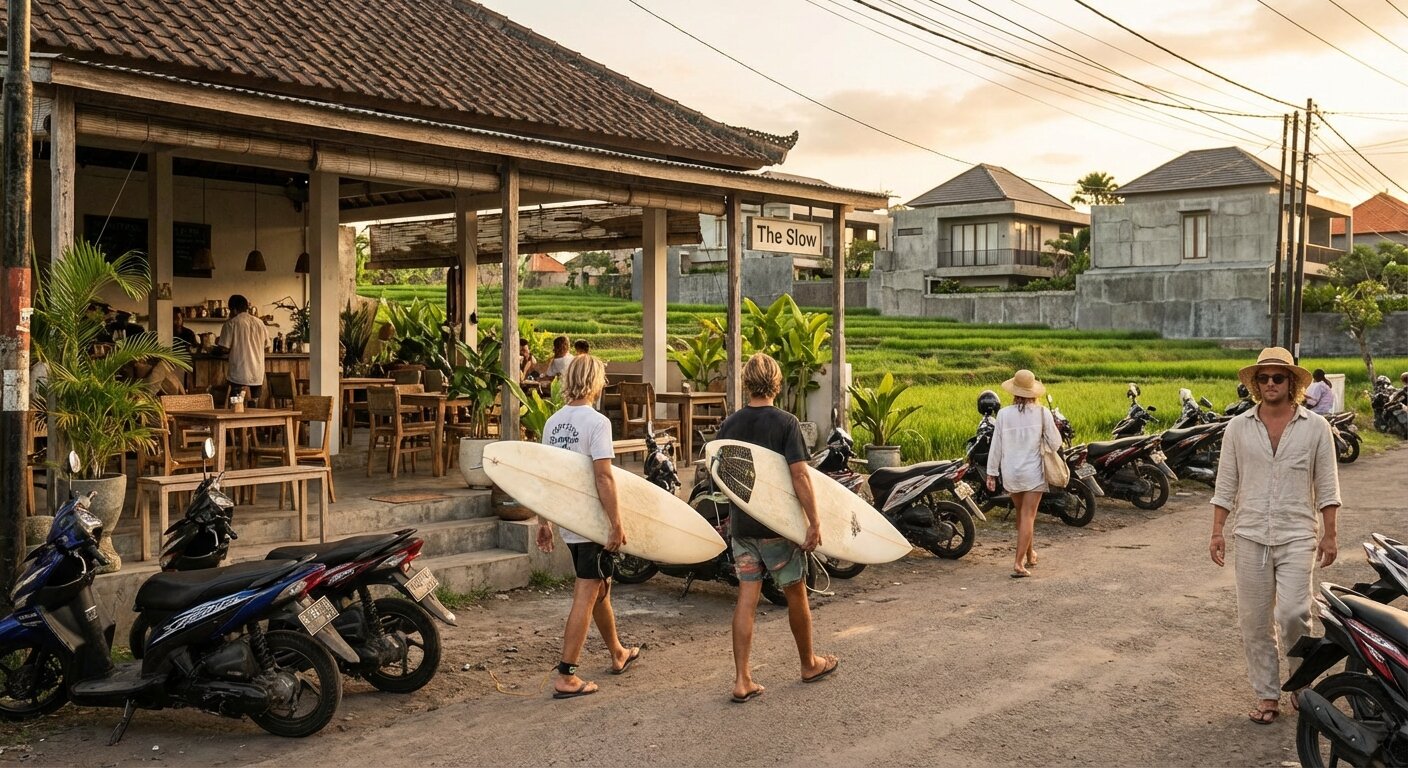
Seminyak: Chic and Walkable
Seminyak is just south of Canggu and has a completely different character. Where Canggu is flip-flops and surf shorts, Seminyak is cocktail dresses and restaurant reservations.
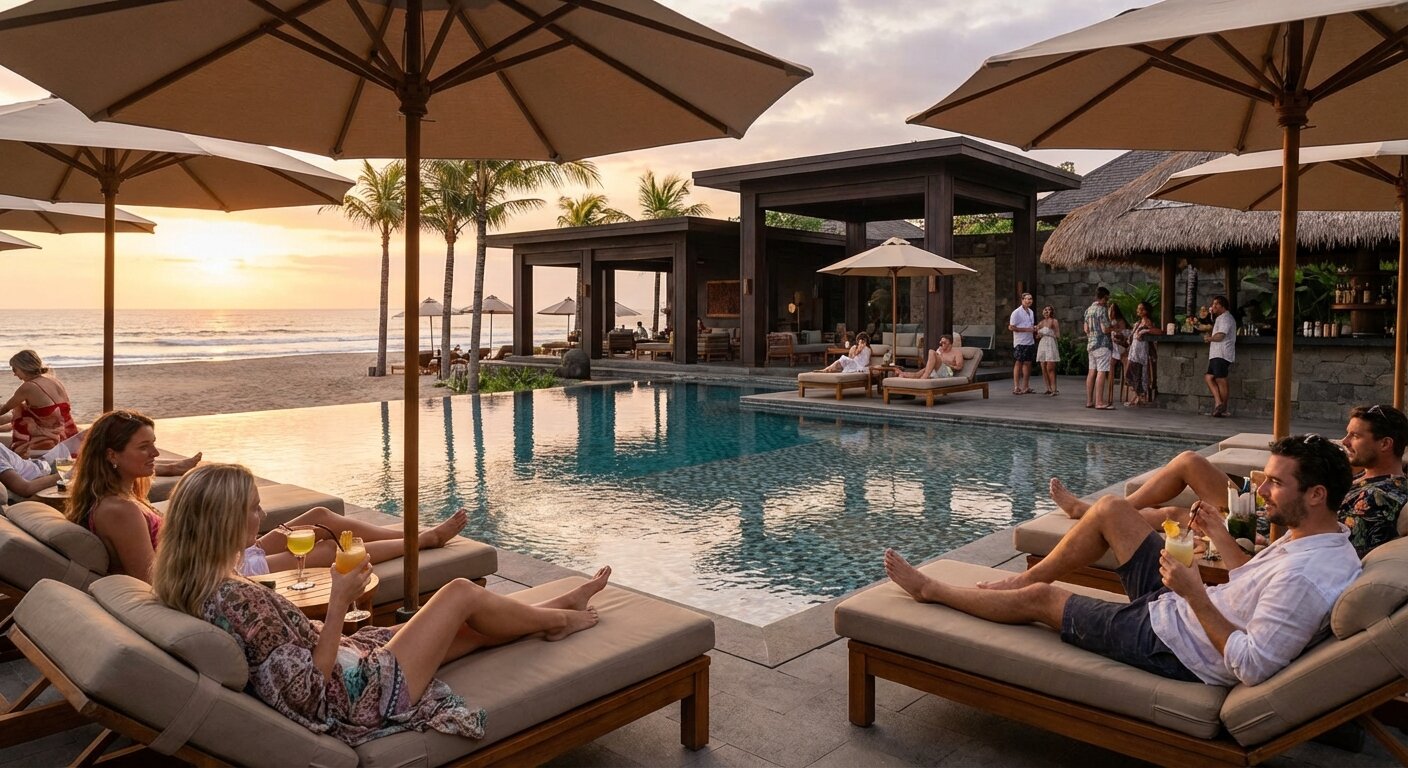
It’s the most polished part of Bali: boutique shopping, beach clubs, and restaurants that would hold their own in any major city. It’s also one of the few places in Bali with real paved sidewalks and reliable ATMs, making it truly walkable.
The food scene is Seminyak’s main asset. Petitenget, the northern strip, has the highest concentration of quality restaurants on the island. La Lucciola is a classic for romantic dinners. Revolver makes excellent coffee in a tiny alley. Potato Head Beach Club is an institution, although it’s expensive and crowded in high season.
For nightlife, La Favela and ShiShi attract night owls, and the vibe here is more refined than Canggu’s.
Seminyak is also the most welcoming neighborhood for LGBTQ+ travelers, with Jalan Camplung Tanduk as the unofficial center. First-time visitors to Bali who want an easy, comfortable base with everything within walking distance often end up most satisfied in Seminyak. It’s close to the airport (20-30 minutes without traffic) and feels more organized than the rest of the island.
The downsides: Seminyak is expensive by Balinese standards. Meals and drinks here are closer to European prices than Southeast Asian prices. The beach has rough waves, making it poor for swimming. And if you stay more than a week, Seminyak can start to feel like an interchangeable place, a polished tourist zone that has traded local character for international comfort.
For short stays and couples who want good food and a beach club vibe, Seminyak delivers. For budget travelers or anyone looking for Balinese culture, look elsewhere. If you want to learn more about dining options in each area, our guide to eating in Bali goes into detail.
Kuta and Legian: Budget Territory
Kuta is the main beach area closest to the airport (about 10 minutes) and has been Bali’s default tourist strip since the 1970s. Legian is its slightly quieter extension to the north. Together, they form a continuous strip of cheap hotels, souvenir shops, massage parlors, and loud bars playing music until the early morning.
The honest assessment: almost every experienced Bali traveler recommends avoiding Kuta unless budget is your only priority. The area is cheap, yes. You can find rooms for 10-15 euros per night and meals for a few euros.
The beach is long and the sunsets are decent. But the neighborhood is noisy, hyper-commercialized, and there’s an aggressive touting culture where people approach you constantly.
Kuta still has its uses. If you have a very early morning flight or a long layover and need a place close to the airport, it’s convenient. If you’re on a very tight budget and want nightlife, it fills that function. Legian is slightly quieter and has a marginally better atmosphere. But for any stay longer than one night, your money and time are better invested almost anywhere else on this list. If you still want to explore this area, check out our complete guide to staying in Kuta.
The only exception: families with older children sometimes stay in Kuta or Legian for convenience and low prices, using it as a base for day trips. Waterbom Bali, one of Asia’s best water parks, is located here. But if you can stretch the budget, Sanur has the same convenience with a fraction of the noise.
Uluwatu and the Bukit Peninsula: Cliffs and Surf
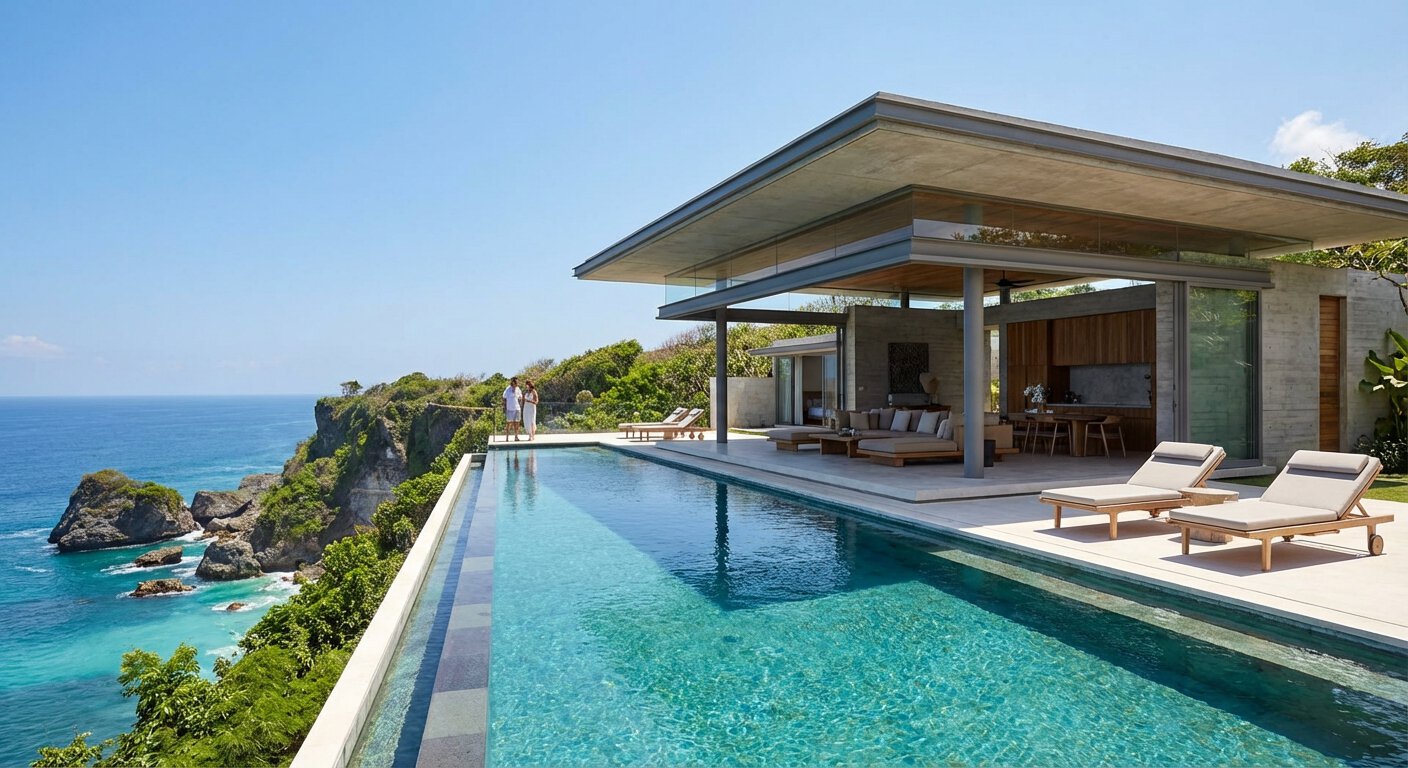
The Bukit Peninsula is the southern tip of Bali, a limestone plateau that ends in steep cliffs plunging down to white sand beaches below. Uluwatu, Bingin, Padang Padang, and Jimbaran are all part of this area. The vibe is laid-back and upscale, with a growing reputation as the “new Canggu” among travelers who found the original too crowded.
The beaches here are the most beautiful on mainland Bali. Padang Padang is the famous one (small cove, clear water, crowded in high season). Bingin is a surf village with steep stairs descending the cliff to the break. Jimbaran is wider and calmer, known for its seafood restaurants that set up tables on the sand at sunset.
The clifftop position means accommodations often have panoramic ocean views that flat coastal areas can’t match.
The Uluwatu Temple and its Kecak fire dance at sunset is one of Bali’s signature experiences, a centuries-old performance on a cliff overlooking the Indian Ocean. Single Fin bar is known for its Sunday sessions, and Savaya is a luxury day club for those willing to pay entrance fees that would make a Seminyak bartender wince.
The main drawback of the Bukit Peninsula is that you need a scooter. No way around it. The area is spread out, Grab and GoJek are unreliable here due to local taxi monopolies, and the roads at night are dark and winding. Getting home after an evening out can be dangerous if you’ve been drinking. Internet can also be unstable, making Uluwatu a bad choice for digital nomads who need a reliable connection for video calls.
The Bukit Peninsula suits experienced surfers (the reef breaks here are fast and hollow, not for beginners), couples wanting clifftop luxury, honeymooners finishing their trip (it’s much closer to the airport than Ubud), and anyone who prioritizes beaches over nightlife. It’s not suitable for travelers without scooter experience, budget backpackers (accommodation is generally mid-range to expensive), or anyone who needs reliable rideshares.
Many travelers do Ubud first, then finish their stay in Uluwatu for the beaches and the short transfer to the airport on departure day.
Sanur: The Quiet Alternative
Sanur is located on the east coast, about 25 minutes from the airport, and has a reputation for being the “boring” area of Bali. Locals and long-term expats call it “Snore-nur.” This reputation is both accurate and, for the right traveler profile, completely beside the point.
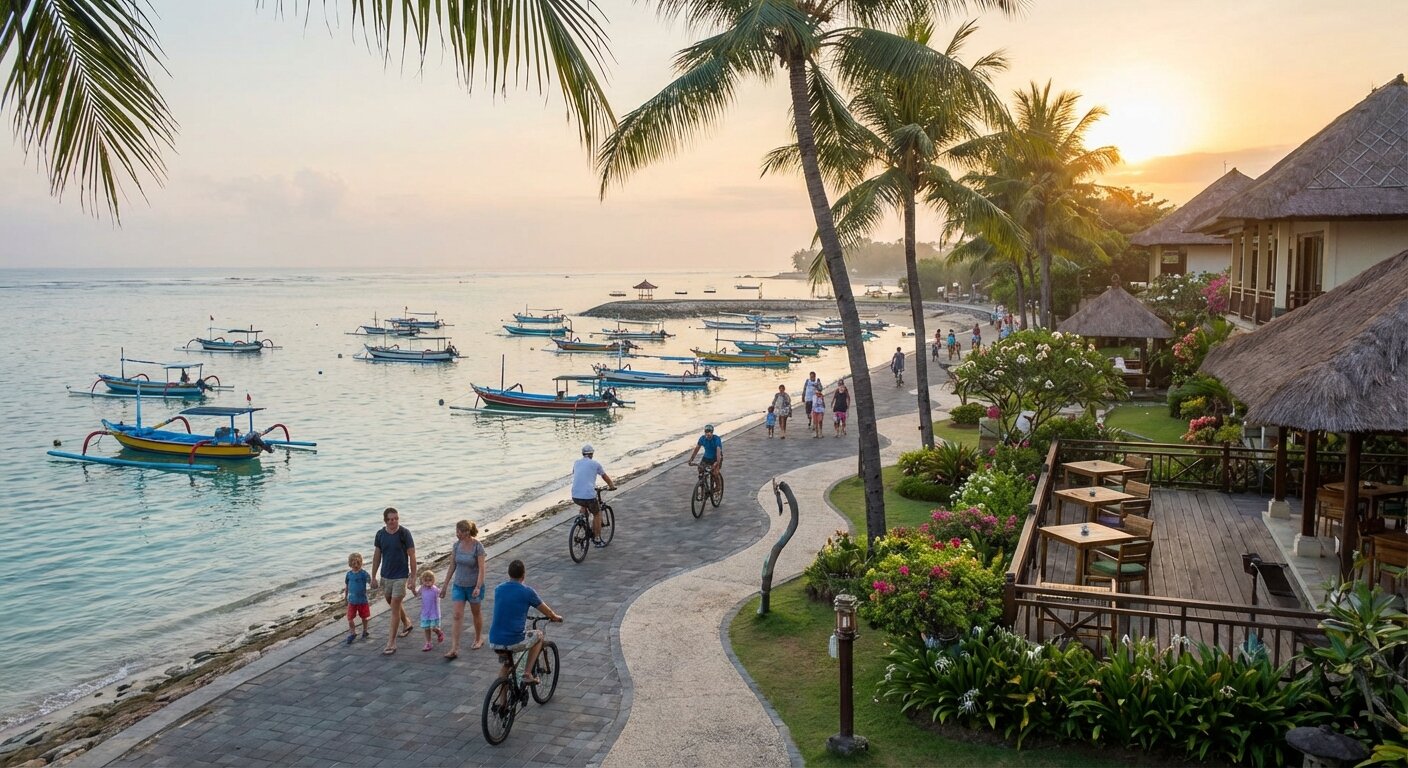
What Sanur actually has is the best walkability on the island. A paved beachfront promenade stretches for several kilometers, flat and wide enough for strollers, bikes, and morning joggers. The beach water is calm and shallow, protected by a reef, making it the safest swimming in Bali for young children.
The food scene is excellent and cheaper than Seminyak or Canggu. Massimo, an Italian restaurant, is so praised it might as well be a monument. Genius Cafe is a reliable local spot.
For families with young children, Sanur is the best neighborhood in Bali, by far. The combination of the promenade, calm water, Pick-a-Boo playground, and Byrdhouse family club makes it the most practical place on the island for families. Older travelers and retirees also gravitate here for the same reasons: it’s flat, walkable, quiet, and well-served without being chaotic.
Digital nomads who prioritize productivity over social networking find Sanur surprisingly efficient. Fiber optic is reliable, the cafe scene is comfortable, and the long-established expat community means you can find people to talk to without Canggu’s ostentatious networking. But if you’re in your twenties and want to meet other travelers, Sanur will feel like social exile.
Sanur suits families, older couples, long-stay remote workers who want peace, and anyone who finds the idea of a beachfront promenade more appealing than a beach club. It’s not suitable for nightlife seekers (everything closes by 10 PM), surfers (the reef means flat water), or young solo travelers looking for action. To learn more about mastering your budget in quieter areas like Sanur, check out our guide to budget tips and transport.
Amed: Diving and Tranquility
Amed is located on the northeast coast, about three hours from the airport on roads that deteriorate as you go. It’s a fishing village that has attracted a small community of divers and snorkelers, and it remains one of the least developed tourist areas on this list. Jemeluk Bay has the best underwater life, with coral gardens accessible directly from shore.
Amed’s appeal is what it lacks: no traffic, no clubs, no influencers, no construction noise. The pace is slow. You wake up, snorkel, have lunch at a beachfront warung, read, maybe dive in the afternoon, and watch the sunset with a beer. If that sounds like paradise to you, Amed is for you. If you feel like it would drive you crazy after 48 hours, it probably will.
Accommodation is affordable. Guesthouses and dive lodges cost between 20 and 40 euros per night, and meals are cheap. Diving here is considered some of the best in Bali, with the USAT Liberty wreck at nearby Tulamben as a signature dive site.
The downsides are significant. Amed is isolated. Getting there requires either a long car ride or a combination of local transport options that test your patience.
Internet is unreliable for anything beyond basic browsing. There’s no nightlife. Medical facilities are basic, and the nearest hospital is in Karangasem, a bumpy ride away. Most travelers consider Amed a two or three night excursion rather than a base, which is the right approach unless you’re there specifically for an extended dive stay.
Amed suits divers, snorkelers, and travelers who want to completely disconnect. It’s not suitable for remote workers, anyone on a tight schedule (travel time eats into the stay), or travelers who get restless without options. To explore the best beaches in Bali including Amed’s coast, check out our beach guide.

The Nusa Islands: Day Trip or Destination
Nusa Penida, Nusa Lembongan, and Nusa Ceningan are three islands off Bali’s southeast coast, accessible in 30 to 45 minutes by fast boat from Sanur. They have become increasingly popular for their high cliffs, clear water, and manta ray diving. The Instagram-famous spots (Kelingking Beach, Angel’s Billabong, Broken Beach on Nusa Penida) attract hordes of day-trippers.
Nusa Lembongan and Nusa Ceningan are smaller, connected by a yellow bridge, and have a relaxed island atmosphere with enough restaurants, bars, and dive centers to fill two or three days comfortably. Nusa Penida is larger and wilder, with roads so bad that a day trip barely scratches the surface.
If you have less than five days in Bali total, skip Nusa Penida. The boat ride plus the terrible roads on the island eat up an entire day, and you’ll return exhausted rather than refreshed.
For a two or three night stay, Nusa Lembongan is the best base. The island is small enough to explore on foot or by bike, the snorkeling is excellent, and the sunset views of Mount Agung are worth the boat ticket price. Nusa Penida rewards overnight stays by giving access to the scenic sites early in the morning, before the crowds of day-trippers arrive.
Accommodation Types in Bali
Bali has more accommodation variety than most Southeast Asian destinations, and the type you choose matters as much as the neighborhood.
Private Pool Villas
Private pool villas are Bali’s signature accommodation and one of the main reasons couples and honeymooners choose the island. One warning: the gap between Instagram and reality is a real problem. Villa listings use wide-angle lenses that make mini pools look like resort pools. Always check guest photos on Google Maps or TripAdvisor rather than relying on listing images.
Real luxury in a villa comes from the staff (private chef, breakfast service, daily housekeeping) rather than the building itself. Also check if the villa is next to a construction site – Bali is in the midst of a real estate boom, especially in Canggu and Uluwatu, and the sound of jackhammers at 7 AM will ruin even the most beautiful property.
Budget pool villas (under 90 euros per night) exist on the outskirts of Ubud, in Sanur, Amed, and Lovina. In Seminyak and central Canggu, expect to pay 140 to 280 euros for the same type of property. If you’re staying three nights or more, contact the host directly and negotiate. A 10 to 20% discount for extended stays is standard.
Hostels and Guesthouses
The hostel scene in Bali is better than most of Southeast Asia. Puri Garden in Ubud (pool, free yoga, puppy cuddle sessions) and The Farm in Canggu (balance between party and sleep) are most frequently recommended. Dorm beds cost between 7 and 14 euros per night depending on area and season. Guesthouses and homestays (often family-run with breakfast included) bridge the gap between hostels and hotels, typically between 18 and 45 euros per night.
Booking Strategies
Agoda tends to have the best hotel prices in Southeast Asia, often cheaper than Booking.com for the same property. For villas, a well-known strategy is to find the property on Airbnb or Booking.com, then search for it on Google Maps to get the direct WhatsApp number. Booking directly often saves 15 to 20% compared to platform prices. For long stays (one month or more), never book online before arriving. Prices are largely inflated for remote bookings.
The best approach is to book a hotel for the first three to five days, rent a scooter, and ride around looking for “Terima Kos” signs (room for rent).
Facebook groups like “Bali Housing” and “Canggu Community Housing” are also useful for finding monthly rentals. On-site prices for villas listed at 1,800 to 2,800 euros per month online often drop to 900-1,500 euros when negotiating face to face.
A warning about scams: beware of agents on Facebook asking for full payment by bank transfer before your arrival. “Double booking” scams (arriving to find the villa occupied, then being redirected to a lower-quality “sister property”) do exist. Use a platform like Booking.com for your first booking to have payment protection, and if you book directly, only put down a small deposit until you’ve seen the property.
Matching Neighborhoods and Beaches
Your neighborhood choice determines which beaches are easily accessible and which require a long ride through traffic. Seminyak and Canggu have gray sand beaches with strong currents. Uluwatu and the Bukit Peninsula have white sand and clear water but require descending steep cliffside stairs. Sanur has calm, shallow water behind a reef. Amed has a rocky coast with the best snorkeling on mainland Bali.
If specific beaches are a priority for your trip, read our guide to the most beautiful beaches in Bali before choosing a neighborhood. There’s no point booking a villa in Ubud if you plan to spend every day at the beach, and equally little point staying in Kuta if you want crystal-clear water. The Phuket neighborhood guide works on the same principle if you’re comparing the two islands.
Eating and Drinking by Area
Each neighborhood has its culinary personality. Seminyak has the best high-end dining. Canggu has the most brunch and healthy options. Ubud has the greatest variety of local Balinese cuisine alongside Western restaurants.
Sanur is underrated for food, with consistent quality at prices lower than trendier areas. Uluwatu has improved rapidly but still has fewer options, and you pay resort markups at many clifftop establishments. Kuta has cheap food, but quality reflects the price.
Our guide to eating in Bali covers specific restaurants and price ranges by neighborhood.
Practical Tips for Choosing Your Base
The most repeated advice from experienced Bali travelers: split your time. Don’t try to see the whole island from a single base. Traffic makes it impractical. A trip to Ubud from Canggu that seems to take 45 minutes on Google Maps can take two hours during rush hour. Two bases (one inland, one coastal) is the minimum for a week-long stay. Three bases work well for two weeks or more.
The most common and proven itinerary follows the Ubud-first, beach-second structure. Do the active visits (temples, rice fields, hikes, cultural activities) while your energy is fresh, then move to the coast for the second half of the trip. If your last destination is Uluwatu or Jimbaran, you have the added advantage of being close to the airport on departure day. For budget planning and transport logistics between neighborhoods, our guide to budget tips and practical advice covers the details.
A scooter is almost essential outside of Seminyak and Sanur. Grab and GoJek work in main tourist areas but become unreliable in Ubud (local taxi cooperatives resist them) and Uluwatu (spread-out area with poor coverage). Renting a scooter costs about 5 to 7 euros per day and opens the island in a way rideshares can’t match.
But be honest about your riding abilities. Bali’s roads are chaotic, and scooter accidents are the most common tourist injury. If you’ve never ridden a scooter, Bali traffic is not the place to learn.
Finally, “cheap Bali” largely belongs to the past in the main tourist hubs. Canggu, Seminyak, and Uluwatu are now at European prices for accommodation and dining. Real budget options still exist on the outskirts of Ubud, in Sanur, Amed, and on the less-visited north coast (Lovina, Pemuteran, Munduk). If you’re watching your spending, these quieter areas will stretch your money considerably further, and in many cases, the experience is more authentically Balinese than what you’ll find in the Instagram-calibrated south.
Also discover our guide to where to stay in Bangkok to plan a Southeast Asia circuit.
Also discover our guide where to stay in Hanoi from the Old Quarter to West Lake