The first mistake most people make with Bali is treating the island as a single destination. In reality, it’s dozens of very different places crammed onto an island roughly the size of a French department. The cliff-top surf spots of Uluwatu have nothing in common with the terraced rice paddies above Ubud. The small fishing village of Amed on the northeast coast feels like a different country compared to the brunch-and-beach-club vibe of Canggu. And the distances between these places, even though they look short on a map, are brutal in practice because of Bali’s legendary traffic jams.
We spent weeks sorting through what really matters for a first trip (and a second, and a third), drawing on our own experience and that of hundreds of travelers who shared their hard-won tips on Reddit, travel forums, and local expat groups. This guide covers the full picture: when to go, where to stay, what to see, what to skip, and the practical details that make the difference between a great trip and a frustrating one. If you’re looking for more detailed guides on specific topics, we’ve written separate guides on the best beaches in Bali, where to eat, the best activities and excursions, practical tips including visa and budget, and where to stay neighborhood by neighborhood.
Bali at a Glance
Bali is one of more than 17,000 islands in the Indonesian archipelago, located just east of Java (the most populated island on Earth) and west of Lombok. It’s about 140 km wide and 80 km from north to south. The interior is mountainous, dominated by Mount Agung (3,031 m), an active volcano that last erupted in 2017-2018 and is sacred to the Balinese Hindu population. The southern coast concentrates most of the tourism, while the north and east remain comparatively quiet.
What sets Bali apart from the rest of Indonesia is religion. While Indonesia is the world’s largest Muslim-majority country, Bali is about 87% Hindu. Balinese Hinduism is a special case, however, a blend of Hindu, Buddhist, and older animist traditions that produces daily rituals visible everywhere.
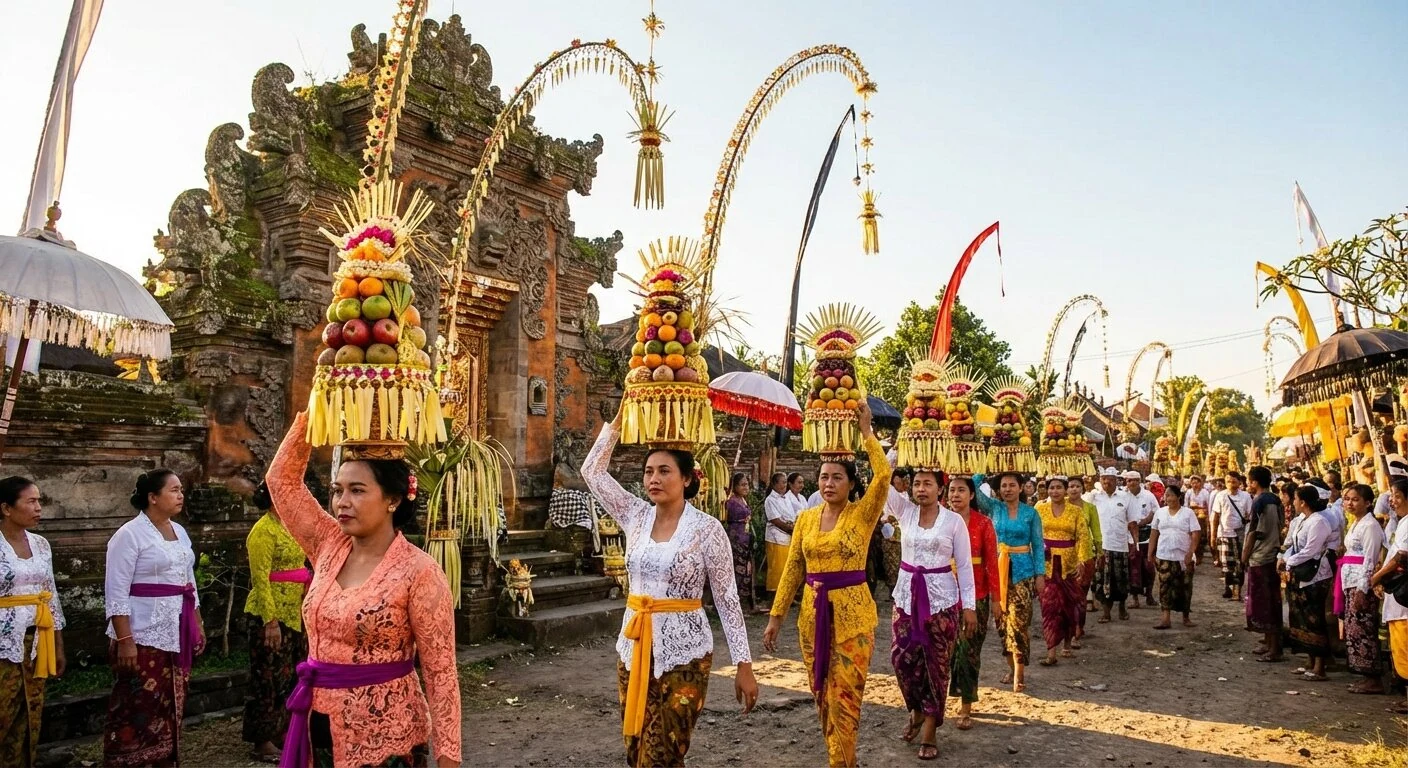
Small woven baskets called canang sari appear every morning on sidewalks, doorsteps, and shop counters, filled with flowers, rice, and sometimes a cigarette or a candy as offerings. Temples (called pura) are everywhere; there are estimated to be more than 20,000 on the island. Ceremonies happen constantly, and you’ll regularly come across processions of people in white carrying offerings on their heads.
The climate is tropical, with average temperatures between 27 and 30°C year-round. There are two seasons: the dry season (April to October) and the wet season (November to March). Humidity is high regardless of the season, but the mountains around Ubud and Munduk can be noticeably cooler, especially at night.
Best Time to Visit
The short answer: May, June, or September. These months offer dry weather without the intense crowds and inflated prices of July-August, which is peak season when Europeans and Australians take their summer and winter holidays respectively.
The dry season runs from April to October. Rain is rare, skies are clear, and humidity is more bearable. The catch is that July and August bring monster traffic jams (worse than usual, which is saying something), higher accommodation prices, and packed temples. If you can only travel in July or August, book everything well in advance and be prepared to share every attraction with large tour groups.
The wet season, from November to March, has a worse reputation than it deserves. It rarely rains all day. The typical pattern is clear mornings followed by an intense downpour lasting one to two hours in the afternoon, then the weather clears again by evening.
The upside is real: lower prices (sometimes 30 to 50% off compared to dry season), fewer tourists, and greener landscapes. The rice terraces are at their most beautiful during the wet season because the paddies are flooded and reflect the sky. The main downside beyond the daily rain is that the west coast beaches (Kuta, Seminyak, Canggu) accumulate plastic trash carried in by currents, especially in January and February. The eastern beaches stay cleaner.
October is a good compromise: still dry most of the time, but crowds thin out and prices drop as the high season winds down. April offers a similar advantage at the start of the season.
Special Events to Know About
Nyepi, the Balinese Day of Silence, falls in March (the exact date changes each year according to the Balinese calendar). For 24 hours, the entire island shuts down. No flights land or take off. Nobody leaves their accommodation. Lights are off. The streets are empty and patrolled by traditional guards (pecalang) to enforce the silence.
The evening before, villages parade enormous papier-mâché demon statues called ogoh-ogoh through the streets, accompanied by gamelan music and firecrackers. If you’re in Bali during Nyepi, the ogoh-ogoh parade is worth seeing, and the enforced darkness means zero light pollution for stargazing. Just know that you’ll be confined to your hotel for an entire day.
Galungan and Kuningan, a 10-day celebration honoring the victory of good over evil, happens twice a year (the Balinese calendar has 210 days). During this period, tall bamboo poles (penjor) decorated with offerings line every road, and temples are at their busiest. It’s a beautiful time to visit, though some shops may close and drivers may be harder to book.
The Neighborhoods: Where to Stay
The most useful piece of advice for planning a trip to Bali is this: pick two or three bases and stay put. Changing hotels every day or two is exhausting and eats into your time because of traffic. A 30 km drive that looks like it takes 40 minutes on Google Maps can easily take two hours at peak times. The classic combo that works for most visitors is Ubud (culture, jungle, rice terraces) plus a southern beach area (Uluwatu, Seminyak, or Canggu). Only add a third base if you have 10 days or more.
Ubud
Ubud is Bali’s cultural center, surrounded by rice paddies and jungle ravines in the island’s interior. This is where you go for traditional dance performances at Ubud Palace, the Sacred Monkey Forest, early morning walks along Campuhan Ridge, and access to the island’s best rice terraces and water temples. The food scene is excellent, with everything from cheap warungs (small local restaurants) to internationally recognized fine dining.
The downside: Ubud’s popularity has made the town center congested. Traffic getting in and out is tough, especially on the main road (Jl. Raya Ubud).
A tip that comes up often from regulars is to stay slightly outside the center, in areas like Nyuh Kuning (a quiet village just south, walkable from the Monkey Forest) or Penestanan (west of the center, artist community, quieter roads). You get the Ubud experience without being stuck in traffic every time you leave your hotel. Three to four nights is the right amount of time here. To pick the best neighborhood, check out our detailed guide on where to stay in Ubud.
Uluwatu (Bukit Peninsula)
The Bukit Peninsula, at the extreme southern tip of Bali, is where you’ll find the island’s most beautiful beaches. White sand, turquoise water, dramatic cliffs. Padang Padang, Bingin, Dreamland, and the hidden coves along the coast here look like what people picture when they think “Bali beach” (the reality at Kuta or Seminyak is quite different). Uluwatu is also the island’s best surf zone, with world-class reef breaks.
The area is spread out and hilly, so getting around without a scooter or Grab is tricky. There’s no real walkable center like Ubud or Seminyak. Accommodation ranges from budget guesthouses perched above Bingin Beach to luxury cliffside resorts. The famous Uluwatu Temple and its sunset Kecak fire dance are here. Plan for two to four nights.
Seminyak
Seminyak is the more upscale, polished alternative to Kuta. Good restaurants, cocktail bars, boutiques, and a long stretch of gray sand beach with beautiful sunsets. It’s one of the most walkable neighborhoods in Bali, with the main shopping strip along Jl. Kayu Aya (also known as Eat Street). The clientele is older and more affluent compared to Canggu.
The beach is fine for sunsets and swimming, but the sand is coarse and gray. It’s a good pick if you want dining and nightlife without the chaos of Kuta or the influencer scene of Canggu.
Canggu
Canggu has become the digital nomad and Instagram capital of Bali. Huge cafe scene, beach clubs like Finns and The Lawn, and beginner-friendly surf at Batu Bolong and Echo Beach. Opinions are polarized. Some people love the energy and food variety. Others find it overbuilt, congested (especially on the single main road, Jl. Batu Bolong), and disconnected from anything authentically Balinese. If you’re looking for the real Bali, this isn’t it, but if you want good food and a social scene, it delivers.
Sanur
Sanur is the underrated pick. On the east coast, there’s a paved beachfront promenade stretching about 5 km, calm and shallow water protected by a reef, and a quieter, more local vibe. The clientele here is older, with lots of long-term expats and families.
It’s also the departure point for fast boats to Nusa Lembongan, Nusa Penida, and the Gili Islands. The trade-off: fewer restaurants, less nightlife, and the beach is narrow and seaweed-covered at low tide. But as a calm base with easy access to the islands, it’s hard to beat.
Kuta
Skip it. That’s the near-universal advice from experienced Bali travelers. Kuta was the first tourist area developed on the island in the 1970s, and it shows. Aggressive touts, low-quality souvenir shops, crowded beach, and a seedy vibe you won’t find anywhere else on this list. The only reason to be in Kuta is the airport proximity (Ngurah Rai International is technically in Tuban, right next to Kuta), so it works as a stopover for a last night before an early morning flight, and nothing more. For those who still decide to base themselves in the area, check out our detailed guide on where to stay in Kuta.
Sidemen
If you want to find what Ubud was like 20 years ago, before the traffic and the tour buses, Sidemen is the answer. This small valley in eastern Bali offers rice terraces with Mount Agung as the backdrop, a handful of guesthouses, and very few Western tourists. It’s about 90 minutes from Ubud. There’s not much to “do” in the classic tourist sense, and that’s exactly the point. Walk through the rice paddies, take a cooking class, attend a ceremony at the local temple. Two nights here reset your batteries.
Other Areas Worth Knowing About
Munduk, in Bali’s central-northern mountains, is cooler (sometimes to the point of needing a jacket at night), surrounded by coffee plantations and waterfalls, and feels remote despite being only about two hours’ drive from Ubud. Amed, on the northeast coast, is Bali’s best area for diving and snorkeling, with the famous USS Liberty shipwreck at nearby Tulamben.
Lovina, on the north coast, is a laid-back former tourist hub that never really took off, known for its early morning dolphin-watching boat trips.
For a detailed guide to each area, including accommodation recommendations and which neighborhood suits which type of traveler, check out our complete guide to where to stay in Bali.
Temples
With around 20,000 temples on the island, you could spend months visiting pura without scratching the surface. Most travelers visit three to five of the major ones, and that’s more than enough. Here are the ones that are truly worth your time, along with a few to avoid.
Uluwatu Temple (Pura Luhur Uluwatu)
Perched on a 70-meter cliff at the southwestern tip of the island, Uluwatu is probably Bali’s most photographed temple. The setting is stunning: the ocean crashing against limestone cliffs, with the temple silhouetted against the sky. The Kecak fire dance held there at sunset is the island’s most popular cultural performance, and deservedly so. About 70 performers chant “cak-cak-cak” in rhythm while acting out a scene from the Ramayana, with the sun sinking into the ocean behind them.
Practical notes: buy your Kecak tickets in advance (they sell out quickly, especially in high season), and arrive around 4:30 PM to get a good seat. The amphitheater holds about 700 people but fills fast. Watch your belongings, especially sunglasses and hats; the monkeys here are notorious thieves and will grab anything within reach. They’ve learned that tourists will trade food for their stolen items.
Tirta Empul (Water Purification Temple)
Tirta Empul, near Ubud, is a 1,000-year-old water temple fed by a sacred spring. Visitors can participate in the purification ritual (melukat), walking through a series of fountains and letting the spring water flow over their head. No guide needed; pay the entrance fee, rent a sarong if you didn’t bring one, and follow what the locals do. Skip the last two water spouts, which are reserved for funeral purification rites.
It’s a moving experience, even if you’re not religious. Go early in the morning (before 9 AM) to avoid the tour bus crowds that arrive mid-morning.
Besakih (The “Mother Temple”)
Besakih is Bali’s largest and most important temple complex, spread across the slopes of Mount Agung. The scale is impressive, with more than 80 individual temples spanning multiple levels up the mountainside. The problem is the aggressive scam guides who intercept visitors near the entrance, insisting you need to hire them (you don’t, though having a legitimate guide helps for context). If you go, arrange your own guide in advance through your hotel or driver, and politely decline anyone who approaches you in the parking lot.
Gunung Kawi
This 11th-century temple near Ubud consists of ancient shrines carved directly into the rock face along a river valley. Getting there involves descending about 300 steep steps through rice paddies, which keeps tour bus crowds away. The atmosphere is special: moss-covered stone carvings, a shallow river, and rice fields surrounding the complex. It’s one of the most peaceful temple visits you can have in Bali.
Tanah Lot
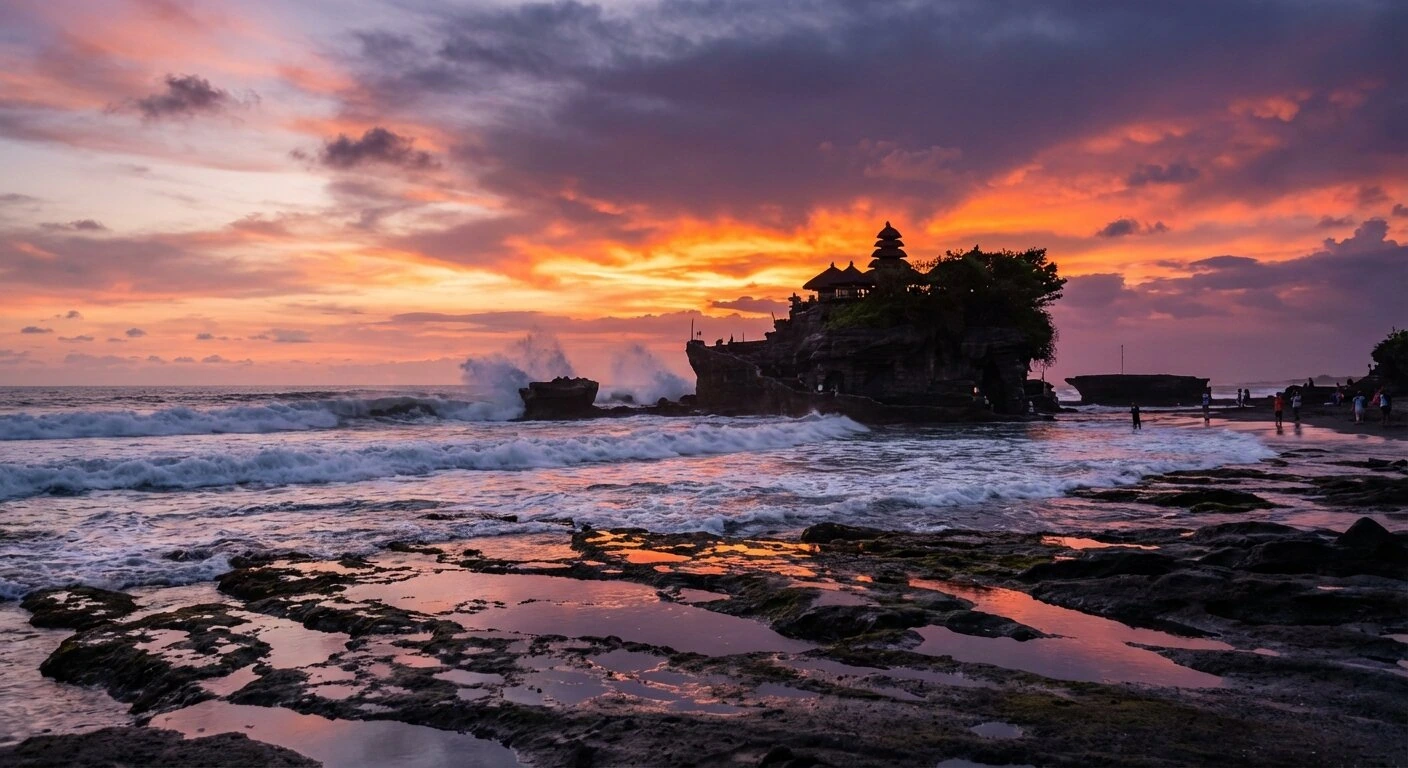
Tanah Lot is the classic postcard image: a temple perched on a rock formation just offshore, silhouetted against the sunset. The reality is extremely crowded, especially at sunset when hundreds of tourists queue for photos. At low tide, you can walk across to the rock; at high tide, it’s surrounded by water. The temple itself is off-limits to non-Hindus. It’s worth a quick stop if you’re in the area, but don’t plan your day around it.
Temples to Skip
Lempuyang, also called the “Gates of Heaven,” is famous for that Instagram photo where the temple gate frames Mount Agung with a mirror-like reflection below. The reflection is fake, created by a local photographer who holds a mirror or phone screen under your camera. The queue for this photo runs two to four hours in high season. A better alternative for Mount Agung views is Lahangan Sweet, a hillside viewpoint nearby, with no queue.
Handara Gate is literally a gateway at the entrance to a golf course. People line up to pose in front of it. That’s the entire experience.
Rice Terraces
The rice terraces are one of Bali’s iconic landscapes, and the island offers two very different experiences.
Jatiluwih (UNESCO World Heritage Site)
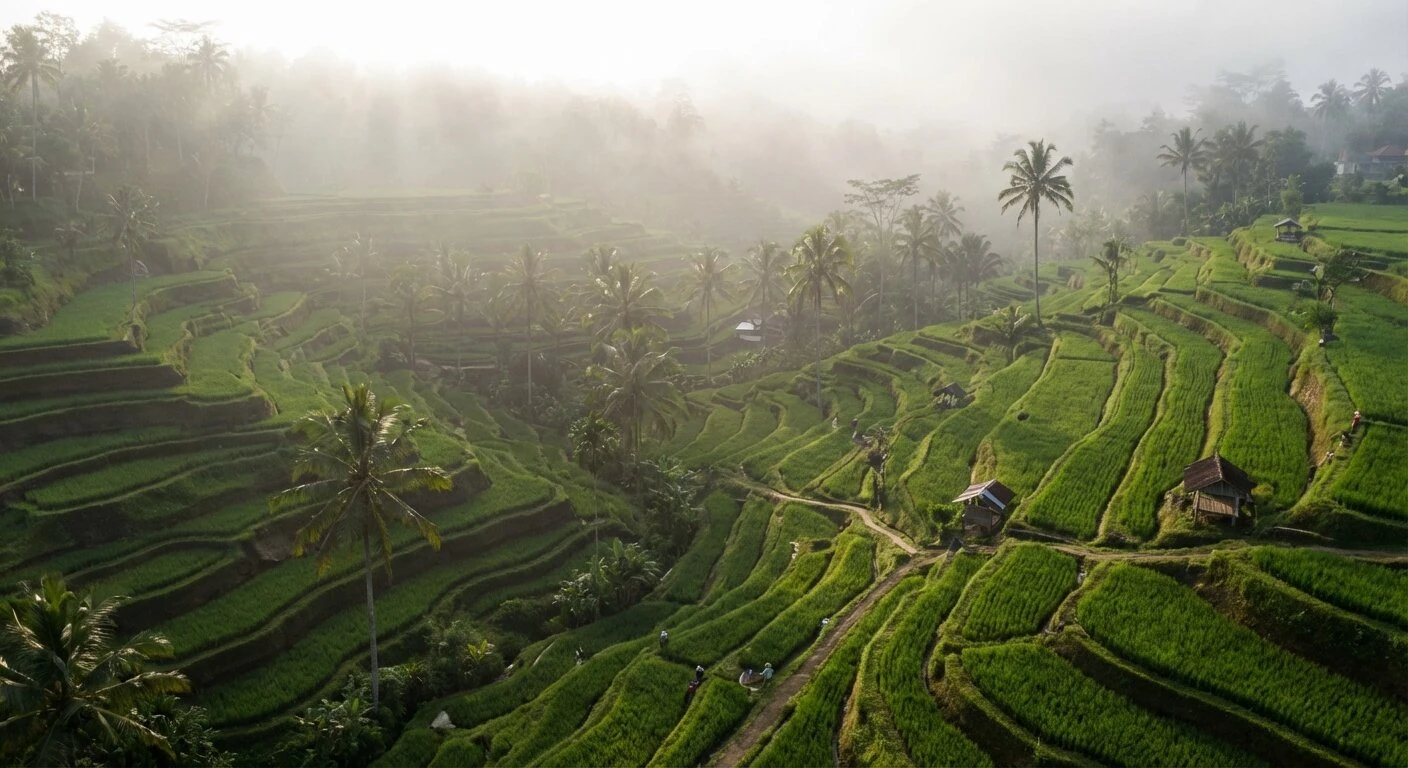
If you only visit one rice terrace site, make it Jatiluwih. Located about 90 minutes northwest of Ubud in the Tabanan regency, Jatiluwih covers about 600 hectares of terraced rice paddies using the traditional Balinese subak irrigation system (a cooperative water management system dating back to the 9th century, which earned it the UNESCO designation).
The terraces here are enormous, rolling over hills with coconut palms and mountains in the background. Walking trails wind through the rice fields, and the whole place is peaceful in a way that Tegalalang hasn’t been for years. There are a few small warungs along the trails where you can stop for a coffee or a plate of nasi goreng with a panoramic view.
Tegalalang
Tegalalang is the famous one, just 20 minutes north of central Ubud, and the most accessible rice terrace for visitors who don’t want a long drive.
It’s also heavily commercialized. Cafes, tourist swings, and souvenir shops line the ridge, and during the day (from about 10 AM), it’s packed with tour groups. If you go, arrive at sunrise before 8 AM and push deeper into the terraces beyond the first cluster of cafes. The further in you go, the fewer people you’ll encounter. Avoid Alas Harum, which is basically a theme park version of a rice terrace with zip lines and photo props.
Sidemen Valley
The rice terraces around Sidemen don’t have the Instagrammable tiered look of Tegalalang, but they’re beautiful in a different way. Here, the paddies stretch across a wide valley floor with Mount Agung rising behind. Almost no tourists. Locals working the fields. The kind of scene that makes you put your phone away and just look.
Beach Overview
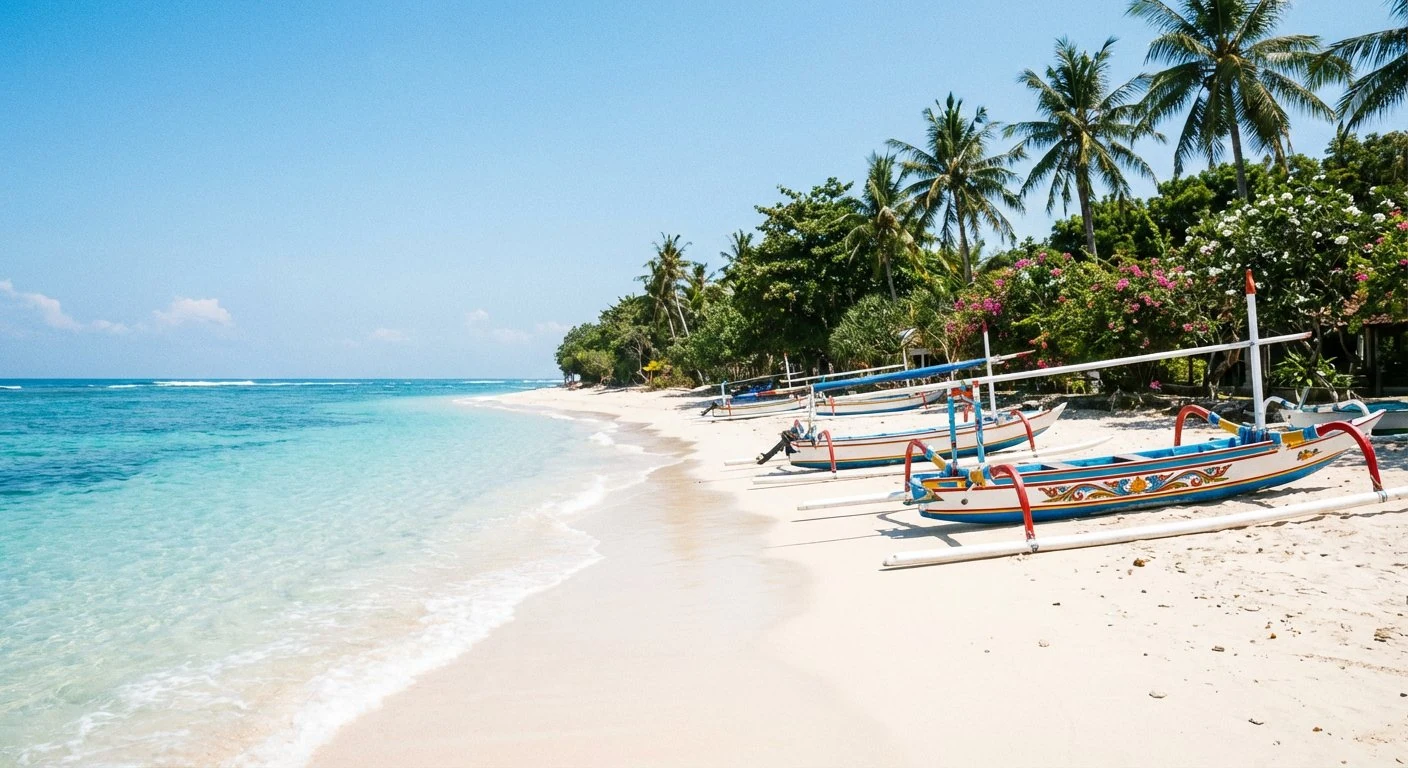
Bali’s beaches vary enormously depending on where you are on the island. The Bukit Peninsula to the south has the white sand and turquoise water that most people picture. The west coast (Seminyak, Canggu, Kuta) has dark volcanic sand, good surf, and beautiful sunsets. The east and north coasts tend to have calmer water and rocky shores, better suited for diving and snorkeling than sunbathing.
On the Bukit Peninsula, Padang Padang is the most famous: a small cove accessed by climbing down through a crack in the limestone cliffs, with clear water and white sand. It gets very crowded by mid-morning. Bingin, nearby, is similar but steeper to access and draws more surfers. Thomas Beach (also called Dreamland by some) offers a wider stretch of sand with fewer people than Padang Padang. Nyang Nyang Beach, reached by a long staircase, is one of the emptiest beaches on the south coast precisely because that staircase deters most visitors.
In Sanur, the beach is narrow, with calm and shallow water protected by an offshore reef. It’s good for kayaking, stand-up paddleboarding, and swimming with young children, but not for surfing. The sunrises facing Nusa Penida are stunning.
Canggu’s beaches (Batu Bolong, Echo Beach, Berawa) have dark gray sand and consistent surf. The water is choppier than in the south and not ideal for swimming, but the surf breaks are popular with beginners and intermediates. Sunset cocktails at one of the many beach bars along this strip are part of the Canggu experience.
For our beach-by-beach guide, including which ones are best for surfing, swimming, snorkeling, and lounging, check out our guide to the best beaches in Bali.
Where to Eat
Eating in Bali covers a huge range, from a 15,000 IDR plate of nasi campur at a roadside warung (less than 1 EUR) to 140 EUR tasting menus at internationally recognized restaurants in Ubud. The best meals, in our experience, are found on the cheaper end of that spectrum.
Warungs are small local restaurants that serve Balinese food, usually from a display case of pre-made dishes. You point at what you want, they plate it with rice, and you eat.
Babi guling (suckling pig) is the signature Balinese dish, and Warung Babi Guling Pak Malen near Seminyak is consistently recommended as one of the best places to try it. In Ubud, Warung Biah Biah is a local favorite for cheap Balinese small plates served on low tables.
The trick with warungs is finding them. The best ones are often tucked into narrow alleys (called gangs in Balinese) rather than on main roads. Ask your hotel staff or your driver where they eat, not where tourists eat. The difference in quality and price is striking.
For something fancier, Ubud has developed a serious dining scene. Locavore (now closed and reopened in a new format) put Bali on the fine dining map.
Room4Dessert offers a dessert-focused tasting menu. Mozaic has been an institution for years. In Seminyak, Sardine serves Indonesian-inspired seafood in a rice paddy setting (book ahead), and Mama San offers shareable Asian dishes in a former warehouse.
Canggu is the epicenter of the international cafe scene: acai bowls, avocado toast, matcha latte. The food is decent, sometimes good, but you’re paying premium prices for food you can find in any major Western city. Crate Cafe, Shady Shack, and Betelnut Cafe come up frequently in recommendations.
Street food markets are worth checking out. The Gianyar night market, about 20 minutes from Ubud, is one of the best on the island for cheap local food. The Sanur night market, smaller, has good satays and martabak (stuffed pancake).
For more on Bali’s food scene, including our recommended restaurant list by area and tips on the culinary scene, check out our complete food guide.

Activities and Excursions
Beyond temples and beaches, Bali offers a long list of things to do. Some are worth it, others are tourist traps where you spend most of your time queuing. Here’s a quick overview of the main activities. Our detailed activities guide covers each one in depth.
Waterfalls
Bali has dozens of waterfalls, mainly concentrated around Ubud and in the north around Munduk. Tukad Cepung, near Ubud, is the most impressive: you walk into a narrow canyon and the waterfall plunges through a hole in the cave ceiling, with shafts of light piercing through the spray.
Arrive at 7 AM or earlier; by 10 AM, it’s a line of people waiting their turn for a photo. Tegenungan, also near Ubud, is the most accessible and most crowded. Sekumpul and Gitgit, in the north near Munduk, require a steeper descent but reward with fewer crowds.
Mount Batur Sunrise Hike
The Mount Batur (1,717 m) sunrise hike is one of Bali’s most popular activities. You leave around 2-3 AM, walk for about two hours in the dark, and reach the summit just in time to watch the sun rise over Mount Agung and the caldera lake. The hike itself isn’t technically difficult, just steep and rocky in places. The downside: it’s very popular, which means the summit at sunrise can be crowded with hundreds of people.
If you want the volcanic experience without the crowds, Mount Abang, on the other side of the caldera, is tougher (steeper, less maintained trail) but much quieter. Another option: skip the hike and do a jeep tour of the caldera and lava fields, which offers nice views without the 2 AM wake-up call.
Monkey Forest (Ubud)
The Sacred Monkey Forest Sanctuary in central Ubud is home to about 700 Balinese long-tailed macaques living in a forested area with three temples. The monkeys are semi-wild and habituated to human contact. They will approach you, sit on your shoulders, and try to steal anything they can grab (water bottles, sunglasses, hats, bags). Don’t bring loose items, don’t make eye contact, don’t bare your teeth (they perceive it as aggression), and don’t feed them.
Go early in the morning (before 8:30 AM) when the monkeys are calmer and the paths less crowded.
Campuhan Ridge Walk
This paved trail follows a narrow ridge between two river valleys on the western edge of Ubud. It takes about 45 minutes each way and passes through tall grass with views of coconut palms and surrounding hills. Do it at sunrise, before the heat sets in. By 9 AM, it’s hot and the magic is gone. Start at the entrance near Ibah Luxury Villas (just off Jl. Raya Campuhan).
Nusa Islands
Three small islands off Bali’s southeast coast (Nusa Penida, Nusa Lembongan, and Nusa Ceningan) are popular day trips or multi-day excursions. Fast boats leave from Sanur, with the ride taking about 30 to 45 minutes.
Nusa Penida is the largest and most well-known, with cliffside viewpoints like Kelingking Beach (the T-Rex shaped cliff), Broken Beach, and Angel’s Billabong. Here’s the truth about Nusa Penida day trips: they’re often miserable. The roads are terrible (potholes, hairpin turns, single lane), the heat is intense, and you spend most of the day in a car bouncing between crowded viewpoints.
If you go, stay at least two nights so you can take your time and visit the sites early before the day-trip crowds arrive from Sanur.
Nusa Lembongan is the smaller, calmer alternative that many experienced Bali travelers prefer. It’s easy to get around (you can walk or rent a bike), the snorkeling is good, and you can cross a yellow suspension bridge to neighboring Nusa Ceningan for cliff jumping at Blue Lagoon and Mahana Point. Two nights here provide a relaxed island experience without the hassles of Penida.
Surfing
Bali is one of the world’s best surf destinations, with spots for every level. Beginners head to Batu Bolong in Canggu or Kuta Beach for gentle waves over sandy bottoms and cheap board rentals. Intermediate surfers will find good waves at Padang Padang (the right-hander) and Bingin. Advanced surfers go to Uluwatu, where the main reef break is a world-class left that barrels over a shallow reef.
Surf conditions vary by season. During the dry season (April to October), the west-facing spots work best as offshore trade winds groom the waves. During the wet season, east coast spots (Keramas, Sanur, Nusa Dua) get better conditions with the wind shift.
A warning repeated constantly by experienced travelers: don’t learn to ride a scooter in Bali to get to surf spots. Traffic is chaotic, roads are narrow and full of potholes, and your insurance almost certainly won’t cover you without an international driving permit with motorcycle endorsement. Take a driver or use Grab.
Dance Performances
Traditional Balinese dance is one of the island’s most striking cultural experiences. Beyond the Kecak fire dance at Uluwatu, Ubud Palace hosts nightly Legong and Barong performances. Legong is a refined court dance performed by young women in elaborate gold costumes, while the Barong dance tells the story of a mythical lion-like creature battling the evil witch Rangda. Tickets bought from street sellers in front of the palace are legitimate and usually cost about 100,000 IDR (about 6 EUR). Arrive early for front-row seats.
For the full list of activities with detailed logistics, check out our activities and excursions guide.
Ceremonies and Cultural Etiquette
You’ll encounter Balinese Hindu ceremonies almost every day of your trip, whether it’s a small offering ritual at the entrance of a shop or a full village procession blocking a road for an hour. This is what makes Bali different from other beach destinations. The spiritual life isn’t a tourist show; it’s the island’s daily life.
A few things to know. Those small woven baskets you see everywhere on the ground, on sidewalks, in front of shops, even in the middle of the road, are canang sari. They’re offerings to the gods, renewed every morning. Never step on them, even accidentally. Walk around them. This is probably the most important cultural rule for visitors.
In temples, cover your shoulders and knees. A sarong wrapped around the waist is the norm, and most temples rent or lend them at the entrance. Women who are menstruating are traditionally asked not to enter temples, a rule posted at most entrances. Whether you observe it or not is your choice, but be aware that it exists.
Give and receive things with the right hand, or both hands. The left hand is considered impure in Balinese culture. This applies when handing over money, accepting change, receiving food.
If something goes wrong (a dispute over a bill, a late driver, a misunderstanding over a reservation), never raise your voice or display anger in public. Balinese culture places great importance on keeping composure. Losing your temper will get you the opposite of what you want. A calm smile and a polite “no, thank you” is more effective than any outburst of frustration.
Outside beach areas, dress modestly in villages and residential areas. A swimsuit or no shirt in a village market or local warung is disrespectful.
Practical Information
This is a quick overview. For the complete guide to visa rules, costs, health tips, and logistics, check out our Bali practical tips guide.
Getting There
Ngurah Rai International Airport (DPS) is the island’s only airport, located in the south near Kuta. It receives direct flights from major Asian hubs (Singapore, Kuala Lumpur, Bangkok, Hong Kong, Tokyo, Sydney, Melbourne) and some Middle Eastern carriers fly direct from Dubai and Doha. From Europe, there are no direct flights; you typically connect through Singapore, Kuala Lumpur, or Doha (expect 15 to 18 hours of travel from London or Paris).
The airport taxi situation is a well-known headache. The official airport taxi monopoly charges fixed rates two to three times what a Grab would cost. You can’t order a Grab from the arrivals terminal (they’re blocked).
Options: pay the fixed taxi rate, walk to the departures level parking where Grabs can pick you up more easily, or arrange a transfer through your hotel in advance. Most hotels offer airport shuttles, and it’s worth the cost for the convenience, especially after a long flight.
Visas
Most European, American, and Australian passport holders get a 30-day visa on arrival (VOA) for about 35 USD, payable in cash or by card. It can be extended once for an additional 30 days at an immigration office (a tedious but doable process, or you can pay an agent about 30-50 USD to handle it for you). Indonesia also offers a B211A visa for longer stays, which requires more paperwork but gives 60 days, extendable up to 180 days. Check current requirements before your trip as visa rules change.
Money
The Indonesian rupiah (IDR) is the currency. At the time of writing, 1 USD equals about 15,500 IDR, and 1 EUR about 17,000 IDR. Cash is still essential for warungs, markets, temple entrance fees, and tips. Many restaurants and shops in tourist areas accept cards but often add a 3% surcharge for credit cards.
For ATMs, only use ones inside bank branches (BCA and Mandiri are the two most reliable banks). Standalone ATMs in convenience stores or on the street carry a risk of skimming. Wise and Revolut cards are popular among travelers for fee-free withdrawals and good exchange rates. Don’t bring large amounts to exchange at money changers. Instead, withdraw as you go.
If you use a money changer, stick to authorized outlets with a real shopfront and air conditioning (BMC and Central Kuta are two reputable chains). The sleight-of-hand scam works like this: they count your bills correctly, then ask to recount, and during the recount, palm a few bills. Never let them touch the money again after you’ve counted it.
Getting Around
Hiring a private driver for the day is one of the best deals in Bali. Expect about 35-50 USD for a full day (8-10 hours) including the car and fuel.
Split between two or more people, it’s cheaper than taking multiple Grabs, and your driver doubles as a local guide who knows where to eat, which routes to avoid, and when to arrive at popular sites. Ask your accommodation for a recommendation, or find a driver through your first Grab ride (many of them do day hires as well).
For short trips within the same area, Grab and Gojek (ride-hailing apps) are the cheapest option. Download both before arriving. Gojek also has a food delivery service (GoFood) that’s useful for ordering to your hotel. WhatsApp is the universal communication tool in Bali. Every driver, guide, hotel, restaurant, and tour operator uses it. Download it before your trip if you don’t already have it.
Scooter rentals are everywhere (about 70,000-100,000 IDR per day, roughly 4-6 USD), and a huge percentage of tourists use them.
We need to be honest here: if you’re not already an experienced scooter or motorcycle rider, Bali is not the place to learn (read our practical tips guide on permits and insurance). Traffic is aggressive and unpredictable, roads have potholes, dogs dart across the street, and if you have an accident, your travel insurance almost certainly won’t cover you unless you have an international driving permit with motorcycle endorsement. The number of tourists with road rash on their arms and legs is a common sight. Take a driver or use Grab.
Health
“Bali belly” (traveler’s diarrhea) is common enough to be a running joke among visitors, but it’s avoidable with basic precautions. Don’t drink tap water, including for brushing your teeth (use bottled water). Wash your hands before eating, especially after handling money. Ice in established restaurants is generally safe now (factory-produced and government-regulated), but avoid ice at random street stalls.
Bring Imodium and consider picking up Norit (activated charcoal tablets) at a local pharmacy as backup. Some travelers swear by a daily Yakult (probiotic drink, available at every convenience store) to keep their gut in check.
Mosquitoes transmit dengue in Bali. Use repellent, especially at dawn and dusk. There’s no widely recommended dengue vaccine for travelers, so prevention is your best bet. The sun is strong near the equator; bring high-SPF sunscreen and reapply often.
Suggested 7 to 10 Day Itinerary
This itinerary uses the two-base approach (Ubud plus a beach area) that works best for most visitors. Adjust based on your interests.
Days 1-2: Arrival and Settling into Ubud
Land at DPS, transfer to Ubud (about 90 minutes depending on traffic, less from the airport). Spend the first afternoon recovering from the journey and adjusting to the heat.
Stroll around the town center, have dinner at a local warung. Day 2, do the Campuhan Ridge Walk at sunrise (leave around 6 AM), then visit the Sacred Monkey Forest mid-morning. Afternoon: explore the shops and market on Jl. Raya Ubud, or book a Balinese massage (widely available, usually 100,000-200,000 IDR per hour, about 6-12 USD). Evening: attend a Legong or Barong dance performance at Ubud Palace.
Days 3-4: Temples and Rice Terraces
Hire a driver for the day. Morning: Tirta Empul water temple (arrive early, before 9 AM). Then drive to Gunung Kawi and descend the 300 steps to the ancient rock-carved shrines. Afternoon: continue to the Tegalalang rice terraces or, if you’re up for a longer drive, make the trip to Jatiluwih (the better experience, as covered above). Back to Ubud for dinner.
Day 4: Tukad Cepung waterfall at 7 AM, then either a cooking class in the afternoon (many available in the Ubud area, usually including a market visit), or explore Sidemen if you want to add a half-day in the eastern valley.
Days 5-6: Nusa Lembongan or Nusa Penida
Transfer to Sanur (about one hour from Ubud) and catch a morning fast boat to Nusa Lembongan (30-40 minutes). Spend two nights. Day 5: explore Lembongan’s mangrove, snorkel the reef, walk along the coast. Day 6: rent a bike or scooter and cross the yellow bridge to Nusa Ceningan for cliff jumping at Mahana Point and Blue Lagoon. If you prefer Nusa Penida’s viewpoints, go there instead, but give yourself two nights and avoid trying to see everything in one day.
Days 7-9: Uluwatu or Seminyak
Boat back to Sanur, then transfer to the Bukit Peninsula (Uluwatu area) or Seminyak, depending on whether you want beaches and surf (Uluwatu) or dining and nightlife (Seminyak). Day 7: settle in, hit the beach. At Uluwatu, spend an afternoon at Padang Padang or Bingin. Day 8: Uluwatu Temple and sunset Kecak fire dance (arrive around 4:30 PM). Day 9: free day. Surf lesson, another beach, or a do-nothing day by the pool.
Day 10: Departure
If your flight is in the afternoon or evening, you have time for one last morning at the beach or a brunch in Seminyak. The airport is 30-45 minutes from Uluwatu and about 20-30 minutes from Seminyak, but add extra time for traffic. The Kuta traffic near the airport is always terrible.
This itinerary can compress to seven days by dropping the Nusa Islands leg or cutting Ubud to two nights. It can also expand by adding Sidemen (two nights), Munduk (two nights), or Amed (two nights for diving).
Common Mistakes to Avoid
Trying to see everything. Bali is small on a map but slow in practice. Travelers who plan five destinations in seven days spend most of their trip in a car, stressed about making it to the next hotel on time. Pick two bases, maybe three, and explore each one properly.
Underestimating traffic. We keep mentioning it because it’s genuinely the number one frustration for visitors. What looks like a 40-minute drive on Google Maps can take two hours at peak times, especially around Denpasar, central Ubud, and Canggu.
Plan your day around traffic flow: leave early, stay late at your destination, avoid moving between zones during rush hours (8-10 AM and 4-7 PM).
Booking based on Instagram photos. The mirror reflection photo at Lempuyang’s “Gates of Heaven” is faked with a mirror. Tegalalang’s terraces look pristine in photos but are lined with cafes and tourist swings. Nusa Penida’s cliffs look serene in images but the experience of getting there involves terrible roads and hours of waiting. Research what a place is actually like, not just what it looks like in a carefully composed image.
Exchanging money at the wrong places. Stick to bank ATMs (BCA, Mandiri) inside real branches. Street-side money changers outside the authorized chains (BMC, Central Kuta) are where scams happen.
Learning to ride a scooter on Bali’s roads. We repeat this because the consequences are serious. Bali’s roads are not a training ground. Road rash is the best-case scenario; head injuries and broken bones happen regularly to tourists on two wheels.
Not downloading the right apps before arriving. You need Grab, Gojek, and WhatsApp. Install them before you land. Also download Maps.me or save Google Maps offline for Bali, as mobile signal can be patchy in some areas.
Overloading your day. A classic first-timer mistake is scheduling a sunrise hike, two temples, a waterfall, a rice terrace, and a sunset dinner all in a single day. You’ll be exhausted and spend most of your time in transit. Two to three activities per day is the right pace, especially in tropical heat.
Ignoring the culture. Bali isn’t just a beach destination with cheap massages. The Hindu ceremonies, temple rituals, and daily offerings are the soul of the island. Take time to watch a ceremony if you come across one. Ask your driver what’s happening when a procession blocks the road. Walk around the canang sari on the sidewalk. These small acts of awareness make the difference between experiencing Bali and merely visiting it.
For our complete list of practical tips, scam alerts, and budget advice, read the full practical guide. And if you’re planning a similar trip to Thailand, our complete guide to visiting Phuket follows the same format and covers another popular Southeast Asian island destination.
For an urban getaway in Asia, check out our complete guide to visiting Bangkok.
For an urban and cultural getaway in Asia, check out our complete guide to visiting Hanoi.