


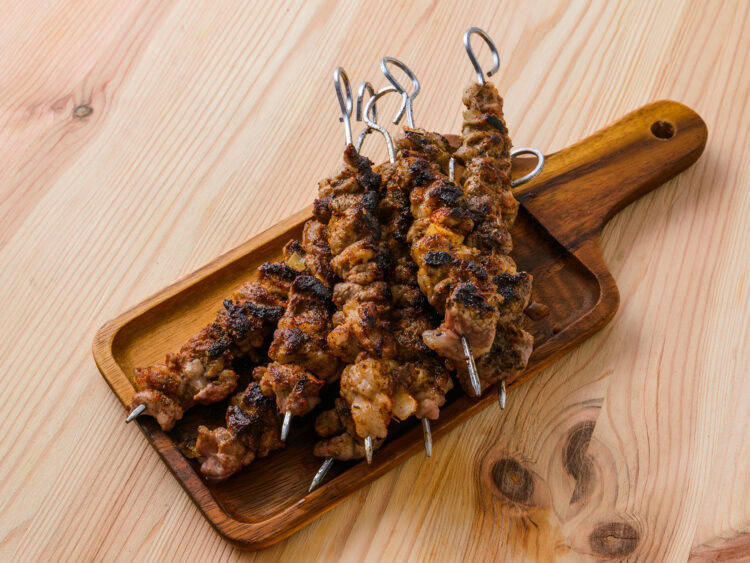
Savor these cumin- and chili-grilled Uyghur lamb skewers for a flavorful journey to Xinjiang.
The first breath is a warm cloud of toasted cumin rising over the coals. It mingles with the smoke, brushes against warm wool, and pricks the nose with a flash of red chili.
In the alleys of Ürümqi, the smoke quivers, then crackles against the tin walls of portable hearths; each spark promises a culinary journey that starts in the grill master’s hand and ends, juicy, between your fingers.
How does a simple piece of lamb become a symbol of Uyghur culture? To understand, you have to trace its origins, dissect its flavors, watch the dance above the fire, and listen to the heated debates it sparks.
From the Steppes to Street‑Food Stalls
Along the Silk Road, caravans and riders traded silks for livestock, spices for stories. Xinjiang, almost three times the size of metropolitan France, thrived on these exchanges: cumin from Central Asia, lamb raised on highland pastures, coal mined from nearby hills.
Today, that heritage lives on in every chuan, the halal skewer that crackles mostly at night, when Uyghur families set out low tables and stools right on the sidewalk. On summer evenings, more than a hundred street stalls line Ürümqi’s streets: miniature feasts where meat—and news—are eaten by hand.
Anatomy of a Cult Favorite
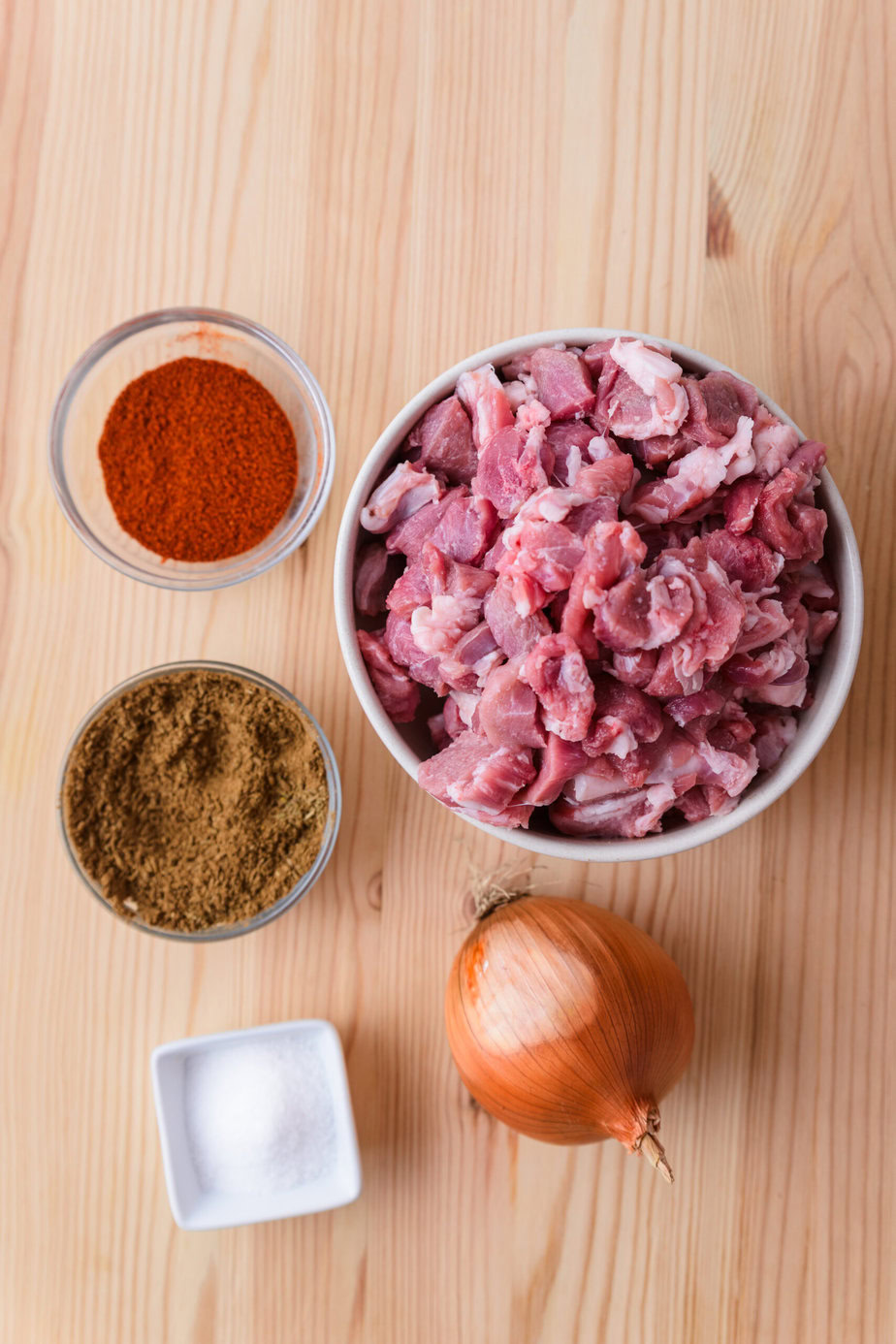
Xinjiang’s signature lies in the spice‑and‑smoke duo: generous heaps of cumin joined by red chili. Sprinkled on when the fat starts to bead, these powders meld with the smoke, create a velvety crust, and release earthy notes first, then a slow heat that evokes high summer even in the depths of winter.
From Market to Home: Mastering Fire and Metal
The skewer, a long, flattened steel rod, acts as a true conductor: the tip heats first, then the heat slides toward the handle, cooking the inside while the surface roasts.
In the markets, the meat is held so close to the embers that forearm hairs frizz, yet cooking rarely exceeds ten minutes. Deep‑red embers are preferred over high flames to avoid bitterness.
At home, a cast‑iron skillet or an air fryer can recreate the same alchemy: keep the meat a moderate distance from the embers, turn the skewer only once, and trust the steady sizzle that signals the juices are sealing into the flesh.
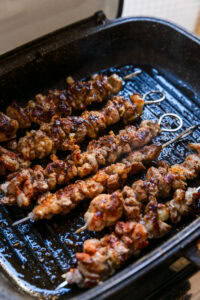
When the edges take on a burnished copper hue, the roasted surface is ideal; beyond that, tenderness fades.
Tasting Notes and Variations
What does “authentic” mean when a territory of 1.66 million km² brings together so many landscapes and peoples?
In the Kazakh west, cooks don’t hesitate to thread cubes of tail fat—little pieces that melt as you eat (a method I’m especially fond of).
In urban centers, some vendors remove that fat to appeal to cosmopolitan strollers; purists call it impoverishment, others applaud the new lightness. The same dilemma plays out between street and restaurant: does a chuan lose its soul in an air‑conditioned dining room if the cumin is sifted to spare tourists’ palates?
The conversation usually comes alive over warm nan, a crisp cucumber salad, and a glass of smoked black tea to cleanse the palate.
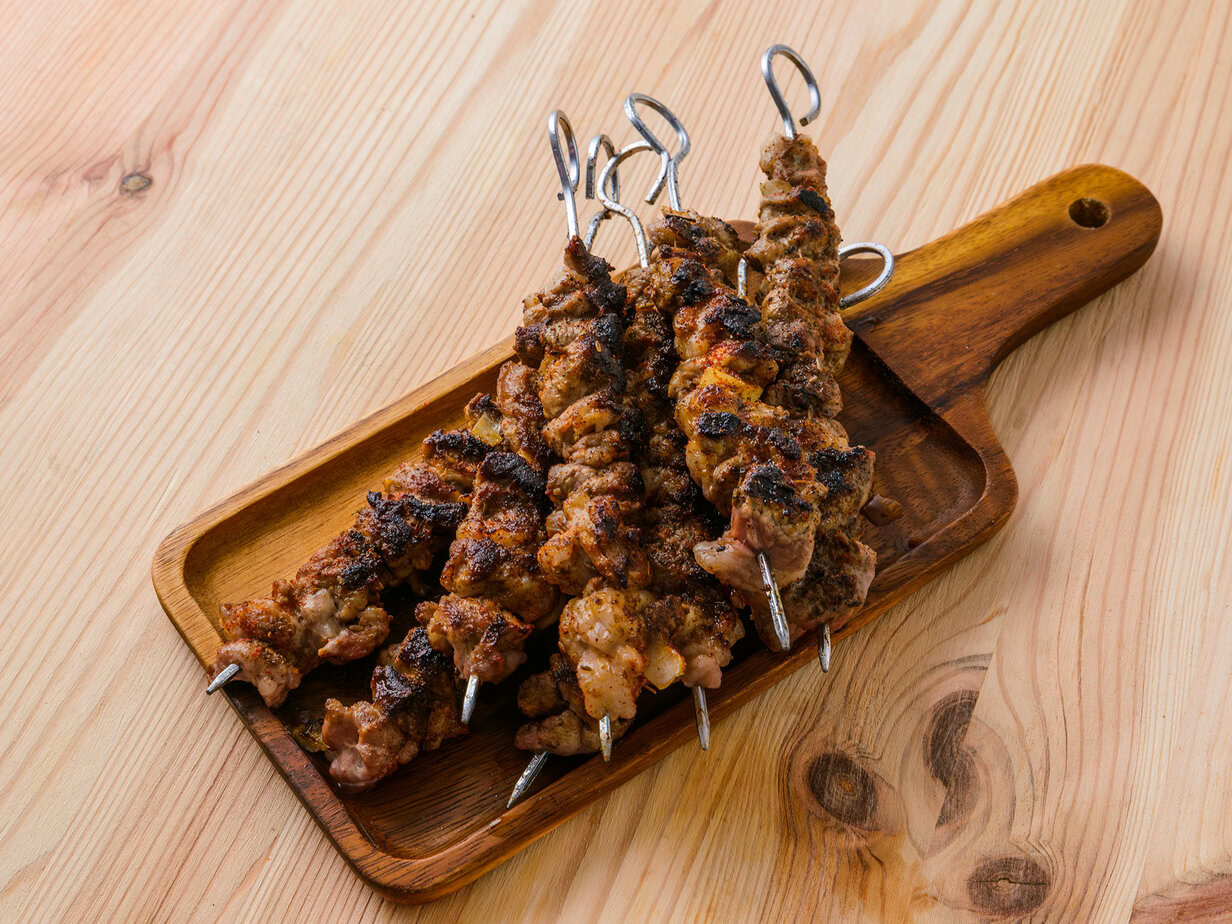
Ingredients
Main Ingredients
- 2 kg leg of lamb lean
- 150 g onion
Seasonings
- 40 g salt
- 30 g chili powder
- 50 g ground cumin
Instructions
Preparation
- Cut the lamb into small, thick slices.2 kg leg of lamb
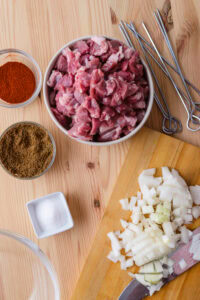
- Chop the onion.150 g onion
- Toss the meat with the onion to coat evenly.
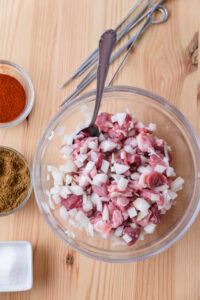
- Marinate in the refrigerator for 30 minutes.
- Thread the meat onto metal skewers.
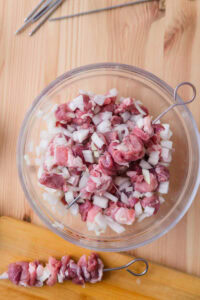
- Light a charcoal grill or heat a large pan; for charcoal, wait until the coals glow red.
- Place the skewers over the coals and season with salt, chili powder, and ground cumin. Grill for about 5 minutes, watching closely.40 g salt, 30 g chili powder, 50 g ground cumin
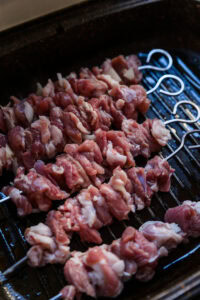
- Turn the skewers, season again, and grill for about 5 more minutes, until the meat is cooked through and the surface is well browned.
- Serve hot.
Notes
- The Uyghur name for these lamb skewers is kawap (喀瓦甫).
- Choose lean or lightly marbled meat and remove tendons for a tender texture.
- Charcoal grilling yields the best results; timing may vary depending on the size of the pieces.
- Optional: add a small amount of vegetable oil and monosodium glutamate (MSG).
Nutrition
Culinary Sources
• Uyghur Lamb Skewers: Secrets of Xinjiang Cuisine – Far West China (English)
• Best Uyghur Recipes from Xinjiang, China – Far West China (English)
• Uyghur Cuisine Blog: Recipe: Uighur Lamb Kebabs – Uyghur Cuisine Blog (English)
• Uyghur Cuisine Blog: Kabab (Skewers) – Uyghur Cuisine Blog (Uyghur) (uyghurtaam.blogspot.com)
• Recipe: Uyghur Kebab and Naan – Muslim Ink (English) (Muslim Ink)
• A 51‑Year‑Old Xinjiang Uncle Teaches You How to Make Authentic Cumin Lamb – 每日頭條 (Chinese)
• Xinjiang Lamb Skewers (新疆烤串, chuar) – Omnivore’s Cookbook (English)
• [Step by Step] Making Lamb Skewers on Red Willow Branches – 下厨房 (Chinese)
• How to Grill the Most Delicious Lamb Skewers? (Answer by 叶小昭) – Zhihu (Chinese)
• What Are Some Simple Ways to Prepare Lamb Skewers? – Zhihu (Chinese)


Made these cumin lamb skewers for our Lunar New Year family gathering, and the grill drew everyone outside the moment the cumin hit the coals. The meat stayed juicy with that smoky chili crust, and even the picky kids asked for seconds 😋
These lamb skewers looked absolutely stunning on the plate, with that burnished crust and specks of cumin and chili, like something straight out of a food magazine. Had to snap a quick photo before anyone dug in 😋
The cumin and chili aroma in these lamb skewers instantly took me back to childhood summers when my uncle would grill meat over glowing coals in the courtyard, turning the skewers just once and letting the smoke do its magic. The simple onion marinade and that crust of spices taste like the kind of street food we’d eat with warm bread, fingers greasy and hearts happy 🙂
Never made lamb skewers before and was sure I’d mess up the spices, but the cumin and chili crust came out so flavorful and the meat stayed juicy on my stovetop pan. Feeling oddly proud that it actually tasted like something from a real grill 😅